

Driven by concerns about AI and job security, in 2026, Gen Z is looking toward blue-collar work.
ResumeTemplates.com recently surveyed 1,250 Gen Z adults about their career plans, finding:
- 6 in 10 Gen Zers plan to pursue blue-collar work in 2026, including half of those with higher education.
- Gen Zers believe blue-collar jobs offer better long-term security, largely due to potential AI-driven job loss.
- Top trades Gen Zers will pursue include construction, electrical work, and plumbing.
60% of Gen Zers Will Pursue Blue-Collar Work in 2026
In 2026, 60% of Gen Zers say they’re very likely (28%) or somewhat likely (32%) to pursue a career in a blue-collar field. Even among Gen Zers with higher education, interest in blue-collar work is strong. About half of Gen Zers with a bachelor’s degree or higher say they’re likely to pursue a trade in 2026.
That interest marks a clear shift from what many expected when they finished high school. When they graduated high school, only 25% of Gen Zers thought that they would pursue a trade.
ResumeTemplates.com’s Chief Career Strategist Julia Toothacre explains what could be driving the shift.
“Many young adults are questioning whether college debt is worth it and are instead exploring blue-collar careers that offer solid income, skill development, and long-term security,” says Toothacre. “As older generations retire, these roles will open up, and unlike many corporate jobs, they’re not likely to be replaced by AI.”
AI Is Driving Gen Z To Seek Out Blue-Collar Work
Nearly half of Gen Zers (47%) believe blue-collar jobs offer better long-term security than corporate roles. Among those who view trades as more secure, 80% say it’s because they believe roles won’t be replaced by AI. Others point to the fact that the work can’t be offshored (38%) or that it tends to be more recession-proof (32%).
Job Security Is Top of Mind
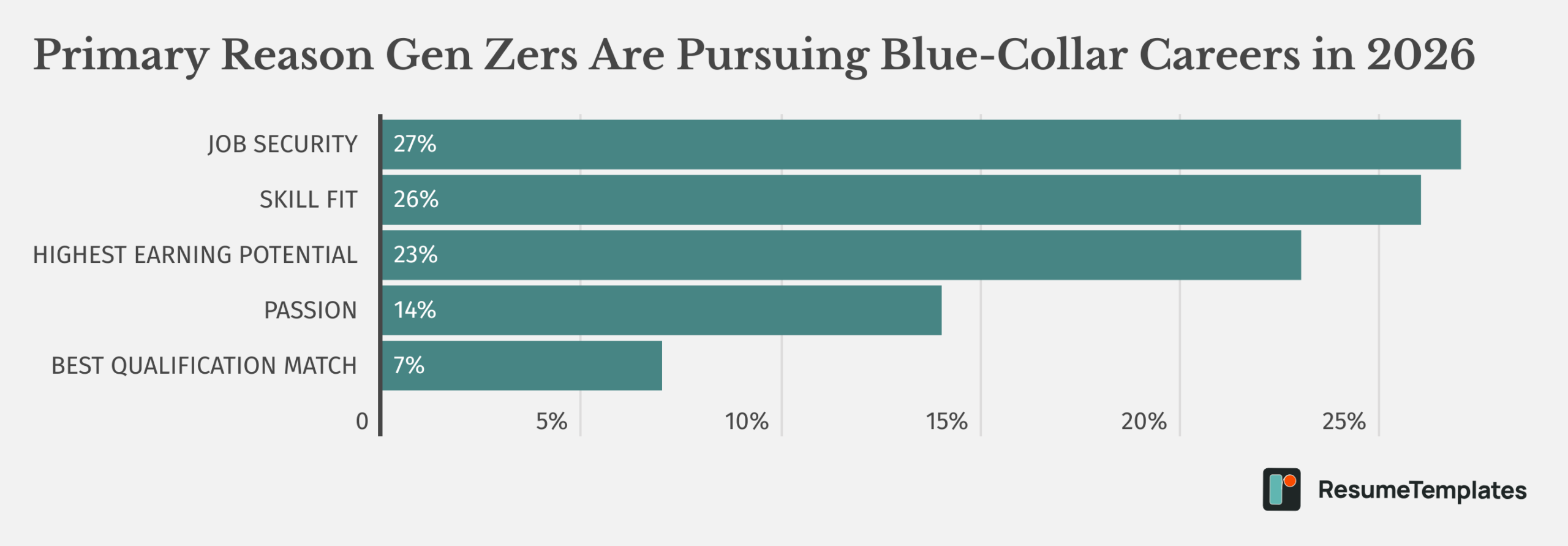
Gen Zers cite a range of reasons for pursuing blue-collar careers in 2026, with job security leading the list. Twenty-seven percent say stability is their main motivator, while 26% point to skill fit and 23% to earning potential. Passion is the primary driver for 14%, and 7% say they’re most motivated by finding the best qualification match. This data suggests Gen Z’s interest in the trades is rooted more in practical outcomes like stability, fit, and pay than in purely personal preference.
Most Popular Career Paths Are Construction, Electrical Work, and Automotive Repair
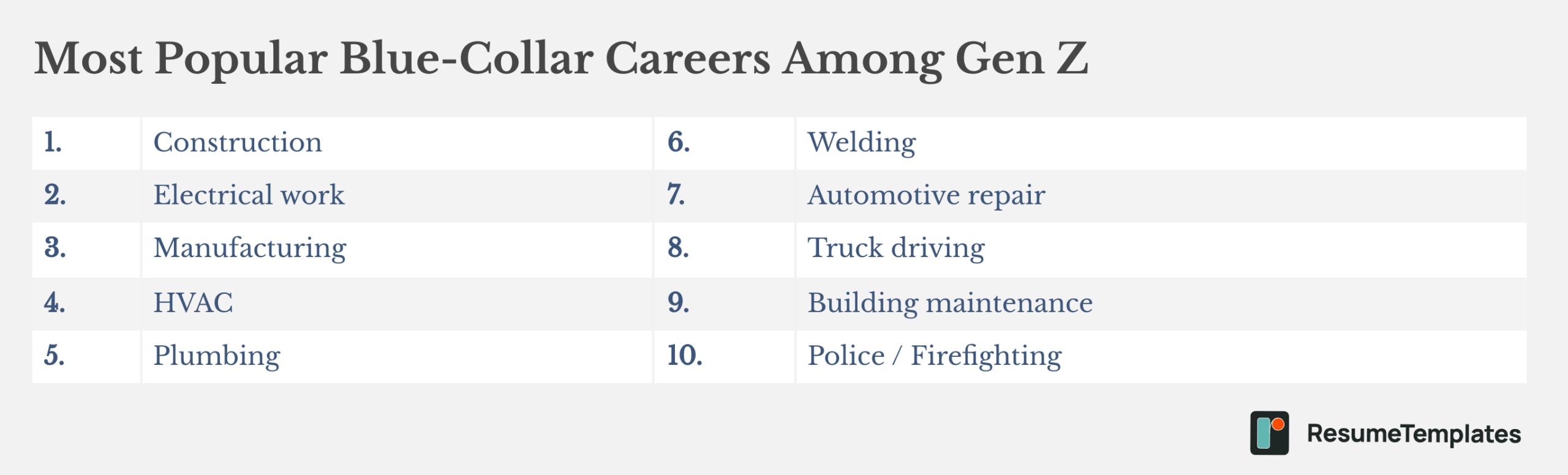
Among Gen Zers planning to enter the trades in 2026, construction sits clearly at the top of the list (21%), with electrical work (10%) and manufacturing or production (9%) next. After that, interest spreads across a wider mix of paths, including HVAC (7%), plumbing (7%), welding or metal fabrication (7%), automotive repair (6%), and truck driving (6%), with smaller shares aiming for building maintenance or janitorial work (4%) and police or firefighting (4%).
These preferences align with trade areas that show substantial projected opportunity in federal labor data. The Bureau of Labor Statistics (BLS) estimates about 149,400 annual openings for construction laborers and helpers and about 81,000 annual openings for electricians, on average, between 2024 and 2034. Electrician roles may also stand out because they are commonly entered through apprenticeship pathways and offer strong earning potential.
Toothacre points to the combination of opportunity, training access, and pay as key drivers: “These trades are appealing because they offer opportunity, training, and good pay.” She also notes that trade careers can support longer-term independence for some workers: “For entrepreneurial Gen Zers, it may eventually lead to owning their own business.” At the same time, she emphasizes an important tradeoff, noting that physical demands can accumulate over time and “can lead to wear and tear or health challenges later in life.”
Methodology: In October 2025, ResumeTemplates.com surveyed a national sample of 1,250 U.S. adults aged 18 to 28 through the Pollfish platform. All respondents were required to have at least a high school diploma to qualify. Among those surveyed, 41% were high school graduates, 20% had completed some college, 9% held an associate degree, and 21% held a bachelor’s degree. Smaller groups reported postgraduate education.
Resume Templates offers HR approved resume templates to help you create a professional resume in minutes. Choose from several template options and even pre-populate a resume from your profile.