4 Best Personal Trainer Resume Examples and Templates for 2026



Hiring athletic directors look for win-loss records, athlete advancement numbers, and current safety certifications on page one, because that combination shows whether a coach can run a program and keep kids safe in the same season.
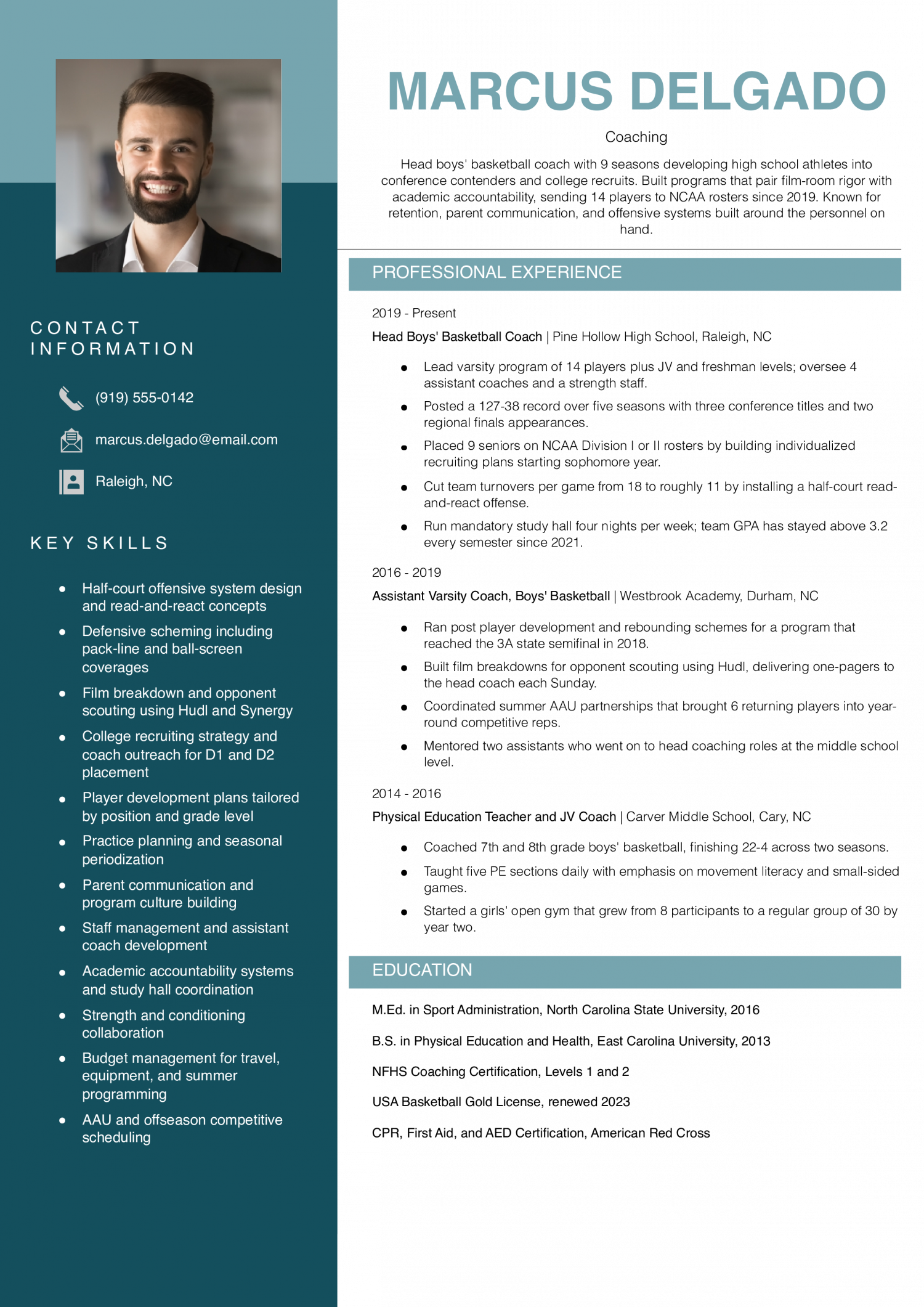
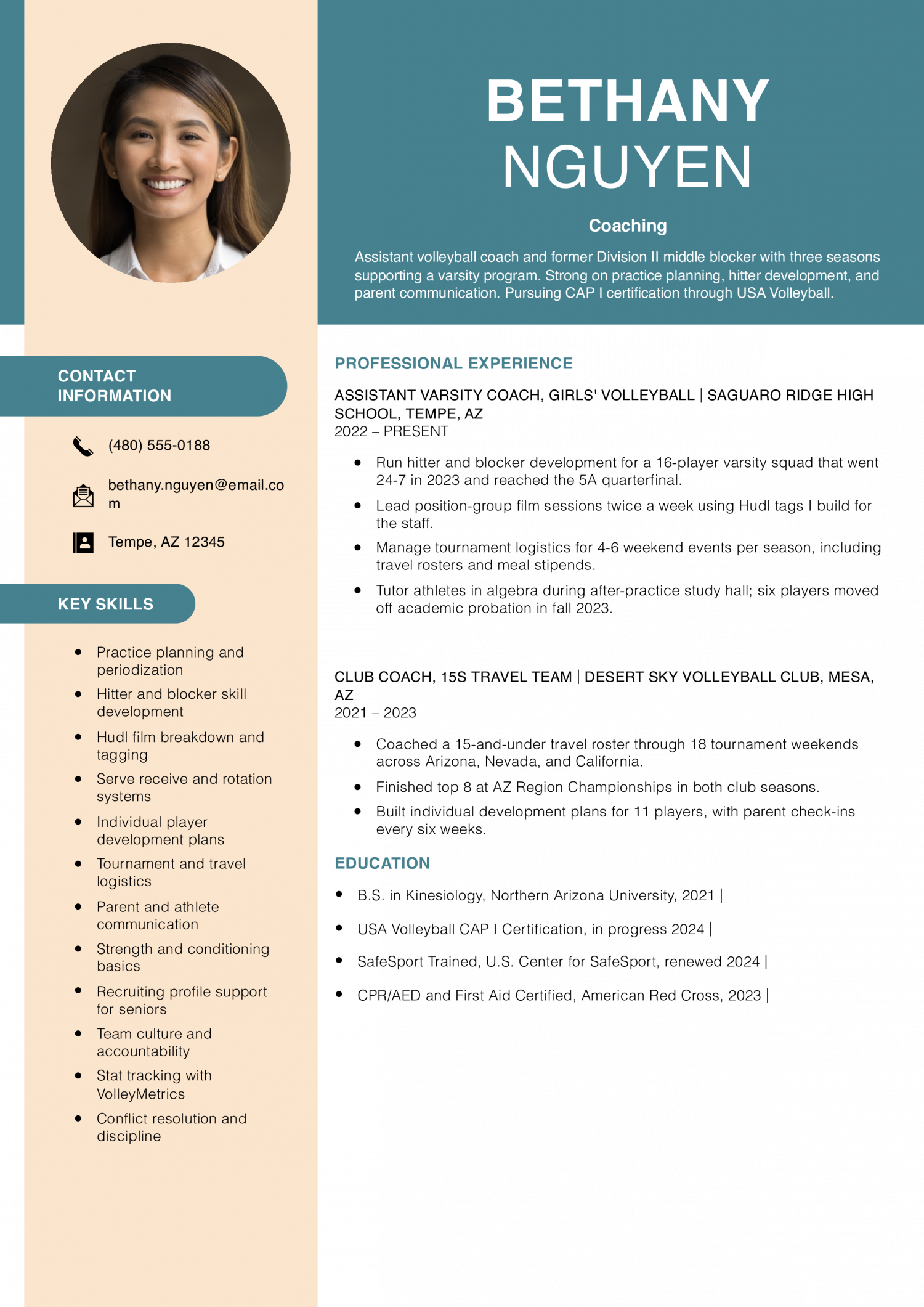
The assistant coach archetype fits early-career coaches running position groups, breakdown film, or specific practice segments under a head coach. Your resume needs to prove you can deliver structured drills, track athlete progress, and back up the head coach's system.
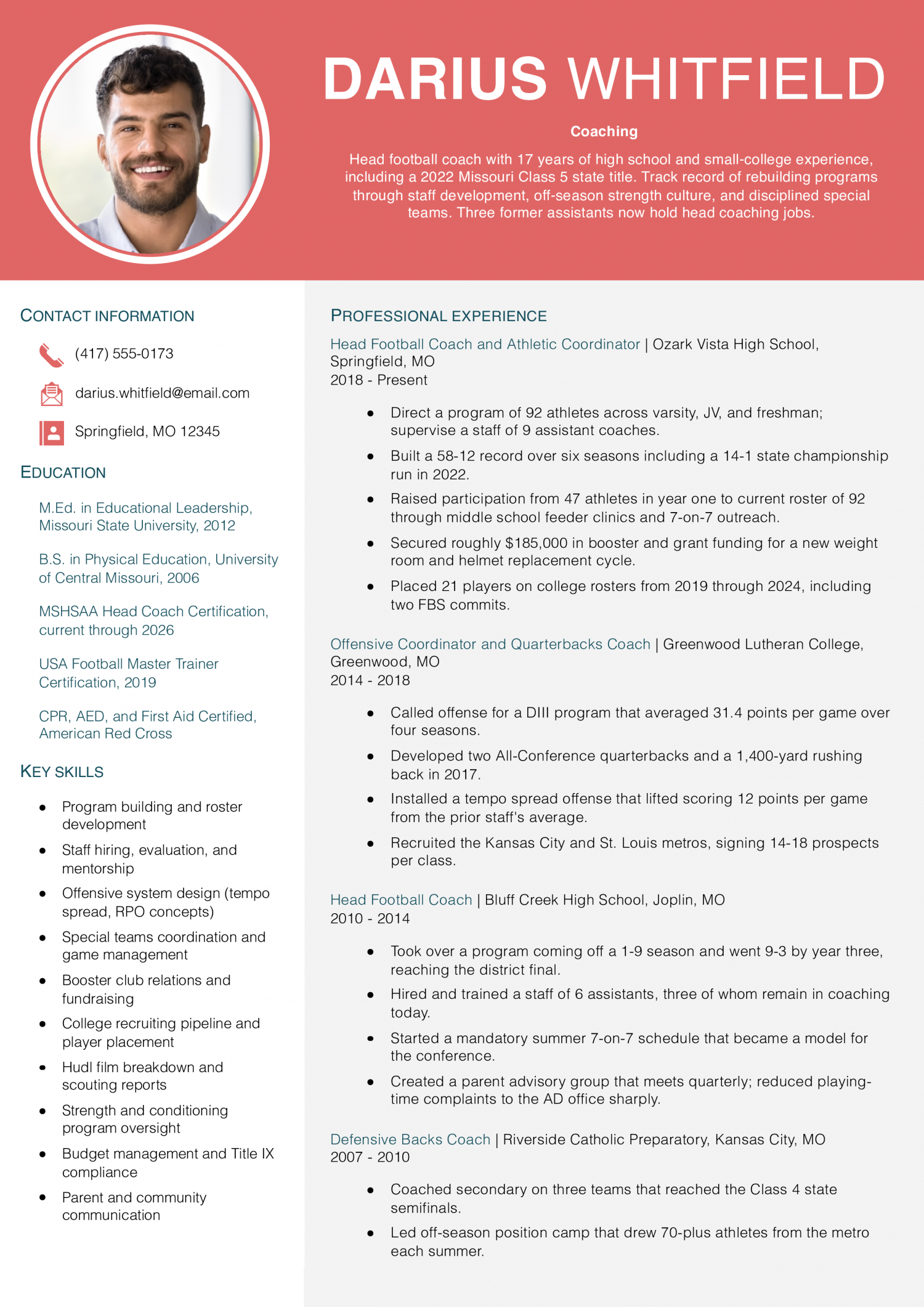
The head coach archetype fits veteran coaches owning program direction, staff hiring, and season-long results. Your resume needs to prove multi-year win-loss records, athletes moved to the next level, and budgets or rosters you've managed end to end.
Alicia Brennan
Madison, WI | (608) 555-0119 | [email protected] | linkedin.com/in/aliciabrennan
Head girls’ soccer coach and certified athletic trainer with 11 years across high school and club programs. Built a Wisconsin Division 1 semifinal team in 2023 and have placed 18 players on college rosters since 2017. Combine sports-science background with strong parent communication and a steady off-season development model.
Head Girls’ Soccer Coach
Lakeshore Central High School | Madison, WI | 2019-Present
Director of Coaching, ECNL Girls
Four Lakes Soccer Club | Middleton, WI | 2017-2019
Assistant Varsity Coach, Girls’ Soccer
Northwood Preparatory | Eau Claire, WI | 2015-2017
Club Coach, U13 and U14 Girls
Capital Crest Soccer Academy | Madison, WI | 2013-2015
The first line of your summary should name your record, the level you coached at, and the athlete outcomes that program produced. Athletic directors and program coordinators read this as your readiness to take their bench.
A line like “varsity soccer coach with a 48-12 record over three seasons, 14 athletes signed to college programs” beats “passionate coach with a love for the game.” Pair the record with a development metric, because wins alone do not signal player growth. If you coached youth or development levels, swap the record for participation growth or skill-assessment gains.
Coaching work translates to numbers more cleanly than most resumes show. Name the roster size you managed, the seasons you coached, and the athlete results that came out the other side.
Strong bullets cite three to five numbers per role: roster size, win-loss record, championships or playoff appearances, athletes promoted or recruited, and practice hours per week. Bullets without a number tend to read as duties. If exact figures are not available for early roles, use scope language like “managed a 22-player roster across two age groups” rather than guessing at percentages.
Split your bullets into three buckets so an athletic director can scan them. Program management covers scheduling, budgets, parent communication, and staff coordination.
Practice design covers drill planning, film study, conditioning, and in-game strategy. Player development covers individual skill work, recruiting communication, academic monitoring, and athlete mental-performance support. Most strong coaching resumes show two to three bullets in each bucket per role, which signals you run a full program rather than just calling plays on game day.
Athletic directors and program coordinators need to see CPR, first aid, AED, and background-check status before they read your bullets. Build a credentials block under your summary listing each certification, the issuing body, and the current expiration year.
Sport-specific certifications like USA Football Heads Up, US Soccer coaching licenses, USA Hockey CEP levels, or NFHS coaching credentials go in the same block. Concussion training (CDC HEADS UP or state equivalent) belongs here too, because most state athletic associations require it. List the certification name without including ID numbers.
For entry and mid-career coaches, the closing section is education plus a short “Athlete Outcomes” or “Program Highlights” block. List championship appearances, all-conference selections, athletes recruited to college programs, and any program firsts.
This block is where you back up the record cited in your summary. Two to four bullets is enough. If you are coming from playing or a teaching background into a head coaching role, add a transferable-skills line tying classroom management or athlete experience to program leadership.
The coaching resumes that get callbacks share a specific skill mix. The lists below come from our user-built coaching resumes. Athletic directors and program coordinators scan for these patterns first, not generic leadership platitudes.
Hard skills carry more weight than soft skills at the ATS layer, because credentials like CPR and concussion training are often hard filters. Soft skills earn their spot when each one ties to a bullet that proves it. Match this list against the posting you are targeting, and treat soft skills as evidence backing your bullets, not standalone claims.
| Soft Skills | % of resumes with this skill |
|---|---|
| Communication | 72% |
| Leadership | 62% |
| Motivation | 49% |
| Active listening | 37% |
| Relationship building | 32% |
And here are the top hard skills showing up most often.
| Hard Skills | % of resumes with this skill |
|---|---|
| Athlete development | 78% |
| Game strategy planning | 52% |
| Performance evaluation | 48% |
| Strength and conditioning | 39% |
| Film and video analysis | 34% |
Based on data from thousands of coaches’ resumes built on ResumeTemplates.com, May 2026.
These are the must-haves hiring teams look for when scanning a coaching resume.
Athletic directors and program coordinators search by sport, level, and credential combinations. Group these terms by the niche you actually coach so the ATS tags your resume for the right openings.
| Niche | Keywords ATS scans for |
|---|---|
| Basketball coaching | basketball coach, varsity basketball, AAU coach, basketball player development |
| Soccer coaching | soccer coach, US Soccer license, club soccer coach, soccer technical director |
| Football coaching | football coach, offensive coordinator, defensive coordinator, USA Football Heads Up |
| Strength and conditioning | strength and conditioning coach, CSCS, sport performance coach, athlete programming |
| Life and health coaching | life coach, health coach, ICF credential, NBC-HWC, coaching client roster |
Beyond CPR, first aid, and your state’s mandatory background check, the certifications below tell an athletic director which sports you can run safely and how seriously you take athlete development. List the certifying body and current expiration year next to each one, without ID numbers.
Coaching pay spreads wide between the median and the 90th percentile, and that spread tells you the market rewards program-building track record more than years on a sideline. Head coaches at well-funded high school and collegiate programs earn multiples of what assistant or youth coaches make, and the lever is documented athlete advancement plus championship results.
Lead your resume with the level you’ve coached at and the athletes you’ve moved up, not the seasons you’ve logged.
| # | State | Avg. Annual |
|---|---|---|
| 1 | Wyoming | $60,640 |
| 2 | New Jersey | $60,350 |
| 3 | District of Columbia | $59,740 |
| 4 | Maryland | $59,470 |
| 5 | Connecticut | $53,250 |
| 6 | Louisiana | $52,260 |
| 7 | Vermont | $50,440 |
| 8 | West Virginia | $50,230 |
| 9 | New York | $50,220 |
| 10 | New Hampshire | $50,120 |
| # | State | Workers | Median |
|---|---|---|---|
| 1 | California | 31,850 | $46,120 |
| 2 | Ohio | 17,660 | $38,480 |
| 3 | Texas | 15,780 | $36,080 |
| 4 | Florida | 13,270 | $46,680 |
| 5 | Illinois | 11,320 | $45,920 |
Resume Templates offers HR approved resume templates to help you create a professional resume in minutes. Choose from several template options and even pre-populate a resume from your profile.
List volunteer coaching the same way you would list paid coaching. Use the program name, your role, dates, and three to four bullets with roster size, sport, age group, and outcomes.
Mark it "(Volunteer)" next to the title if the application asks for paid versus unpaid distinction. Athletic directors weigh volunteer youth coaching as real coaching experience when the bullets show structured practice plans and athlete progress.
Lead with playing experience at the highest level you reached, then teaching, mentoring, or camp counselor roles that involved running drills or managing groups of athletes.
Add any sport-specific certifications, CPR, and first aid. A short "Coaching Philosophy" paragraph under your summary helps when the bullets cannot carry the resume on their own.
A two to three sentence coaching philosophy can replace the standard summary block when you apply for head coaching roles. Name how you develop athletes, what you prioritize in practice, and the results that approach has produced.
Save the longer coaching bio for your application packet, a separate cover letter, or your portfolio site. Resumes that lead with a full-page philosophy tend to bury the record an athletic director needs to find.
Group by program, not by sport. Under each program, list the sports and seasons you coached on one line, then write bullets covering the combined record and athlete outcomes.
If you are applying for a single-sport role, lead the bullets under that program with the matching sport. Move the other sports to a secondary line so the targeted sport stays front and center.
For a coach, an ATS-friendly template is the safest pick, because it puts your certifications and experience where a hiring manager scans first. A basic template is a solid alternative. Whichever you choose, keep the formatting clean and easy to parse: clear section headings, a standard font, and no graphics a parser can choke on.
Executive Resume Writer and Career Coach
Andrew Stoner is an executive career coach and resume writer with 17 years of experience as a hiring manager and operations leader at two Fortune 500 Financial Services companies, and as the career services director at two major university business schools.
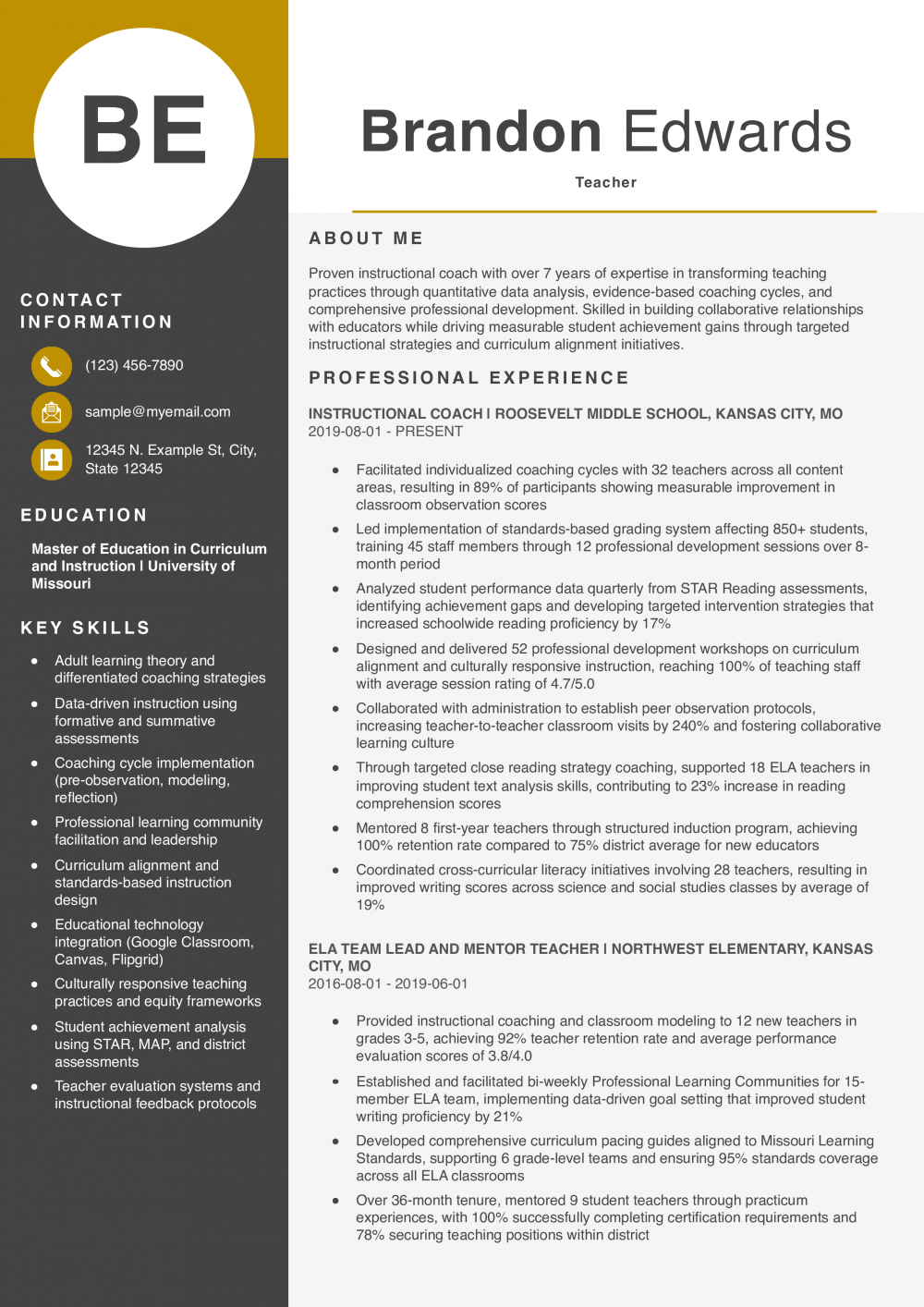
Customize this template in our builder in under 10 minutes.