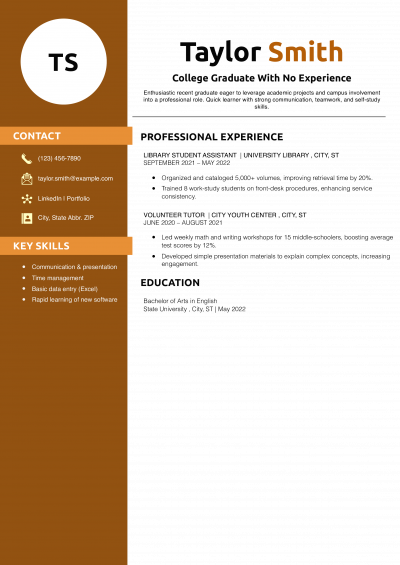
Recent College Graduate Resume Examples



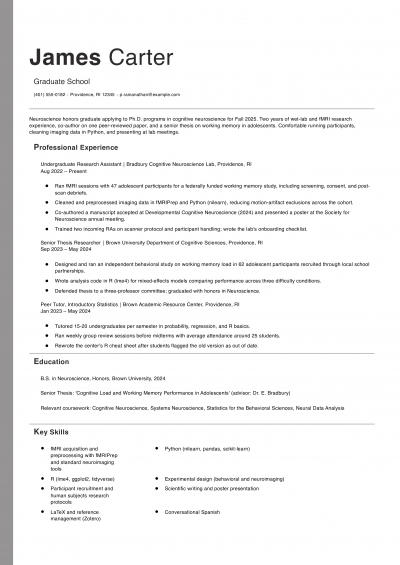
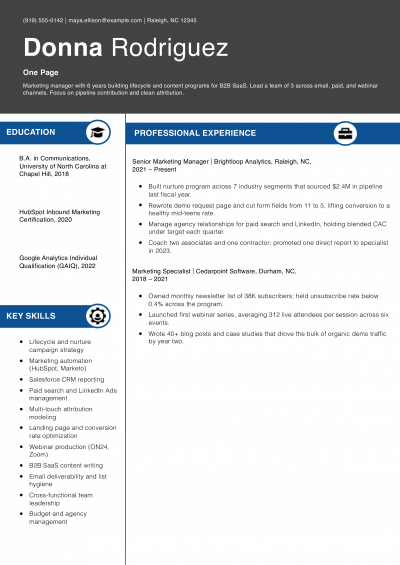
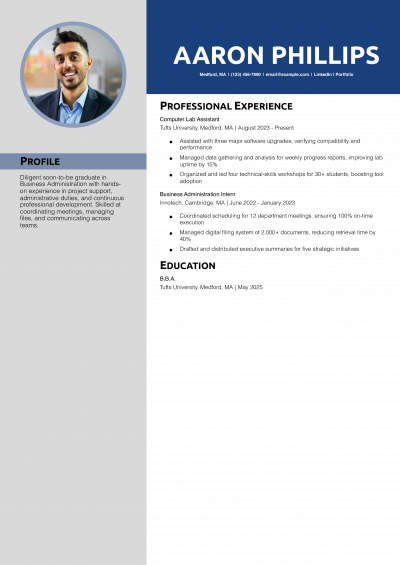
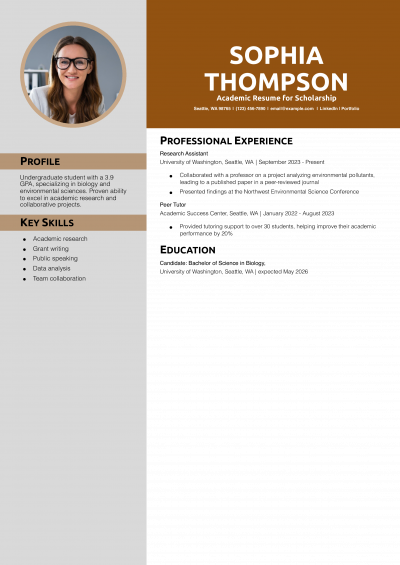
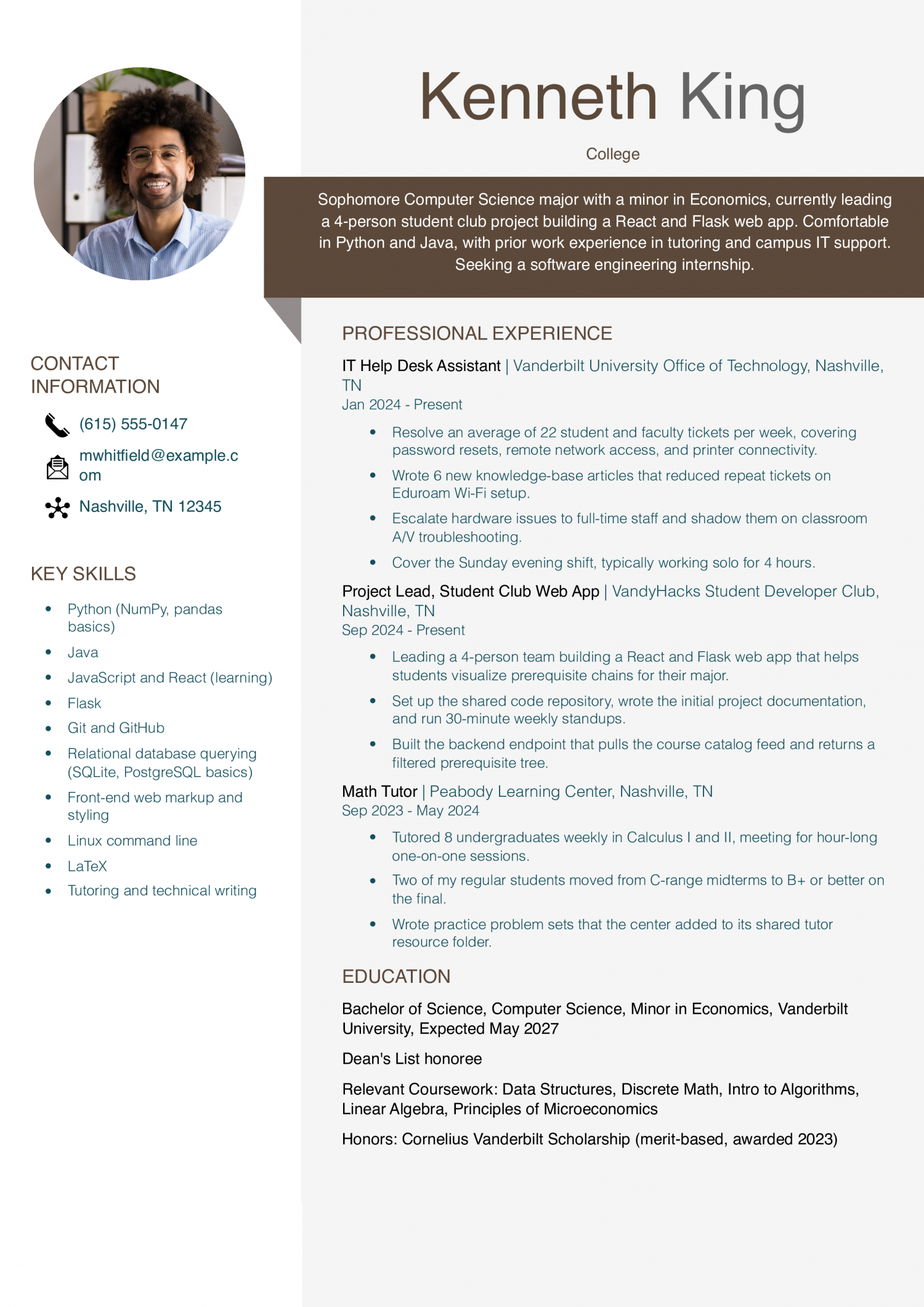
As a college student, your resume has to show school progress and any work or campus roles that hint at real skills. Recruiters for entry-level jobs want proof that you can learn fast and follow through.
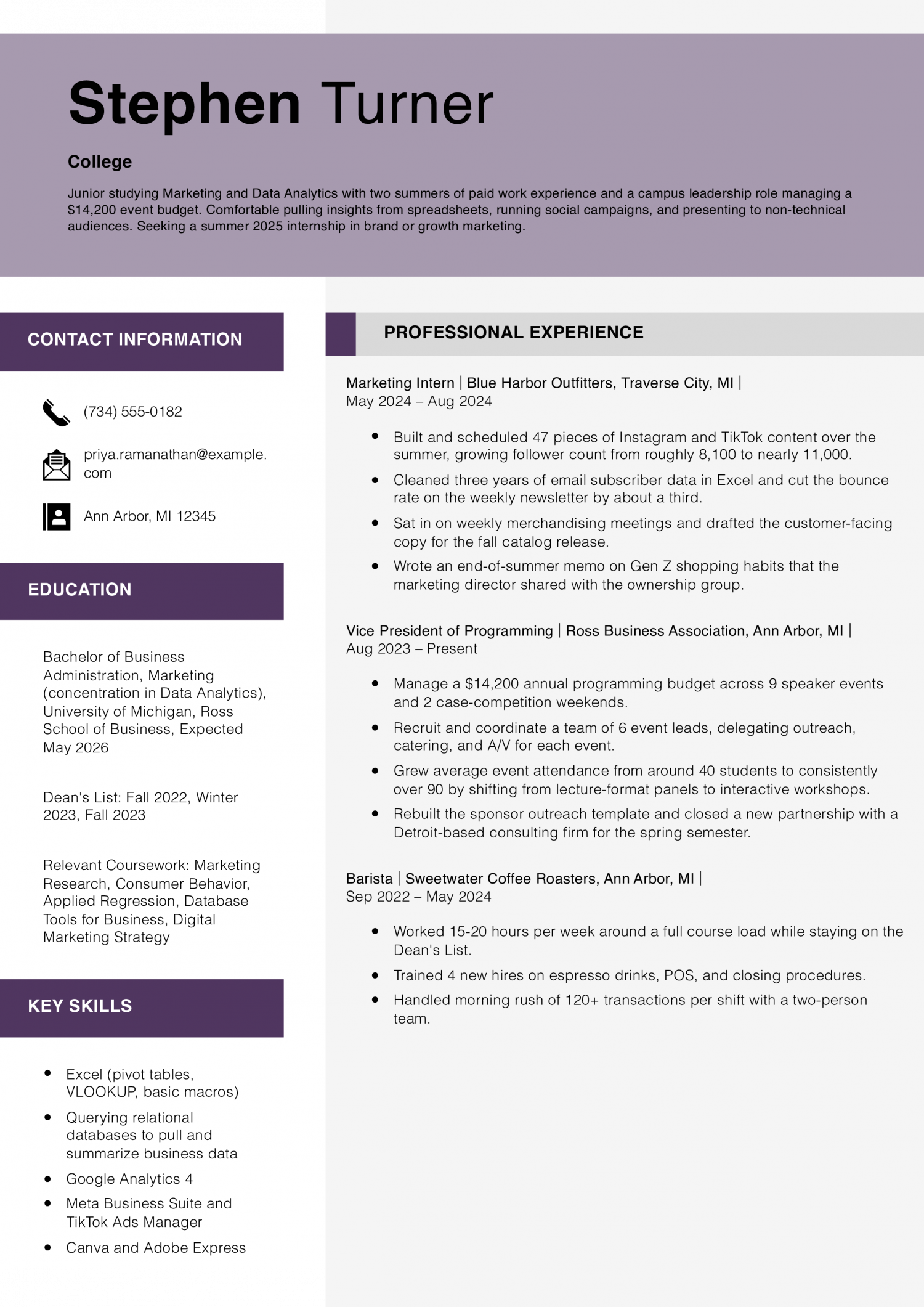
Junior at the University of Michigan studying Marketing and Data Analytics, with two summers of paid marketing experience, a campus leadership role managing a $14,200 event budget, and part-time work through most of undergrad. Comfortable pulling insights from spreadsheets, running social campaigns, and presenting to non-technical audiences. Seeking a summer 2025 internship in brand, growth, or content marketing.
Your profile should sit at the top of page one. Name your school, your major or intended major, and your expected graduation month and year. Add your GPA if it is 3.3 or higher.
State the type of role you want in one line: summer internship, part-time campus job, or full-time entry role after graduation. Give two or three anchors that show your scope so far. Coursework in a focus area counts.
A research project, a leadership title, or a language you use at work all count. Admissions officers and entry-level recruiters read this block first to decide whether to keep reading. Keep it to four or five lines of plain prose.
Most strong college resumes trade in numbers, even at the student level. Recruiters scan for size, frequency, and outcome before they read the verbs around them. Name the size of the club you led, the number of shifts you covered each week, or the dollar total your fundraiser brought in.
A tutoring role reads stronger as 12 students per week across two courses. A cashier role reads stronger as 40 to 60 transactions per hour on weekend shifts. A resume line with no number in it reads as a task, not an accomplishment.
Pick two or three metrics per role that a reader can picture. If a task truly has no count, describe scope instead: campus-wide, first-year cohort, or 200-person event.
Sort your experience so a reader sees a pattern, not a pile. Four groupings tend to cover most college resumes. Academic and research work belongs first if you want a technical role: lab projects, capstone work, and coursework with a real deliverable.
Leadership and campus involvement covers club officer roles, resident assistant work, and event planning. Paid work covers retail, food service, campus jobs, and internships. Community work covers volunteering and service trips.
Inside each entry, lead with what you produced or handled. A shift lead ran the closing count. A club treasurer managed a 4,000 dollar budget.
A research assistant coded interview transcripts. Group by skill, then order by recency inside each group.
Put a short skills and tools block on page one, under your profile or beside your education. List the software you actually use in class or at work: Excel, Python, R, Figma, Adobe Suite, Salesforce, or a point-of-sale system. Name languages you speak and your level.
If you hold a food handler card, a lifeguard certification, or a driver’s license the role asks for, list it here. Admissions officers and entry-level recruiters skim this block to confirm you can start work without a long ramp. Keep your education section on page one as well, since your degree in progress is the main credential you have.
Add study abroad, honors, and relevant coursework as short sub-lines under the school.
Your closing sections do the work a longer career history would do later. Lead the education block with your school, degree, major, minor, and expected graduation date. Add dean’s list terms and scholarships by name.
Follow with a projects section if your coursework produced something a reader can picture: a marketing plan, a data analysis, a short film, a working app. Give each project two lines: what you built, and what tools or methods you used. Close with activities, awards, or languages if space allows.
Keep the whole resume to one page while you are still in school. A second page tends to read as padding to entry-level recruiters reviewing a stack of student resumes.
Five years ago, a college resume read like a list of classes and clubs. The mix has shifted toward project work, tools used, and coursework tied to outcomes. Skills like Excel or Python now sit next to leadership roles from campus jobs. Admissions officers and entry-level recruiters read hard skills as proof you can start the work. They read soft skills as proof you will grow into the team once you arrive. Use the two tables below as a starting point, not a copy list. Match each skill against the target posting or program. Then use soft skills as the theme your bullets prove with real examples. A skill without a bullet to back it up reads as filler. A bullet with a number attached to it reads as evidence. Pull skill wording straight from the posting when your coursework or jobs honestly cover it. Skip any term you cannot defend in an interview.
Resume Templates offers HR approved resume templates to help you create a professional resume in minutes. Choose from several template options and even pre-populate a resume from your profile.
Keep a college resume to one page in almost every case. Admissions officers and entry-level recruiters read fast and skim for named activities, roles, and outcomes.
A second page is worth it only if you have published research or multi-year leadership that will not fit.
Yes, list them when they sit near the top of your class or program. Numbers that a reader can compare help more than a vague line about strong academics.
Leave them off when they will pull attention away from stronger parts of your record.
Yes, list the school, the program, and the dates you attended, even without a degree. Add expected graduation if you plan to return, or list completed credit hours if you have stopped.
Admissions officers and entry-level recruiters read the gap as honest when the dates are clear.
Put the club name on the top line and "President" on the line below with your dates of service.
Under that, write two or three bullet points naming what you did: budget managed, members recruited, events run. Numbers matter more than the title itself to a reader who does not know the club.
Admissions offices do spot-check claims, and some schools verify awards, published work, and named leadership roles with the sponsoring group.
Assume anything you list could be called. Only put on the resume what you can back up with a person, a date, or a document.
The biggest one is listing activities without any role, dates, or outcomes attached to them. The second is padding the page with middle-school awards that push out real high school work.
The third is a summary that repeats your name and school instead of naming what you study and want to do.
Most colleges do not require a resume, but many accept one as an optional upload with the Common Application or their own portal.
Submit one when your activities list runs out of room, or when your work matters more than the checkbox version shows. Skip it when the application already captures every role, hour, and honor you would list.
For a college student, an ATS-friendly template is the safest pick, because it puts your certifications and experience where a hiring manager scans first. A basic template is a solid alternative. Whichever you choose, keep the formatting clean and easy to parse: clear section headings, a standard font, and no graphics a parser can choke on.
Executive Resume Writer and Career Coach
Andrew Stoner is an executive career coach and resume writer with 17 years of experience as a hiring manager and operations leader at two Fortune 500 Financial Services companies, and as the career services director at two major university business schools.
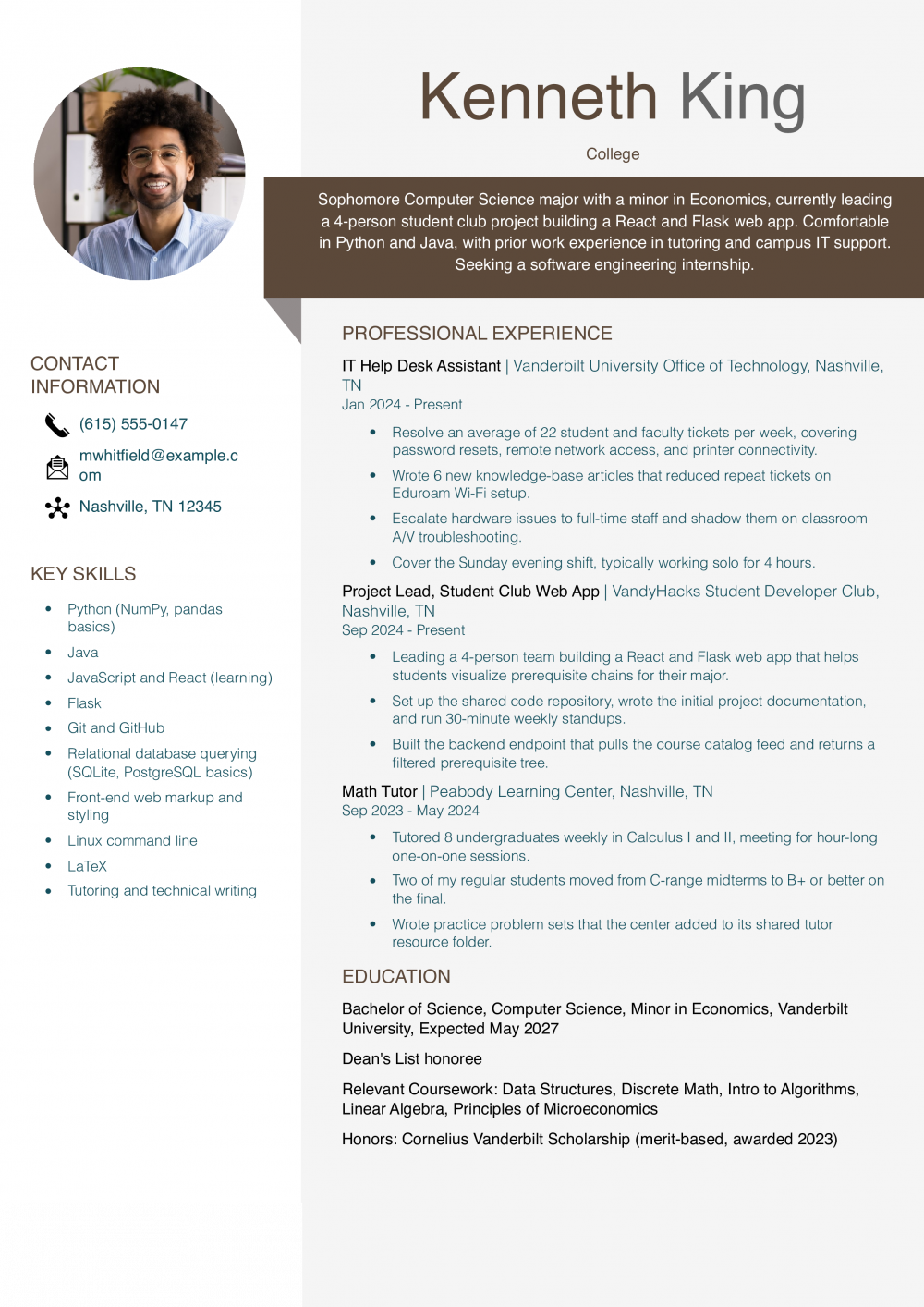
Customize this template in our builder in under 10 minutes.