20 Best Data Scientist Resume Examples and Templates for 2026



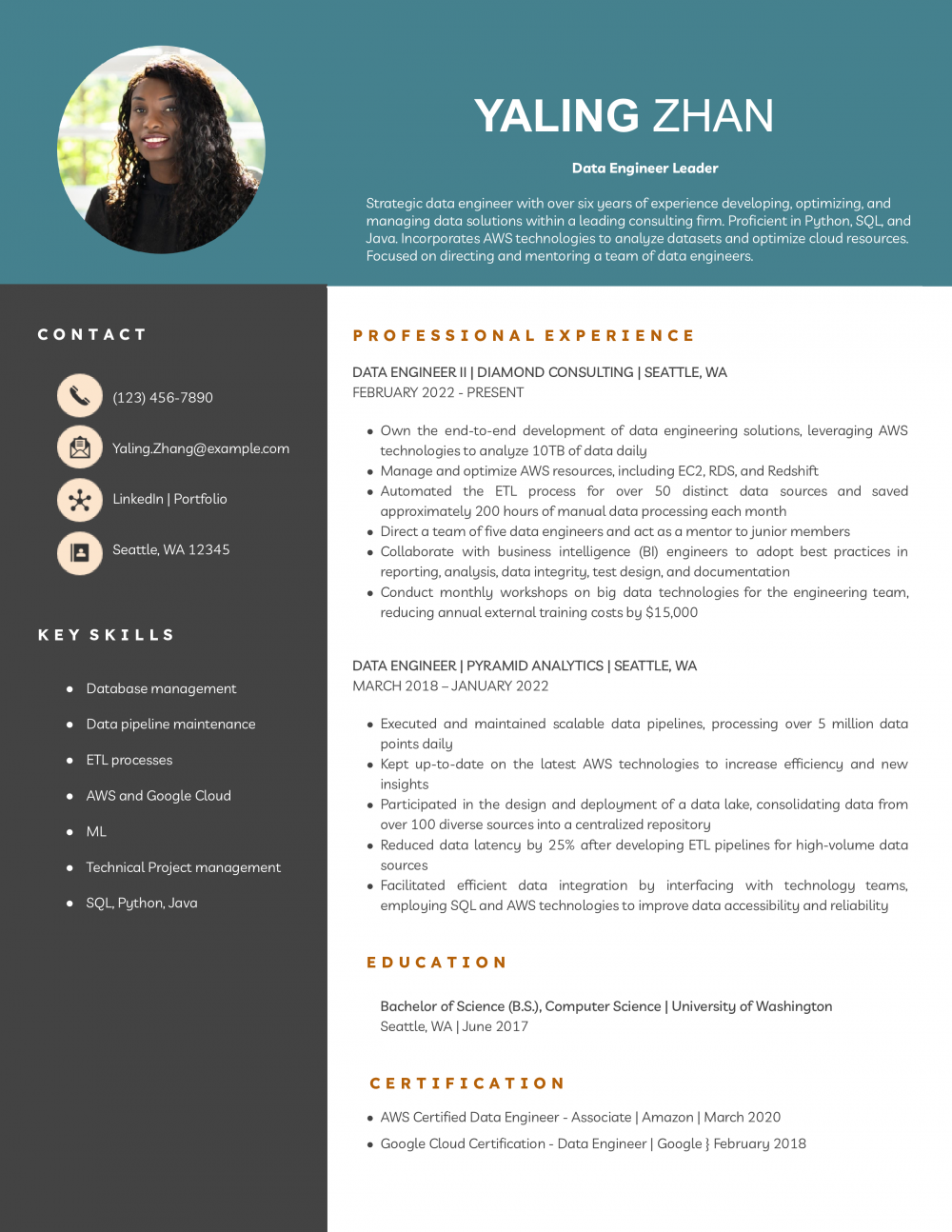
The data engineer resumes that advance past the take-home stage share three things: a named stack in the top third, pipeline scale numbers on every senior bullet, and one design decision explained in plain English.
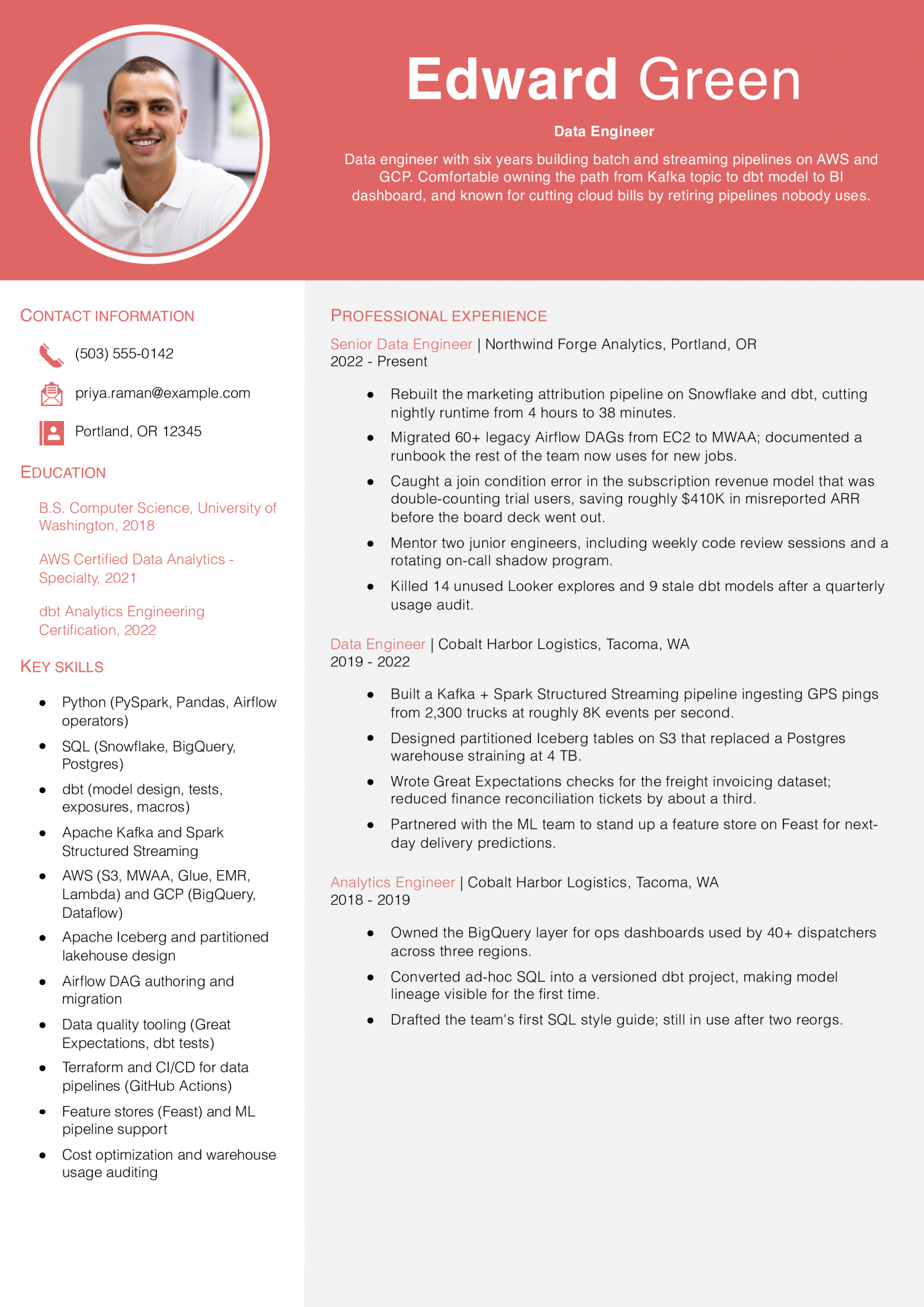
Junior data engineers are zero to three years in, often converted from analyst or software roles. The resume needs to prove you have shipped a production pipeline, written tested SQL, and been on-call for something that mattered.
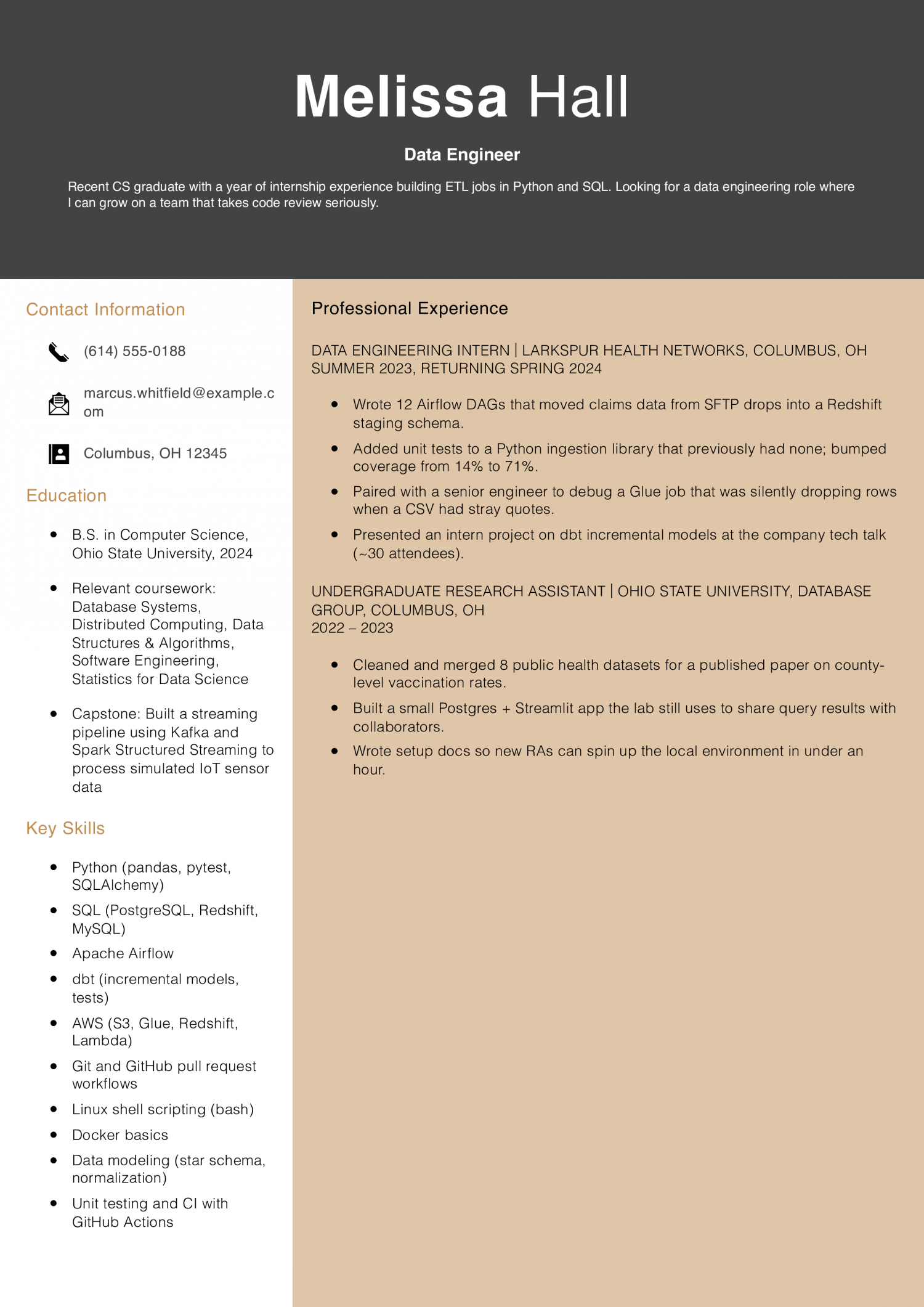
Senior data engineers own a domain end to end: ingestion, modeling, orchestration, and the warehouse contract with analytics consumers. The resume needs to prove scale numbers, design tradeoffs you made, and pipelines that other teams now depend on.
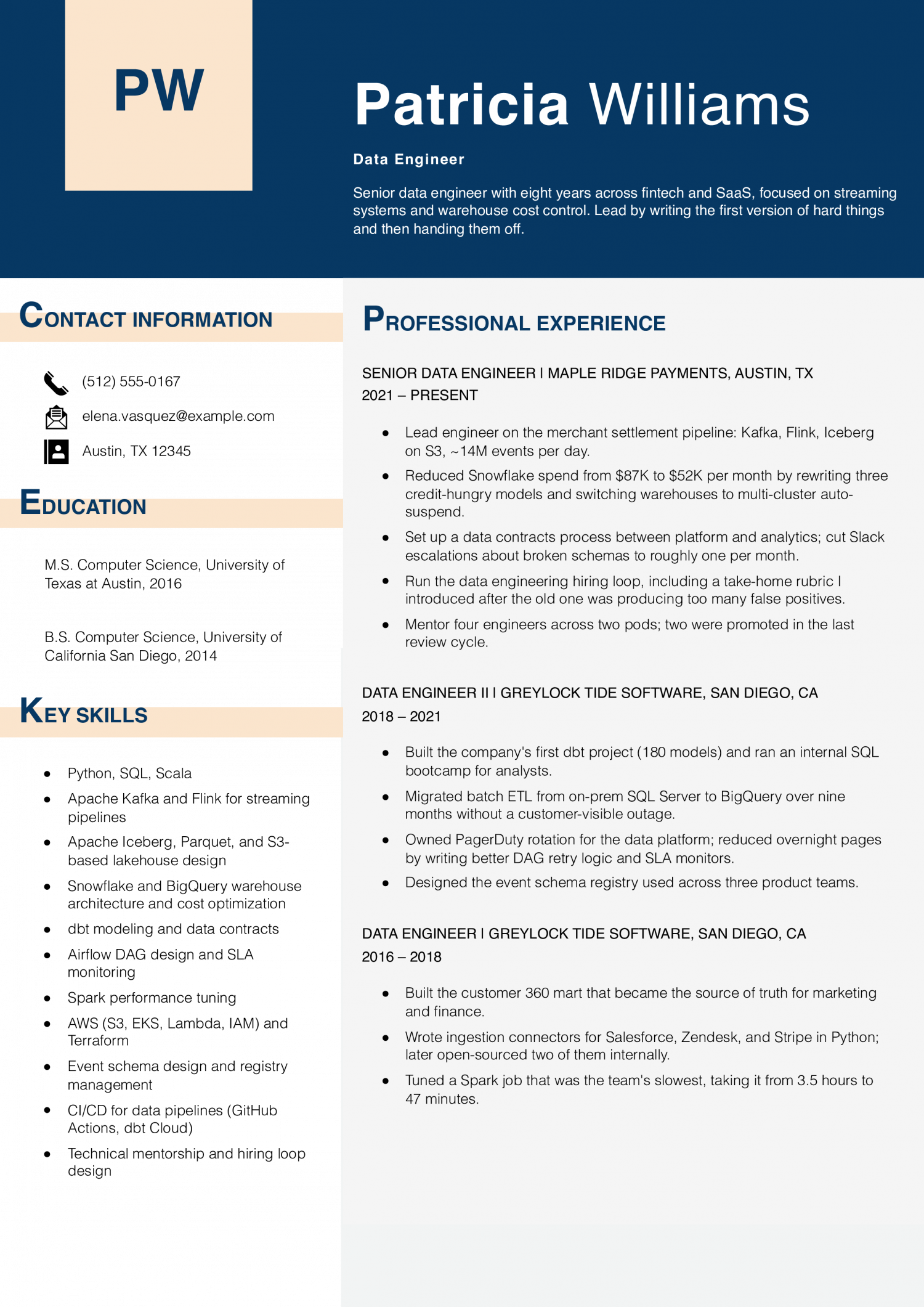
Staff data engineers set platform direction across multiple teams and mentor seniors. The resume needs to prove architectural decisions you led, the cost or reliability deltas they produced, and the engineers whose work you raised.
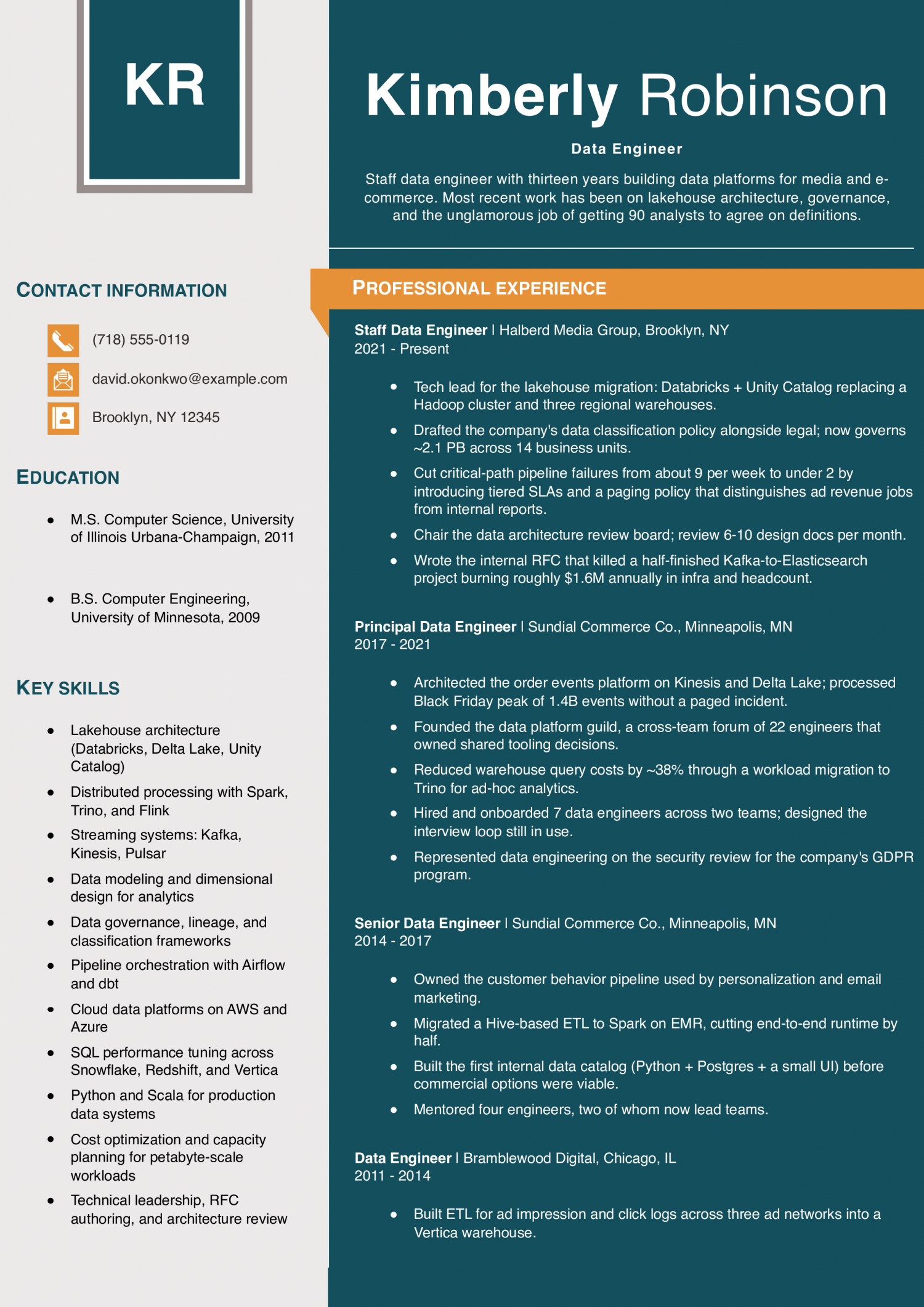
Data engineer with seven years across healthtech and consumer apps. I specialize in streaming ingestion, dbt modeling, and the boring infrastructure work that keeps dashboards loading on time. Comfortable being the person who writes the runbook nobody else wants to write.
Add a single line a platform lead cannot infer from your LinkedIn stack list. The differentiator is usually a specific system you owned end to end, not a tool name.
Strong openers name a system and a constraint: a Kafka-to-Iceberg pipeline serving sub-minute freshness, a dbt warehouse with 400 tested models, or a Spark job you cut from six hours to 40 minutes. That kind of line reads as judgment, not vocabulary, and it gives the recruiter something concrete to ask about on the screening call before your stack section even renders.
Most strong data engineer bullets carry a number. Pick from rows or events per day, freshness SLA, p95 latency, warehouse cost delta, or test coverage on dbt models.
Bullets without a number tend to read as duties, not impact. Replace soft verbs like supported or assisted with the artifact you owned: a 12-table dbt domain, a 30-DAG Airflow project, a streaming job ingesting 8 billion events per day. If a number is sensitive, give an order of magnitude or a delta instead, and pair the metric with the constraint you held (cost, latency, or correctness).
Reviewers expect to see the work split into clear categories. The cleanest grouping is ingestion and streaming, modeling and transformation, orchestration and reliability, and platform and cost.
Under ingestion, name the sources (Kafka, Fivetran, CDC from Postgres) and the sink. Under modeling, name dbt, SQL dialect, and the layer you owned (staging, marts, semantic). Under orchestration, name Airflow, Dagster, or Prefect, plus SLA and alerting practices.
Under platform, name the warehouse (Snowflake, BigQuery, Redshift, Databricks), IaC tools, and cost-control wins. This structure lets a platform lead skim for the gaps on their team.
Put a technical skills block on page one, above your earliest role. List languages (SQL, Python, Scala), warehouses, orchestrators, streaming tools, and the cloud you work in.
Certifications belong in their own short block, not buried under education. AWS Certified Data Engineer, Google Professional Data Engineer, Databricks Certified Data Engineer Professional, and SnowPro Core all read as cloud-track signals platform leads use to route resumes. List the issuing body and the year.
Engineering managers screening 80 resumes for one opening rely on this block to decide which take-homes to send out that week.
Senior and staff resumes lose ground when half the bullets describe dashboards, ad hoc SQL pulls, or stakeholder reporting. Cut those or compress them into one line.
Trim the skills block to tools you have shipped in production within the last three years. A 40-item stack list reads as keyword stuffing and dilutes the signal of the five tools you actually own. Drop early-career roles older than 12 years unless they carried a platform-defining project.
At the staff level, lead with architecture decisions and the platform metrics that moved, not the day-to-day pipeline work a senior would own.
ATS filters catch more data engineer resumes than ever in 2026. The skills below come from our user-built data engineer resumes, so the terms reflect what real candidates ship. Platform leads weigh hard skills first: SQL, Python, Airflow, and the warehouse name clear the parse.
Soft skills like incident communication and stakeholder partnership decide whether the resume advances past the recruiter screen. Match this list against the target posting, then use the soft skills as evidence backing your bullets, not as a standalone block.
| Soft Skills | % of resumes with this skill |
|---|---|
| Analytical problem-solving | 72% |
| Cross-team collaboration | 52% |
| Stakeholder communication | 40% |
| Attention to detail | 35% |
| Adaptability to change | 34% |
And here are the top hard skills showing up most often.
| Hard Skills | % of resumes with this skill |
|---|---|
| SQL development | 70% |
| Data pipeline development | 63% |
| ETL process design | 40% |
| Python programming | 37% |
| Cloud platform deployment | 35% |
Based on data from thousands of data engineers’ resumes built on ResumeTemplates.com, May 2026.
The items below are what separate a data engineer resume from one that gets put back in the pile.
Platform leads and engineering managers expect a niche section that mirrors the stack and sub-specialty in the posting. Group keywords by sub-niche so the parse picks up the cluster, not just the headline term.
| Niche | Keywords ATS scans for |
|---|---|
| Warehouse and lakehouse | snowflake, bigquery, redshift, databricks |
| Modeling and transformation | dbt, sql, data modeling, semantic layer |
| Orchestration and pipelines | airflow, dagster, prefect, data pipeline |
| Streaming and ingestion | kafka, spark streaming, cdc, fivetran |
| Governance and platform | databricks unity catalog, data lineage, data contracts, iceberg |
Hiring teams are split between platform leads who expect you to use Copilot and ChatGPT for boilerplate DAGs and SQL, and leads who screen for engineers who can debug without them. Name the tools, describe the workflow honestly, and avoid claims that you build AI pipelines if your work is editing generated code and writing tests.
Copilot now drafts most Airflow DAG scaffolding and dbt model stubs, so reviewers screen for the design decisions you made on top.
ChatGPT and Hex Magic draft first-pass SQL, but reviewers test whether you can read query plans and catch correctness bugs.
AI tools draft column-level descriptions and lineage notes, which raises the bar for what reviewers expect to see documented.
Teams now expect engineers to use AI assistants to summarize logs and stack traces during pipeline outages, then verify the root cause.
GitHub Copilot: Used for drafting Airflow DAGs, dbt models, and Python pipeline code, then refactored against the team style guide.
ChatGPT: Used for SQL drafts, regex, and stack-trace triage, with output verified against query plans and test runs.
Data engineer portfolios are read differently than software engineer portfolios. Platform leads want to see one pipeline you can defend in depth, not a gallery of repos. Pick one project, document the design decisions, and link it from the top of your resume.
Host the repo with a README that names the stack, the dataset, and the constraint you optimized for.
One page per project covering architecture diagram, tradeoffs, and what you would change at scale.
Publish the dbt docs site for a public-data project so reviewers can read your model lineage and tests directly.
Pick one project and go deep. A single pipeline with an architecture diagram, dbt tests, an Airflow DAG, and a README that explains why you chose Snowflake over Redshift beats five half-finished repos.
Use a real dataset. NYC TLC trip data, GitHub Archive, or Common Crawl all give you the volume to justify Spark or partitioning decisions. Toy datasets undercut the design claims.
Document the tradeoffs. Reviewers want to see that you considered cost, latency, and correctness, then made a call. Write one paragraph on what you would change at 100x scale.
Platform leads look for a stack block that matches the posting in the first 10 seconds. Group your tools by layer so the parse and the reader both find what they need.
Languages: SQL, Python, Scala or Java where relevant
Warehouses and lakehouses: Snowflake, BigQuery, Redshift, Databricks
Transformation: dbt, Spark, SQL
Orchestration: Airflow, Dagster, Prefect
Streaming and ingestion: Kafka, Kinesis, Fivetran, Airbyte, CDC tools
Cloud and platform: AWS, GCP, Azure, Terraform, Docker, Kubernetes
Governance: Unity Catalog, dbt tests, OpenLineage, data contracts
Platform leads and engineering managers read this list as a map of where your work is heading. The certifications below tell them which cloud, warehouse, or streaming track you have invested in. List the issuing body and the year of completion in a short block on page one, separate from education.
AWS Certified Data Engineer Associate: Signals you can ship on the most common cloud stack and reads as the default credential for AWS-shop hiring.
Google Professional Data Engineer: Carries weight at GCP shops running BigQuery and Dataflow, and routes your resume to teams hiring for analytics platforms.
Databricks Certified Data Engineer Professional: Names you as a lakehouse and Spark practitioner, which matters at shops moving off pure warehouse stacks toward Delta or Iceberg.
SnowPro Advanced: Data Engineer: Signals deep Snowflake ownership beyond entry level, useful when the target team runs heavy modeling or large-scale ELT in Snowflake.
Data engineer pay spreads wide because the title covers analytics-engineering tracks at small shops through staff platform roles at FAANG-tier employers. The gap between the 10th and 90th percentile is one of the largest in tech, and geography compresses or stretches it further depending on whether you target a hub or a remote role.
Lead the resume with the warehouse, the orchestrator, and one pipeline scale number in the top third, so reviewers can place you against the band before they read your bullets.
| # | State | Avg. Annual |
|---|---|---|
| 1 | California | $170,910 |
| 2 | Washington | $166,910 |
| 3 | Virgin Islands | $162,820 |
| 4 | New York | $161,260 |
| 5 | Massachusetts | $150,520 |
| 6 | Maryland | $137,890 |
| 7 | District of Columbia | $136,040 |
| 8 | Oregon | $135,260 |
| 9 | Delaware | $135,160 |
| 10 | Colorado | $134,540 |
| # | State | Workers | Median |
|---|---|---|---|
| 1 | California | 292,630 | $170,910 |
| 2 | Texas | 151,460 | $130,500 |
| 3 | New York | 104,130 | $161,260 |
| 4 | Washington | 91,470 | $166,910 |
| 5 | Virginia | 83,290 | $134,470 |
Resume Templates offers HR approved resume templates to help you create a professional resume in minutes. Choose from several template options and even pre-populate a resume from your profile.
Put Databricks and Unity Catalog in your skills block under platform tools. Then back the listing with one bullet that names what you built.
Strong bullets reference the catalog structure (catalogs, schemas, external locations), the access pattern you enforced, and lineage you exposed. Vague phrases like worked with Unity Catalog get filtered.
If you hold the Databricks Certified Data Engineer Professional, list it in your certifications block with the year.
Skip arrows, em dashes, and decorative symbols inside bullets. ATS parsers handle them inconsistently, and some strip the surrounding text.
If you want to show a before-and-after delta, write it in words. Cut Spark job runtime from six hours to 40 minutes reads cleaner than any arrow notation.
Stick with standard bullets, plain hyphens, and percent signs only where they carry a real number.
Give the project a title, the stack, and a date range. Below it, write two or three bullets in the same format as a job entry.
Lead one bullet with the problem and dataset size. Lead another with the pipeline you built and a number: rows ingested per day, p95 freshness, or cost on the free-tier cloud.
Personal projects matter most for junior resumes. Strong seniors should cut the projects block unless the build led to open-source adoption or a conference talk.
Lead with engineering artifacts you already own: dbt models, SQL transformations, Airflow DAGs, or any pipeline you have shipped to production.
Push dashboard and ad hoc analysis bullets down or compress them into a single line. They signal analyst, not engineer, and dilute the screen.
Add a short summary that names the transition explicitly: analytics engineer moving into platform-side data engineering with three years of dbt and Snowflake ownership.
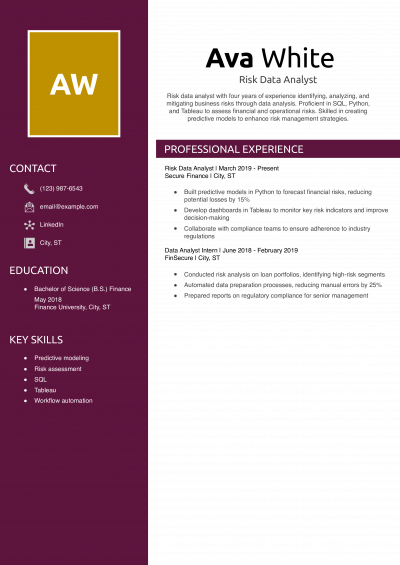
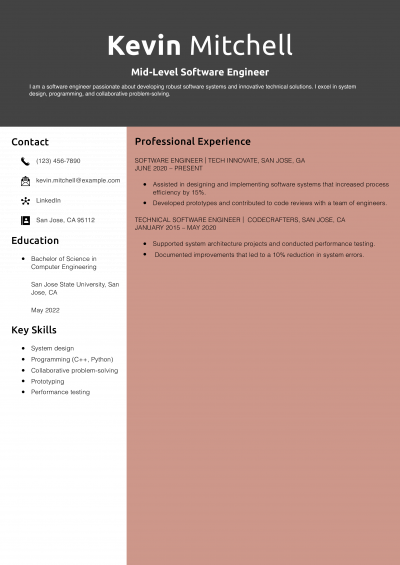
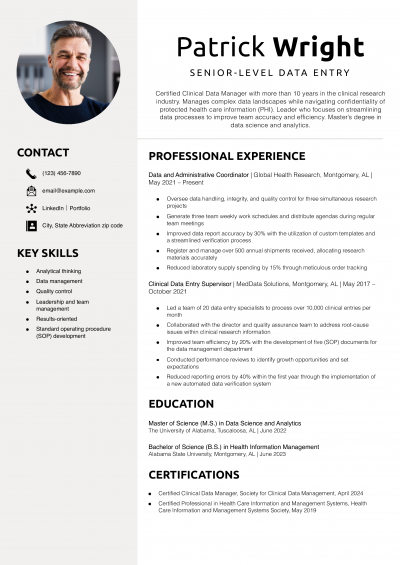
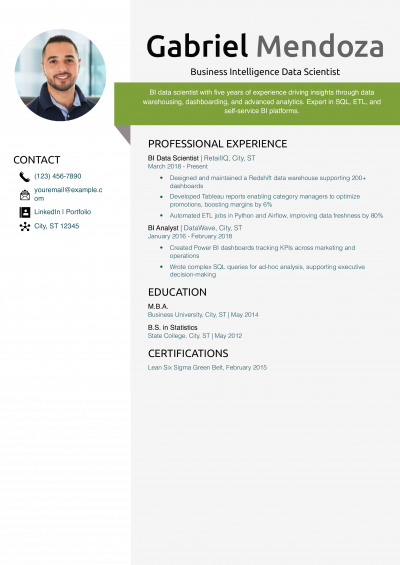
For a data engineer, a tech template is the safest pick, because it keeps your stack, tools, and impact easy to scan. An ATS-friendly template is a solid alternative. Whichever you choose, keep the formatting clean and easy to parse: clear section headings, a standard font, and no graphics a parser can choke on.

Professional Resume Writer (MBA, CPRW, CDCS)
Mark Misiano is a Certified Professional Résumé Writer (CPRW), Certified Digital Career Strategist (CDCS) and the owner of RésuméReady. He has helped over 1,000 professionals find fulfilling jobs, transition to new industries, and land big promotions. In addition to writing impactful résumés, Mark crafts engaging cover letters, optimizes LinkedIn profiles, prepares clients for interviews, and provides individualized career coaching.
Customize this template in our builder in under 10 minutes.