21 Best Server Resume Examples and Templates for 2026



Hiring restaurant managers look for shift availability, POS systems, and tip or check averages in the top third of the page, because those signal whether a server can hold a section on a Friday night.
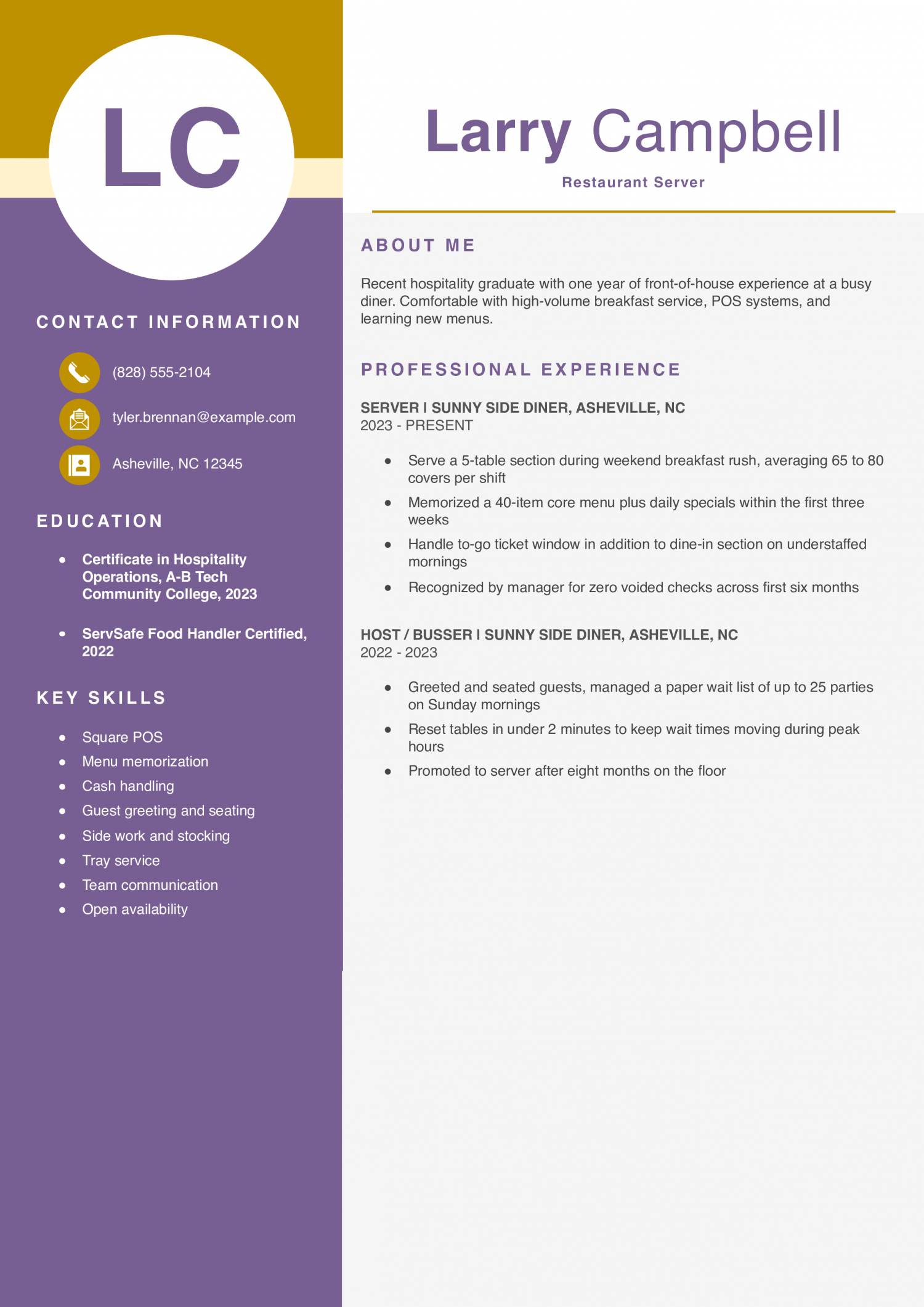
Entry-level servers are coming from host, busser, food runner, or barista roles, or stepping into the first full server position. Your resume needs to prove pace, POS speed, and a clean food-safety record.
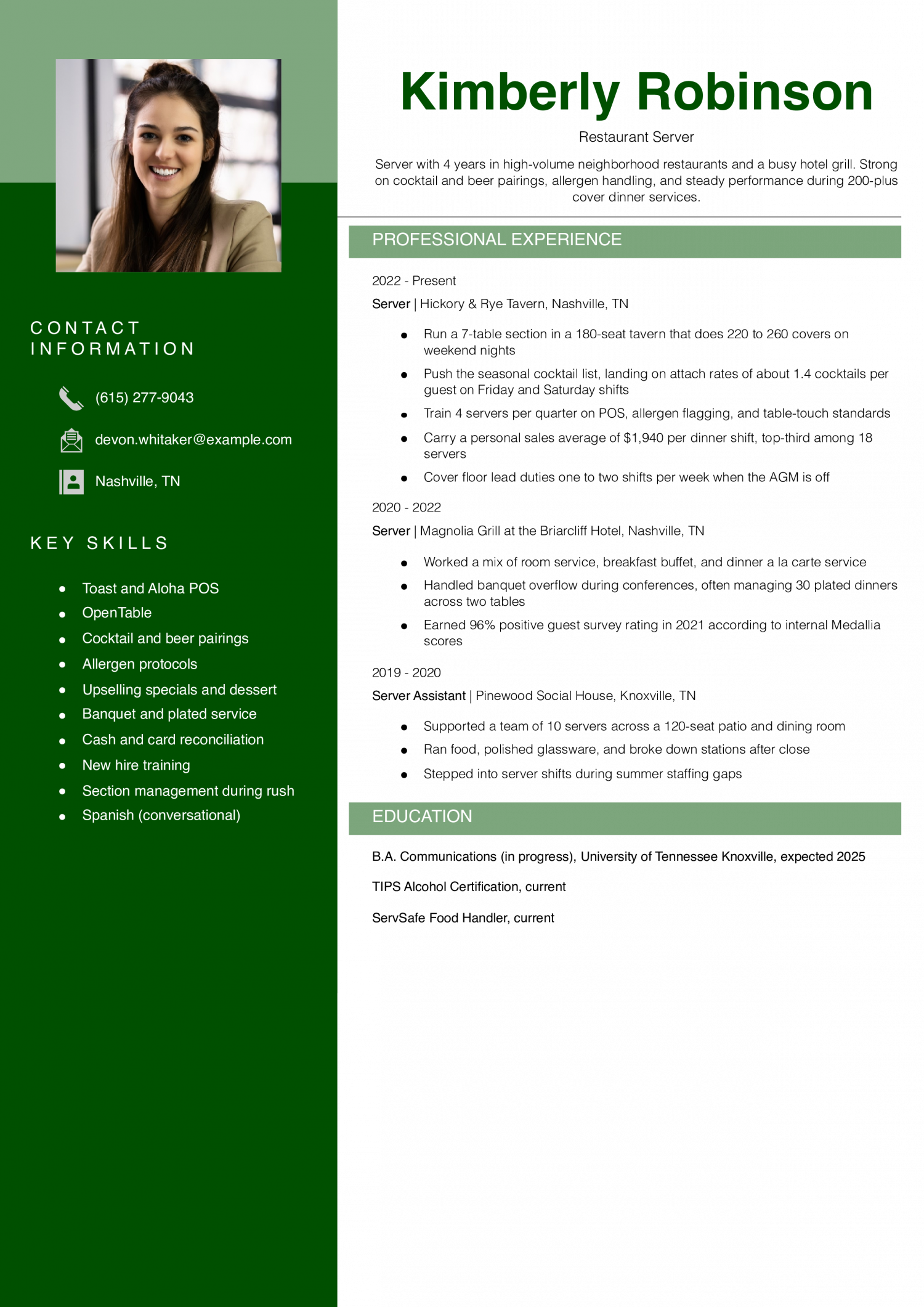
Experienced servers have two to six years on the floor across casual, upscale casual, or fine dining sections. Your resume needs to prove section size, check averages, and consistent upsell performance on wine and apps.
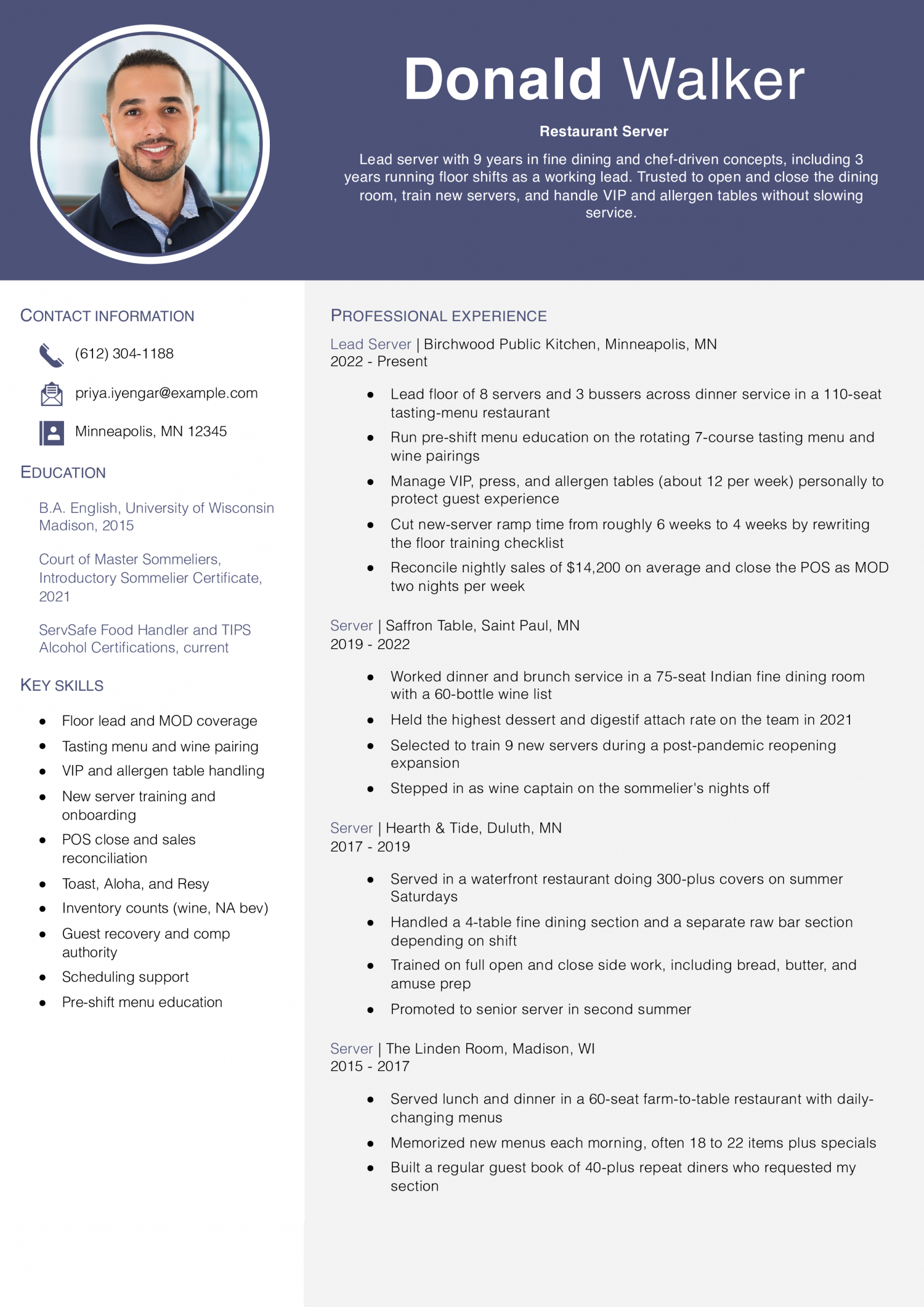
Lead servers, captains, and senior banquet servers run sections, train new hires, and own VIP tables. Your resume needs to prove team lift, cover counts at peak service, and the wine, spirits, or banquet credentials that justify the lead title.
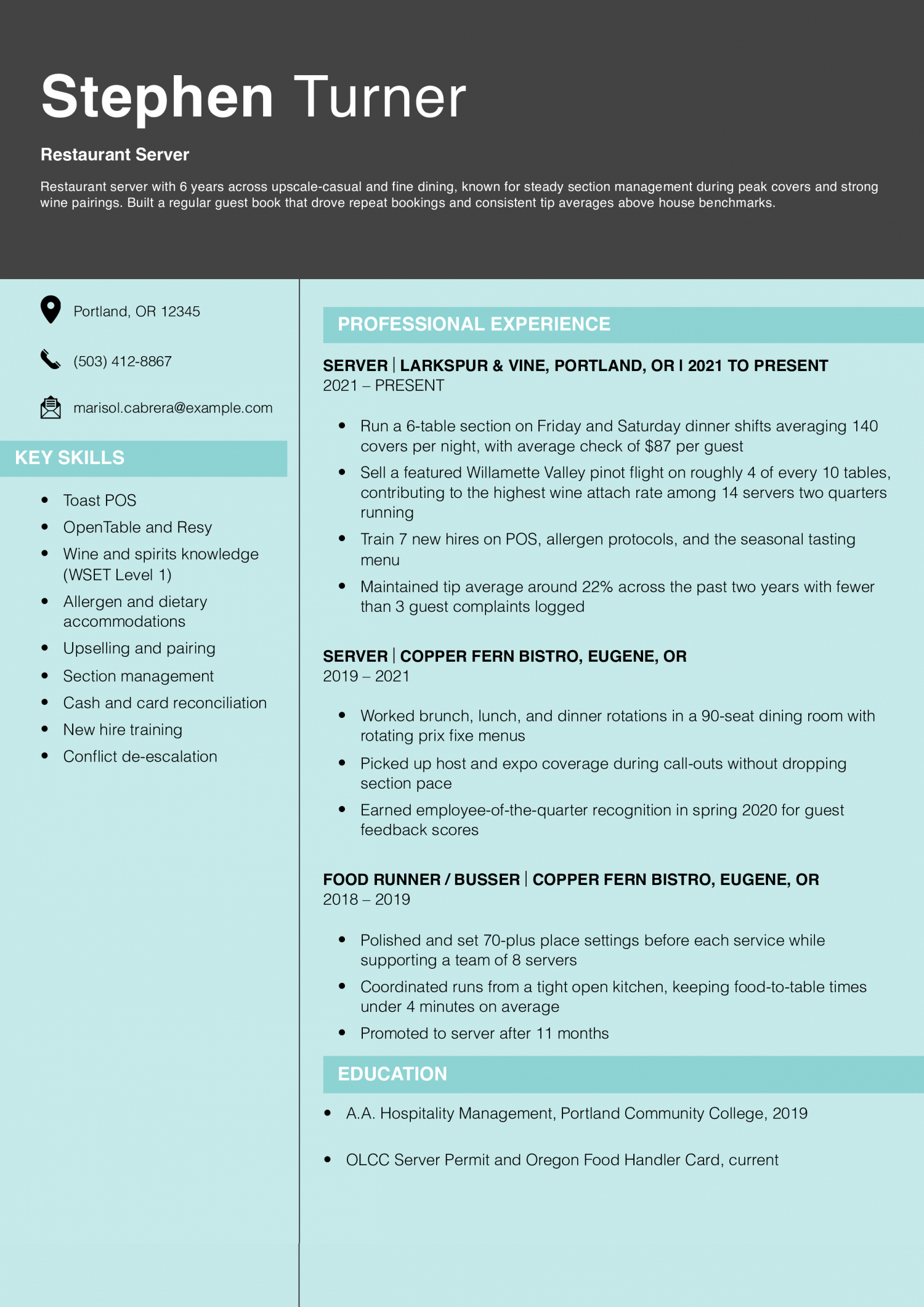
Marisol Cabrera
Portland, OR | (503) 412-8867 | [email protected] | linkedin.com/in/marisolcabrera
Restaurant server with 6 years of front-of-house experience across upscale-casual, bistro, and fine dining environments. Known for steady section management during peak covers, strong wine and cocktail pairings, and a regular guest book that drives repeat reservations. Comfortable training new hires, covering floor lead duties, and handling allergen and VIP tables.
Server
Larkspur & Vine | Portland, OR | 2021-Present
Server
Copper Fern Bistro | Eugene, OR | 2019-2021
Food Runner / Busser
Copper Fern Bistro | Eugene, OR | 2018-2019
Barista / Counter Server
Maple Lane Coffee Co. | Eugene, OR | 2017-2018
Your profile should state your years on the floor and the service style you have worked, such as fine dining, upscale casual, high-volume casual, banquet, or hotel restaurant.
Name the average cover count per shift, the section size you handle, and the POS systems you run. Add the price point or check average if you have worked tasting menus or upscale rooms.
Close the profile with one signal the floor manager cares about: open availability, weekend and holiday coverage, or a sommelier or TIPS credential. Keep it to three or four sentences so the screener gets the shape of your section work fast.
Servers live or die on numbers, so name them. Strong bullets cite covers per shift, average check size, tip percentage, and wine or dessert attach rates.
Try ranges like 80 to 120 covers on a Saturday dinner, average checks of $65 per guest, or 22 percent tip average across a six-month stretch. Add upsell wins, such as growing wine-by-the-glass attach from 35 to 55 percent during a menu rollout.
Bullets without a number tend to read as duties. Front-of-house managers scan for volume and dollar signals first, so put the metric at the front of the bullet, not buried at the end.
Cluster bullets into three or four buckets so the manager can scan for the work that matches the room.
Useful categories: guest experience and table management, menu knowledge and upselling, POS and payment handling, and teamwork with the kitchen, bar, and bussers. Add a training or trail bucket if you onboarded new servers.
Inside each bucket, name the specifics. Menu knowledge means wine regions, spirit categories, allergen protocols, and tasting-menu pacing. POS means Toast, Toast Go handhelds, Aloha, Micros, Square, or TouchBistro, plus split-check and comp procedures.
Front-of-house managers screen for ServSafe Food Handler, state alcohol service cards such as TIPS or TABC, and any sommelier coursework before they read bullets.
Put a short credentials line directly under your contact block: ServSafe Food Handler, TIPS Alcohol Certified, Court of Master Sommeliers Introductory. List the issuing body and expiration year, not the certificate number.
Add a one-line availability statement in the same block: nights, weekends, holidays, doubles, or split shifts. Schedulers reading a stack of resumes use that line to sort the pile before deciding who gets a trail.
Restaurant servers do not need a degree, so keep education tight. A high school diploma, hospitality coursework, or culinary school listing is enough.
Use the closing third of page one for the extras that round out a server profile: languages spoken with guests, wine or spirits coursework in progress, catering or banquet experience, and any sidework leadership such as polishing captain or expo runner.
If you have catering, fine dining, or VIP table work, name it here. Those line items often decide between two servers with similar covers per shift.
Five years ago, a restaurant server resume read like a list of side duties: greet, seat, take orders, run food, bus tables. The skills below come from the resumes our users built in 2026. The mix has shifted toward POS fluency, upsell numbers, and named alcohol and food-safety credentials.
Front-of-house managers weigh hard skills like Toast and ServSafe as gate items, then read soft skills as backing for your cover counts and tip averages. Match the list against the posting in front of you, and treat soft skills as evidence you back up inside your bullets.
| Soft Skills | % of resumes with this skill |
|---|---|
| Communication skills | 66% |
| Friendly demeanor | 55% |
| Teamwork | 40% |
| Problem-solving | 36% |
| Time management | 34% |
And here are the top hard skills showing up most often.
| Hard Skills | % of resumes with this skill |
|---|---|
| POS system operation | 77% |
| Cash handling | 58% |
| Menu knowledge | 49% |
| Order taking | 39% |
| Food and beverage service | 33% |
Based on data from thousands of restaurant servers’ resumes built on ResumeTemplates.com, May 2026.
These are the must-haves hiring teams look for when scanning a restaurant server resume.
Food safety and alcohol service credentials are gate items for most server postings. List them under your contact block with the issuing body and expiration year, never the certificate number.
Front-of-house managers screen resumes for the POS their restaurant runs. Name the system by brand, not by category, so both the ATS and the manager see it on the first pass.
Schedulers sort the resume pile by who can cover the shifts that hurt to fill. A one-line availability statement under your contact block puts you ahead of servers who leave managers guessing.
Be specific about nights, weekends, holidays, doubles, and brunch shifts. If you have a hard constraint, name it briefly so a manager does not waste a trail slot on a mismatch.
Update this line for each application. A fine dining room hiring for Friday and Saturday dinner reads availability differently than a brunch spot hiring for Sunday opens.
A food handler card and state alcohol service permit keep you eligible for most server roles. The certifications below are what move a restaurant server resume from the qualified-but-typical stack into the shortlist for fine dining rooms and hotel restaurants. List the issuing body, level, and expiration year on one line each.
Server pay reports through the BLS reflect base wages, not tips, so the median looks lower than what a working server actually takes home on a strong section. The top-paying states for restaurant servers cluster around tourism-heavy and tipped-minimum-wage markets, not always the cities with the highest cost of living.
If you are geographically flexible, the resume should foreground tip averages, check sizes, and the room types you have worked, because those signal real take-home better than a base hourly figure.
| # | State | Avg. Annual |
|---|---|---|
| 1 | Vermont | $60,910 |
| 2 | Hawaii | $48,570 |
| 3 | Washington | $47,490 |
| 4 | New York | $46,460 |
| 5 | District of Columbia | $45,770 |
| 6 | Maine | $44,550 |
| 7 | Rhode Island | $42,600 |
| 8 | New Hampshire | $39,270 |
| 9 | New Jersey | $38,720 |
| 10 | Virginia | $36,990 |
| # | State | Workers | Median |
|---|---|---|---|
| 1 | California | 243,300 | $35,290 |
| 2 | Texas | 210,170 | $27,930 |
| 3 | Florida | 208,920 | $29,580 |
| 4 | New York | 140,890 | $46,460 |
| 5 | Illinois | 84,550 | $29,120 |
Resume Templates offers HR approved resume templates to help you create a professional resume in minutes. Choose from several template options and even pre-populate a resume from your profile.
Lead each bullet with a number, a category of guest, or a tool. Cite covers per shift, average check size, tip percentage, or wine attach rates.
Swap weak verbs like took, delivered, and assisted for served, ran, upsold, trained, and recovered. A bullet like ran a six-table section averaging 90 covers on Saturday dinners beats took orders and delivered food.
Lead with the hard skills managers filter for: POS systems by brand name, ServSafe, TIPS or your state alcohol permit, and wine or spirits knowledge.
Back those with soft skills tied to behaviors, such as pace under pressure during peak service, upselling without sounding scripted, and conflict resolution with unhappy guests.
List the last three to five service jobs covering about 10 years. Restaurant managers expect movement, but they want to see the rooms that match their price point.
Roll older or very short stints into an early career line. If you stayed under three months at a spot due to a closure or ownership change, note that briefly so it does not read as a quit.
Foreground the highest check averages and any tasting menu, wine pairing, or table-side service you have done at a casual spot.
Add credentials that signal fine dining readiness: Introductory Sommelier, ServSafe Manager, or a TIPS-equivalent alcohol service card. Name guest profiles such as business diners, anniversary tables, or chef's tasting seatings to show you can read a room.
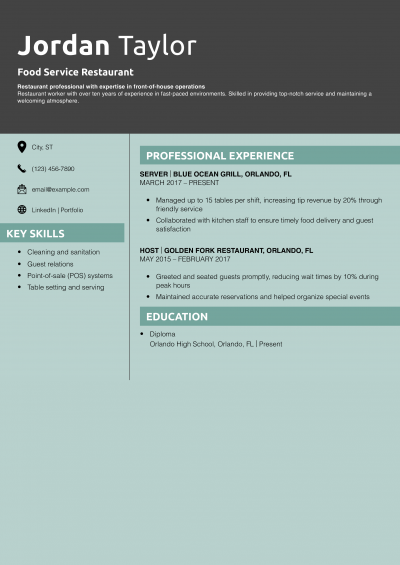
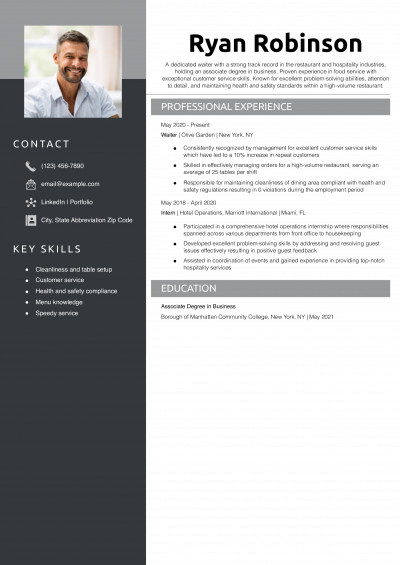
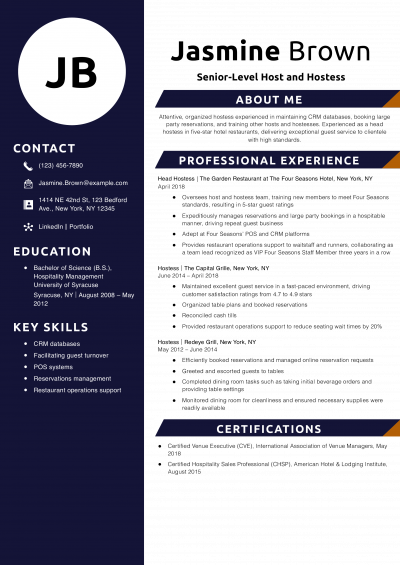
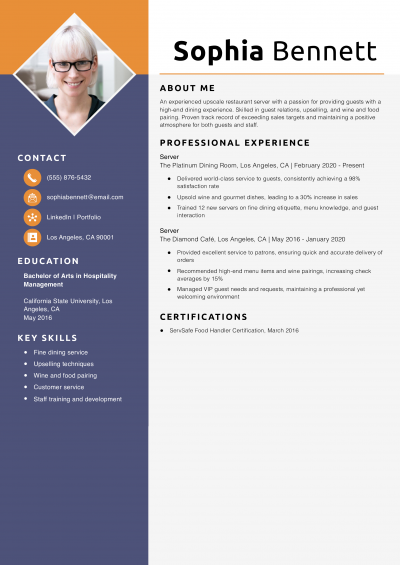
For a restaurant server, an ATS-friendly template is the safest pick, because it puts your certifications and experience where a hiring manager scans first. A basic template is a solid alternative. Whichever you choose, keep the formatting clean and easy to parse: clear section headings, a standard font, and no graphics a parser can choke on.
Executive Resume Writer and Career Coach
Andrew Stoner is an executive career coach and resume writer with 17 years of experience as a hiring manager and operations leader at two Fortune 500 Financial Services companies, and as the career services director at two major university business schools.
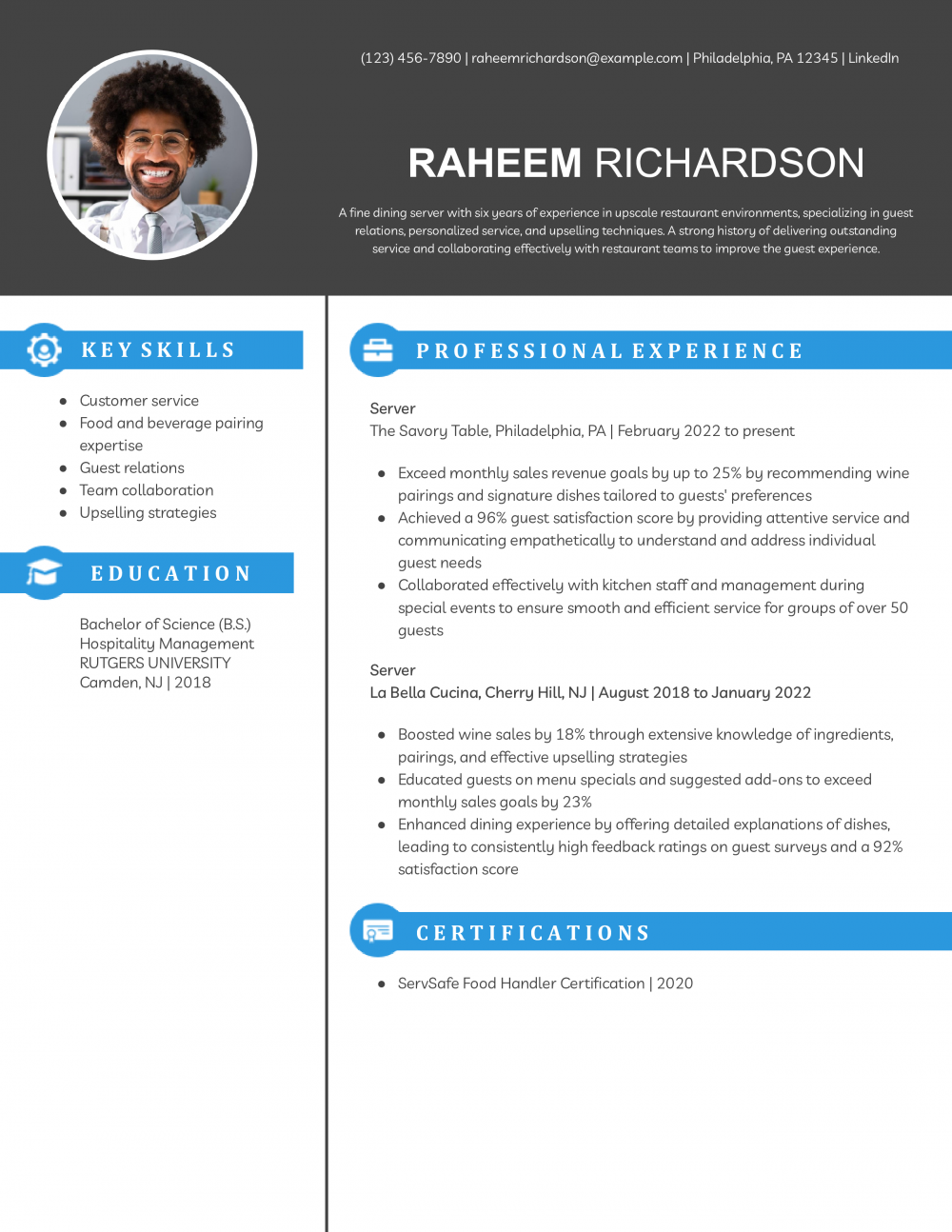
Customize this template in our builder in under 10 minutes.