20 Best Marketing Resume Examples and Templates for 2026



Demand-gen directors decide whether to keep reading by the first two summary lines; if a channel, a budget figure, and a ROAS or pipeline number aren't visible there, the resume gets passed over for one that leads with proof.
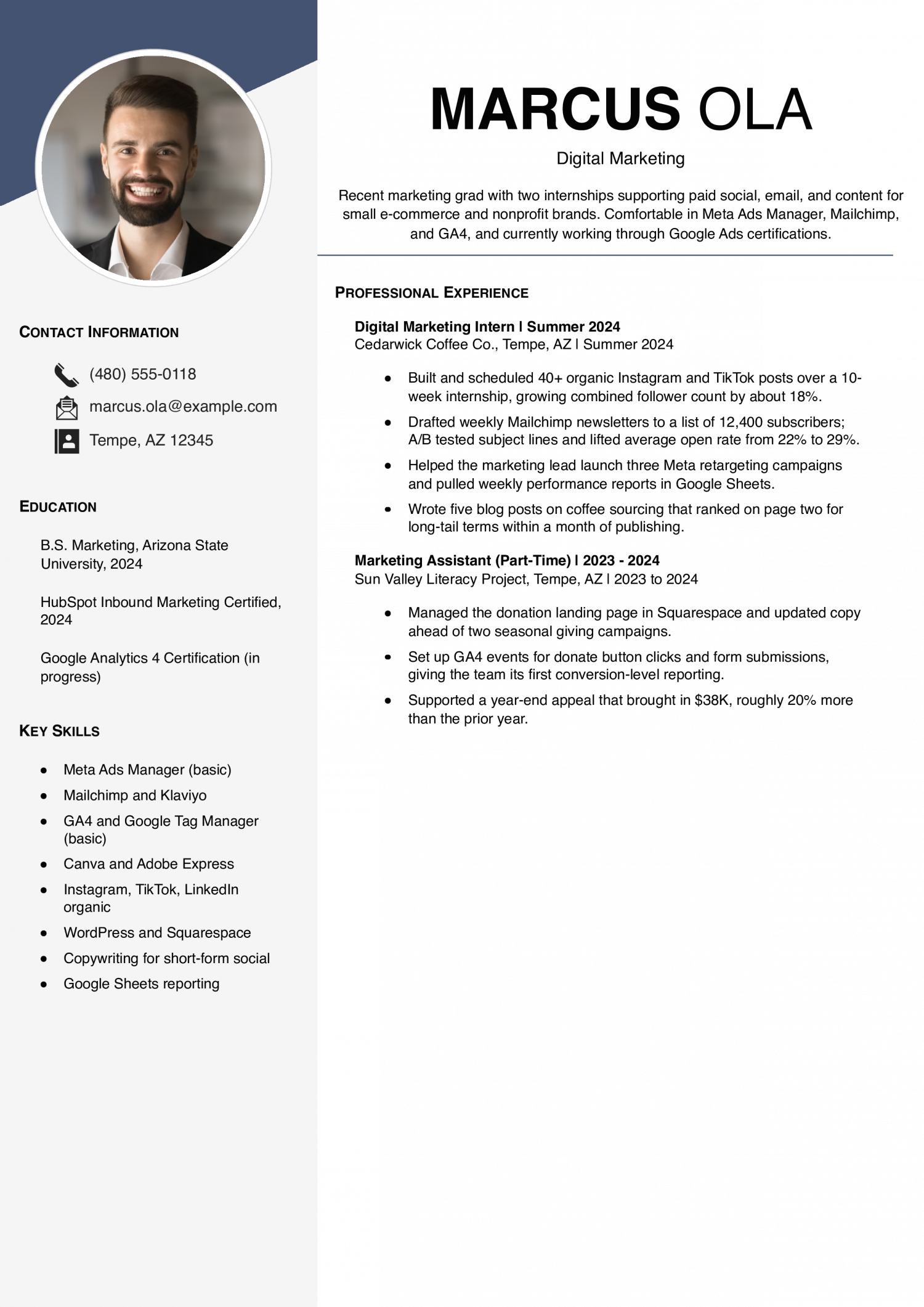
Entry-level digital marketers are coordinators, associates, and recent grads with internship work or freelance campaigns under their belt. This resume needs to prove platform fluency in GA4 and one ad network, plus quantified results from any campaign you touched.
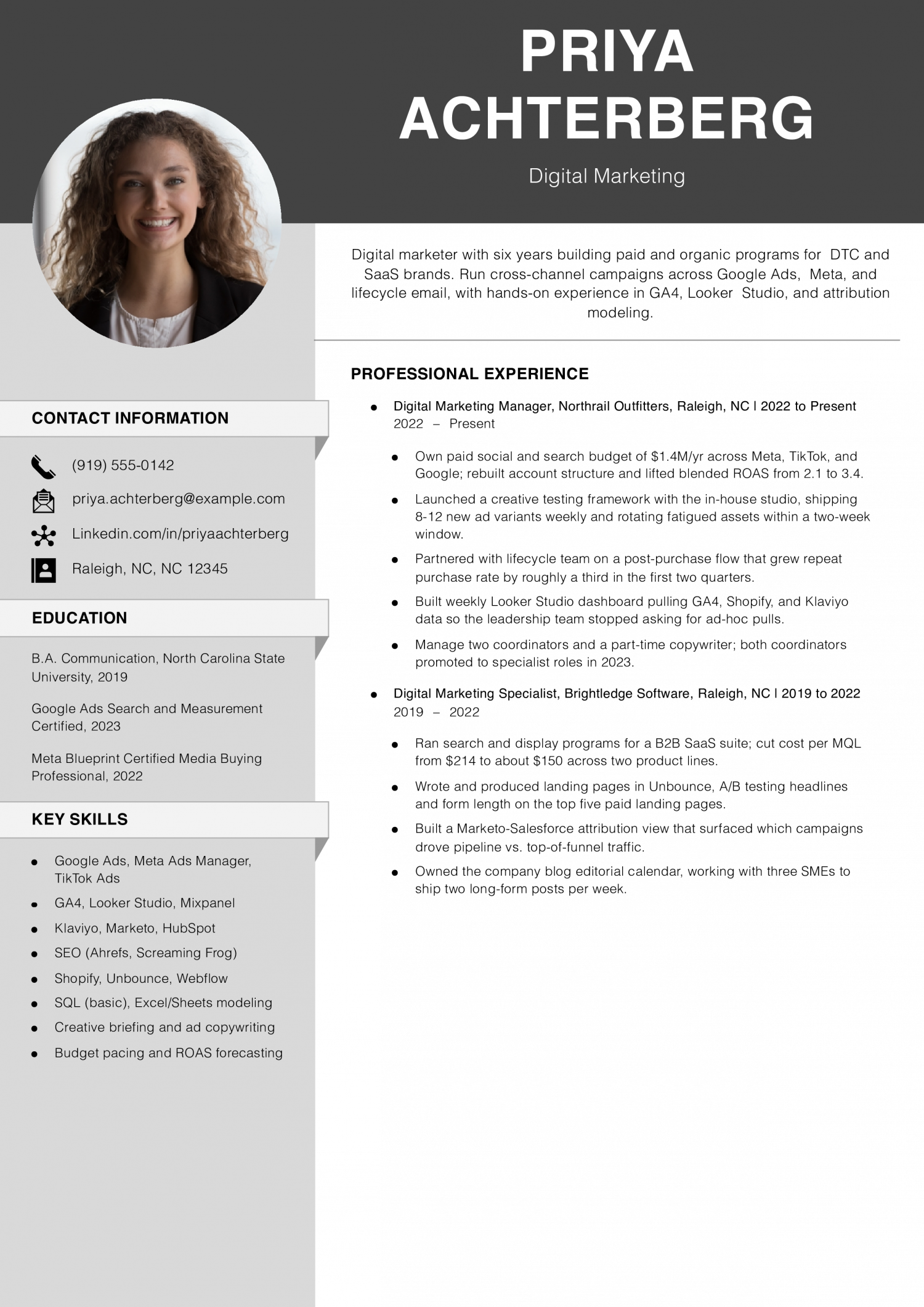
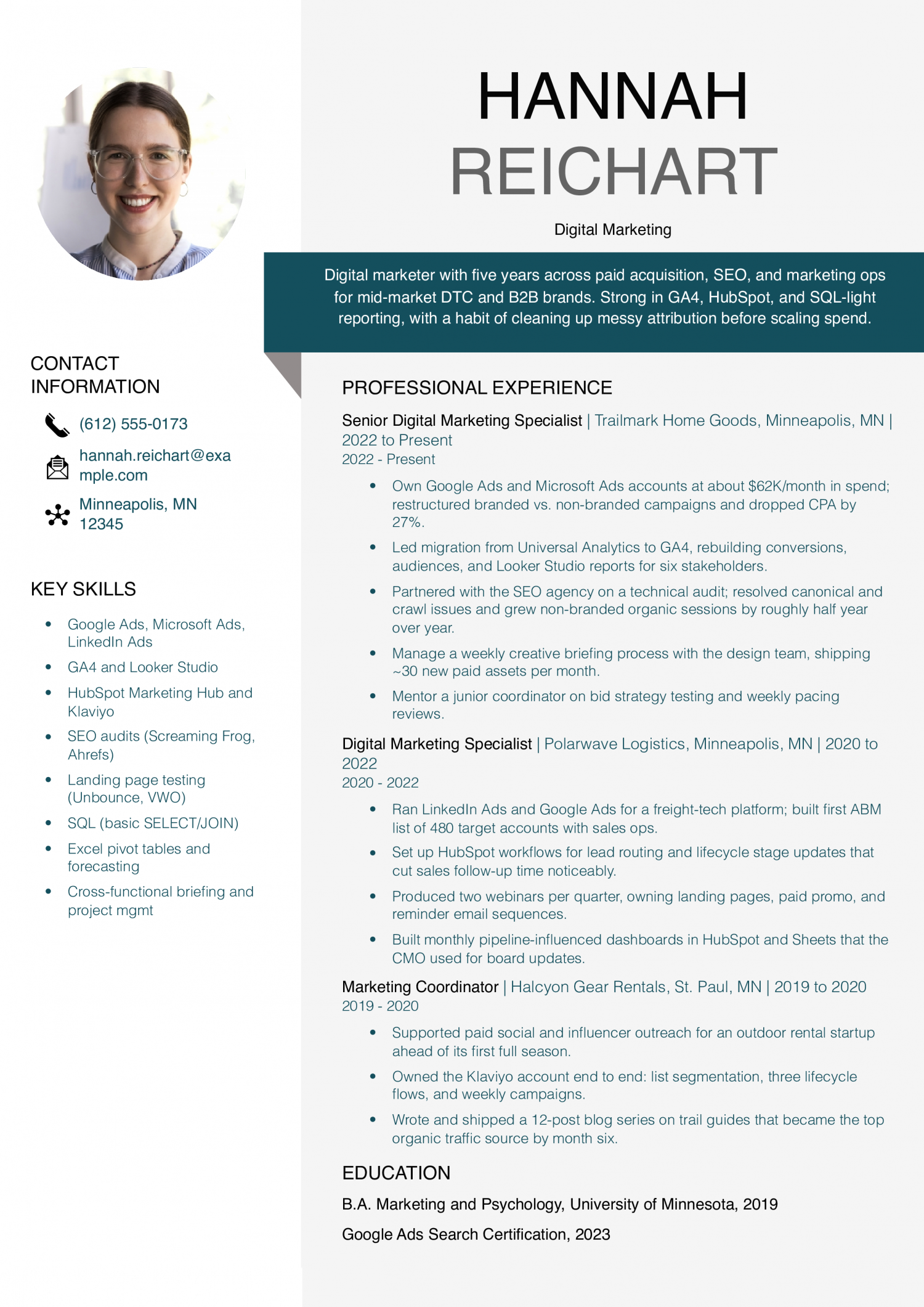
Mid-career digital marketers own a channel or two, manage real budget, and report on CAC and ROAS to a director. This resume needs to prove channel-level pipeline contribution, the budget you allocated, and the tools you operate without supervision.
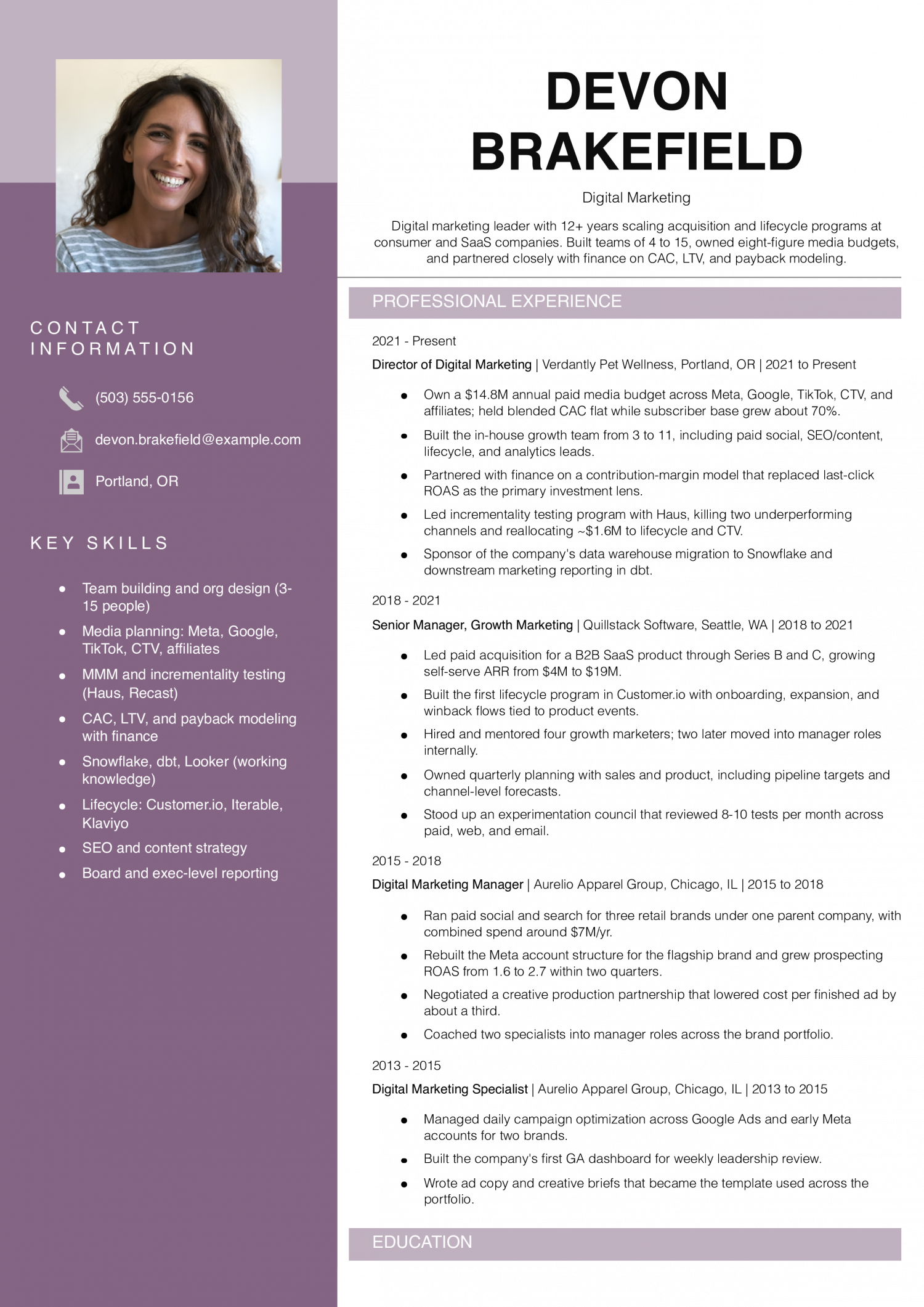
Senior digital marketers run multi-channel programs, manage analysts or specialists, and own forecasted pipeline against a revenue number. This resume needs to prove team leadership, full-funnel attribution ownership, and campaign results that map to company revenue.
Digital marketer with eight years across paid media, SEO, and lifecycle for DTC, marketplace, and B2B SaaS brands. Comfortable owning channel strategy end to end, from forecast and creative brief through GA4 reporting and weekly pacing reviews. Known for cleaning up attribution and reporting before pushing for bigger budgets.
The first line of your summary should name a campaign result a demand-gen director already tracks. Pick ROAS, CAC payback, MQL-to-SQL rate, or pipeline sourced.
Pair that number with the channel and the budget behind it. “Ran $1.8M in paid social at 4.2x ROAS” reads as ready; “results-focused marketer” reads as filler.
VPs of marketing and demand-gen directors use these figures to map you to their funnel before they read a single bullet. Lead with the metric they would put on a board slide, not your years in marketing.
Most strong digital marketing bullets carry three numbers: the spend, the result, and the time window. “Scaled Google Ads from $40K to $120K monthly, holding CAC under $85 over two quarters” works.
Recruiters scan for CAC, ROAS, CTR, CVR, MQL volume, and pipeline dollars first. Bullets without a number tend to read as duties, not outcomes.
When a number is confidential, use a percent change or a ratio against the prior baseline. “Lifted email CVR 38% against the trailing six-month average” still gives the reader something to weigh.
Organize bullets under the channels you actually ran: paid search, paid social, SEO and content, lifecycle and email, and analytics or attribution. This mirrors how marketing teams are staffed.
Inside each group, name the platform, the audience or keyword strategy, and the result. “Built six SKAGs in Google Ads for high-intent B2B terms, driving 22% of demo requests” reads as operator language.
If you own creative testing, ABM plays, or marketing ops in HubSpot or Marketo, give those their own grouping. Recruiters hiring for a specialist seat want to see the specialty surfaced, not buried under generic campaign bullets.
VPs of marketing and demand-gen directors need to see your stack before they reach your work history. Put a tools line under the summary listing GA4, HubSpot or Marketo, Meta Ads, Google Ads, SEMrush or Ahrefs, and any CDP or attribution platform.
Page-one credentials, Google Ads Search, Meta Blueprint, HubSpot Inbound, GA4, signal which platforms you’ve passed an exam on. They also seed ATS keyword hits before the bot reads your bullets.
Keep the list to platforms you’ve actually shipped on. Padding with tools you touched once flags as inflation when the interview gets specific.
A marketing, communications, business, or analytics degree belongs at the bottom for anyone past the first job. Lead with the school, the degree, and the graduation year only if you’re inside three years out.
Add a short continued-learning line if you’ve completed a recent program: CXL, Reforge, MeasureSchool, or a Demand Curve course. Demand-gen directors read these as evidence you’re tracking how the channels keep shifting.
Skip generic MOOCs that don’t tie to a measurable skill. The closing section is short for a reason; it should reinforce, not pad.
The digital marketing resumes that get callbacks share a specific skill mix. The lists below come from our user-built digital marketing resumes, so they reflect what actually ships, not what a job-description template suggests. VPs of marketing and demand-gen directors scan for platform names, channel ownership, and attribution fluency first, not generic “passionate storyteller” framing.
They want to see GA4, paid social budgets, and CAC numbers in the first third of the page. Match the lists below against your target job posting, then use the soft skills as the evidence layer backing your campaign bullets.
| Soft Skills | % of resumes with this skill |
|---|---|
| Communication | 72% |
| Creativity | 50% |
| Adaptability | 46% |
| Collaboration | 37% |
| Analytical thinking | 25% |
And here are the top hard skills showing up most often.
| Hard Skills | % of resumes with this skill |
|---|---|
| Search engine optimization | 74% |
| Social media marketing | 52% |
| Content marketing | 48% |
| Google Analytics | 38% |
| Email marketing | 32% |
Based on data from thousands of digital marketers’ resumes built on ResumeTemplates.com, May 2026.
Before a digital marketing resume gets a closer read, hiring teams check for a short list of essentials.
VPs of marketing and demand-gen directors expect to see channel-specific vocabulary in the bullets, not a generic “digital marketing” header. Group your keywords by the sub-niche you’re targeting so the parser scores you against the right req.
| Niche | Keywords ATS scans for |
|---|---|
| Paid media and performance | google ads, meta ads, paid social, roas |
| SEO and content | technical seo, semrush, content strategy, on-page optimization |
| Marketing automation and lifecycle | hubspot, marketo, lifecycle marketing, email automation |
| Analytics and attribution | ga4, looker studio, multi-touch attribution, conversion tracking |
| Demand generation and growth | demand generation, mql, pipeline marketing, abm |
What demand-gen directors expect on a digital marketing resume has shifted. A vague “experimented with AI tools” line now reads as thin, while a specific workflow naming where AI saved hours and where a human still signs off reads as operator-level. The items below name what to add.
Teams now ship 5 to 10x more ad variants per test, with AI handling the first-draft copy and humans editing for brand voice.
AI tools generate outlines and SERP analysis in minutes, so the editorial work is now selection, fact-checking, and adding original POV.
ChatGPT and Claude compress hours of review-mining and forum scraping into a single prompt cycle, freeing time for creative testing.
AI-assisted query builders in GA4 and BigQuery surface insights faster, but recruiters expect you to name what you do with them.
ChatGPT or Claude: Ad copy iteration, SEO outline drafting, persona research, and rewriting customer interview notes into briefs.
Jasper or Copy.ai: Bulk ad variant generation against a brand voice profile, then human editing before launch in Meta or Google.
Demand-gen directors read this list as a map of where your work is heading. The certifications below tell them which channels and platforms you’ve invested in, and whether you can run paid, lifecycle, or analytics at a senior level. List the issuing body and the year passed, since most of these expire on a one or two-year cycle.
Google Ads Certifications (Search, Display, Video, Shopping): Signals you've passed Google's current exam on each channel; list the specific tracks you hold, not just "Google Ads certified."
Meta Blueprint Certified (Media Buying or Media Planning): Tells paid social hiring managers you've passed Meta's exam on auction mechanics, audience strategy, and Ads Manager workflows.
Google Analytics (GA4) Certification: Shows you've moved off Universal Analytics and can build events, conversions, and exploration reports in the current property type.
HubSpot Inbound Marketing or Marketo Certified Expert: Pick the one that matches your stack; both signal you can build workflows, score leads, and report on funnel stages without a consultant.
The 90th-percentile digital marketer out-earns the median by a wide margin, which tells you the market rewards channel ownership and measurable pipeline contribution more than years in the field. The high band pays for operators who can name a CAC, a ROAS, and a forecast against a revenue target. Geography matters less than it did before remote demand-gen roles opened up, but the top-paying states still cluster around tech-heavy metros.
Lead your resume with the channels and the dollar figures the top band charges for, not a general marketing summary.
| # | State | Avg. Annual |
|---|---|---|
| 1 | Delaware | $98,650 |
| 2 | Washington | $94,300 |
| 3 | Massachusetts | $93,430 |
| 4 | California | $92,770 |
| 5 | New York | $91,840 |
| 6 | New Jersey | $85,190 |
| 7 | District of Columbia | $83,340 |
| 8 | Oregon | $82,600 |
| 9 | Minnesota | $81,460 |
| 10 | Colorado | $80,670 |
| # | State | Workers | Median |
|---|---|---|---|
| 1 | California | 108,460 | $92,770 |
| 2 | New York | 75,100 | $91,840 |
| 3 | Texas | 61,200 | $64,900 |
| 4 | Florida | 54,090 | $77,490 |
| 5 | Massachusetts | 37,320 | $93,430 |
Resume Templates offers HR approved resume templates to help you create a professional resume in minutes. Choose from several template options and even pre-populate a resume from your profile.
Match the posting first. Beyond that, the consistent ATS hits are channel names (paid search, paid social, SEO, lifecycle) and platform names like Google Ads, Meta Ads, GA4, HubSpot, and Marketo.
Add the metrics recruiters filter on: CAC, ROAS, CTR, CVR, MQL, and pipeline. Put a dedicated tools line under your summary and weave the metrics into bullets, not a buzzword list.
Use percent changes or ratios against a prior baseline. "Lifted ROAS 42% over the trailing quarter" or "cut CAC by a third in six months" gives recruiters something to weigh without exposing budget figures.
You can also describe scope using ranges, like "mid-six-figure monthly paid social budget," if your contract restricts specifics. Recruiters read this as compliant, not evasive.
Reorganize bullets by channel rather than by job. Pull every paid media result under one heading, every SEO win under another, and let your target specialty take the most space.
Lead each section with your strongest metric. Drop or compress unrelated work so the page reads as a paid social or SEO operator, not a generalist coordinator.
Yes, for any role above coordinator. Link a one-page portfolio in your header with two or three case studies: the problem, the channels used, the spend, and the result.
Recruiters often forward it to the marketing director before scheduling a call. Keep it screenshot-heavy and metric-first, not a long-form brand story.
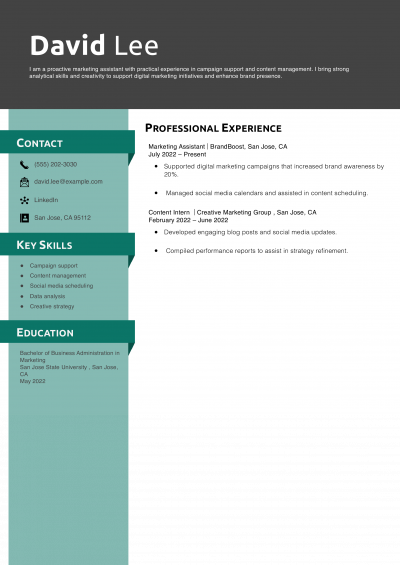
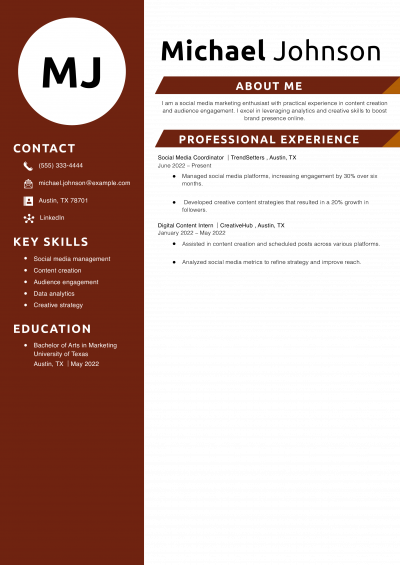
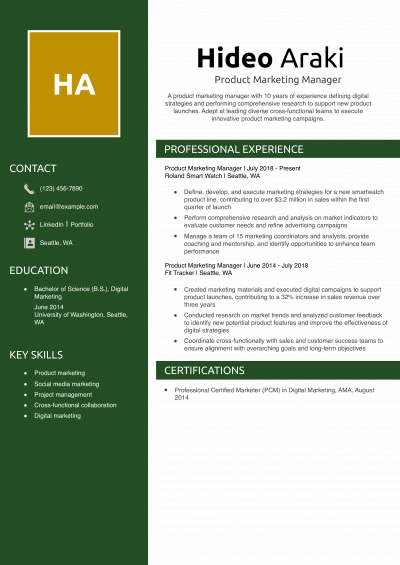
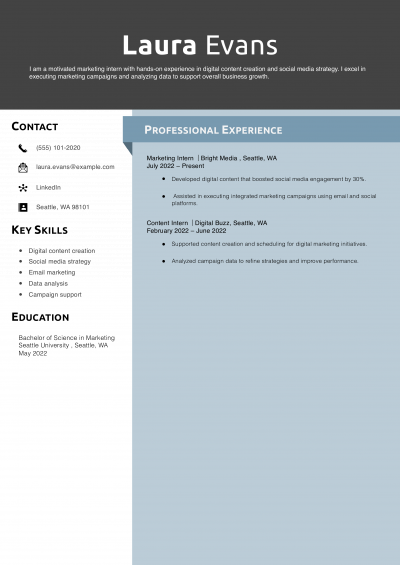
For a digital marketer, a professional template is the safest pick, because it signals the polish hiring managers in this field expect. An ATS-friendly template is a solid alternative. Whichever you choose, keep the formatting clean and easy to parse: clear section headings, a standard font, and no graphics a parser can choke on.
Executive Resume Writer and Career Coach
Andrew Stoner is an executive career coach and resume writer with 17 years of experience as a hiring manager and operations leader at two Fortune 500 Financial Services companies, and as the career services director at two major university business schools.
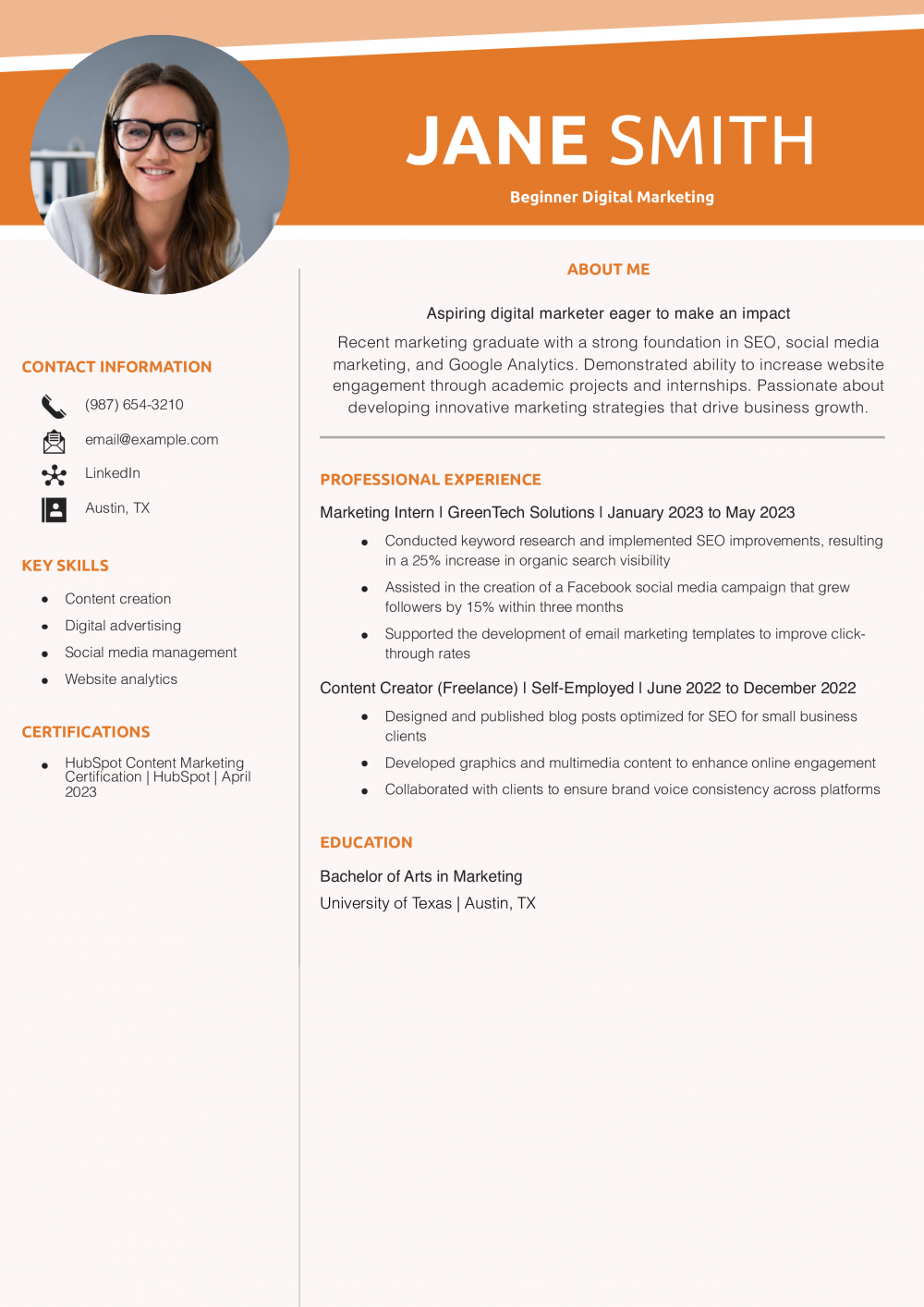
Customize this template in our builder in under 10 minutes.