

20 Best Retail Resume Examples and Templates for 2026



Hiring district leads scan a retail manager resume for shrink percentage and comp-store growth in the first bullet under each store, because those two numbers signal whether a candidate can protect a P&L.
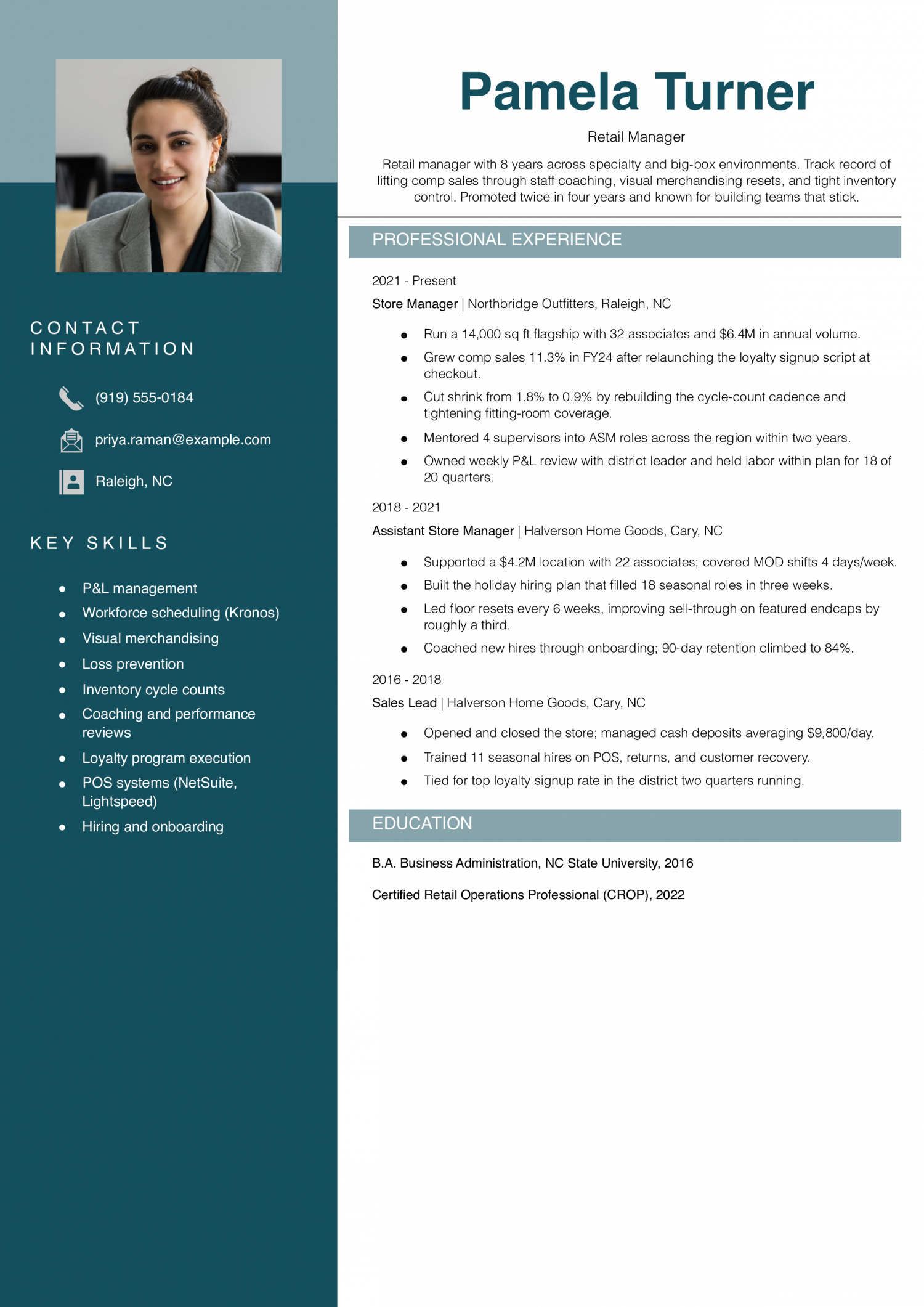
Assistant managers are second-in-command on the floor, running shifts, coaching part-time staff, and closing the store. This resume needs to prove you own a shift end-to-end and hit conversion or UPT targets without a senior on site.
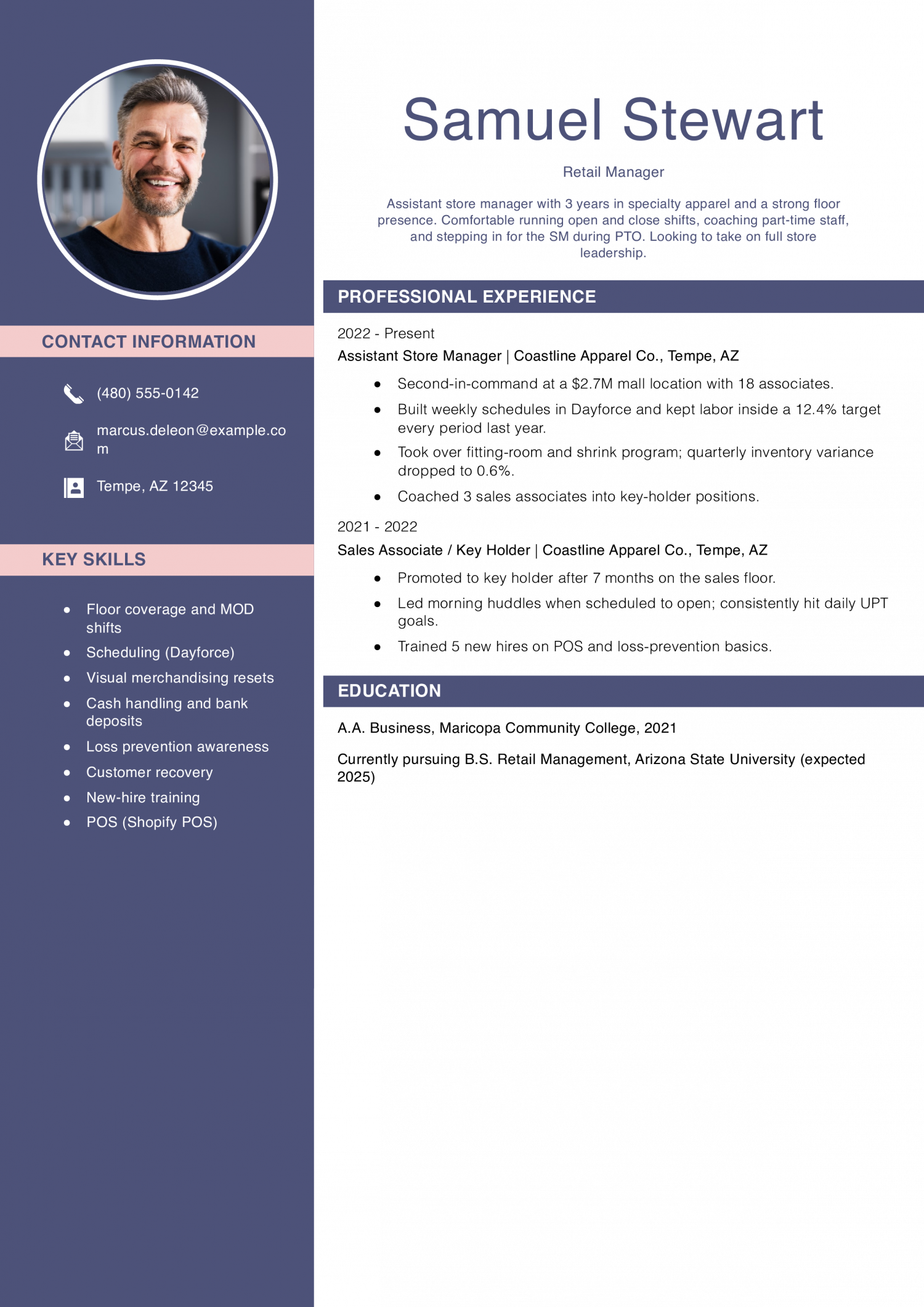
Store managers carry P&L for a single location, plus hiring, scheduling, and shrink. This resume needs to prove comp-store sales growth, payroll discipline against a labor-to-sales ratio, and audit scores that hold up under district review.

District managers run a portfolio of stores and develop the store managers inside them. This resume needs to prove portfolio-level revenue, shrink across multiple sites, and a bench of internal promotions you built and moved up.

Alicia Brennan
Portland, OR | (503) 555-0128 | [email protected] | linkedin.com/in/aliciabrennan
Retail manager with 10 years of progressive experience across specialty and lifestyle brands. Led stores from $2M to $8M in annual volume, built two district-level pilot programs, and developed multiple store managers from the sales floor. Strong on P&L, coaching, and turning service scores into repeat traffic.
Store Manager
Driftwood Outdoor Co. | Portland, OR | 2021-Present
Store Manager
Halcyon Beauty | Beaverton, OR | 2018-2021
Assistant Store Manager
Halcyon Beauty | Lake Oswego, OR | 2016-2018
Department Supervisor
Kestrel Books | Salem, OR | 2014-2016
Sales Associate
Kestrel Books | Salem, OR | 2013-2014
Your summary should lead with comp-store sales growth, shrink percentage, or payroll-to-sales, not a scope statement about leading teams. District managers and regional retail directors read those three numbers as a fast proxy for P&L control.
Name the store volume you ran, the headcount you managed, and your last full-year comp result. A summary that opens with “Ran a $4.1M specialty store, grew comp 6.2%, held shrink at 0.9%” tells a regional lead more than three sentences about leadership philosophy.
Most strong retail manager resumes carry numbers on roughly two-thirds of bullets. Recruiters scan for shrink percentage, comp-store growth, units per transaction, conversion rate, and labor-to-sales ratio before anything else.
Bullets without a number tend to read as duties. Pair the action with a result: “cut shrink from 1.8% to 0.9% over four quarters,” “grew UPT from 2.1 to 2.6,” or “held payroll at 9.2% against a 9.8% plan.”
Cluster bullets so a reader can find each capability fast. Operations covers shrink, audits, cash control, and inventory accuracy. People covers hiring, scheduling, turnover, and internal promotions.
Merchandising covers visual standards, planogram compliance, and markdown management.
Within each cluster, lead with the bullet that carries the strongest number. A district lead reading the people cluster wants to see retention rate and promotions developed before any line about “fostering a positive culture.”
List your POS and workforce-management systems in a short skills block near the top: NCR, Oracle Retail Xstore, Lightspeed, Square for Retail, Kronos, UKG Pro WFM. ATS scans hit this block first, and district managers use it to confirm system fluency.
Add LP-certified or CFI status, OSHA 10, and any food-handler or alcohol-service permits the format requires. Page-one placement matters because regional retail directors filter on systems and safety credentials before they read the experience section.
Trim bullets that read like a job description: “responsible for daily operations,” “oversaw staff,” “ensured customer satisfaction.” Replace them with a number or remove them. A senior retail manager resume should run two pages, not three.
Drop legacy POS systems you used more than seven years ago and any retail role older than 12 to 15 years unless it carries a title progression that matters. Keep the page focused on recent P&L results and the team scale you carry now.
The skills below come from retail manager resumes our users built on ResumeTemplates.com. District managers and regional retail directors scan dozens of resumes a week, and these are the skills that show up most often. Hard skills like shrink control and POS fluency carry more ATS weight; soft skills like coaching back up the numbers in your bullets.
Match this list against your target posting and use the soft skills as evidence behind specific results, not as standalone claims.
| Soft Skills | % of resumes with this skill |
|---|---|
| Team leadership | 65% |
| Communication | 60% |
| Conflict resolution | 41% |
| Adaptability | 39% |
| Customer service | 32% |
And here are the top hard skills showing up most often.
| Hard Skills | % of resumes with this skill |
|---|---|
| Inventory management | 76% |
| Point of sale systems | 70% |
| Sales forecasting | 47% |
| Budgeting and financial management | 36% |
| Visual merchandising | 32% |
Based on data from thousands of retail managers’ resumes built on ResumeTemplates.com, May 2026.
The items below are what separate a retail manager resume from one that gets put back in the pile.
POS and workforce-management fluency is one of the first filters a district manager applies. Name the specific systems you’ve run, not just “POS experience.”
Retail hiring leads filter for open availability on weekends, holidays, and peak season. Show this without burning resume real estate on a calendar.
Add a one-line note under your name block or at the end of the summary: “Open availability including weekends, holidays, and peak.” That clears the screen many recruiters run before they call.
If you’ve covered Black Friday, inventory weekends, or back-to-school resets as the manager on duty, mention them inside a bullet. Specifics like “led seven Black Friday openings” read as proven peak-season experience.
Beyond a high school diploma and any state-required alcohol or food-handler permits, the certifications below tell district managers and regional retail directors which operational disciplines you can run without supervision. List the certifying body and the year earned next to each item.
Retail manager pay spreads wide. The 10th-percentile floor reflects small-box and franchise locations with limited P&L scope, while the top-decile ceiling rewards multi-unit oversight, big-box volume, or specialty stores with high average tickets. What moves a retail manager from floor to ceiling is volume of store run, shrink discipline, and whether the title carries district or multi-store responsibility.
Lead your resume with store revenue, headcount, and the comp-store result that maps to the band you’re targeting.
| # | State | Avg. Annual |
|---|---|---|
| 1 | Washington | $58,460 |
| 2 | Rhode Island | $58,030 |
| 3 | New York | $57,410 |
| 4 | Colorado | $55,780 |
| 5 | Hawaii | $55,380 |
| 6 | District of Columbia | $55,350 |
| 7 | Massachusetts | $53,050 |
| 8 | New Jersey | $52,450 |
| 9 | Vermont | $52,000 |
| 10 | Connecticut | $51,790 |
| # | State | Workers | Median |
|---|---|---|---|
| 1 | California | 108,140 | $50,240 |
| 2 | Texas | 102,480 | $45,270 |
| 3 | Florida | 78,600 | $47,100 |
| 4 | New York | 52,490 | $57,410 |
| 5 | Pennsylvania | 43,870 | $46,160 |
Resume Templates offers HR approved resume templates to help you create a professional resume in minutes. Choose from several template options and even pre-populate a resume from your profile.
One page if you have under seven years of retail experience. Two pages once you carry store manager or district titles with P&L results worth showing.
Cut roles older than 12 to 15 years unless the title progression matters. District managers and regional retail directors stop reading past page two.
Lead with comp-store sales growth, shrink percentage, and labor-to-sales ratio. Add UPT, conversion rate, audit scores, retention rate, and internal promotions you developed.
Pair each metric with a baseline or plan number. "Held shrink at 0.9% against a 1.4% plan" reads stronger than "reduced shrink."
Pull out the shifts you closed, the new hires you trained, and any keyholder or lead-on-duty work. Those count as management even without the title.
Quantify the scope: "closed five shifts a week," "trained six new associates," "covered store manager during two-week vacation." District leads read those as ready-to-promote signals.
Both. Put the system names in a skills block near the top for ATS, then reference them in bullets where they tied to a result.
Example bullet: "Migrated store from legacy POS to Oracle Retail Xstore over six weeks with zero downtime during the holiday window."
For a retail manager, an ATS-friendly template is the safest pick, because it puts your certifications and experience where a hiring manager scans first. A basic template is a solid alternative. Whichever you choose, keep the formatting clean and easy to parse: clear section headings, a standard font, and no graphics a parser can choke on.
Executive Resume Writer and Career Coach
Andrew Stoner is an executive career coach and resume writer with 17 years of experience as a hiring manager and operations leader at two Fortune 500 Financial Services companies, and as the career services director at two major university business schools.
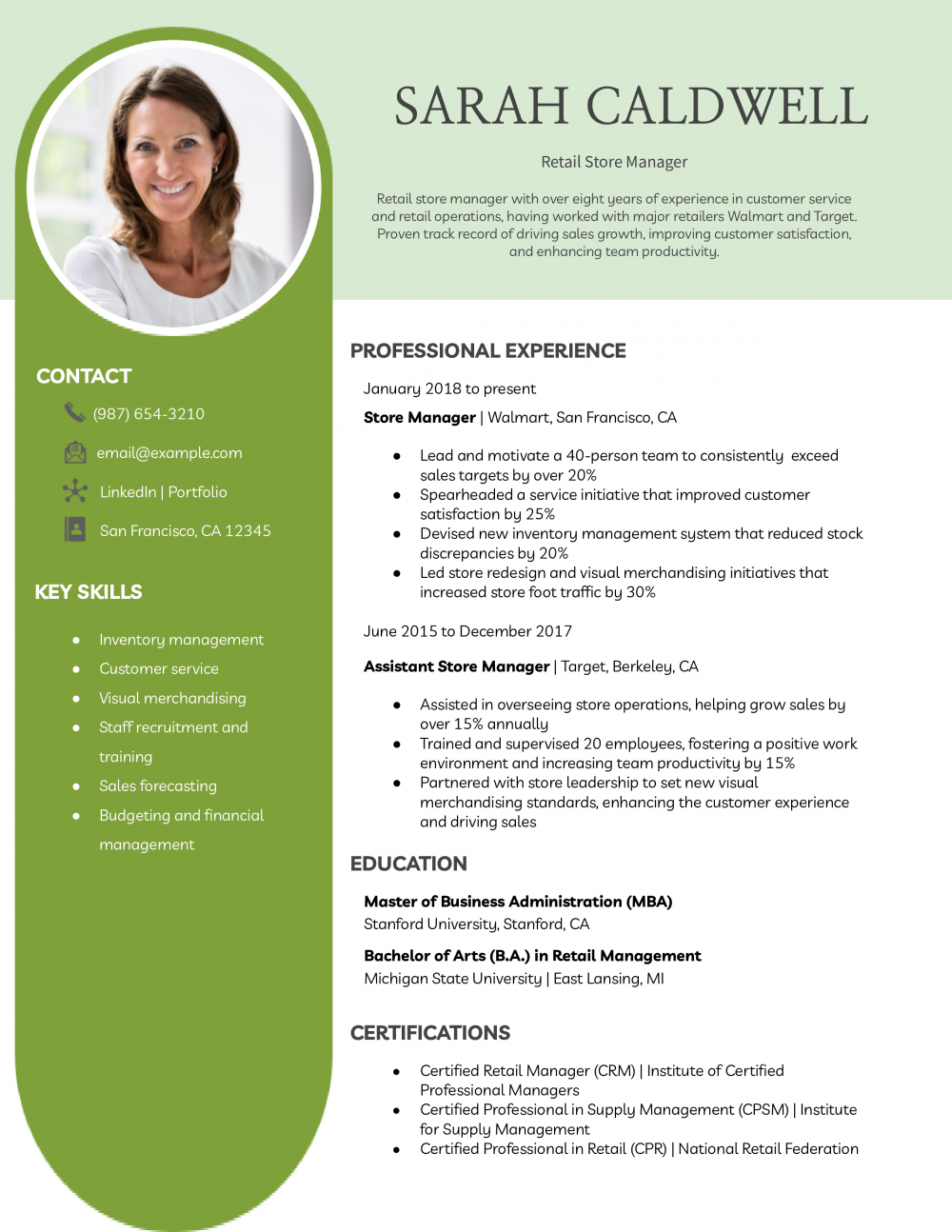
Customize this template in our builder in under 10 minutes.
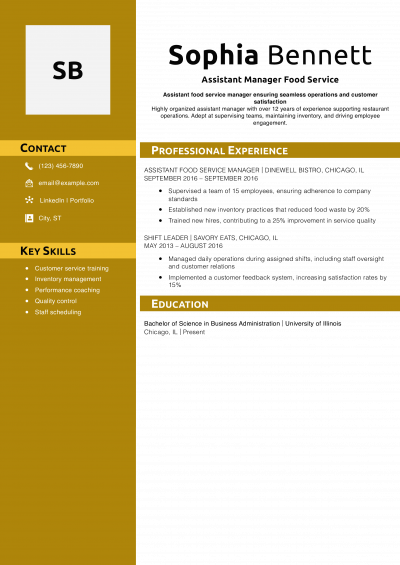


![20 Best Visual Merchandising Resume Examples and Templates for [y]](/wp-content/uploads/2024/11/Visual-Merchandiser-Resume-Example.x400.pdf.jpeg)