Housekeeping Resume Examples and Templates for 2026


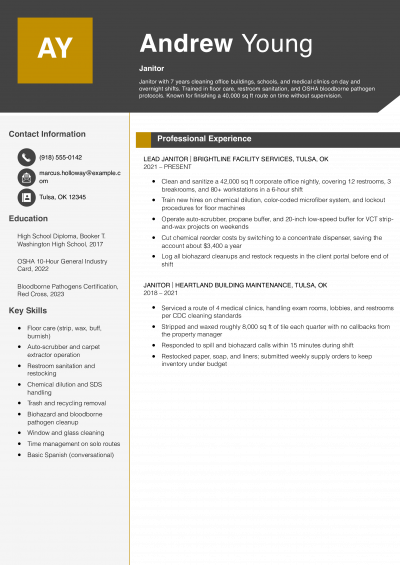
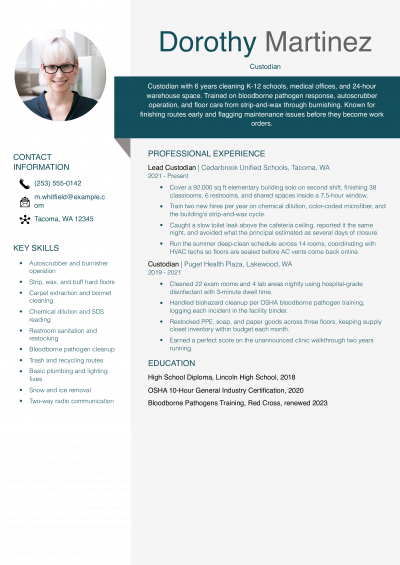
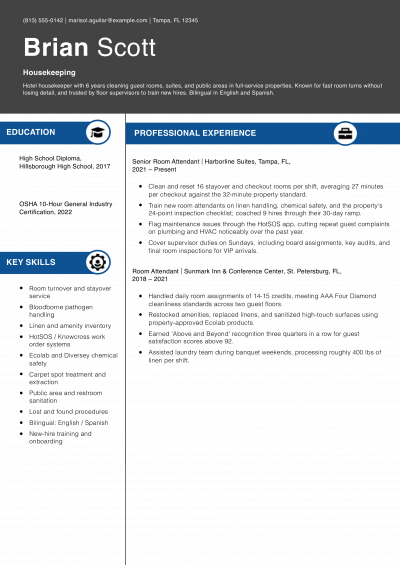
Facilities managers look for the facility type, square footage covered, and equipment list on the first page of a cleaning resume, because those three items show whether a candidate can handle the route without retraining.
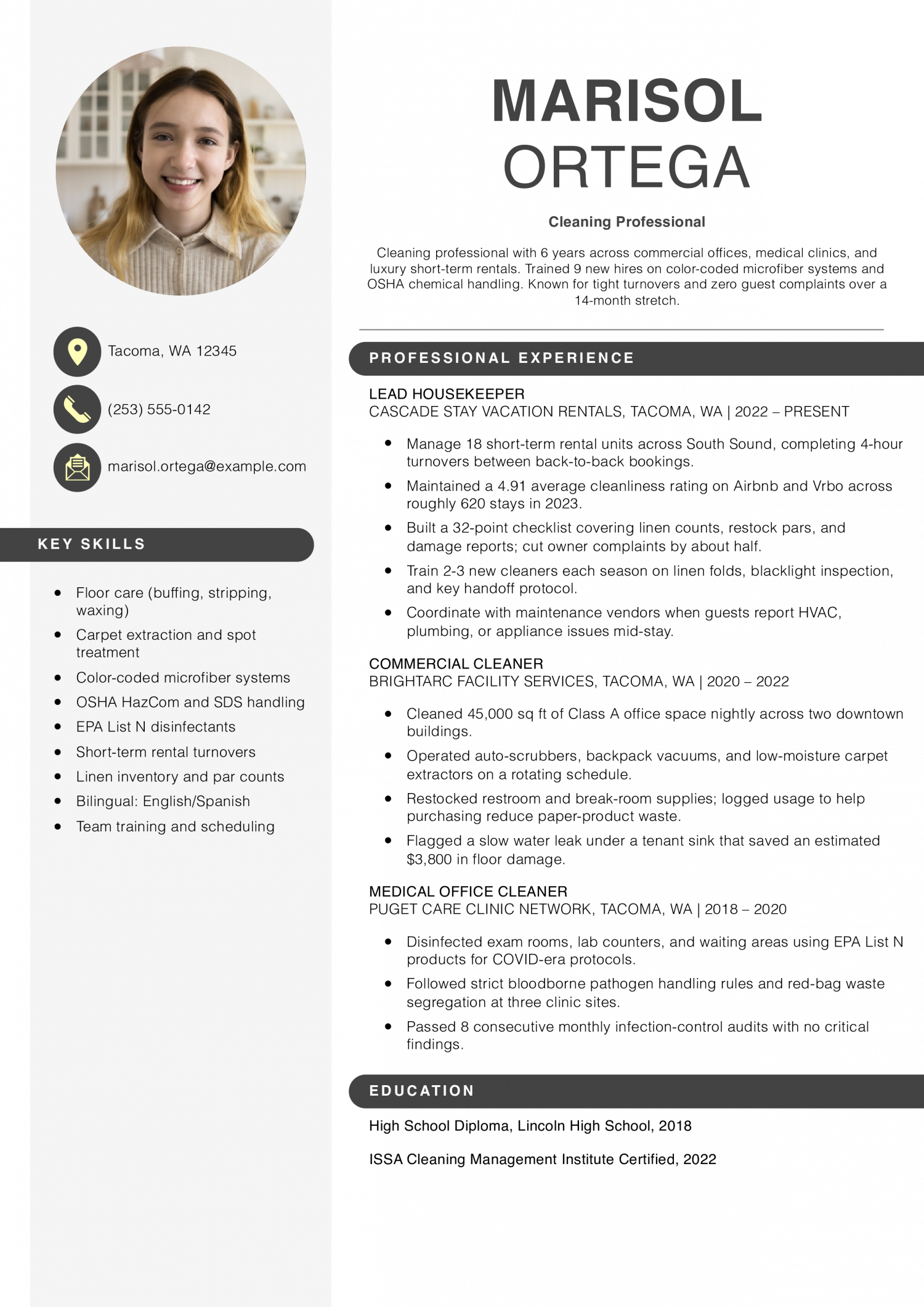
You are stepping into your first cleaning role or moving from a related service job into commercial or residential cleaning. The entry-level resume needs to prove reliability, basic chemical safety awareness, and a clear willingness to learn equipment.
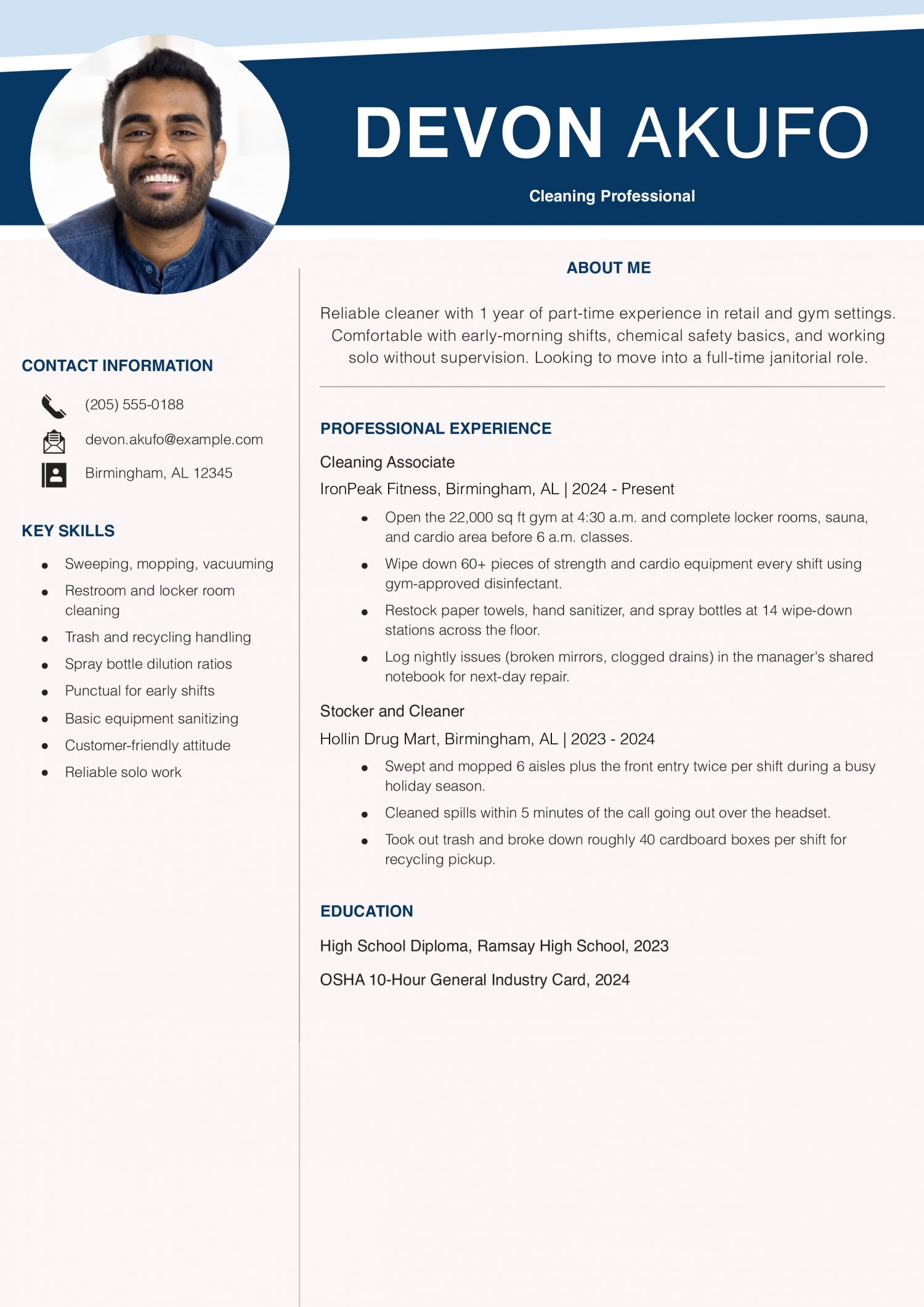
You have several years of commercial, medical, or hospitality cleaning work and run equipment without supervision. The experienced resume needs to prove facility scope, OSHA and bloodborne pathogen knowledge, and a steady attendance record across shifts.
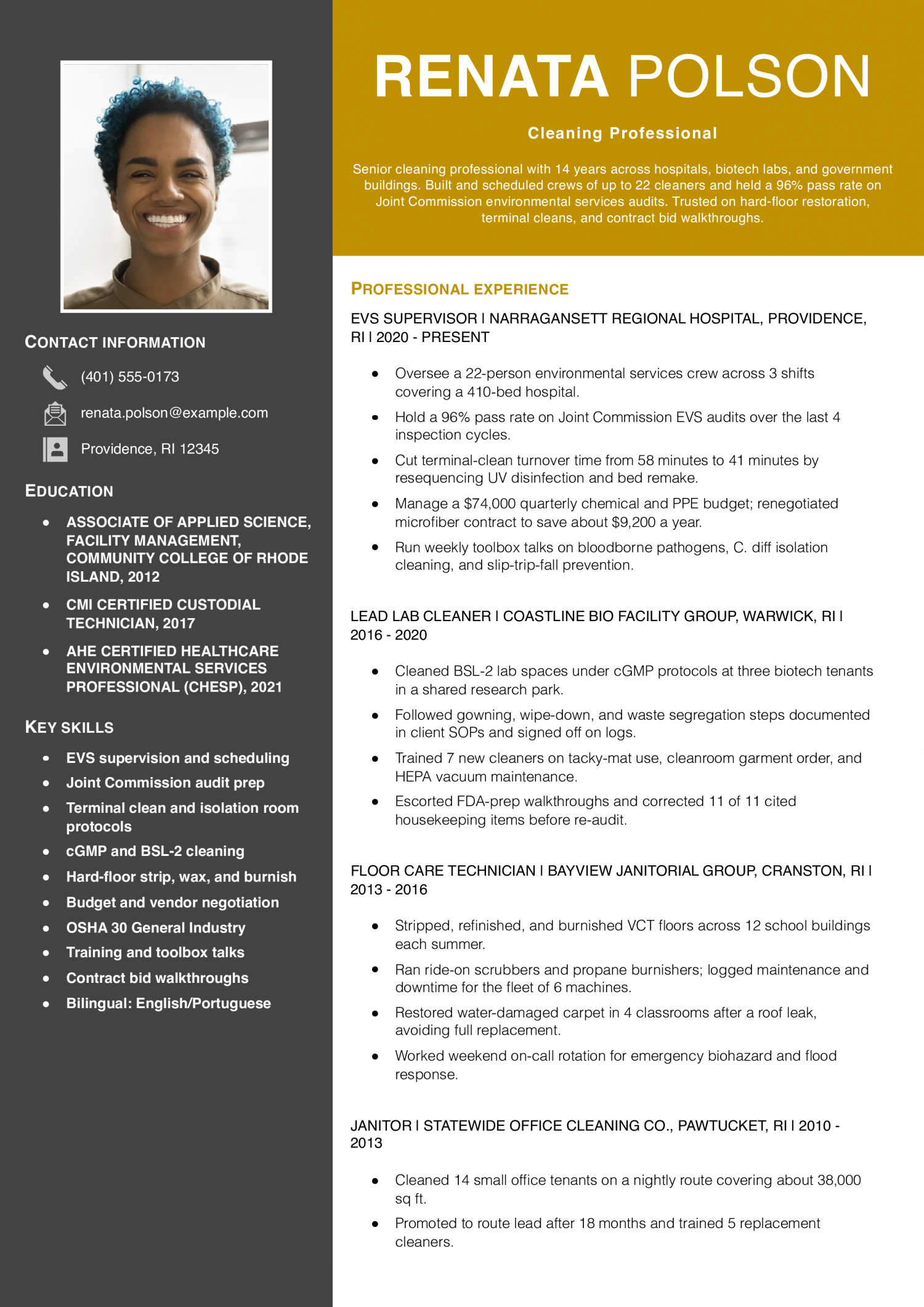
Yusra Halverson
Albuquerque, NM | (505) 555-0119 | [email protected] | linkedin.com/in/yusrahalverson
Cleaning professional with 9 years across hotels, schools, post-construction sites, and high-end residential. Comfortable leading 4-6 person crews, reading scope sheets, and walking clients through bid pricing. Holds active IICRC and OSHA 30 credentials and a clean driving record for company-vehicle routes.
Crew Lead, Post-Construction Cleaning
Mesa Finish Detail | Albuquerque, NM | 2021-Present
Hotel Room Attendant, Senior
Sandia Crest Boutique Hotel | Albuquerque, NM | 2018-2021
Custodian
Rio Grande Charter Schools | Albuquerque, NM | 2016-2018
Residential Cleaner
Adobe Home Shine | Rio Rancho, NM | 2015-2016
Lead your summary with a verifiable number, not a scope statement. Name the square footage you clean per shift, the room or unit count, and the facility type.
A line like “Cleaned 42 patient rooms per shift across a 180-bed hospital wing” tells a facilities manager you can hold a route. Add your years on the job and one safety credential next.
Skip phrases like “hardworking cleaner with strong attention to detail.” Those read as filler. The reviewer wants scope, setting, and proof you ran the equipment without supervision.
Most cleaning bullets read as duty lists. Strong bullets carry a number: rooms per shift, restrooms per route, square footage stripped and waxed, or years with zero call-offs.
Name realistic figures. “Stripped and refinished 8,000 square feet of VCT flooring on weekend shifts” beats “floor care duties.” “Maintained 99% attendance over three years” beats “reliable team member.”
If you cover medical, add room turnover times. If you cover hotels, add rooms per eight-hour shift against the property standard.
Sort your bullets into three or four buckets reviewers actually scan for. Common groupings: restroom and high-touch disinfection, floor care, trash and waste handling, and specialty surfaces.
Under each, name the chemicals and equipment. Quaternary disinfectants, peroxide cleaners, auto-scrubbers, propane and battery burnishers, carpet extractors, and HEPA backpack vacuums all read as ATS keywords.
Call out facility settings by name: acute-care hospital, K-12 school, Class A office, full-service hotel, manufacturing plant. Each setting carries different protocols, and reviewers hire for fit.
Facilities managers and cleaning service owners need to see safety training before they schedule a call. Put a short credentials block under your summary, not buried at the bottom.
List OSHA 10 or OSHA 30, bloodborne pathogen training, SDS chemical handling, and any CIMS or ISSA certifications you hold. Add the certifying body and the year.
If you have hospital-grade experience (AORN, CDC, or Joint Commission cleaning protocols), name it. Medical and food-service contracts often will not interview without that line visible.
Education sits at the bottom for this role. List your high school diploma or GED, and any trade-school or vocational coursework in custodial services or building maintenance.
Add languages spoken, since many cleaning teams are multilingual and supervisors hire for crew communication. Spanish, Haitian Creole, Portuguese, Tagalog, and Vietnamese all add value.
Close with shift availability and reliable transportation. Overnight, third-shift, weekend, and on-call coverage are often the deciding factor when two resumes match on skills.
ATS filters catch more cleaning professional resumes than ever in 2026. The skills below come from our user-built cleaning resumes, and they map to what facilities managers and cleaning service owners screen for first. Equipment names and chemical safety terms clear the first cut.
Reliability language and crew-communication signals decide whether the resume advances to a shop interview. Match the hard skills against the posting word for word, and use the soft skills as evidence inside your bullets, not as a standalone list.
| Soft Skills | % of resumes with this skill |
|---|---|
| Attention to detail | 79% |
| Time management | 53% |
| Reliability | 48% |
| Physical stamina | 36% |
| Adaptability | 35% |
And here are the top hard skills showing up most often.
| Hard Skills | % of resumes with this skill |
|---|---|
| Floor care and equipment operation | 73% |
| Surface sanitizing and disinfection | 57% |
| Chemical handling and safety | 46% |
| Waste disposal and recycling | 39% |
| OSHA safety compliance | 25% |
Based on data from thousands of cleaning professionals’ resumes built on ResumeTemplates.com, May 2026.
Cleaning contracts run on second, third, weekend, and on-call shifts. Reviewers screen for coverage before they screen for skill, so name your availability where they will see it.
Put a one-line availability statement under your summary or in a sidebar block. Spell out the shifts you can take and whether you have reliable transportation for late hours.
If you can split shifts, work split days, or cover holiday rotations, say so. Contract cleaners often lose accounts over coverage gaps and hire to close them.
Beyond a high school diploma or GED, the certifications below tell facilities managers and cleaning service owners which environments you can work in safely and which equipment you can run without retraining. List the certifying body and the year completed for each item.
For cleaning professionals, the 10th-percentile floor sits near minimum wage in many states, while the top-decile ceiling reflects union, government, and specialty contract work. That spread tells you setting, shift, and credentials move pay more than years on the job alone. Medical, government, and unionized commercial routes pay above hospitality and small-office work.
Lead the resume with the facility types, equipment, and safety certifications that map to the higher-paying end of the band.
| # | State | Avg. Annual |
|---|---|---|
| 1 | Massachusetts | $44,570 |
| 2 | Washington | $43,720 |
| 3 | New York | $39,920 |
| 4 | Alaska | $39,040 |
| 5 | California | $38,640 |
| 6 | Vermont | $38,630 |
| 7 | Maine | $38,560 |
| 8 | District of Columbia | $38,390 |
| 9 | Minnesota | $38,320 |
| 10 | New Hampshire | $37,860 |
| # | State | Workers | Median |
|---|---|---|---|
| 1 | California | 237,680 | $38,640 |
| 2 | New York | 186,370 | $39,920 |
| 3 | Texas | 181,520 | $31,230 |
| 4 | Florida | 128,160 | $31,540 |
| 5 | Illinois | 97,440 | $37,010 |
Resume Templates offers HR approved resume templates to help you create a professional resume in minutes. Choose from several template options and even pre-populate a resume from your profile.
Lead with the unpaid and informal work you've done. Cleaning a family member's rental property, helping at a church, or doing turn-overs for a friend's Airbnb all count when you describe scope and frequency.
Add an OSHA 10 certificate before you apply. The course runs online for under $100 and clears the safety filter most contract cleaners use.
Close with shift availability and reliable transportation. For entry roles, those two lines often beat a longer work history.
List the categories, not the brand names. Reviewers want to see that you understand quaternary disinfectants, peroxide cleaners, and neutral floor cleaners, not that you used a specific manufacturer's bottle.
The exception is hospital-grade products tied to a protocol, like bleach-based disinfectants for C. diff rooms. Name those, since they signal medical-setting experience.
Put it in a bullet with a number. "Maintained 98% attendance across 24 months on third shift" or "Zero call-offs in 14 months" reads as proof, not as a self-rating.
Add tenure at each employer. A two-year run at one contract cleaning company tells a facilities manager more than the word "reliable" ever will.
Translate residential work into commercial vocabulary. "Cleaned 12 homes per week" becomes "Cleaned average 12 occupied units per week, including kitchens, bathrooms, and high-touch surfaces."
Add any equipment you've used that crosses over: vacuums, mops, microfiber systems, and basic floor care. Then name the commercial gear you're trained on or willing to learn.
Get an OSHA 10 and SDS handling refresher before you apply. Commercial contractors screen for both, and residential roles often skip them.
For a cleaning professional, an ATS-friendly template is the safest pick, because it puts your certifications and experience where a hiring manager scans first. A basic template is a solid alternative. Whichever you choose, keep the formatting clean and easy to parse: clear section headings, a standard font, and no graphics a parser can choke on.
Executive Resume Writer and Career Coach
Andrew Stoner is an executive career coach and resume writer with 17 years of experience as a hiring manager and operations leader at two Fortune 500 Financial Services companies, and as the career services director at two major university business schools.
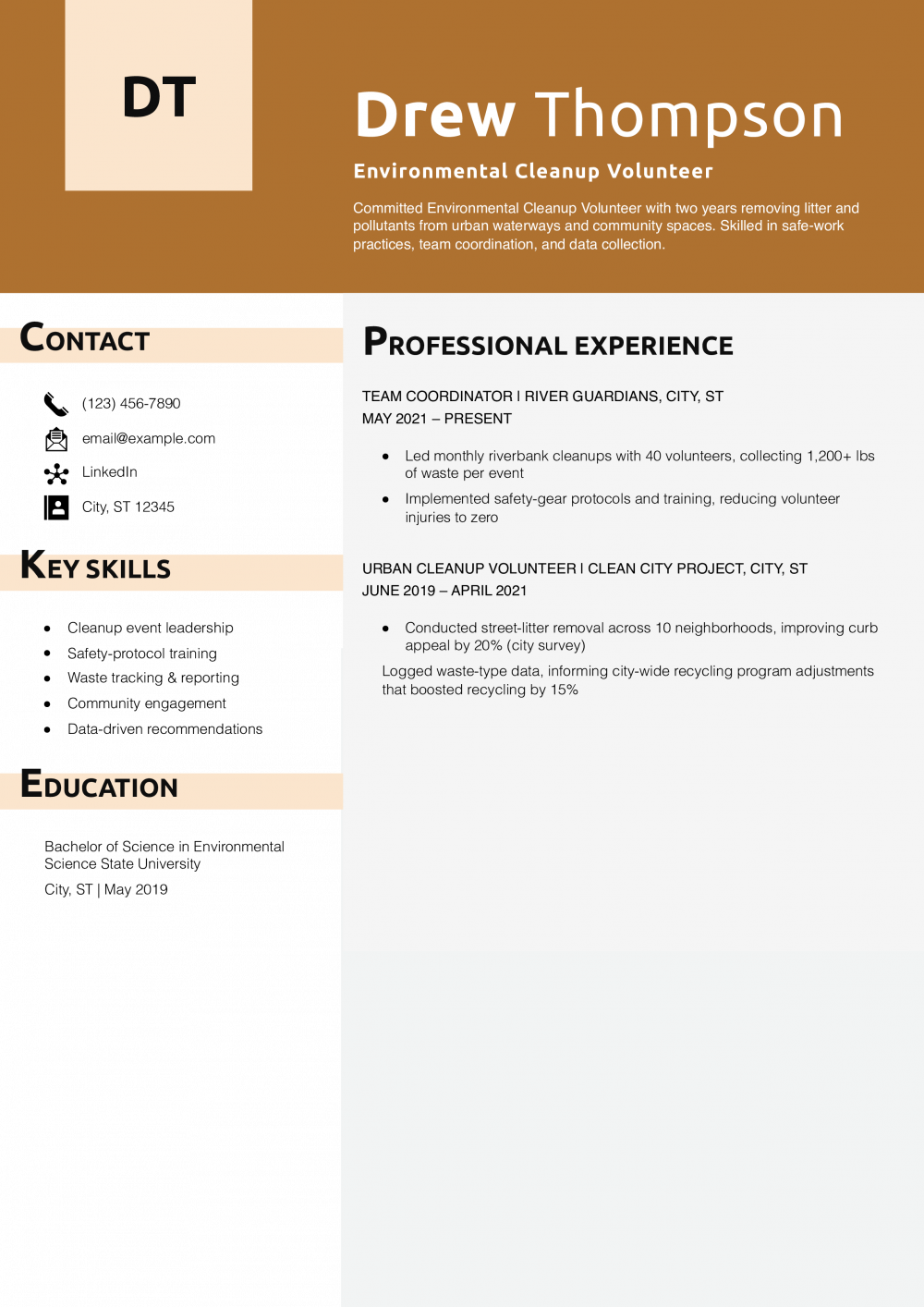
Customize this template in our builder in under 10 minutes.