Line Cook Resume Examples
Your profile should state your years on the line, the kitchen type you’ve worked (fine dining, high-volume banquet, fast casual, hotel, country club), and the stations you run unassisted. Name the covers per shift you…
Kitchen managers decide whether to keep reading by the top three lines of a dishwasher resume; if volume handled and sanitation knowledge are not obvious there, the page moves to the reject pile.
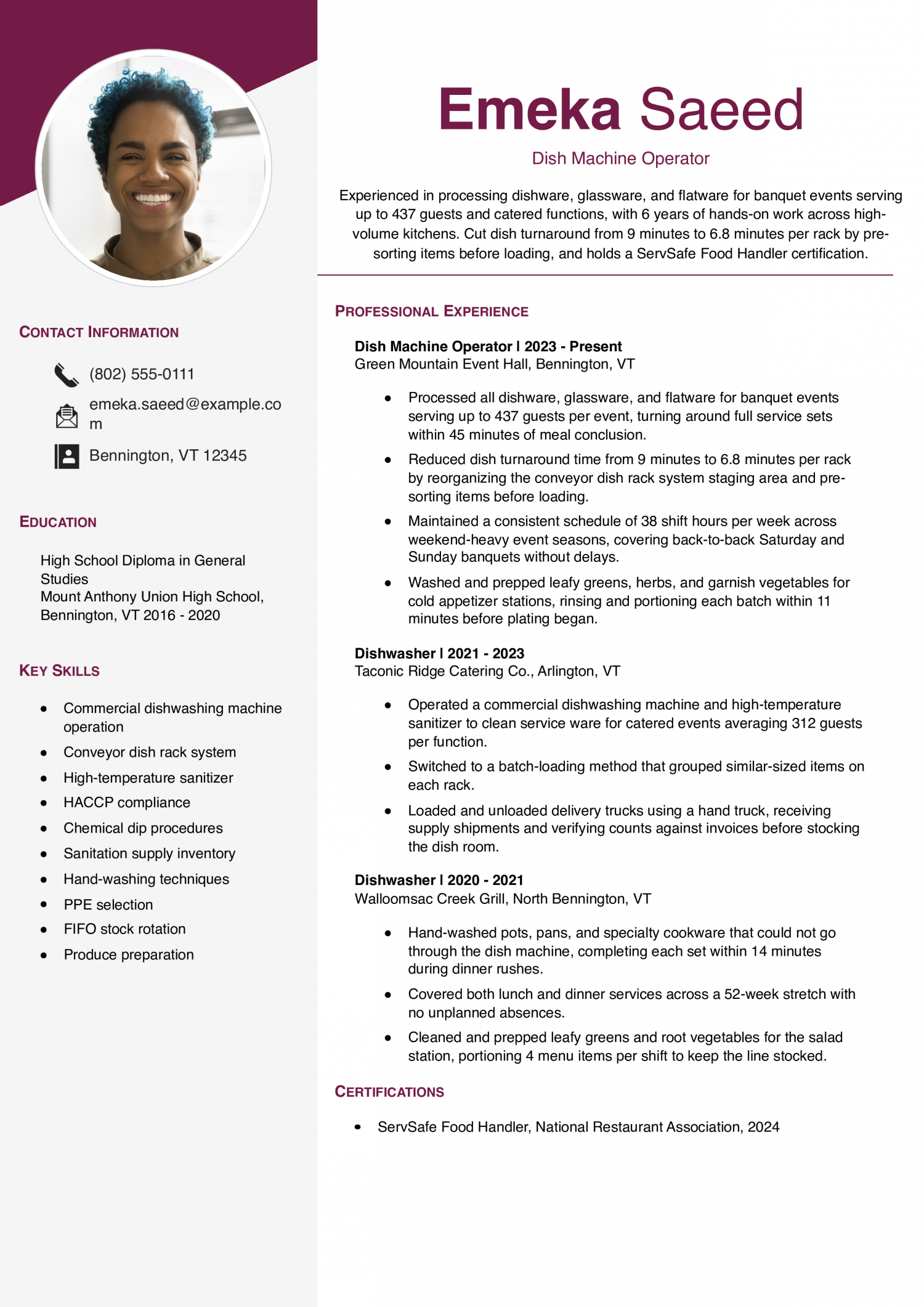
Pick this resume if you are a mid-level dish machine operator with several years of banquet and catering kitchen experience. Attach a guest count to every event-scale task so your volume is clear at a glance.
Most dishwasher resumes mention speed without giving any actual numbers to back it up. This resume pins down the improvement with a before-and-after pair: “from 9 minutes to 6.8 minutes per rack.” That format lets a hiring manager see the gain instantly without doing any subtraction. If you have sped up any process in your dish room, write the old number next to the new number so the comparison speaks for itself.
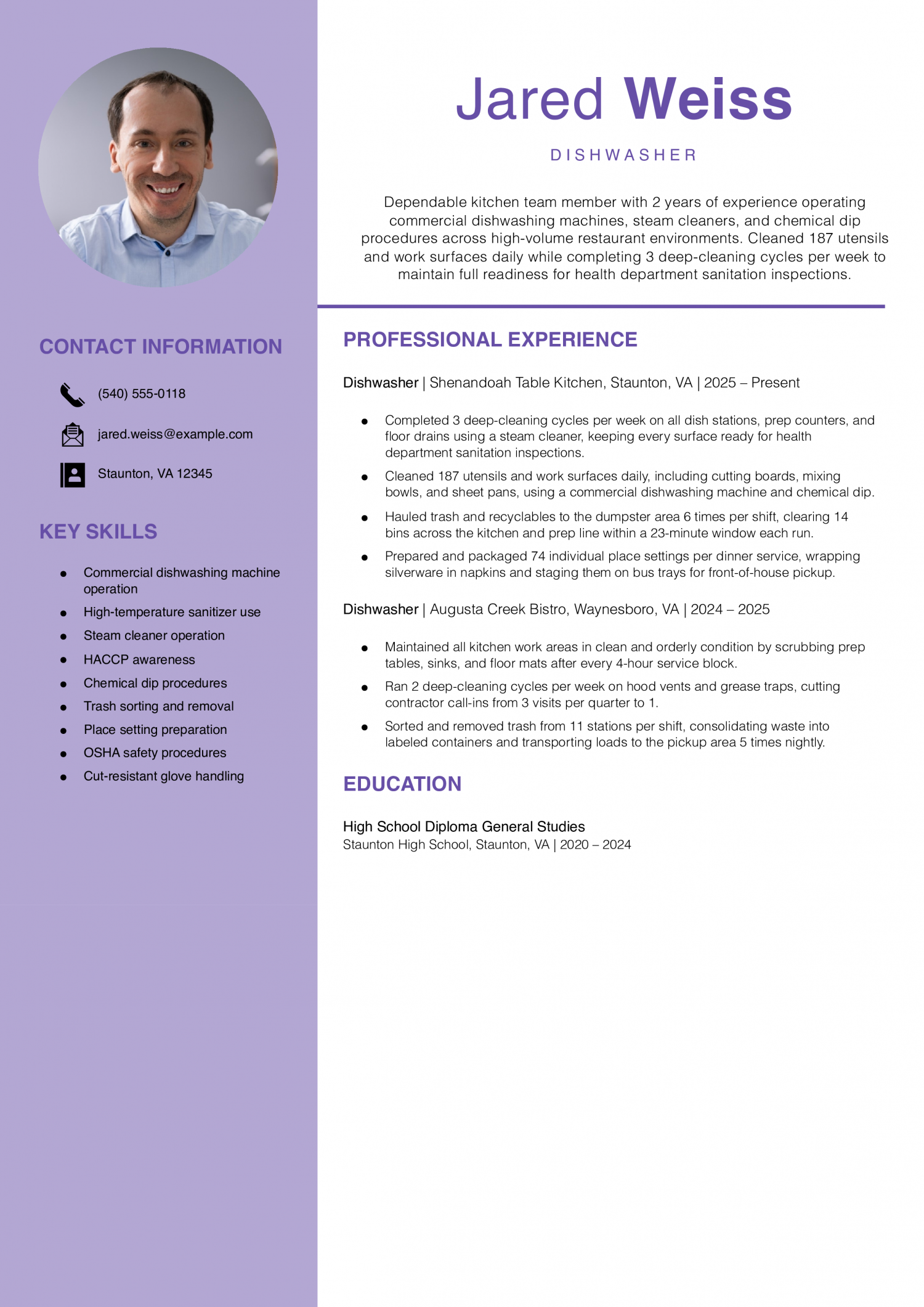
Start with this resume if you are an entry-level dishwasher building your first year or two of back-of-house experience. Convert each cleaning routine into a numbered cycle count so your output is specific and verifiable.
Most dishwasher resumes list side duties like rolling silverware but leave out any count that shows the workload. This resume puts a number on it with “prepared and packaged 74 individual place settings per dinner service, wrapping silverware in napkins and staging them on bus trays for front-of-house pickup.” That line tells a hiring manager exactly how much output you handled beyond the dish pit. If you do prep work, stocking, or setup tasks alongside washing, count the units per service and name the steps involved.
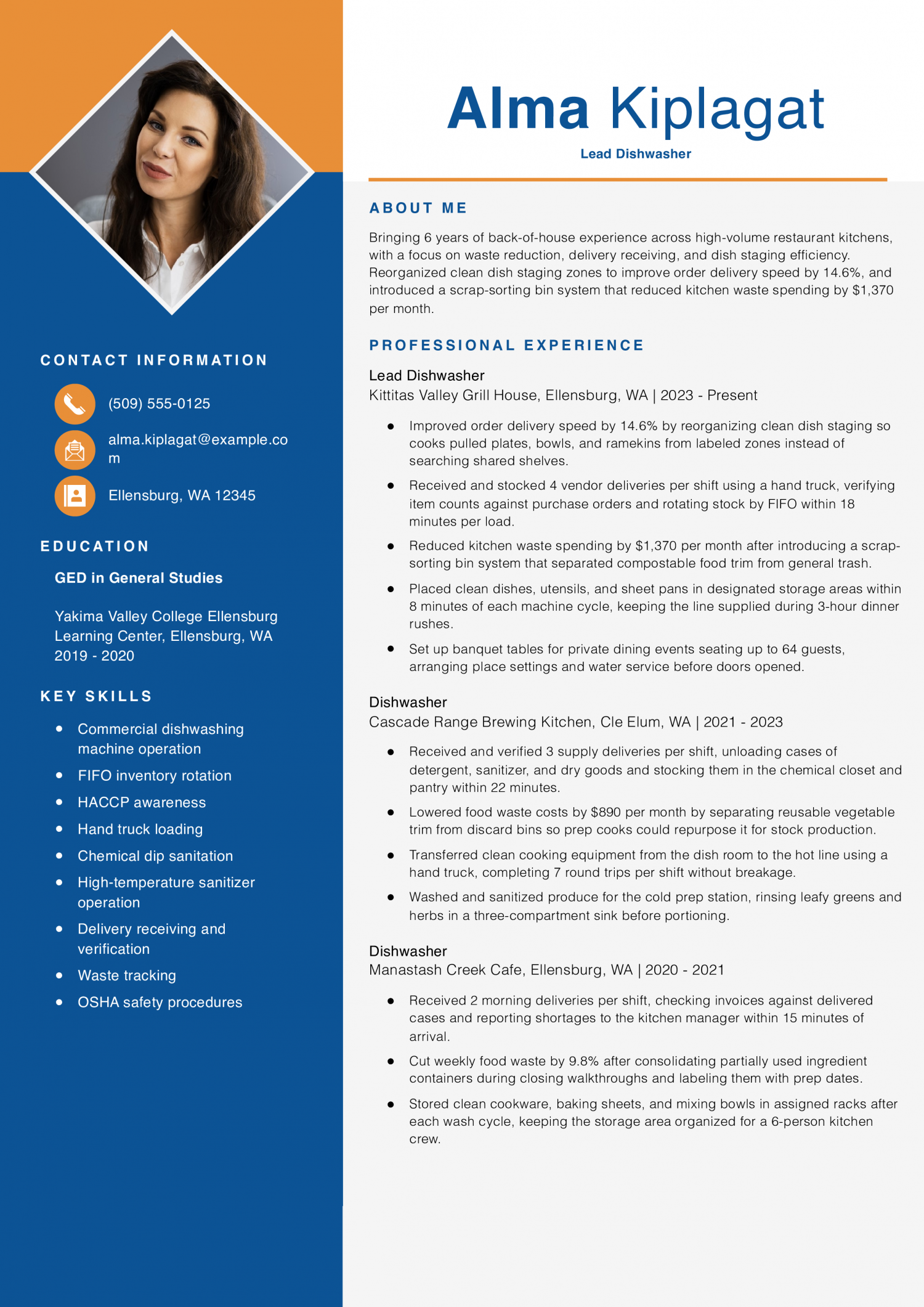
Try this layout if you are a mid-level dishwasher stepping into lead responsibilities after several years of kitchen work. Count how each bullet names the method behind a cost or time savings, giving every claim a verifiable cause.
Most dishwasher resumes say they helped cut waste but never attach a dollar figure or explain what changed. This resume fronts the savings with “reduced kitchen waste spending by $1,370 per month after introducing a scrap-sorting bin system that separated compostable food trim from general trash.” That line gives a monthly number a kitchen manager can compare against their own budget and names the exact system behind it. If you have cut costs in your dish room, state the dollar amount per month and describe the process you put in place.
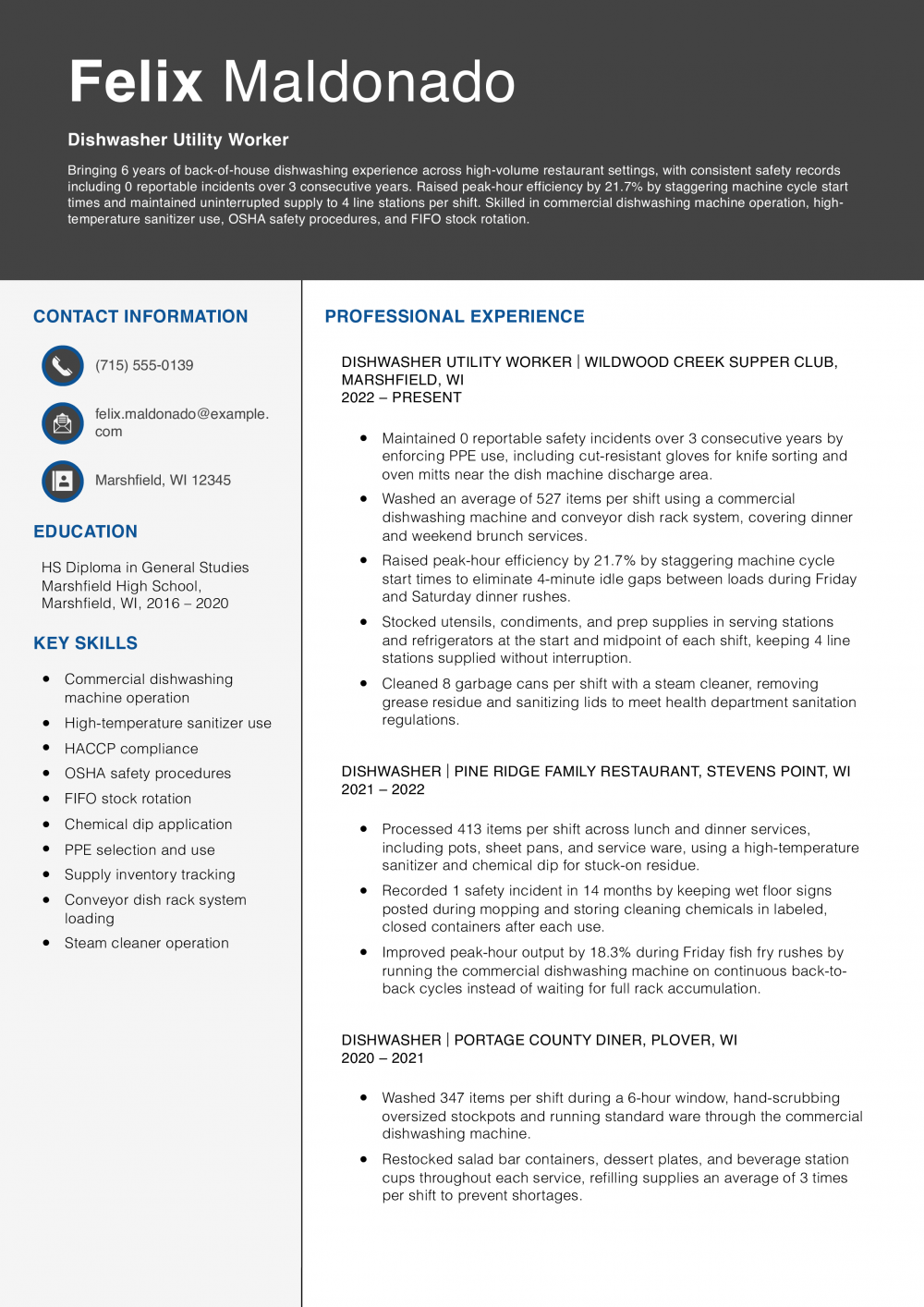
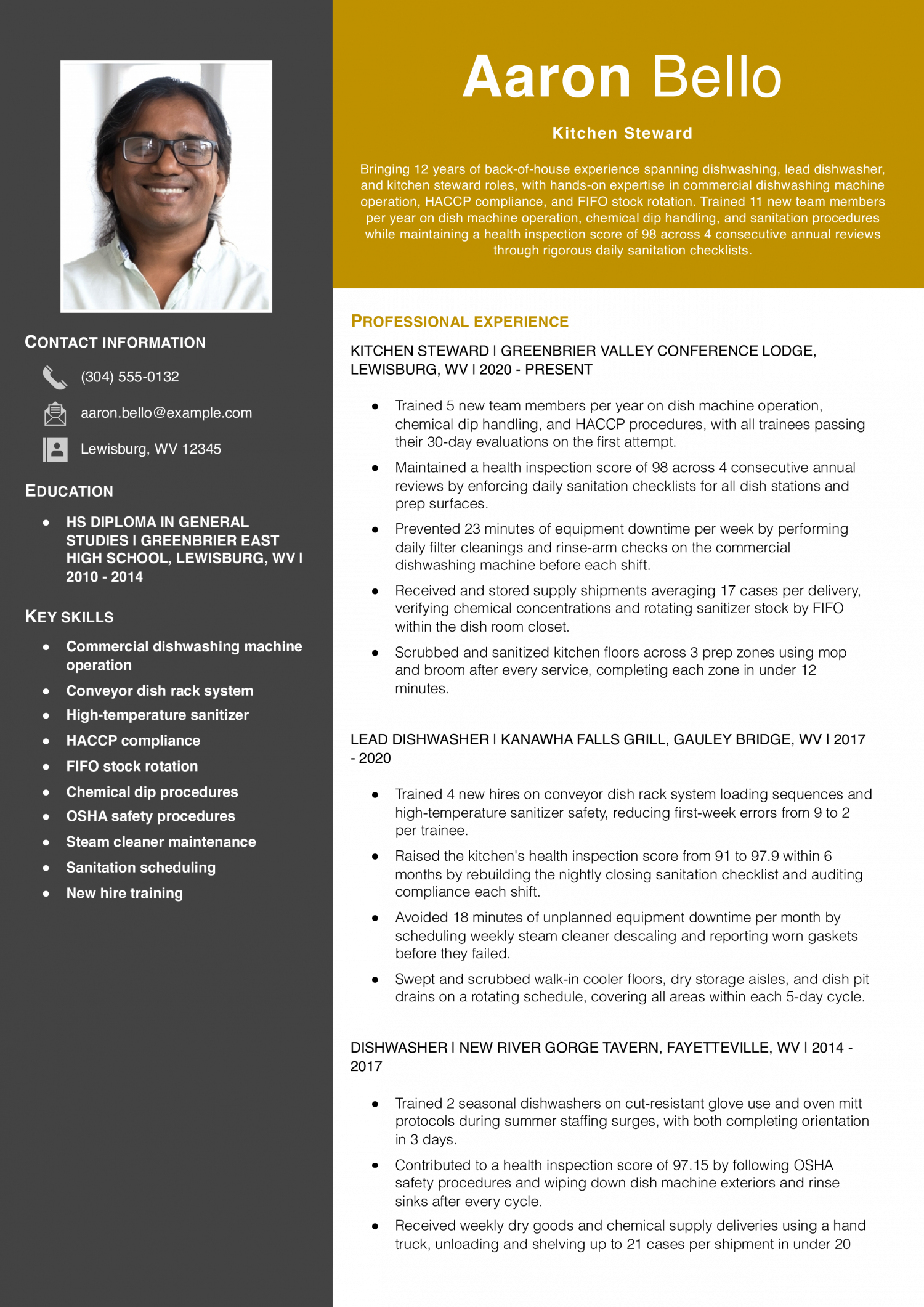
Lean on this resume if you are a senior kitchen steward with over a decade of dish room and sanitation leadership behind you. Credit each maintenance habit with the exact downtime it prevented, the way this resume does throughout.
Most dishwasher resumes mention keeping equipment running but never say how much downtime they actually stopped. This resume specifies “prevented 23 minutes of equipment downtime per week by performing daily filter cleanings and rinse-arm checks on the commercial dishwashing machine before each shift.” That line ties a weekly time savings to the exact maintenance tasks behind it, so a manager can see the payoff without guessing. If you handle any routine machine upkeep, count the downtime you avoid per week and name the specific checks you run.
Bringing 6 years of back-of-house dishwashing experience across high-volume restaurant settings, with consistent safety records including 0 reportable incidents over 3 consecutive years. Raised peak-hour efficiency by 21.7% by staggering machine cycle start times and maintained uninterrupted supply to 4 line stations per shift. Skilled in commercial dishwashing machine operation, high-temperature sanitizer use, OSHA safety procedures, and FIFO stock rotation.
Your profile sits at the top of page one. It should state how long you have been washing dishes in commercial foodservice environments. Name the kitchen type you know best.
This could be a high-volume hotel or a small café. Mention the shift pace you handle, such as approximately 200-plus covers a night. If you have worked with specific machine types, say so here.
Conveyor systems and single-rack units show different skill sets. Kitchen managers and executive chefs scan this section in a few seconds, so conciseness matters. They want to know if your speed fits their operation.
A clear scope line helps them decide fast. Keep this section to three or four lines at most.
Most strong dishwasher resumes lean on volume and pace. Count the racks you run per hour or per shift. Note how many covers the kitchen served each night.
Bullets without a number tend to read as generic duty descriptions rather than accomplishments. A line like “cleared 300 racks per shift during high-volume dinner service” tells considerably more than “washed dishes.” You can also note turnaround time for pots and pans. Track how fast you restocked the line with clean plates and utensils during peak service hours.
If you helped cut breakage, estimate the percentage drop. Mention team size if you trained or led other dish staff. These numbers give kitchen managers a picture of your output.
Even rough counts are better than vague, unquantified claims on your dishwasher resume.
Break your daily work responsibilities into three or four functional groups. The first is commercial machine operation, covering loading procedures, wash cycles, and temperature checks. The second is manual washing for pots, pans, and prep tools.
Third is sanitation, which includes cleaning floors and drain traps. A fourth group could be stocking and organizing clean wares. List each group as a short cluster of two or three bullets.
This organizational layout helps executive chefs see your range at a glance. It also keeps your resume from looking like one long, undifferentiated block of text. Match the terms you see in the job posting.
Use words like “sanitize” and “degrease” when they fit the listing.
Add a credentials block on page one, right below your profile. List your ServSafe Food Handler card from the National Restaurant Association here. Kitchen managers and executive chefs look for this card early on.
It signals that you understand safe food handling procedures and temperature controls. If your state requires a local food handler permit, list that too. Put the credential name, the issuing body, and the year you earned it.
Do not include certification card numbers or personal identification details on your resume. Placing these items high on the page keeps them visible. Many postings name food safety training as preferred or required.
Showing yours up front saves the reader time.
Close your resume with a short education section. List your high school diploma or GED with the year earned. If you are still in school, write your expected graduation date.
You do not need a long list of courses for this particular role. Below education, add a line for language skills if you speak more than one. Many commercial kitchens value bilingual staff during busy service.
You can also note schedule flexibility, such as nights or weekends. Mention any first aid or CPR training you hold. Keep this closing section to four or five lines.
It should fill out the page without repeating what your bullets already cover. A clean ending leaves a strong final read.
Kitchen managers and executive chefs read dozens of dishwasher resumes each week. The ones they keep list specific tasks and clear proof of speed. Hard skills tell them you can run the machine and keep the pit clean.
Soft skills tell them you can handle a rush without slowing the line. Kitchen managers and executive chefs weigh hard skills first for this role. They need to know you can sanitize dishes to code.
But teamwork and time management matter almost as much. A strong cook line depends on steady dish flow from you. Check the tables below against the job posting you want.
Match the exact words the posting uses in your bullet points. Treat each soft skill as a claim you back up with a result. For example, pair “time management” with the plate count you hit per shift.
| Soft Skills | AI-estimated % |
|---|---|
| Pace under pressure | 65% |
| Team reliability | 56% |
| Physical stamina | 45% |
| Attention to cleanliness | 38% |
| Shift adaptability | 32% |
And here are the top hard skills showing up most often.
| Hard Skills | AI-estimated % |
|---|---|
| Commercial dishwasher operation | 78% |
| Sanitization procedures | 68% |
| Kitchen equipment cleaning | 45% |
| Chemical safety handling | 37% |
| Dish sorting organization | 28% |
Skill names and rankings come from an AI model grounded in U.S. Department of Labor occupation data for dishwashers, not from a count of dishwashers’ resumes built on ResumeTemplates.com.
The items below are what separate a dishwasher resume from one that gets put back in the pile.
Kitchen managers often check for food safety training first. A ServSafe Food Handler card proves you know the basics. It is issued by the National Restaurant Association.
Restaurants need dish coverage for nights and weekends. Executive chefs plan labor around known open shifts. Stating your hours helps them fill gaps fast.
Tip: State Your Availability Up Front
Add a short line near your contact details. Name the days and shift windows you can work. This saves time for you and the kitchen manager.
Open availability is a strong selling point.
A clean work record and on-time shifts keep you eligible. The credential below is what moves a dishwasher resume from the qualified stack into the shortlist. Kitchen managers and executive chefs scan for it to gauge your food safety awareness.
Many kitchens ask for it before your first day on the line. Others let you earn it in the first few weeks. Either way, it sets you apart from other applicants.
List the issuing body, the date you earned it, and the year it expires. Put it in a short section near the top of the page so it is easy to spot.
Dishwasher is one of the larger occupations tracked by BLS, which means the median reflects a wide mix of entry-tier roles. The pay spread is narrow. The top earners outpace the median by roughly a quarter, and the lowest band sits about the same distance below it.
That tight range tells you most of the field works at similar wage levels. Geographic location and venue type shape where you fall within that band. Because the gap between tiers is small, even one credential can shift your positioning.
Lead your resume with the volume of covers you handled per shift and any food-safety training you hold.
| # | State | Median Annual |
|---|---|---|
| 1 | Washington | $40,080 |
| 2 | District of Columbia | $38,670 |
| 3 | California | $37,870 |
| 4 | Colorado | $37,840 |
| 5 | Hawaii | $37,740 |
| 6 | Massachusetts | $37,190 |
| 7 | Illinois | $36,180 |
| 8 | Oregon | $36,040 |
| 9 | Vermont | $36,010 |
| 10 | New Jersey | $35,900 |
| # | State | Workers | Median |
|---|---|---|---|
| 1 | California | 74,160 | $37,870 |
| 2 | Florida | 40,480 | $31,240 |
| 3 | Texas | 33,630 | $29,610 |
| 4 | New York | 30,680 | $35,450 |
| 5 | Pennsylvania | 19,570 | $29,950 |
Resume Templates offers HR approved resume templates to help you create a professional resume in minutes. Choose from several template options and even pre-populate a resume from your profile.
Yes, a resume helps you stand out even for entry-level dishwasher roles. Kitchen managers and executive chefs often review dozens of walk-in applications in a single week. A one-page resume that lists your availability, speed, and sanitation habits gives them a reason to call you first.
Start each bullet with an action verb and attach a number when you can. For example, write "Washed and sanitized 300+ plates, pans, and utensils per shift in a 200-seat restaurant." Numbers like dish counts or turnaround times show kitchen managers the pace you can handle.
Focus on the results your work created for the kitchen team. Mention how you kept stations stocked during peak service or reduced breakage by organizing dish racks. Tying your tasks to the restaurant's speed of service shows you understand how the back of house operates.
Capitalize "Dishwasher" when it appears as your job title in the experience section header. In a bullet point or sentence where it describes the work itself, use lowercase. Following this rule keeps your formatting consistent with standard resume style.
List hard skills that kitchen managers can verify, such as commercial dish machine operation and chemical sanitizer handling. Add soft skills like time management and teamwork under pressure. Keep the section to eight or ten items so each one carries weight.
One page is the standard length for a dishwasher resume. Most candidates have fewer than ten years of kitchen experience to cover. A single page forces you to keep only the details that matter to executive chefs reviewing your application.
Lead with a profile statement that highlights your physical stamina and willingness to learn kitchen protocols. Below that, list any volunteer work, school cafeteria duties, or household tasks that involved cleaning at volume. Even unpaid work shows you can follow sanitation standards and manage repetitive tasks under time pressure.
For a dishwasher, an ATS-friendly template is the safest pick, because it puts your certifications and experience where a hiring manager scans first. A basic template is a solid alternative. Whichever you choose, keep the formatting clean and easy to parse: clear section headings, a standard font, and no graphics a parser can choke on.