Medical Resume Examples and Templates for 2026



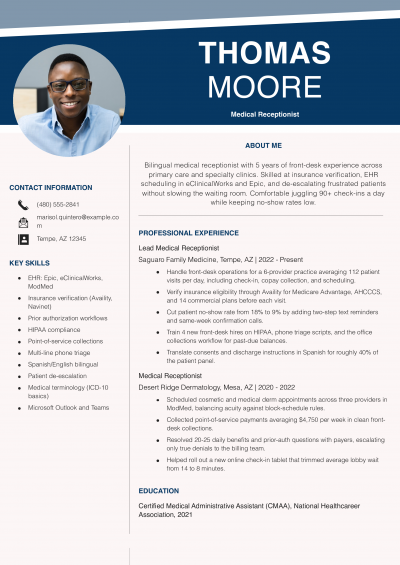
Office managers hiring front desk receptionists look for the EHR system named on the first page and a real patient-volume number, because both signal whether the candidate can step into the schedule without a six-week ramp.
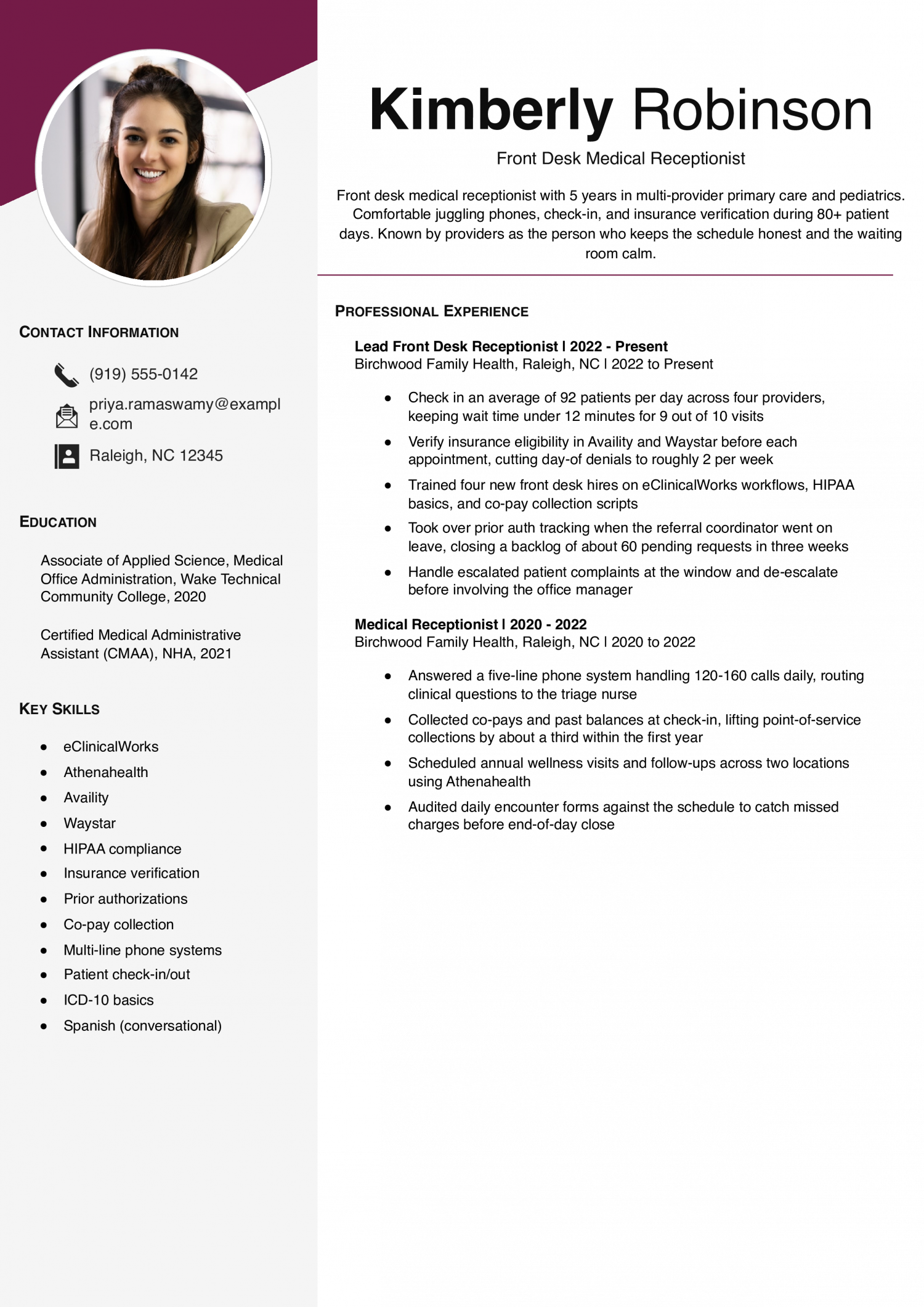
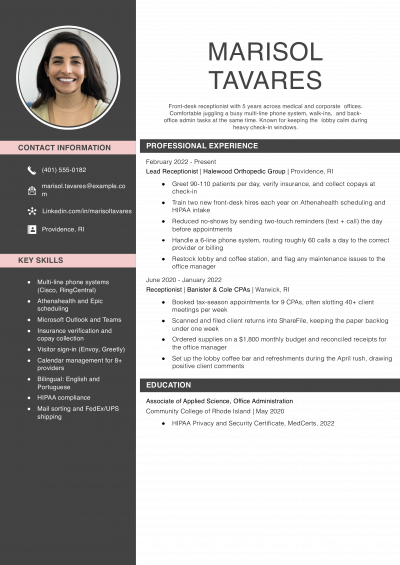
You're early in your front desk career, maybe coming from retail, hospitality, or a CMA program. The Entry Level resume needs to prove you can handle phones, HIPAA-aware intake, and learn an EHR fast.
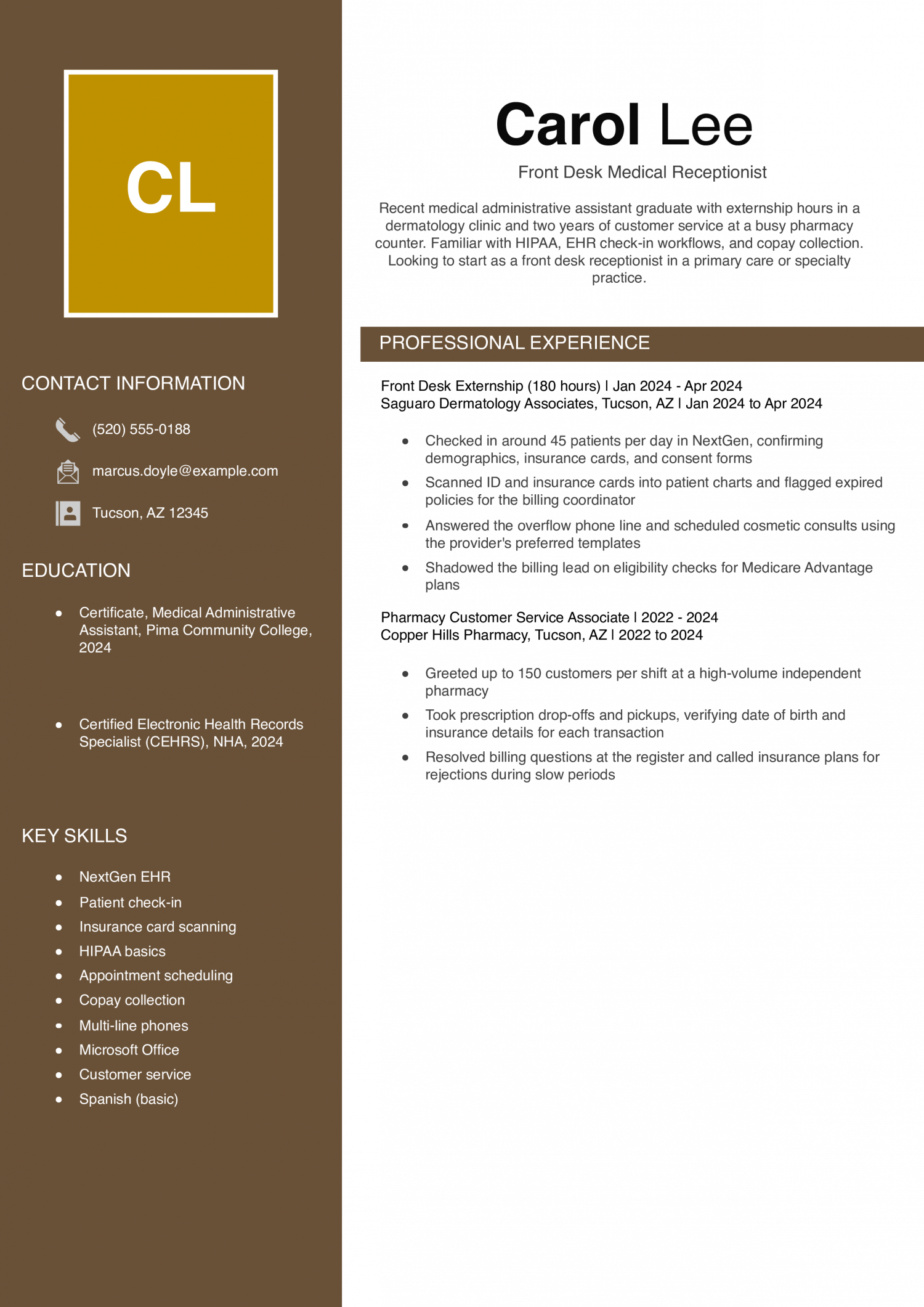
You've run a front desk for two or more years across one or more EHR systems. The Experienced resume needs to prove daily patient volume, insurance verification accuracy, and ownership of scheduling for multiple providers.
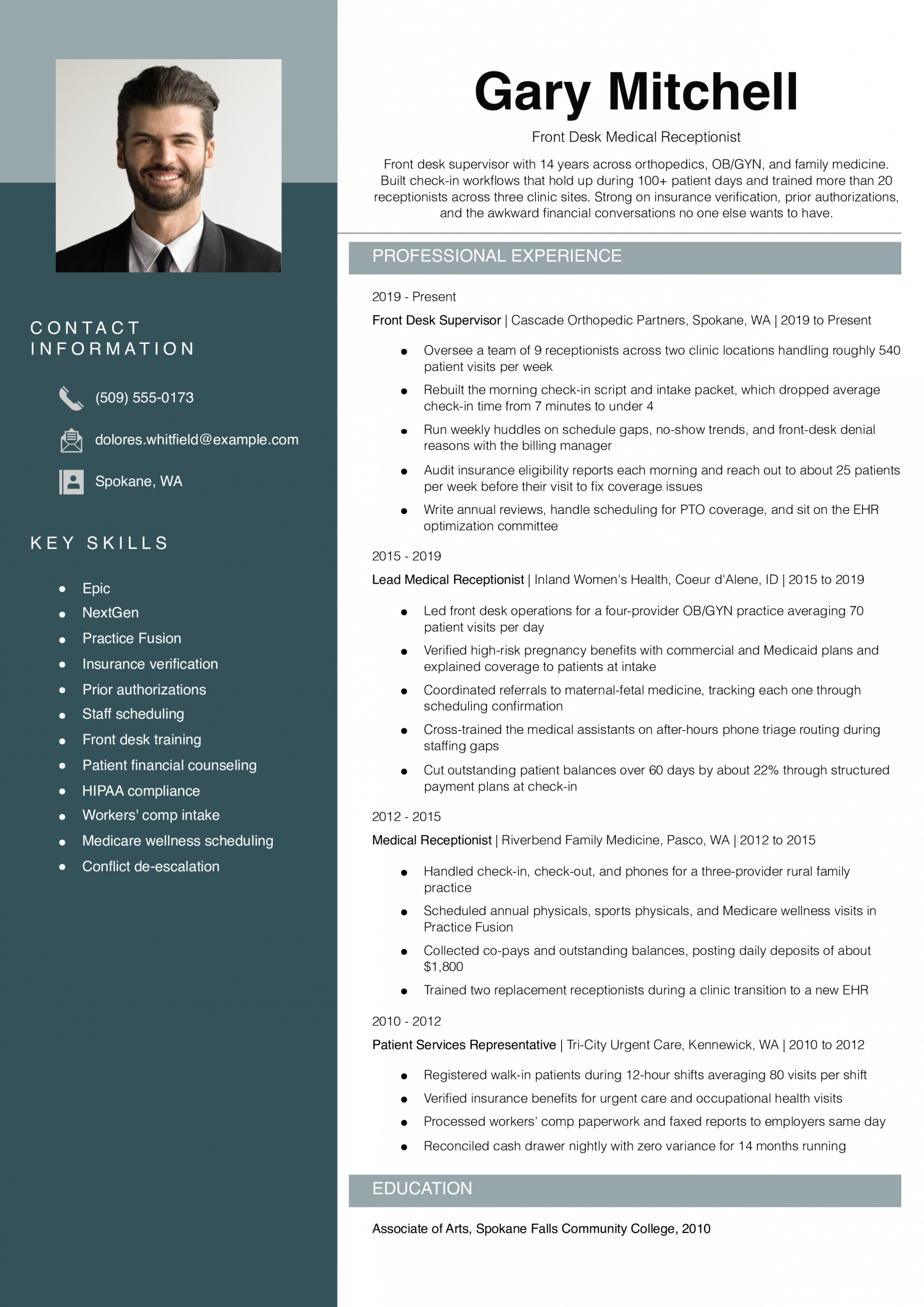
Front desk medical receptionist with 8 years across cardiology, pediatrics, and community health. Comfortable as the only person at the desk on a 90-patient day, and equally comfortable training a new hire on Epic check-in their first week. Known for catching insurance issues before they become denials.
Your profile should state your years at a medical front desk and the practice type you have worked in. Name the setting: family practice, pediatrics, orthopedics, urgent care, multi-specialty group, or hospital outpatient clinic.
Add the EHR you use daily and the provider count you support. A line like “three years at the front desk of a six-provider orthopedic clinic on Athenahealth” tells an office manager the scope in one read. Avoid generic openers about being a people person.
Most strong front desk bullets carry a number. Office managers scan for daily patient check-ins, calls answered, and copay collection totals first.
Name two or three real metrics: patients checked in per day, multi-line calls handled per shift, or insurance eligibility verifications completed weekly. Bullets without a number tend to read as duties, not results. A bullet like “verified insurance eligibility for 60 daily appointments with 98% clean-claim rate” beats “verified insurance.”
Cluster bullets so a reader can scan them. Use four buckets most clinics expect: patient intake and check-in, scheduling and appointment management, insurance verification and copay collection, and phones and provider support.
Under each, name the concrete task. “Scheduled follow-ups across three providers in Epic” sits in scheduling. “Collected copays and reconciled the daily cash drawer” sits in insurance and payments.
This shape helps office managers map your work to their open shifts. If your work leans toward insurance and billing, see our medical billing and coding resume examples for ways to present it.
Medical office managers and practice administrators want EHR systems, HIPAA training, and any certifications visible on page one, not buried at the bottom.
Put a short credentials block under your profile listing the EHR and PM systems you know (Epic, eClinicalWorks, Athenahealth, NextGen), your HIPAA training year, and CPR or BLS if current. Add CMAA or CMRS if you hold them. List the state and “in good standing” for any license, never the license number.
End with a tight education section and any relevant coursework. List your high school diploma or GED, any medical office administration certificate, and CPR or BLS dates.
If you came from retail, hotel front desk, or call center work, add a short “earlier experience” line citing the volume you handled. Five years at a pharmacy counter or hotel desk tells an office manager you can handle a busy lobby and difficult patients without losing your composure.
Five years ago, a front desk medical receptionist resume read like a list of office duties: answered phones, greeted patients, filed charts. The skills below come from the resumes our users built in 2026. The mix has shifted toward named EHR systems, insurance verification accuracy, and HIPAA fluency.
Office managers weigh hard skills first because they signal day-one readiness, then read soft skills as evidence in the bullets below. Match the hard skills against the target posting, and treat each soft skill as a claim your work history has to back up.
| Soft Skills | % of resumes with this skill |
|---|---|
| Customer service | 65% |
| Communication | 60% |
| Multitasking | 42% |
| Attention to detail | 38% |
| Empathy | 33% |
| Hard Skills | % of resumes with this skill |
|---|---|
| Electronic health records (EHR) | 73% |
| Appointment scheduling | 61% |
| Insurance verification | 47% |
| Medical billing | 36% |
| HIPAA compliance | 30% |
Based on data from thousands of front desk medical receptionists’ resumes built on ResumeTemplates.com, May 2026.
Before a front desk medical receptionist resume gets a closer read, hiring teams check for a short list of essentials.
Office managers filter front desk resumes by EHR brand before reading anything else. Name the systems you have used by their actual product name, and add the years of experience next to each.
Epic (including MyChart patient portal workflows)
Athenahealth (athenaOne scheduling and athenaCollector)
eClinicalWorks (eCW front desk and patient portal)
NextGen Healthcare (NextGen Office for small practices)
Cerner / Oracle Health (now common at hospital outpatient clinics)
Kareo, DrChrono, or Practice Fusion (small and mid-size practices)
HIPAA fluency is table stakes for any medical front desk role. The goal on the resume is to show you apply it in daily workflows, not just that you sat through a training video.
Show HIPAA in action through your bullets. Reference verifying patient identity at check-in, locking workstations, and handling records requests through proper release forms.
List your most recent HIPAA training in the credentials block with the provider and year. Skip details about specific patients, case files, or anything that could itself be a privacy breach.
A high school diploma and current CPR or BLS keep you eligible for most front desk roles. The certifications below move a front desk medical receptionist resume from the qualified-but-typical stack into the office manager’s shortlist. List the issuing body, year earned, and expiration on each line.
Certified Medical Administrative Assistant (CMAA): Issued by NHA, this signals you know front-office workflows, HIPAA, and basic billing without on-the-job training.
Certified Medical Reimbursement Specialist (CMRS): Useful if your role touches billing or claims; signals you understand the revenue cycle past the check-in window.
BLS or CPR Certification (American Heart Association): Required at many clinics and urgent cares; list the issuer and expiration so the office manager does not have to ask.
HIPAA Privacy and Security Training Certificate: List the provider and year; clinics audit this and prefer hires who arrive with current training already documented.
The top-paying states for front desk medical receptionists tend to cluster in high-cost metros and states with strong outpatient clinic networks, not the regions most job seekers assume. Pay also rises in markets where multi-specialty groups and surgery centers compete for bilingual or EHR-experienced front office staff.
If you are open to relocation or to a longer commute, foreground the EHR systems you know and any bilingual patient communication on your resume; both travel across state lines and lift your offers in the markets that pay the most.
| # | State | Avg. Annual |
|---|---|---|
| 1 | Alaska | $44,380 |
| 2 | District of Columbia | $43,900 |
| 3 | Washington | $43,760 |
| 4 | California | $43,360 |
| 5 | Massachusetts | $42,650 |
| 6 | New York | $41,570 |
| 7 | Colorado | $40,560 |
| 8 | Maine | $40,360 |
| 9 | Rhode Island | $40,360 |
| 10 | Oregon | $39,800 |
| # | State | Workers | Median |
|---|---|---|---|
| 1 | Texas | 81,110 | $34,480 |
| 2 | California | 80,400 | $43,360 |
| 3 | New York | 76,590 | $41,570 |
| 4 | Florida | 70,960 | $36,070 |
| 5 | New Jersey | 48,710 | $39,060 |
Resume Templates offers HR approved resume templates to help you create a professional resume in minutes. Choose from several template options and even pre-populate a resume from your profile.
Lead with your years at a medical front desk, the practice setting, and the EHR you use.
Add the daily patient volume you handle and any bilingual ability. Keep the summary to three sentences and skip generic traits like "hard-working" or "team player."
Pull from retail, hotel front desk, or call center work and translate the volume. "Checked in 80 hotel guests per shift" maps cleanly to patient check-in.
Add a HIPAA training certificate and any EHR coursework on a free or low-cost platform. This shows the office manager you have already closed the clinical gap.
Yes, and name them exactly as the posting spells them. Office managers scan for "Epic," "Athenahealth," or "eClinicalWorks" by brand, not by generic terms.
If you have used more than one, list them in a short systems block under your summary. This way the ATS parser catches every term on the first pass.
Tie HIPAA to a real action in your bullets. Write "verified patient identity per HIPAA protocols before releasing records to 30 callers daily."
List your HIPAA training year and provider in the credentials block. That beats a vague "HIPAA compliant" line dropped into your skills section.
For a front desk medical receptionist, an ATS-friendly template is the safest pick, because it puts your certifications and experience where a hiring manager scans first. A basic template is a solid alternative. Whichever you choose, keep the formatting clean and easy to parse: clear section headings, a standard font, and no graphics a parser can choke on.
Executive Resume Writer and Career Coach
Andrew Stoner is an executive career coach and resume writer with 17 years of experience as a hiring manager and operations leader at two Fortune 500 Financial Services companies, and as the career services director at two major university business schools.
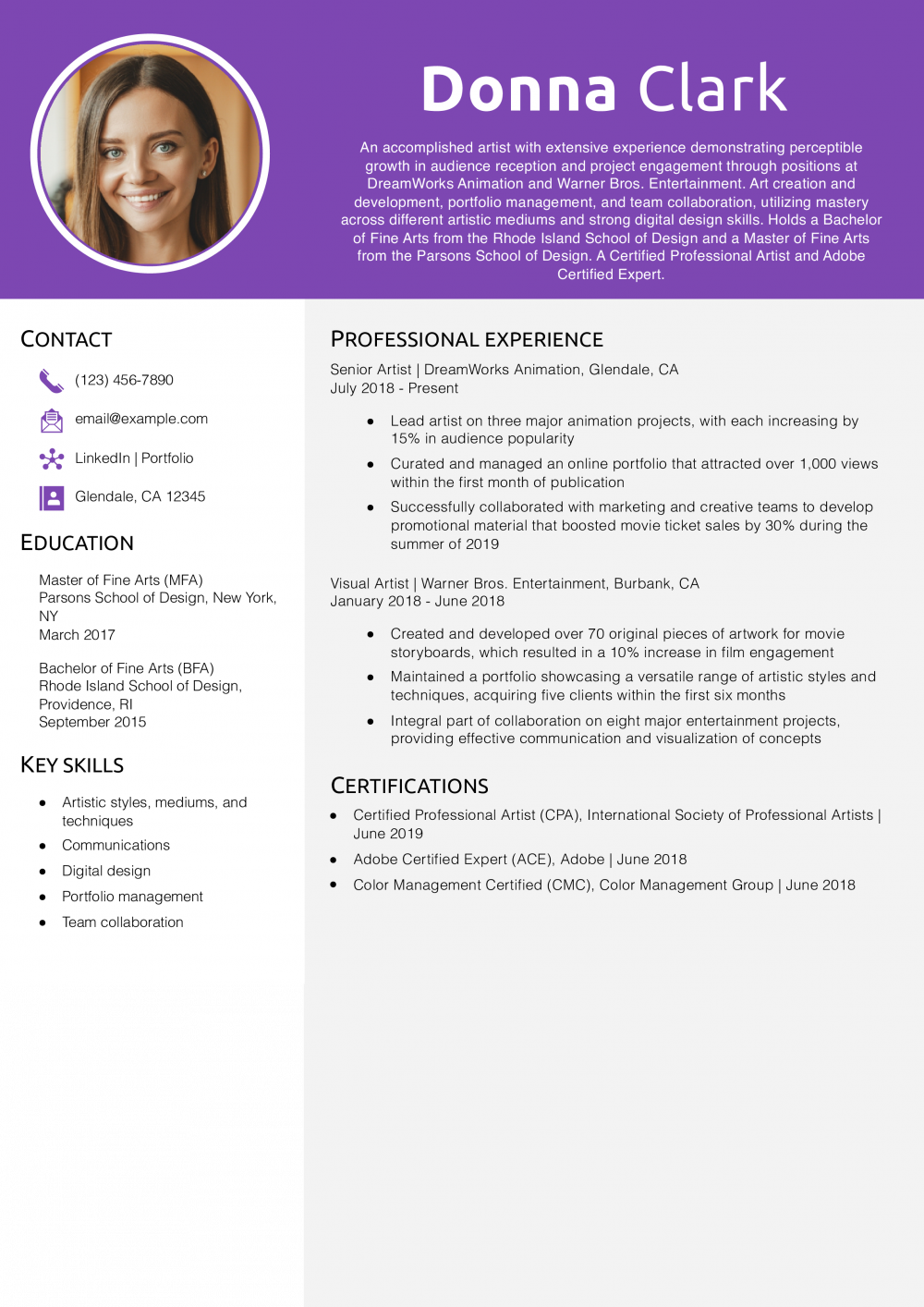
Customize this template in our builder in under 10 minutes.