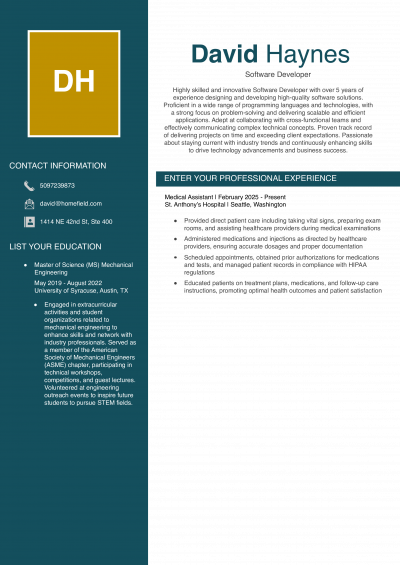
3 Best Mechanical Engineer Resume Examples and Templates for 2026



Engineering resumes are most effective when technical skills are paired with real-world application. Employers want to see systems built, tested, or improved.
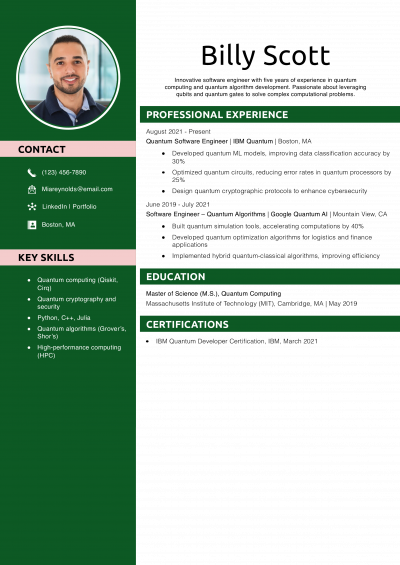
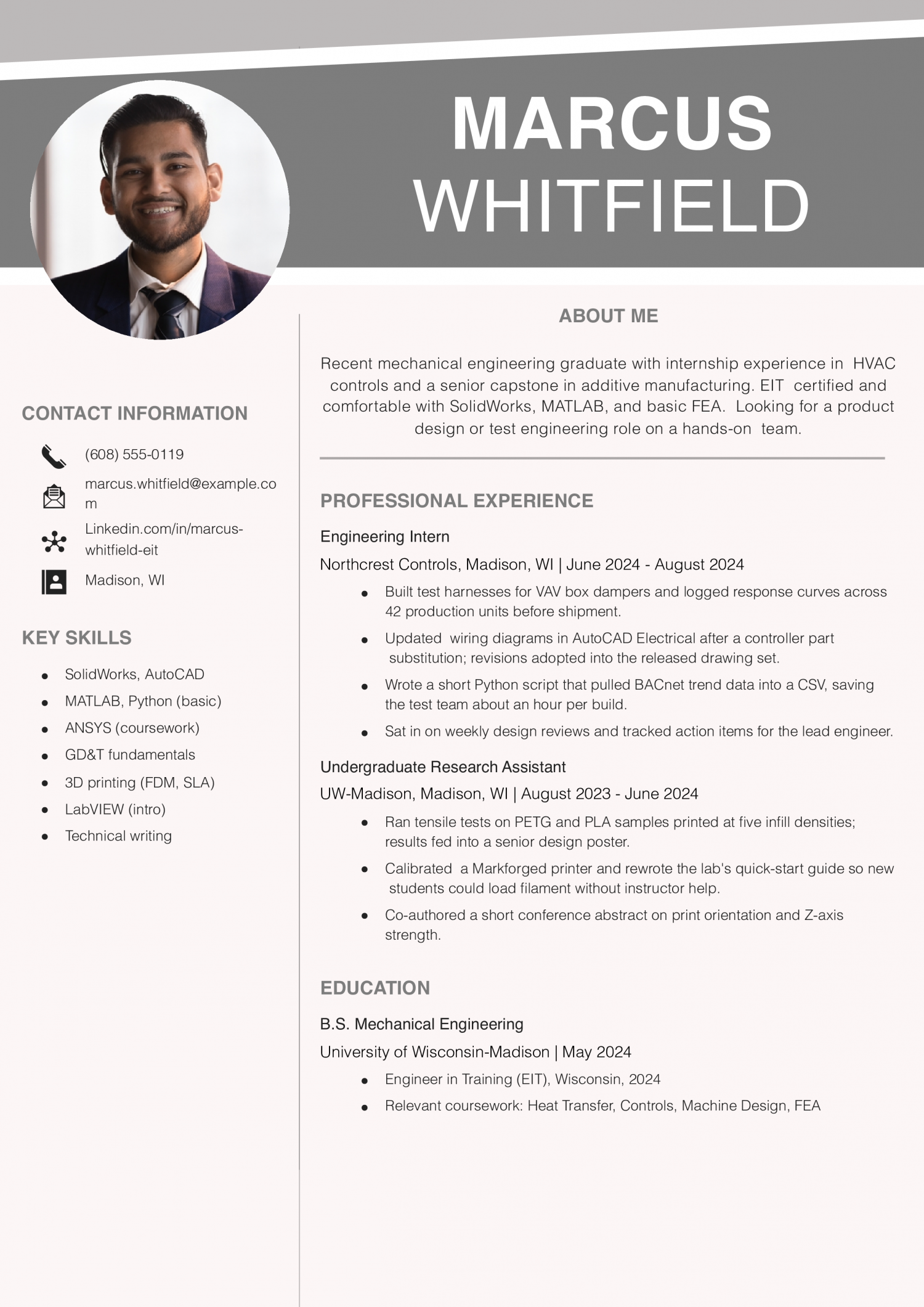
Entry-level engineers are recent ABET grads, EITs, or interns moving into a first full-time seat. This resume needs to prove capstone scope, the CAD or coding stack you actually used, and any FE pass.
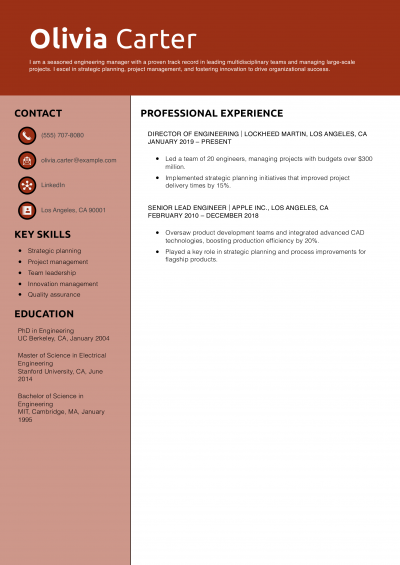
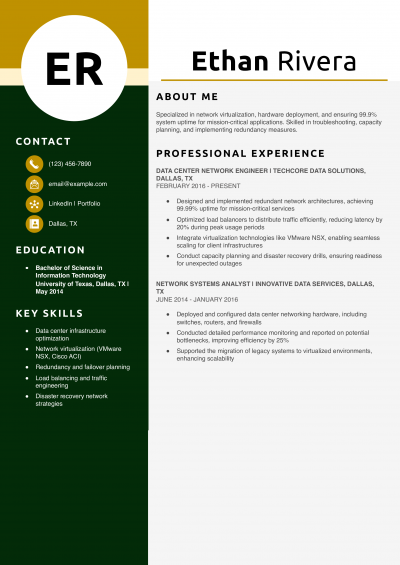
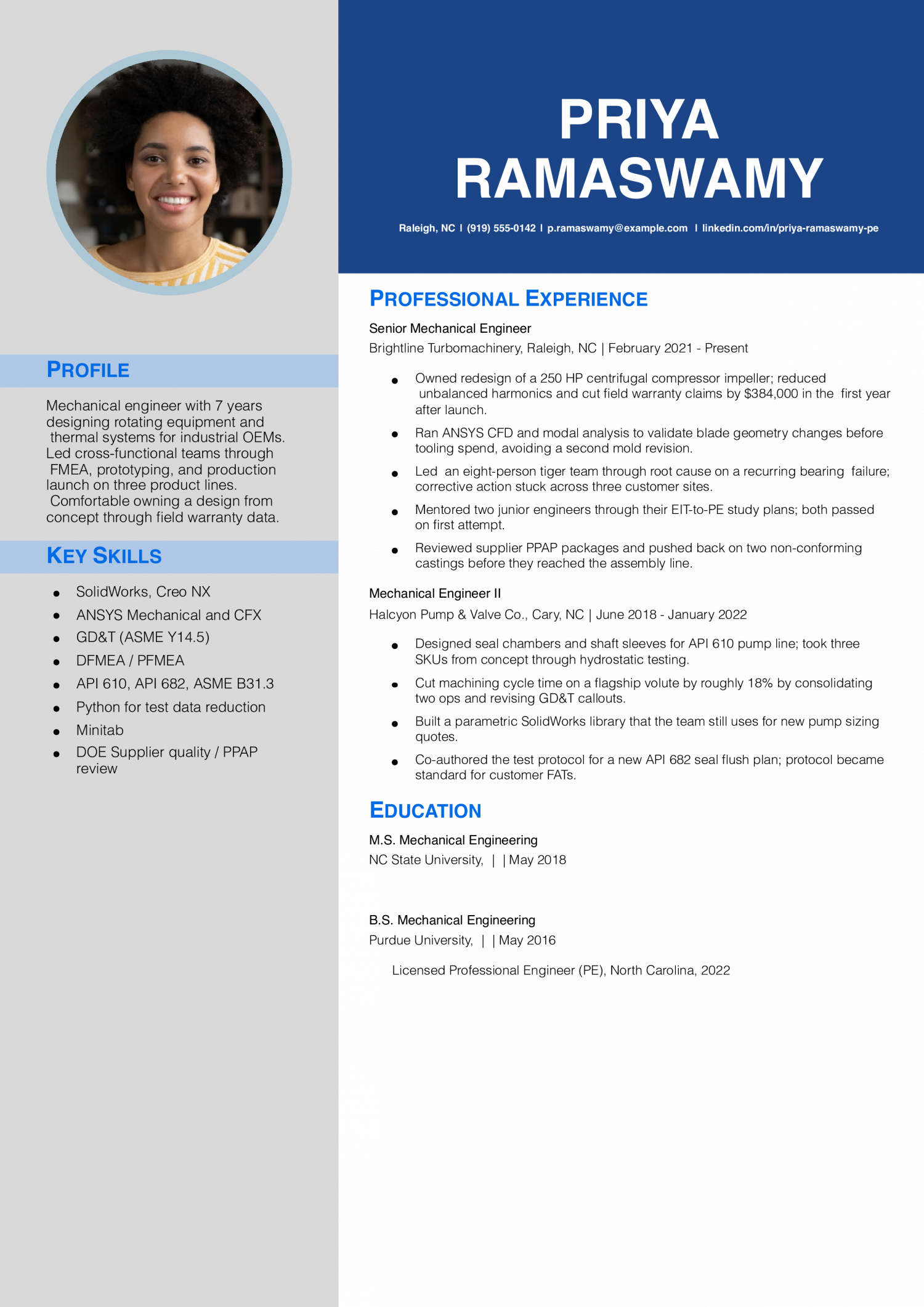
Mid-career engineers own projects end to end and mentor juniors. This resume needs to prove budget and timeline ownership, the standards you design to, and measurable performance gains on shipped work.
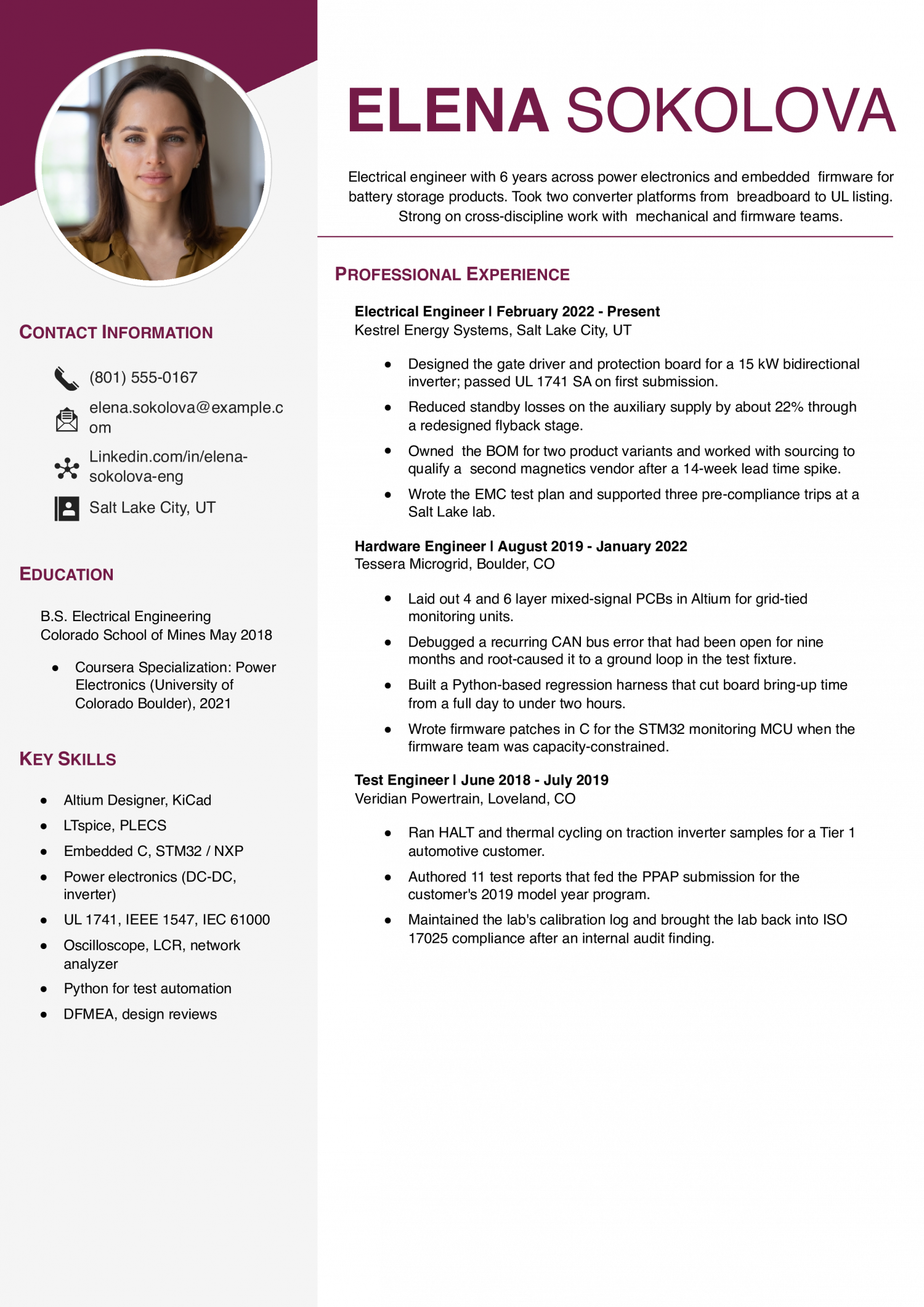
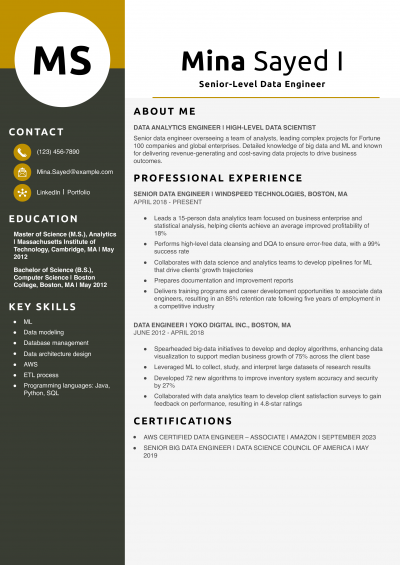
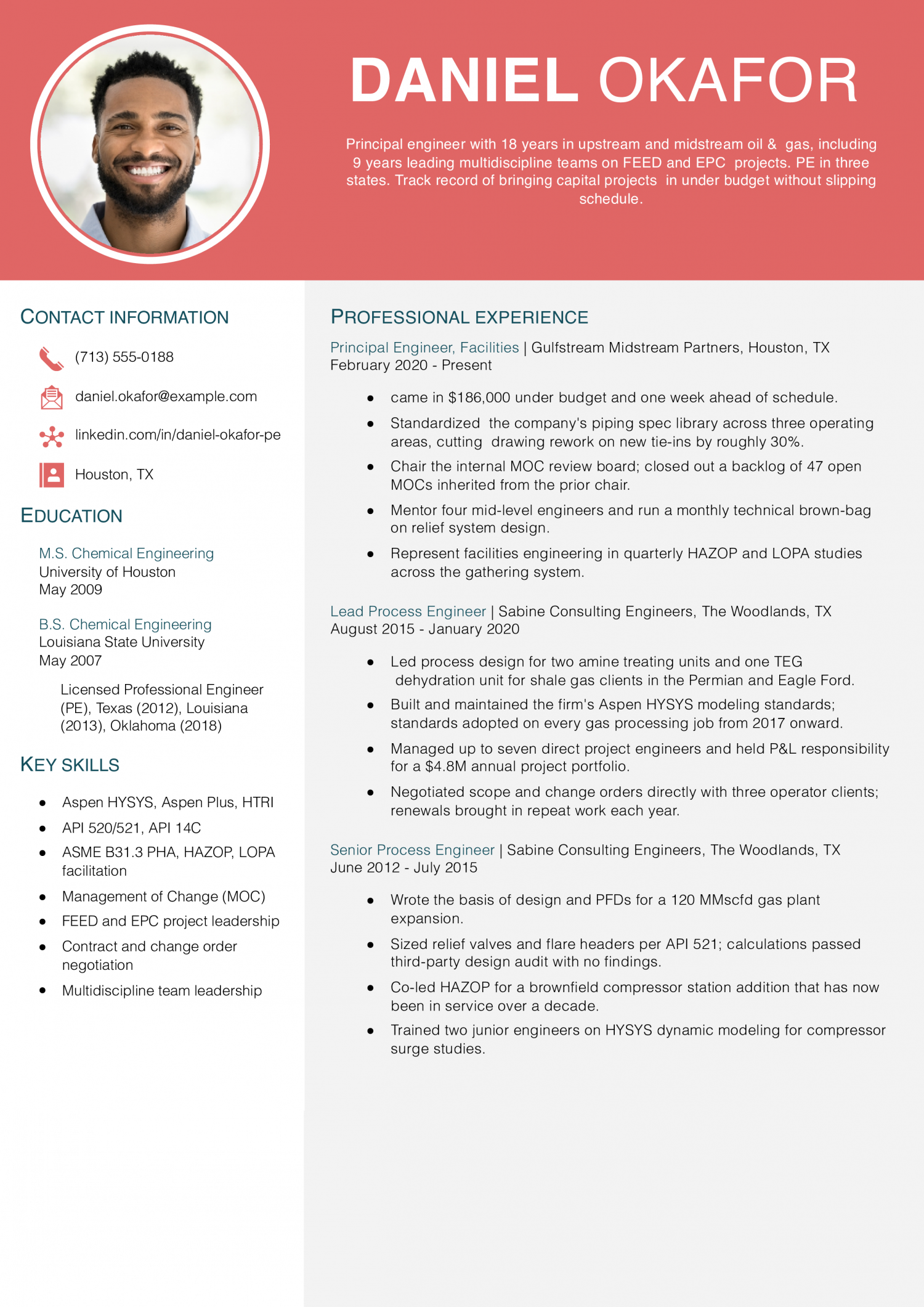
Senior engineers stamp drawings, lead multi-discipline teams, or architect platforms. This resume needs to prove PE or SE licensure, multi-million-dollar program scope, and the technical decisions that moved cost, reliability, or schedule.
Amara Linwood
Minneapolis, MN | (612) 555-0173 | [email protected] | linkedin.com/in/amara-linwood-pe
Civil/structural engineer with 11 years across commercial buildings, light industrial, and DOT bridge work. Licensed PE in Minnesota and Wisconsin. Comfortable running a project from proposal through construction administration and translating analysis results into drawings the contractor can actually build.
Senior Structural Engineer
Northwind Structural Group | Minneapolis, MN | 2021-Present
Project Engineer
Bluestem Bridge Consultants | St. Paul, MN | 2018-2021
Structural Engineer
Cedar Lake Engineering | Eau Claire, WI | 2015-2018
Engineer in Training
Riverbend Civil Associates | La Crosse, WI | 2013-2015
Lead the summary with a verifiable number, not a scope statement. Name the budget you owned, the tolerance you held, or the uptime you delivered.
An engineering manager reads the first line to gauge whether you’ve shipped at the scale they need. A line like ‘Mechanical engineer with seven years designing rotating equipment to ASME B73.1, owning $4M in capital projects’ beats ‘experienced engineer with strong technical skills.’ Add your discipline, your license tier (EIT, PE, SE), and the standards you design to. That trio tells the reader your stamping authority, your domain, and the codes you’ve worked under before they reach bullet one.
Engineering bullets without numbers read as duties. Most strong resumes name two or three of the following per project: budget, throughput, tolerance, weight, cycle time, defect rate, or uptime.
Pick metrics your discipline actually tracks. Civil leads with linear feet, square footage, or contract value. Mechanical leads with tolerance bands, GD&T callouts, or FEA load cases cleared.
Software leads with latency, request volume, or deploys per week. Pair the metric with the constraint you worked under, such as ‘reduced harness weight 18% while holding UL 758 compliance.’ Recruiters scan for a number plus a standard in the same line.
Cluster your work into three to five buckets so a reader can find depth fast. Common groupings: Design and Analysis, Testing and Validation, Project Management, and Manufacturing or Field Support.
Under each bucket, name the deliverable, the tool, and the outcome. Design and Analysis might cover SolidWorks models, ANSYS FEA runs, or AutoCAD Civil 3D grading plans. Testing and Validation covers DVP&R execution, LabVIEW data acquisition, or hardware-in-the-loop rigs.
Project Management covers RFIs cleared, submittals processed, or sprints led. This structure helps an engineering manager match your bullets to the open requisition without rereading.
Engineering hiring managers look for license status, code familiarity, and software stack before they read experience. Put a Credentials line and a Technical Skills block in the top third of page one.
List your FE, EIT, PE, or SE status with the state of licensure, without the license number itself. Name the codes you design to (ASME, IEEE, NEC, IBC, ACI 318, ASCE 7) and the CAD, simulation, or PLM tools you use daily. A staffing recruiter or engineering manager scans this block to confirm you can stamp, review, or model what the role requires before they invest in the bullets below.
Entry-level engineers should keep GPA if 3.5 or higher, list capstone and research projects with the tech stack, and name internships with measurable output.
Move education below experience after your first full-time role. Drop coursework once you have two years in industry. Keep your ABET-accredited degree, your FE pass date, and any society memberships (ASME, IEEE, ASCE, AIChE) that map to your discipline.
Replace student projects with shipped work as soon as you can match the bullet density. Keep the resume to one page through year five, then move to two pages once project count exceeds what fits.
ATS filters catch more engineering resumes than ever in 2026. The skills below come from our user-built engineering resumes. Tool and standard names like SolidWorks, ANSYS, and ASME B31.3 clear the first cut.
Engineering managers weigh hard skills heaviest because licensure and code familiarity are non-negotiable, but cross-functional communication decides who advances past the technical screen. Match the hard skills below against your target posting word for word, and use soft skills as evidence backing bullets, not as standalone claims.
| Soft Skills | % of resumes with this skill |
|---|---|
| Problem solving | 69% |
| Communication | 68% |
| Attention to detail | 43% |
| Team collaboration | 35% |
| Time management | 30% |
And here are the top hard skills showing up most often.
| Hard Skills | % of resumes with this skill |
|---|---|
| CAD software | 73% |
| Technical documentation | 59% |
| Data analysis | 42% |
| Project management | 39% |
| Mathematical modeling | 35% |
Based on data from thousands of engineers’ resumes built on ResumeTemplates.com, May 2026.
These are the credentials, software, and compliance signals hiring teams look for when scanning an engineering resume.
Engineering managers expect to see discipline-specific tools and standards listed by their exact names. Group keywords by sub-niche so the ATS and the human reader can both find depth fast.
| Niche | Keywords ATS scans for |
|---|---|
| Mechanical design | solidworks, gd&t, ansys fea, ASME Y14.5 |
| Civil and structural | autocad civil 3d, revit, staad pro, ASCE 7 |
| Electrical and controls | altium, allen-bradley plc, NEC, labview |
| Chemical and process | aspen plus, hysys, P&ID, OSHA PSM |
| Software and embedded | python, c++, git, ros, aws |
AI use on an engineering resume can go three ways: claim ‘AI-driven design innovator’ (which engineering managers screen out), leave it off entirely (which reads as evasive in 2026), or describe the workflow as it actually runs. The third is what engineering managers can validate in a technical interview.
Tools like nTopology and Fusion 360 Generative Design propose geometry; the engineer validates loads, manufacturability, and material spec.
Copilot drafts MATLAB, Python, and PLC code; the engineer reviews edge cases, units, and safety-critical logic before commit.
LLMs summarize standards and RFP language; the engineer confirms code references and resolves ambiguity with the client or AHJ.
AI accelerates mesh generation and boundary-condition setup in ANSYS workflows; the engineer still owns convergence and result interpretation.
Engineering portfolios are expected in software, hardware, and design-heavy roles, and increasingly welcome in mechanical and civil tracks. Pick a platform that fits what you ship: code, drawings, models, or written reports.
Public repos with README files that name the problem, stack, and outcome.
Renders, exploded views, and CAD files for parts you can share publicly.
One page per project with a problem, approach, tools, and result section.
Publications, conference papers, and citations for research-track roles.
Lead with three to five projects that map to the job you’re targeting, not your full archive. An engineering manager scans for the same tools and standards listed in the requisition.
For NDA-bound work, write a redacted case study: problem, approach, tools, measurable outcome, with proprietary numbers replaced by ranges or percentages. Note ‘details available under NDA’ at the bottom.
Drop a portfolio URL on the resume header next to your email. If the link doesn’t load on mobile in under three seconds, the engineering manager will not retry.
List the tools you use weekly, grouped by category. Engineering managers scan this block before reading bullets, so the stack you name signals which roles you’re ready for.
Beyond your ABET degree and FE or PE licensure, the certifications below tell engineering managers which methodologies you can lead and which domains you’ve gone deep on. List the certifying body and the year earned for each, without the certificate number.
The top-paying states for engineers cluster around defense, semiconductor, and energy corridors, not the coastal metros most candidates assume drive the ceiling. Specialized industry concentration, not population density, sets the upper percentiles. The spread between the tenth and ninetieth percentiles is wide because the umbrella covers EIT-level designers through licensed PEs running capital programs.
If you’re geographically flexible, the resume should foreground the industries (aerospace, semiconductor, oil and gas, utilities) where your discipline pays at the top of the curve.
| # | State | Avg. Annual |
|---|---|---|
| 1 | District of Columbia | $167,270 |
| 2 | Alabama | $146,480 |
| 3 | New Mexico | $142,520 |
| 4 | Virginia | $142,110 |
| 5 | Wyoming | $139,010 |
| 6 | Maryland | $135,990 |
| 7 | Massachusetts | $132,410 |
| 8 | Massachusetts | $132,020 |
| 9 | New Jersey | $131,960 |
| 10 | Rhode Island | $131,830 |
| # | State | Workers | Median |
|---|---|---|---|
| 1 | California | 26,500 | $128,830 |
| 2 | Texas | 9,900 | $115,950 |
| 3 | Florida | 9,120 | $103,920 |
| 4 | Louisiana | 7,630 | $95,550 |
| 5 | Maryland | 6,670 | $135,990 |
Resume Templates offers HR approved resume templates to help you create a professional resume in minutes. Choose from several template options and even pre-populate a resume from your profile.
No. List your PE status, the state of licensure, and the year you were licensed. Do not publish the license number on a public resume. State boards recommend providing the number only on application forms where it's requested. Write it as 'PE, Texas, 2021' on the credentials line.
Use reverse-chronological with a Credentials line and Technical Skills block in the top third of page one. Keep it to one page through year five. Move to two pages once you've shipped enough projects to fill the second with metrics, not filler. Avoid two-column templates that break ATS parsing.
List programming languages in your Technical Skills block, grouped by proficiency. Spoken languages belong in a separate Languages line at the bottom only if you're fluent enough to work in them. Conversational Spanish doesn't help a stress-analysis role. Fluent Mandarin on a supplier-quality role in Asia does.
Create a dedicated Projects section below Experience. Each entry gets a project name, the tools or stack you used, and one measurable outcome. Format: 'Autonomous Drone Capstone, ROS / Python / OpenCV, achieved obstacle-avoidance at 3 m/s in flight tests.' Cap it at three projects and drop the section once you have three years of full-time engineering work.
For an engineer, a tech template is the safest pick, because it keeps your stack, tools, and impact easy to scan. An ATS-friendly template is a solid alternative. Whichever you choose, keep the formatting clean and easy to parse: clear section headings, a standard font, and no graphics a parser can choke on.
Executive Resume Writer and Career Coach
Andrew Stoner is an executive career coach and resume writer with 17 years of experience as a hiring manager and operations leader at two Fortune 500 Financial Services companies, and as the career services director at two major university business schools.
Customize this template in our builder in under 10 minutes.