Dispatcher Resume Examples

Featured Example

Why this resume works
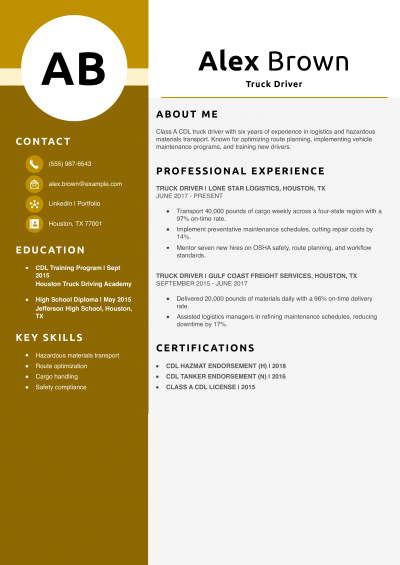
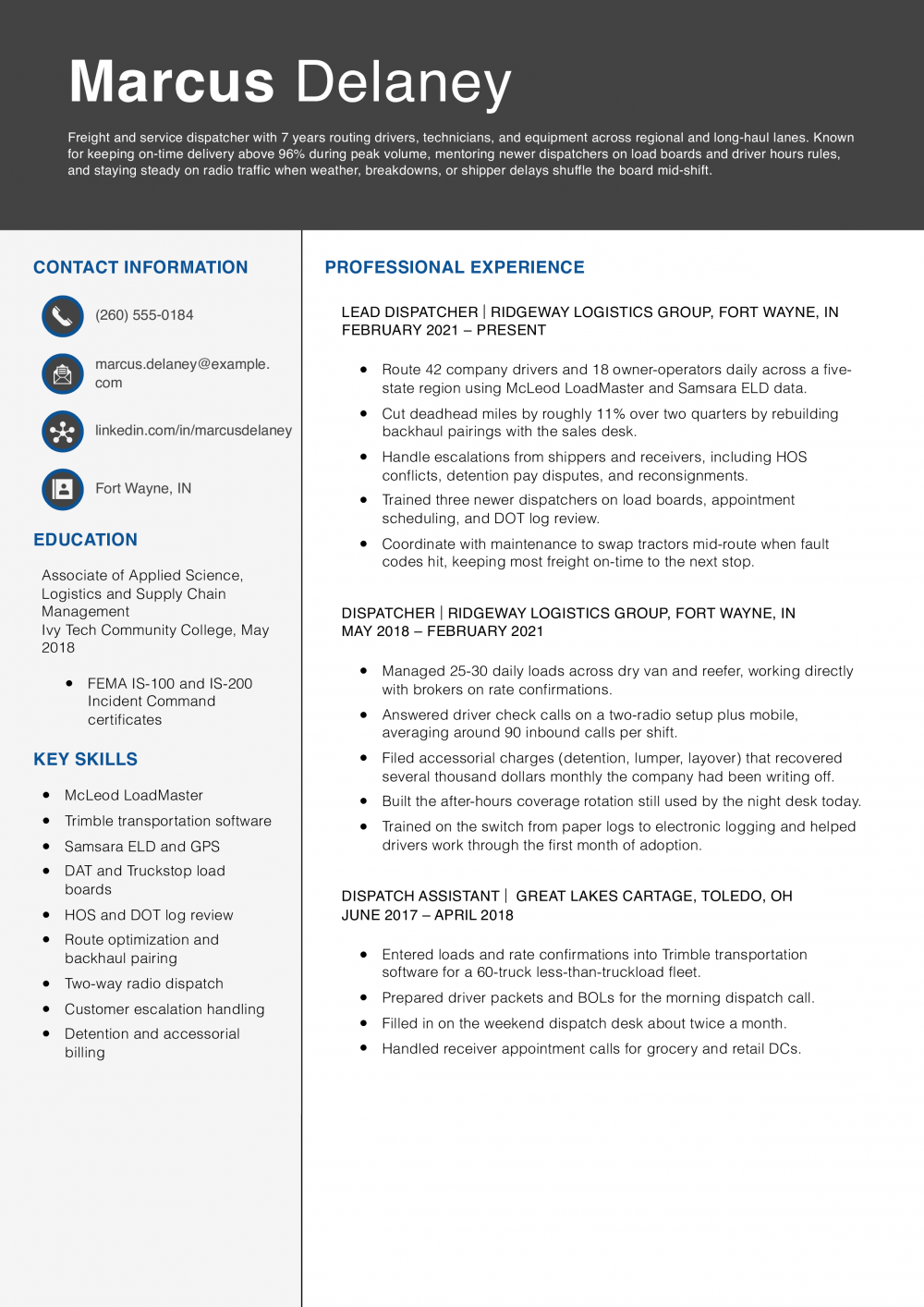
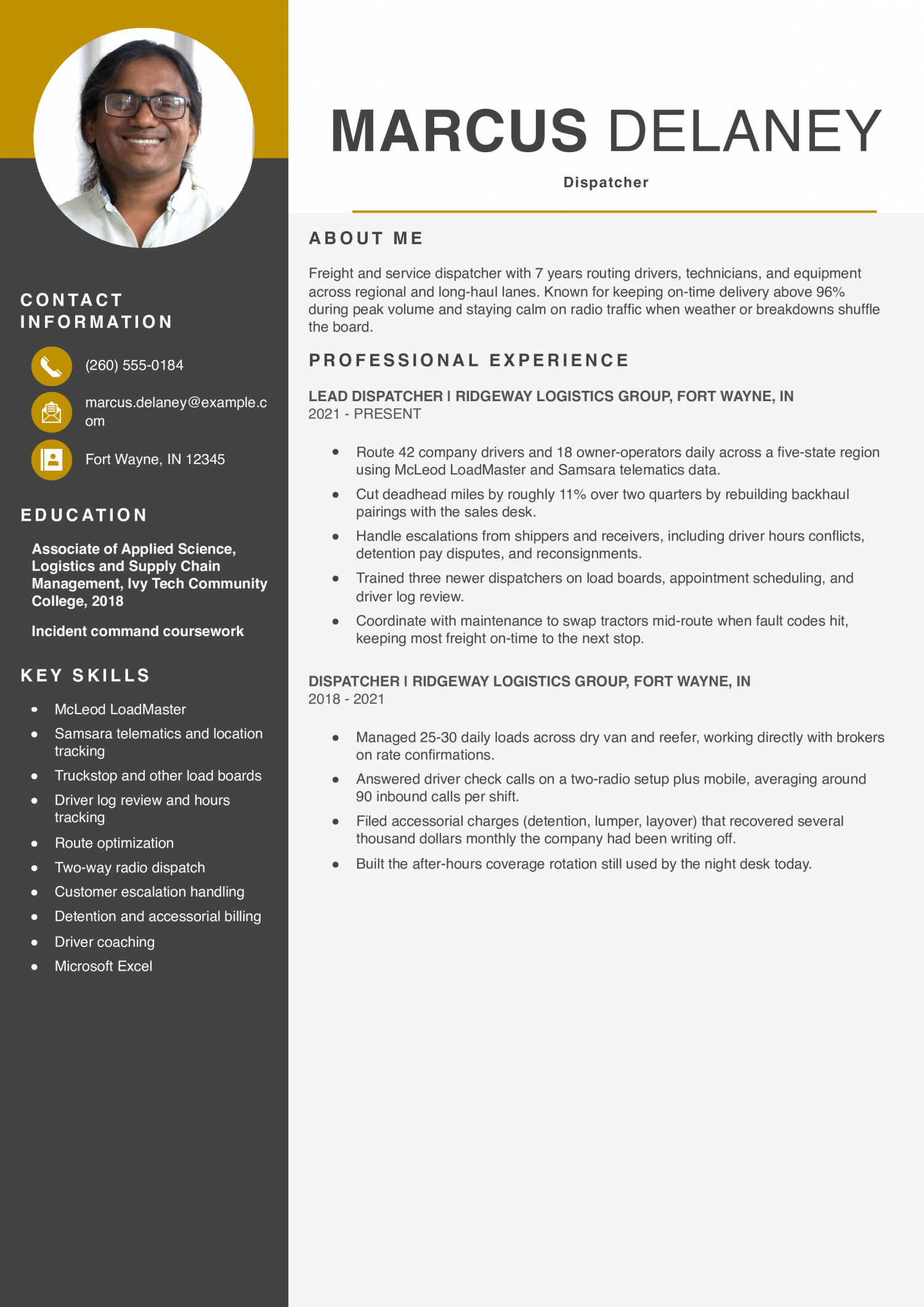
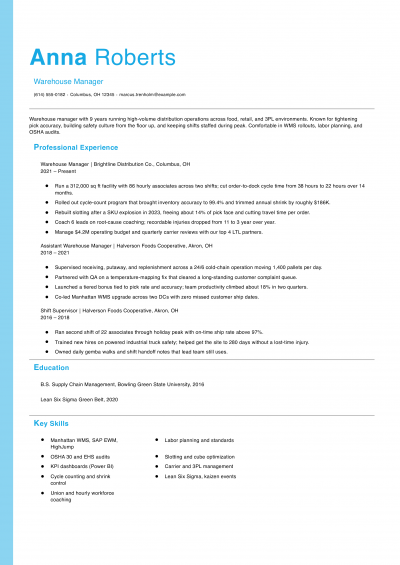
  • Numbers tied to the actual job: On-time percentage, deadhead reduction, and daily load counts are the exact metrics a transportation manager looks for.
  • Identifies actual software used: McLeod, Samsara, and DAT tell a hiring manager this person can sit down and work without a two-week ramp.
  • Grew into more responsibility: The move from Dispatcher to Lead Dispatcher at the same carrier, with training duties added, shows steady promotion.

Dispatcher Example

This resume fits a working dispatcher who routes calls, assigns drivers or crews, and tracks status across a shift. Prove you can hold a busy board, follow protocol, and keep records clean under time pressure.

Why this resume works
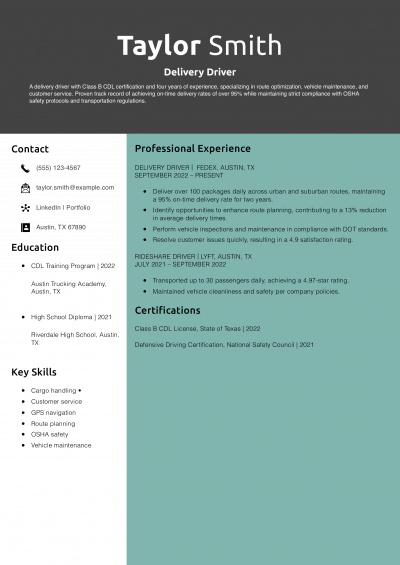
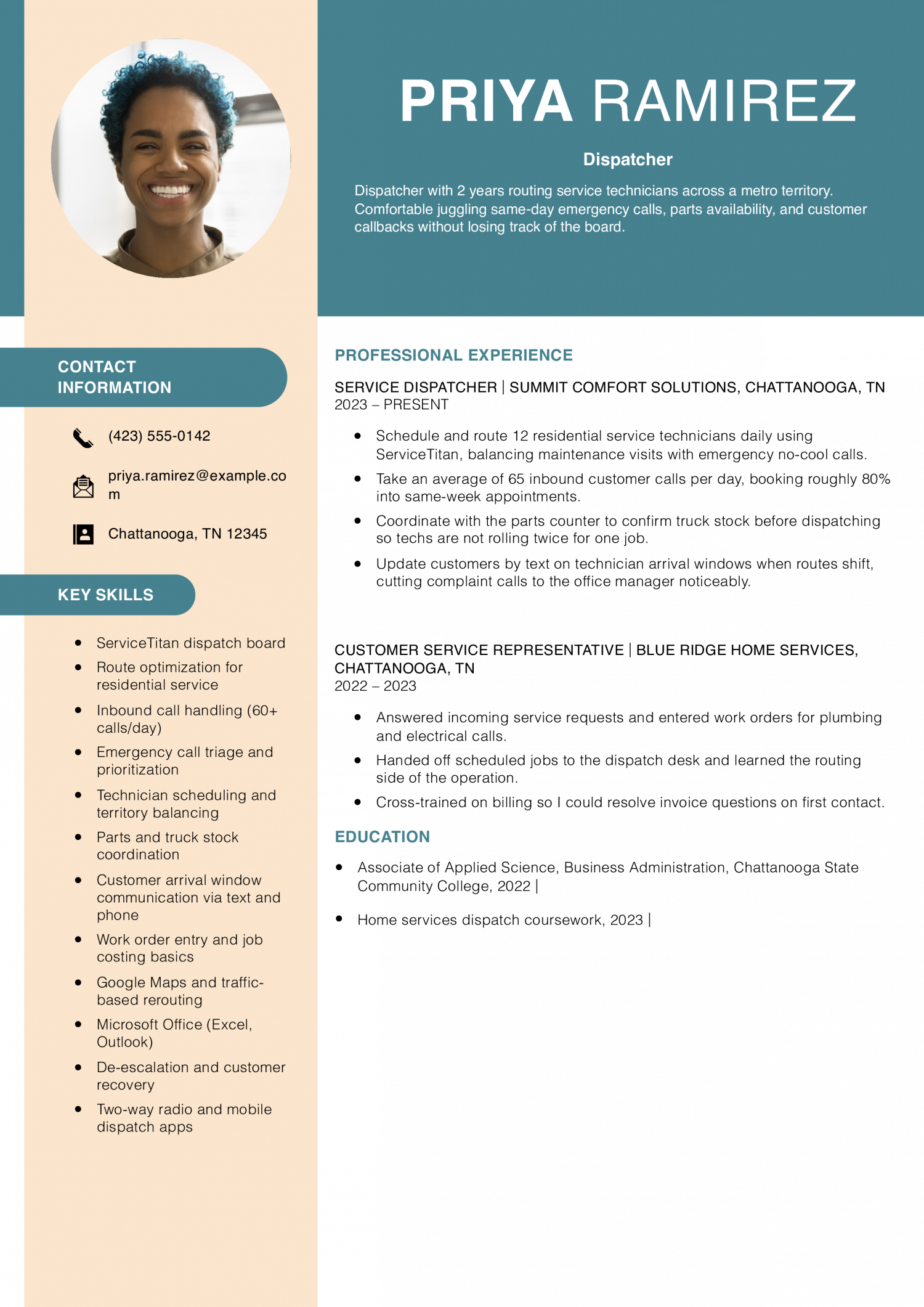
  • Real software, real trade: ServiceTitan and HVAC-specific terms like no-cool calls and truck stock show she has actually done the job, not just read about it.
  • Quantified call volume and booking rate: 65 calls per shift and same-week booking rate answer the first question every service manager asks in the interview.
  • Clear career progression into dispatch: The customer service to dispatcher move inside home services is a common and believable path that hiring managers recognize.

Senior Dispatcher Example

A senior dispatcher runs the harder shifts, trains new hires, and owns the calls that supervisors would otherwise take. Your resume should show longer tenure, cleaner metrics, and clear ownership of escalations and coverage gaps.

Why this resume works
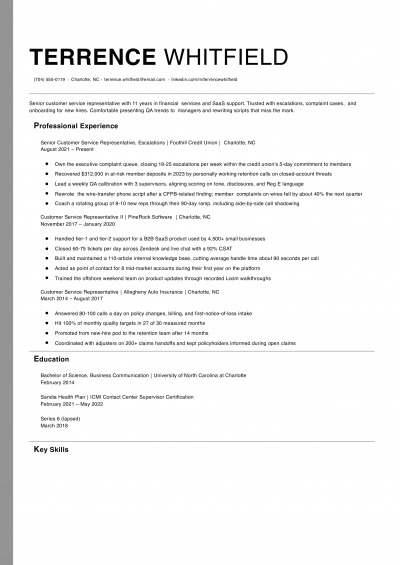
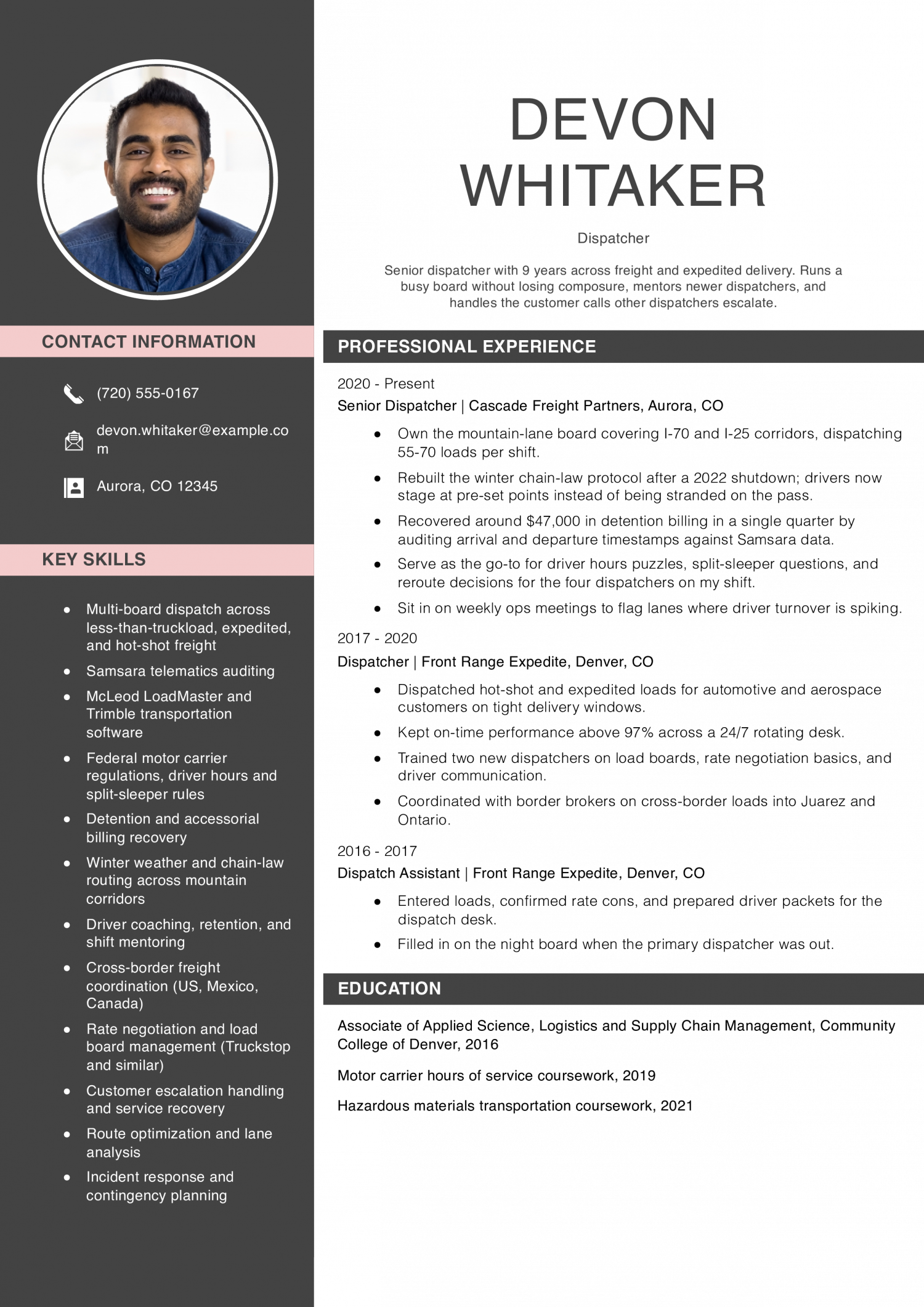
  • Fixed a real operational problem: The winter chain-law protocol rewrite tells a story any freight ops manager immediately understands.
  • Recovered money the company was losing: The $47,000 detention recovery is the kind of dollar figure that gets a resume moved to the top of the stack.
  • Shows the mentor role: Training newer dispatchers and being the escalation point signal readiness for a supervisor step.

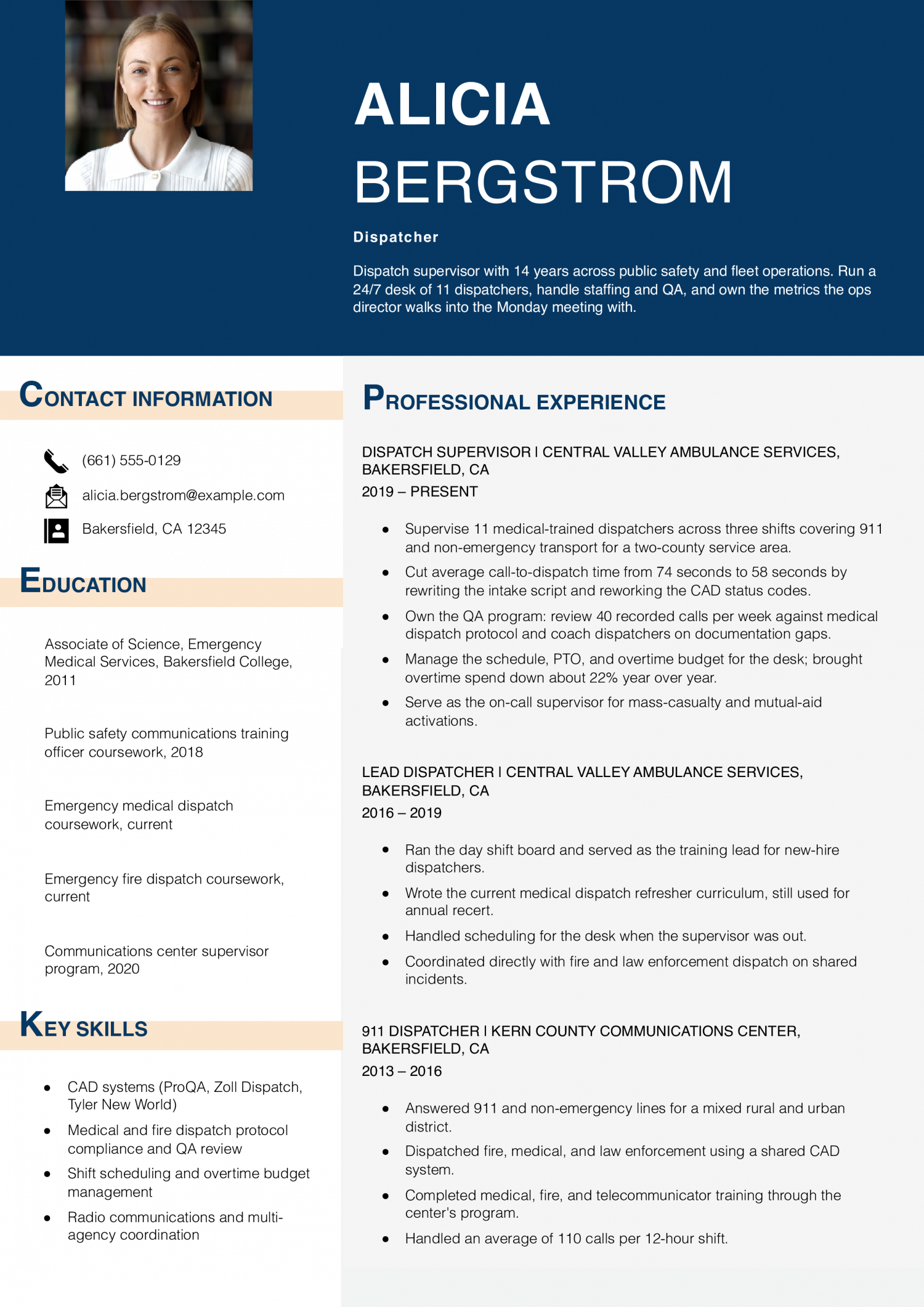
Dispatch Supervisor Example

A dispatch supervisor runs the room, sets the schedule, and answers to operations managers and dispatch supervisors above them. Show staff counts, shift coverage, service level results, and any policy or training work you led.

Why this resume works
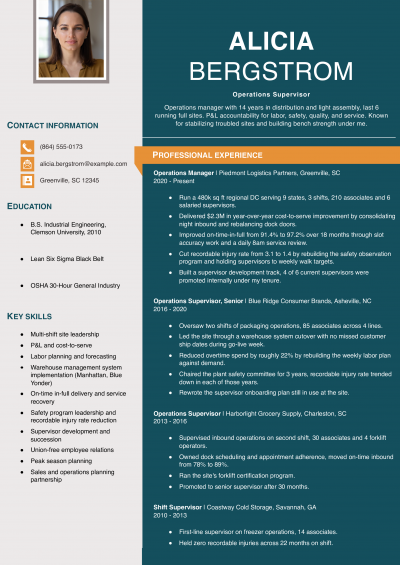
  • Team size and scope are clear: 11 dispatchers, three shifts, two counties. A hiring director knows exactly what this job looks like.
  • Improved a metric the industry tracks: Call-to-dispatch time is the number every emergency operations director watches, and the specific 74 to 58 second drop is credible.
  • Full career arc for a supervisor role: Frontline 911 dispatcher, lead dispatcher, supervisor. That progression is exactly what the posting is asking for.

How to Write a Dispatcher Resume

01 Open with the metric a dispatch supervisor would size you up on

The first line of your summary should name your daily load volume, your fleet size, or the service area you covered. Operations managers and dispatch supervisors read that number as your readiness to hold a live board on day one. A line like ‘Dispatcher routing 180 daily stops across a 42-truck fleet’ lands harder than ‘experienced dispatcher with strong communication skills.’ Pick the metric that maps to the job you want.

If the posting names last-mile delivery, lead with stops per day and on-time rate. If it names emergency services, lead with call volume and average dispatch time. Keep the sentence tight so the number is the first thing a reviewer sees.

02 Put numbers on the board work

Bullets without a number tend to read as duties, not results. Dispatch supervisors scan for load volume, on-time percentage, and average response or dispatch time first. Name two or three realistic metrics per role and tie each to a window: ‘Held 96 percent on-time delivery across 220 daily stops for six months.’ If your prior shop did not track a metric, use scope instead: fleet size, driver count, radio channels monitored, or dollar value of freight moved.

A strong bullet pairs the action with a size and a result. ‘Rerouted 30 drivers during a two-day storm and kept refusals under 4 percent’ beats ‘handled rerouting during weather events.’ Keep verbs concrete: routed, dispatched, reassigned, escalated, cleared.

03 Group your work into clear categories

Sort your bullets so a reviewer can find the skill they need in five seconds. Four categories cover most dispatcher roles. Routing and load planning holds stop sequencing, driver assignment, and mileage optimization.

Live board management holds radio traffic, fleet tracking, and exception handling. Driver and customer communication holds ETAs, delay calls, and escalations to operations. Compliance and documentation holds trip logs, driver check-ins, and incident reports.

Under each category, lead with the highest-volume or highest-stakes work. If you dispatched for both freight and passenger service, split those into separate role entries so the vocabulary stays clean. Avoid stacking six verbs in one bullet.

One action, one metric, one outcome reads faster.

04 Place credentials and systems on page one

Operations managers and dispatch supervisors want to see your tools and any required cards before they read your bullets. Build a short credentials block under your summary. List the dispatch platforms you have run on a live board: names like McLeod, Samsara, Motive, Verizon Connect, or CAD systems for emergency work.

Add radio experience, fleet tracking tools, and any state or employer-required cards the posting names, with issue and expiration dates. If the role touches hazmat, medical transport, or 911, put the matching training in the same block. Keep the list to items you have used in the last three years.

Older tools belong lower in the role entry where you used them, not on page one.

05 Close with education and a short skills strip

For entry and mid-level dispatcher resumes, the closing sections carry the credentials the top of the page cannot. List your highest degree or diploma with the school and year. If you took logistics, supply chain, or emergency services coursework, name two or three courses under the degree.

Add a compact skills strip of eight to twelve items: platforms, radio protocols, load types, and languages spoken on the board. Skip soft-skill filler like ‘team player’ or ‘multitasker.’ A dispatcher who lists ‘bilingual English and Spanish, hazmat placarding, multi-stop routing, exception handling’ tells a supervisor more in one line. If you are early in your career, a short volunteer or internship entry with real metrics still counts.

ATS filters catch more dispatcher resumes than ever in 2026. Check the lists below against the specific posting you are chasing. Software names like CAD systems clear the first cut.

Calm radio communication then decides whether the resume advances to a human read. Operations managers and dispatch supervisors read the hard skills first to confirm you can run the console. They then read soft skills for proof you hold steady under call volume.

Both lists carry equal weight during the shortlist stage, so treat neither as filler. Pull two or three hard skills straight into your summary line. Back each soft skill with a bullet showing the shift, the call load, and the outcome.

Use the exact wording the posting uses when your experience matches. Swap in radio codes or CAD product names the employer lists by name. That mirror step is what moves your file from the queue to the screen.

Soft Skills AI-estimated %
Calm under pressure 68%
Clear verbal communication 61%
Rapid decision-making 45%
Team coordination 39%
Active listening 33%

And here are the top hard skills showing up most often.

Hard Skills AI-estimated %
Multi-channel radio communication 75%
Route coordination 50%
CAD system operation 41%
Driver scheduling 37%
Incident log documentation 33%

Skill names and rankings come from an AI model grounded in U.S. Department of Labor occupation data for dispatchers, not from a count of dispatchers’ resumes built on ResumeTemplates.com.

Must Have on a Dispatcher Resume

Before a dispatcher resume gets a closer read, hiring teams check for a short list of essentials.

Niche Keywords for ATS Checkers

Dispatch work splits into a handful of clear lanes. Operations managers and dispatch supervisors scan for the lane you have run. A trucking board reads nothing like a 911 console. A taxi or rideshare desk shares little with utility crews. The words below match what each group actually does. Pick the row that fits your last job. Then put those exact terms in your bullets. Name the system you used by its trade name. Keep the capitals on a rule or a platform. Skip terms for work you have not done. Supervisors spot padding fast and drop the resume. Show two lanes at most if your history is mixed.

Niche Keywords ATS scans for
Freight and trucking driver check calls, load tendering, route planning
Emergency 911 CAD systems, call triage, radio protocols
Utility and field service outage response, crew routing, ticket closeout
Taxi and rideshare vehicle tracking, fare disputes, driver assignment
Medical transport trip scheduling, patient pickups, wheelchair vans

Latest BLS Statistics for Dispatchers

For Dispatchers, the 10th-percentile floor sits well below the median, and the 90th-percentile ceiling runs about 55 percent above it. That spread is wide for a support role. It tells you that industry, shift complexity, and the systems you route on separate an entry seat from a senior desk.

National employment is moderate, so the top-paying states and the highest-employment states rarely overlap. Read the floor as a starter transit or delivery desk. Read the ceiling as a 911, rail, or utility desk with regulated protocols.

Position your resume for the tier you want. Lead with the dispatch software you run, the call or load volume you carry, and the industry you route in.

$50,340 National median annual
$54,740 National mean annual
$36,030 10th percentile
$78,140 90th percentile
202,810 Dispatchers in the U.S.
Where you stand

Below median

$36,030 to $50,340 Show call volume per shift and the CAD or routing software you run daily.

Above median

$50,340 to $78,140 Above the median, show multi-channel radio traffic, on-time rates, and the fleet size or territory you cover.

Top 10%

$78,140+ In the top 10%, lead with 911, rail, or utility protocols and the shift supervisor duties you carry.

Top-paying states

# State Median Annual
1 District of Columbia $72,260
2 Washington $59,330
3 Minnesota $59,220
4 North Dakota $57,580
5 Illinois $57,240
6 Delaware $57,170
7 Alaska $56,730
8 Vermont $56,360
9 New York $55,810
10 Massachusetts $55,690

Highest-employment states

# State Workers Median
1 California 23,970 $52,350
2 Texas 23,920 $47,320
3 Florida 12,550 $45,880
4 New York 11,160 $55,810
5 Pennsylvania 6,670 $49,960
-0.7% projected growthJob outlook, 2025-2035

Source: U.S. Bureau of Labor Statistics, Employment Projections, 2025-2035. View on bls.gov
Source: U.S. Bureau of Labor Statistics, OEWS May 2025 release (SOC 43-5032). View on bls.gov
Written by professional resume writers and loved by hiring managers

Resume Templates offers HR approved resume templates to help you create a professional resume in minutes. Choose from several template options and even pre-populate a resume from your profile.

Frequently Asked Questions

What skills should you put on a dispatcher resume?

Lead with the skills that map to the console work a dispatch supervisor actually watches.

Name your CAD system, radio protocol experience, and multi-line phone volume. Add route planning and incident logging as separate lines so an ATS scan picks each one up.

How do you describe a dispatcher job on a resume?

Open each bullet with the action you took on the console and end with the load it carried.

Write "routed 120 service calls per shift across 18 drivers" rather than "handled calls." Name the industry in the job title line, since a trucking dispatcher and a 911 dispatcher read very differently.

What resume format works best for a dispatcher?

Use a reverse chronological format with a short summary, a skills strip, and dated work history.

It lets an operations manager see your console tenure and shift pattern in one scan. Save creative layouts for other fields, because dispatch hiring rewards a clean single column an ATS can parse.

How do you write a police or 911 dispatcher resume with no experience?

Lead with any role that put you on a headset, a multi-line phone, or a radio, even part time.

Retail keyholding, hotel front desk, and roadside assistance all show the same triage instinct a public safety desk needs. Then list any telecommunicator coursework you have started, with the expected completion date.

What belongs on a truck or transportation dispatcher resume?

Name the dispatch software you ran, the fleet size, and the lane types, whether local, regional, or over the road.

Add hours of service knowledge and the average loads you covered per shift. Managers scan for whether you have worked reefer, flatbed, or dry van, so name the equipment.

Should a dispatcher resume be one page or two?

One page covers most dispatchers with under 10 years on the console, and a supervisor prefers to see it that way.

Go to two pages once you have led a shift, trained new hires, or run more than one dispatch system. Never split a single job across two pages, since it breaks the timeline a reader is scanning for.

How do you show shift work and call volume on a dispatcher resume?

Put the shift pattern on the job header line, such as "overnight, Thursday through Monday, 10 hour shifts."

Then put the call or load volume in the first bullet, as a per shift or per week figure. This tells a manager whether your pace matches the desk they need to fill.

Which resume template works best for a dispatcher?

For a dispatcher, an ATS-friendly template is the safest pick, because it puts your certifications and experience where a hiring manager scans first. A basic template is a solid alternative. Whichever you choose, keep the formatting clean and easy to parse: clear section headings, a standard font, and no graphics a parser can choke on.

Rate this article

Dispatcher Resume

Average Rating

4.8/5 stars with 238 reviews

You have given 0 Star(s)
4.8/5 stars with 238 reviews
Andrew Stoner

Executive Resume Writer and Career Coach

Andrew Stoner is an executive career coach and resume writer with 17 years of experience as a hiring manager and operations leader at two Fortune 500 Financial Services companies, and as the career services director at two major university business schools.