Fashion Designer Resume Examples and Templates for 2026



Creative directors and photo producers decide whether to click the portfolio link by the top third of the resume; if the credit list, publications, and named talent aren't visible by then, the file gets closed.
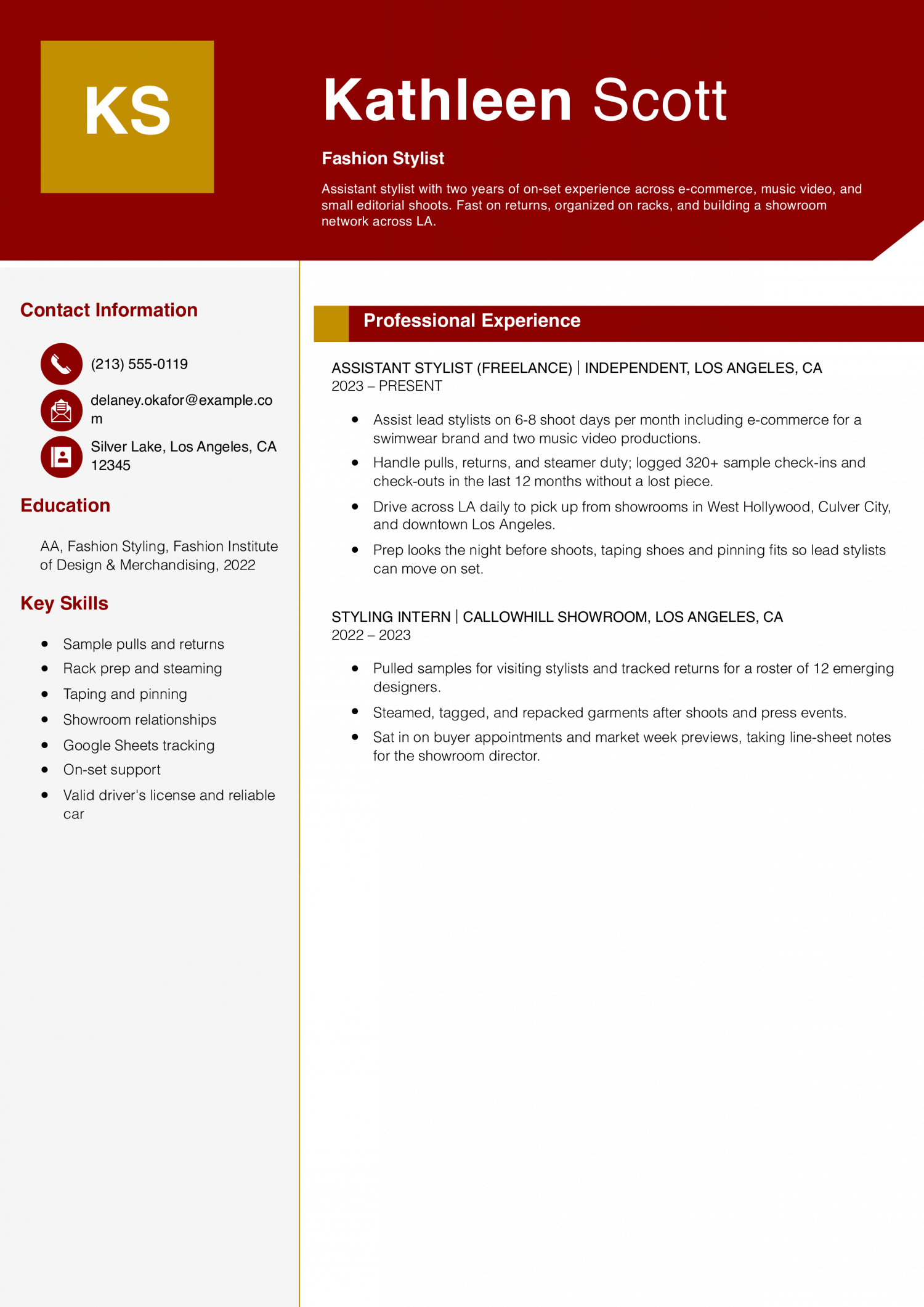
Assistant Stylist resumes belong to people early in the trade who pull, prep and return wardrobe on shoots. Yours has to prove you can run a fitting room and track every borrowed piece.
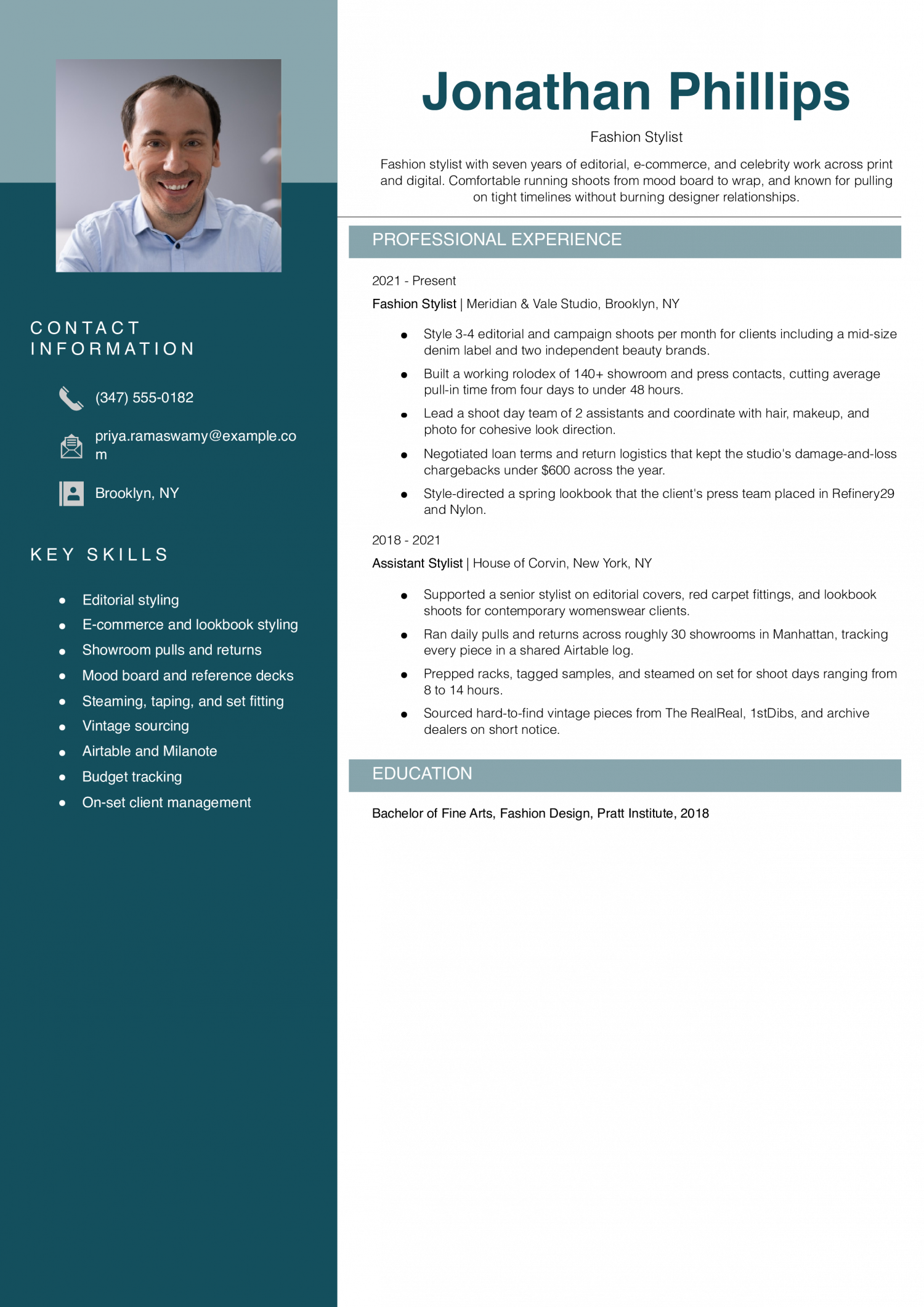
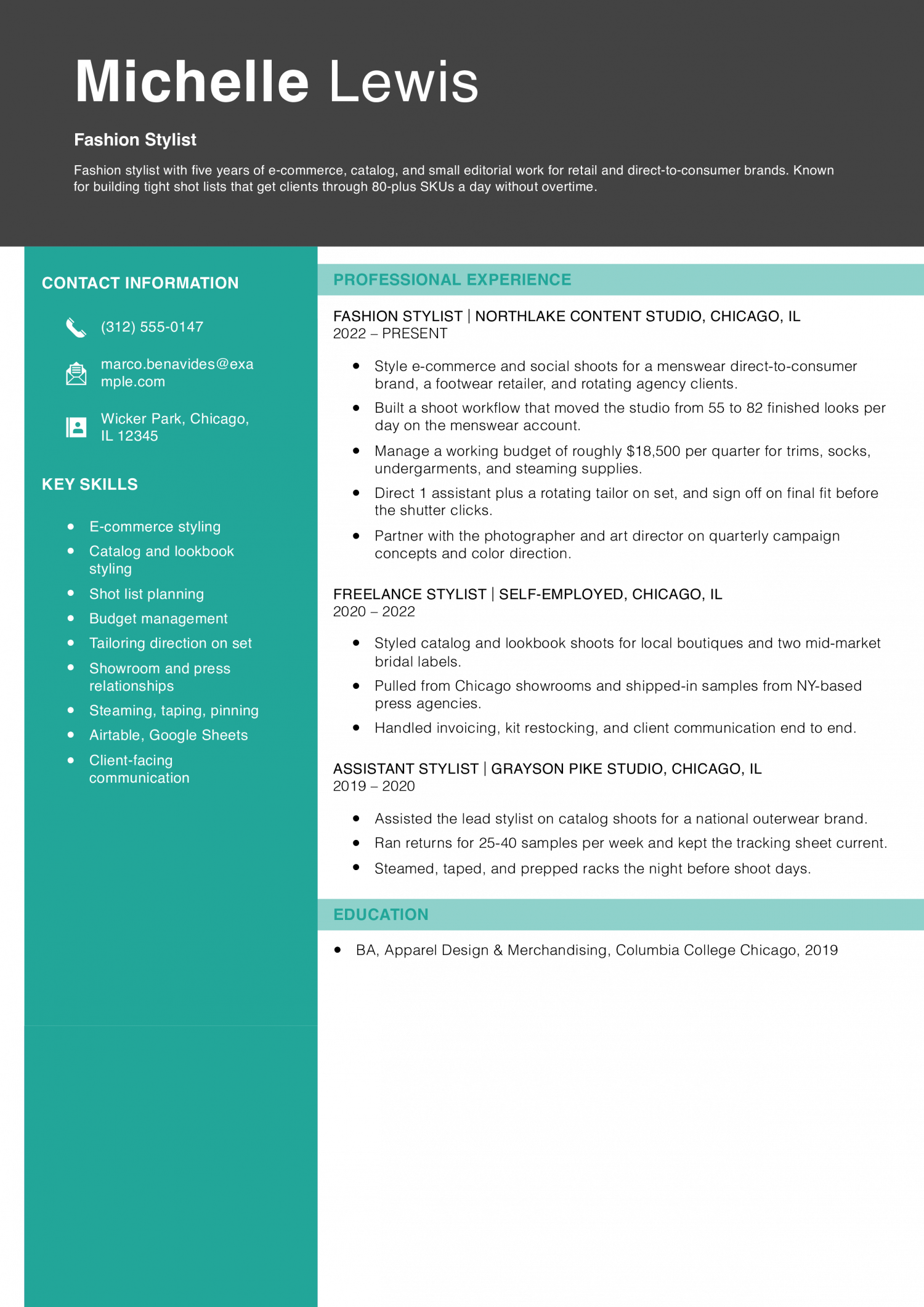
Fashion Stylist resumes belong to people running their own shoots for editorial, commercial or celebrity clients. Yours has to prove you can build a look from brief to final frame and manage the credits behind it.
Lead Stylist resumes belong to senior talent shaping the visual direction of campaigns and setting the bar for junior teams. Yours has to prove you can own a concept and hand creative directors work that ships.
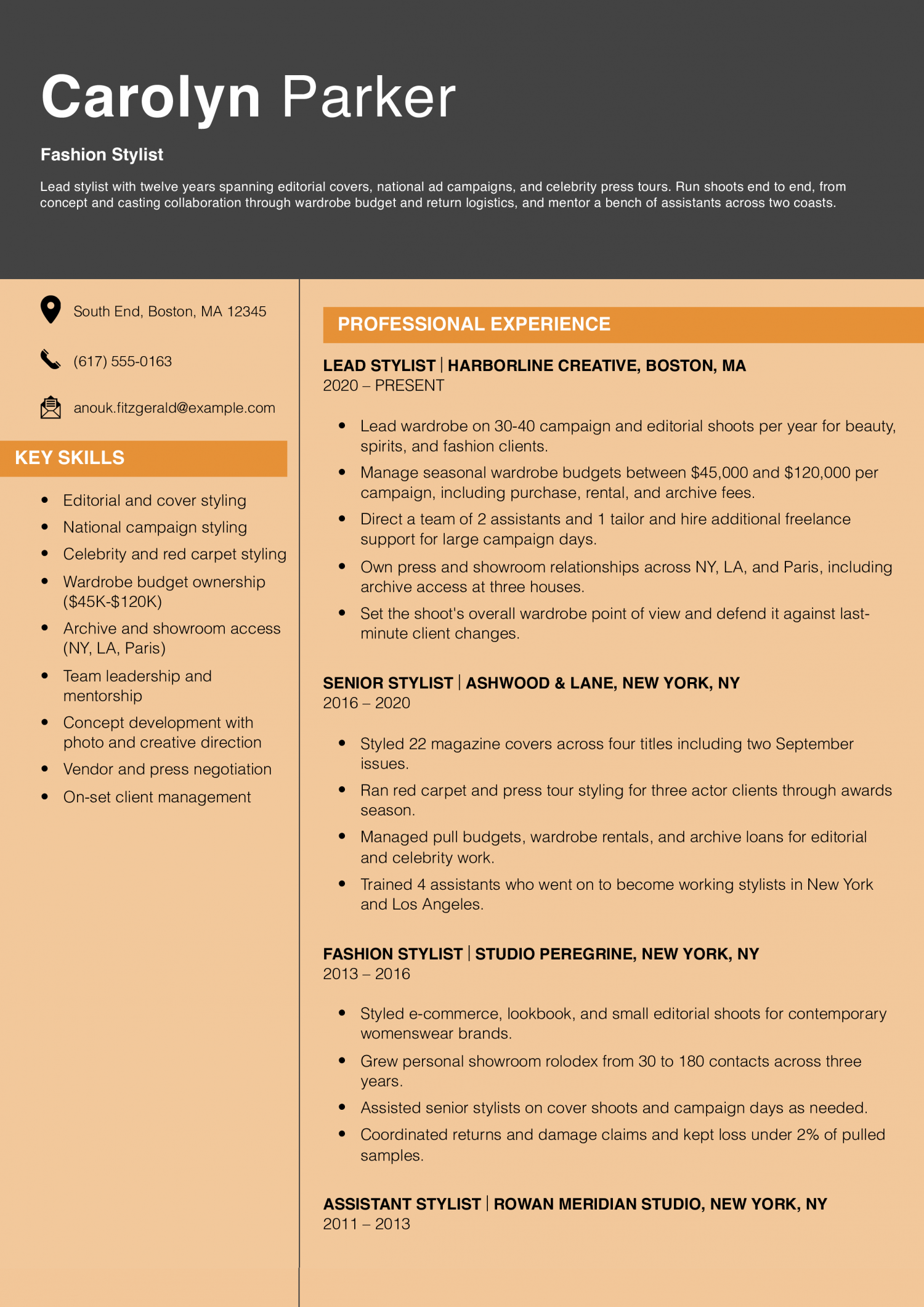
Priya Ramaswamy
Brooklyn, NY | (347) 555-0182 | [email protected] | linkedin.com/in/priyaramaswamy
Fashion stylist with seven years across editorial, e-commerce, and celebrity press work. Comfortable running shoots from mood board to wrap, and known for pulling on tight timelines while keeping designer and showroom relationships intact.
Fashion Stylist
Meridian & Vale Studio | Brooklyn, NY | 2021-Present
Freelance Stylist
Self-employed | Brooklyn, NY | 2020-2021
Assistant Stylist
House of Corvin | New York, NY | 2018-2020
Styling Intern
Ellery Post Press Agency | New York, NY | 2017-2018
Your profile should sit at the top of page one. State your years of styling work, the setting you work in, and the projects that fill your week. Setting means editorial, commercial, celebrity, e-commerce, catalog, music video, or personal styling.
Projects mean covers, campaigns, lookbooks, red carpet, press tours, or on-set wardrobe. Name the markets you pull in, such as New York, Los Angeles, Paris, or Milan. Name the categories you handle, such as womenswear, menswear, or kidswear.
Creative directors and photo producers read this block first to decide if your scope matches the brief. Three or four tight lines are enough. Save credits and shoot counts for the body of the resume.
Bullets without a number tend to read as duties, not work. Producers scan for volume, budget, and brand names before anything else. Pull two or three metrics per role that show the shape of your book.
Count shoot days per year, looks pulled per shoot, and wardrobe budgets managed. Name the publications, brands, or platforms the work ran on, and the talent tier you dressed. A strong bullet might read: styled 40 e-commerce shoots per year, 60 looks per day, on a $15K weekly pull budget.
Another might name three national campaigns for a beauty client across print and social. Stylists who show reach, budget, and cadence tend to advance further than those who list credits alone.
Sort your bullets into three or four clear buckets so a reader can scan them. Pulls and market work covers showroom appointments, sample requests, tracking, and returns. On-set work covers fittings, alterations, steaming, and continuity across setups.
Concept work covers mood boards, reference decks, color stories, and look development with the creative director. Client and talent work covers wardrobe fittings, tour styling, press days, and red carpet. Under each bucket, lead with the biggest brand or title, then the scale of the job.
This structure helps a producer see whether you can run market alone, or lead a team of assistants. It also shows where your taste sits across editorial, commercial, and celebrity work.
Put a short credentials block on page one, under your profile or in the right rail. List the software you run, such as StyleShoots, Airtable, Creative Force, or a rental tracker. Name the pull tools you use for sample requests and tracking logs.
Add union or guild status if you carry it, and note your kit inventory at a high level. Creative directors and photo producers need to see this early, because a booking often turns on whether you can plug into their pipeline this week. List your assistant network size, your travel radius, and your day rate range if you publish one.
Note languages if you work international markets. Put full credits, tearsheets, and portfolio links right beside this block.
Education sits near the bottom for working stylists, and takes two or three lines. Name your fashion school, art school, or apprenticeship, with the year and city. If you assisted a named stylist for two or more years, list that as a training line.
Add short courses in tailoring, costume, or image consulting if they shape your work. Close the page with a references note and links to your portfolio, agency page, and social handles. Producers expect a live portfolio link, not a PDF attachment, so test the URL before you send.
Keep the reference line to one sentence, offering names on request. A tight closing block signals that you treat the resume as a working document, not a scrapbook.
ATS filters catch more fashion stylist resumes than ever in 2026. Check both lists against the specific booking or job you are chasing. Wardrobe and editorial terms clear the first cut on most jobs.
On-set behavior decides whether the resume advances to a real read. Creative directors and photo producers scan hard skills first to confirm you can execute the brief. Then they read soft skills as proof you can hold a set together under pressure.
Both blocks matter, so treat them as one unit when you edit. Pull the exact phrases from the job post and mirror them in your skills block. Back each soft skill with a bullet showing where you used it on a shoot.
Swap in the terms the posting uses for garment types, shoot formats, and brand tiers. Update the block for each application, since agency and in-house postings word things differently.
| Soft Skills | AI-estimated % |
|---|---|
| Visual storytelling | 74% |
| Client rapport building | 64% |
| Creative collaboration | 41% |
| Attention to detail | 38% |
| Adaptability to trends | 27% |
And here are the top hard skills showing up most often.
| Hard Skills | AI-estimated % |
|---|---|
| Fashion illustration | 76% |
| Garment construction | 58% |
| Fabric selection | 42% |
| Trend forecasting | 36% |
| Client style consultation | 35% |
Skill names and rankings come from an AI model grounded in U.S. Department of Labor occupation data for fashion stylists, not from a count of fashion stylists’ resumes built on ResumeTemplates.com.
Before a fashion stylist resume gets a closer read, hiring teams check for a short list of essentials.
Creative directors and photo producers scan for the work you have actually done. Group your terms by the type of shoot or client. Editorial covers magazine and print stories with a masthead credit. Commercial covers brand campaigns, lookbooks and product catalogs. Celebrity and personal styling covers red carpet, press tours and private clients. E-commerce covers packshot days and model rotations on set. Wardrobe management covers pulls, returns, sample tracking and steamer kits. Name the software you use, like StyleShoots or Airtable. List the vendors and showrooms you pull from by name. Note the union locals you belong to if that applies. Keep each term short and written the way the trade writes it.
| Niche | Keywords ATS scans for |
|---|---|
| Editorial styling | market pulls, masthead credit, editorial call sheets |
| Commercial campaigns | lookbook production, brand campaigns, product catalogs |
| Celebrity styling | red carpet, press tour, private fittings |
| E-commerce shoots | StyleShoots, packshot days, model rotations |
| Wardrobe management | sample tracking, showroom returns, steamer kits |
AI use on a Fashion Stylist resume can go three ways. You can lead with hype like ‘AI-powered trend forecaster,’ which creative directors screen out on sight. You can leave it off and answer the workflow question on the call. Or you can describe how the tools actually sit inside your process. The third is what creative directors and photo producers can validate. Name the tool, the step it supports, and the human choice you still own. Mood boards, casting notes and market research all get faster with AI. The taste calls, fittings and on-set edits stay with you.
Image generators speed up concept boards, but final selects still come from your reference archive and taste.
AI summaries of runway and street reports cut hours, though you verify sources before pitching a direction.
Tagging tools sort samples by color, silhouette and brand, which shortens prep for editorial and commercial shoots.
Layout tools draft treatment pages faster, so you spend more time refining story and less time formatting.
Your portfolio carries more weight than your resume in styling work. Creative directors and photo producers want to see the frame before they read the credit. Pick two or three platforms that match the work you want next, and keep them current.
Owned domain with clean galleries by category: editorial, commercial, celebrity, e-commerce.
Grid as a living tear sheet, with credits in the caption.
If you are agency signed, link the roster page as a third proof point.
A password-shared PDF you can send to a producer within the hour.
Order shoots by strength, not by date. Your first three frames decide whether a producer keeps scrolling. Lead with the category you want to be booked in next, even if older work sits above it in your archive.
Credit every shoot in full: photographer, hair, makeup, talent, publication or brand. Missing credits read as either careless or borrowed, and both cost you callbacks. Refresh the site every quarter so the newest tear sheet is never more than 90 days old.
Fashion Stylist is a narrow job in the BLS wage record. A small headcount means the pay band stretches wide from bottom to top. The 90th percentile earns far more than the median, while the 10th sits well below it.
The shape shows a market where a few names at the top pull the ceiling up, and the assistant tier sits well below the middle. Pay also clusters where fashion houses and big production budgets live. On your resume, name the publications, brands, or talent you have styled.
| # | State | Median Annual |
|---|---|---|
| 1 | Massachusetts | $103,520 |
| 2 | New Jersey | $101,610 |
| 3 | New Hampshire | $100,160 |
| 4 | New York | $98,640 |
| 5 | Colorado | $94,140 |
| 6 | Virginia | $94,120 |
| 7 | Ohio | $82,050 |
| 8 | Washington | $82,030 |
| 9 | Connecticut | $81,510 |
| 10 | Vermont | $79,610 |
| # | State | Workers | Median |
|---|---|---|---|
| 1 | California | 6,470 | N/A |
| 2 | New York | 5,760 | $98,640 |
| 3 | Texas | 1,850 | $40,040 |
| 4 | Florida | 1,100 | $43,020 |
| 5 | Oregon | 860 | N/A |
Resume Templates offers HR approved resume templates to help you create a professional resume in minutes. Choose from several template options and even pre-populate a resume from your profile.
A reverse-chronological format works best because creative directors want to see recent shoots and clients first.
Lead with a profile, then credits grouped by deliverable, then tools and education. Skip a functional format, since producers read it as a way to hide gaps in booked work.
Keep it to one page for the first six years of credits, and move to two pages only when editorial and commercial work both need room.
A second page is fine when you are cutting real credits to fit. It is padding when you are stretching type to fill it.
No, group the smaller credits and name the tent-pole clients in full.
Producers scan for titles they know, so put Vogue, Nike or Zara on their own line and gather the rest under a short heading like selected editorial or selected commercial.
That keeps the page readable without hiding the volume of your book.
Cover the gap with the assisting, market work, or personal editorial you did during it, dated in the same format as your paid credits.
Creative directors expect freelance calendars to breathe between campaigns, so a short honest line reads better than a rewritten date. Do not leave months blank and hope the reader misses them.
Put assistant credits in a separate section under the lead work, and name the stylist you assisted on each shoot.
Producers use the lead's name as a reference in itself, so it belongs on the line. Keep the section short once you have three years of your own bookings on top.
No, keep the day rate off the resume and send it in the booking email once a producer asks.
Rates shift by market, usage, and shoot length, so a printed number dates the page and prices you out of jobs you would take. A short line saying rates on request is enough if you feel the gap.
Rewrite the profile around the shoots you want next, and lead the credit list with any test editorials, lookbooks, or brand collaborations you have already styled.
Personal client work still belongs on the page under a wardrobe styling heading, since it proves you can dress a body on a deadline. Keep the credit format identical across both sections so the reader compares them fairly.
For a fashion stylist, an ATS-friendly template is the safest pick, because it puts your certifications and experience where a hiring manager scans first. A basic template is a solid alternative. Whichever you choose, keep the formatting clean and easy to parse: clear section headings, a standard font, and no graphics a parser can choke on.
Executive Resume Writer and Career Coach
Andrew Stoner is an executive career coach and resume writer with 17 years of experience as a hiring manager and operations leader at two Fortune 500 Financial Services companies, and as the career services director at two major university business schools.
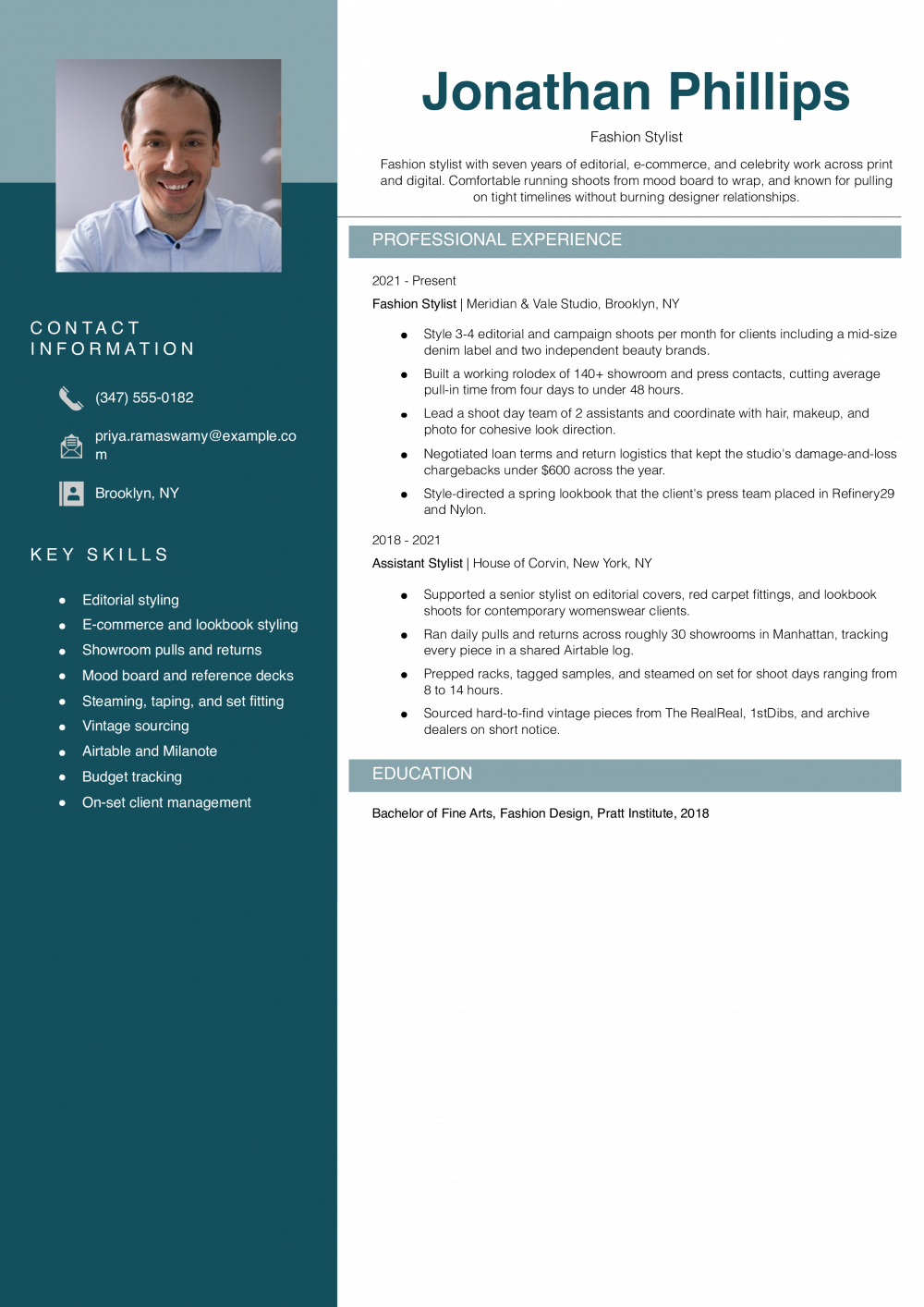
Customize this template in our builder in under 10 minutes.