Tip !

Tight-tolerance callouts on finished parts, documented G-code or CAM proficiency and a current NIMS credential are what separate the CNC Machinist resumes that production managers schedule for interviews from the rest.

Andrew Stoner , Executive Resume Writer and Career Coach

CNC Machinist Resume Examples

Featured Example

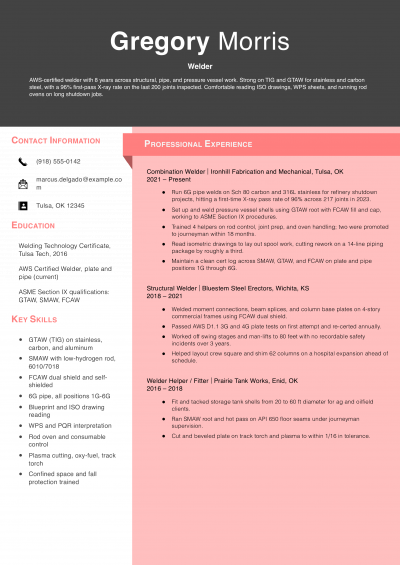
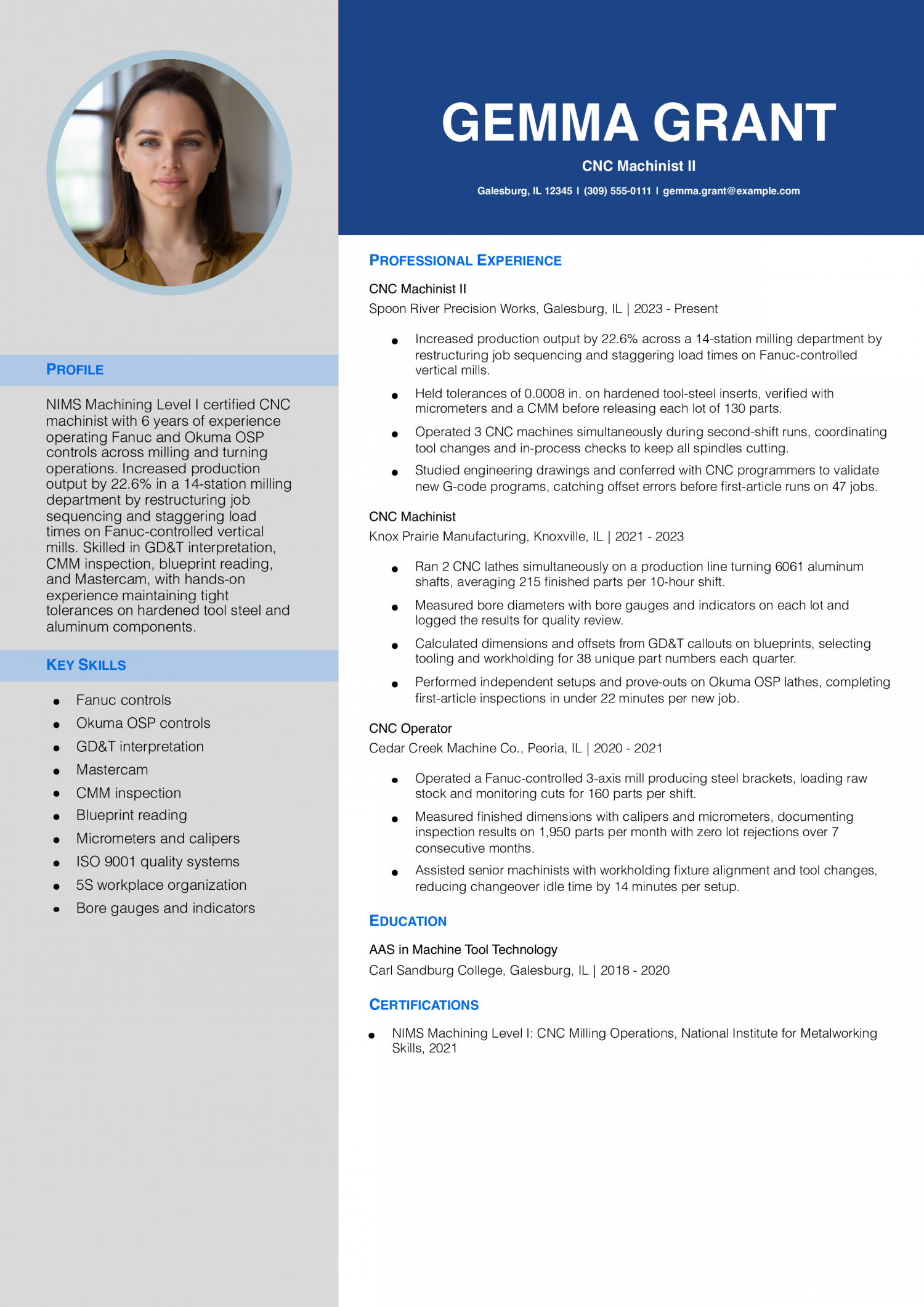
Pick this resume if you are a mid-level CNC machinist with around six years of experience running multi-machine setups on mills and lathes. Apply its method of counting simultaneous machines and per-shift part volumes to give each production bullet a concrete scale.

What to take from this resume example

Many CNC machinist resumes list a tolerance number without naming the material, which leaves the reader guessing how difficult the work actually was. This resume pairs both details in one line: “tolerances of 0.0008 in. on hardened tool-steel inserts, verified with micrometers and a CMM before releasing each lot of 130 parts.” When you write your own bullet, attach the material name directly to the tolerance so the reader can judge the real difficulty of holding that spec.

CNC Operator Example

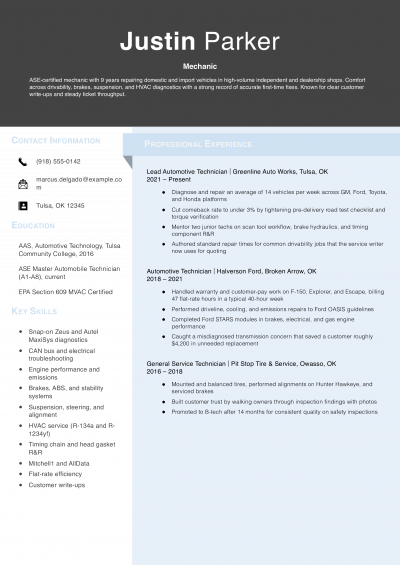
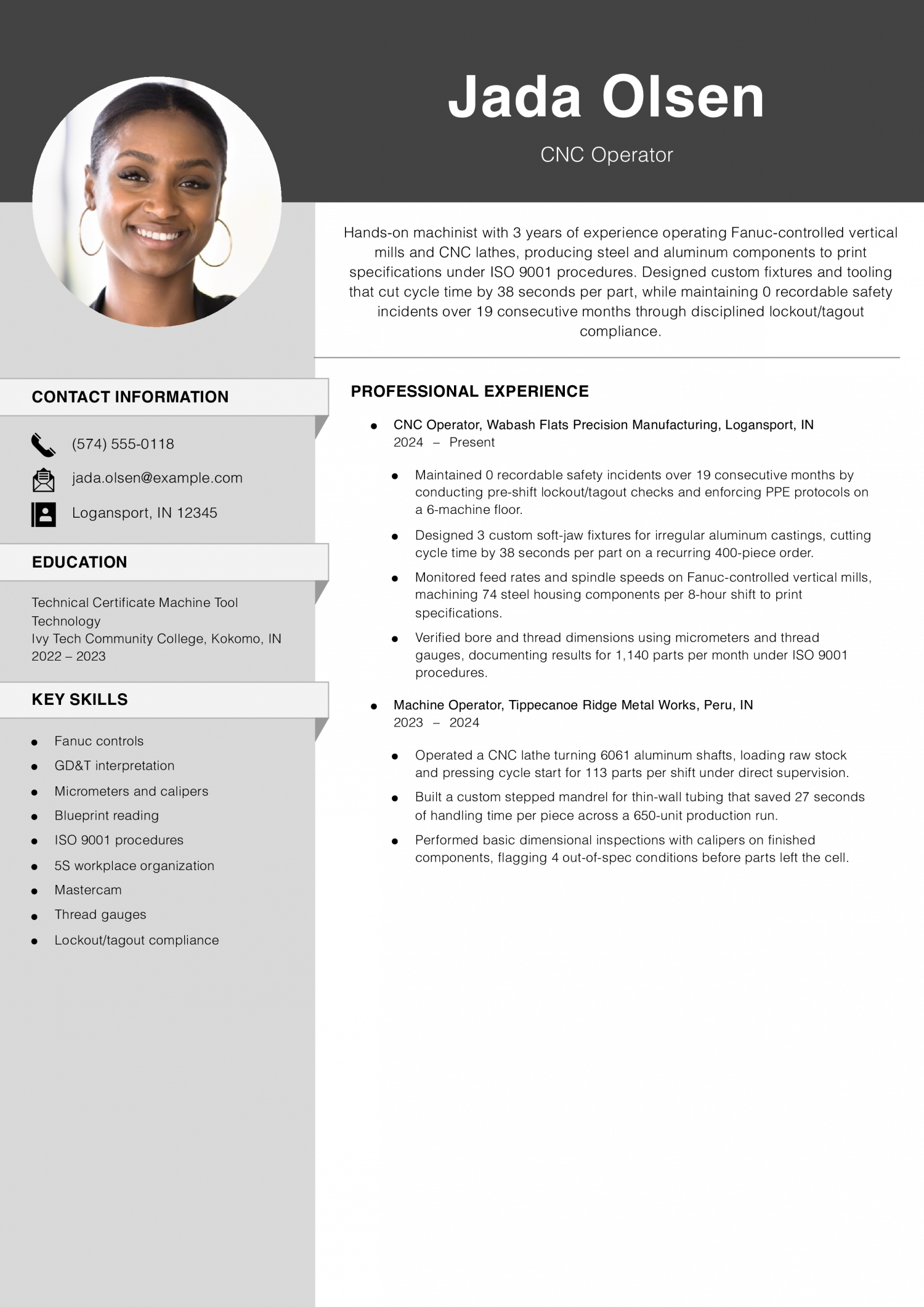
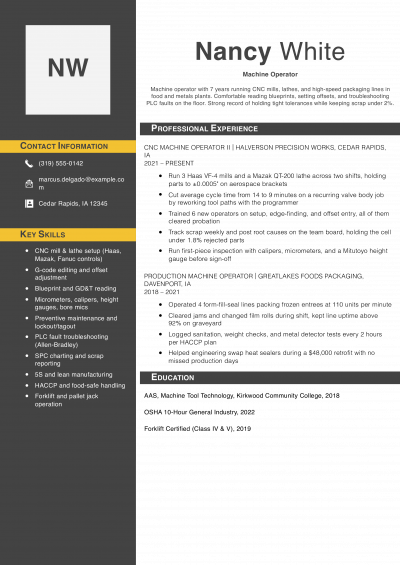
Start with this resume if you are an entry-level CNC operator with up to three years of shop floor experience. Bring attention to how every fixture or tooling improvement names the exact seconds saved and the batch size it covered.

What to take from this resume example

Many CNC machinist resumes mention shift output but never name the specific part, which makes the number feel generic. This resume ties the count directly to the component: “machining 74 steel housing components per 8-hour shift to print specifications.” When you write your own bullet, pair your per-shift quantity with the actual part name and material so the reader can judge whether that pace reflects light or demanding work.

CNC Machinist Example

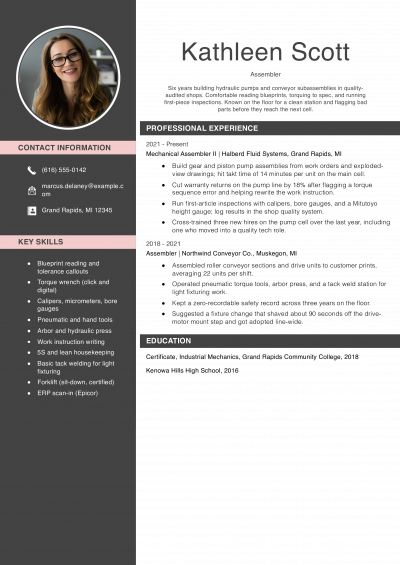
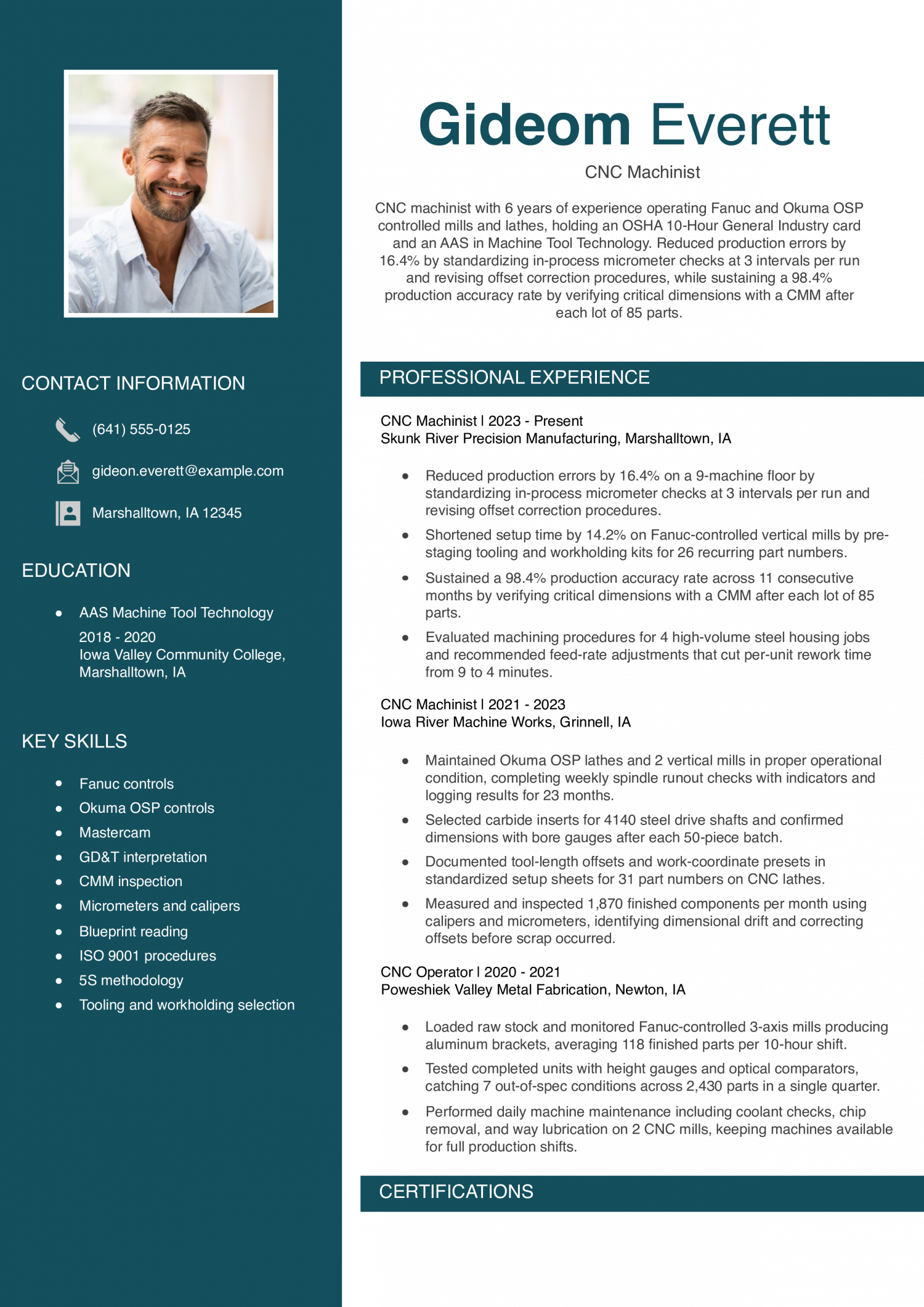
Try this resume if you are a mid-level CNC machinist with about six years running setups across Fanuc and Okuma platforms. Quantify every quality control step by naming the inspection tool, the interval, and the lot size it covered.

What to take from this resume example

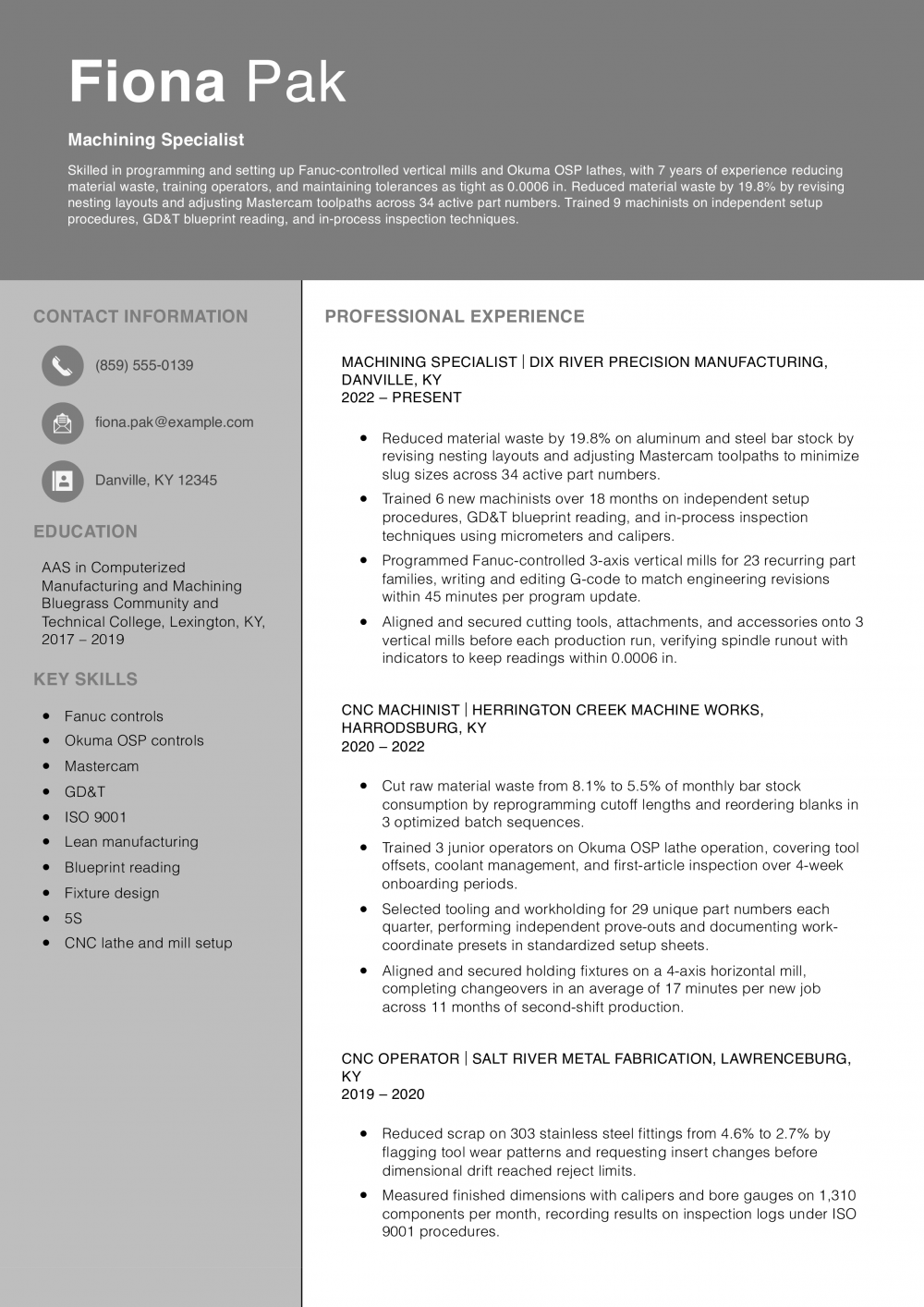
Many CNC machinist resumes claim they reduced setup time but never explain the method behind the number. This resume connects the improvement to a specific practice: “pre-staging tooling and workholding kits for 26 recurring part numbers.” When you write your own bullet, name the preparation step you used and how many part numbers or jobs it covered so the reader understands the system you built, not a one-time shortcut.

CNC Programmer Example

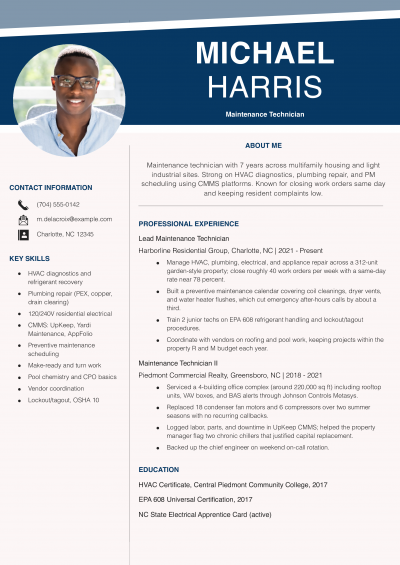
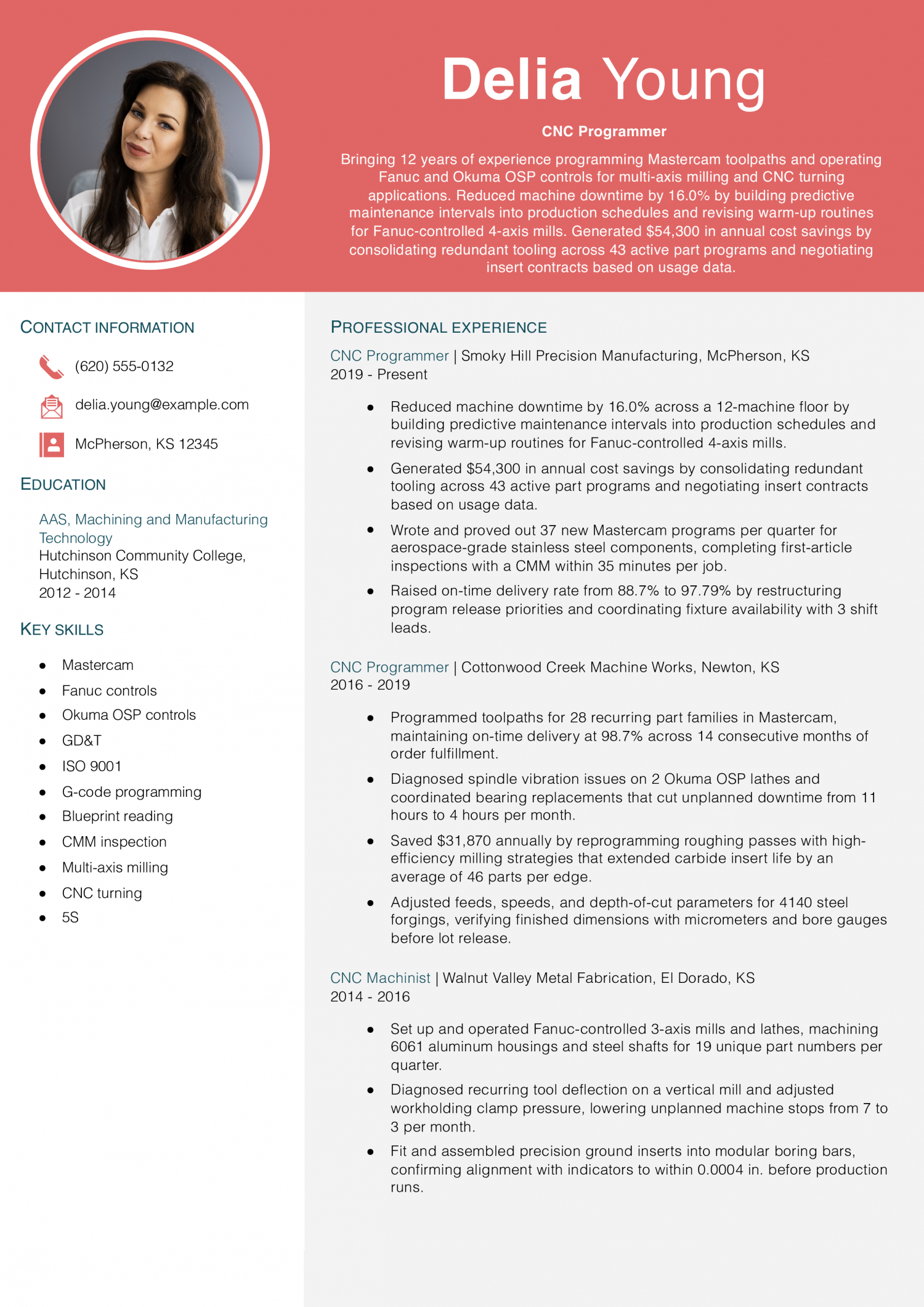
Lean on this resume if you are a senior CNC programmer with roughly twelve years of shop floor and programming experience across mills and lathes. Raise your cost-savings credibility by noting how each tooling or programming change names the exact annual dollar figure and the contract or strategy behind it.

What to take from this resume example

Many CNC machinist resumes claim cost savings without explaining what actually changed in the process. This resume connects the dollar figure to a specific programming decision: “reprogramming roughing passes with high-efficiency milling strategies that extended carbide insert life by an average of 46 parts per edge.” When you write your own bullet, name the machining change you made and attach a measurable gain in tool life or material usage so the reader can see the cause behind the savings.

How to Write a CNC Machinist Resume

01 Open with the output a shop supervisor checks first

Your summary should start with a number. Name how many parts you run per shift or per day. Machine shop supervisors and production managers read that figure before anything else.

It tells them your speed on the machine. Follow it with the tightest tolerance band you hold. A line like “CNC mill operator producing 200 turned parts per shift to ±0.0005 in.” sets the scale fast.

Then add the types of machines you run, such as 3-axis mills and CNC lathes. Close the summary with the materials you cut most. This opening gives a production manager three facts in four lines.

It beats a vague claim about being skilled with CNC equipment.

02 Frame each bullet around volume or scope

Most strong CNC machinist bullets name a volume or a scope. You might list how many setups you complete per shift. You could note the scrap rate you kept below target.

Cycle time cuts also read well in bullets. If you reduced a 12-minute cycle to nine minutes, state the percentage saved. First-pass yield is another figure shop supervisors scan for.

Pair it with the part family you ran. Bullets without a number tend to read as duties rather than results. When exact counts are hard to recall, describe batch sizes and shift counts instead.

A phrase like “ran 50-piece batches across two shifts” still anchors the reader. Even rough figures outperform bare task lists on a resume.

03 Group your work into clear skill areas

Break your experience into categories that match shop workflows. The first category is setup and programming. List the G-code and M-code tasks you handle.

Note whether you write programs or edit existing ones. The second category is inspection and quality. Name the gauges you use, such as micrometers and CMMs.

The third is machine maintenance. Include preventive tasks like way lube checks and spindle alignments. A fourth category covers material handling.

Mention forklift use or crane signals if your shop requires them. The fifth is blueprint reading. State the GD&T standards you interpret on drawings.

Sorting bullets under these headings helps production managers find relevant skills without scanning every line.

04 Place credentials where supervisors look first

Add a credentials block near the top of page one. Machine shop supervisors and production managers often skim past a long work history to find proof of training. If you hold a NIMS Machining Level I: CNC Milling Operations credential from the National Institute for Metalworking Skills, list it by name.

An OSHA 10-Hour General Industry card from the OSHA Outreach Training Program also belongs here. Note that the OSHA 10 is a course completion card, not a license. Employers still train you on their own shop hazards.

Below credentials, list your CAD/CAM software. Mastercam and Fusion 360 are common. Name the version you used and the post-processor you ran.

This block gives a supervisor a quick yes-or-no read on your readiness.

05 End with education and shop-floor training

Close your resume with an education section. List your diploma or associate degree first. Add the school name and graduation year.

If you finished a trade school or apprenticeship program, name the shop hours you logged. Many CNC machinists train through community college programs or union apprenticeships. State total lab hours if your program tracked them.

Below formal schooling, add a short training section. Include any in-house courses on new controls or tooling systems. Fanuc, Haas, and Siemens controls each have their own syntax.

Naming the control brand you trained on saves a production manager a follow-up question. Keep this section brief. Four to six lines are enough to round out the page.

Manufacturing shops still need skilled CNC machinists in 2026. Many shops run with fewer workers, though. That raises the bar for each hire.

Machine shop supervisors and production managers look for proven hard skills first. They want to see G-code fluency and hands-on setup ability. Soft skills like attention to detail matter too.

These show you can hold tight tolerances shift after shift. A strong mix of both types helps your resume clear the first screen. Check each table against the posting you want to match.

Pull the exact terms the posting uses into your bullets. Treat soft skills as proof points inside your work history. Add a short result to each bullet so the skill feels real.

Soft Skills AI-estimated %
Attention to detail 75%
Safety conscientiousness 50%
Problem-solving under pressure 45%
Team coordination 38%
Quality ownership 35%

And here are the top hard skills showing up most often.

Hard Skills AI-estimated %
CNC machine operation 79%
Blueprint interpretation 60%
Precision measurement 49%
G-code programming 39%
Tight tolerance machining 35%

Skill names and rankings come from an AI model grounded in U.S. Department of Labor occupation data for CNC machinists, not from a count of CNC machinists’ resumes built on ResumeTemplates.com.

Must Have on a CNC Machinist Resume

Before a cnc machinist resume gets a closer read, hiring teams check for a short list of essentials.

Apprenticeship Routes

Many CNC machinists start through formal apprenticeships. These programs blend classroom study with paid shop hours. Machine shop supervisors and production managers value this training highly.

List your apprenticeship in the experience section. Give it a job title, employer name, and dates. Note the total hours you completed on the shop floor.

Call out the machine types you trained on.

  • Name the sponsoring shop or union local
  • State total registered hours completed
  • List each machine type you ran
  • Note G-code and M-code coursework

Safety Training and Credentials

OSHA 10-Hour General Industry is a common shop requirement. It is a course completion card, not a license. Employers still train you on their own site hazards.

  • Write “OSHA 10-Hour General Industry”
  • Add the completion year
  • Name the OSHA-authorized trainer if known
  • Pair it with any lockout/tagout training

Tools of the Trade

Your tools section tells shops what you can run. Name each control brand and machine type you know. Be specific about software and measuring instruments.

  • CNC control systems like Fanuc or Haas
  • CAM software such as Mastercam or Fusion 360
  • Micrometers, calipers, and height gauges
  • CMM operation and GD&T reading ability

CNC Machining Credentials Worth Listing

Machine shop supervisors and production managers read your credentials as a map of where your skills are heading. The items below tell them which machining track you have put time and money into. A strong list sets you apart from other machinists who learned on the job alone.

It can also shape which machines or cells you are assigned to first. List each credential on its own line with the issuing body and the year you earned it. Note that the OSHA 10 card is a course completion record, not a license or a certification.

Employers still train you on their own shop hazards after you are hired. Even so, many shops ask for it during onboarding because it shows basic safety awareness. Pair it with a NIMS credential so supervisors see both safety training and verified machining skill on the same page.

That combination covers the two boxes most postings check at the entry level.

  • NIMS Machining Level I: CNC Milling Operations: Issued by NIMS, this credential is often requested by shops that want proof of entry-level milling skill.
  • OSHA 10-Hour General Industry: Completed through OSHA-authorized trainers, this card is asked for by many shops during onboarding.

Latest BLS Statistics for CNC Machinists

CNC Machinist falls under the broader BLS category of Machinists, a large occupation. That size means the median reflects a wide mix of experience levels and shop types. The spread between the lowest and highest earners is wide.

Workers near the top out-earn the median by roughly a third. Workers near the bottom sit about a third below it. Geographic concentration matters too, with pay and job counts varying by state.

Your resume should lead with the specific machines you run, the tolerances you hold, and the materials you cut. Listing exact CNC controls by brand name helps machine shop supervisors and production managers see your fit at a glance.

$58,750 National median annual, all machinists
$59,320 National mean annual, all machinists
$39,200 10th percentile, all machinists
$80,010 90th percentile, all machinists
287,050 Machinists in the U.S. (the BLS group that includes CNC machinists)
Where you stand

Below median

$39,200 to $58,750 Lead with the CNC controls you can run and any NIMS credential you hold.

Above median

$58,750 to $80,010 Show the tightest tolerances you hold and the G-code programming you do.

Top 10%

$80,010+ List multi-axis setups you own and any first-article inspection work you lead.

Top-paying states

# State Median Annual
1 Hawaii $84,410
2 Alaska $77,670
3 District of Columbia $72,900
4 Massachusetts $67,270
5 Washington $66,160
6 Oregon $63,820
7 New Jersey $63,190
8 Wyoming $63,070
9 Vermont $62,680
10 Delaware $62,650

Highest-employment states

# State Workers Median
1 Texas 21,700 $59,180
2 Michigan 20,350 $52,360
3 California 18,950 $57,190
4 Ohio 17,110 $57,940
5 Illinois 16,520 $58,520
1% projected growthJob outlook, 2025-2035

Source: U.S. Bureau of Labor Statistics, Employment Projections, 2025-2035. View on bls.gov
Source: U.S. Bureau of Labor Statistics, OEWS May 2025 release (SOC 51-4041). View on bls.gov
Written by professional resume writers and loved by hiring managers

Resume Templates offers HR approved resume templates to help you create a professional resume in minutes. Choose from several template options and even pre-populate a resume from your profile.

Frequently Asked Questions

Is CNC machinist a good career to pursue?

Yes. CNC machinists are in steady demand across aerospace, automotive, and defense manufacturing. Employers often pay for advanced training in programming or quality inspection.

Experienced operators can move into supervision or CNC programming roles. Highlighting tight-tolerance work on your resume positions you well for these paths.

How do I write a CNC machinist resume with no professional experience?

Lead with hands-on training from a vocational program or community college lab. List the machines you operated and the materials you cut during coursework.

Add your NIMS Machining Level I credential if you earned it. Machine shop supervisors treat it as proof of baseline milling skill.

What is the best resume format for a CNC machinist?

A reverse-chronological format works best because production managers want your most recent shop work first. Place your job title, employer name, and dates at the top of each entry.

Follow each heading with three to five bullets that name specific machines and tolerances. This format lets a supervisor scan your capabilities in seconds.

Should I include tolerances and measurements on my machinist resume?

Yes. Tolerances tell a production manager whether you can handle precision work on their parts. State the tightest tolerance you held, such as plus or minus 0.0005 inches.

Pair the number with the material and the operation so the reader sees the full picture.

How long should a CNC machinist resume be?

One page is the standard for machinists with fewer than ten years of experience. If you have worked across several shops over a longer career, a second page is reasonable.

Keep every bullet focused on machines, tolerances, and output so nothing reads as filler.

How do I list contract or temporary machinist work on my resume?

Name the staffing agency on one line, then list each shop placement as a sub-entry with its own dates. Include the same detail you would for a permanent role, covering machine types and part volumes.

This structure shows a production manager that you adapted to different shop environments.

Should I add G-code or CAM software knowledge to my resume?

Yes, if the posting asks for it or your shop used it daily. Name the specific CAM package, such as Mastercam or Fusion 360.

Mention whether you wrote G-code from scratch or edited existing programs. Each tells a shop supervisor a different skill level.

What resume template should a CNC machinist use?

For a CNC machinist, an ATS-friendly template is the safest pick, because it puts your certifications and experience where a hiring manager scans first. A basic template is a solid alternative. Whichever you choose, keep the formatting clean and easy to parse: clear section headings, a standard font, and no graphics a parser can choke on.

Rate this article

CNC Machinist Resume

Average Rating

4.8/5 stars with 215 reviews

You have given 0 Star(s)
4.8/5 stars with 215 reviews
Andrew Stoner

Executive Resume Writer and Career Coach

Andrew Stoner is an executive career coach and resume writer with 17 years of experience as a hiring manager and operations leader at two Fortune 500 Financial Services companies, and as the career services director at two major university business schools.