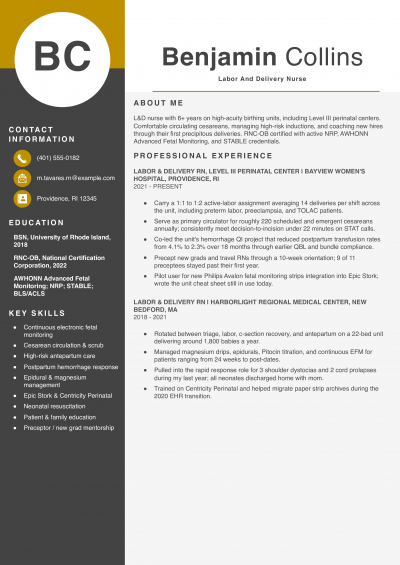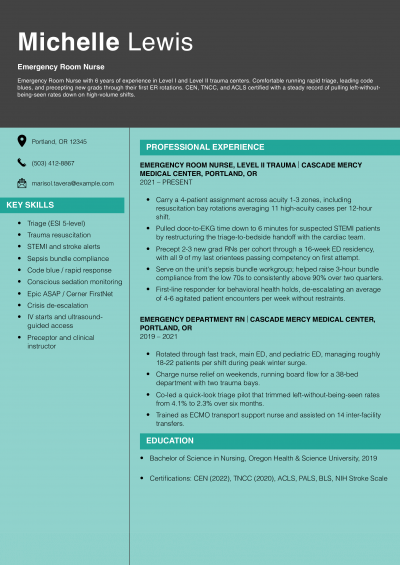
Emergency Room Nurse Resume Examples and Templates for 2026



Medical directors want to see board certification, specialty, and patient volume in the first six lines, because that tells them in one scan whether a nurse practitioner can hold a 20-patient day on their schedule.
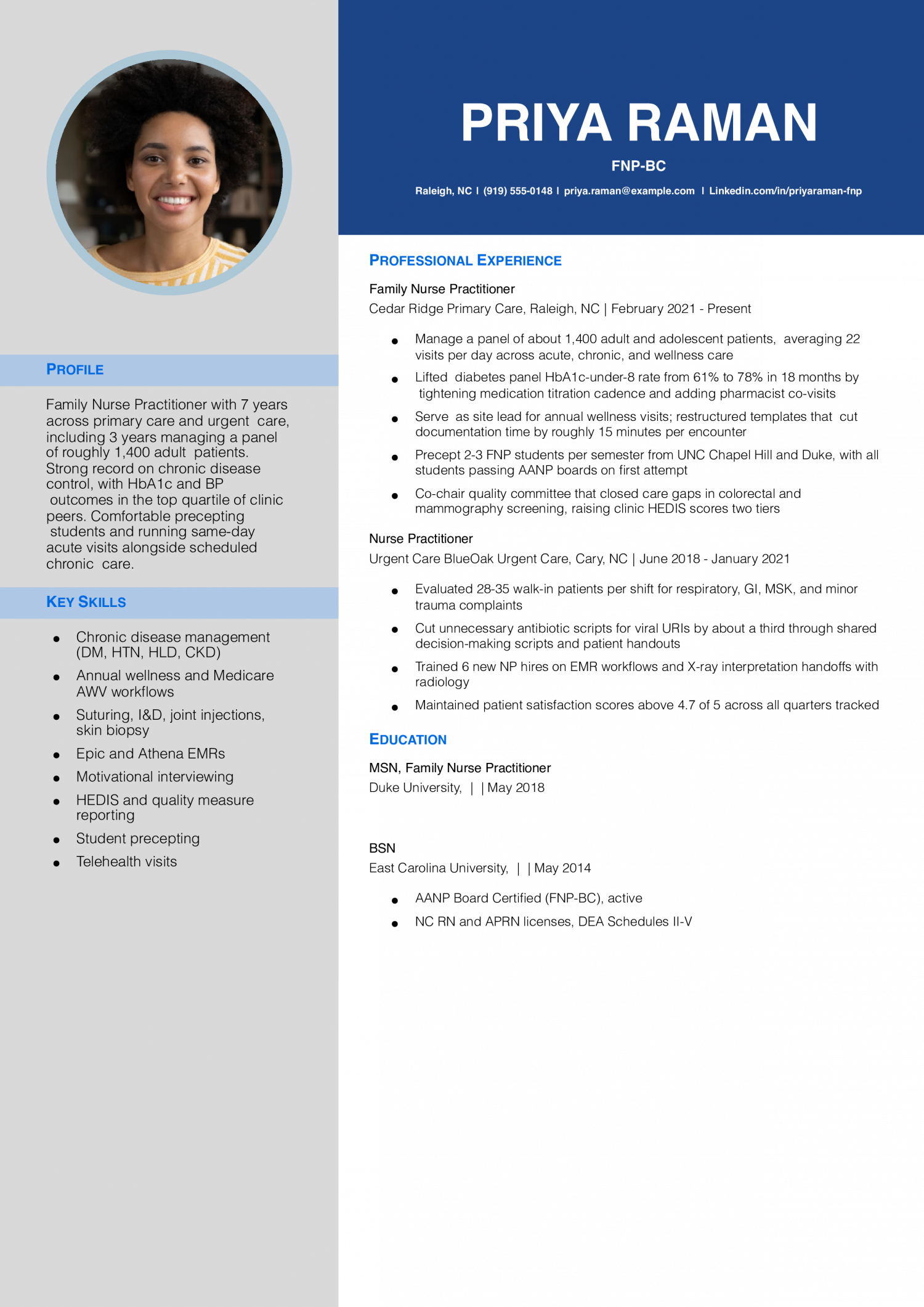
The new NP is finishing an MSN or DNP, holds a fresh board certification, and has not yet logged independent NP work. This resume needs to prove your clinical practica hours, preceptor settings, and the patient populations you handled under supervision.
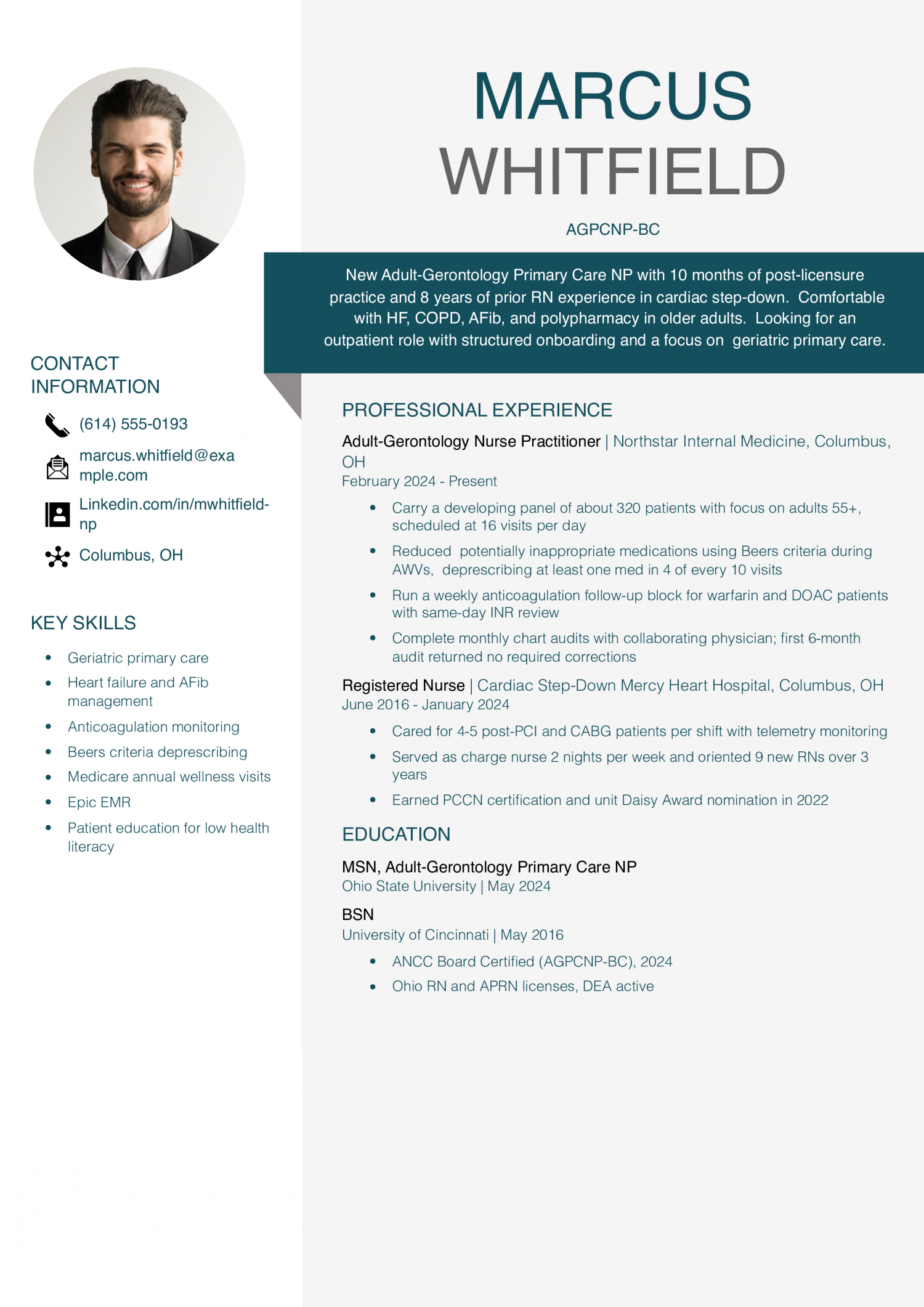
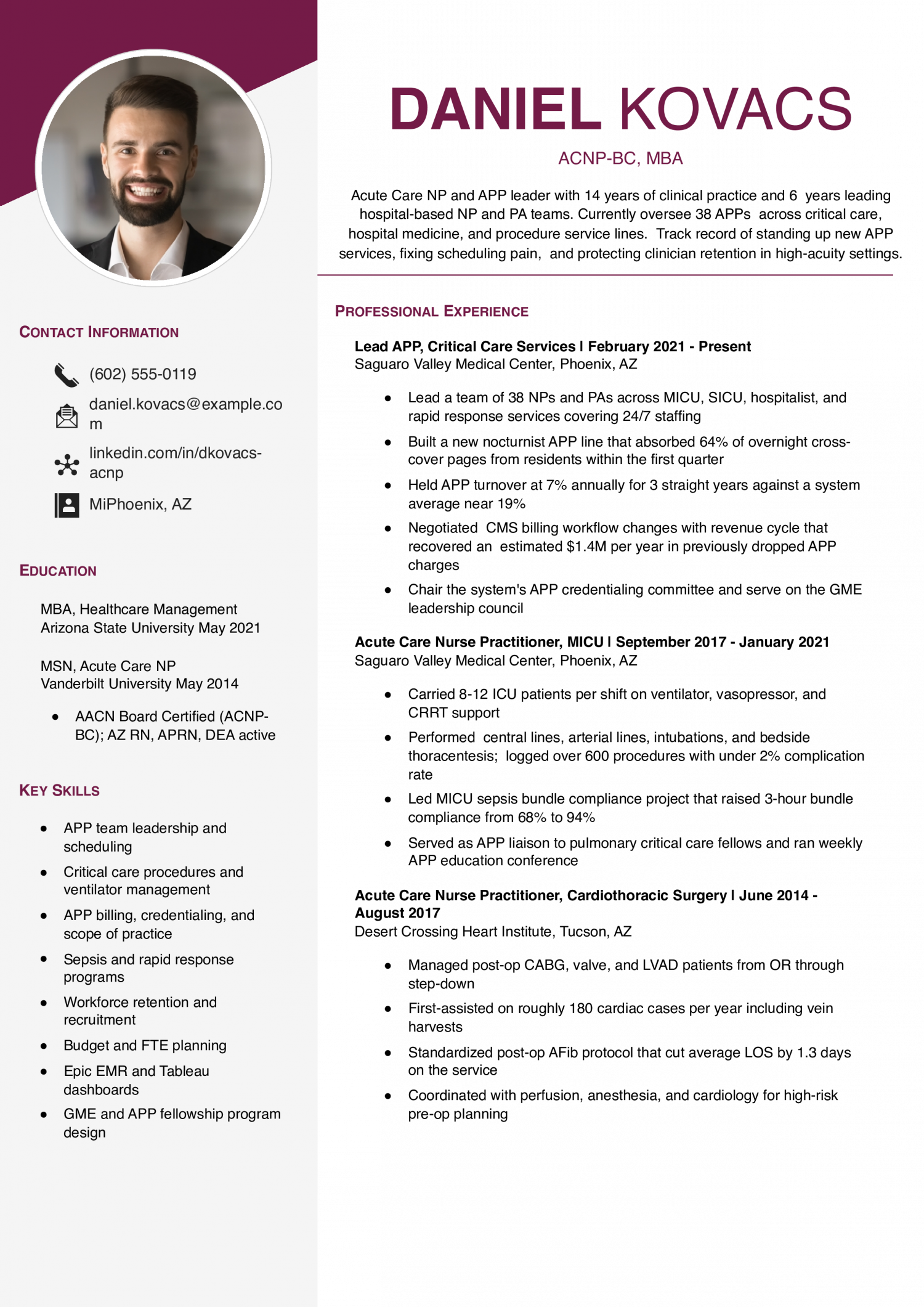
The experienced NP has two to seven years on a panel and runs visits independently within a collaborative or full-practice scope. This resume needs to prove daily patient volume, the acuity mix, EMR fluency, and measurable outcomes tied to your own panel.
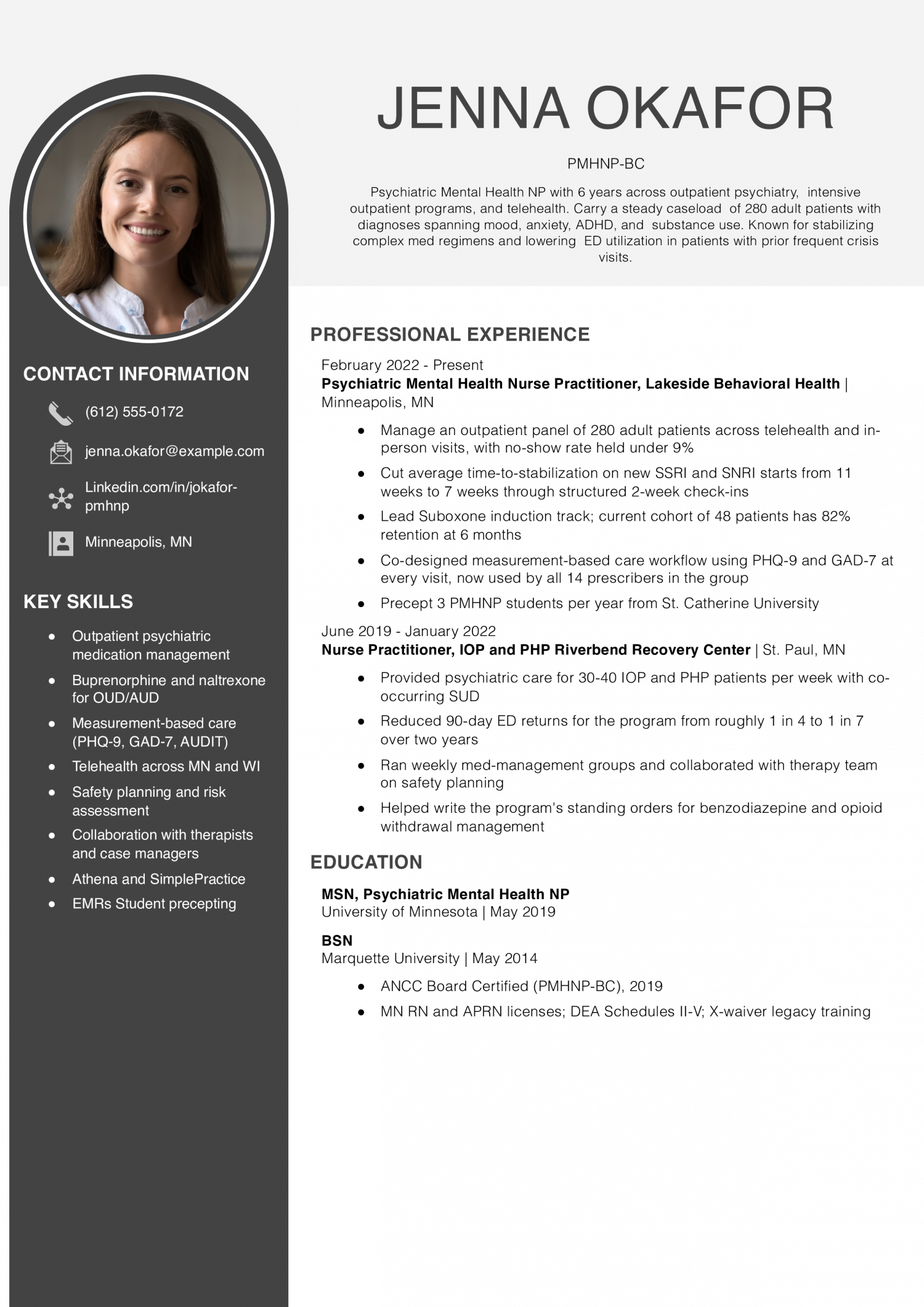
The lead NP precepts students, mentors junior NPs, and shapes clinical protocols inside a service line or clinic. This resume needs to prove the team you lead, the quality metrics you moved, and your role in standing up programs or pathways.
Alicia Hartman, FNP-BC
Portland, OR | (503) 555-0164 | [email protected] | linkedin.com/in/aliciahartman-np
Family Nurse Practitioner with 9 years of outpatient experience across primary care, women’s health, and integrated behavioral health. Manage a panel of about 1,650 patients with strong chronic disease metrics and a focus on closing care gaps for Medicaid and dual-eligible patients. Bilingual English/Spanish.
Senior Family Nurse Practitioner
Willamette Community Health | Portland, OR | 2020-Present
Family Nurse Practitioner
Coastline Family Medicine | Astoria, OR | 2017-2020
Nurse Practitioner, Women’s Health
Cascade Women’s Clinic | Salem, OR | 2015-2017
Registered Nurse, Labor and Delivery
Mount Hood Regional Hospital | Gresham, OR | 2012-2015
Lead the summary with patient volume, acuity, and specialty, not years in nursing. A medical director reads the first six lines to gauge whether you can hold their schedule.
Name your board certification, your population focus, and an average daily panel. A line like “FNP-C seeing 22 to 25 primary care patients per day across acute and chronic visits” outperforms a generic summary. Add the EMR you run in and the state where you hold full or collaborative practice.
Most strong NP bullets carry a number. Recruiters scan for daily patient load, panel size, and one outcome metric tied to your care.
Name two or three figures per role: patients per day, panel size, A1C reduction across diabetic patients, no-show rate, or 30-day readmission rate on your service. Bullets without a number tend to read as duties. Pair the number with the action: “Managed a panel of 1,400 primary care patients, lowering average A1C by a clinically meaningful margin over 12 months.”
Split your bullets across assessment and diagnosis, treatment and prescribing, procedures, and care coordination. The grouping helps a reviewer match your scope to their visit type.
Under procedures, name what you perform: suturing, joint injections, IUD insertion and removal, skin biopsies, incision and drainage. Under prescribing, note controlled-substance authority and chronic-disease management. Under care coordination, name specialist referrals, behavioral health warm handoffs, and case management.
Keep each category to three or four bullets so the page stays readable.
Put your active APRN license state, board certification (FNP-C, FNP-BC, AGPCNP-BC, PMHNP-BC), DEA registration, and BLS or ACLS in a credentials block under your name. Medical directors and clinic administrators verify this before reading bullets.
List the state and “license in good standing” without the license number; the same goes for DEA. Provide numbers on the application itself. Add the EMR systems you run in (Epic, Cerner, athenahealth, eClinicalWorks) inside this block or a tools line so the keyword scan and the credentialing coordinator both find them fast.
End the resume with MSN or DNP, school, graduation year, and a clinical-hours line if you are within five years of graduation. New NPs should name the breakdown.
Write “Clinical Practica: 720 hours across primary care, women’s health, and pediatrics; preceptors at [clinic name] and [hospital name].” Add professional memberships (AANP, ANA, specialty colleges) on one line. Skip hobbies and high school. If you are mid-career, the education block can shrink to two lines and let your clinical work hold the page.
Based on data from the nurse practitioner resumes our users build, here are the skills that show up most on shortlisted files. Match this list against the posting you’re targeting before you ship the resume.
| Soft Skills | % of resumes with this skill |
|---|---|
| Empathy | 71% |
| Communication | 57% |
| Critical thinking | 42% |
| Patient education | 36% |
| Interdisciplinary collaboration | 29% |
And here are the top hard skills showing up most often.
| Hard Skills | % of resumes with this skill |
|---|---|
| Patient assessment | 76% |
| Diagnosis and treatment planning | 67% |
| Medication prescribing | 49% |
| EHR documentation | 37% |
| Chronic disease management | 33% |
Based on data from thousands of nurse practitioners’ resumes built on ResumeTemplates.com, May 2026.
These are the credentials, software, and compliance signals hiring teams look for when scanning a nurse practitioner resume.
Your APRN license is the first thing a credentialing coordinator verifies. List it in a credentials block under your name so it clears the gate fast
Show the state, the credential type, and that the license is in good standing. Do not publish the license number on the resume itself; provide it on the application form.
If you hold a compact state license or multiple state licenses, list each one on its own line. Note pending state licenses with an expected activation month so a recruiter knows your start window.
State boards set CE hour requirements and pharmacology hour minimums. List the CE that signals you are sharpening your scope, not the hours that keep you eligible.
Keep a short CE block near your certifications. Name courses that map to the role you want: buprenorphine waiver training for primary care, trauma-informed care for behavioral health, dermatology procedures for urgent care.
Skip the generic compliance hours every NP completes. List CE that shows you have invested in a specialty, ideally with the hours and the issuing body so it reads as credible.
EMR fluency is a hard filter. The keyword scan and the nurse manager both look for the brand name of the system in your last few roles.
Patient privacy rules sit underneath every nurse practitioner role. Do not name patients, employers as identifiable settings, or specific dates of care on the resume.
Aggregate your bullets. “Managed a panel of 1,400 primary care patients” is safe; a sentence that ties a diagnosis to a small clinic and a date is not.
Avoid posting screenshots of your EMR, dashboard exports, or case studies with identifiable details. Keep the resume focused on volume, outcomes, and scope at the population level.
Board certification is the credential a medical director uses to route your application to the right panel. Name the body and the population focus on the same line.
An active APRN license, board certification, and DEA registration keep you eligible. The certifications below are what move a nurse practitioner resume from the qualified-but-typical stack onto a medical director’s shortlist. List the issuing body, the credential abbreviation, and the expiration month and year.
Nurse practitioner is one of the larger advanced-practice occupations tracked by BLS, and the median pulls in a wide mix of primary care, urgent care, and specialty roles. That spread means the population focus and care setting drive most of the variation under the headline number. Geography matters too: full-practice-authority states and hospital-employed roles sit above retail clinic and outpatient primary care on the same credential.
To position above the median, lead your resume with the specialty, panel size, and acuity you carry, not your years since graduation.
| # | State | Avg. Annual |
|---|---|---|
| 1 | California | $166,610 |
| 2 | New Jersey | $149,620 |
| 3 | Alaska | $145,450 |
| 4 | New York | $145,390 |
| 5 | Oregon | $144,600 |
| 6 | Washington | $140,220 |
| 7 | Connecticut | $138,960 |
| 8 | Massachusetts | $138,890 |
| 9 | New Mexico | $138,440 |
| 10 | Arizona | $133,790 |
| # | State | Workers | Median |
|---|---|---|---|
| 1 | Florida | 24,690 | $129,010 |
| 2 | Texas | 21,690 | $129,880 |
| 3 | California | 20,980 | $166,610 |
| 4 | New York | 20,430 | $145,390 |
| 5 | Ohio | 14,550 | $126,740 |
Resume Templates offers HR approved resume templates to help you create a professional resume in minutes. Choose from several template options and even pre-populate a resume from your profile.
Build a clinical practica section near the top of the resume. List total hours, then break them out by rotation: primary care, women's health, pediatrics, behavioral health.
Name the preceptor's practice setting (federally qualified health center, rural primary care, urban academic clinic) and the patient population served. Add procedures you performed under supervision and the EMR you documented in.
Keep RN experience below this block. Frame it as the foundation, not the lead, so the reviewer sees you as an NP candidate first.
No. State boards and credentialing offices advise against publishing license and DEA registration numbers on a resume that gets emailed and posted on job boards.
Write "Texas APRN license in good standing" and "Active DEA registration" as line items. Provide the actual numbers on the employer's application form or credentialing packet when asked.
Show 10 to 15 years of RN experience that relates to the NP role you want. ICU and ED time stays. Specialty alignment matters more than total years.
Compress older or unrelated RN jobs into a one-line "Earlier nursing experience" entry. This keeps the page focused on the work a medical director cares about.
Open the summary with your board certification, population focus, and clinical practica hours. The first line should read as an NP, not an RN.
Reframe RN bullets around assessment, triage decisions, patient education, and team coordination, the skills that translate to NP visits. Keep procedure exposure and acuity visible.
Add a "Procedures and Skills" block listing what you performed during practica: suturing, injections, IUD insertion, skin biopsies, well-child exams.
For a nurse practitioner, an ATS-friendly template is the safest pick, because it puts your certifications and experience where a hiring manager scans first. A basic template is a solid alternative. Whichever you choose, keep the formatting clean and easy to parse: clear section headings, a standard font, and no graphics a parser can choke on.
Executive Resume Writer and Career Coach
Andrew Stoner is an executive career coach and resume writer with 17 years of experience as a hiring manager and operations leader at two Fortune 500 Financial Services companies, and as the career services director at two major university business schools.
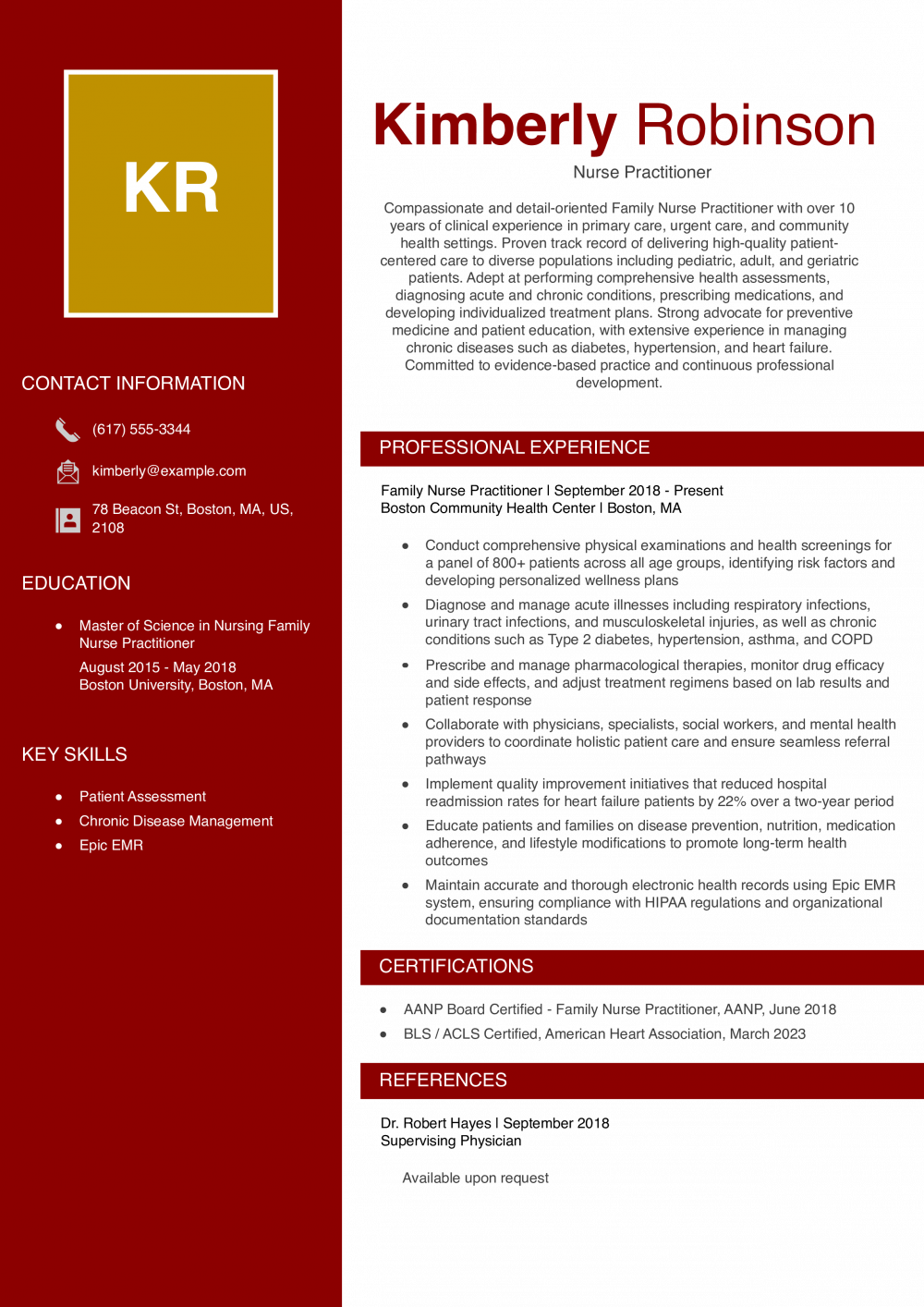
Customize this template in our builder in under 10 minutes.