Certified Nursing Assistant Resume Examples and Templates for 2026



Hiring L&D nurse managers look for your fetal monitoring credentials and delivery acuity on the first scan of page one, because that combination shows whether you can take a high-risk assignment without a preceptor backstop.
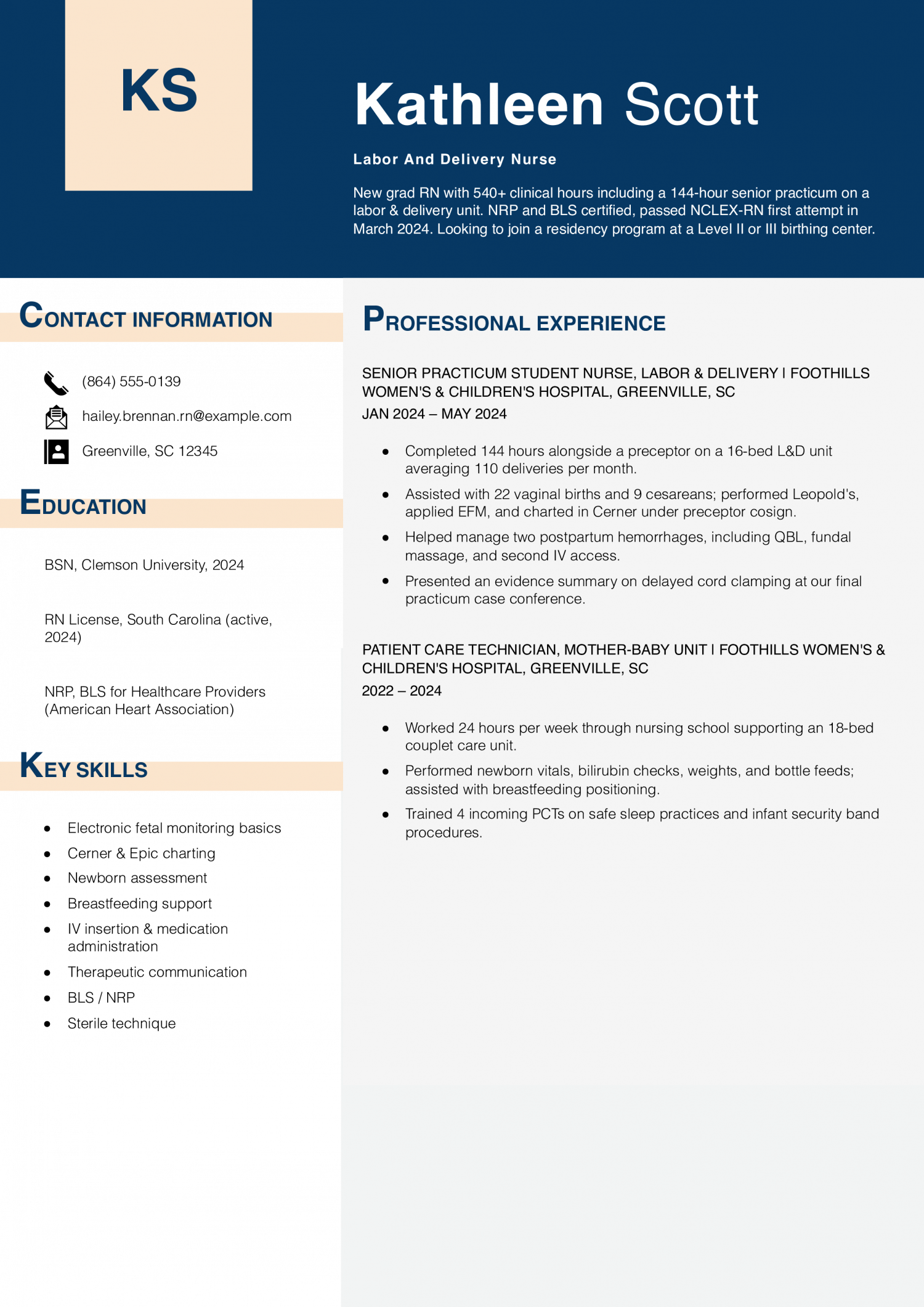
New grad RNs are typically within a year of NCLEX with an OB capstone or L&D externship behind them. This resume needs to prove clinical readiness through preceptor hours, simulation work, and the EFM coursework you completed before sitting for boards.
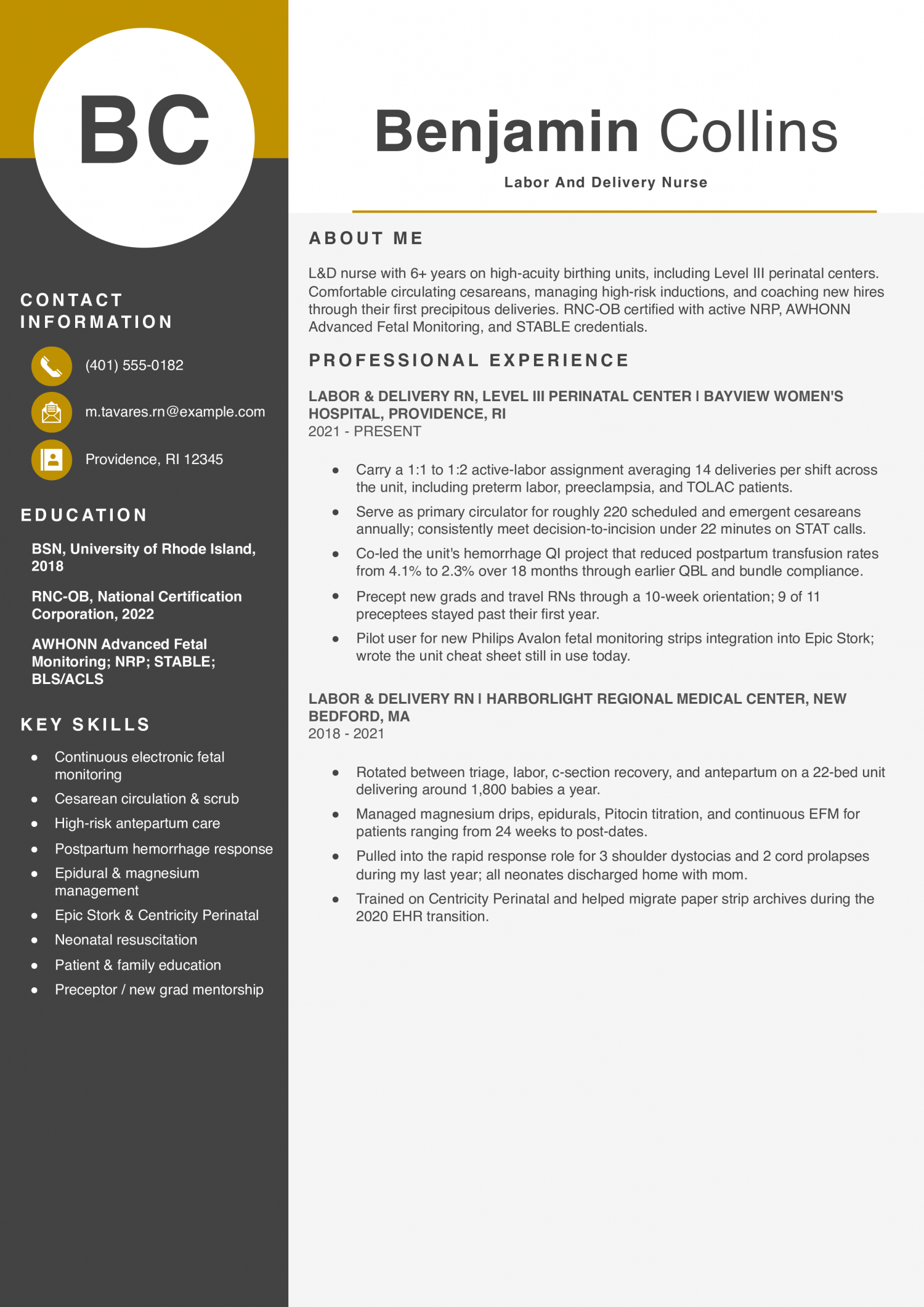
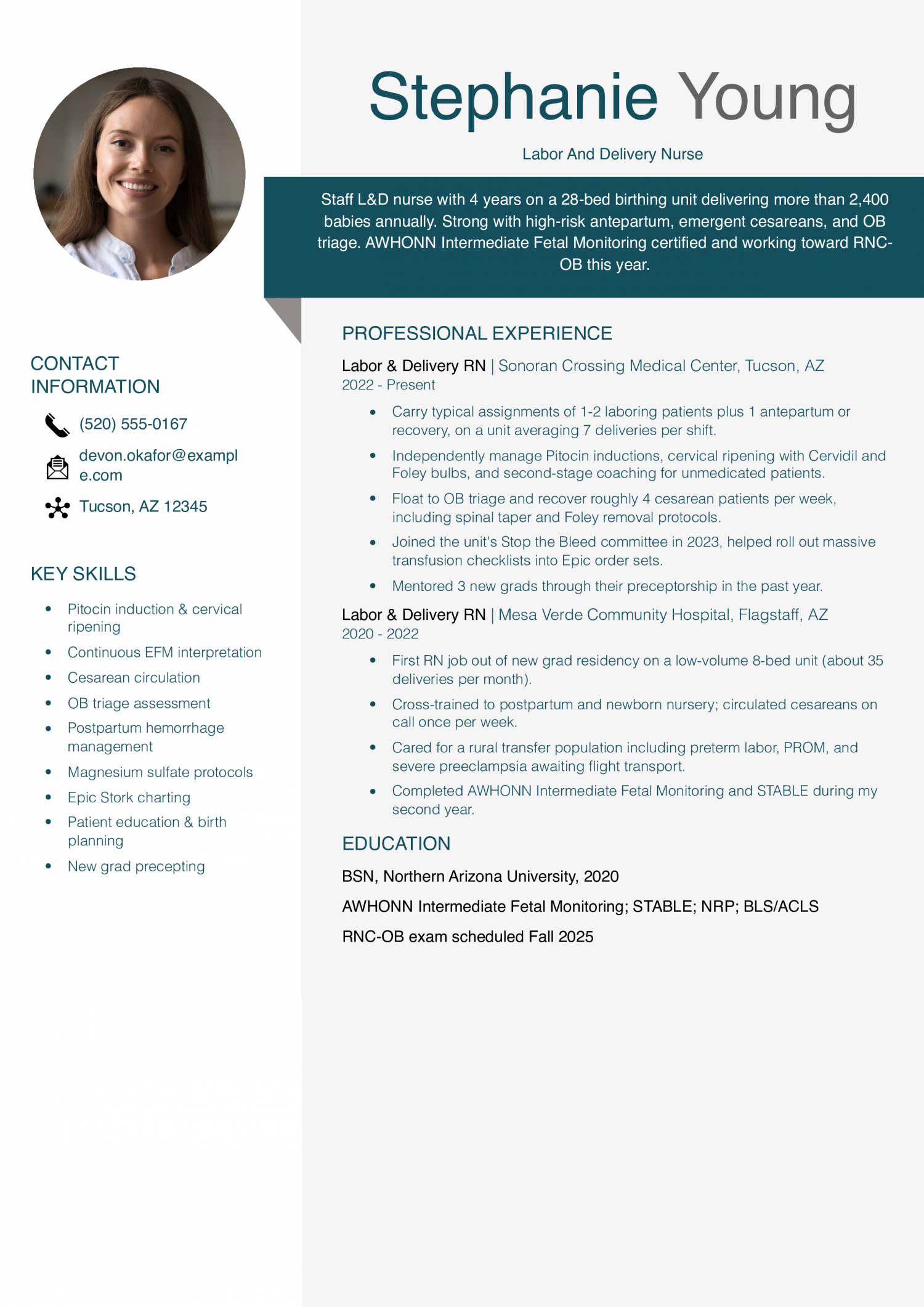
Staff L&D nurses carry two to seven years on a labor unit and run their own patient assignments through full deliveries. This resume needs to prove acuity, autonomy, and the procedures you handle without backup, including Pitocin titration and postpartum hemorrhage response.
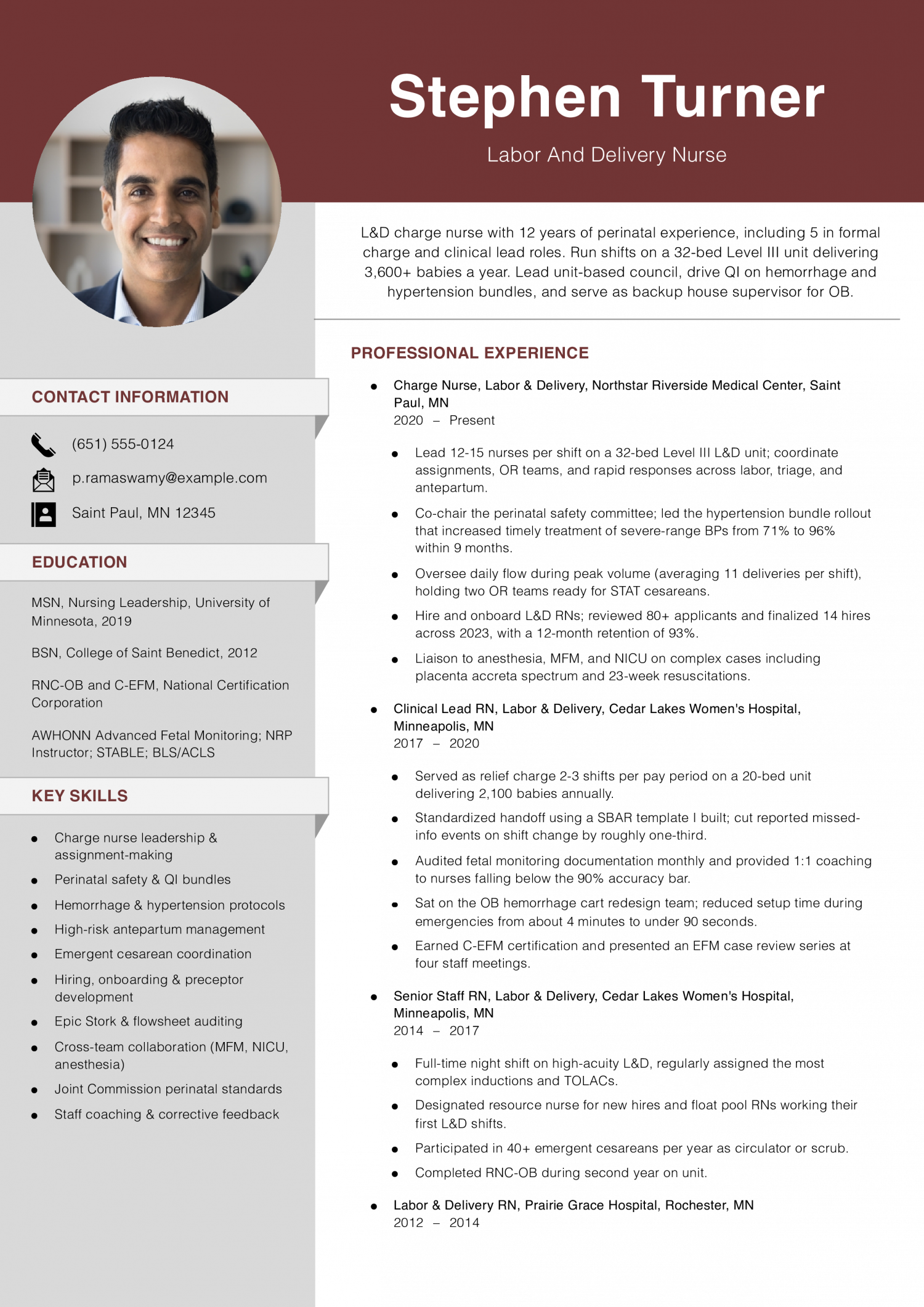
Charge nurses lead shift assignments on a Level II or III L&D floor and triage staffing during high-census windows. This resume needs to prove team oversight, OB emergency response leadership, and the quality metrics your unit improved under your watch.
Labor & delivery nurse with 8 years across community and academic birthing centers, including 3 years as relief charge. Strong in high-risk antepartum, emergent cesarean response, and OB triage. RNC-OB certified with C-EFM, NRP, and STABLE. Known on my unit for staying calm during shoulder dystocias and for building the orientation tool our new grads still use.
Your profile should state your years on an L&D unit, the acuity level you have worked (Level I, II, or III), and the patient population you carry.
Name the procedures that fill your typical shift: inductions, scheduled and emergent c-sections, epidural management, triage, and postpartum recovery. Add your strongest OB credential here, C-EFM or NRP, so the credential check clears before a manager reads further.
Bullets without a number tend to read as duties rather than competence. Nurse managers scan for delivery volume, c-section assist counts, and the high-risk population you handle.
A strong bullet names the metric and the clinical context: deliveries per shift, NICU consult rate, postpartum hemorrhage cases stabilized, or Apgar improvement on resuscitation calls. Most strong resumes land two or three of these per role.
Cluster your bullets so a recruiter can scan the scope in one pass. Useful categories include intrapartum care, fetal monitoring and EFM interpretation, OB emergency response, and patient education.
Within each category, name the real tools and protocols: AWHONN FHM strips, Pitocin and magnesium sulfate titration, OB rapid response activation, and breastfeeding initiation. Avoid stacking every skill under one bullet.
L&D nurse managers and hospital recruiters need to see your active RN license, C-EFM, NRP, BLS, and ACLS before they read your experience. Put a credentials block on page one with the state of licensure (in good standing) and certification expiration months.
Name your EMR fluency right after: Epic Stork, Cerner, or Meditech. Hospital recruiters filter on these terms during the first pass.
End with your BSN or ADN, school, and graduation year, then a short continuing education block tied to OB practice. List AWHONN Intermediate or Advanced FHM, STABLE, and any perinatal safety coursework you completed in the last two years.
If you precept new grads or run unit-based education, add a one-line note under education. That signal moves your resume toward the charge nurse and clinical educator tracks.
Based on data from the resumes our users built in 2026, the skill mix has shifted from a checklist of OB tasks toward credential specificity and EMR fluency. Five years ago, a labor and delivery nurse resume read like a bedside checklist topped with BLS. Nurse managers weigh hard skills like C-EFM and NRP first, then read soft skills as evidence backing your bullets on triage decisions and family communication.
Match the lists below against your target posting and rewrite a bullet for each soft skill rather than dropping it in a standalone block.
| Soft Skills | % of resumes with this skill |
|---|---|
| Communication | 70% |
| Compassion and empathy | 69% |
| Composure under pressure | 50% |
| Patient advocacy | 38% |
| Interdisciplinary teamwork | 28% |
And here are the top hard skills showing up most often.
| Hard Skills | % of resumes with this skill |
|---|---|
| Electronic fetal monitoring | 78% |
| Neonatal resuscitation | 57% |
| Labor and delivery assessment | 45% |
| EHR documentation | 36% |
| BLS and ACLS certification | 31% |
Based on data from thousands of labor and delivery nurses’ resumes built on ResumeTemplates.com, May 2026.
Before a labor and delivery nurse resume gets a closer read, hiring teams check for a short list of essentials.
Every L&D posting starts with a license check before a nurse manager reads your experience. Get the credential block on page one right and you clear the first gate.
List your active RN license with the state and the words in good standing. Do not include the license number on the resume itself.
If your home state is part of the Nurse Licensure Compact, write multistate or compact license next to the state. That tells recruiters you can be staffed at any NLC facility without endorsement delays.
For jobs in non-compact states, note license by endorsement in progress with the month you applied. State boards verify the number when you submit the application.
CE hours satisfy your state board, but the courses you list signal where your practice is headed. Put OB-specific CE under education with the issuing body and the year.
AWHONN Intermediate and Advanced FHM courses carry the most weight on an L&D resume after C-EFM. Pair them with STABLE for neonatal stabilization scope.
If you completed perinatal safety, OB hemorrhage simulation, or implicit bias coursework in the last two years, list those too. Hospital quality programs weight that signal during charge nurse hiring.
Hospital recruiters filter the first round on EMR platform by name. Put yours in your page-one skills block and name the OB-specific module where it applies.
Epic (Stork module for L&D documentation and fetal strip archiving)
Cerner PowerChart Maternity
Meditech Expanse OB
GE Centricity Perinatal for EFM archive review
Allscripts and athenaOne (smaller hospital systems and birthing centers)
L&D resumes can drift into specifics that violate HIPAA without the writer realizing it. Keep your bullets at the population and protocol level.
Do not name patients, room numbers, dates of service, or any detail that could identify a delivery. Even a unique high-risk case can be traced back to a real patient.
Write at the population level instead: gestational ages, acuity tier, procedure type, and aggregate volume. Bullets like managed care for 12 to 15 high-risk antepartum patients per shift read as competence, not disclosure.
An active RN license and BLS keep you eligible for any L&D opening. The certifications below are what move a labor and delivery nurse resume from the qualified-but-typical stack into the shortlist L&D nurse managers and hospital recruiters actually call back. List the issuing body, the credential acronym, and the expiration month and year for each.
C-EFM (Electronic Fetal Monitoring): Issued by NCC, this credential signals you can read strips at the level a charge nurse expects and is often the first specialty cert recruiters search for.
NRP (Neonatal Resuscitation Program): Required at most L&D units for the nurse on the warmer at delivery, and a non-negotiable line item for Level II and Level III openings.
AWHONN Intermediate or Advanced FHM: Signals deeper fetal monitoring competence than C-EFM alone and moves your resume toward high-risk antepartum and charge nurse tracks.
RNC-OB (Inpatient Obstetric Nursing): Earned through NCC after two years of specialty practice, this credential separates experienced L&D RNs from staff nurses who rotated through OB during orientation.
For labor and delivery nurses, the 10th-percentile floor and the top-decile ceiling sit far enough apart that the spread itself tells the story. What moves a candidate from floor to ceiling is acuity level, specialty certification stack, and geography, with charge or clinical educator scope adding the final lift. Geographic concentration matters: metros with academic medical centers and high-birth-volume hospital systems pay above the national mean.
Lead your resume with the acuity level, the specialty certs (C-EFM, NRP, RNC-OB), and the unit scope that map to where you want to land.
| # | State | Avg. Annual |
|---|---|---|
| 1 | California | $140,330 |
| 2 | Hawaii | $136,320 |
| 3 | Oregon | $123,990 |
| 4 | Washington | $112,180 |
| 5 | Alaska | $110,690 |
| 6 | New York | $105,600 |
| 7 | District of Columbia | $104,550 |
| 8 | New Jersey | $102,730 |
| 9 | Nevada | $101,990 |
| 10 | Massachusetts | $101,970 |
| # | State | Workers | Median |
|---|---|---|---|
| 1 | California | 326,720 | $140,330 |
| 2 | Texas | 261,050 | $90,010 |
| 3 | Florida | 218,100 | $82,850 |
| 4 | New York | 204,120 | $105,600 |
| 5 | Pennsylvania | 146,840 | $87,610 |
Resume Templates offers HR approved resume templates to help you create a professional resume in minutes. Choose from several template options and even pre-populate a resume from your profile.
Lead with your BSN, NCLEX pass date, and OB capstone or externship hours. Name the specific clinical site and the number of deliveries you observed or assisted.
List NRP and BLS in your credentials block even if C-EFM is still pending. Add any simulation lab work on EFM strip interpretation as a bullet under education.
Many new grad residency programs at academic hospitals weigh capstone hours and preceptor evaluations more than prior RN tenure.
Separate your charge nurse responsibilities into their own role block or sub-section. Lead with shift assignment scope, staffing decisions during high census, and OB rapid response leadership.
Quantify the unit: beds you oversee, RNs on your shift, and any quality metrics that moved under your watch. Name policy work, audit participation, or preceptor coaching as distinct bullets.
List your current license as active and in good standing with the state board, then note compact state status if your home state participates in the NLC.
For non-compact moves, write license by endorsement in progress with the target state and the month you submitted. Do not put the license number on the resume itself.
Put EMR systems in your page-one skills block by name: Epic Stork, Cerner, or Meditech. Hospital recruiters filter on the exact platform during the first scan.
If you were a superuser, build trainer, or go-live resource, write that as a bullet under the role where it happened. That signal moves you toward informatics-adjacent tracks.
For a labor and delivery nurse, an ATS-friendly template is the safest pick, because it puts your certifications and experience where a hiring manager scans first. A basic template is a solid alternative. Whichever you choose, keep the formatting clean and easy to parse: clear section headings, a standard font, and no graphics a parser can choke on.
Executive Resume Writer and Career Coach
Andrew Stoner is an executive career coach and resume writer with 17 years of experience as a hiring manager and operations leader at two Fortune 500 Financial Services companies, and as the career services director at two major university business schools.
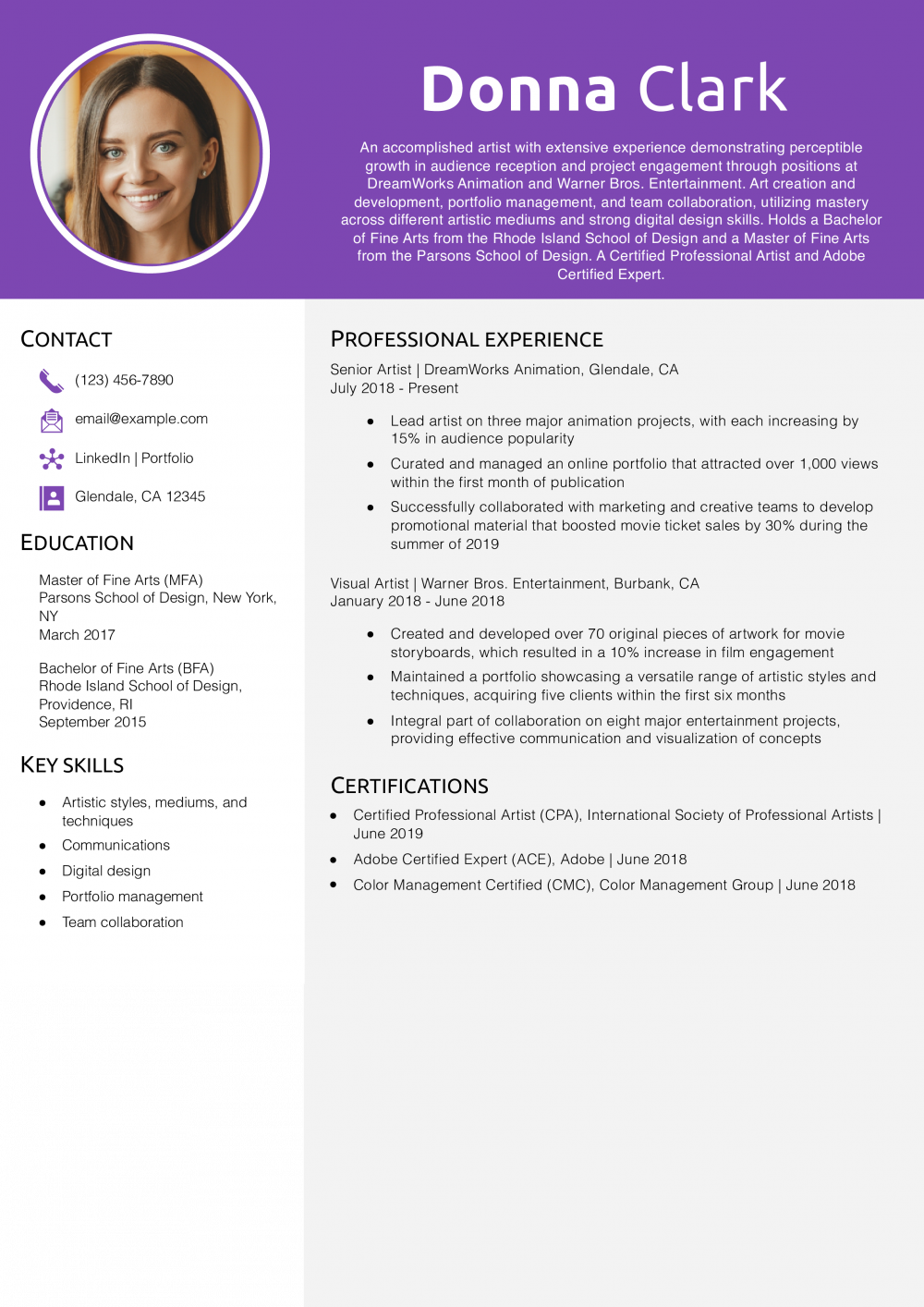
Customize this template in our builder in under 10 minutes.