


Artist Resume Examples and Templates




For an effective fashion designer resume, focus on your relevant skills like fabric sourcing, trend forecasting, or apparel construction. Show your success developing new clothing items, and cite any related degrees or certificate programs you’ve completed. This guide provides expert tips to help you create a results-driven resume showing your best fashion designer qualifications.
Key takeaways:
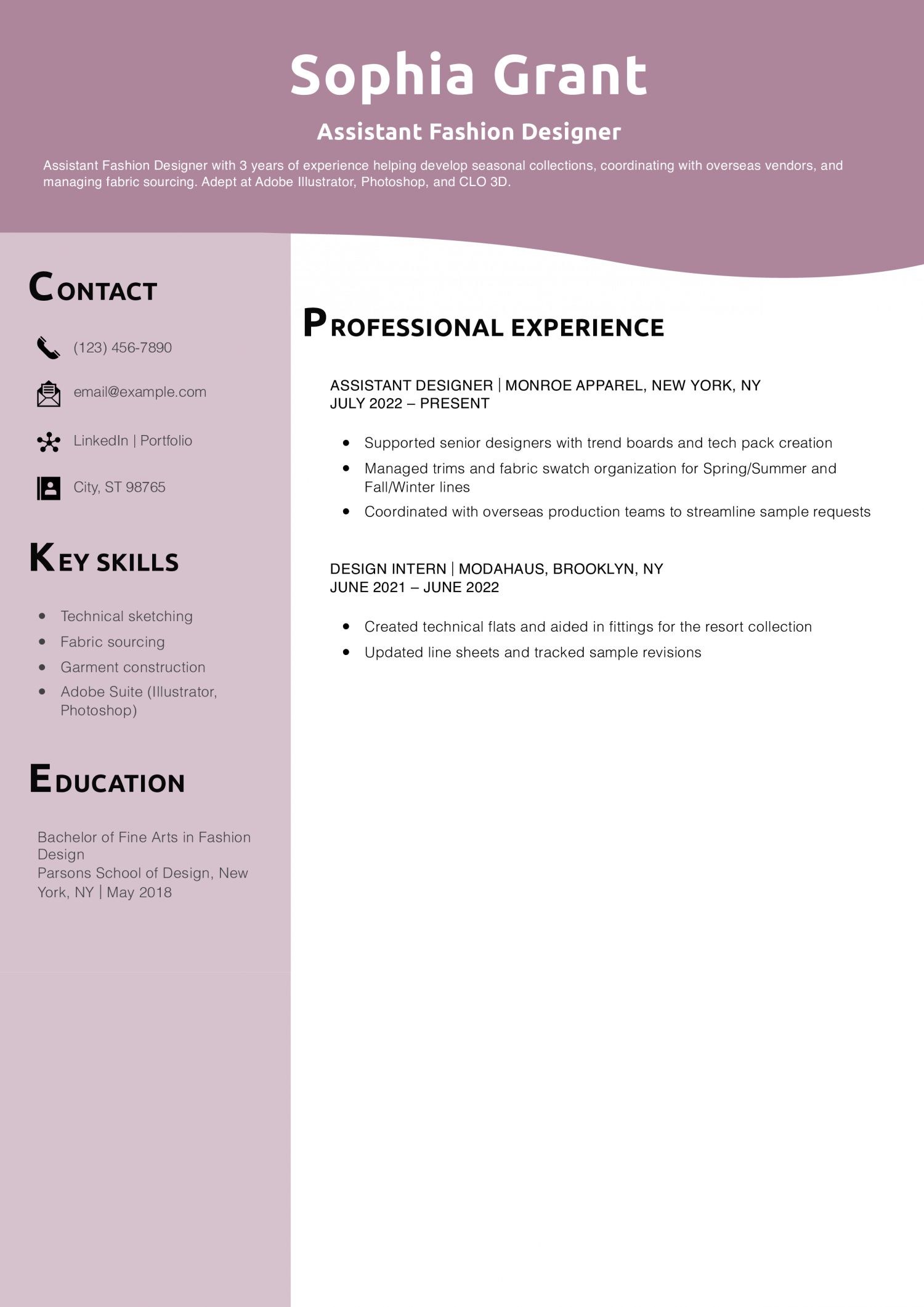
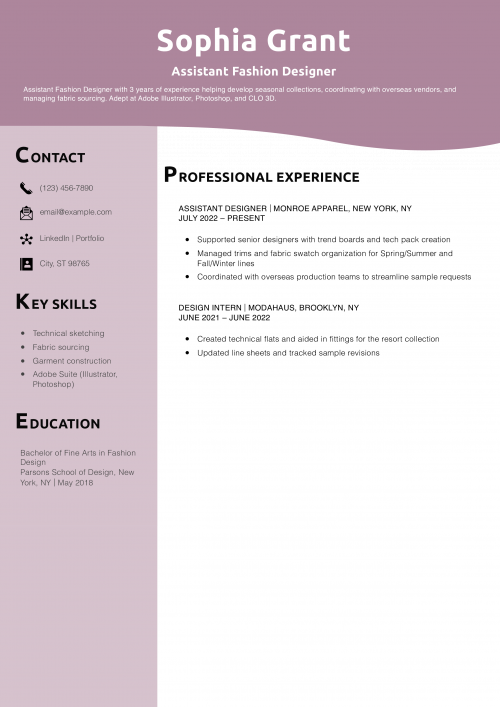
This resume highlights collaboration with senior designers, efficient communication with vendors, and fluency in essential design tools. The inclusion of quantified results like reduced sample production time demonstrates real-world impact. The layout is clean and focused, with skills and education placed strategically to guide the reader. Learn how to present your experience clearly with this guide on listing work experience.

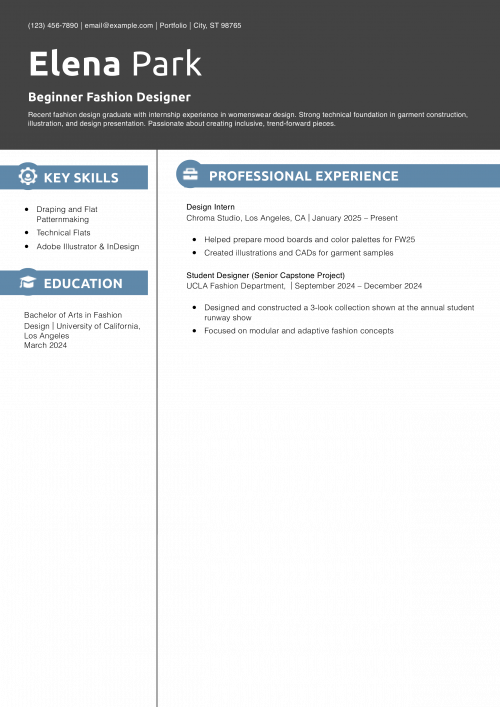
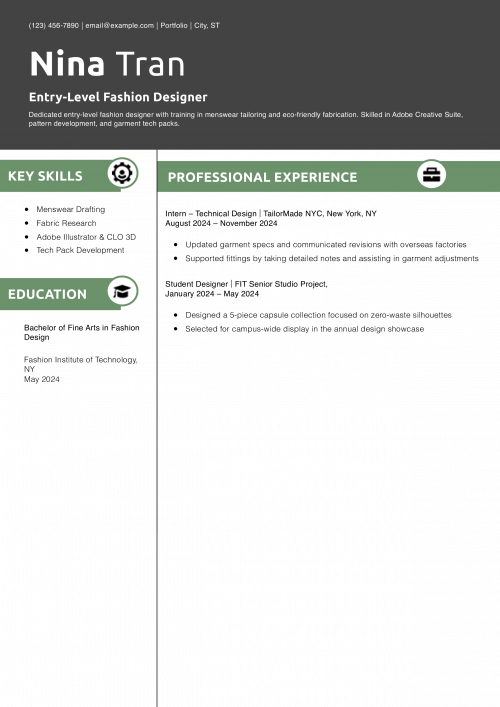
This resume is a great example of how to leverage internships and academic work when you’re new to the field. It makes smart use of a concise summary and technical skills, while linking classroom experiences to real-world outcomes. For more ideas, see how to write a resume with no experience.
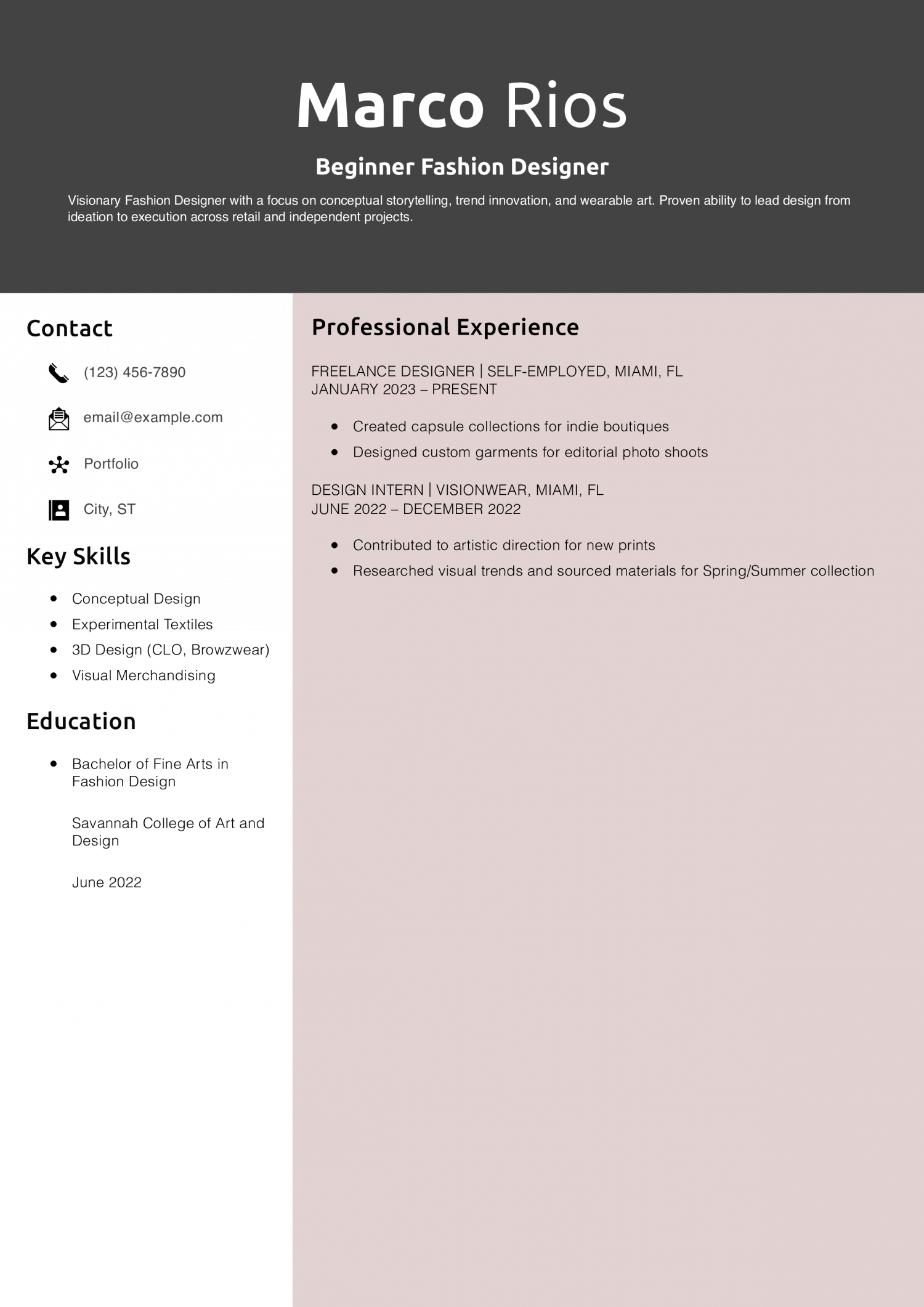
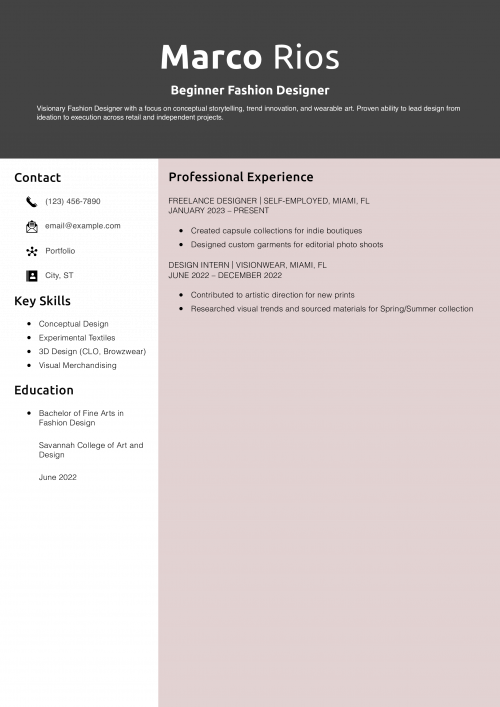
This resume balances artistic expression with practical design results. By highlighting a capsule collection launch and strong concept development skills, it positions the candidate as both visionary and effective.
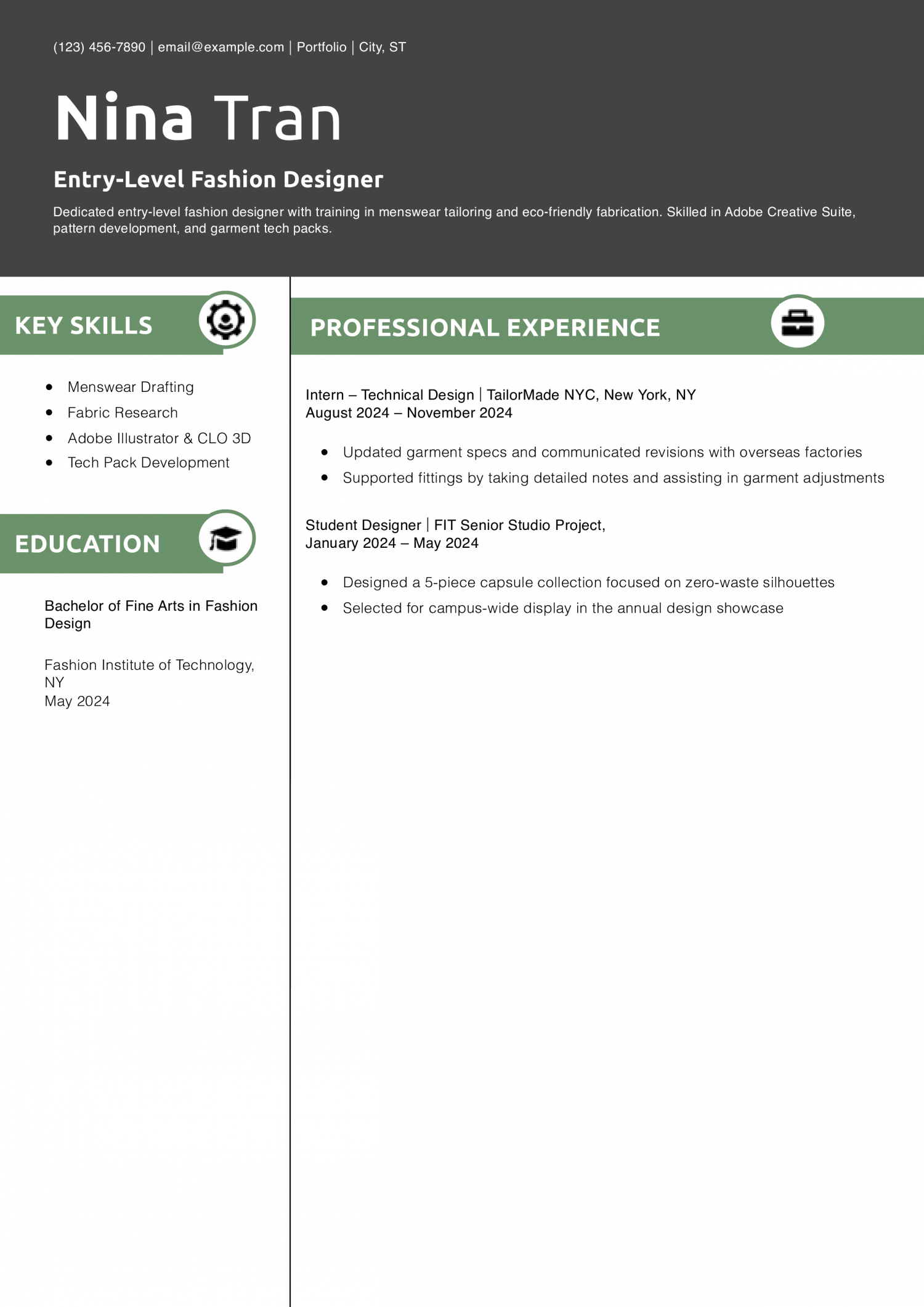
With a solid capstone project and technical internships, this resume uses each experience to show industry readiness. Bullet points emphasize contribution to professional teams and knowledge of design software. Learn to format your own resume like this with this resume writing guide.
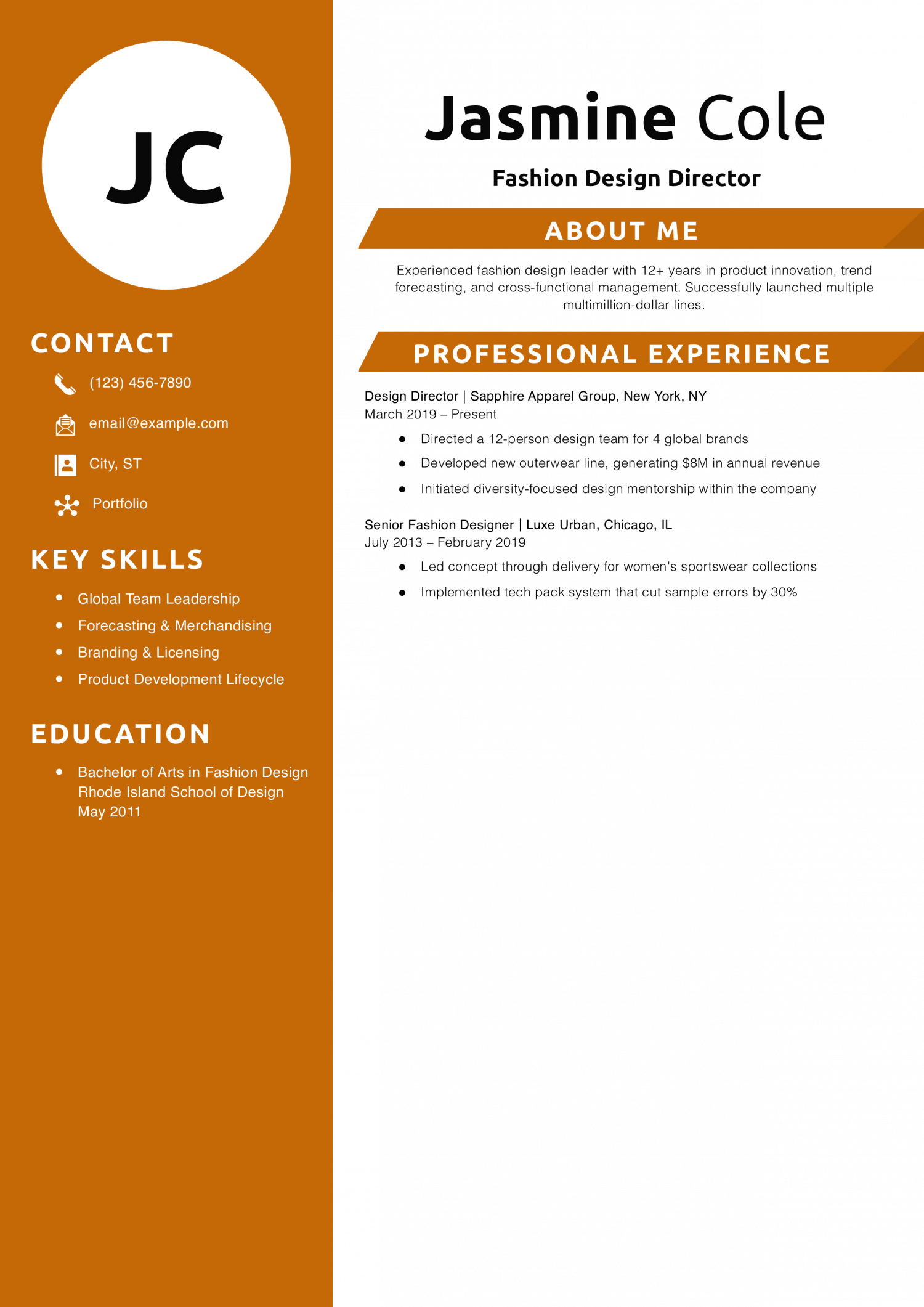
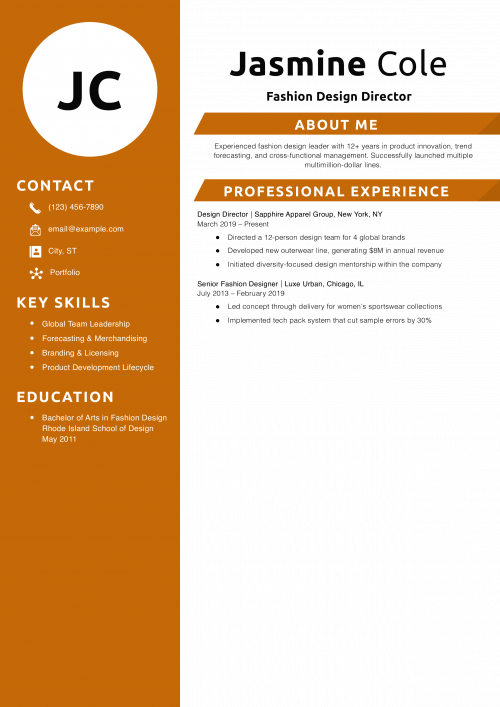
This resume clearly demonstrates leadership in design and business strategy, using revenue growth and team management examples to prove impact. A great reference for professionals in senior roles. For tips on showing career progression, check out this guide to listing promotions.
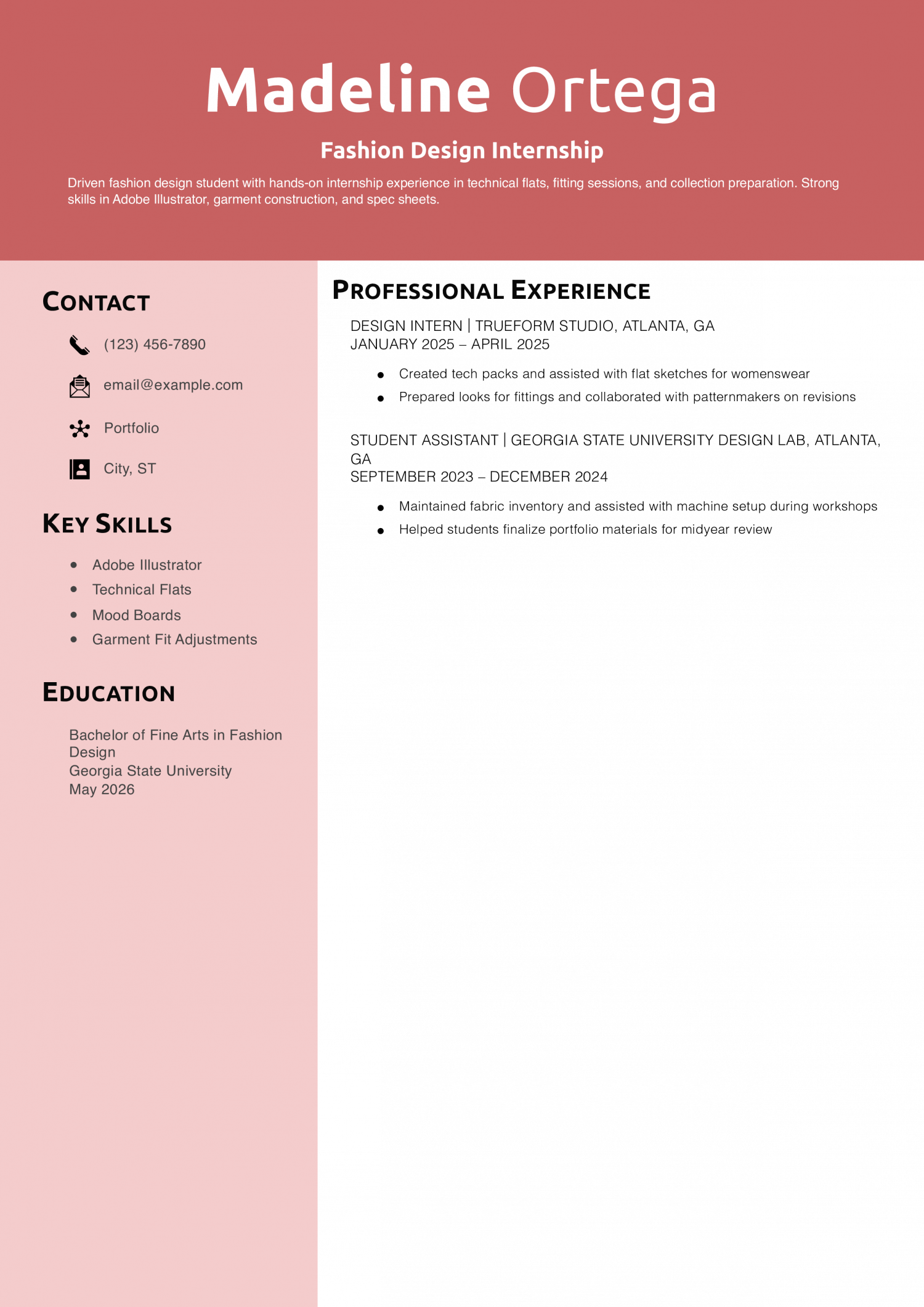
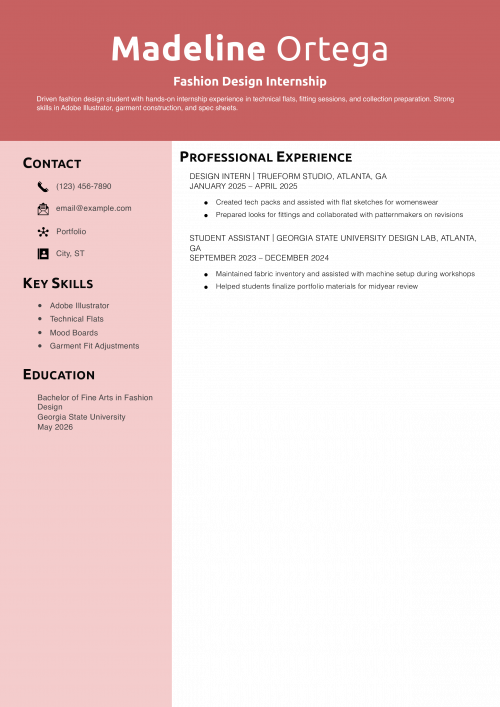
This resume highlights relevant coursework, technical proficiencies, and hands-on experience assisting with fittings and CAD work. It’s ideal for a student applying to internships who wants to show practical value. Learn how to enhance early experience like this using how to write a resume with no experience.

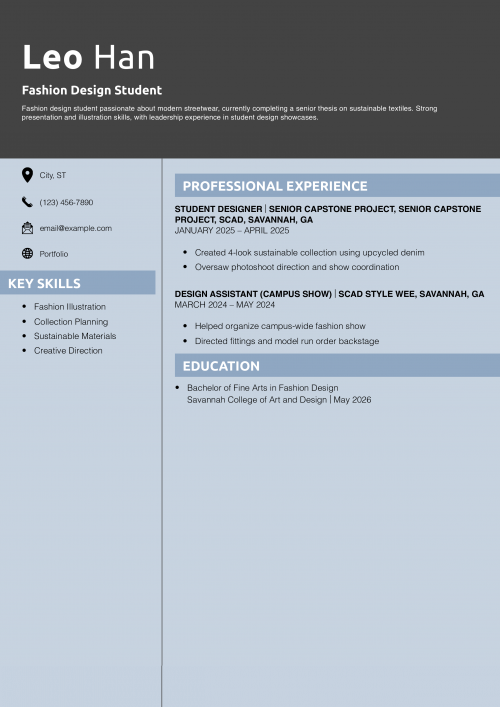
This resume draws attention to academic work, leadership in student groups, and creative skills. It shows initiative and a strong foundation in both technical and creative areas. Learn how to organize this type of student resume with this guide to resume formats.
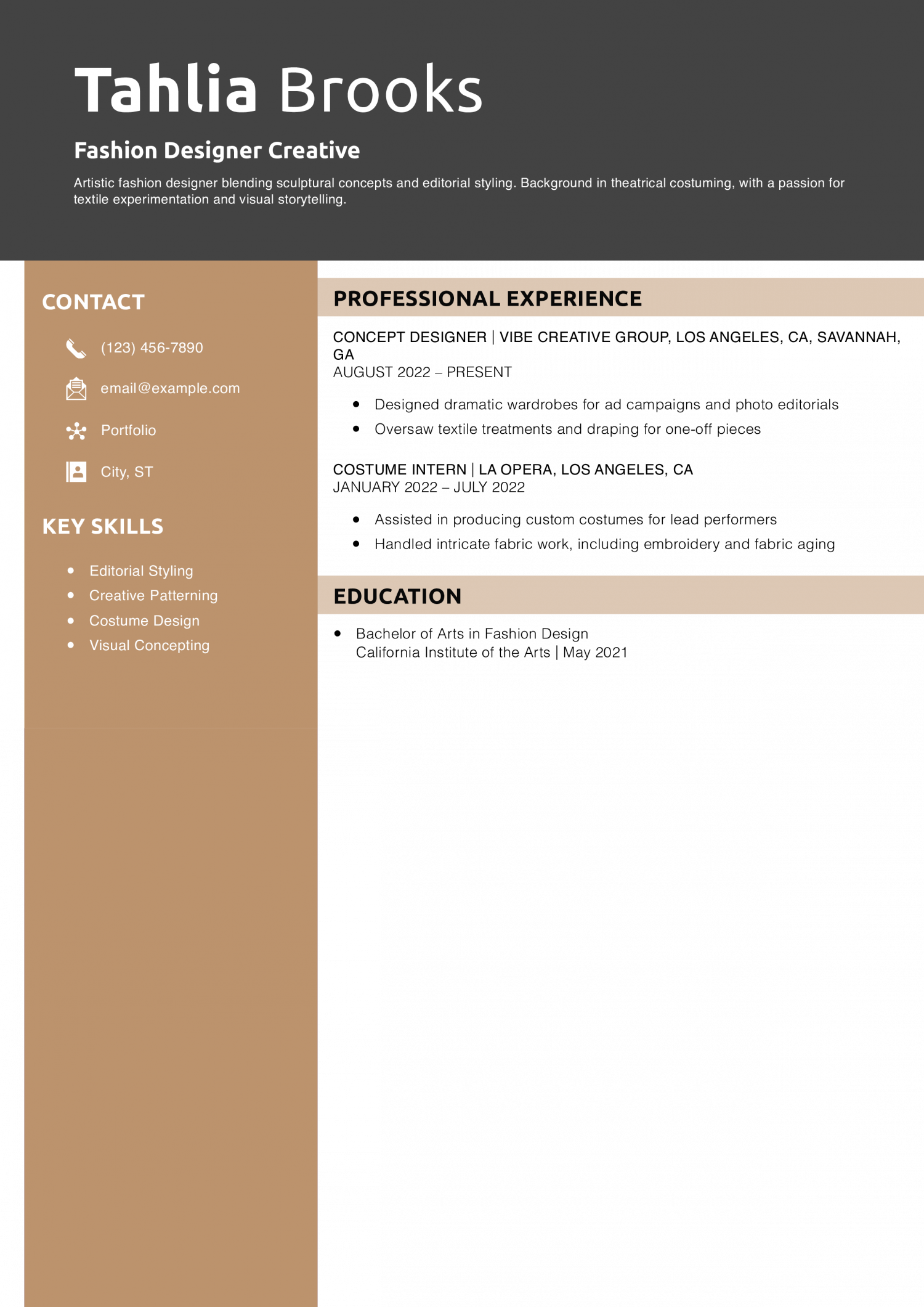
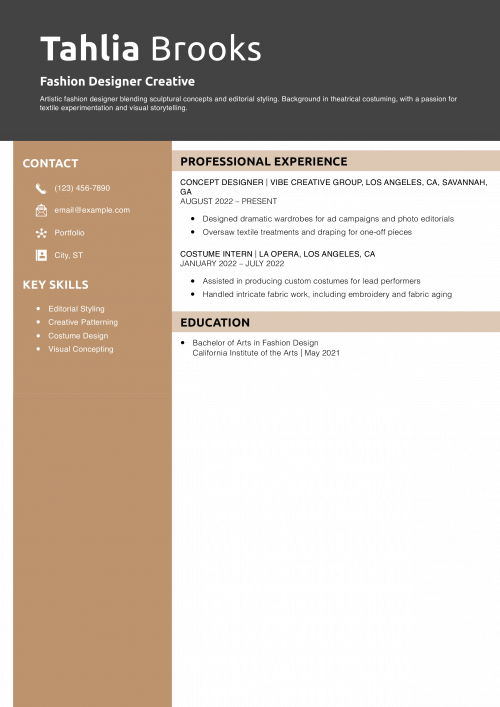
Aesthetically driven and portfolio-oriented, this resume works well for candidates in editorial or conceptual fashion. It demonstrates a mix of art direction, styling, and production skills. If you’re targeting creative industries, you can improve your resume’s appeal using resume personal statement examples.

This resume stands out by showcasing clear technical proficiencies, pattern development, and cross-department collaboration. It’s a great model for candidates in product development roles. Learn how to write detail-oriented descriptions like these with resume job description examples.
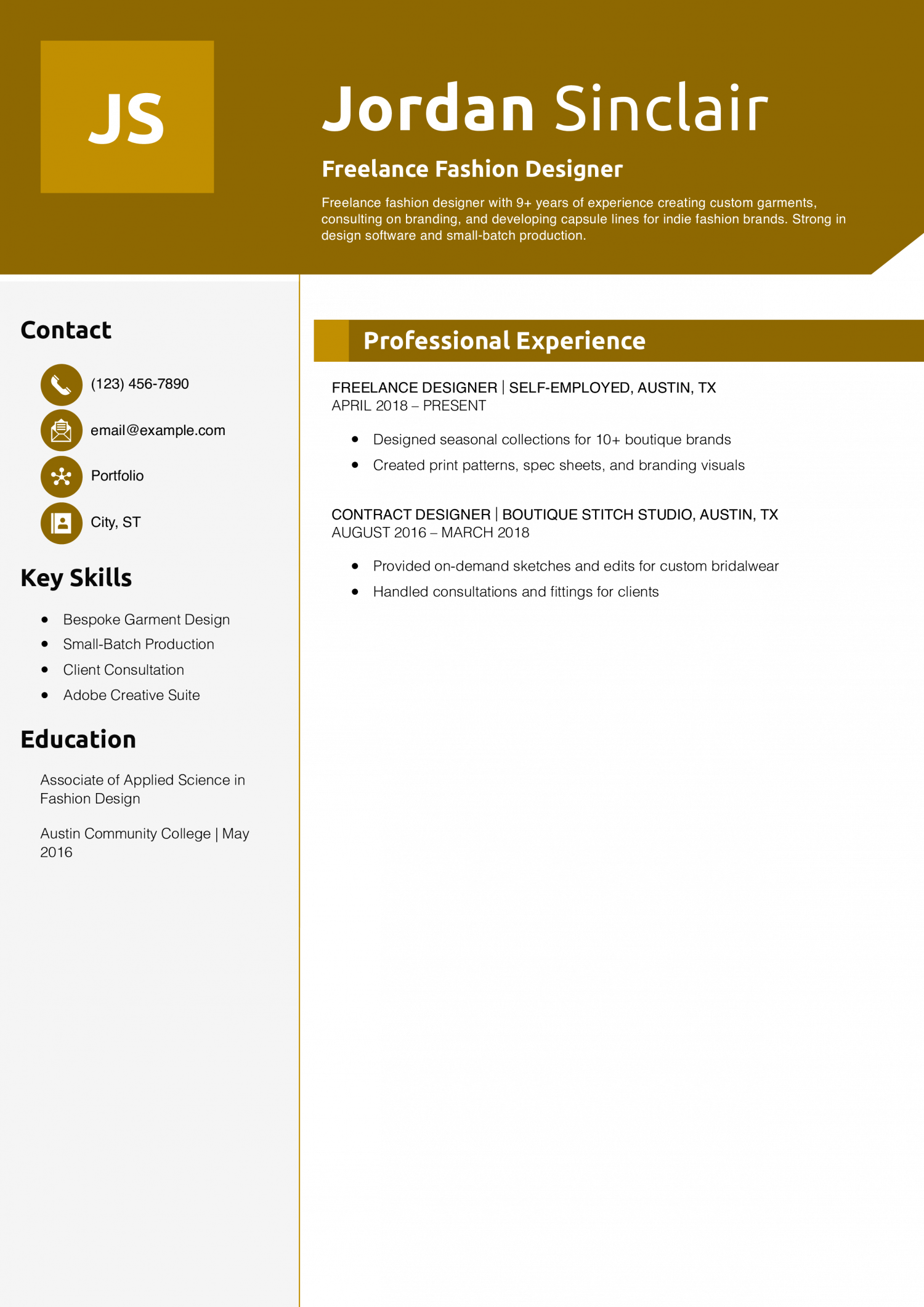
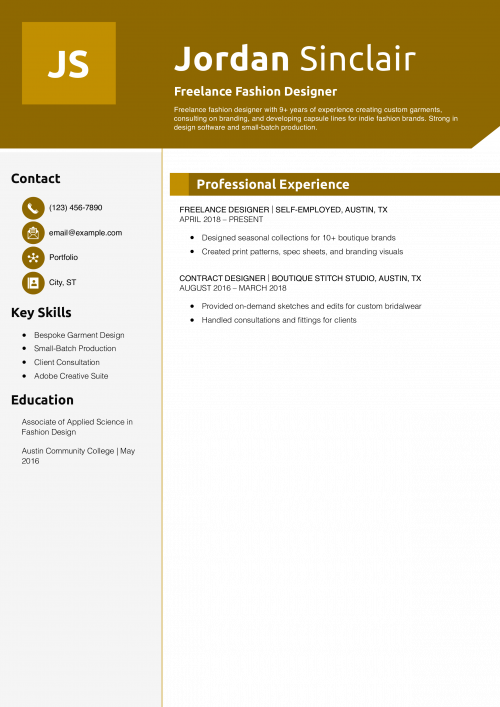
This resume demonstrates self-directed work and the ability to manage multiple clients. The variety of styles and deliverables shows adaptability, which is essential in freelance roles. Learn how to describe varied work history with how far should a resume go.
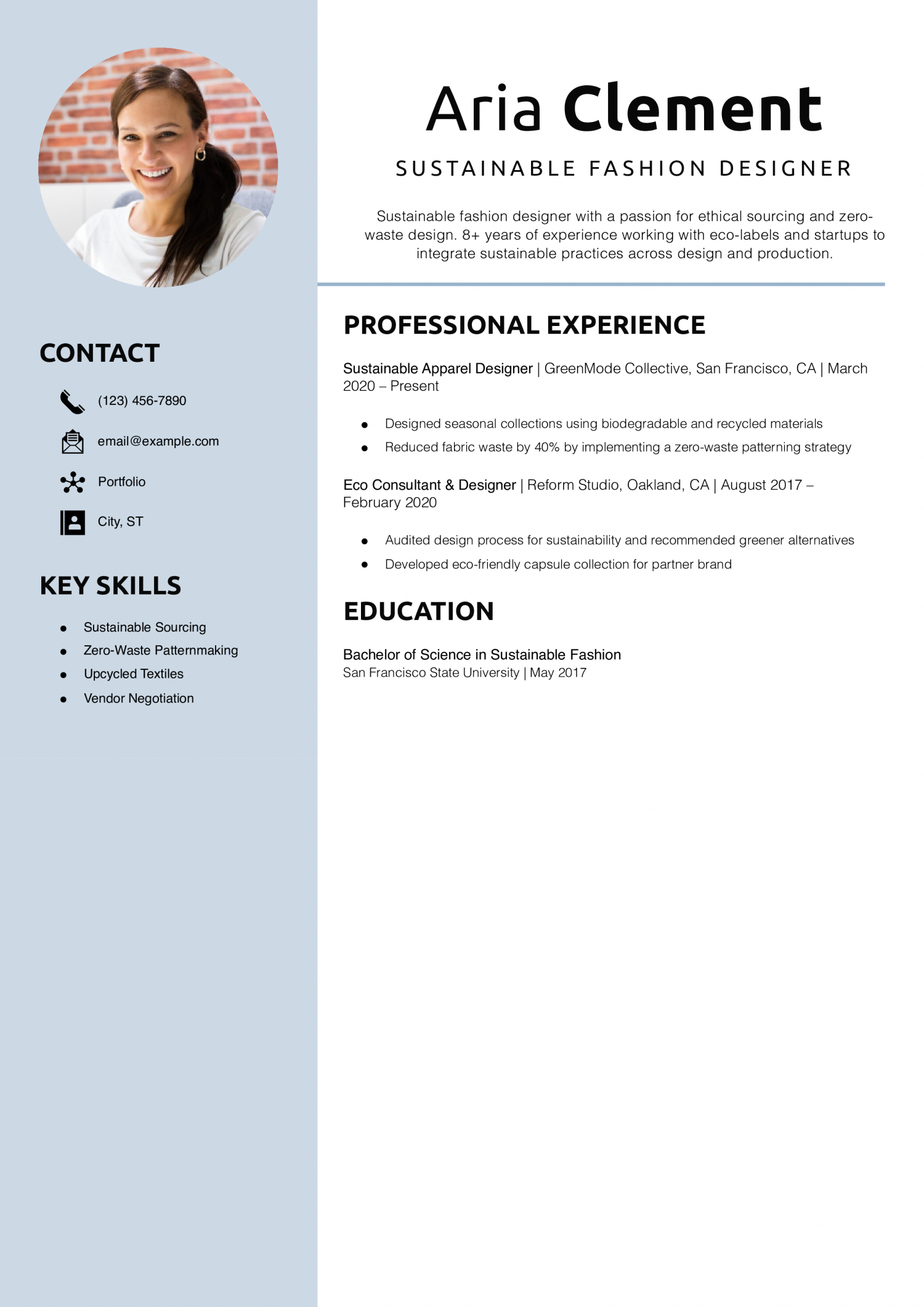
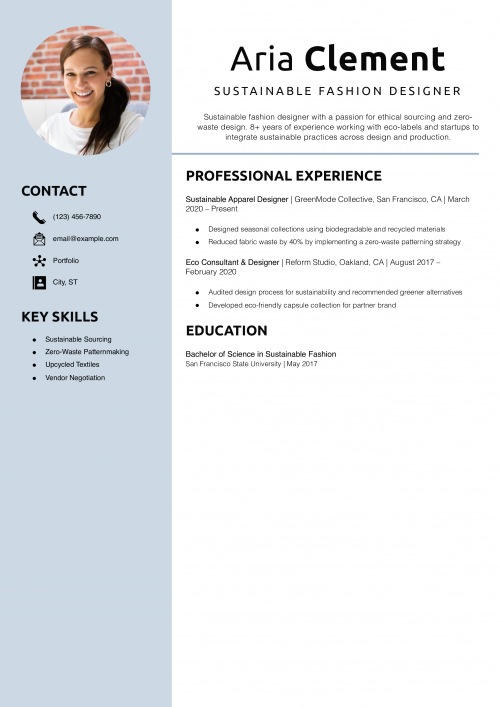
This resume focuses on eco-conscious design and material sourcing, making it ideal for candidates targeting sustainability-focused brands. It also includes tangible outcomes, such as waste reduction and new supplier partnerships. For more on positioning specialized skills, see how to list skills on a resume.
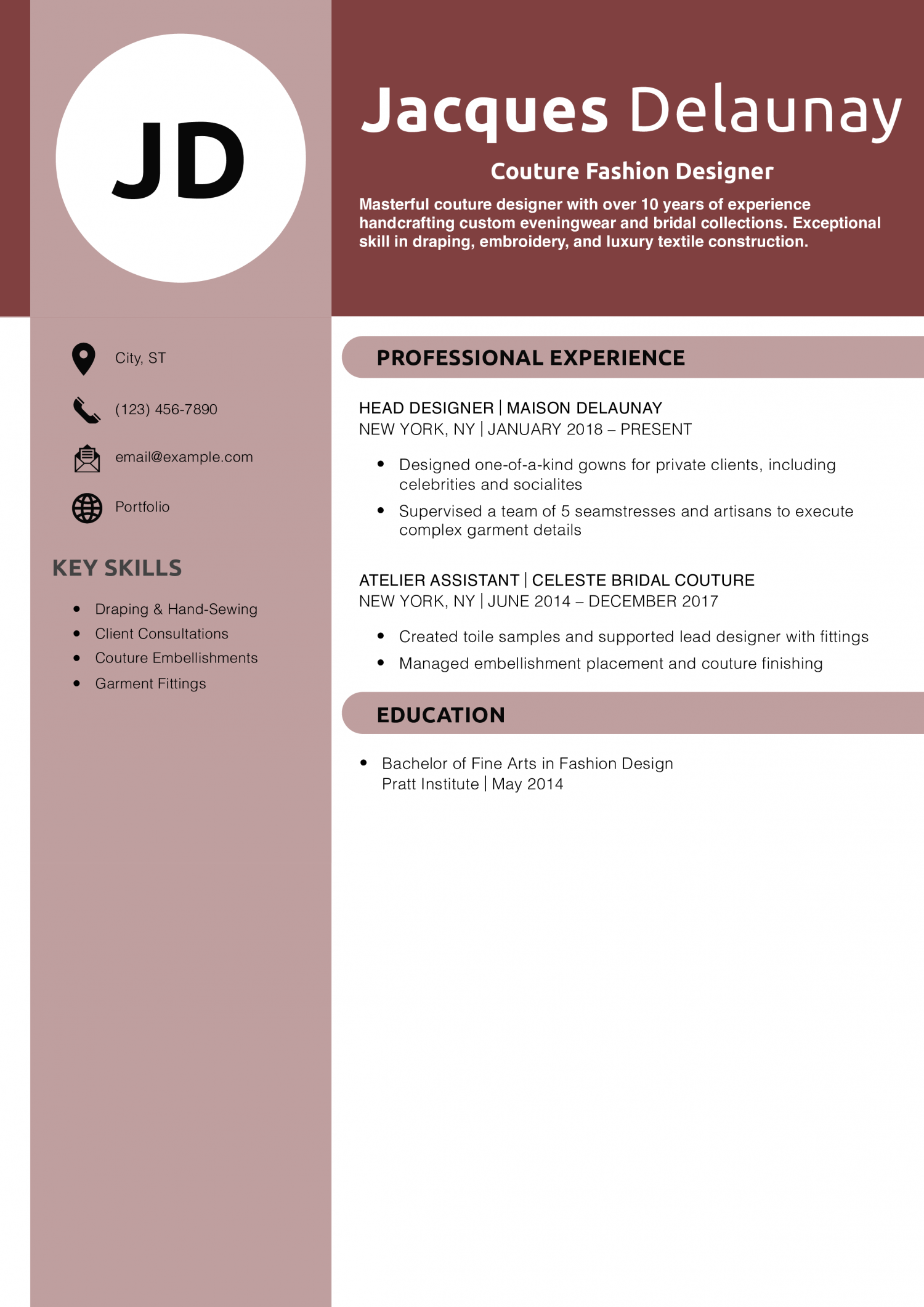
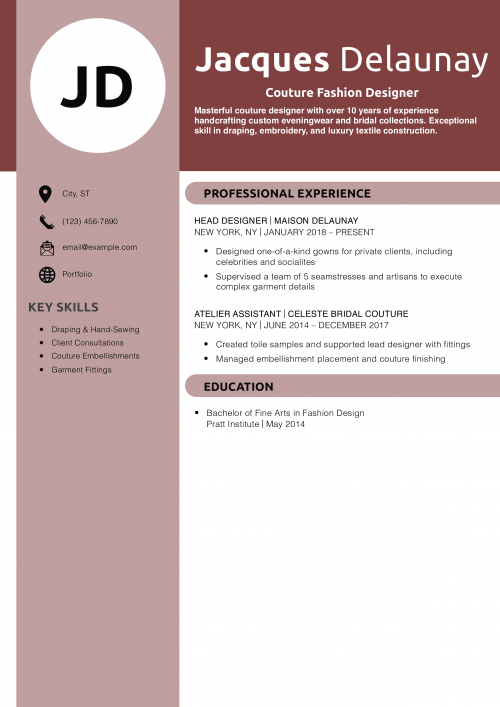
This resume emphasizes craftsmanship, client customization, and fine detailing—hallmarks of haute couture work. Its focus on client satisfaction and artisan techniques makes it a strong match for boutique or luxury design houses. Learn how to describe craftsmanship in your resume with resume action words.
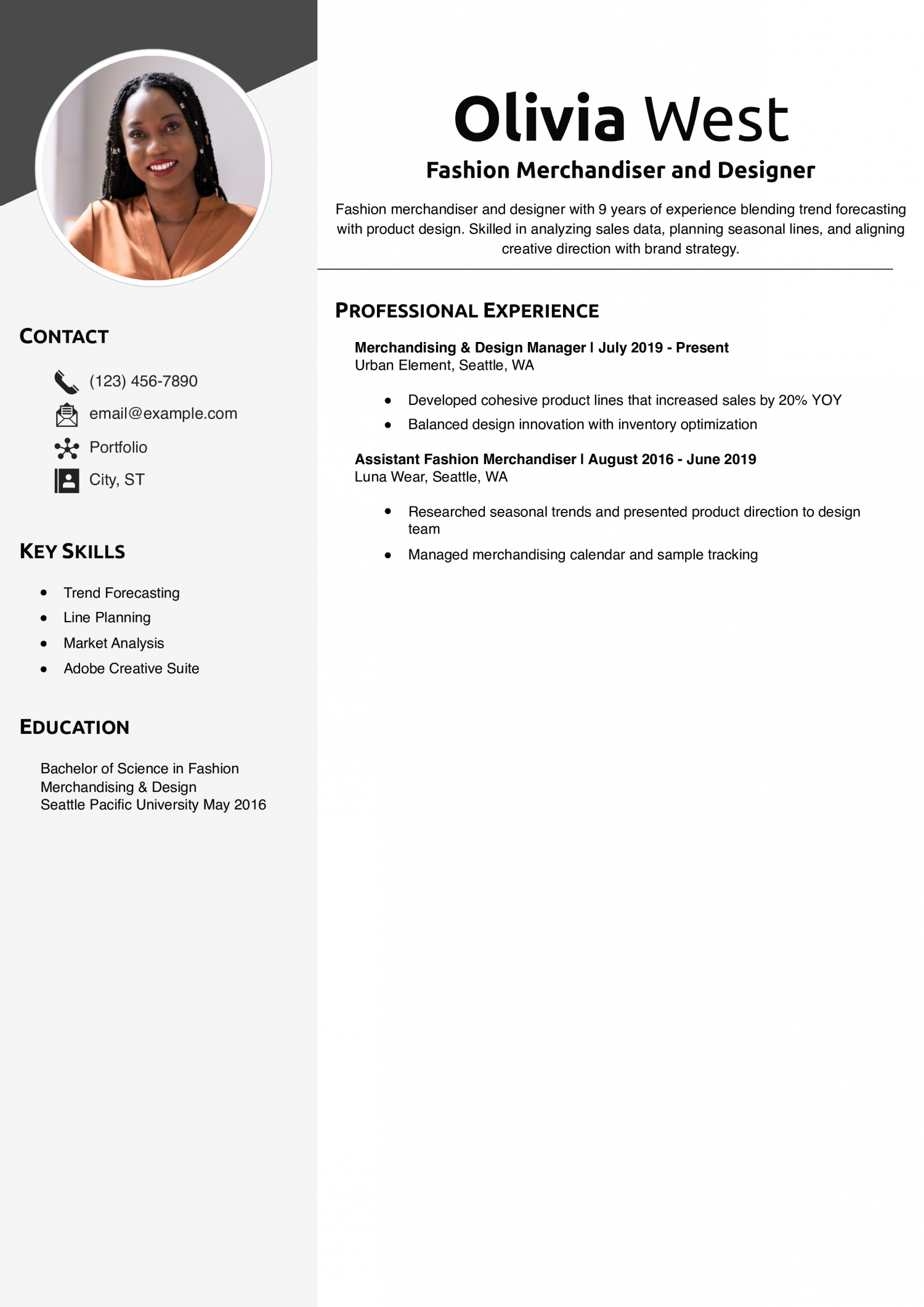
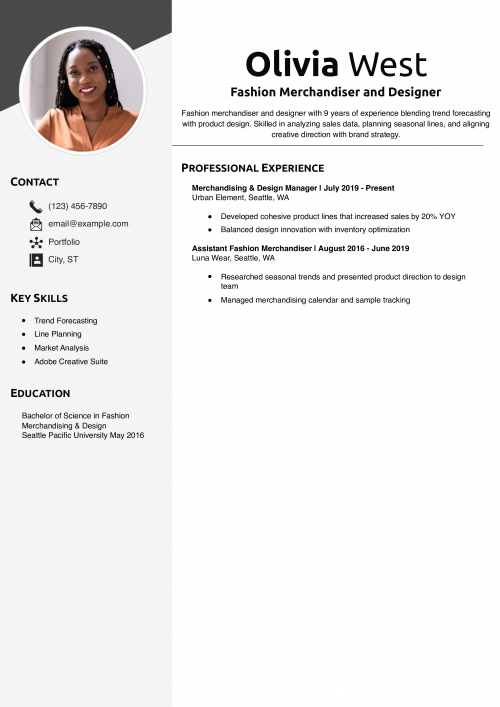
Blending creative design with analytical merchandising, this resume appeals to brands that value both aesthetics and market strategy. It also shows cross-functional communication and retail trend expertise. For more ideas on showcasing hybrid roles, check out job title examples for your resume.
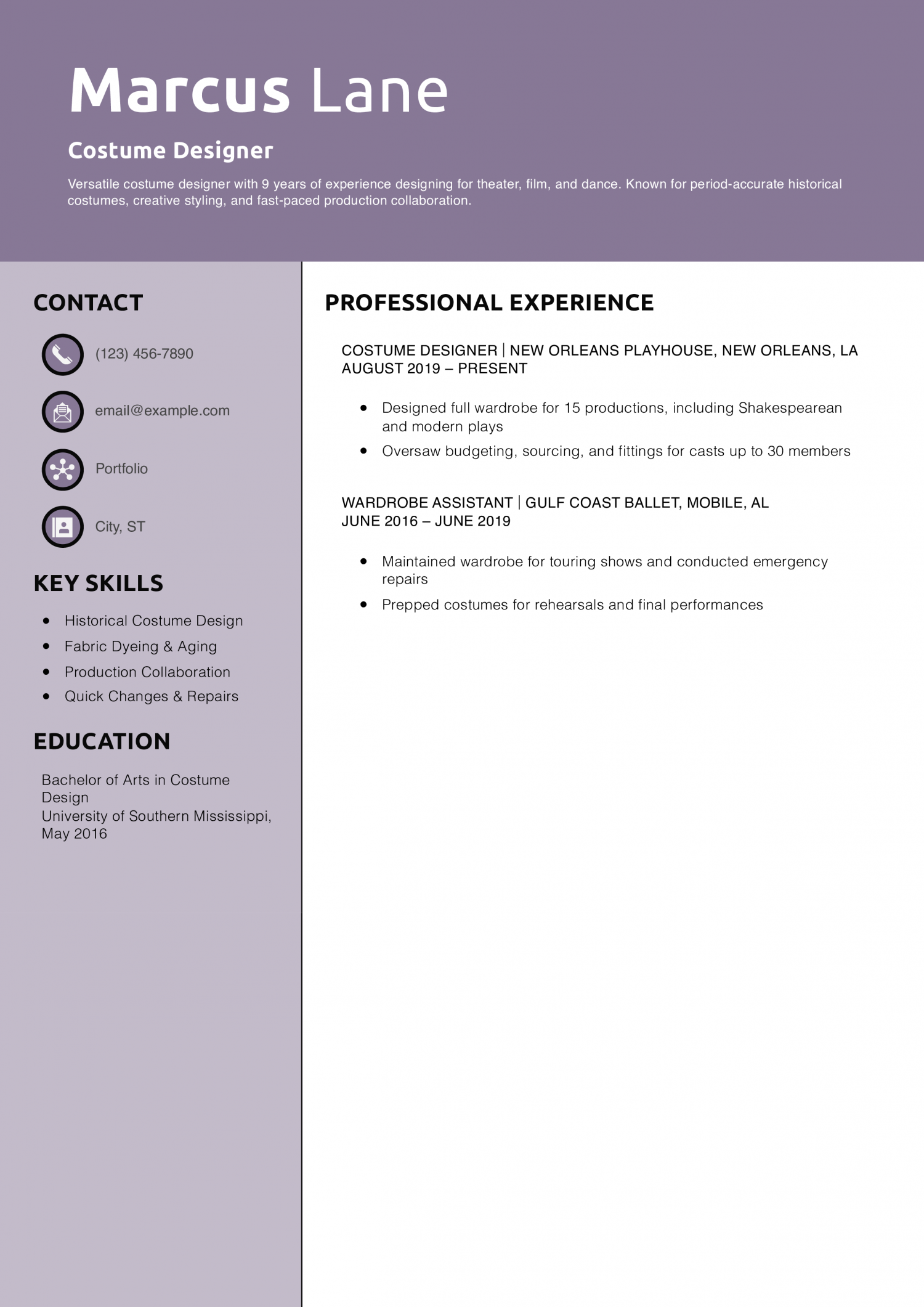
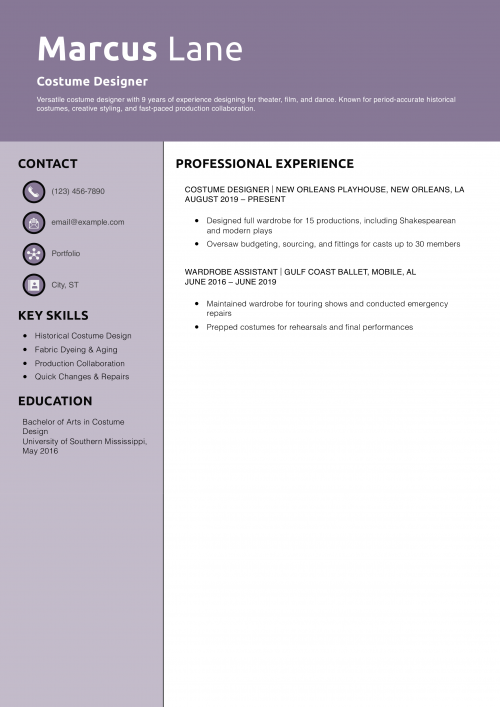
This resume shows how to tailor your experience to performance arts, using production names and collaboration with directors to demonstrate versatility. It’s a great blueprint for candidates in theater, film, or live entertainment. Learn to structure resumes like this with how to make a resume.

Focused on print design and branding, this resume emphasizes both technical Adobe skills and successful client campaigns. It works well for candidates targeting streetwear, activewear, or brand marketing roles. For more guidance on showcasing design software, see computer skills for resume.

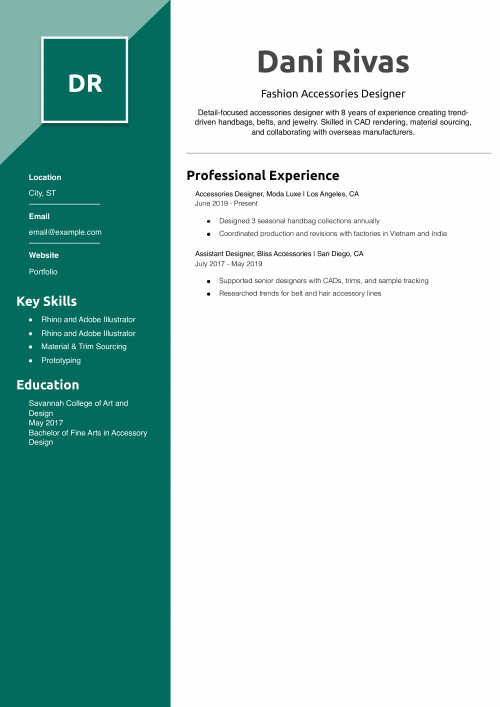
This resume spotlights specialization in handbag and jewelry design, supported by strong CAD and prototyping skills. It demonstrates both creativity and hands-on manufacturing knowledge. To enhance niche resumes like this, explore resume keywords to align with job postings.
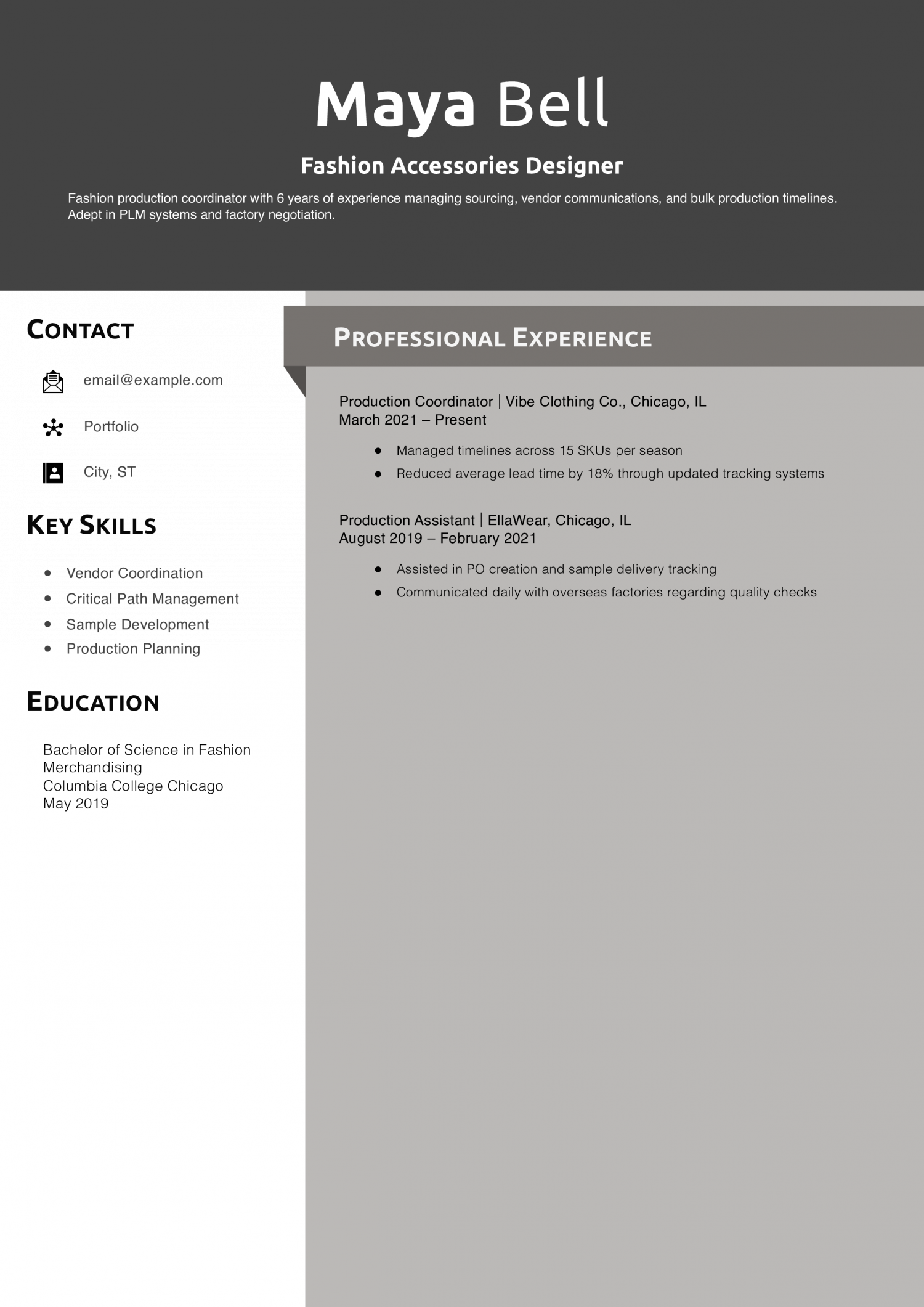
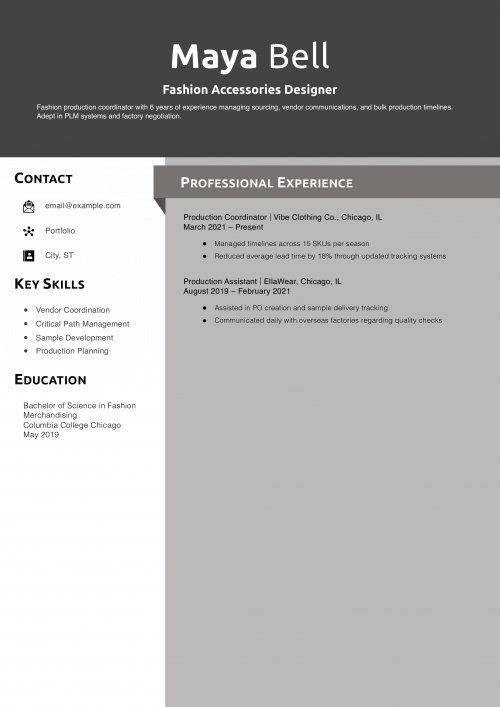
This resume emphasizes logistics, vendor relations, and deadline management. The metrics used—like reducing lead times—strengthen the applicant’s case for behind-the-scenes roles. For more on using metrics effectively, see how to quantify your resume experience.
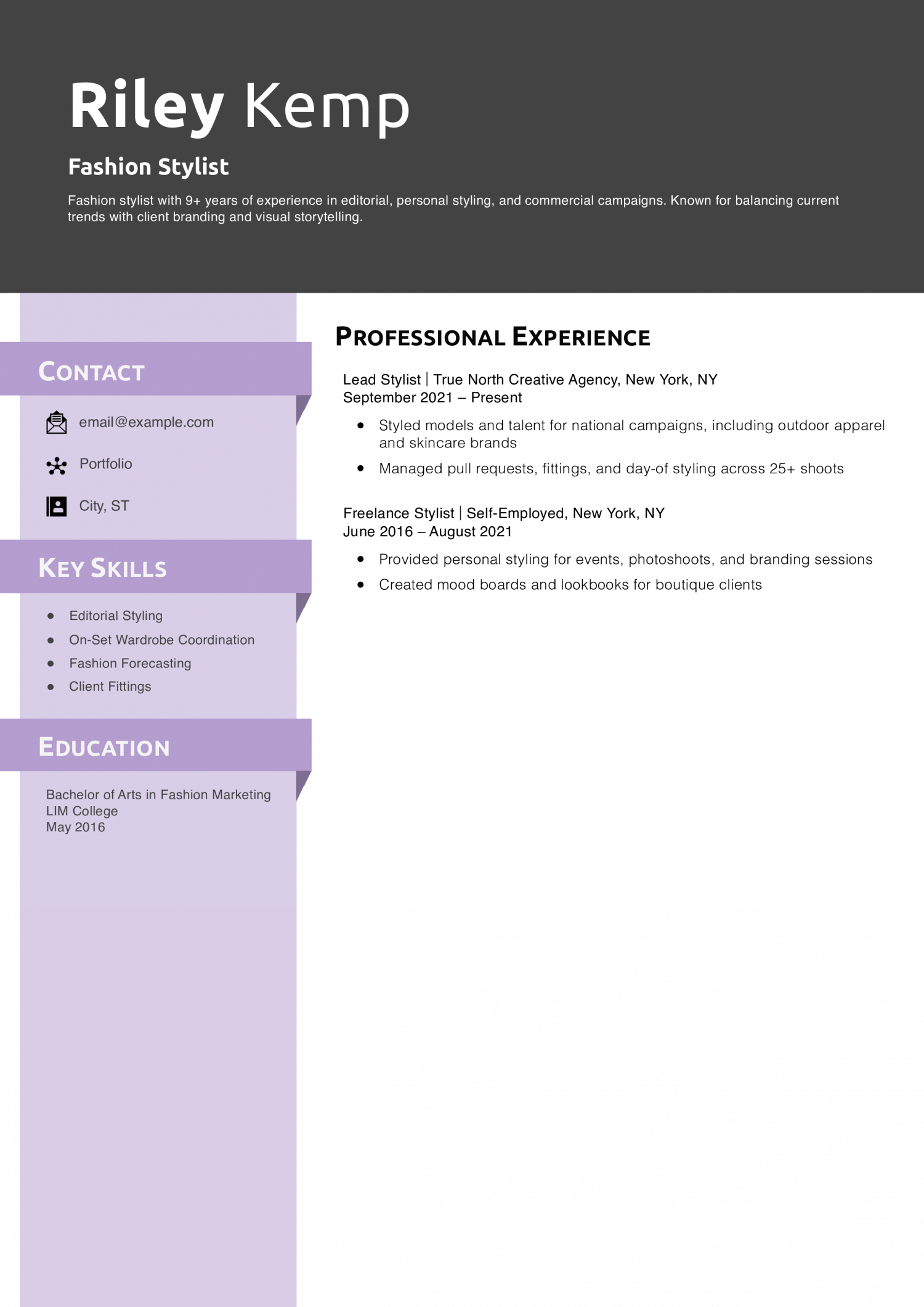
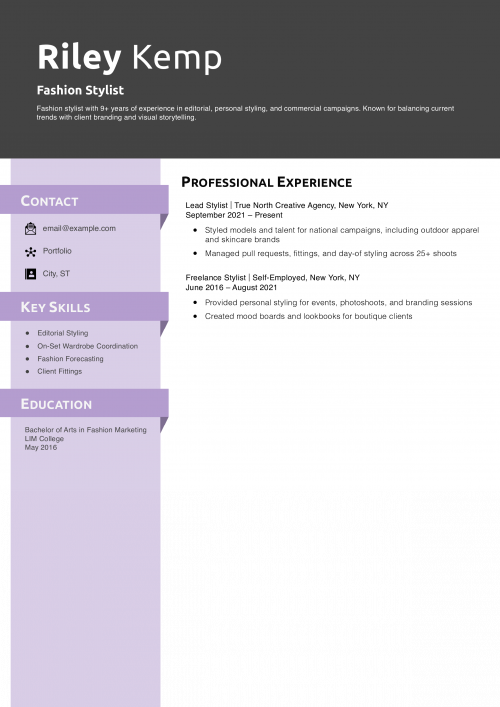
This resume effectively combines visual creativity with practical styling experience for shoots and retail clients. The freelance-to-agency transition demonstrates professional growth. For guidance on combining self-employment and traditional roles, check out how to list freelance work on a resume.
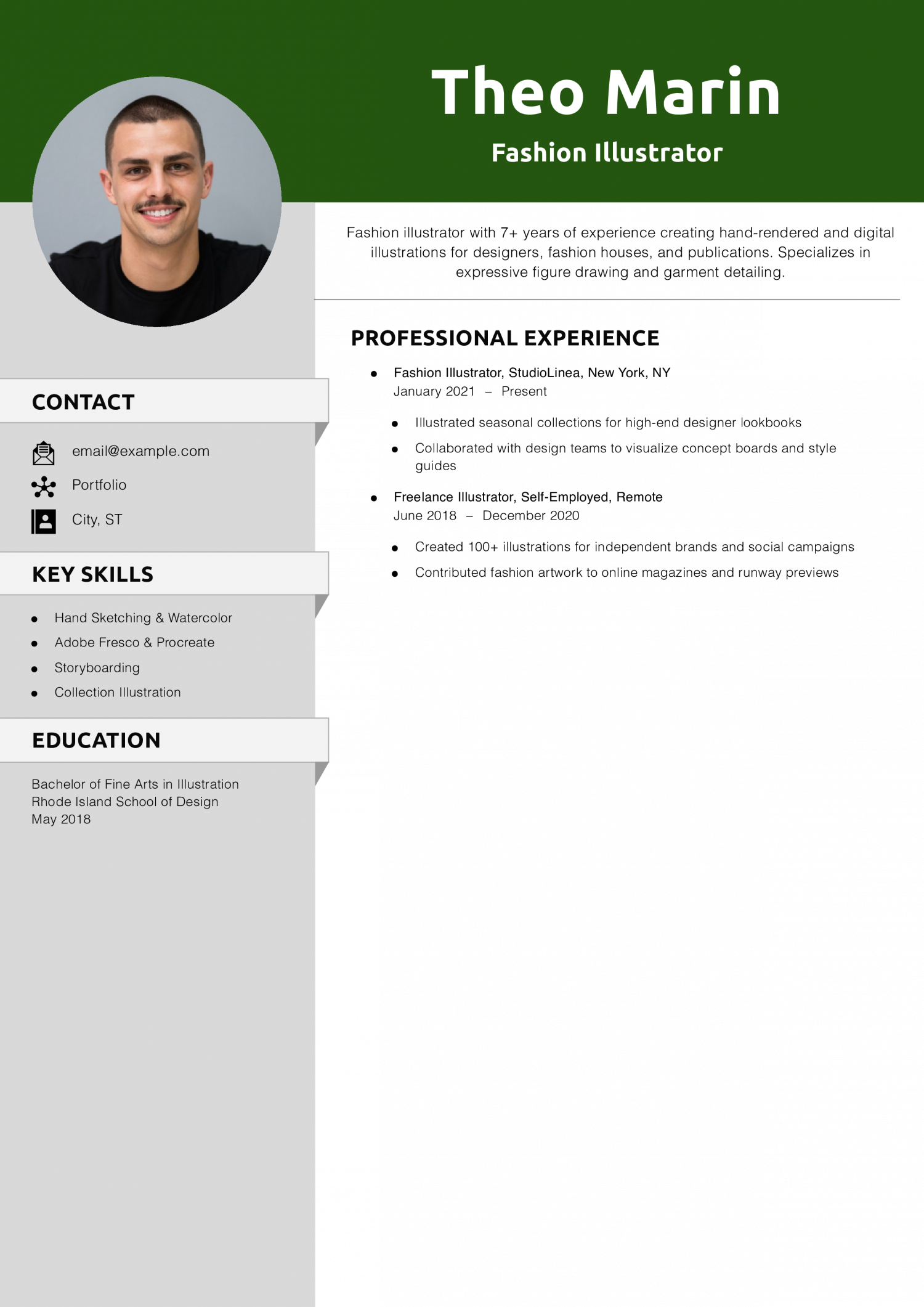
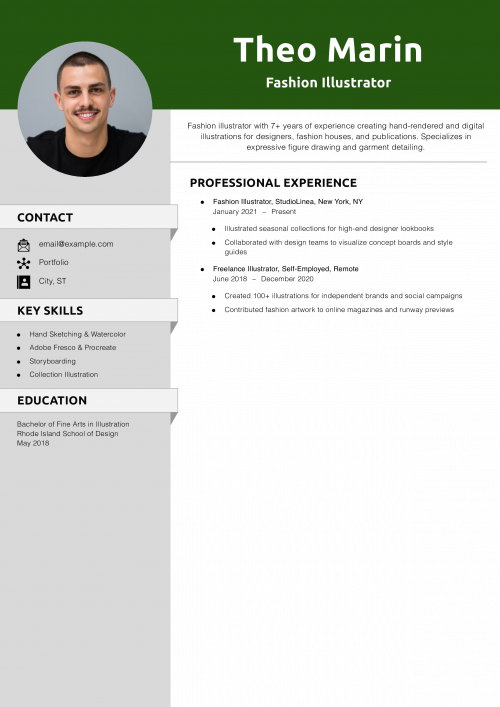
This resume excels by showcasing specific illustration tools, publications, and collaborations with designers. It highlights both freelance and in-house experience. To present creative roles well, see how to write a convincing resume profile.
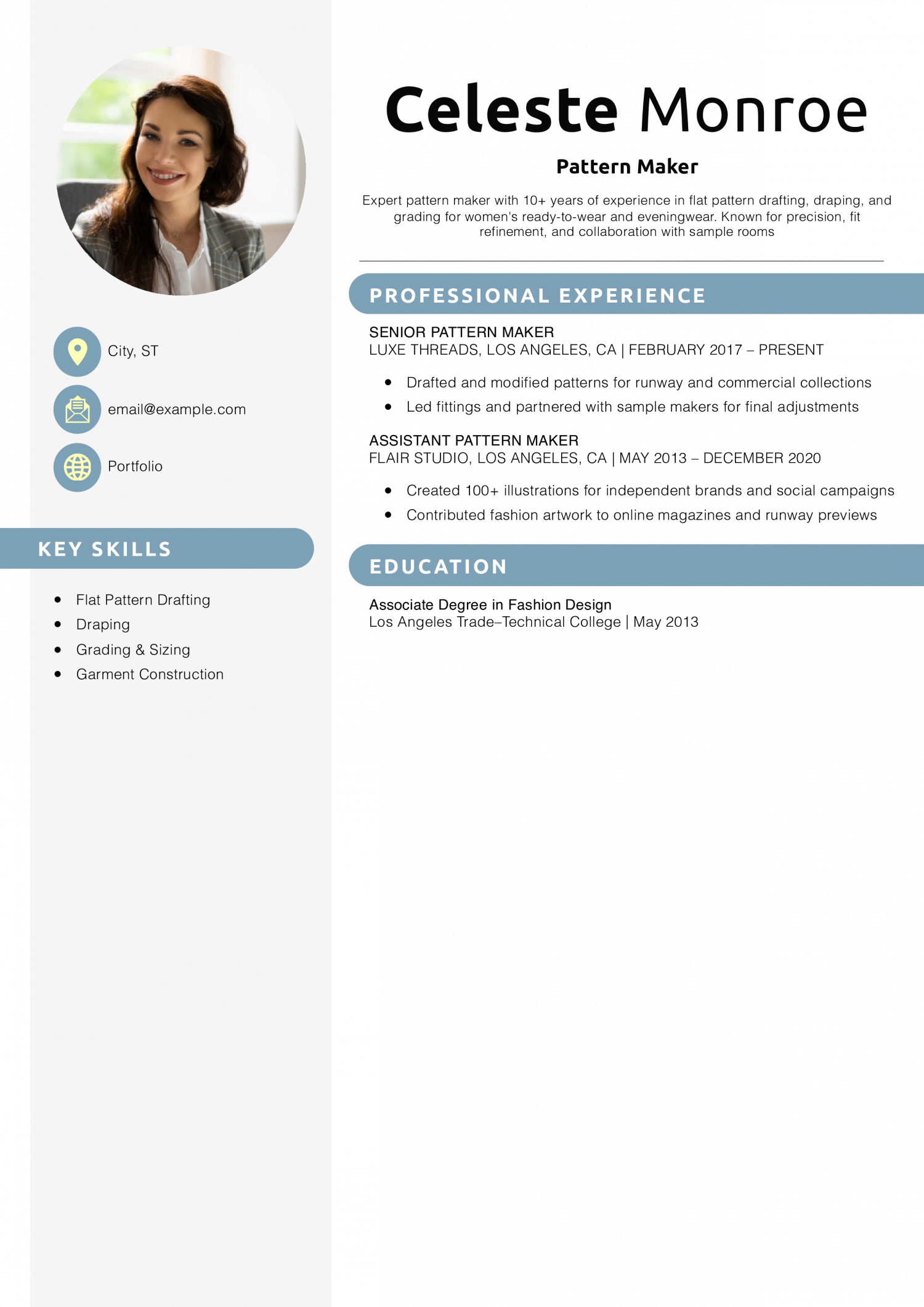
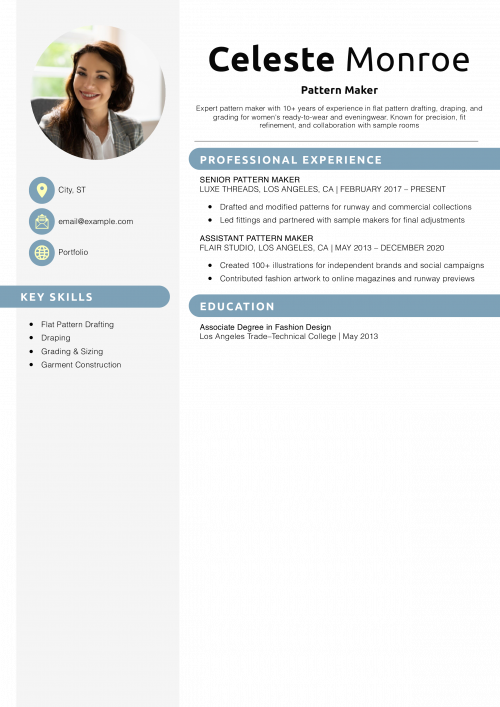
This resume highlights expert-level technical accuracy and cross-team coordination, perfect for high-volume production or custom-tailoring environments. It’s an excellent example of emphasizing niche technical skills. For more ideas, visit technical skills in IT resume and apply the same concepts to fashion.
Your fashion designer resume should usually include these sections:
Below are tips and samples to help you organize each resume section.
Give your full name, phone number, email address, location, and links to any online professional profiles. Ensure your contact information is current so employers can reach you for an interview.
Your Name
(123) 456-7890 | [email protected] | City, ST 09876 | LinkedIn | Portfolio
You can impress hiring managers at the top of your resume by giving the three to five primary reasons you’ll excel as their next fashion designer. These key selling points may include your:
(Note: Most job seekers find it easier to write their profile last.)
Experienced fashion designer with 10+ years in contemporary womenswear. Expert in design development, CAD sketching, and line planning for global fashion brands. Passionate about combining function and form to deliver trend-forward, sustainable collections.
View the experience section as a chance to give examples of your work and success. For each job in your recent work history, first brainstorm your duties and achievements on a separate document or sheet of paper. Then, choose the most relevant details to feature as bullet points on your resume. This two-step process helps you write full descriptions of your fashion jobs, but also assess and describe the value of any jobs you’ve held outside the industry.
Assistant Designer
Monroe Apparel, New York, NY | July 2022 – Present
When possible, use relevant performance data to measure the results you’ve achieved as a fashion designer. Hard numbers like percentages and dollar amounts put your work in context and give recruiters a better sense of your impact.
For each job posting you respond to, note any details given about the hiring organization’s size, industry, customer base, or product lines. How do these areas compare to your recent experience? By citing these similarities in your profile, you can make a stronger first impression on the hiring manager.
As long as the job posting doesn’t strictly require it, you don’t need direct work experience to write an effective resume. The trick is focusing on your transferable skills, which can come from various areas such as your other past jobs, internships, volunteer positions, or college courses. By detailing these areas in full on your resume, you can ensure it helps you get interviews for your target job.
With the education and certifications sections, you can show you have a strong knowledge base in your field. Each degree or credential also serves as a formal endorsement of your skills and professionalism. Following are templates to help you organize this information on your resume (note, years are optional).
Template:
[Degree Name], [School Name], [City, ST] | [Graduation Year]
[Relevant honors, coursework, or activities]
Example:
Bachelor of Fine Arts in Fashion Design, Savannah College of Art and Design, Savannah, GA | 2022
Template:
[Certification Name], [Awarding Organization] | [Completion Year]
[Description if the credential is lesser-known but relevant]
Example:
Certified Apparel Technical Designer, TechDesign Institute | 2023
A separate skills section lets you quickly display the various ways you can apply yourself and add value to an organization. Below, you’ll find some key terms and skills to consider for this section:
| Key skills | |
|---|---|
| Adobe Creative Suite | Apparel construction |
| Computer-aided design (CAD) | Color theory |
| Digital patternmaking | Draping |
| Fabric sourcing | Fashion illustration |
| Garment fitting | Line planning |
| Mood board development | Production coordination |
| Sample development | Sewing techniques |
| Sustainability design practices | Tech pack creation |
| Technical sketching | Textile design |
| Trend forecasting | Visual merchandising |
Start each bullet point with a strong action verb. Dynamic verbs help you keep the hiring manager’s attention and tell a compelling story about your experience.
The following list can help you find a good mix of action verbs for your fashion designer resume:
| Action verbs | |
|---|---|
| Analyzed | Arranged |
| Collaborated | Conceptualized |
| Created | Curated |
| Customized | Decreased |
| Defined | Designed |
| Developed | Enhanced |
| Fostered | Generated |
| Grew | Illustrated |
| Improved | Increased |
| Instructed | Introduced |
| Launched | Lowered |
| Managed | Merchandised |
| Oversaw | Pinpointed |
| Presented | Produced |
| Ranked | Reduced |
| Researched | Selected |
| Sketched | Streamlined |
| Studied | Styled |
| Tailored | Updated |
| Won | |
A resume is a simple tool for professional communication and should be formatted that way. Choose a template that’s clear and straightforward, and avoid any template with elaborate graphics or various colors and font styles. Simple resume design helps a hiring manager scan for relevant information. It also helps you tailor the document to each job application and update your work history going forward.
Focus on editing your skills section. With just a few quick changes to this section, you can further hone your resume and help it get past screenings by applicant tracking systems (ATS).
First, take a close look at the job posting and highlight any skills required. Then, compare those highlighted terms against your resume's existing skills section. Delete any skills from your list that don't appear in the job posting, and add any missing skills of yours that do.
Say the job posting calls for experience in training new hires, which you have. Add the phrase "New hire training" to your skills section so ATS and human readers can see you have the leadership ability they're looking for.
The combination (or hybrid) format, because it lets you present yourself both clearly and strategically. According to job search experts Wendy Enelow and Louise Kursmark, this format "gives you many opportunities to share your specific successes.... It offers immense flexibility in an easy-to-follow structure."
A combination resume has these two features:
A good cover letter sharpens your job application by saying directly why you’re interested in the brand, company, or job opening. When possible, quote or paraphrase text from the job posting and explain why it caught your attention.
Executive Resume Writer and Career Coach
Andrew Stoner is an executive career coach and resume writer with 17 years of experience as a hiring manager and operations leader at two Fortune 500 Financial Services companies, and as the career services director at two major university business schools.
Resume Templates offers HR approved resume templates to help you create a professional resume in minutes. Choose from several template options and even pre-populate a resume from your profile.