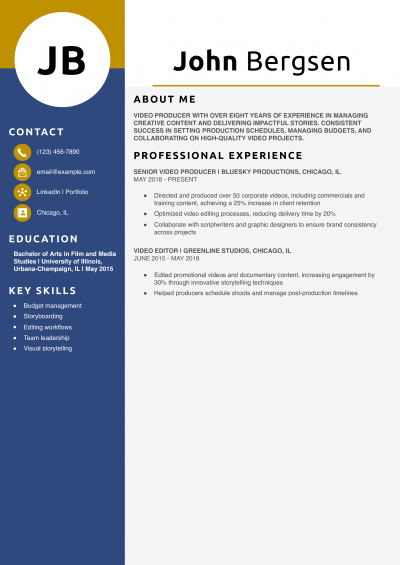
Theater Resume Examples



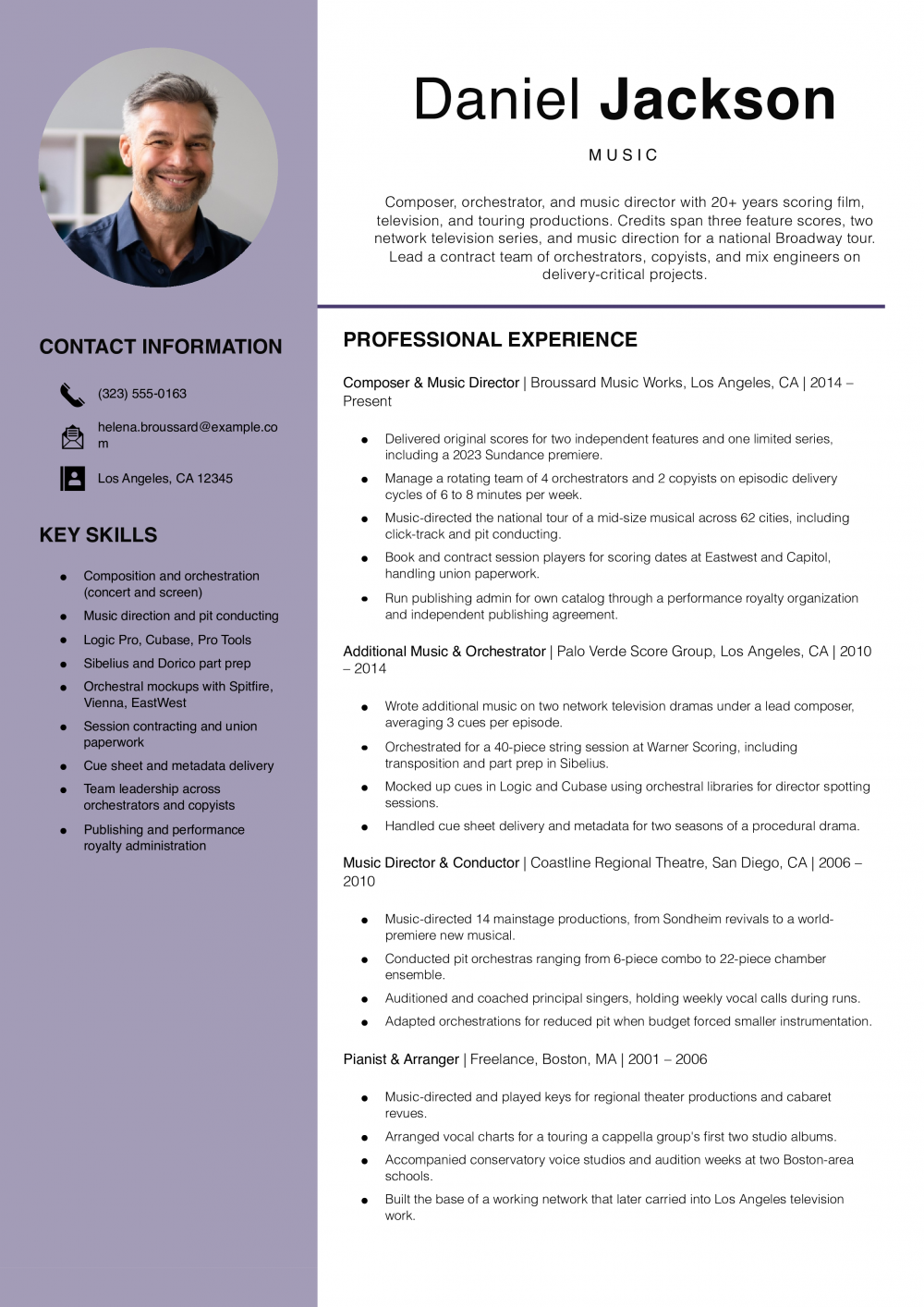
A credits list with venue names and dates, recorded work with labels or streaming links, and formal training or private study are what separate the Music resumes that music directors and A&R reps advance from the rest.
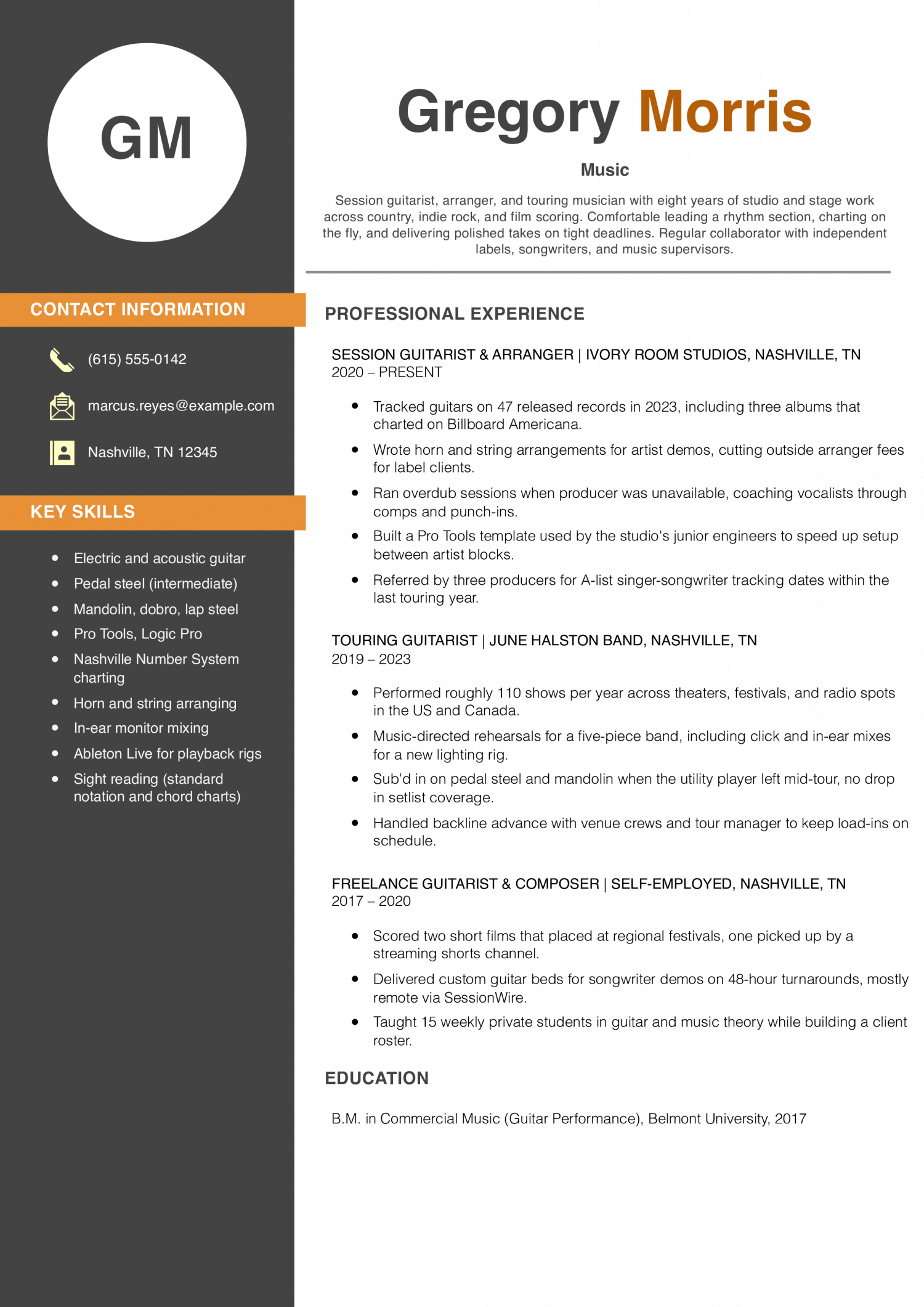
You are an emerging artist or session player with a growing body of live and studio work. This resume has to prove you can hold a pocket, learn charts fast, and show up ready for music directors.
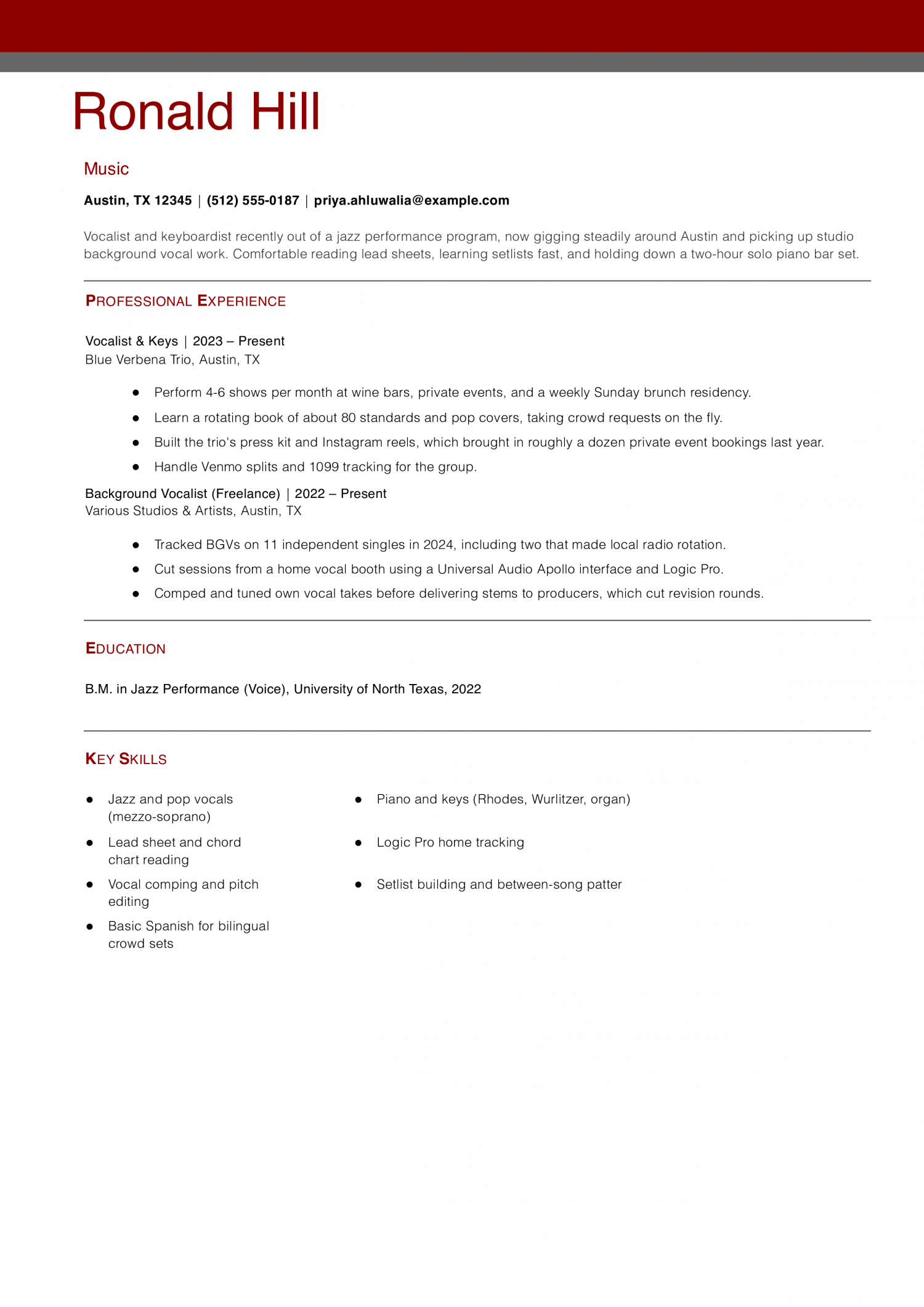
You are an established performer, writer, or producer with regional touring credits and released recordings. This resume has to prove steady booking, repeat clients, and the kind of catalog A&R representatives take seriously.
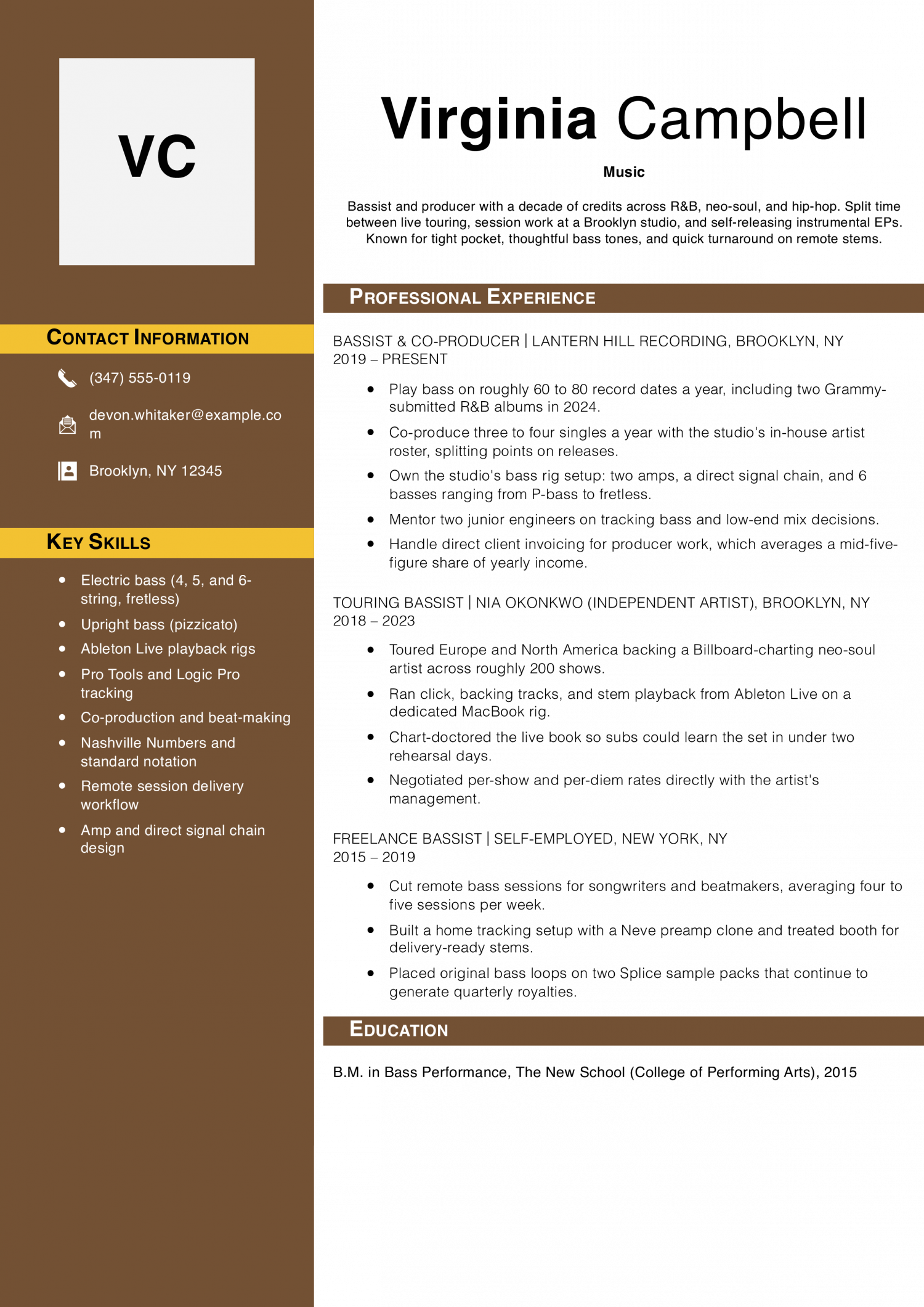
You are a senior artist, music director, or producer with national credits and career arcs behind other acts. This resume has to prove label revenue, headline runs, and the trust that keeps top rooms and rosters coming back.
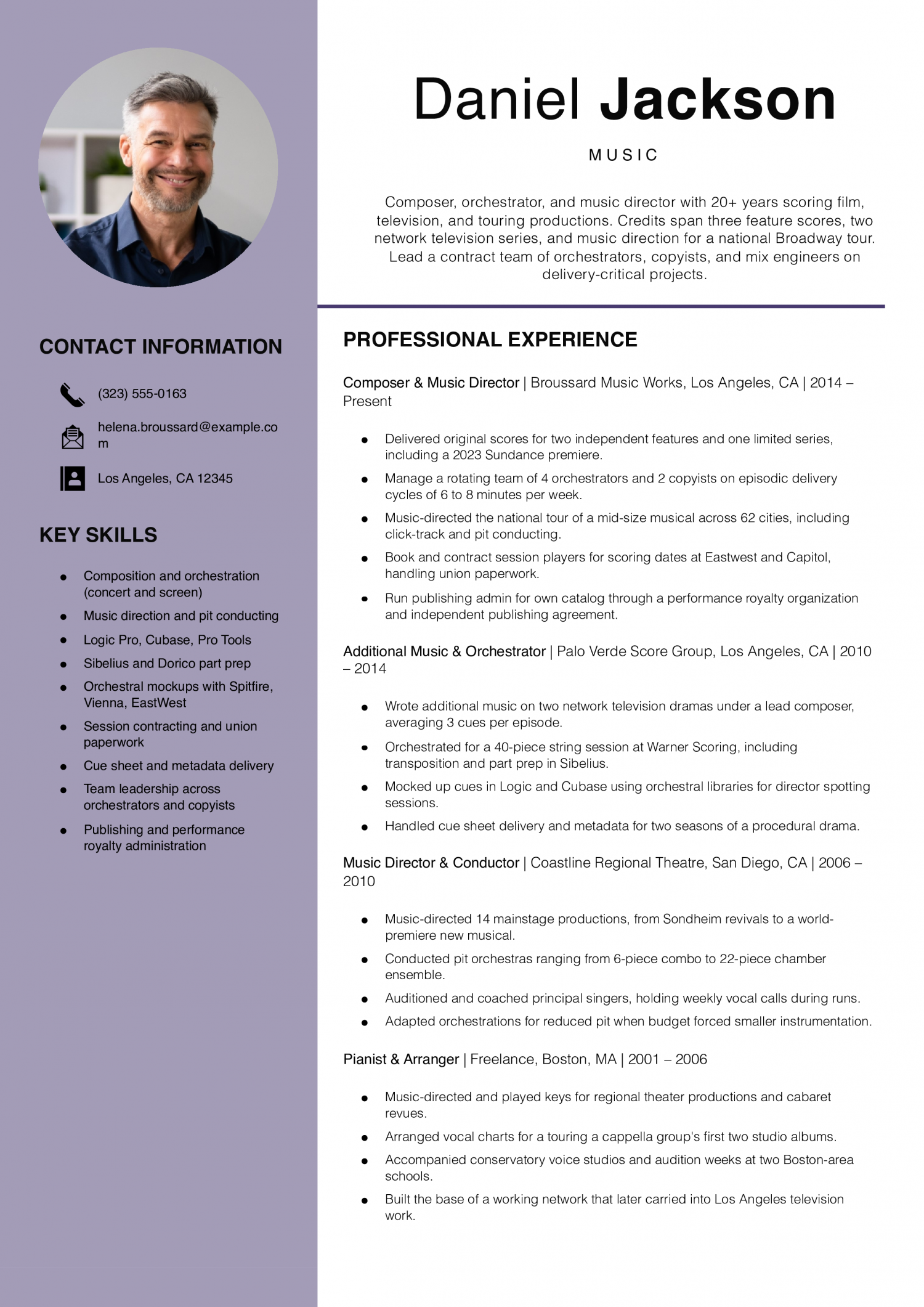
Drummer, producer, and bandleader with 12 years of studio, touring, and educational work across jazz, gospel, and pop. Comfortable reading, playing to click, running a playback rig, and producing full records from tracking through mix hand-off. Regular first-call drummer for independent Chicago artists and a steady clinician on the college jazz circuit.
The first line of your summary should name a number a music director or A&R rep already tracks. Lead with monthly streams, ticket sales for your last tour, or paid session count. Follow that with your primary instrument or vocal range and your genre lane.
A line like “vocalist with 240,000 monthly Spotify listeners across indie pop” reads as ready. A line like “passionate musician seeking opportunities” reads as unproven. Directors scan the top two inches for scale before they read anything else.
Put your strongest verifiable figure there, even if the figure is regional. A sold-out 400-cap room means more than a vague claim of national reach. Save narrative for the bio section further down the page.
Most strong music resumes carry two or three real figures per role, not adjectives. Convert your work into audience size, revenue, output volume, and reach. Name venue capacity, festival slot size, streaming totals, sync placements, or records sold.
For session and pit work, name track count, show count per run, and the artists or productions you backed. A bullet like “performed 92 shows across 14 states on the 2023 tour” lands. A bullet like “toured extensively” reads as filler.
Recruiters scan for a number in the first six words of each bullet. Where a number is not public, use scope language: headliner, opener, music director, first call. Bullets without any figure tend to read as duties, not results.
Split the body of the resume into the categories A&R reps expect to see. Use live performance, studio and session work, songwriting and production credits, and teaching or music direction. Under live, list headline sets, support slots, residencies, and festival appearances with dates and venues.
Under studio, list album credits, singles, EPs, and named session dates with the lead artist and label. Under writing and production, list cuts, co-writes, and sync placements in film, video, or ads. Under teaching or direction, list studios, schools, church programs, or pit orchestras with student counts or run length.
Four clean buckets read faster than one long mixed list. Order the buckets by whichever one carries your strongest credits.
Music directors and A&R reps look for union status, rights affiliation, and tooling before they read your credits. Put a short block on page one under your summary. Name your rights organization, any union membership, and the DAWs you track in daily.
List Pro Tools, Logic, Ableton Live, or Cubase with your working level. Add notation software like Sibelius or Finale if you chart or arrange. Name your primary instruments, secondary instruments, and vocal range in the same block.
If you read charts, say so. If you produce and mix your own records, say so. Contractors and directors staff from this block first, then read the credits below.
Buried tooling costs you calls you would have taken.
Close the resume with formal training, standout press, and the links a director will actually click. List conservatory or university training, private study with named teachers, and any masterclasses or fellowships. A one-line press quote from a named outlet carries weight if you have one.
Then give three links: your streaming profile, your artist site, and a single video of a live performance. Skip social handles that do not show the work. Add a short musician bio of three or four sentences if space allows, written in third person.
The bio names your lane, your recent milestone, and what you are booking next. Cut hobbies, headshots, and every reference to being passionate. Directors book from evidence.
Music directors and A&R representatives scan hundreds of Music resumes a quarter, and a few skills show up on almost every shortlist. The hard skills carry the most weight in the first pass. Music directors want proof you can play the parts and read the charts.
Soft skills like collaboration back up the bullets that describe your work with a band or a producer. Use the two tables below as a checklist against the posting you want. Match the hard skills to the tools and styles the listing names.
Treat the soft skills as evidence you support with a short bullet, not standalone claims. Rework the language on your resume so the terms line up with what the posting asks for. That helps the scan pull your file into the human review pile.
| Soft Skills | AI-estimated % |
|---|---|
| Collaboration | 77% |
| Communication | 70% |
| Leadership | 43% |
| Adaptability | 39% |
| Attention to detail | 34% |
And here are the top hard skills showing up most often.
| Hard Skills | AI-estimated % |
|---|---|
| Music theory and ear training | 67% |
| Pro Tools | 61% |
| Logic Pro | 41% |
| Instrument proficiency | 39% |
| Ableton Live | 33% |
Skill names and rankings come from an AI model grounded in U.S. Department of Labor occupation data for musicians, not from a count of musicians’ resumes built on ResumeTemplates.com.
These are the must-haves hiring teams look for when scanning a music resume.
Music directors and A&R representatives scan for proof of paid work. They want to see the settings you have played in. They want the roles you have held on stage and off. Group your keywords by the kind of music work you do. Performers should name their instrument, their voice part, and their genre. Session players should list studio work and tracking credits. Music business roles should show label, publishing, and rights work. Teachers should list studio, ensemble, and private lesson work. Production credits belong with the software and mixing terms you use. Match the phrasing on the posting when you can. Keep proper nouns spelled the way the venue or label spells them.
| Niche | Keywords ATS scans for |
|---|---|
| Live performance | Live performance, stage presence, set list |
| Session and studio | Session recording, tracking, overdubs |
| Music production | Pro Tools, Logic Pro, mixing |
| Music business | Publishing rights, licensing, royalties |
| Teaching and direction | Private lessons, ensemble direction, music theory |
Resume Templates offers HR approved resume templates to help you create a professional resume in minutes. Choose from several template options and even pre-populate a resume from your profile.
A music resume runs one page and opens with your name, voice type or instrument, and contact line.
Below that you group performances, training, and skills into clear sections a music director can scan fast. Musical theater resumes often add height, and a headshot stapled to the back.
Put instruments in a skills block near the top and mark each one proficient, intermediate, or beginner.
Name the family too, so a reader knows if your saxophone covers alto, tenor, and baritone. That level tag tells a music director which parts you can cover in an audition.
No, musical theater resumes group credits by type first, then rank the strongest role at the top.
The common order is Broadway, national tour, regional, and then educational or community credits. Casting readers scan for the biggest house and the leading role, not the newest date.
Yes, performance experience is the core of the resume and sits above training on almost every version.
List the piece, your role or chair, the venue or ensemble, the conductor or director, and the year. If you pass a dozen credits, keep only the ones that show range or a bigger room.
Music videos get their own section on an acting resume, not the film or television blocks.
List the song, the artist, the director, and the production company on one line each. A featured principal role in a major-label video is worth keeping; a background day is not.
Lead with your primary instrument or voice type, then list private teachers with years and festival programs.
Add competitions, chairs held in youth orchestras, and solo recitals with the repertoire performed. Admissions faculty want repertoire depth and steady study, so name the pieces prepared for audition.
A cover letter is expected for teaching, music director, and A&R roles, and optional for casting-site auditions.
Keep it to three short paragraphs and name the production, season, or roster you are writing about. Attach the resume as a PDF so the layout stays intact for the reader.
For a musician, an ATS-friendly template is the safest pick, because it puts your certifications and experience where a hiring manager scans first. A basic template is a solid alternative. Whichever you choose, keep the formatting clean and easy to parse: clear section headings, a standard font, and no graphics a parser can choke on.
Executive Resume Writer and Career Coach
Andrew Stoner is an executive career coach and resume writer with 17 years of experience as a hiring manager and operations leader at two Fortune 500 Financial Services companies, and as the career services director at two major university business schools.