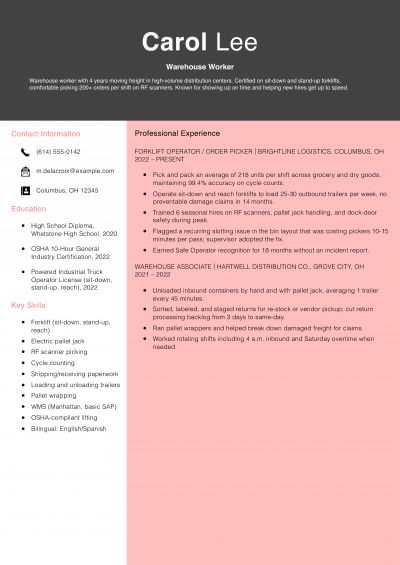
Warehouse Worker Resume Examples
Add a single line a shift lead cannot find on your OSHA card or forklift cert. That might be cold-storage experience or a hazmat endorsement. Other strong differentiators: SAP EWM or Manhattan WMS time on…
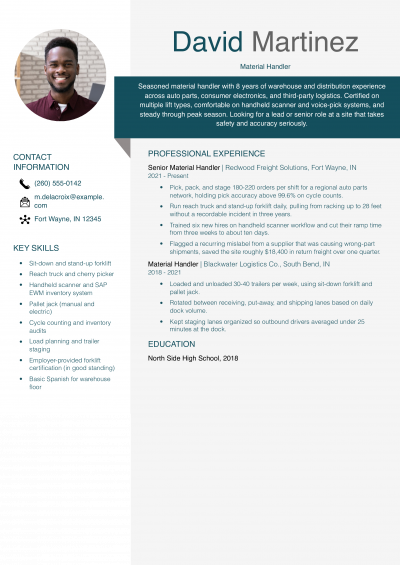
Every resume example is written and reviewed by our team of Certified Professional Resume Writers to ensure top-quality content and formatting.
Most packer roles fill fast, often from a short stack of resumes. Speed and accuracy on the line matter more than years of experience. Warehouse supervisors and production leads scan for proof you can hit pack rates with low error counts.
Your resume should show units packed per shift and any quality metrics you track. List the tools you use, such as tape machines and shrink wrap guns. Add RF scanners or a forklift certification if they apply, and review the examples below to see how to put these details on the page. To compare layouts before you start, browse our resume templates.
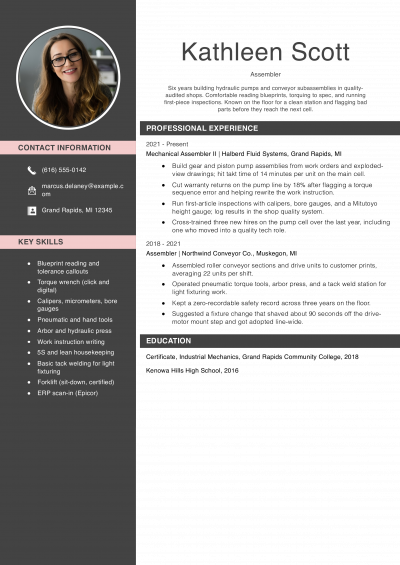
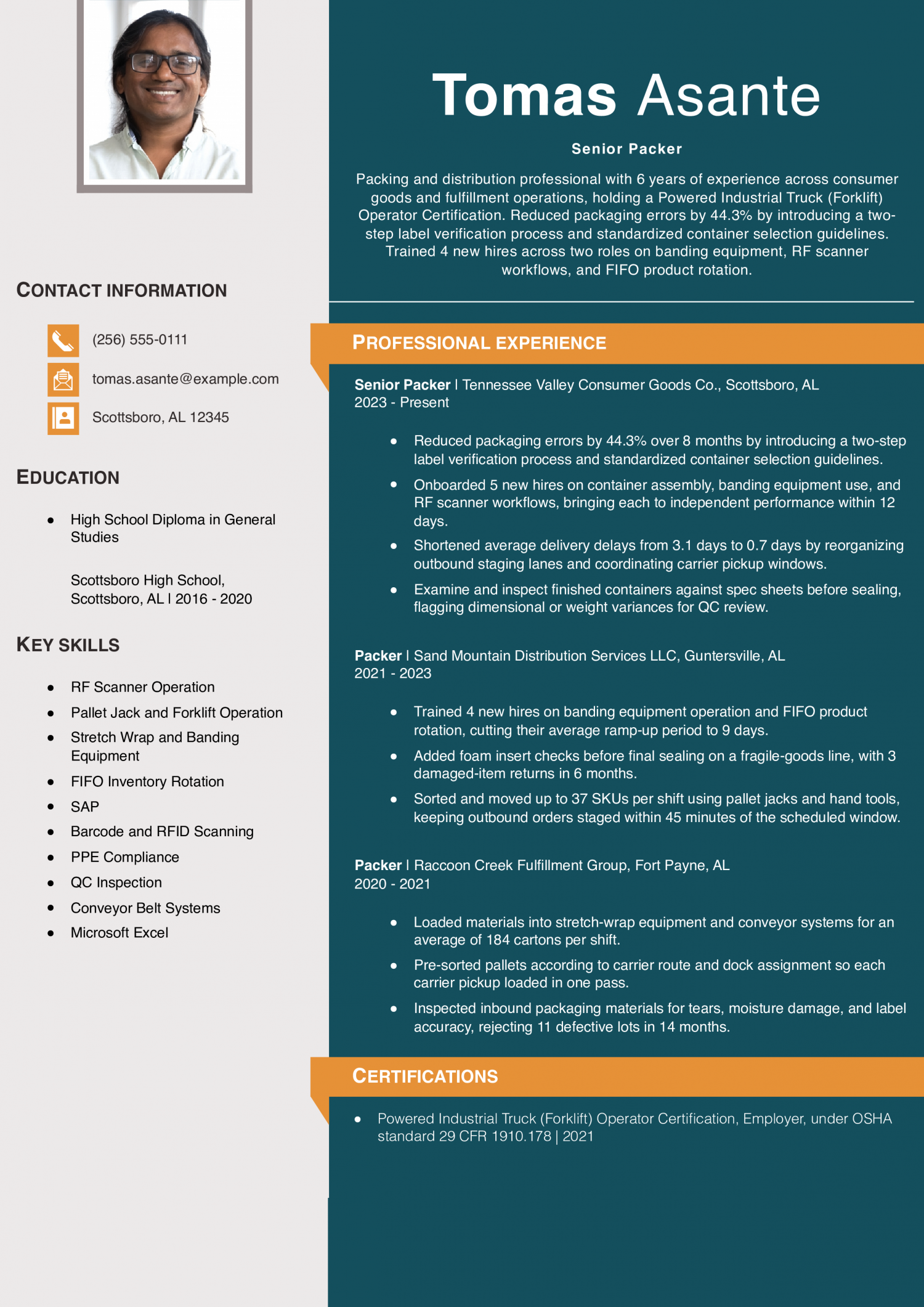
Pick this resume if you are a mid-level packer with several years on the line and a growing record of training others. Lead with delivery-delay reductions and error-rate drops rather than daily task lists.
Training bullets here name the task taught and how long each new hire took to work alone. That tells a warehouse supervisor whether the ramp-up speed is fast for the role. Spell out the equipment or process you covered and how many days passed before they worked without help.
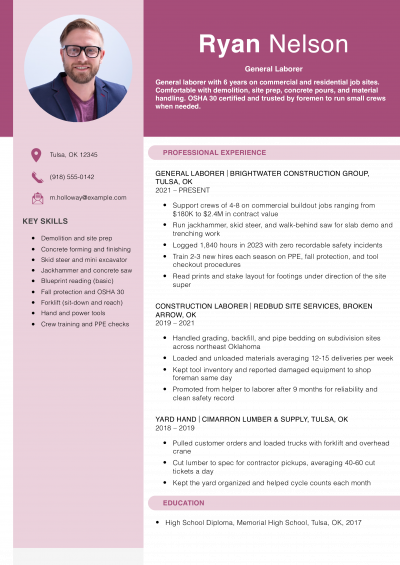
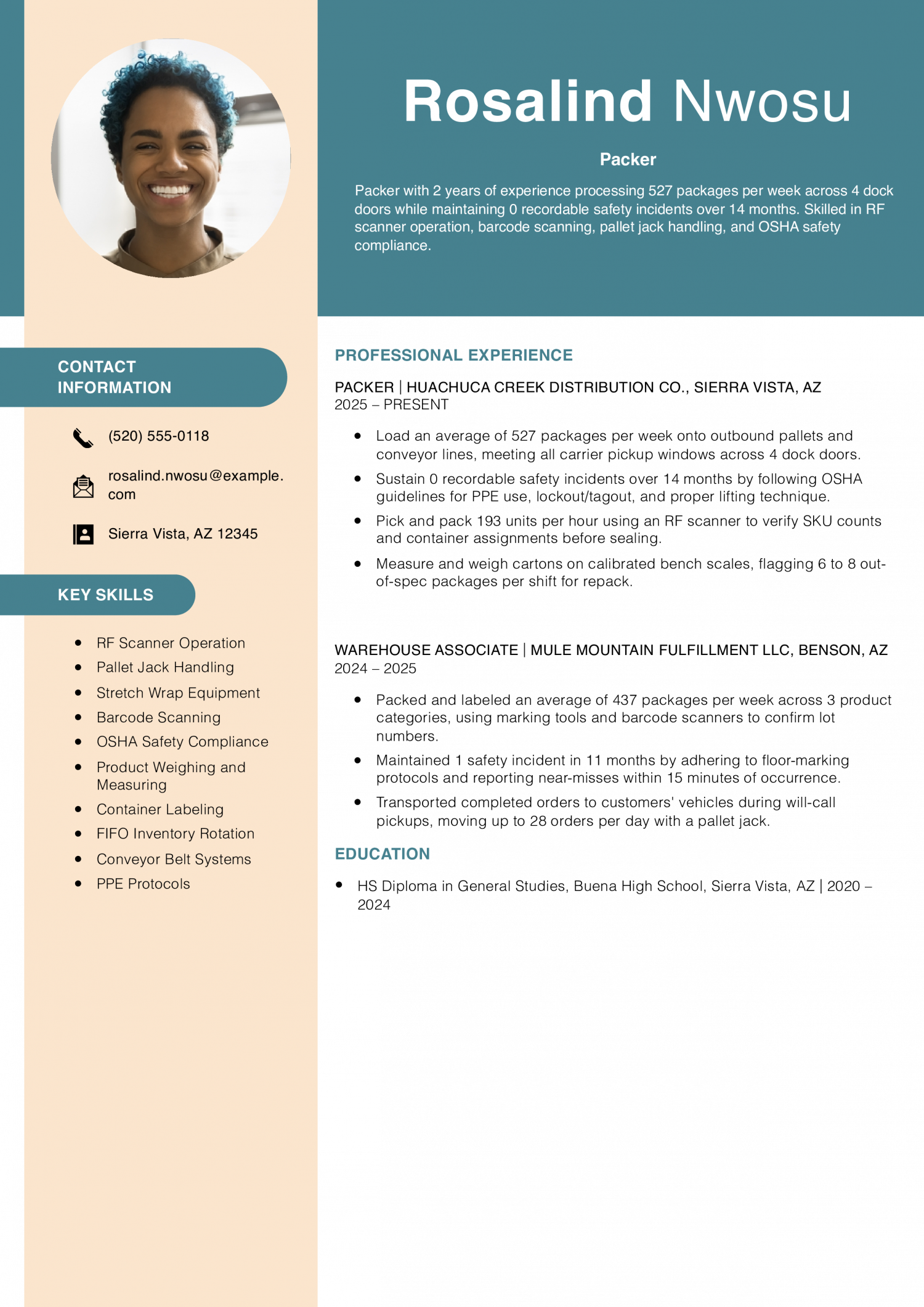
Start with this resume if you are an entry-level packer building a career in warehouse fulfillment with limited prior experience. Lead with per-hour unit rates and safety records rather than generic task descriptions.
The safety bullet ties a zero-incident streak to specific protocols followed, not a vague claim. Someone reviewing that sees habits tracked over a real stretch of time. List the practices you follow and how long your clean record has held.
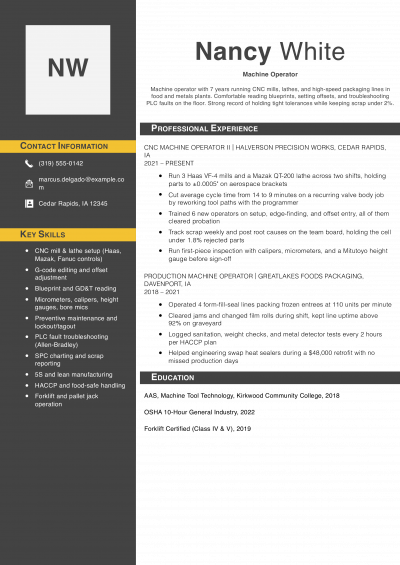
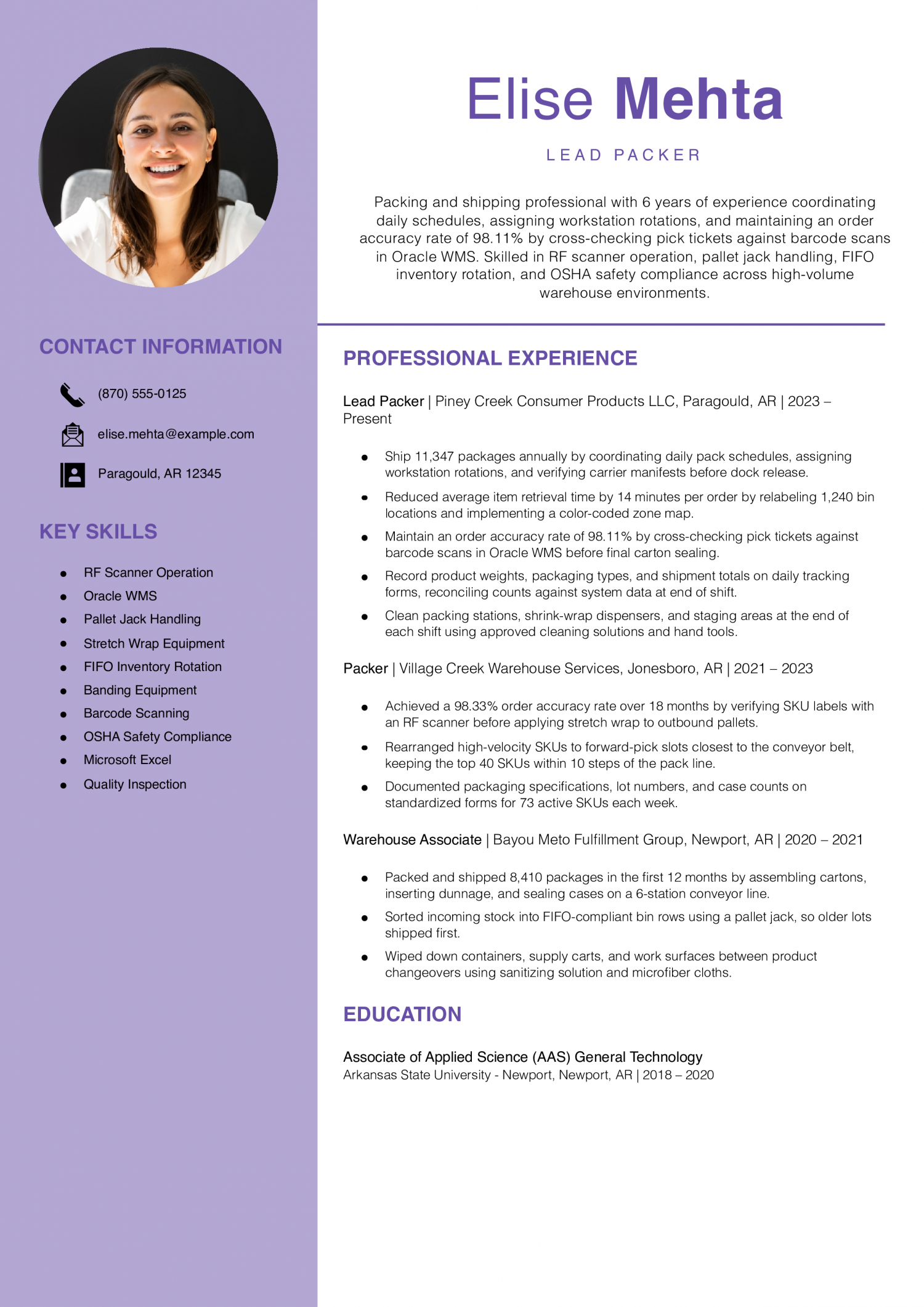
Try this layout if you are a mid-level lead packer ready to move from line work into a supervisory warehouse role. Lead with the retrieval-time reductions this resume places alongside relabeling and zone-mapping projects.
Look at how the bin relabeling connects to a faster retrieval time. Both the old speed and the new one sit side by side, so a warehouse manager can feel the difference. For any layout change, say what you reorganized and how the speed changed.
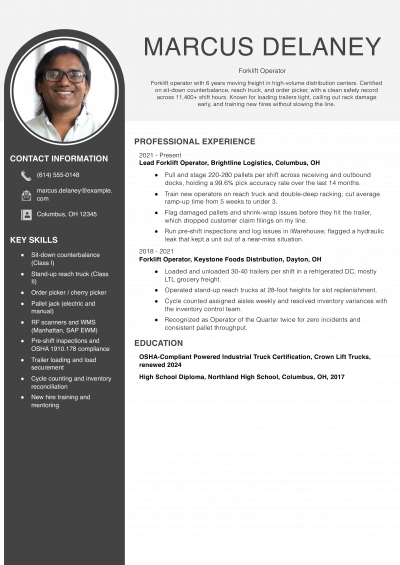
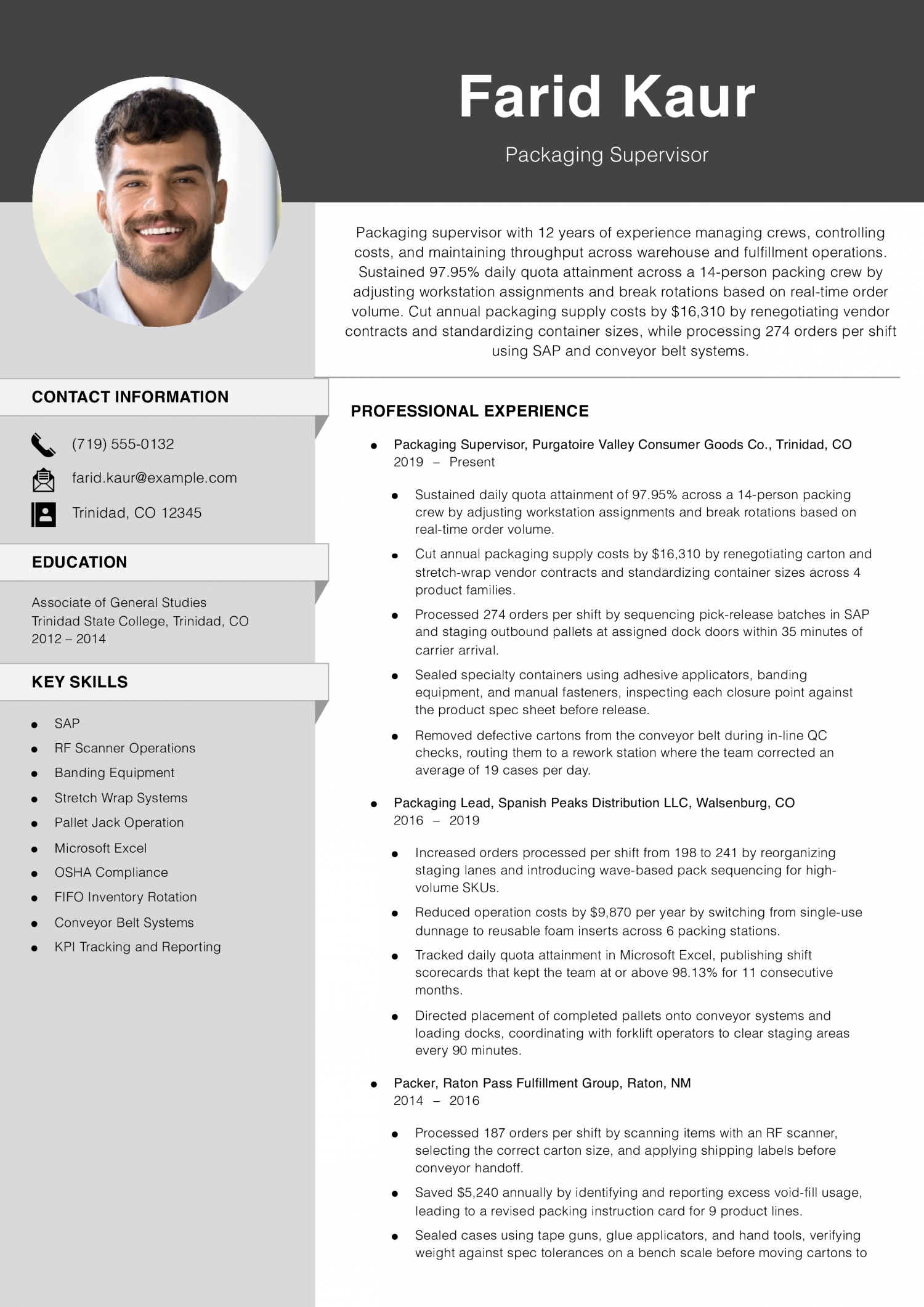
Lean on this resume if you are a senior packaging supervisor with a decade or more of warehouse leadership and cost-reduction results. Lead with vendor-negotiated savings and quota percentages rather than restating line-level packing duties.
Cost savings here name the exact material swap that saved the money. The reviewer can picture what went away and what took its place. If you cut packaging costs, say which material or step you removed and which one replaced it.
Warehouse picker and packer with 6 years of experience assembling, lining, and shipping cartons while maintaining inventory accuracy through RF scanning and Oracle WMS updates. Improved warehouse throughput by 44.7% by redesigning pick-path routing and consolidating staging zones. Skilled in pallet jack handling, stretch wrap and banding, conveyor belt systems, and OSHA safety compliance.
Open your profile with your years as a packer and the kind of operation you work in. Name the industry, such as food production or e-commerce fulfillment.
State the line speed or daily volume you handle. Warehouse supervisors and production leads scan this section in a few seconds. They want to see whether your background fits their operation.
Mention the types of goods you pack, like fragile items or frozen products.
Most strong packer resumes include at least one number per bullet. Units packed per hour is the metric warehouse supervisors look for first. Error rate or damage rate is the second one they check.
Without a number, a bullet tends to read as a duty, not a result. You can also cite order accuracy as a percentage. If you helped cut waste, state the reduction in pounds or dollars.
Pull numbers from end-of-shift reports or quality audits.
Break your work history into groups that match real packing duties. The first group is line packing, which covers boxing, wrapping, and sealing. The second is quality checks, such as weight verification and label accuracy.
A third group covers material handling, including loading pallets and staging shipments. Add machine operation if you run tape machines or shrink-wrap systems. These groups help production leads find your relevant skills fast.
Place the group closest to the job posting at the top.
Place your certifications on page one, right below your profile. If you hold a Powered Industrial Truck (Forklift) Operator Certification from your employer under the OSHA standard, list it there. Warehouse supervisors and production leads need to see it early.
Below that, list tools and equipment you use. Pallet jacks, hand scanners, and scale systems are common ones. Name the warehouse management system you have used, like RF scanning software.
Limit each entry to two or three words.
A high school diploma is the most common requirement for packer roles. List yours near the bottom of the page with the school name and year. If you have completed any OSHA safety courses, add them in this section too.
On-the-job training hours are worth listing if the posting asks for them. You do not need a college degree for most packer positions. Any coursework in logistics or supply chain can still add value.
Keep this section brief, around three to five lines.
Soft skill phrases decide whether the resume moves forward. Warehouse supervisors and production leads look for hard skills first. They want proof you can run sealing tools.
They also check that you read order sheets without errors. Once that bar is met, soft skills set you apart. Attention to detail ranks high on most packing lines.
Teamwork matters too, since most lines run two or more people. Show each soft skill with a result in your bullet points. Compare each table to the job posting you plan to apply to.
Skip any term the posting leaves off. Add any term the posting uses that you truly have.
| Soft Skills | AI-estimated % |
|---|---|
| Sustained physical stamina | 73% |
| Attention to detail | 70% |
| Team coordination | 47% |
| Safety compliance | 40% |
| Consistent work pace | 31% |
And here are the top hard skills showing up most often.
| Hard Skills | AI-estimated % |
|---|---|
| Product wrapping techniques | 69% |
| Order verification | 55% |
| Label application | 49% |
| Weight and measurement | 39% |
| Inventory stock rotation | 29% |
Skill names and rankings come from an AI model grounded in U.S. Department of Labor occupation data for packers, not from a count of packers’ resumes built on ResumeTemplates.com.
Here is what to have on your resume before you send it out.
Warehouse supervisors and production leads check for safety training. OSHA standard 29 CFR 1910.178(l) governs forklift use. This certification proves you passed hands-on evaluation. Your employer issues it after you complete training.
Many packing operations run second and third shifts. Warehouse supervisors look to fill night and weekend shifts first. Stating your shift range on the resume saves time.
Shift Availability
Place your availability near the top of the page. Use a short line below your contact details. Name the exact shifts you can work each week.
This detail helps production leads match you to open slots.
Warehouse supervisors and production leads look at your credentials to see where your work is heading. A forklift card tells them you can move loaded pallets and help the team in new ways. Many packers earn one early in their time on the floor.
Others add it after a few months of steady work at the same site. Add who issued your forklift card and when you earned it. Put this section below your work history so it stands out on its own.
Keep each entry short. One line per credential is enough for a clean, readable layout. If your card has an expiration date, add that detail in a note beside the year.
Warehouse supervisors and production leads check dates to confirm your training is current.
The 90th-percentile Packer out-earns the median by roughly 30 percent. That gap is wide for a role often seen as flat in pay. The spread tells you the market does sort resumes, even in high-volume packing jobs.
National employment is large, so openings exist across many states and industries. Geographic concentration and the type of facility both shape where you land on the scale. List your forklift certification, daily unit counts, and error rates on your resume.
Lead with the output figures that set you apart from the broad hiring pool.
| # | State | Median Annual |
|---|---|---|
| 1 | Kansas | $44,460 |
| 2 | New Jersey | $43,840 |
| 3 | Alaska | $41,670 |
| 4 | District of Columbia | $40,910 |
| 5 | Colorado | $40,730 |
| 6 | Minnesota | $40,310 |
| 7 | Vermont | $39,440 |
| 8 | Washington | $39,220 |
| 9 | Nebraska | $38,880 |
| 10 | Missouri | $37,670 |
| # | State | Workers | Median |
|---|---|---|---|
| 1 | California | 79,730 | $37,260 |
| 2 | New Jersey | 71,260 | $43,840 |
| 3 | Texas | 46,510 | $33,090 |
| 4 | Florida | 38,860 | $28,280 |
| 5 | Illinois | 23,270 | $36,090 |
Resume Templates offers HR approved resume templates to help you create a professional resume in minutes. Choose from several template options and even pre-populate a resume from your profile.
Use the title that matches the job posting, such as Sorter/Packer or Warehouse Sorter and Packer. Below the title, write bullets that split sorting tasks from packing tasks. That way a warehouse supervisor can scan each skill set fast.
Call it the title your employer gave you, such as Warehouse Packer or Packaging Associate. If you held an informal title like "helper," pick the closest standard title from the new posting. Matching the posted title helps your resume pass keyword filters in tracking systems.
List the role as Packer/Truck Helper and describe your duties in two or three bullets. Include the weight of loads you moved and the number of trucks you loaded per shift. Production leads look for volume numbers because they show you can keep pace on the dock.
Yes, a one-page resume with no white space is harder to scan than a clean layout. Keep your resume to one page and limit each job to three or four bullets. Cut any bullet that does not relate to packing speed, order accuracy, or safety compliance.
Combine similar roles under one heading if they were at the same company. Use numbers instead of long descriptions, such as "packed 300 units per hour with 99.5% accuracy." That single bullet tells a warehouse supervisor more than a full paragraph of general duties would.
Yes, bring at least two clean copies printed on plain white paper. Warehouse supervisors often interview on the floor and may not have your file pulled up. Handing over a printed copy shows you prepared for the meeting.
Write "Microsoft Office" in your skills section followed by the specific programs you use, such as Excel and Outlook. Name each program because some warehouse roles track inventory in spreadsheets. Listing the programs separately also helps your resume match keyword filters.
An ATS-friendly template with clear section breaks makes your experience easy to follow. A basic template works well too.
Packer Resume
4.9/5 stars with 163 reviews

Executive Resume Writer and Career Coach
Andrew Stoner is an executive career coach and resume writer with 17 years of experience as a hiring manager and operations leader at two Fortune 500 Financial Services companies, and as the career services director at two major university business schools.
© 2026 Resumetemplates.com All rights reserved.