






Data Analyst Resume Examples and Templates




In today’s competitive job market, you need an accomplishment-driven resume that encapsulates the most compelling aspects of your experience as a research assistant. Emphasize your ability to collect, analyze, and verify data to support complex research projects and initiatives. Showcase how you’ve leveraged your scientific and clinical knowledge to drive new discoveries and advancements in your field. In this guide, we’ll provide expert tips and insights to help you translate your career into a powerful resume that resonates with potential employers.
Key takeaways:

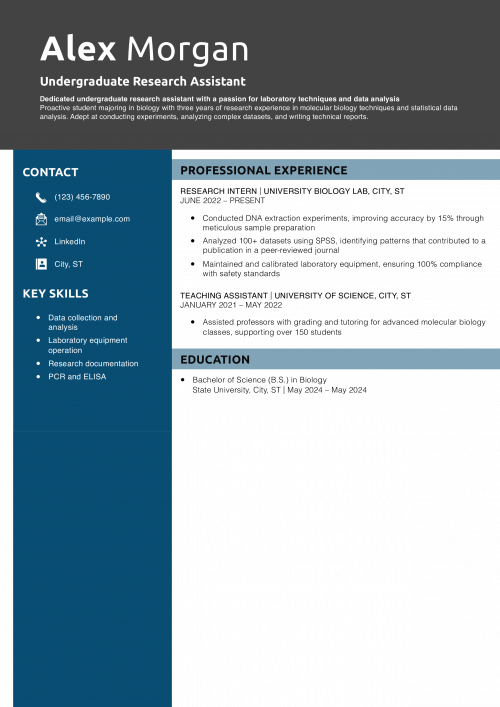
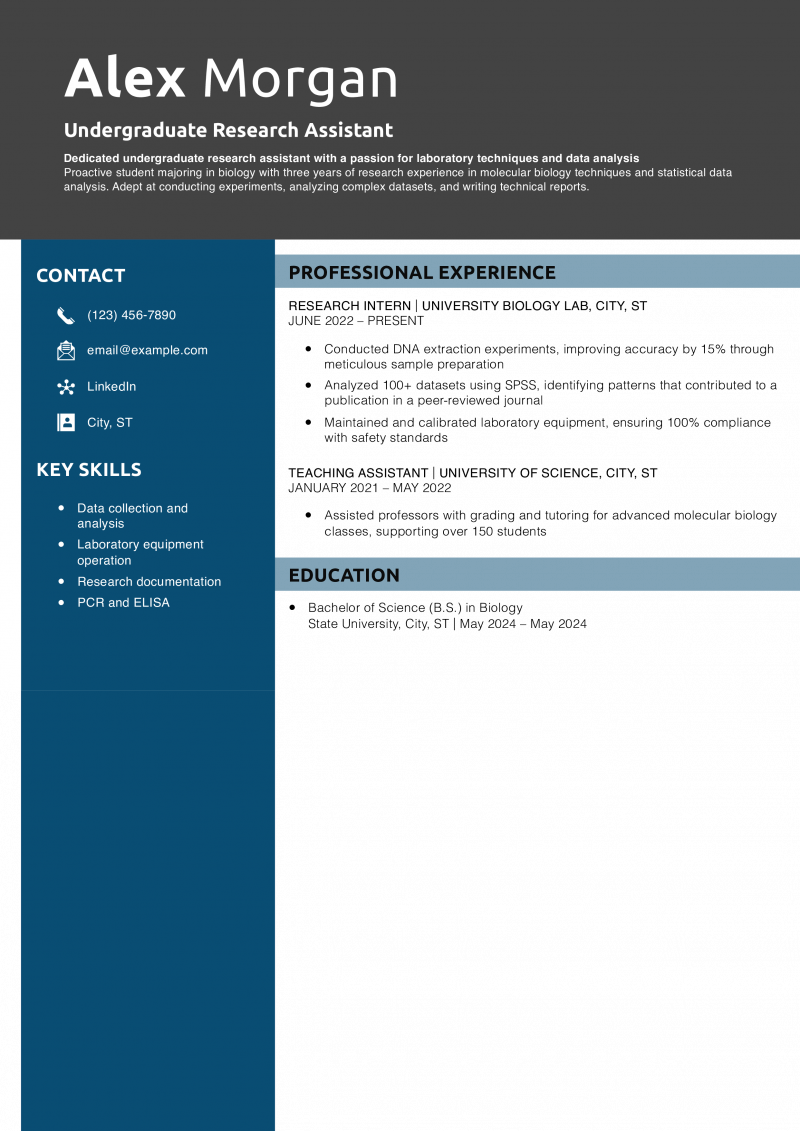
This resume highlights Alex’s academic experience and laboratory expertise while emphasizing measurable achievements such as improving experimental accuracy and contributing to published research. For tips on showcasing relevant coursework and projects, visit How to List Education on a Resume.
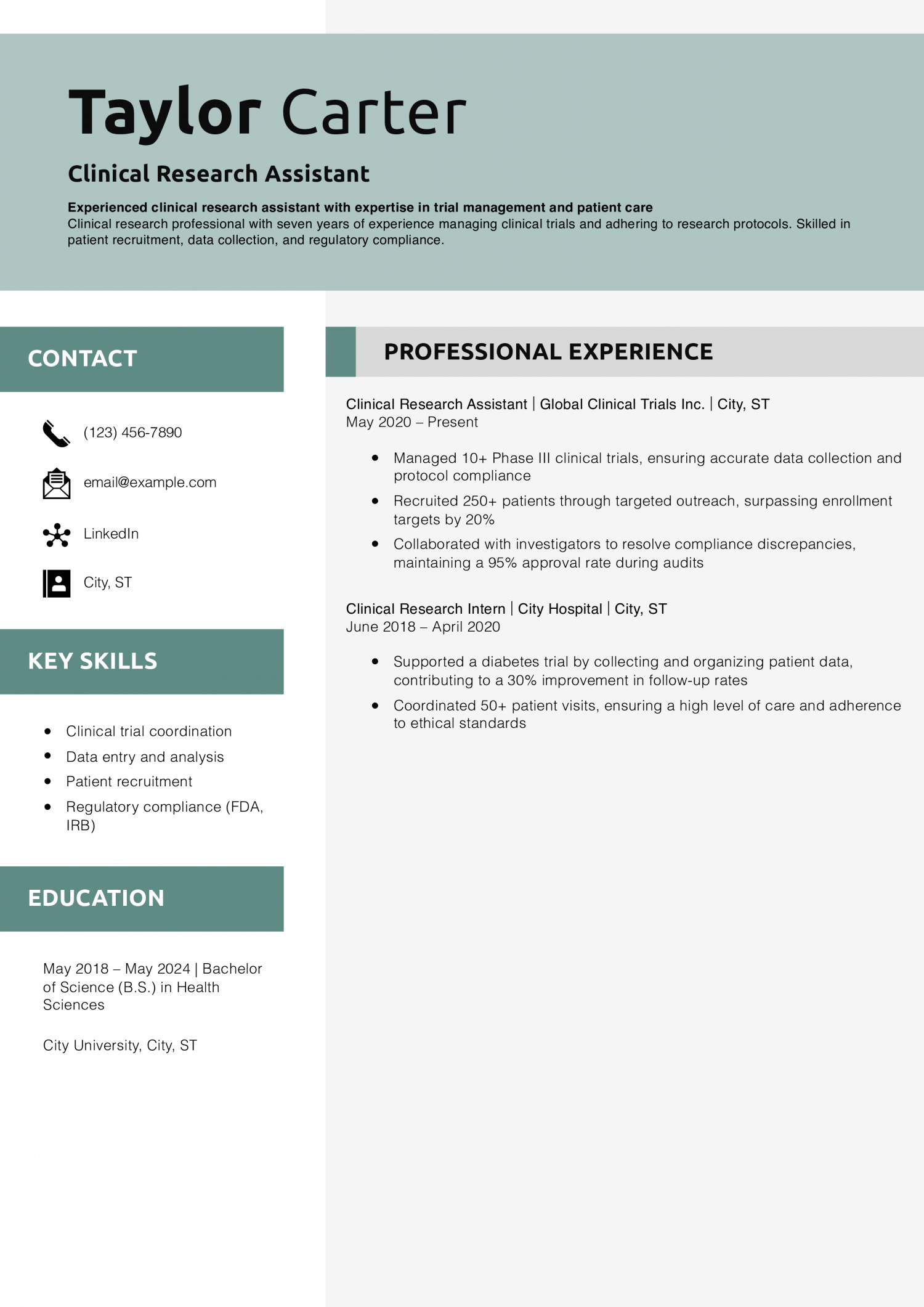
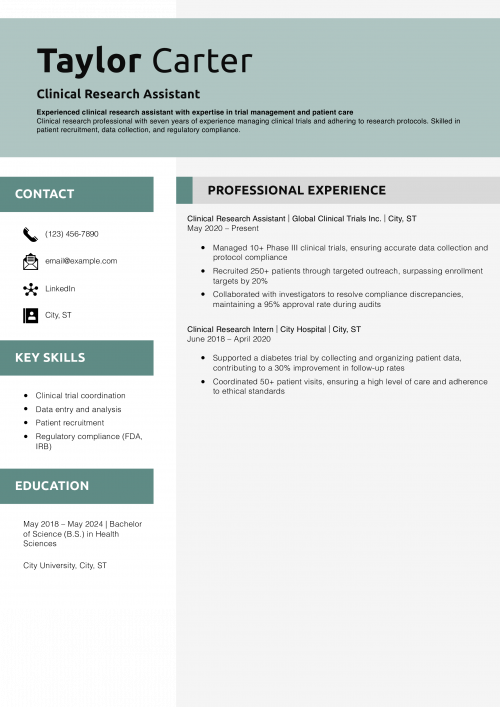
This resume showcases Taylor’s experience managing large-scale clinical trials while emphasizing their success in surpassing recruitment goals and maintaining regulatory compliance. Learn more about how to enhance your document at Resume Keywords.
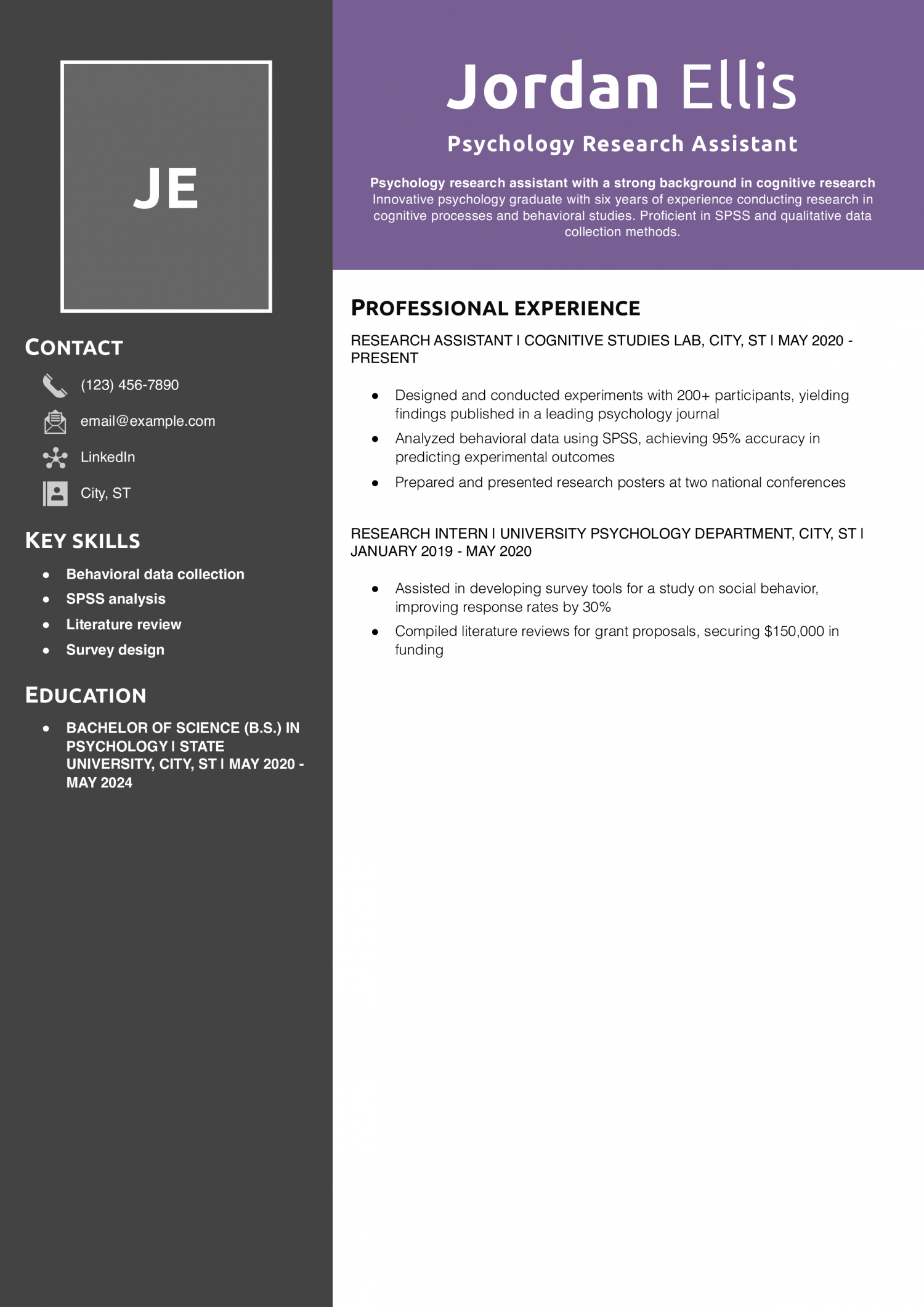
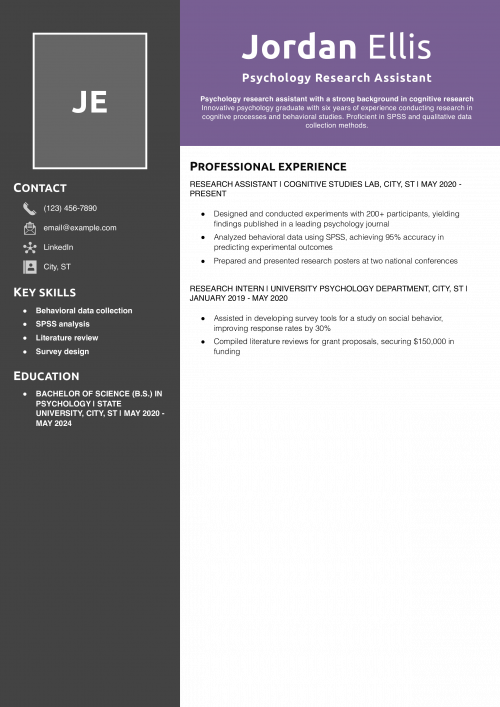
This resume demonstrates Jordan’s ability to design experiments and analyze complex data, which are crucial in psychology research. Find out how to highlight relevant skills at How to List Skills on a Resume.
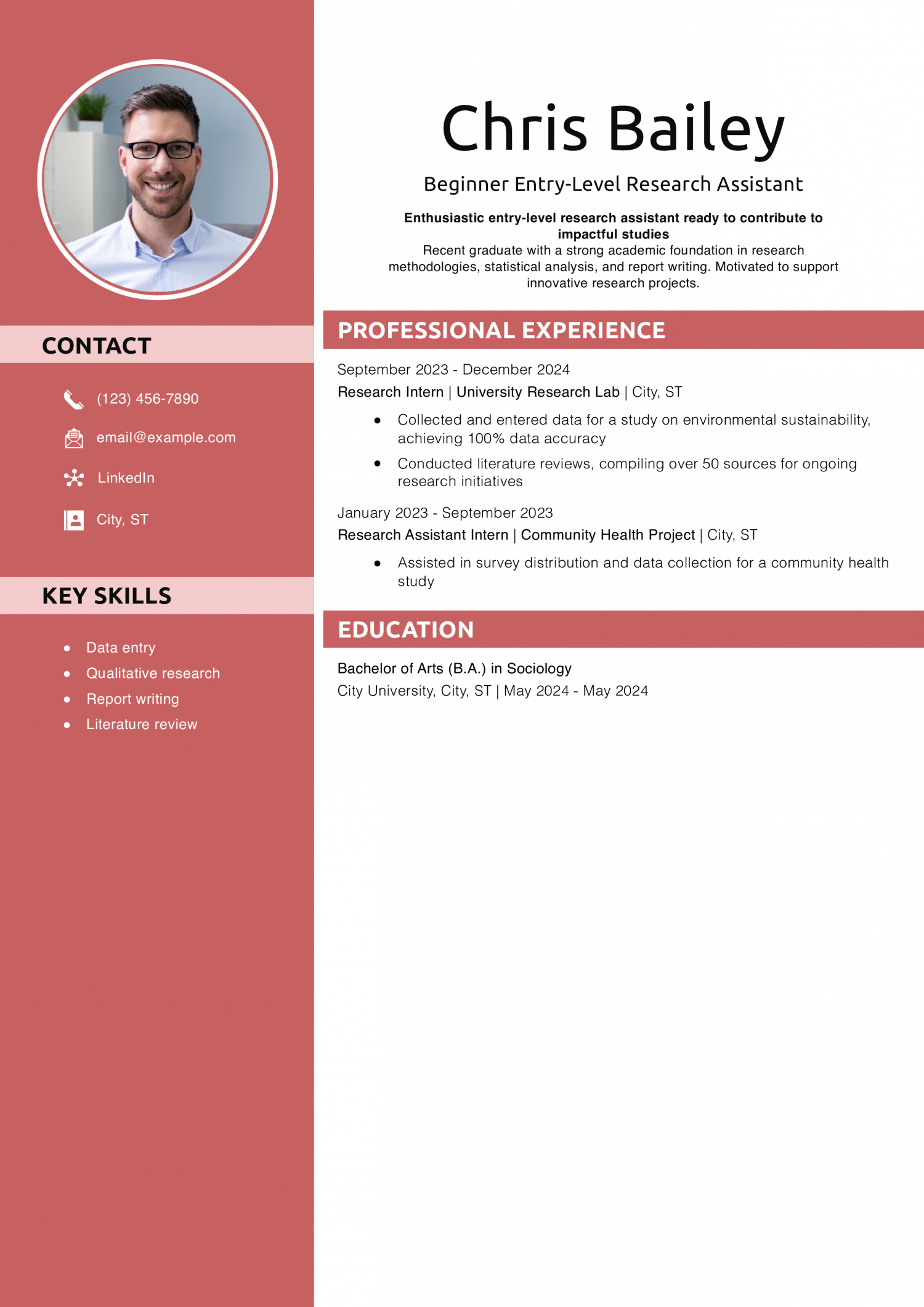
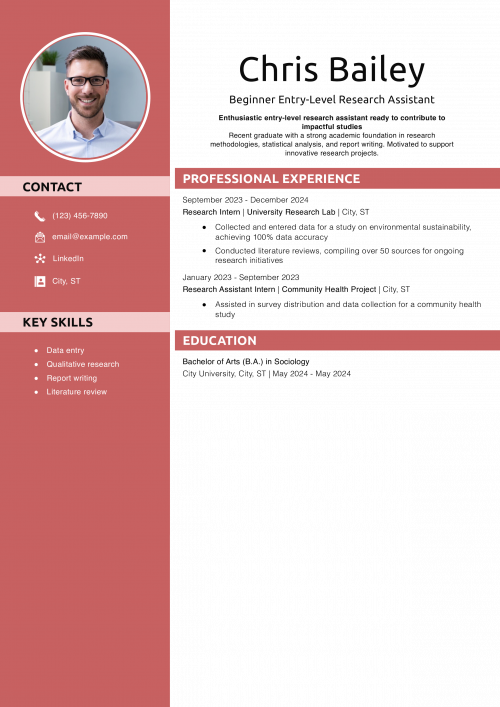
Chris’s resume highlights relevant academic and volunteer experiences, demonstrating readiness for professional research roles. For advice on writing your first resume, visit How to Write a Resume with No Experience.
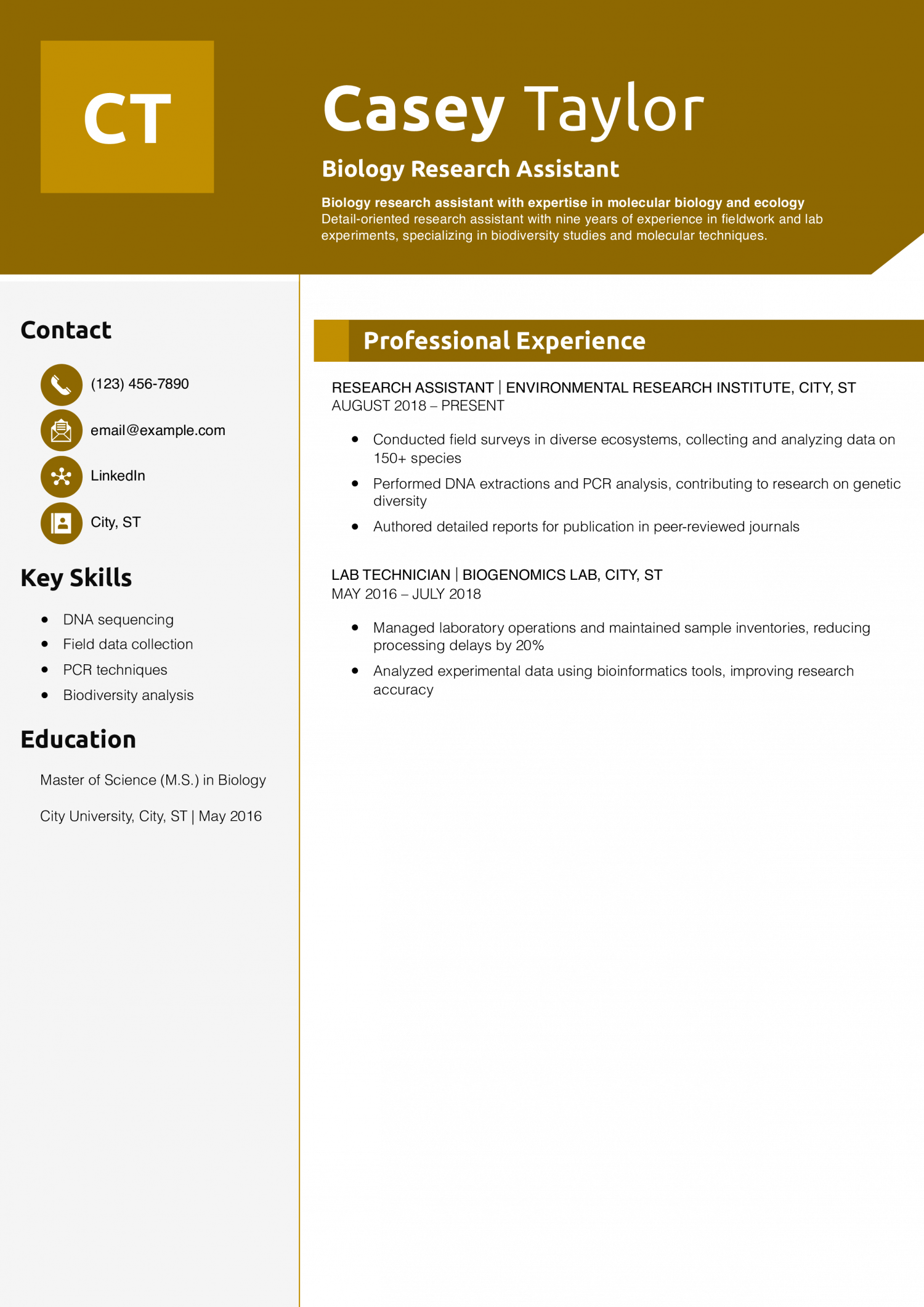
This resume emphasizes Casey’s technical expertise in molecular biology and fieldwork experience, with quantifiable achievements in biodiversity research. Learn how to structure your resume effectively at Best Resume Formats.
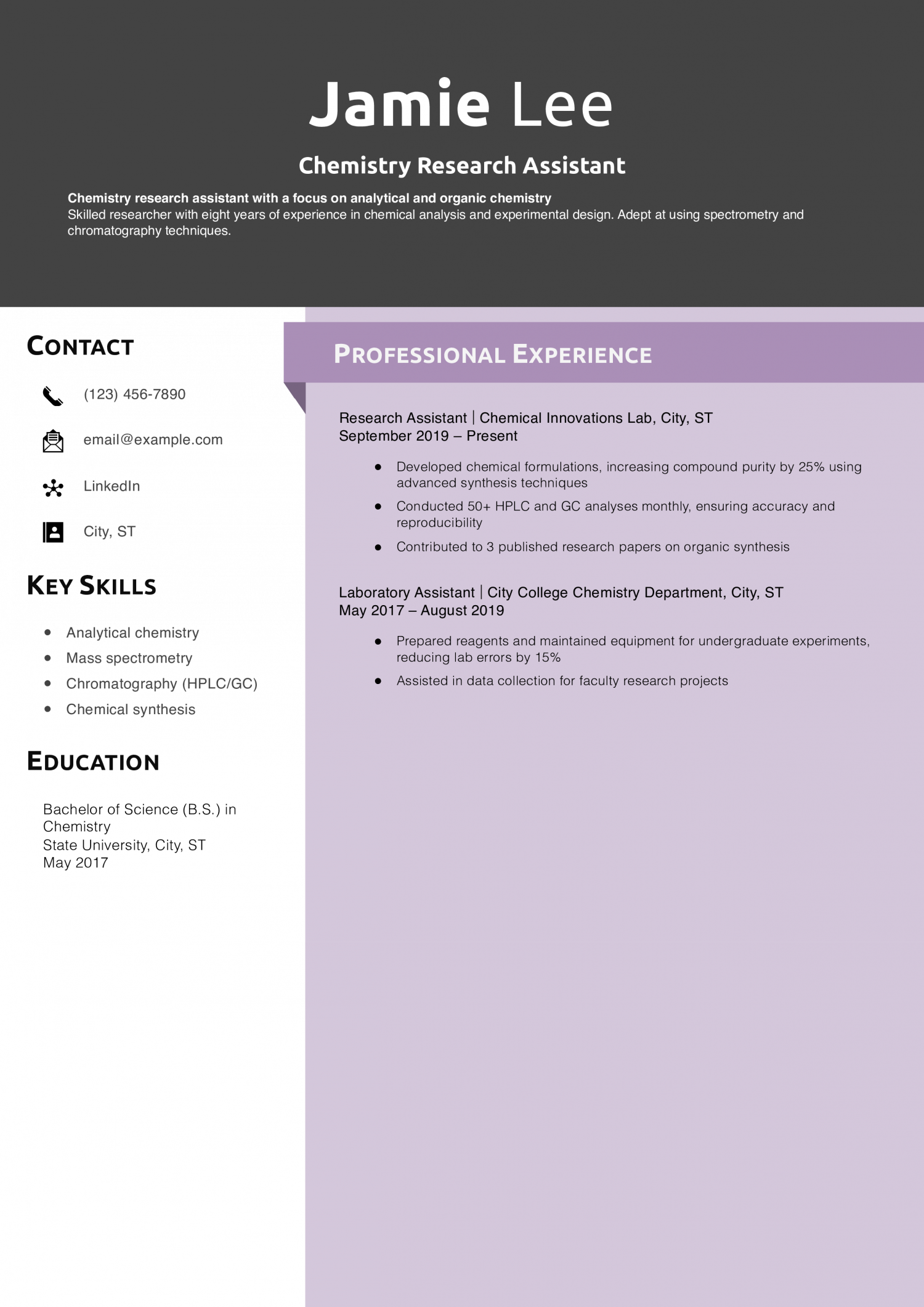
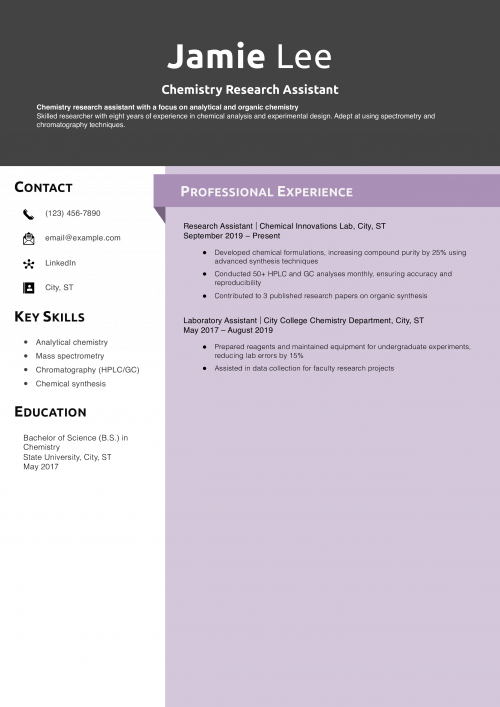
Jamie’s resume highlights advanced technical skills in chemical analysis and synthesis, supported by measurable contributions to research. For tips on showcasing lab techniques, check out How to Write a Resume with Technical Skills.
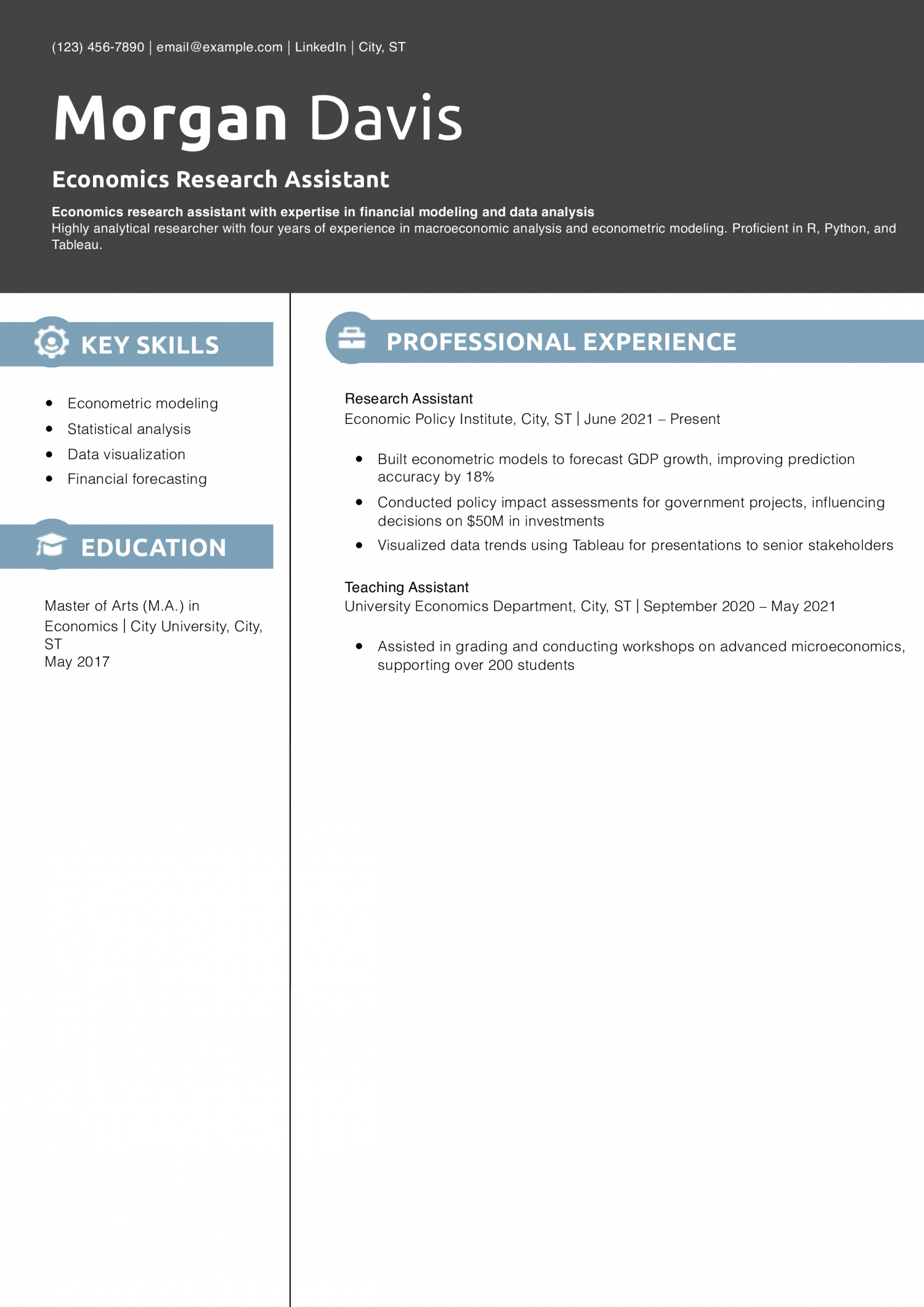
Morgan’s resume demonstrates proficiency in quantitative analysis and policy evaluation, which are vital for economics research roles. To learn how to feature your work experience effectively, visit our guide.
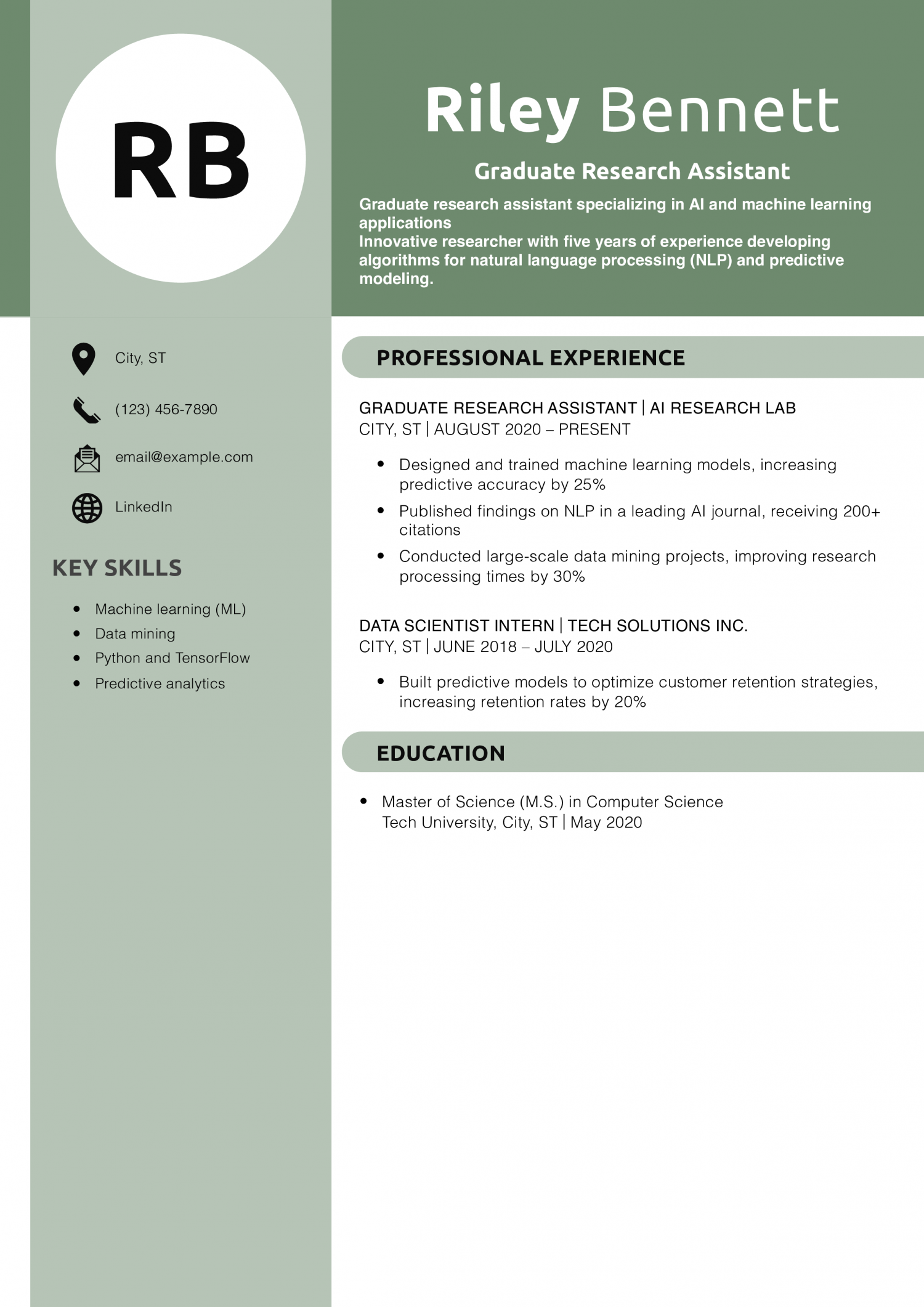
Riley’s resume focuses on advanced technical expertise and research contributions in AI, supported by real-world applications. For advice on listing graduate-level achievements, visit How to Show Graduate School on a Resume.
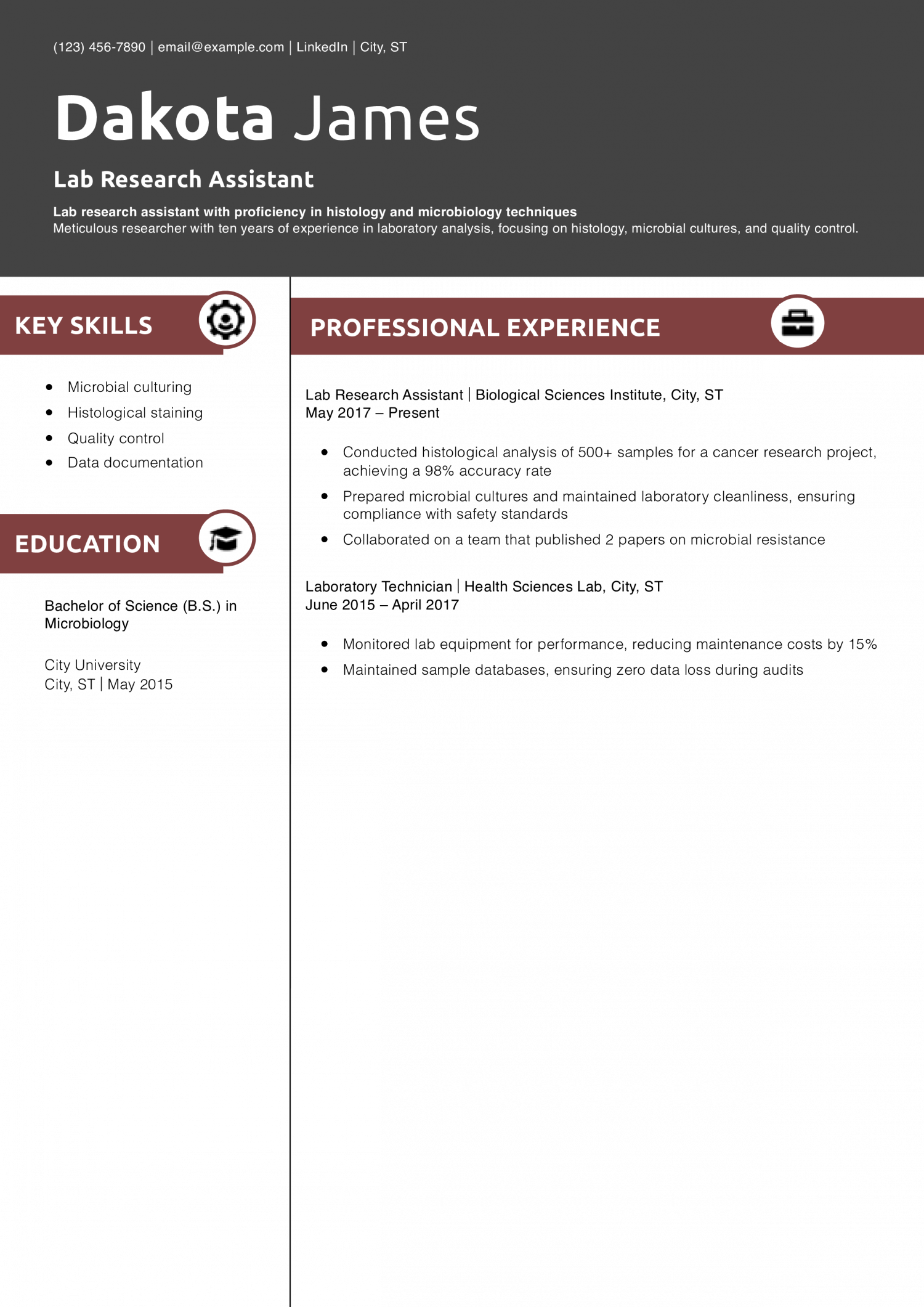
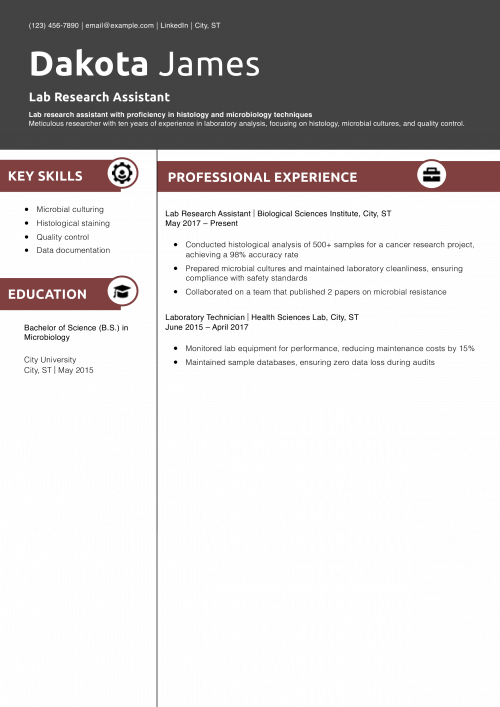
This resume highlights Dakota’s technical lab skills and significant contributions to published research. For advice on creating lab-specific resumes, visit How to List Work Experience on a Resume.
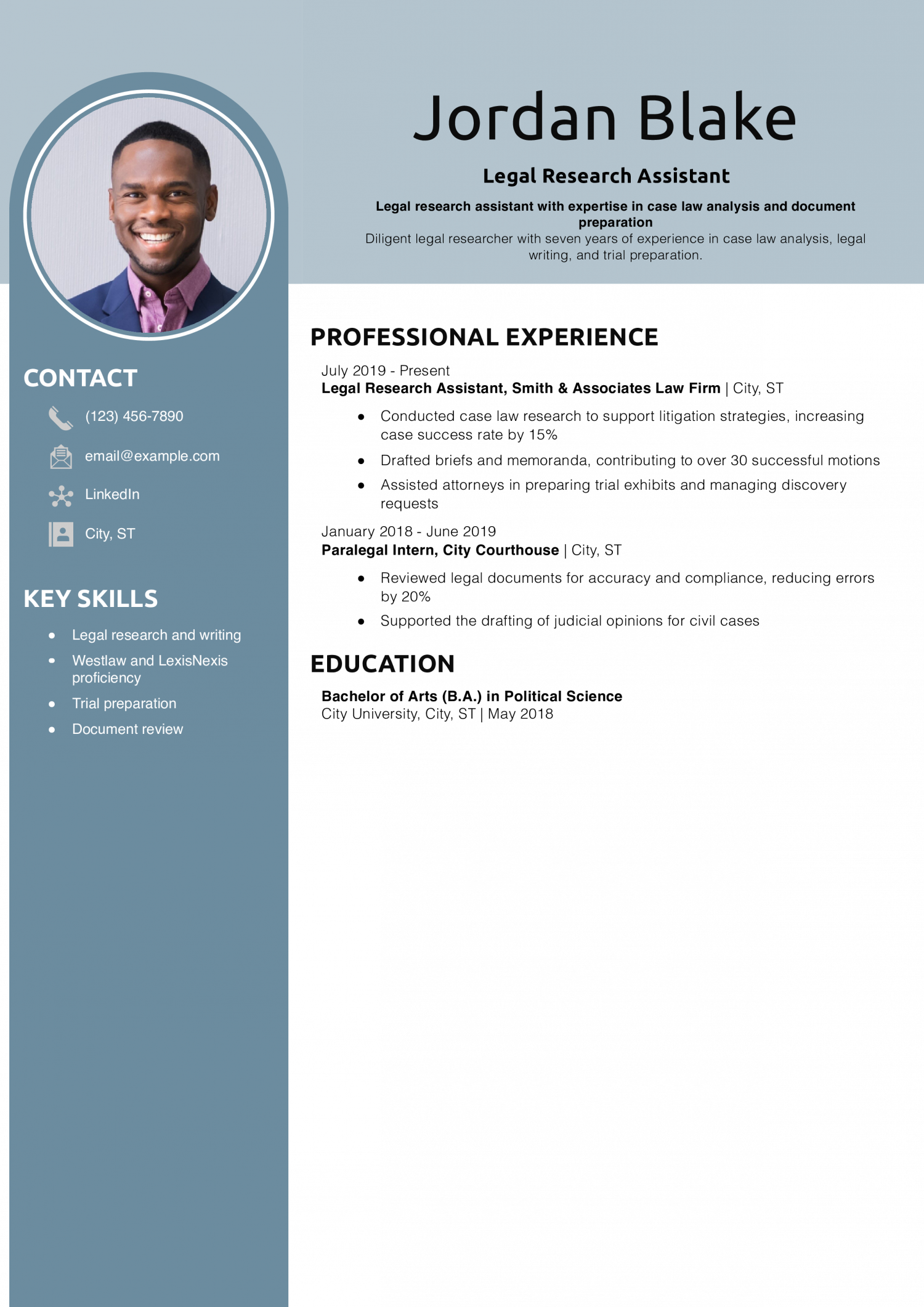
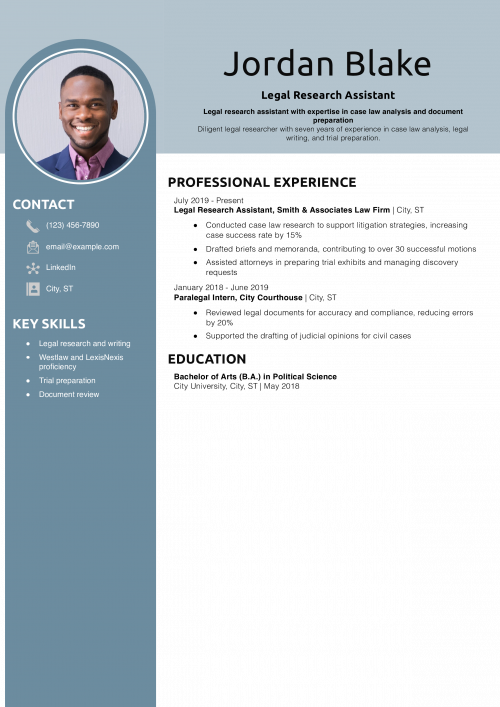
Jordan’s resume highlights their expertise in legal research and document preparation, key skills for success in the field. Learn how to present your education effectively at How to List Education on a Resume.

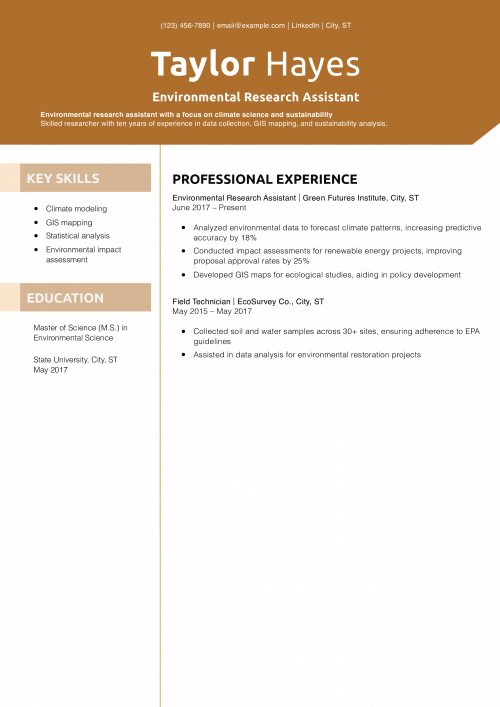
This resume emphasizes Taylor’s technical and fieldwork skills, with quantifiable achievements in environmental analysis. Learn more about how to enhance your resume in our guide.
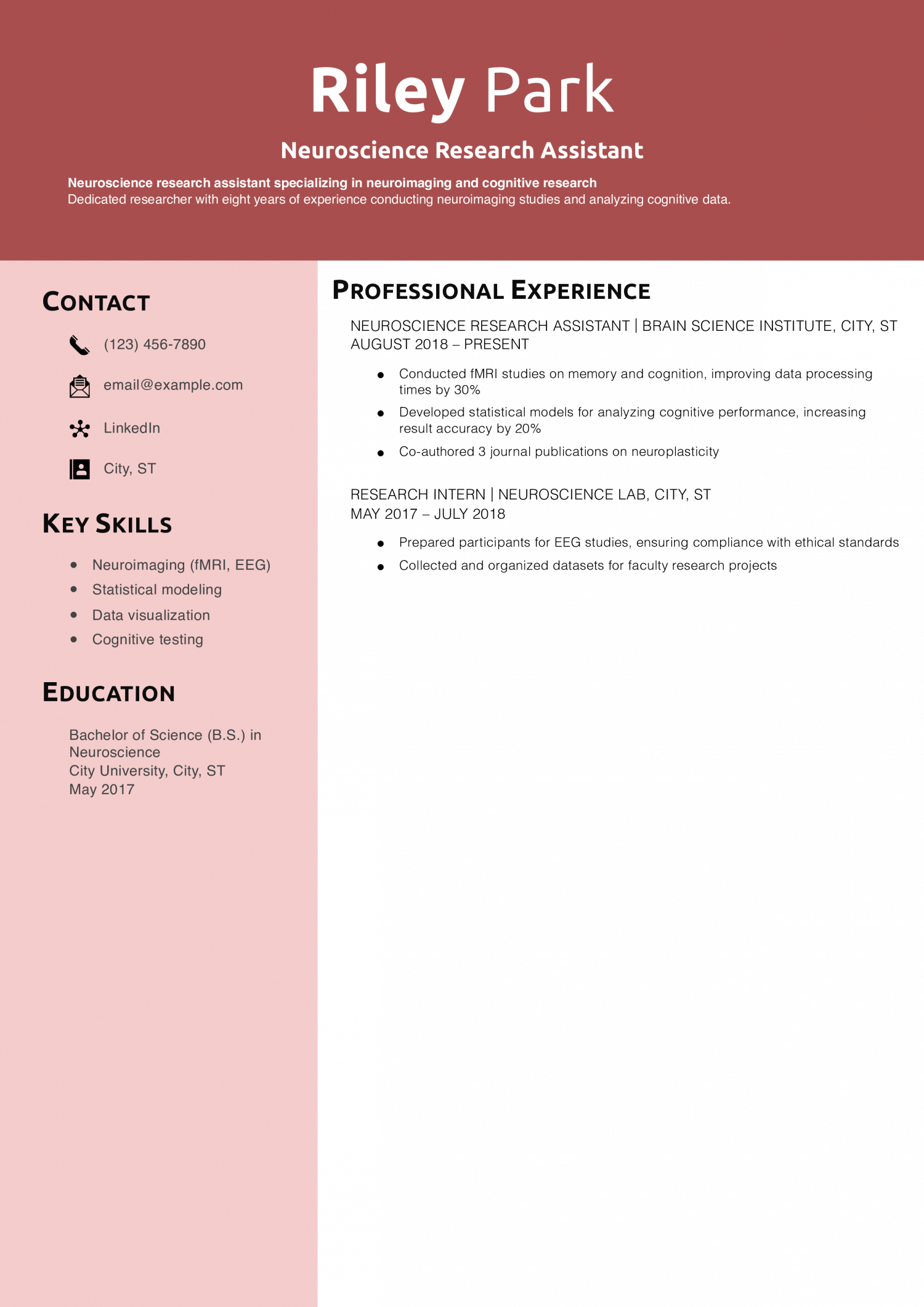
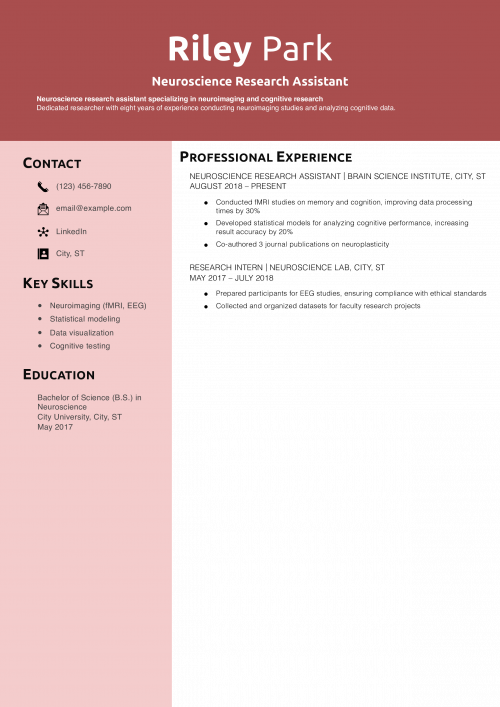
Riley’s resume focuses on technical expertise in neuroimaging and cognitive testing, essential for neuroscience research. Explore ways to present your research experience in our guide.

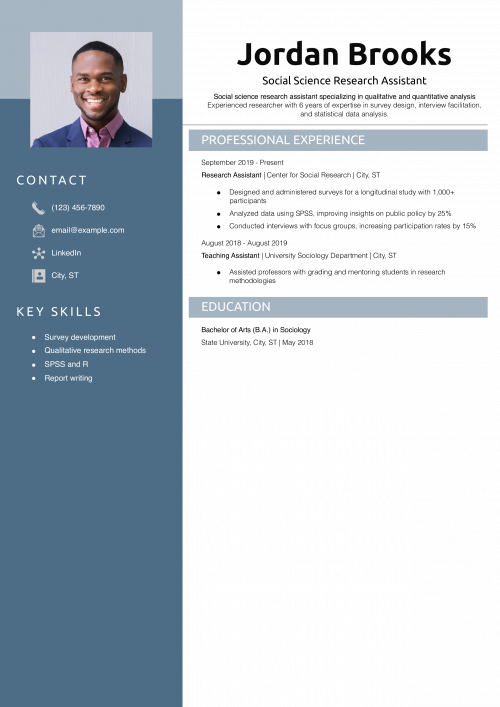
Jordan’s resume highlights both qualitative and quantitative research expertise, crucial for social science roles. For tips on showcasing your research publications, visit our guide.
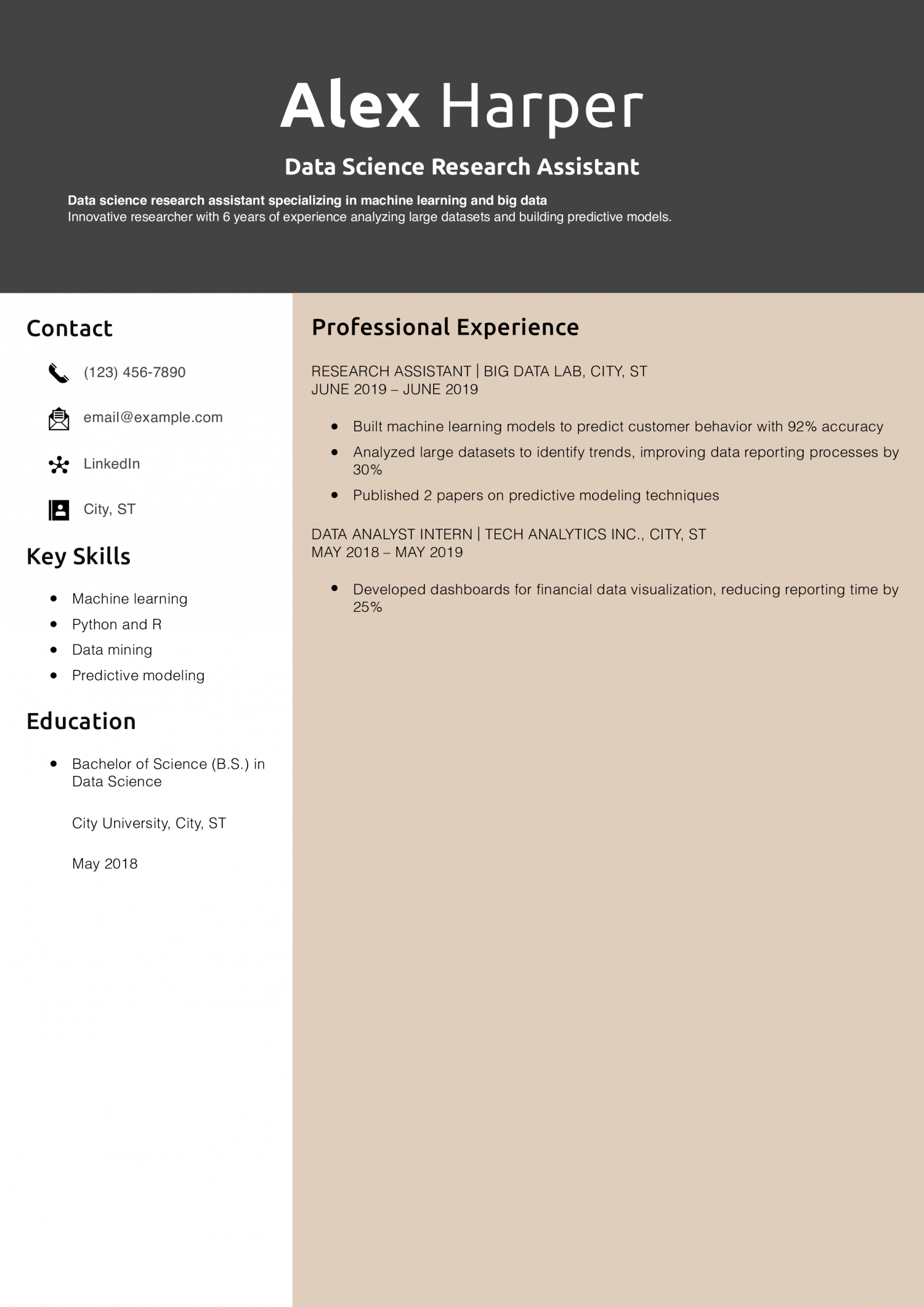
Alex’s resume demonstrates strong technical skills and significant contributions to data-driven research. For insights on how to capture your professional experience, visit our guide.

This resume highlights Taylor’s blend of technical and community-based skills, showcasing measurable contributions to public health. For tips on capturing your research and health care expertise, visit How to List Skills on a Resume.

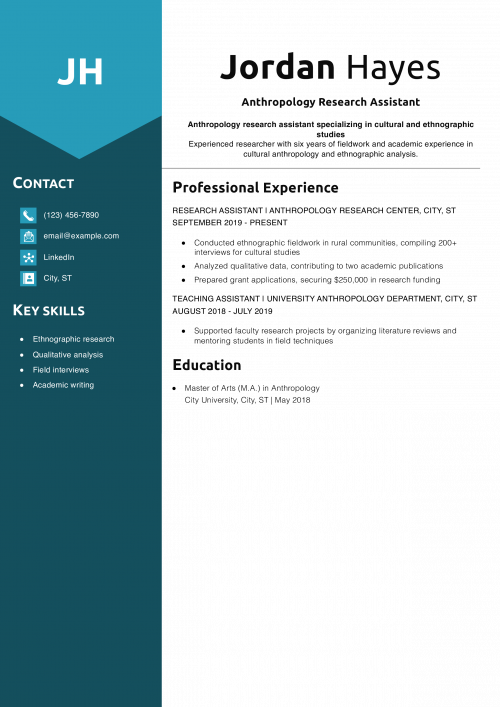
Jordan’s resume emphasizes fieldwork and academic contributions, key components for anthropology roles. Explore how to highlight your research experience at Resume Job Description Examples.

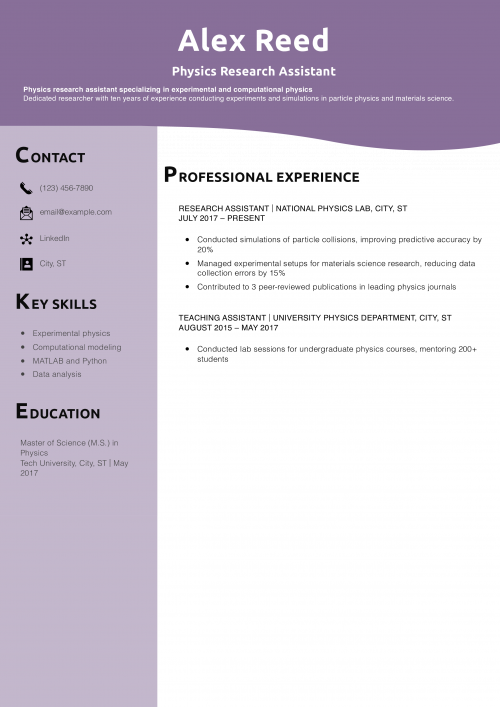
Alex’s resume demonstrates technical expertise and impactful contributions to both experimental and computational research. For advice on presenting technical skills, visit our guide.
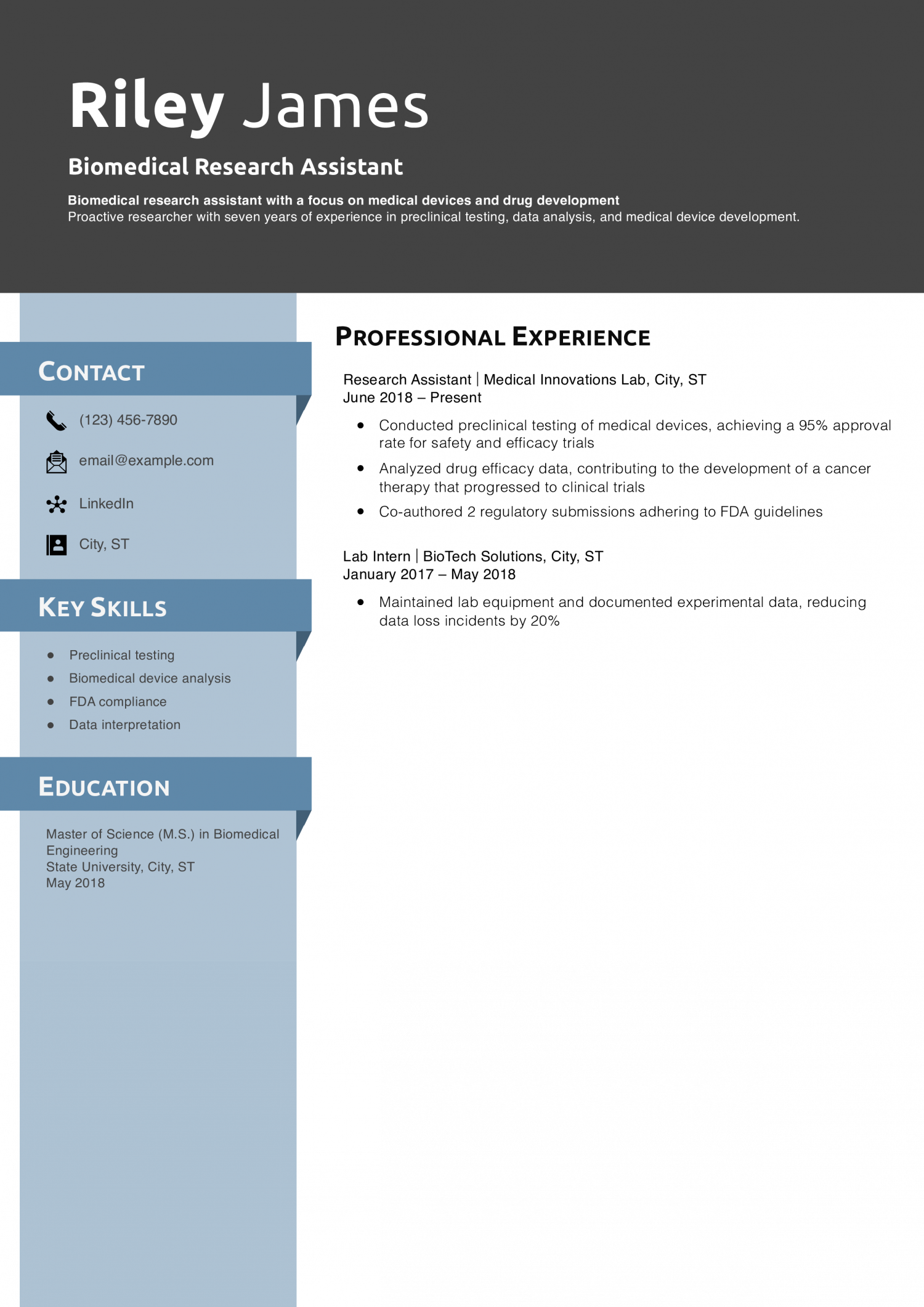
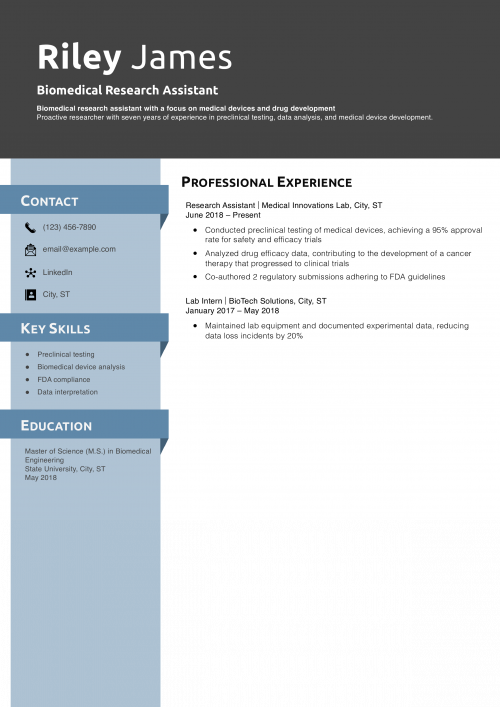
This resume highlights Riley’s technical expertise in medical device development and adherence to regulatory standards. Learn how to emphasize compliance-related skills at How to Build a Professional Resume.
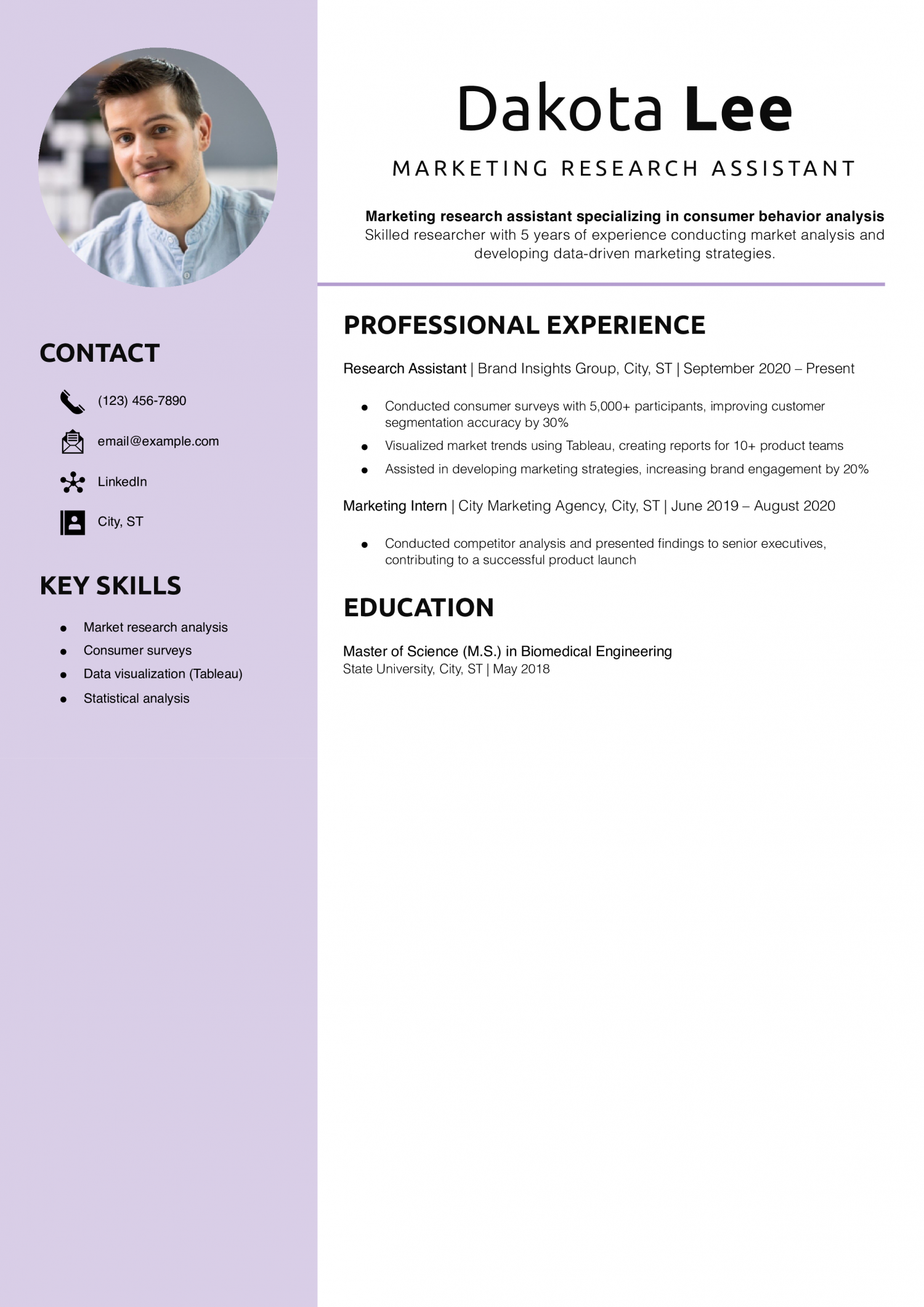
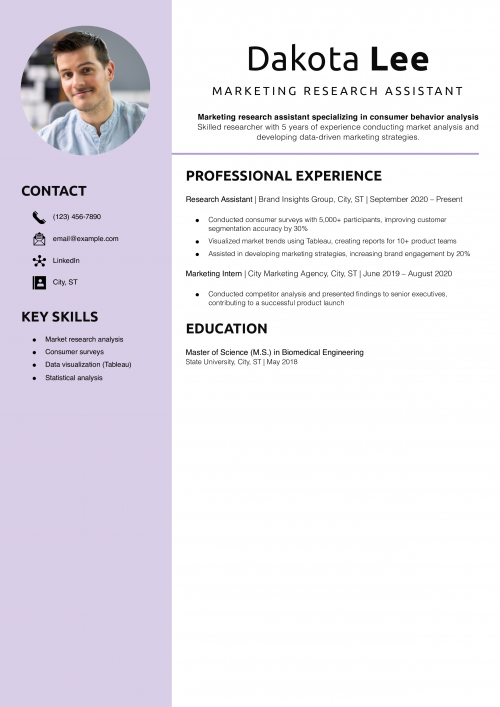
Dakota’s resume effectively combines technical and strategic marketing skills, showcasing the ability to improve brand strategies. For tips on creating a strong opening summary, visit our guide.

Casey’s resume highlights technical and academic achievements, combining computational skills with linguistic expertise. Explore how to feature your professional experience over time using our guide.
As a research assistant, your role revolves around collecting, analyzing, and presenting data to support scientific and clinical projects. To capture your experience effectively, you need a professional resume template that allows you to structure your qualifications, research skills, and achievements in a clear and compelling manner. Before crafting your content, be sure that your resume includes the following sections:
Provide your full name, phone number, email address, location, and a URL to your LinkedIn profile. Ensure all your information is up-to-date so hiring managers can easily reach out to schedule an interview.
John Smith
[email protected] | (123) 456-7890 | City, ST | LinkedIn | Portfolio
Lead with a powerful opening summary that provides an engaging overview of your career as a researcher. Start with a sentence that lists your title, years of experience, field of study, and three to four skills that align with the job description. Use this opportunity to convey unique aspects of your research experience that can help you leave a lasting impression on the hiring manager. For example, if you played an integral role in a multi-million dollar clinical trial exploring new cancer treatments, this information should be featured directly in your profile.
Research assistant with 10+ years of experience in molecular biology, specializing in RNA sequencing, genetic mapping, and laboratory analysis. Adept at managing cross-disciplinary research projects and publishing findings in peer-reviewed journals.
Research assistant with two years of experience conducting qualitative research, survey design, and statistical analysis. Proficient in SPSS and R, with a focus on behavioral science research and data visualization.
The professional experience section serves as the foundation of your resume, exploring the most compelling aspects of your work history. The key is to craft concise yet descriptive bullet points that explore the nuances of your experience as a researcher. Paint a clear picture of the research projects you’ve supported throughout your career. Emphasize your proven track record of enhancing data collection and analysis processes to validate findings and drive new discoveries. This sends a clear message to potential employers that you have the knowledge and expertise to provide genuine value to their organizations.
Senior Research Assistant
National Genetics Laboratory | New York, NY | June 2015 – to present
Research Assistant
Behavioral Insights Group | Austin, TX | August 2021 – to present
Featuring eye-catching metrics and numbers is a great way to add depth to your bullet points and convey your positive impact on previous employers. For example, you might mention the number of research studies you supported or provide insights into how you successfully refined processes to increase data accuracy.
Aligning your content with the job description is a key part of the resume-building process. You need a document that is effectively geared towards specific opportunities to show employers how your research background aligns with their organization’s needs. For example, if a company is looking for a candidate with an extensive history of supporting clinical trials, emphasize your experience recruiting participants and ensuring strict compliance with protocols to maintain the integrity of findings.
Even without years of industry experience, you can still build an impactful resume to position yourself for entry-level opportunities. Highlighting internships is a great way to compensate for a limited work history, though you can also feature academic projects or lab assistant roles at your university. Emphasizing research projects you’ve completed and skills you’ve garnered while pursuing your degree is another way to show employers you have the knowledge to succeed as a research assistant.
Featuring your education and certifications is essential for research assistants, especially during the early phases of your career. Most employers require a bachelor’s degree in chemistry, biology, or a science-related field, though pursuing a master’s degree can greatly benefit your long-term career prospects. In addition to your degrees, highlight industry certifications to further establish your credibility as a researcher, such as a Certified Research Assistant (CRA) or Good Clinical Practice (GCP) Certification.
Template:
[Degree Name], [School Name], [City, ST] | [Graduation Year]
[Relevant honors, coursework, or activities]
Example:
Master of Science (M.S.) in Biochemistry
University of Chicago | Chicago, IL
Template:
[Certification Name], [Awarding Organization] | [Completion Year]
[Description if the credential is lesser-known but relevant]
Example:
Certified Clinical Research Coordinator (CCRC) | Association of Clinical Research Professionals
To ensure compliance with applicant tracking systems (ATS), it’s important to feature a comprehensive list of skills that contains keywords from the job posting. Highlight a blend of technical competencies, research methodologies, and clinical terms to show hiring managers that you have a versatile background. Be sure to also include interpersonal and leadership-oriented skills, as research projects often require a high degree of multidisciplinary collaboration. Below, you’ll find a list of skills to feature on your research assistant resume.
| Key skills: | |
|---|---|
| Clinical research | Data analysis |
| Data collection | Data validation |
| Data visualization | Good Clinical Practice (GCP) |
| Grant writing | Laboratory operations |
| Literature review | Project management |
| Python | Qualitative and quantitative research |
| Research ethics and compliance | R (programming language) |
| Scientific writing | Statistical analysis |
Lead each bullet point with a strong action verb to add a dynamic and engaging element to your writing. Using proactive language allows the hiring manager to visualize your achievements, effectively capturing the integral role you played in various research projects. Avoid passive language such as “helped,” “completed,” or “worked,” as this verbiage doesn’t give you proper credit for what you’ve achieved in your previous roles. Below, you’ll find a list of verbs you can use to build your professional experience sections:
| Action verbs: | |
|---|---|
| Analyzed | Collaborated |
| Conducted | Designed |
| Documented | Enhanced |
| Evaluated | Facilitated |
| Identified | Implemented |
| Improved | Investigated |
| Led | Managed |
| Monitored | Oversaw |
| Performed | Provided |
| Presented | |
When choosing a template, prioritize readability and a clean layout that emphasizes your qualifications. Avoid overly creative designs that may distract hiring managers. Focus on a format that organizes your skills, education, and experience clearly.
According to the Bureau of Labor Statistics, occupations for medical scientists are expected to increase by 11% over the next decade. These projections are also positive indicators for research assistant jobs, though it's still important to carefully tailor your resume towards each job application to maximize your odds of landing the interview. For example, if a health care organization is looking for a candidate with a strong grasp of artificial intelligence, emphasize your experience leveraging machine learning to create predictive models for clinical research activities.
Reverse chronological is typically the ideal format for research assistants. This approach highlights your most recent and relevant experience towards the top of your document, allowing hiring managers to quickly view your qualifications and achievements. A combination format is a viable option for entry-level candidates, as this layout allows you to compensate for a lack of work history by highlighting internships, academic research projects, certifications, and research methodologies.
Once you’ve completed your research assistant resume, pair it with an engaging cover letter to add a personal touch to your application. Be sure to mention something specific about the organization’s mission, reputation, or culture in the middle paragraphs and why this draws you to apply for the position. For instance, if an organization is well-regarded for its cancer research, mentioning this detail in the cover letter shows that you’ve taken the time to learn about the company before applying.
Executive Resume Writer and Career Coach
Andrew Stoner is an executive career coach and resume writer with 17 years of experience as a hiring manager and operations leader at two Fortune 500 Financial Services companies, and as the career services director at two major university business schools.
Resume Templates offers HR approved resume templates to help you create a professional resume in minutes. Choose from several template options and even pre-populate a resume from your profile.