





Engineering Resume Examples and Templates




For an effective systems engineer resume, focus on your relevant skills like project management, requirements definition, or quality improvement. Give examples of your success in similar roles, and show your knowledge base by citing any technical training or certificate programs you’ve done. This guide provides expert tips to help you create a results-driven resume showing your best systems engineer qualifications.
“Systems engineer resumes should present complex responsibilities in an organized way, helping employers quickly assess technical depth and system scope.” — Andrew Stoner, Executive Resume Writer and Career Coach
Key takeaways:

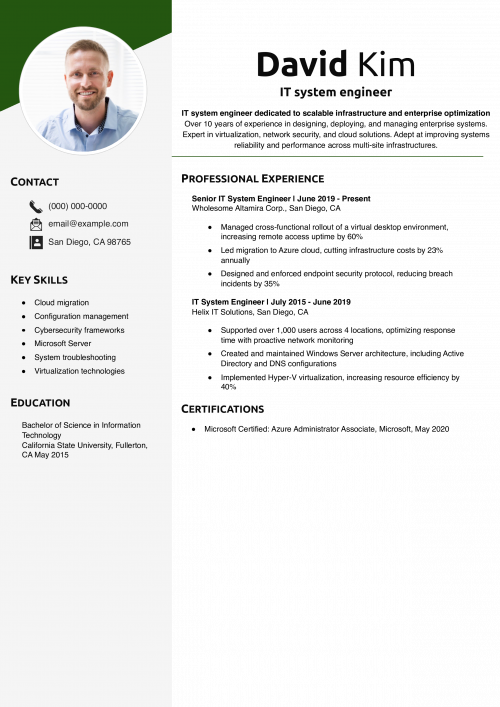
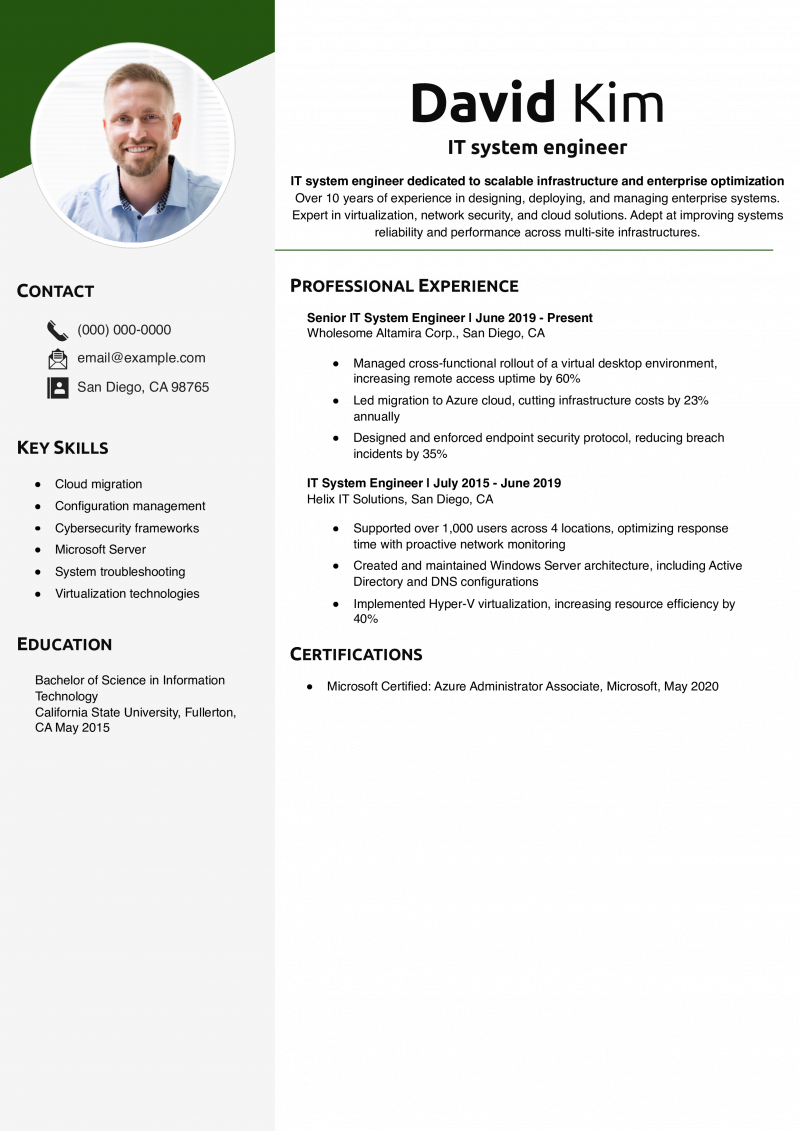
David’s resume shows the career progression and technical range expected in a seasoned systems engineer. Each role includes quantified outcomes like a 23% cost reduction and 60% uptime increase—these make his impact tangible. For more on structuring your job history with results, visit Work Experience on a Resume.
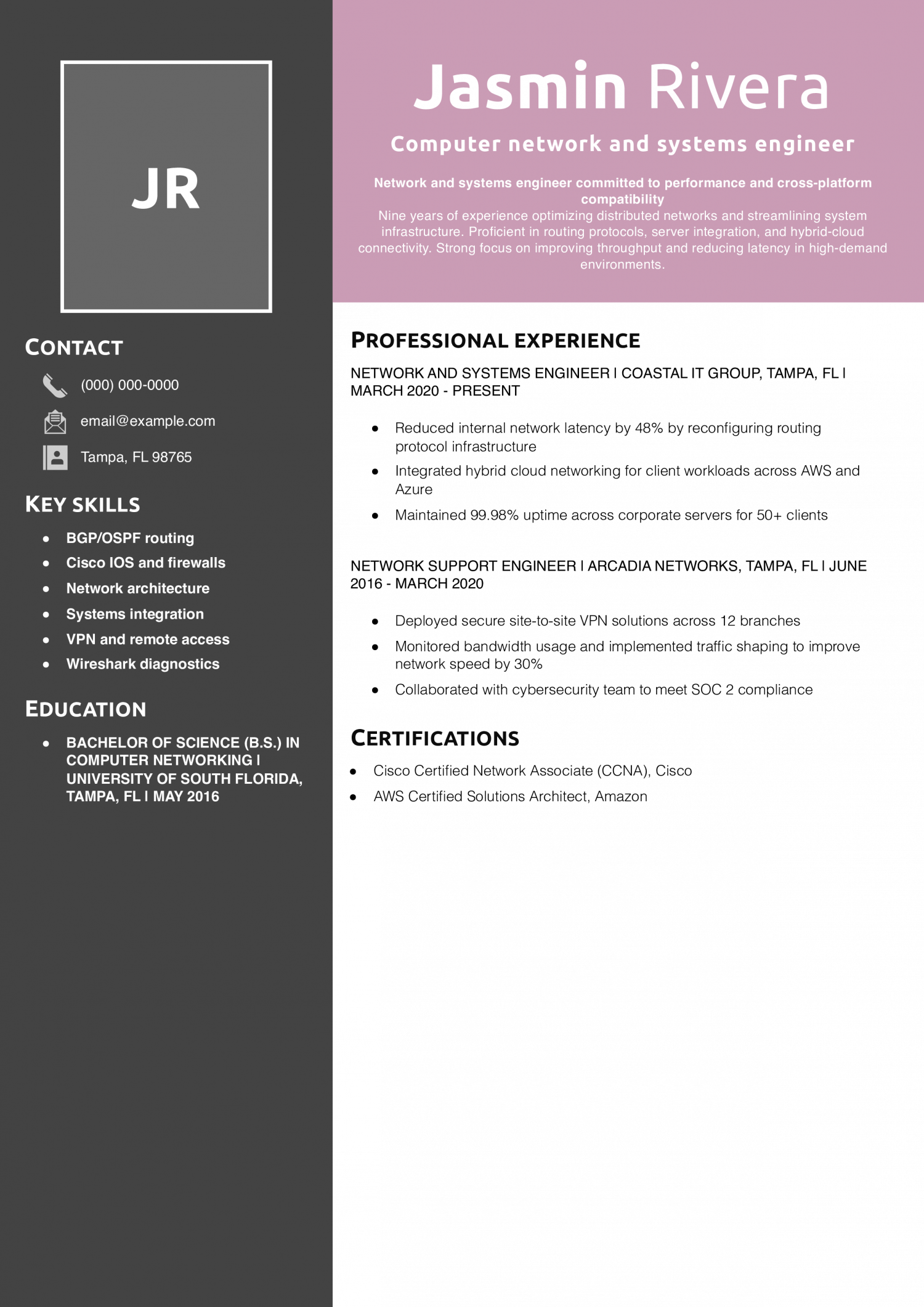
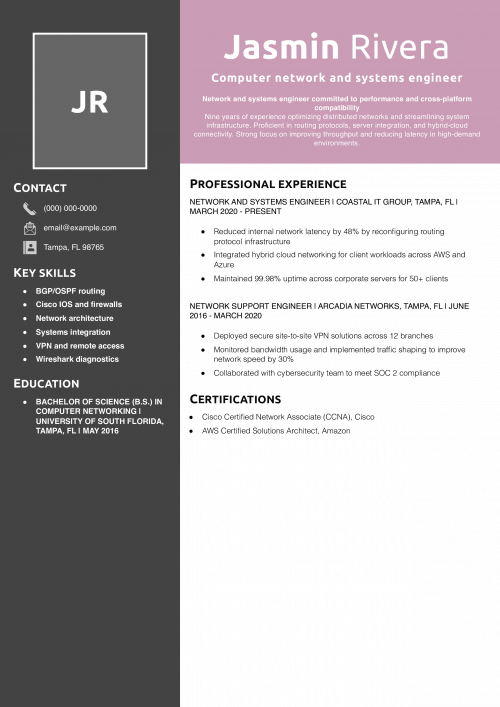
Jasmin’s resume features highly specialized technical keywords and measurable success, like network latency reduction and uptime improvements. Her use of technical tools and metrics shows depth. Learn how to highlight your technical credentials with Technical Skills in IT Resume.

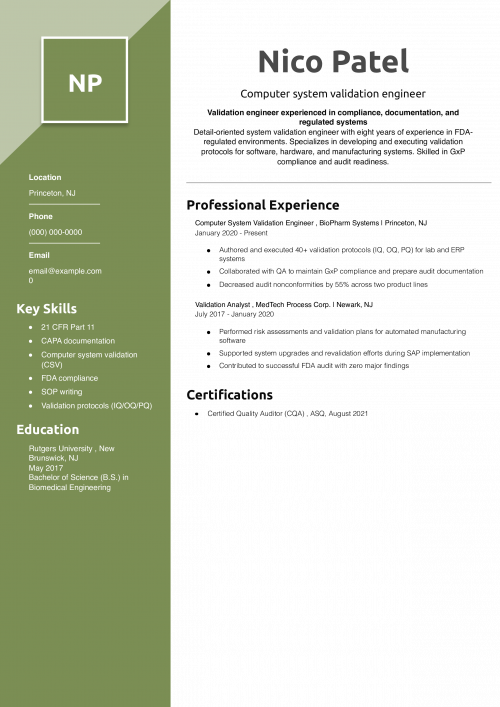
Nico’s resume focuses on validation frameworks and regulatory language that hiring managers in pharma and medical tech will expect. Including keywords like GxP and IQ/OQ/PQ shows immediate relevance. Learn more about targeting regulated fields in Resume Job Description.

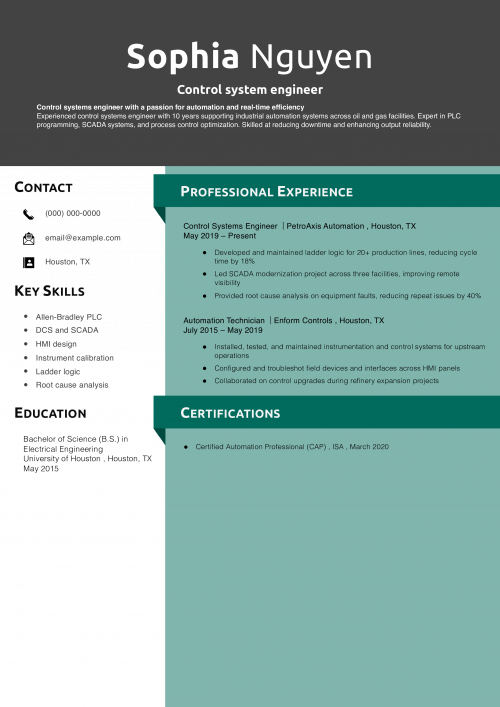
Sophia’s resume balances technical tools with tangible field results. Phrases like “reducing cycle time” and “SCADA modernization” connect daily tasks with high-value outcomes. Explore how to describe engineering results in Resume Action Words.

Amina’s resume integrates software depth with real-world application. She connects development tasks to functional improvements like startup speed and power savings. Her combination of device experience and technical clarity is powerful. Read more in How to Write a Resume Summary.
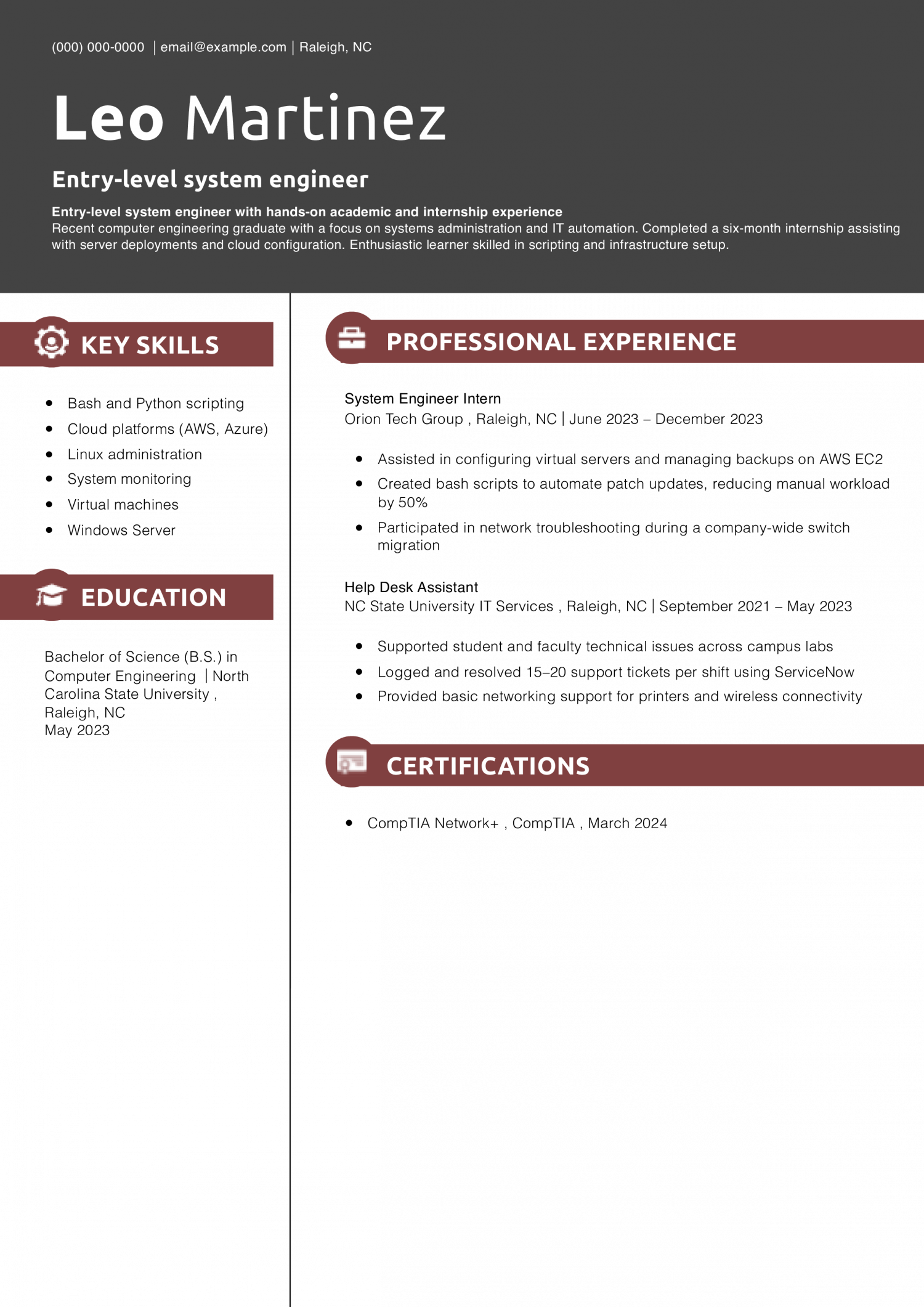
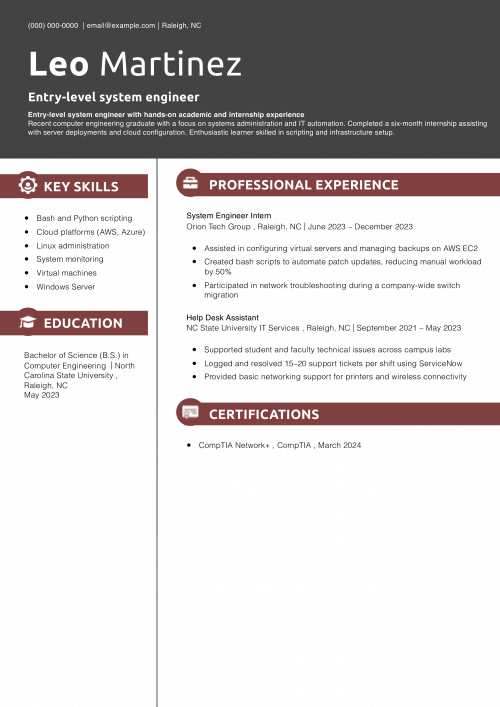
Leo’s resume highlights strong technical grounding with real examples from internships and on-campus support work. Including scripting and cloud tools helps demonstrate job readiness. Learn how to start your first resume in How to Write Your First Job Resume.
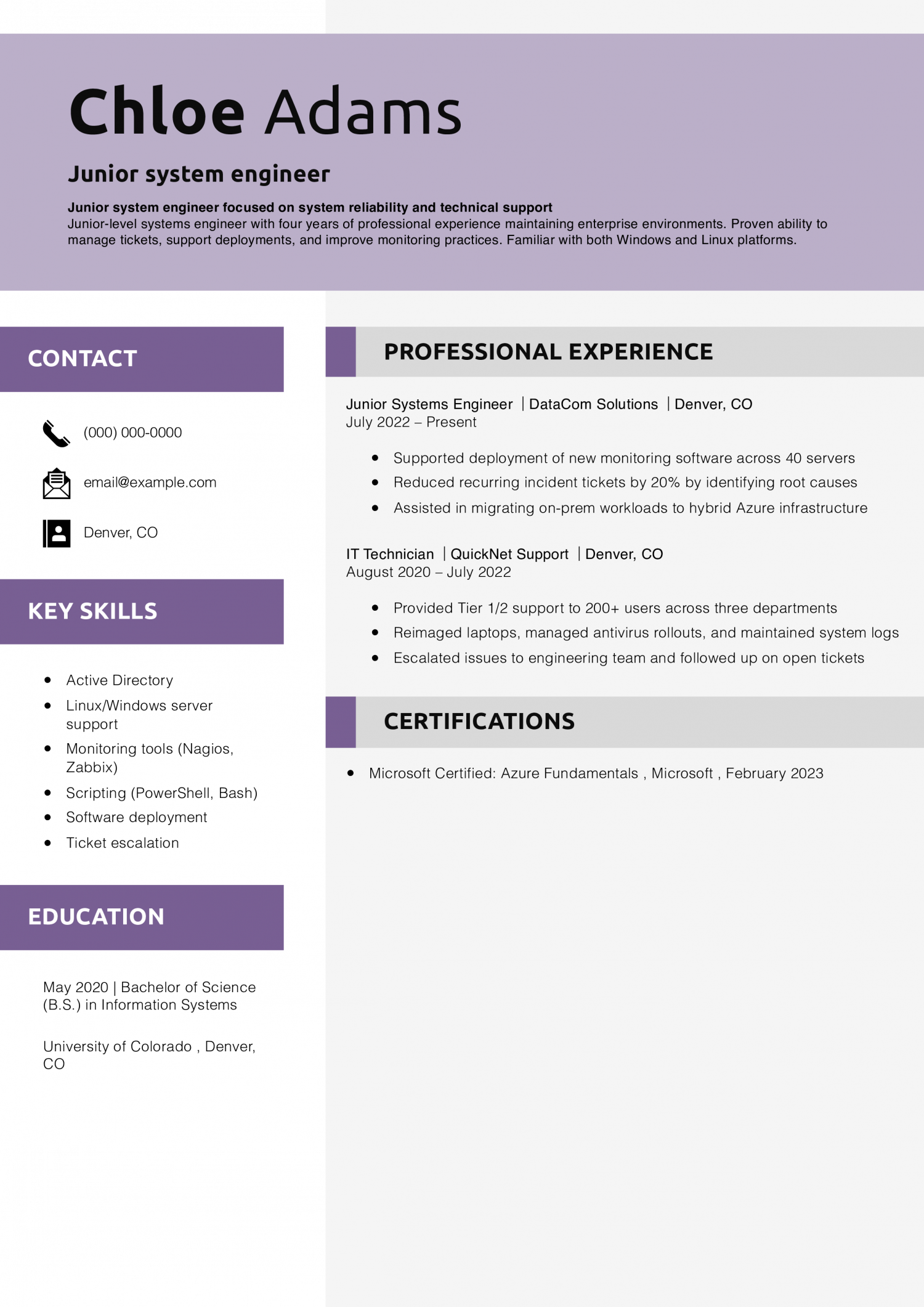
Chloe’s resume features action verbs and clear outcomes, like improving ticket efficiency and infrastructure monitoring. Each job adds to her reliability story. Learn more about effective structure in Best Resume Formats.
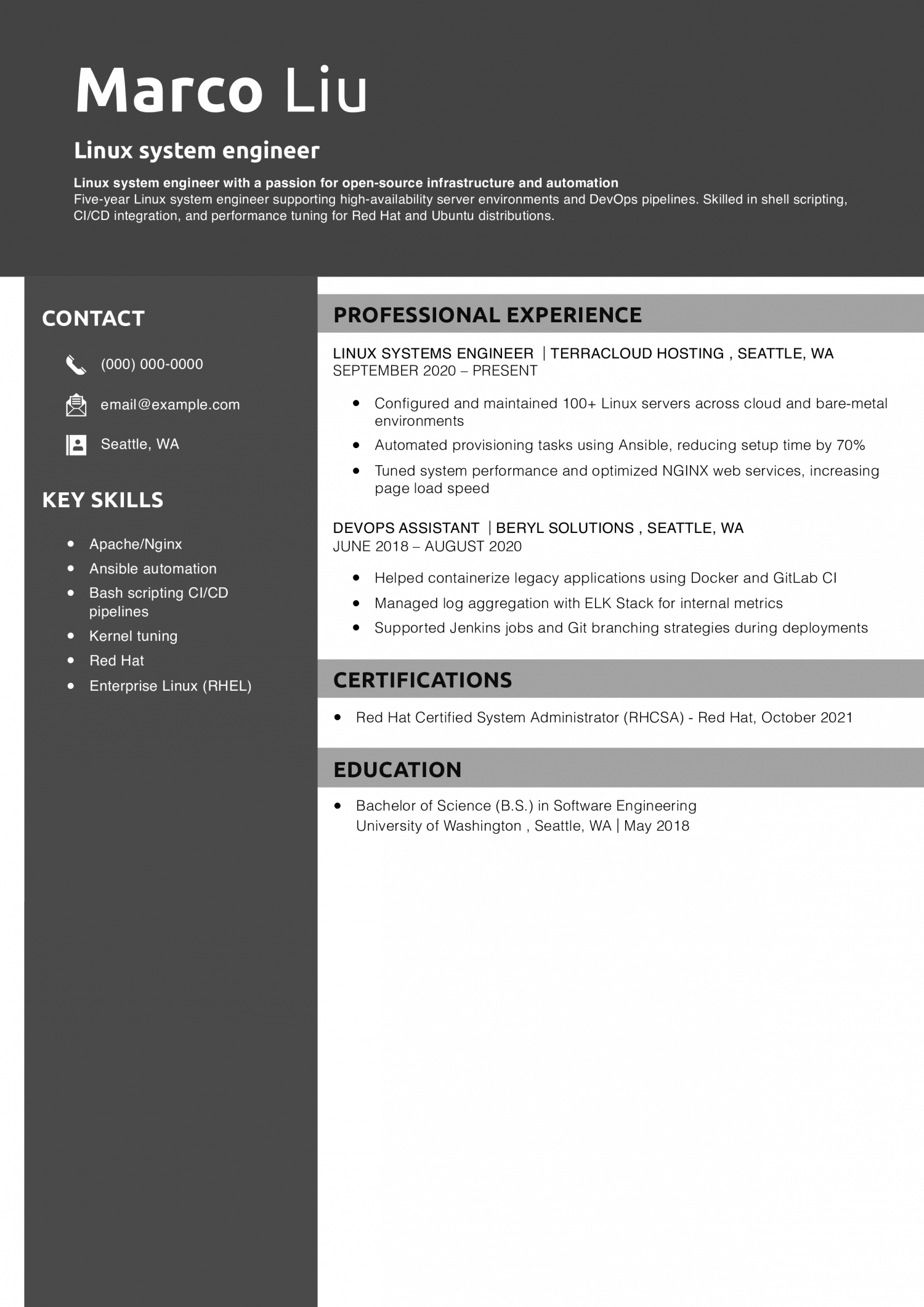
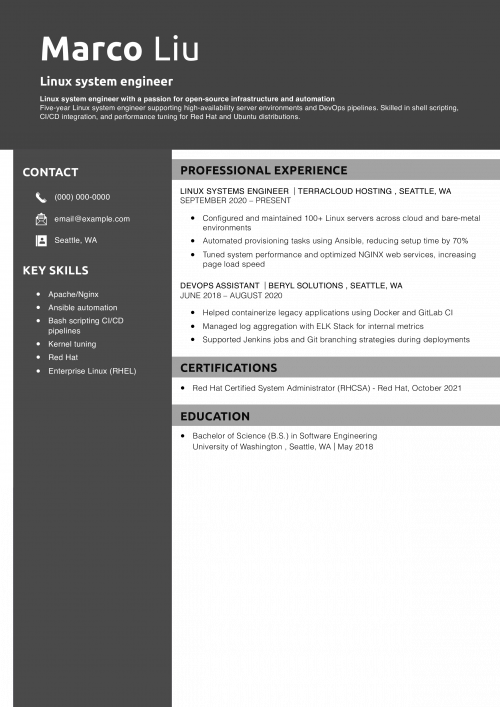
Marco’s resume emphasizes automation and open-source tools that hiring managers expect in a Linux-focused role. The use of performance metrics and DevOps vocabulary is strategic. Explore more keyword ideas in Resume Keywords.
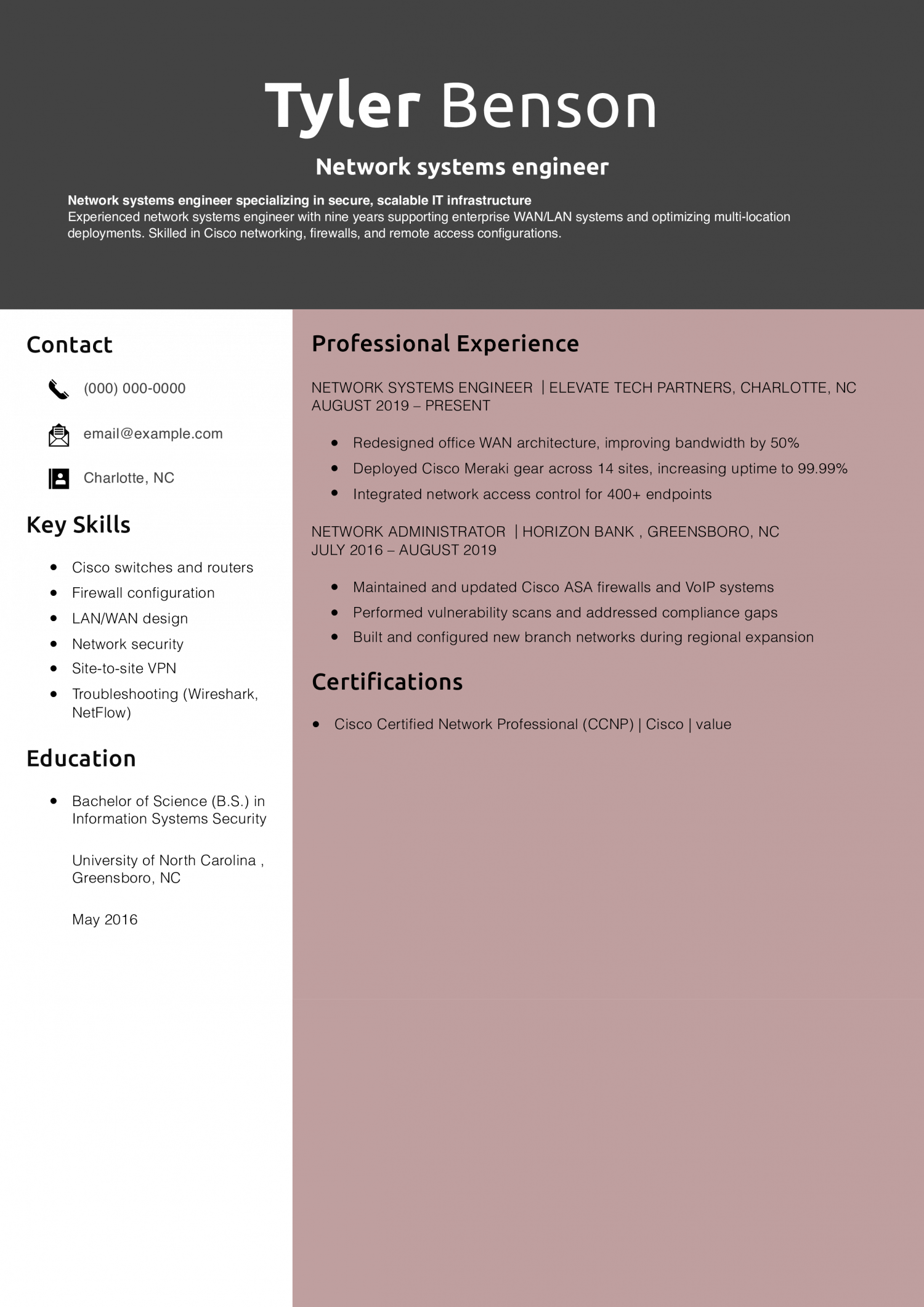
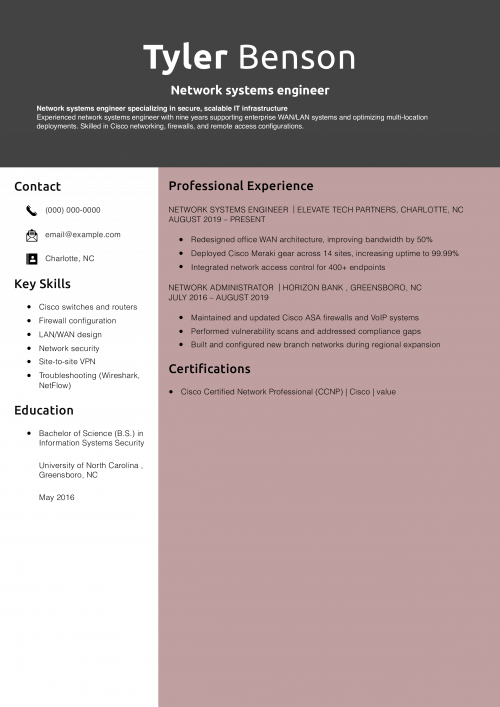
Tyler’s resume reflects his ability to manage complex systems at scale. Metrics like uptime and bandwidth gains offer clear value. For more on framing technical work clearly, see Resume Job Description.

Fatima’s resume uses specialized language relevant to utility engineering. The inclusion of PE licensure and specific projects strengthens her credibility. Want to showcase certifications effectively? Check out How to List Degrees on Resume.
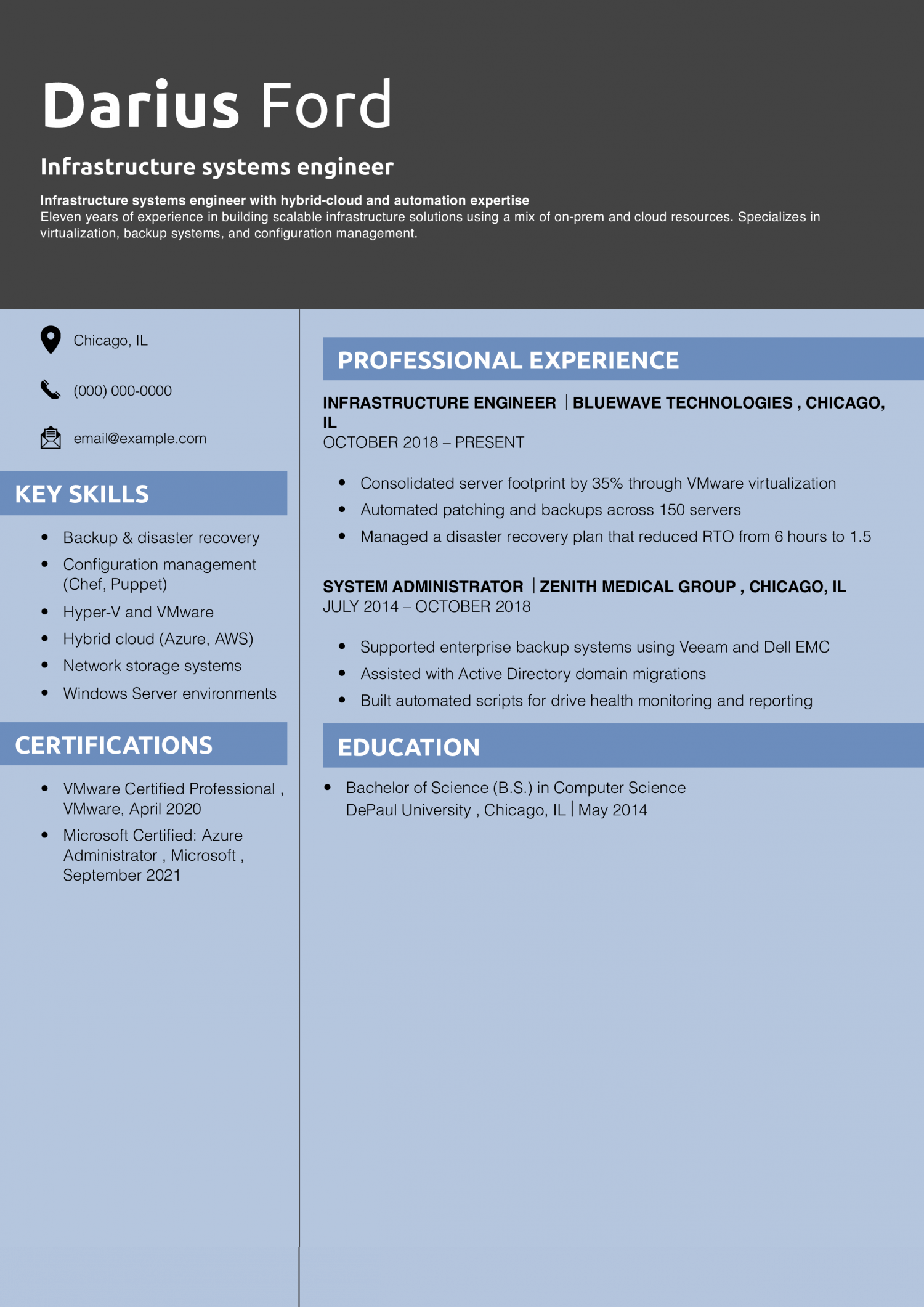
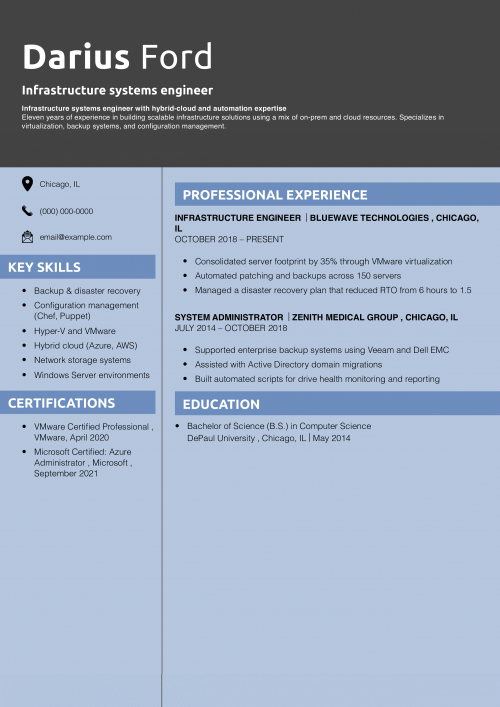
Darius combines infrastructure management and disaster recovery with automation. His metrics, such as reduced recovery times, clearly show value. Learn more about presenting infrastructure skills at Technical Skills in IT Resume.
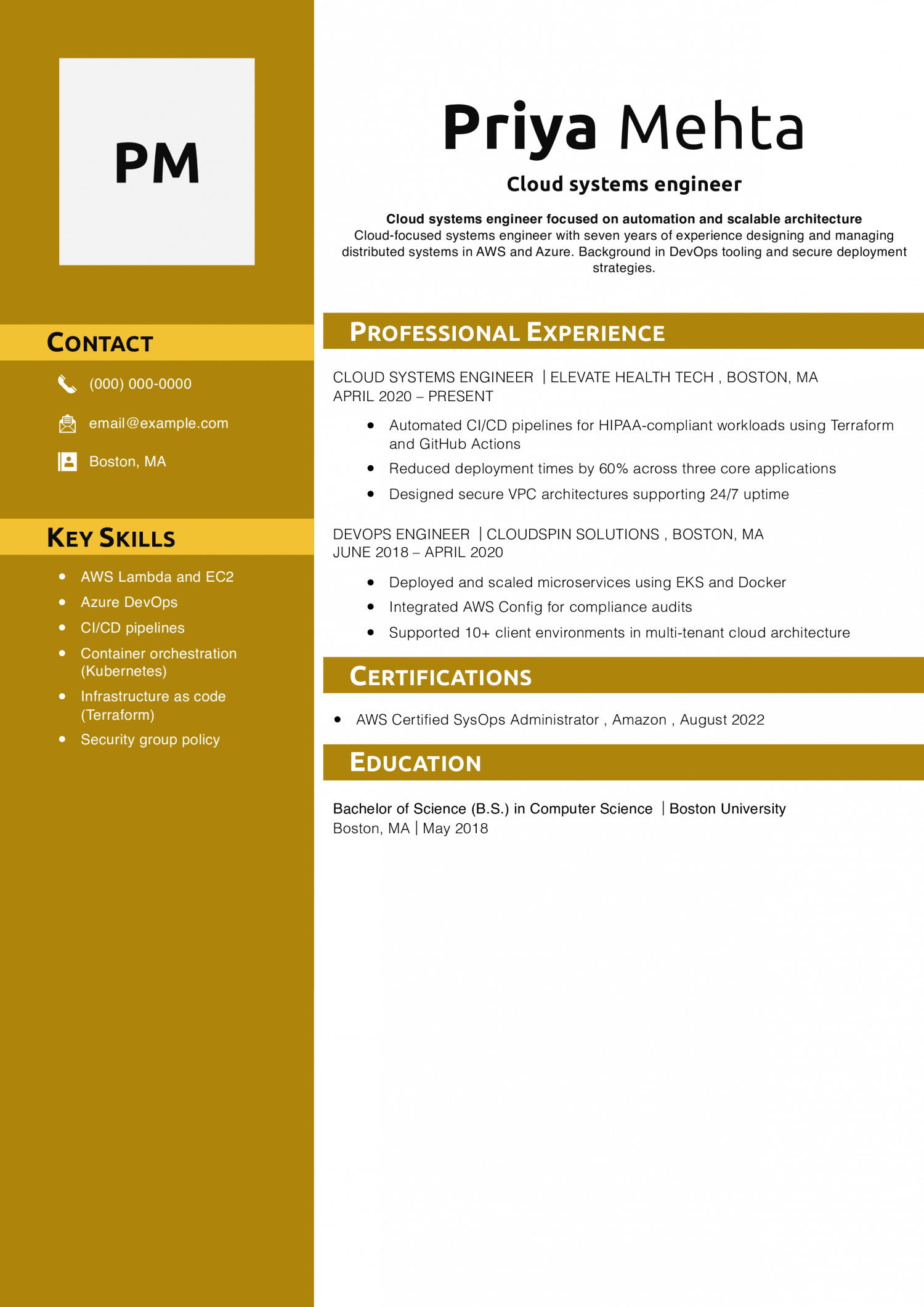
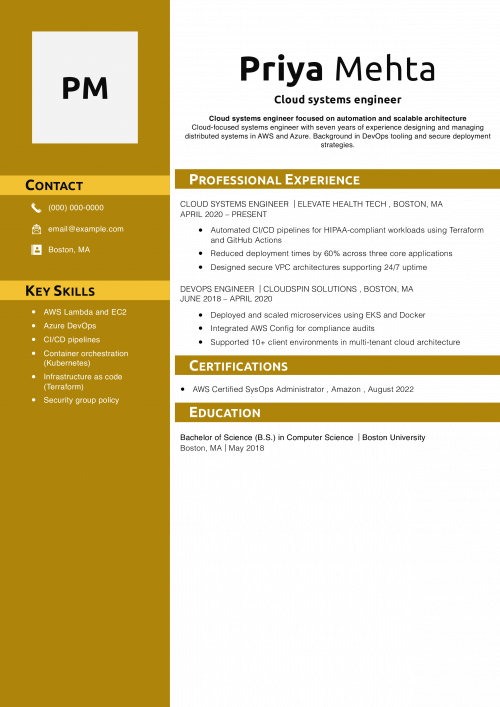
Priya’s resume uses the language of modern cloud engineering—DevOps, automation, and compliance. She quantifies impact through deployment speed and uptime. See more ways to modernize your experience in How to Make a Resume.
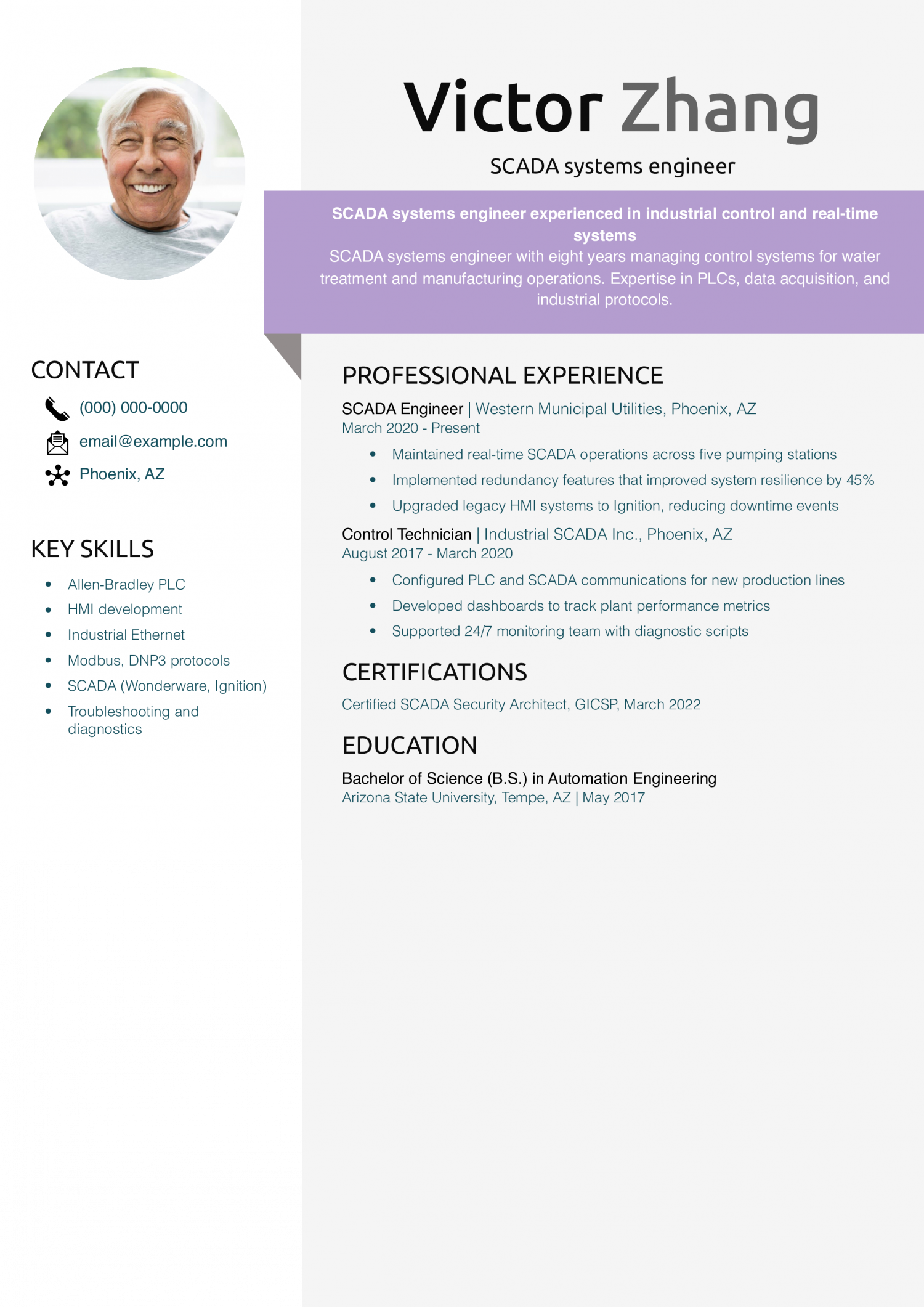
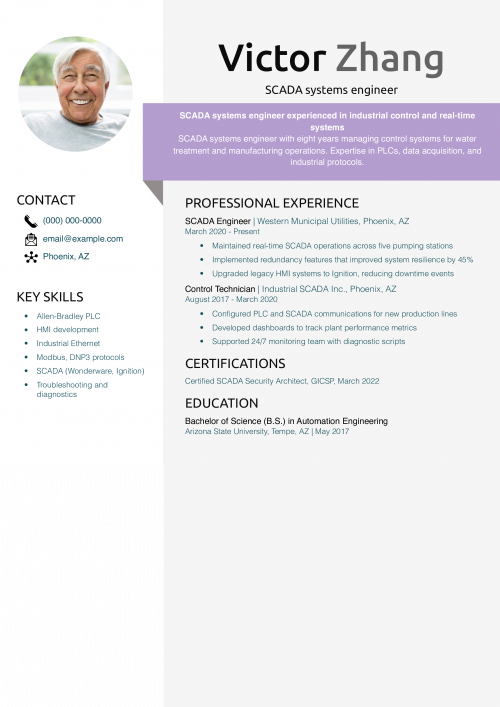
Victor’s resume uses SCADA-specific terms and shows how his changes improved reliability and visibility. Including industry certifications also adds weight. Want to ensure your layout works for tech resumes? Read Best-Looking Resumes.
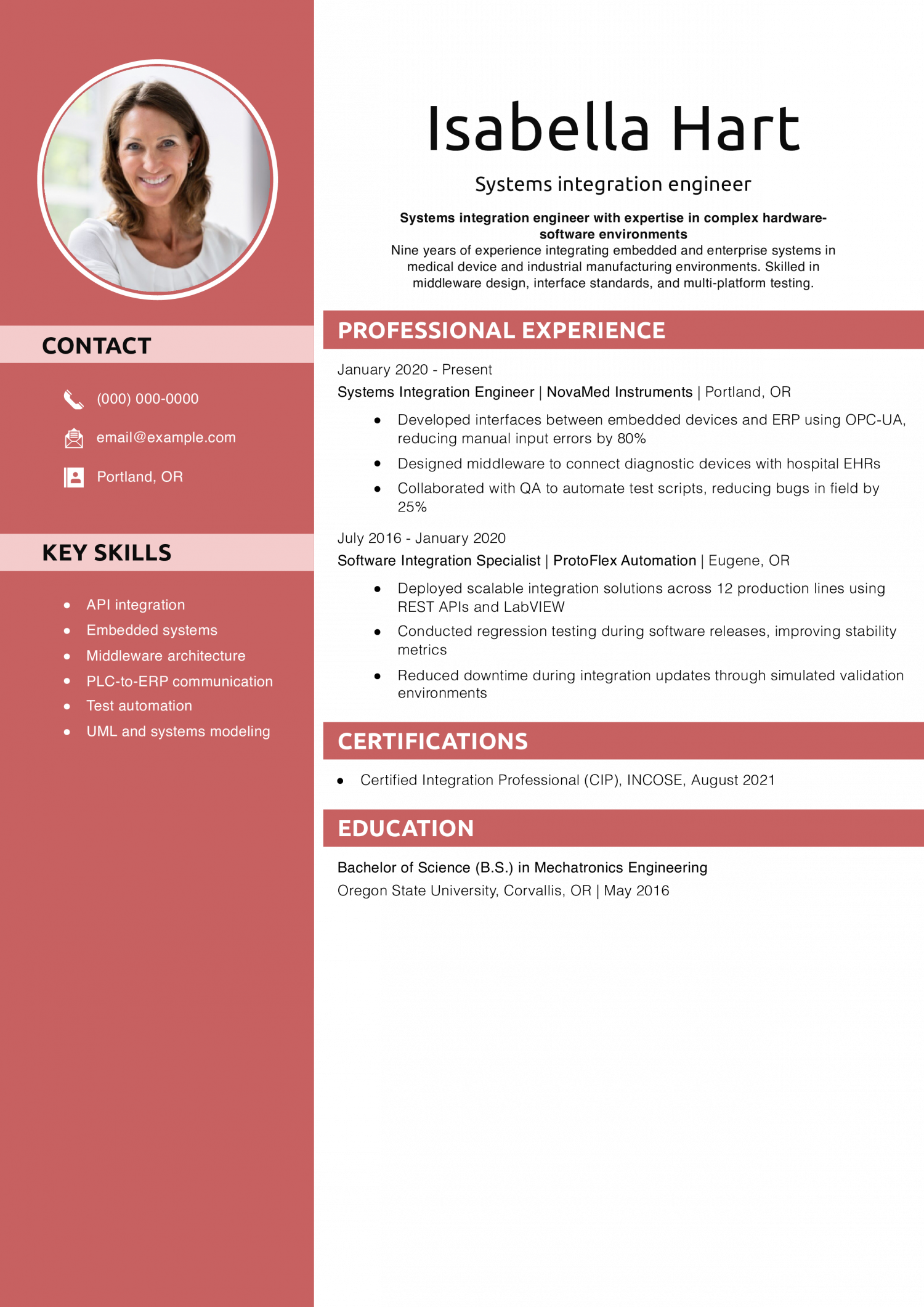
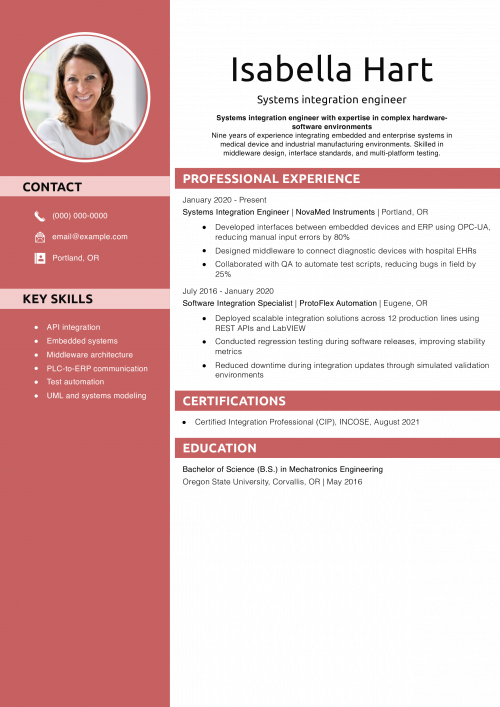
Isabella showcases her ability to bridge devices, platforms, and data systems with measurable results. This clarity around integration work helps recruiters grasp her technical impact. For advice on writing your profile, check out How to Write a Convincing Resume Profile.
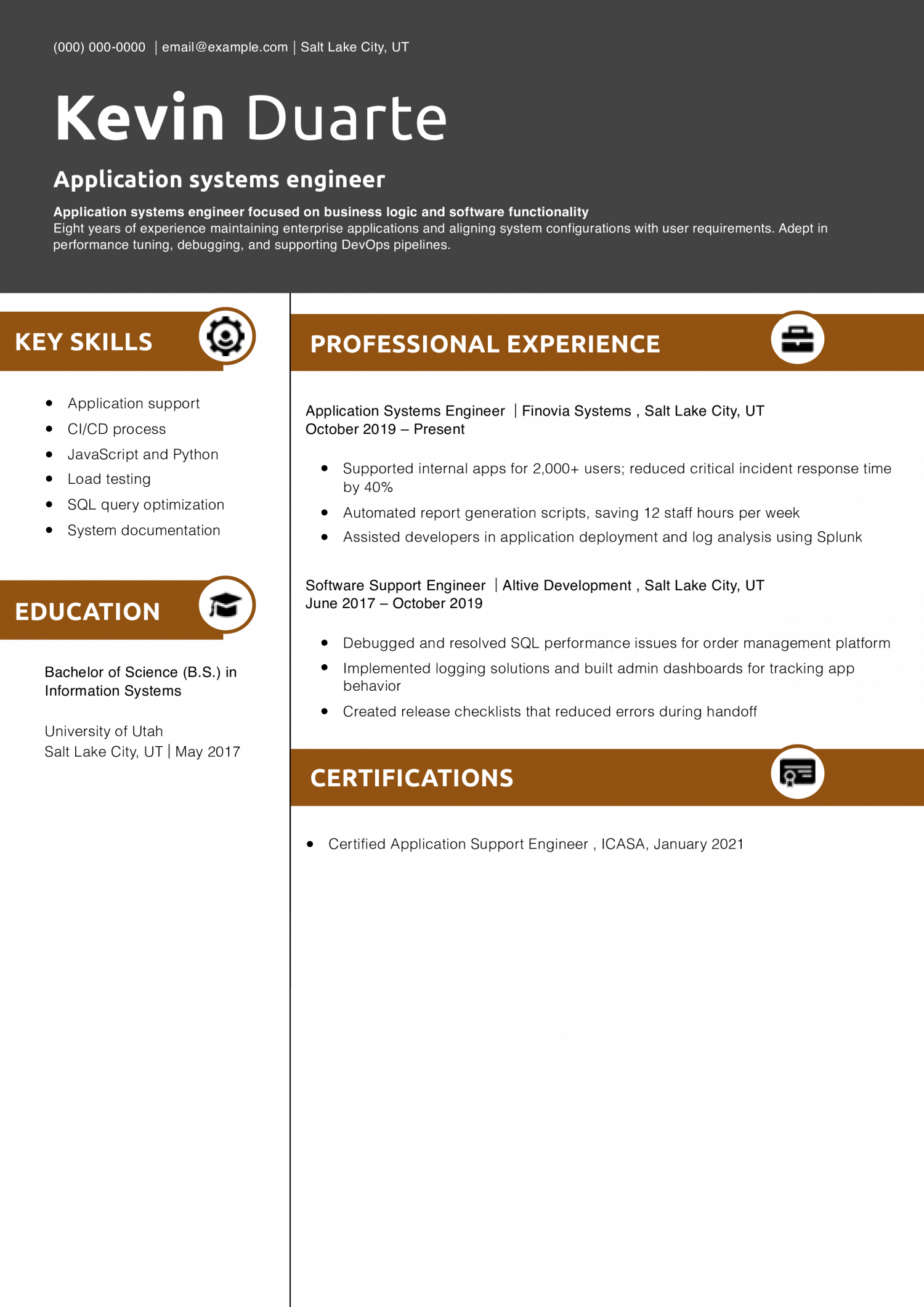
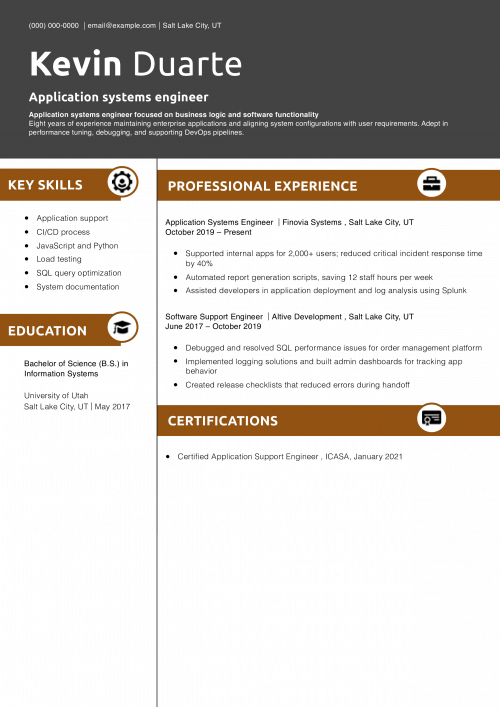
Kevin’s resume clearly shows how he supports and enhances enterprise-level systems. The result-driven metrics and automation details give weight to his contributions. Explore ways to list tech projects at Resume Personal Statement Examples.

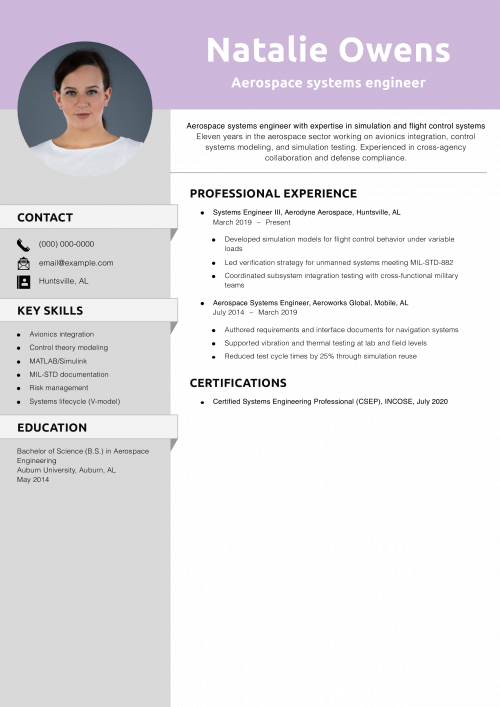
Natalie tailors her resume to the aerospace industry by including defense standards and systems engineering models. Her use of quantifiable outcomes strengthens each project. Learn how to apply precision in your wording at Resume Action Words.
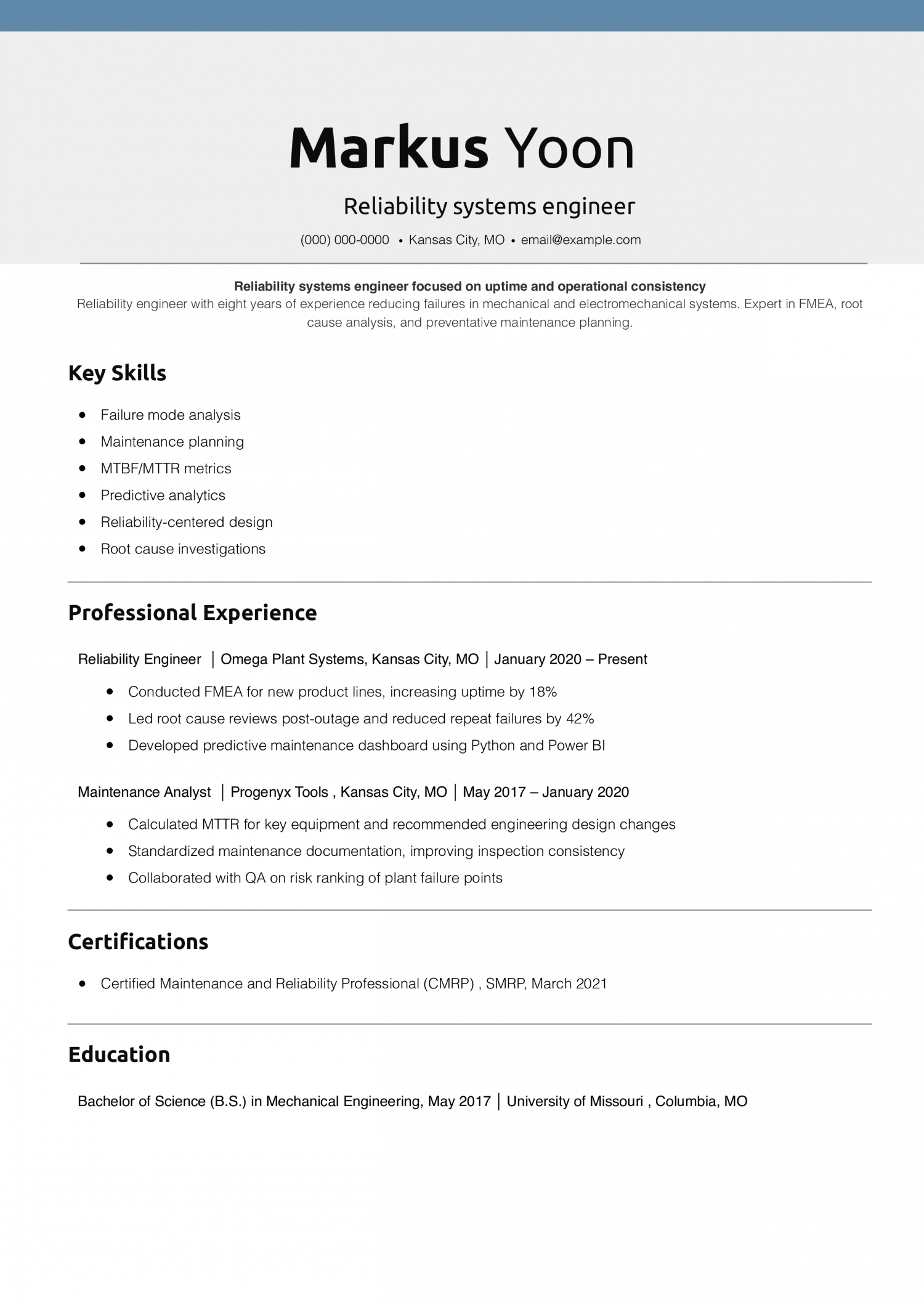
Markus’s resume focuses on specific reliability practices and quantifiable system improvements. The clarity in describing maintenance metrics builds trust. Learn how to write clear metric-based bullets with How to Use Bullet Points on a Resume Effectively.

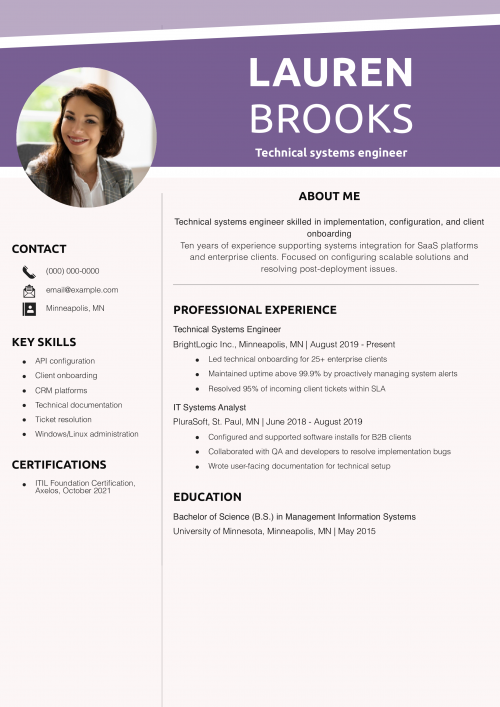
Lauren’s experience spans client interaction and deep technical work. Her metrics show reliability and responsiveness, two traits hiring managers value. Learn more at How to Show a Promotion on a Resume.
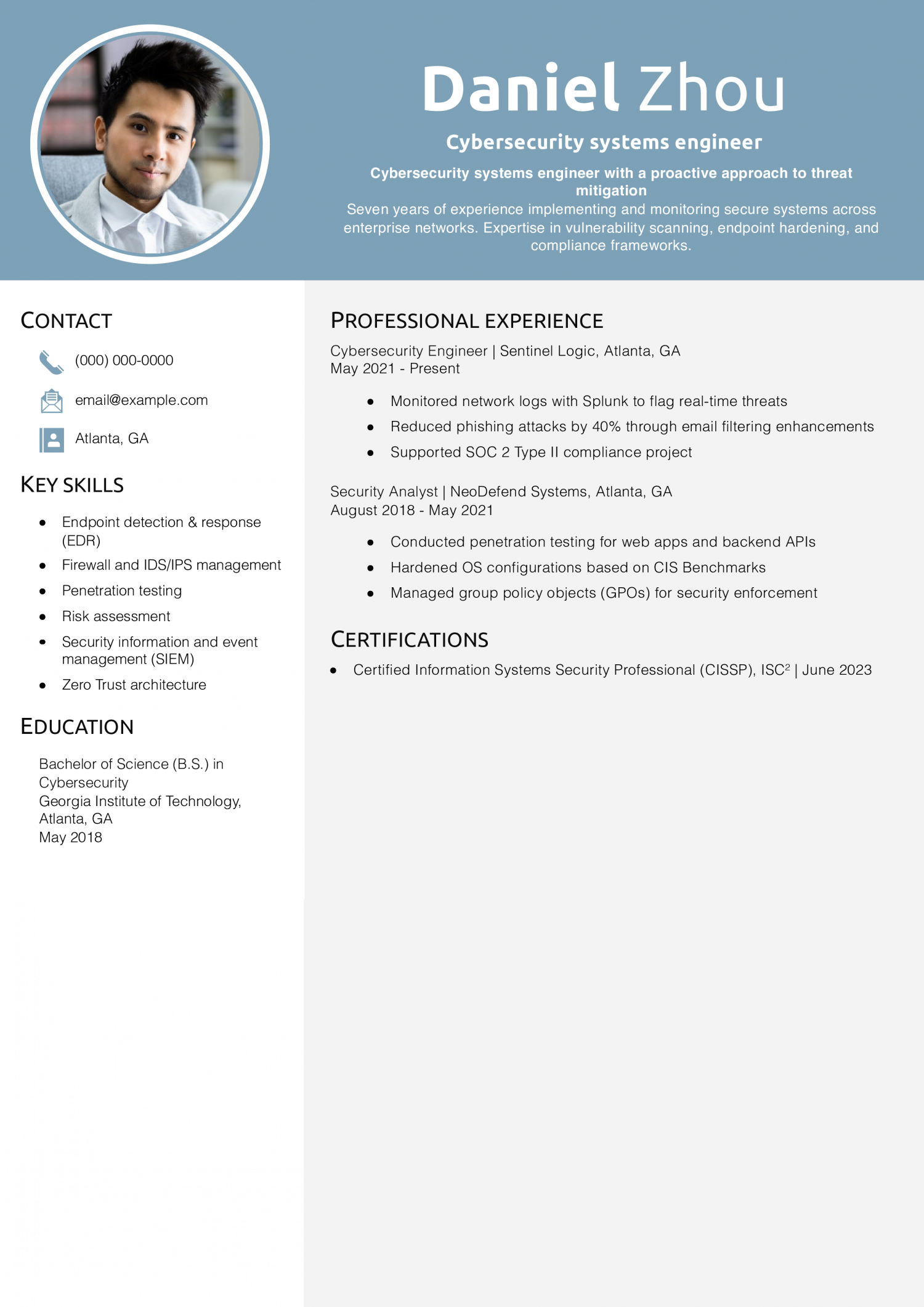
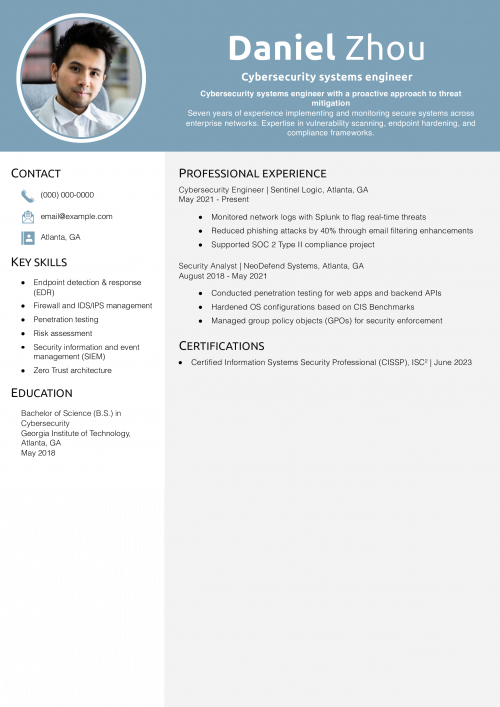
Daniel’s resume highlights specific security tools and protocols that resonate with employers. Clear metrics on threat reduction add value. Learn how to organize resumes for specialized roles in Resume and Career Guide for People with Disabilities.
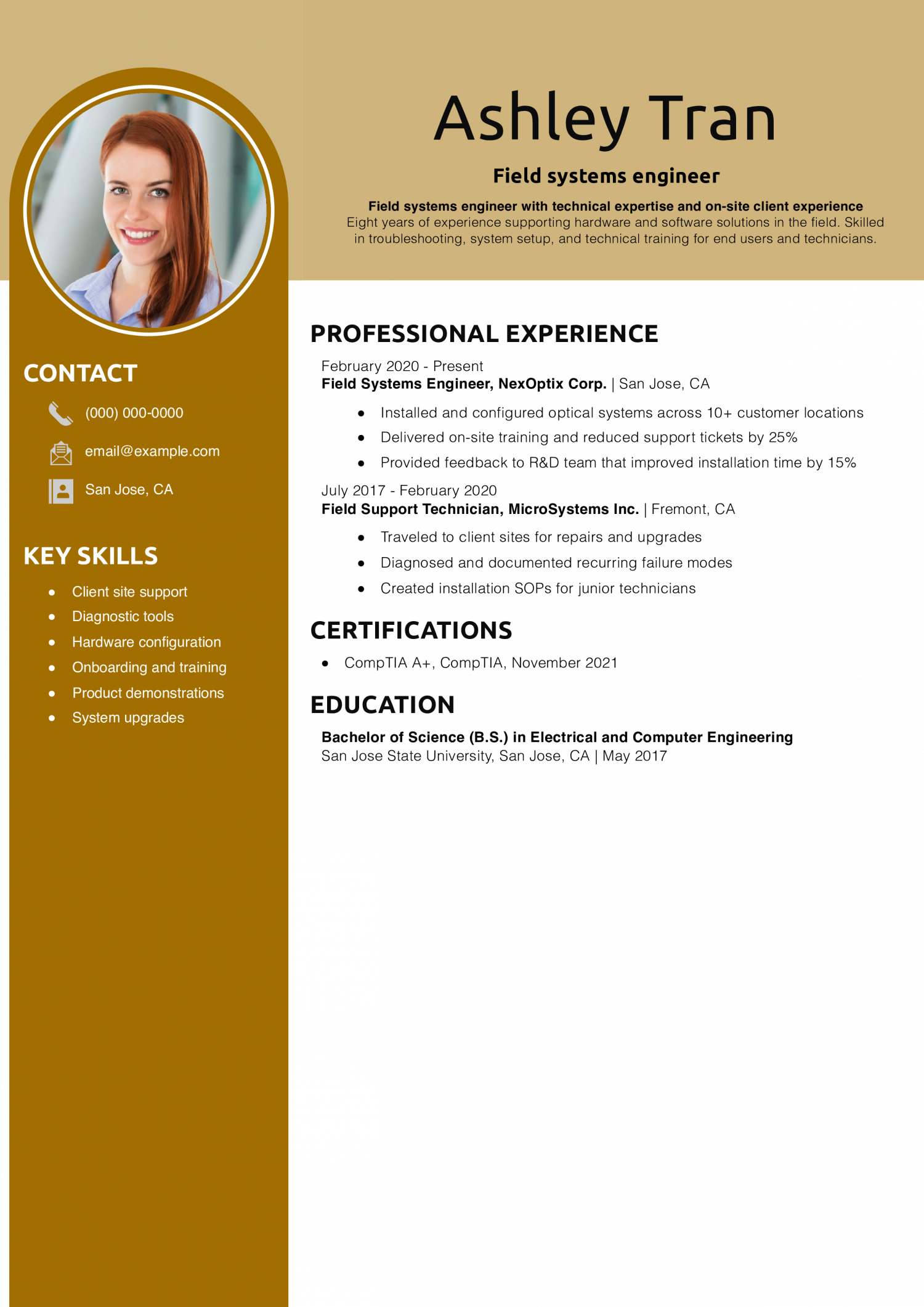
Ashley’s resume effectively shows her client-facing skills and technical ability in a mobile role. It’s clearly structured and results-driven. Want tips on strong resume headlines? See Headline Examples for Your Resume.
Your professional systems engineer resume should usually include these sections:
Below are tips and samples to help you organize each resume section.
Give your full name, phone number, email address, location, and links to any online professional profiles. Ensure your contact information is current so employers can reach you for an interview.
Your Name
(123) 456-7890 | [email protected] | City, ST 09876 | LinkedIn
You can impress hiring managers at the top of your resume by giving the three to five primary reasons you’ll excel as their next professional systems engineer. These key selling points may include your:
(Note: Most job seekers find it easier to write their profile last.)
Professional systems engineer with over 10 years of experience developing and maintaining enterprise-level IT infrastructures. Specialize in automation, cloud services, and cybersecurity frameworks. Proven success in designing scalable architectures that reduce downtime and streamline operations.
For each job in your recent work history, brainstorm your various duties and achievements on a separate document or sheet of paper. Then, review your notes in light of your target job, and choose the most relevant ones to feature as bullet points in this section. By filtering your information this way, you can create an experience section that’s both detailed and engineering-focused.
Field Systems Engineer, NexOptix Corp., San Jose, CA | February 2020 – present
When possible, use relevant performance data to measure the results you’ve achieved as a professional systems engineer. Hard numbers like percentages and dollar amounts put your work in context and give recruiters a better sense of your impact.
Before sending your resume, review it carefully against the job posting. Delete any details that don’t speak to the requirements, and consider using that space for more information about your relevant experience. This process takes extra time, obviously. But it can shorten your overall job search by giving you an edge over the many applicants who send a more general, less convincing resume.
Writing a resume can be hard if you don’t have real-world experience. But remember, you still have valuable skills and knowledge from your education and training. Include any relevant coursework you’ve completed or certifications you’ve earned. Also, describe volunteer roles or internships you’ve held in your field, and emphasize your work ethic and willingness to learn. By focusing on these qualities, you can show you’d be an asset to any team.
Each degree or credential in this section endorses your knowledge, skills, and professionalism. Following are templates to help you organize this information on your resume (note, years are optional).
Template:
[Degree Name], [School Name], [City, ST] | [Graduation Year]
[Relevant honors, coursework, or activities]
Example:
Bachelor of Science (B.S.) in Computer Engineering, University of Texas, Austin, TX
Template:
[Certification Name], [Awarding Organization] | [Completion Year]
[Description if the credential is lesser-known but relevant]
Example:
Certified Systems Engineering Professional (CSEP), INCOSE | 2022
A separate skills section lets you quickly display the various ways you can add value to an organization. Below, you’ll find some key terms and skills to consider for this section:
| Key skills | |
|---|---|
| Active Directory | Automation scripting |
| Business data analysis | Cloud architecture |
| Configuration management | Cross-functional collaboration |
| Cybersecurity compliance | Disaster recovery planning |
| Infrastructure as code (IaC) | Linux/Unix systems |
| Network administration | Performance tuning |
| PowerShell | Project lifecycle management |
| Requirements definition | Risk mitigation |
| Root cause analysis | Scalability design |
| Security protocols | Server maintenance |
| System integration | Technical troubleshooting |
| Virtualization | |
Start each bullet point with a strong action verb. Dynamic verbs help you keep the hiring manager’s attention and tell a compelling story about your experience.
The following list can help you find a good mix of action verbs for your professional systems engineer resume:
| Action verbs | |
|---|---|
| Advised | Analyzed |
| Clarified | Collaborated |
| Configured | Coordinated |
| Created | Decreased |
| Defined | Designed |
| Developed | Engineered |
| Enhanced | Focused |
| Found | Generated |
| Grew | Improved |
| Increased | Integrated |
| Introduced | Lowered |
| Maintained | Managed |
| Operated | Organized |
| Partnered | Prevented |
| Ranked | Reduced |
| Replaced | Reversed |
| Streamlined | Updated |
| Won | |
Choose a template that’s clear and straightforward, and avoid any template with elaborate graphics or various colors and font styles. Simple resume design helps a hiring manager scan for relevant information. It also helps you tailor the document to each job application and update your work history going forward. (Tip: When given the option, save and submit your resume as a PDF file to preserve formatting across screens and systems.)
Focus on editing your skills section. With just a few quick changes to this section, you can further hone your resume and help it get past screenings by applicant tracking systems (ATS).
First, take a close look at the job posting and highlight any skills required. Then, compare those highlighted terms against your resume's skills section. Delete any skills from your list that don't appear in the job posting, and add any missing skills of yours that do.
Say the job posting calls for experience in training new hires, which you have. Add the phrase "New hire training" to your skills section so ATS and human readers can see you have the leadership ability they're looking for.
The combination (or hybrid) format, because it lets you present yourself both clearly and strategically. According to job search experts Wendy Enelow and Louise Kursmark, this format "gives you many opportunities to share your specific successes.... It offers immense flexibility in an easy-to-follow structure."
A combination resume has these two features:
A good cover letter sharpens your job application by answering the question, Why are you interested in this particular job? As with starting your resume, brainstorm your thoughts on a separate document or paper and then choose the most compelling ones as your foundation. When possible, quote or paraphrase text from the job posting and explain why it caught your attention.
Executive Resume Writer and Career Coach
Andrew Stoner is an executive career coach and resume writer with 17 years of experience as a hiring manager and operations leader at two Fortune 500 Financial Services companies, and as the career services director at two major university business schools.
Resume Templates offers HR approved resume templates to help you create a professional resume in minutes. Choose from several template options and even pre-populate a resume from your profile.

