Supervisor Resume Examples and Templates for 2026



COOs and CEOs decide whether to keep reading by the top third of page one; if P&L scope, headcount, and a margin or throughput number aren't visible by then, the resume gets passed to the recruiter for the second-tier stack.
This profile fits operators running a single business unit, region, or function with full P&L accountability. Your resume needs to prove dollars managed, headcount led, and the throughput or margin gains you delivered against plan.
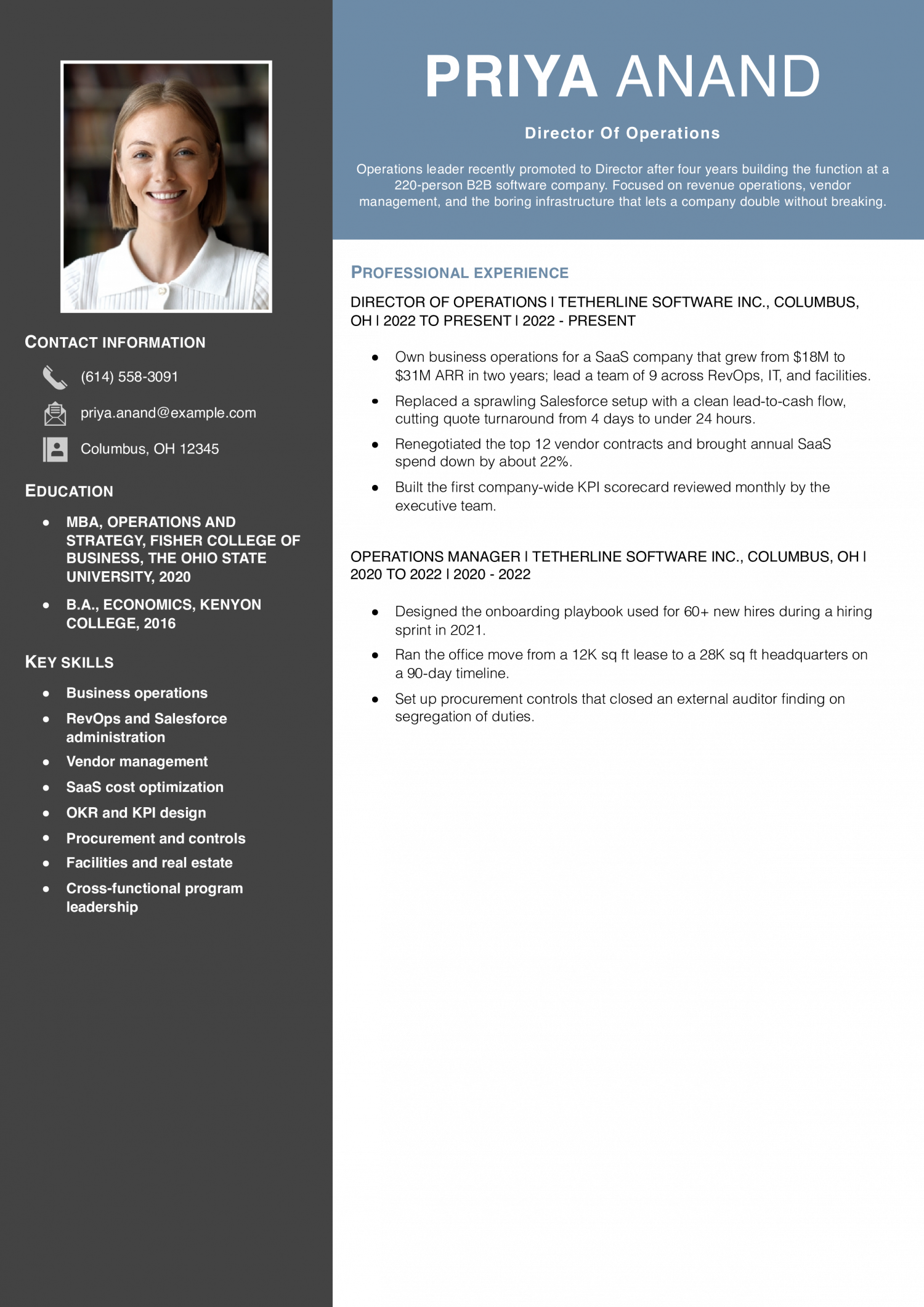
This profile fits enterprise operators reporting to the COO or CEO across multiple sites, business units, or geographies. Your resume needs to prove board-facing scope, integration or transformation wins, and the executive team you built underneath you.
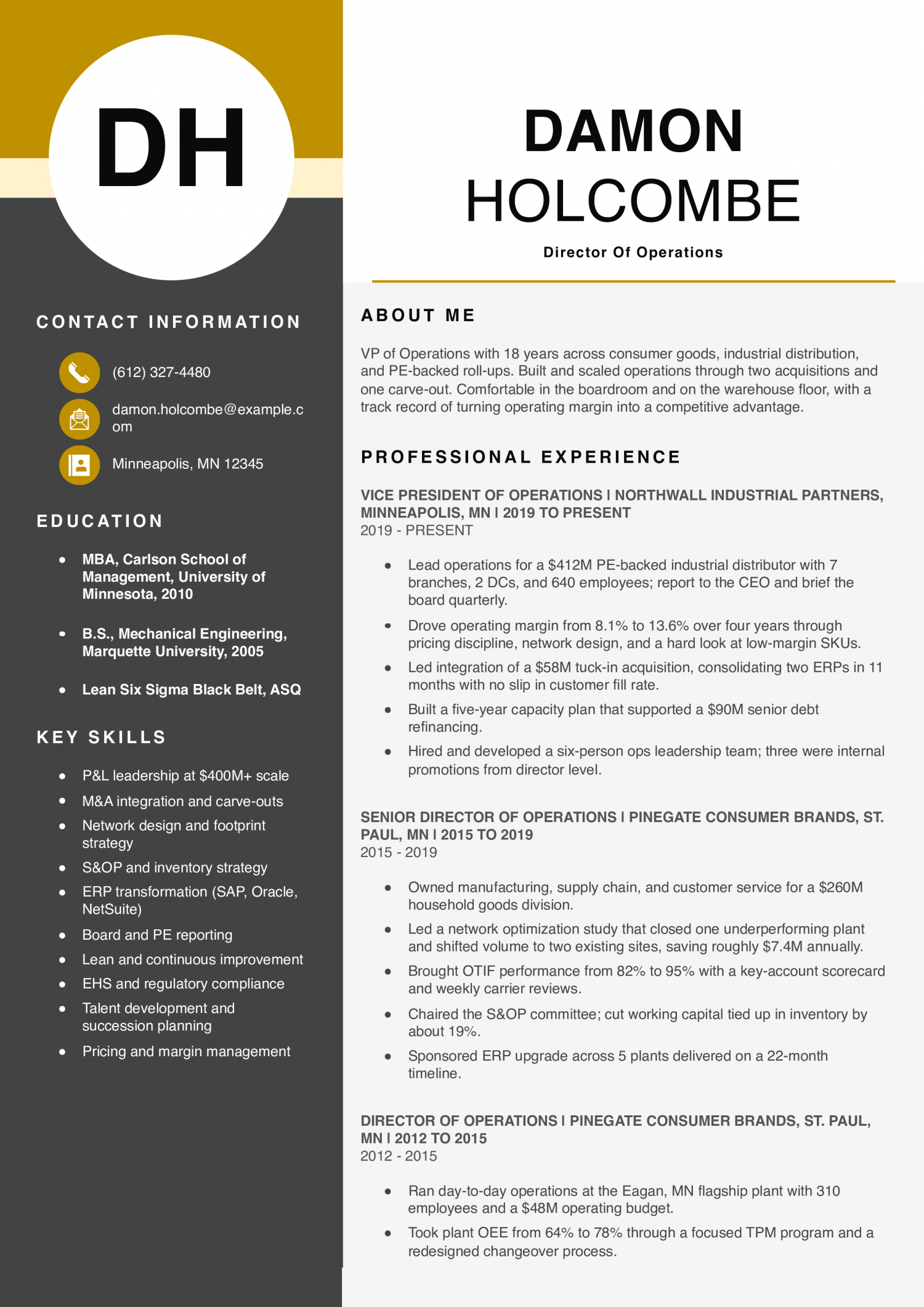
Operations executive with 15 years across e-commerce, healthcare services, and contract manufacturing. Built operations functions from 12 people to 380 and led a successful Series C raise as the operating partner to the CEO. Strongest in environments where the business is growing faster than the systems can handle.
Lead your summary with P&L scope, headcount, and one outcome. Not years, not adjectives.
A COO reads the first two lines to size your operating weight. Name the dollars you owned, the FTEs you led, and the sites or business units in your span.
A strong opener reads: Operations leader with $180M P&L, 14 sites, and 420 FTEs across the Midwest, with three straight years of EBITDA growth above plan.
That one line answers scope, scale, and result. Skip the mission statement and the soft-skill stack.
Operations bullets without numbers read as duties, not wins. COOs and CEOs scan for three metric families: financial, throughput, and people.
Financial: EBITDA delta, OPEX reduction, working capital freed, gross margin points. Throughput: cycle time, OEE, on-time-in-full, SLA attainment.
People: attrition, span of control, internal promotion rate. Most strong bullets pair the lever you pulled with the number it moved.
Bullets like ‘cut order-to-cash cycle from 38 to 22 days across four DCs’ tend to advance further than ‘improved efficiency.’ Aim for a number in roughly two-thirds of your bullets.
Cluster bullets under the categories COOs already track in their own scorecards.
Use four groups: P&L and financial performance, operations and supply chain, organizational design and talent, and transformation or integration work.
Under P&L, name the budget cycle you owned and the variance you held. Under supply chain, name the S&OP cadence, ERP, and KPI suite.
Under talent, name the layer you built (managers of managers, plant directors). Under transformation, name the program: ERP cutover, post-merger integration, lean rollout, or PE value-creation plan.
A page-one credentials and tools strip earns its space for senior operators.
List your MBA or undergraduate degree, then certifications like Lean Six Sigma Black Belt, PMP, or APICS CPIM or CSCP. Add the ERP and planning stack you ran: SAP, Oracle, NetSuite, Anaplan, Kinaxis, Power BI.
If you’ve operated under private equity, name the firm tier or the value-creation play (carve-out, bolt-on integration, 100-day plan). Search firms and PE operating partners screen for that signal in the top third of page one before they read bullets.
Senior operations resumes get longer than they should. Two pages is the ceiling for most director of operations candidates; three only if you have 20-plus years and PE or public-company scope.
Cut early-career bullets older than 15 years to one line each. Drop the skills-cloud of soft traits, the objective statement, and any bullet without a noun and a number.
Remove tool names you used once. Keep the stack you actually ran the business on. Trim the summary to four lines.
ATS filters catch more director of operations resumes than ever in 2026. The skills below come from our user-built director of operations resumes. P&L scope and ERP system names clear the first cut, and how you describe cross-functional leadership decides whether the resume advances.
COOs and CEOs weigh hard skills as table stakes and soft skills as the read on whether you’ll fit their operating cadence. The hard skills get you parsed; the soft skills get you a screen. Match the hard skills against the target posting word-for-word, and treat each soft skill as a claim you back with a bullet later in the resume.
| Soft Skills | % of resumes with this skill |
|---|---|
| Leadership | 73% |
| Cross-functional collaboration | 66% |
| Strategic decision-making | 49% |
| Communication | 38% |
| Problem-solving | 26% |
And here are the top hard skills showing up most often.
| Hard Skills | % of resumes with this skill |
|---|---|
| Operations management | 71% |
| Budget and P&L management | 65% |
| Process improvement | 50% |
| Project management | 39% |
| Supply chain management | 30% |
Based on data from thousands of directors of operations’ resumes built on ResumeTemplates.com, May 2026.
These are the must-haves hiring teams look for when scanning a director of operations resume.
COOs and CEOs expect to see the language of their own operating model on your resume. Group your keywords by the sub-niche of operations you actually run so the ATS parse and the human read agree.
| Niche | Keywords ATS scans for |
|---|---|
| P&L and financial operations | p&l management, ebitda growth, opex reduction, budget variance |
| Supply chain and S&OP | s&op cadence, demand planning, inventory turns, on-time in-full |
| Continuous improvement | lean six sigma, kaizen, value stream mapping, oee improvement |
| Multi-site and field operations | multi-site operations, regional director, field operations, site consolidation |
| PE and transformation work | private equity portfolio, 100-day plan, post-merger integration, carve-out |
AI use on a director of operations resume can go three ways: lead with ‘AI-powered operator’ (which COOs screen out), leave it off entirely (which reads as out of touch in 2026), or describe the workflow as it actually runs across forecasting, SOP drafting, and exception reporting. The third is what COOs and CEOs can validate.
Forecast drafts run faster, but the operator still owns the assumptions, the scenario set, and the read-out to commercial leadership.
First drafts of SOPs and runbooks now come from AI; your value is the field validation and the version-control discipline behind them.
Natural-language queries against ERP and BI cut the analyst back-and-forth, so directors get to root cause hours earlier in a shift.
AI drafts board decks and variance commentary, but the narrative judgment and the numbers you stand behind stay with you.
Microsoft Copilot in Excel and Power BI: Used for variance analysis, KPI dashboards, and pulling exception reports without waiting on the analyst team.
ChatGPT or Claude with enterprise data controls: Used for SOP first drafts, communication templates, and scenario modeling before review by finance and HR.
Lead the summary with enterprise scope: dollars of P&L, business units, geographies, and the executive team layer you led.
Name the board or executive forums you presented in: quarterly business reviews, audit committee, value-creation committee, or operating partner meetings.
If you’ve held the COO or general manager title, or acted in either capacity, say so in plain language with the duration and scope.
Directors of operations run programs more than projects, and COOs read the methodology line to gauge how you’ll handle the integration, ERP cutover, or transformation already on their roadmap.
Lean and Six Sigma deployment across three plants, with 14 Green Belt projects closed in 18 months
Stage-gate program management for capital projects above $5M, partnered with the CFO on gate approvals
Agile and Scrum operating cadence for the digital operations team, with two-week sprints and a quarterly OKR review
PMO build-out covering 22 active programs, with a standardized intake, prioritization, and status reporting model
Beyond your degree, the certifications below tell COOs and CEOs which operating disciplines you actually run and how seriously you’ve invested in the craft. List the certifying body and the year earned next to each item, and put active credentials in your page-one credentials strip.
Lean Six Sigma Black Belt: Signals you can lead enterprise process work, not just sit in on it. Name the certifying body (ASQ, IASSC, or a corporate program) and the projects you led.
Project Management Professional (PMP): Carries weight on resumes touching ERP cutovers, integration work, or capital projects. PMI is the issuing body.
APICS CSCP or CPIM: Specific to supply chain and manufacturing operations. CSCP signals end-to-end supply chain fluency; CPIM signals deeper planning and inventory control.
Certified Manager (CM) or Executive MBA: Useful as a credibility marker for operators without an undergrad business degree, especially in PE-backed or public-company hiring.
The 90th-percentile director of operations out-earns the median by a wide spread, which tells you the market rewards P&L size, PE or public-company scope, and integration experience more than years in seat. Generalist breadth without dollar scope tends to flatten pay.
Lead your resume with the largest P&L you’ve owned, the most complex operating environment you’ve run, and the transformation work that moved EBITDA, not the count of years you spent getting there.
| # | State | Avg. Annual |
|---|---|---|
| 1 | District of Columbia | $167,270 |
| 2 | New Jersey | $149,990 |
| 3 | Delaware | $136,900 |
| 4 | South Dakota | $133,440 |
| 5 | Colorado | $130,340 |
| 6 | Washington | $130,240 |
| 7 | Connecticut | $130,230 |
| 8 | New York | $129,990 |
| 9 | California | $125,240 |
| 10 | Massachusetts | $123,850 |
| # | State | Workers | Median |
|---|---|---|---|
| 1 | Texas | 454,720 | $100,290 |
| 2 | California | 292,300 | $125,240 |
| 3 | Florida | 249,620 | $100,750 |
| 4 | New York | 210,890 | $129,990 |
| 5 | Illinois | 170,790 | $101,430 |
Resume Templates offers HR approved resume templates to help you create a professional resume in minutes. Choose from several template options and even pre-populate a resume from your profile.
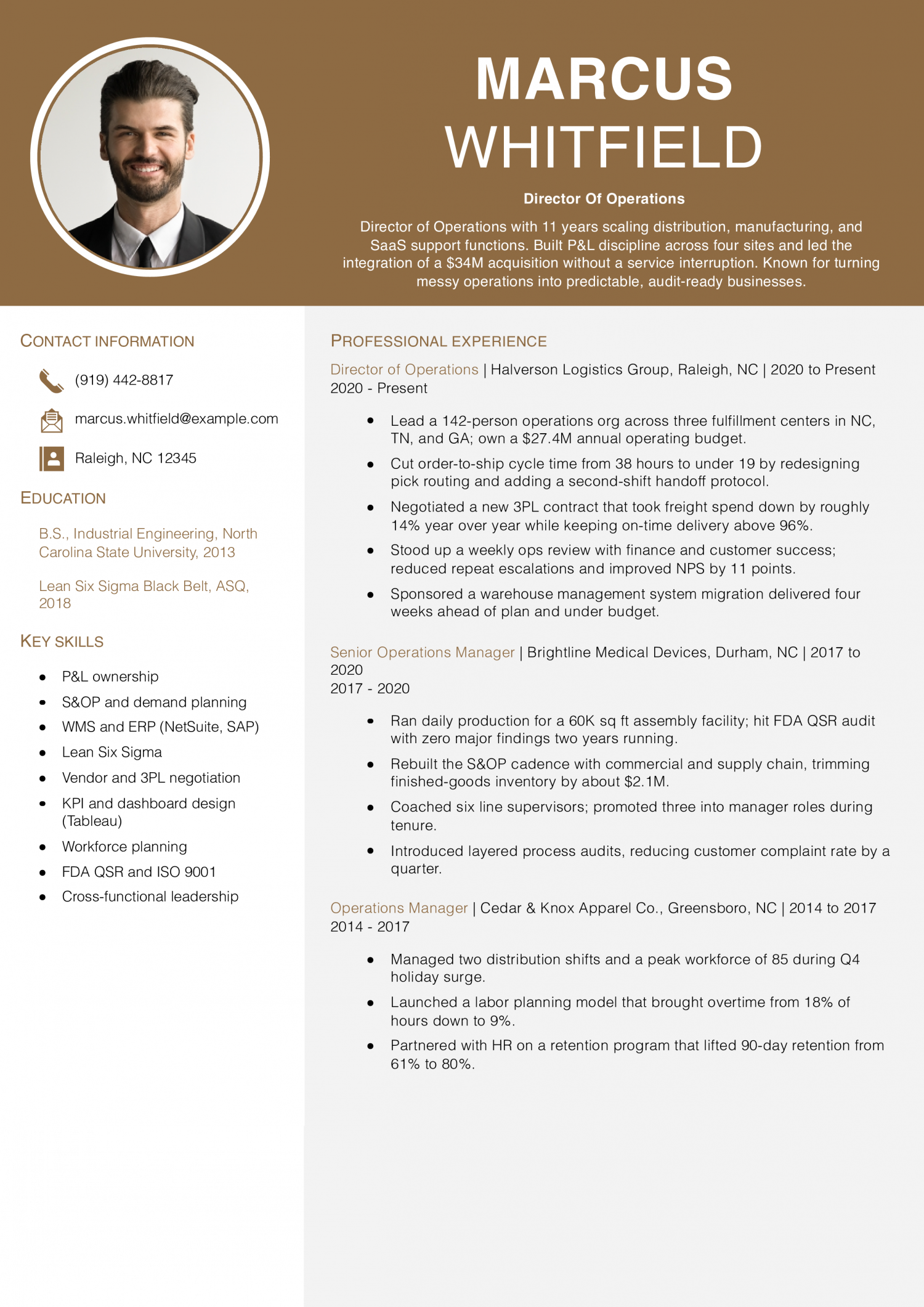
It opens with P&L scope, FTE count, and one outcome in the first two lines. The work history runs reverse-chronological with three to six bullets per role, most carrying a number.
A credentials and tools strip on page one names your ERP stack, certifications, and degree. Total length is two pages for most operators.
Scope is the line. Operations manager resumes lead with team size, process work, and KPI delivery inside one function.
Director of operations resumes lead with P&L ownership, multi-function or multi-site scope, and a board or executive read-out.
If your current resume reads like a manager's, lift the dollar and headcount numbers up to the summary.
Yes, if it's relevant to the roles you're targeting. Name the sponsor tier (middle-market, lower-middle-market, mega-fund) without naming the fund unless it's public.
Call out the value-creation play you ran: 100-day plan, bolt-on integration, carve-out, or exit prep. Search firms and PE operating partners screen for that exact language in the top third of page one.
Name the context once and move on. A bullet like 'navigated 22 percent volume decline through plant consolidation and SG&A reset, holding gross margin within 80 basis points of prior year' shows the operator move without hiding the drop.
COOs and CEOs read downturns as a test of judgment, not a disqualifier, when you frame the lever you pulled.
For a director of operations, a professional template is the safest pick, because it signals the polish hiring managers in this field expect. An ATS-friendly template is a solid alternative. Whichever you choose, keep the formatting clean and easy to parse: clear section headings, a standard font, and no graphics a parser can choke on.
Executive Resume Writer and Career Coach
Andrew Stoner is an executive career coach and resume writer with 17 years of experience as a hiring manager and operations leader at two Fortune 500 Financial Services companies, and as the career services director at two major university business schools.
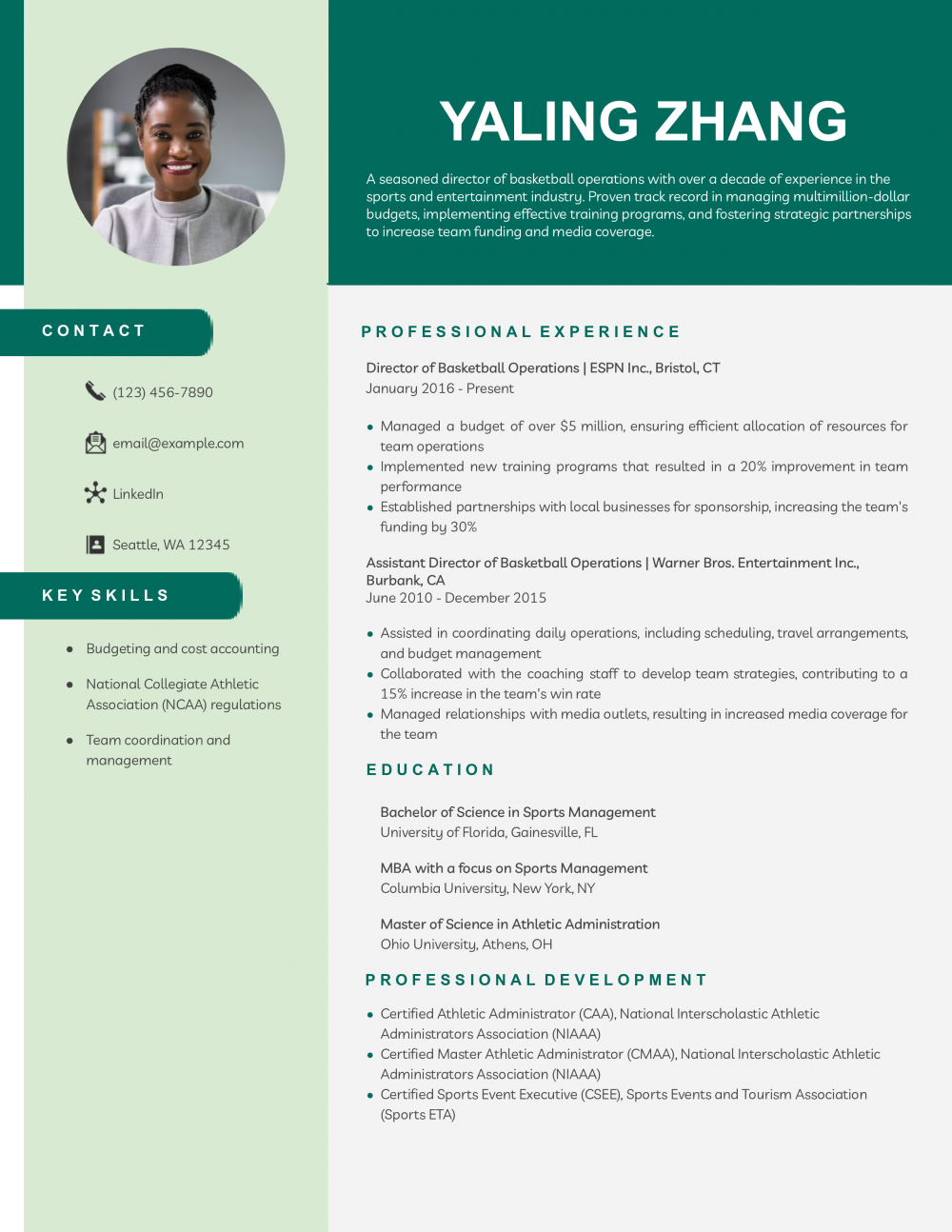
Customize this template in our builder in under 10 minutes.