



Computer Science Resume Examples and Templates




In the current job market, it’s essential to leverage every possible advantage to differentiate yourself from the competition. That starts with your resume. Your content should paint a compelling image of your experience managing inventories and identifying opportunities to enhance operations. Whether reducing costs for a large warehouse or forecasting product sales to reduce churn for a retail business, convey how your expertise can benefit potential employers. We’ll walk you through each step of the resume-building process to help accelerate your job search.
Key takeaways:
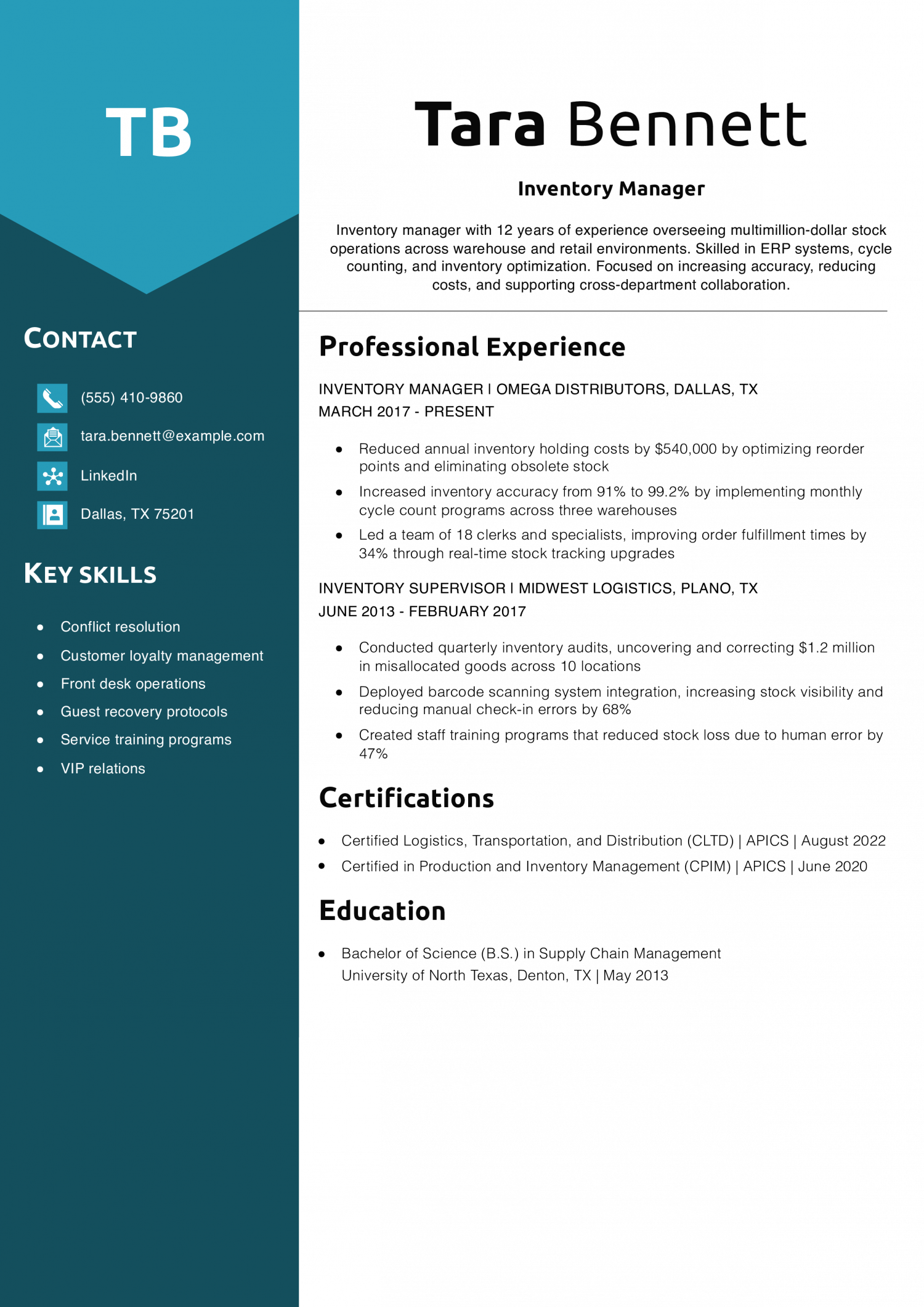
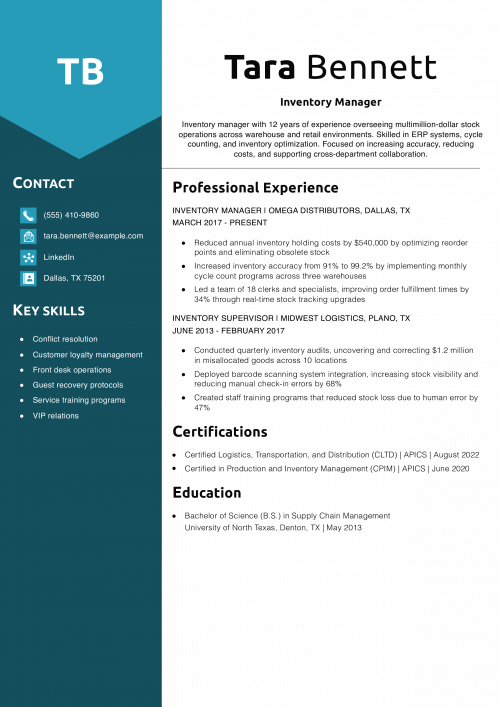
Tara’s resume directly connects inventory management activities to tangible outcomes like cost savings, improved accuracy, and faster fulfillment. She shows leadership with a measurable impact.
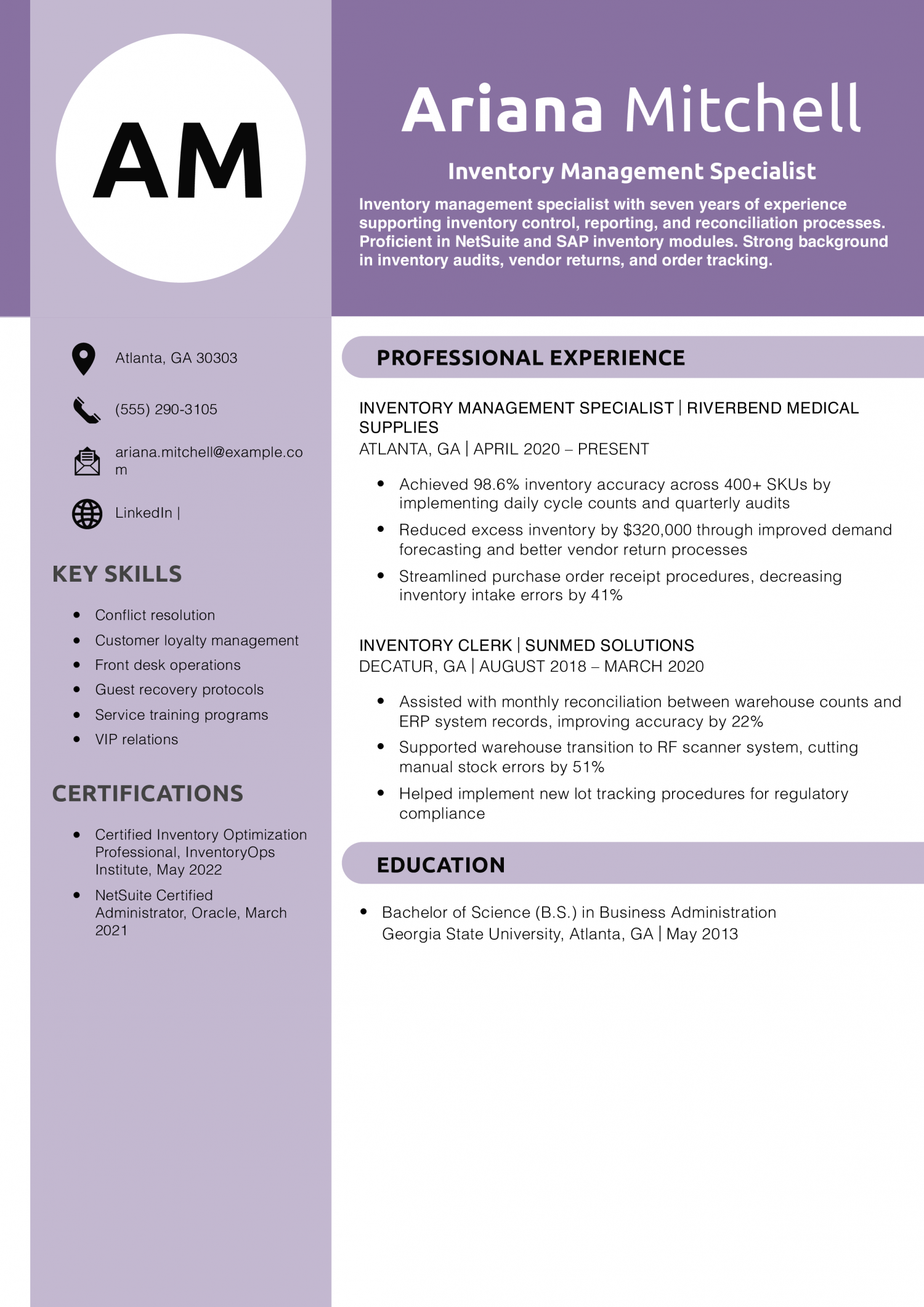
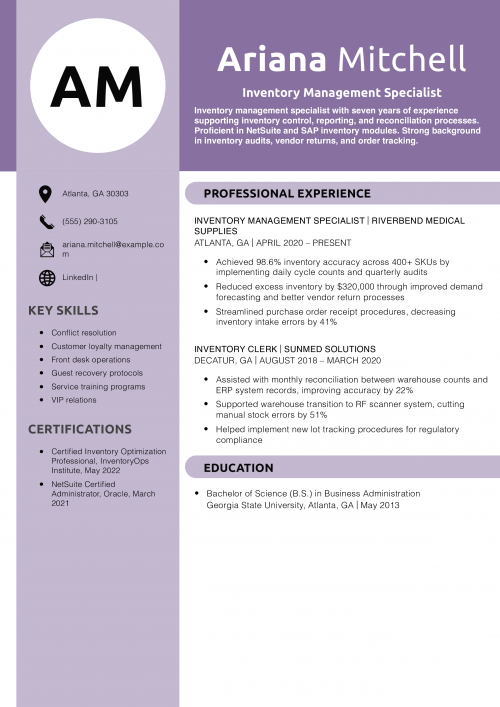
Ariana focuses on control, accuracy, and compliance — the backbone of strong inventory management. Her experience scaling tracking systems and working with ERP platforms adds immediate value.
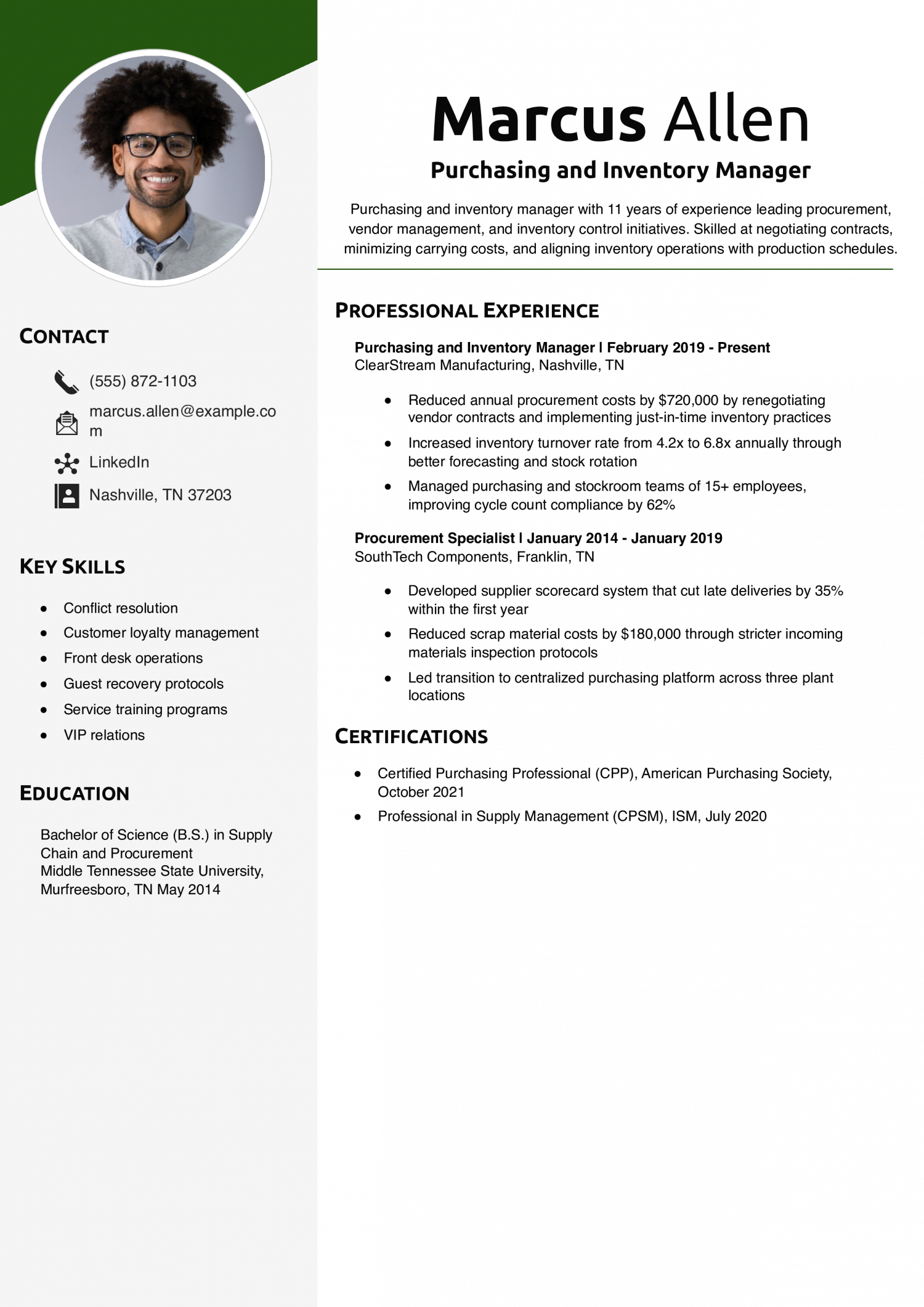
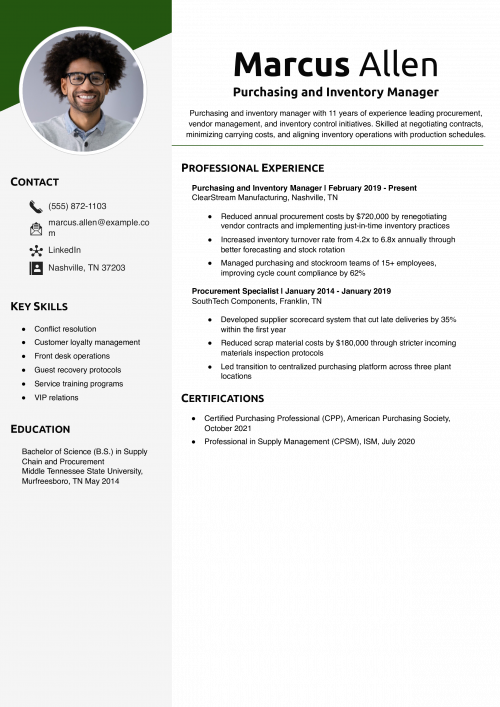
Marcus clearly owns both purchasing and inventory results — a rare and valuable combination. His achievements are framed around cost reductions and operational efficiency.
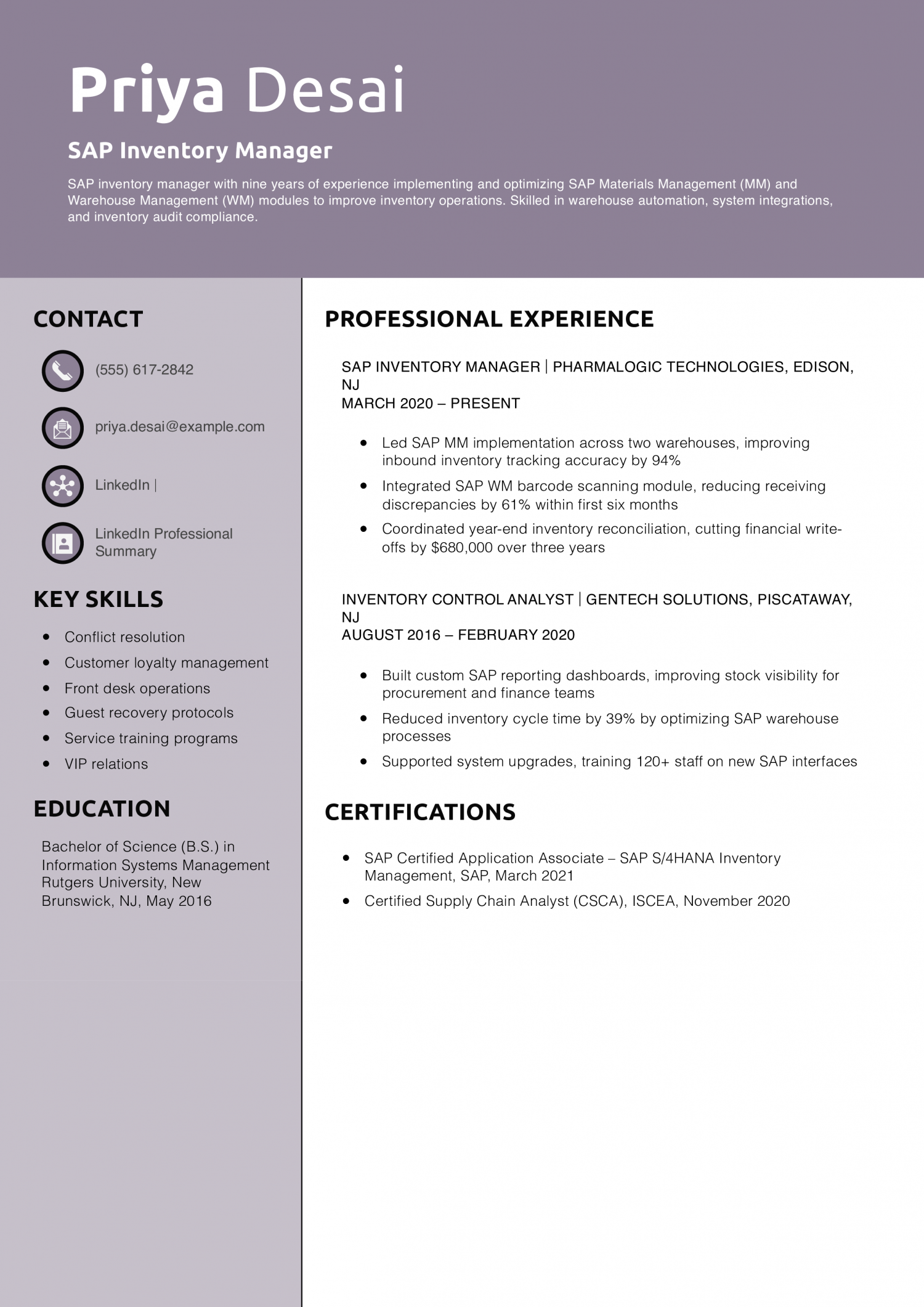
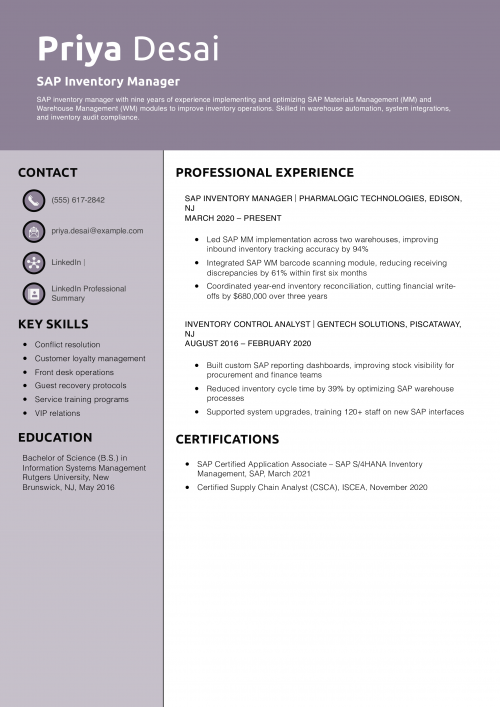
Priya shows that she’s not just using SAP — she’s optimizing it. Her results around discrepancy reduction and financial savings speak directly to inventory control goals.
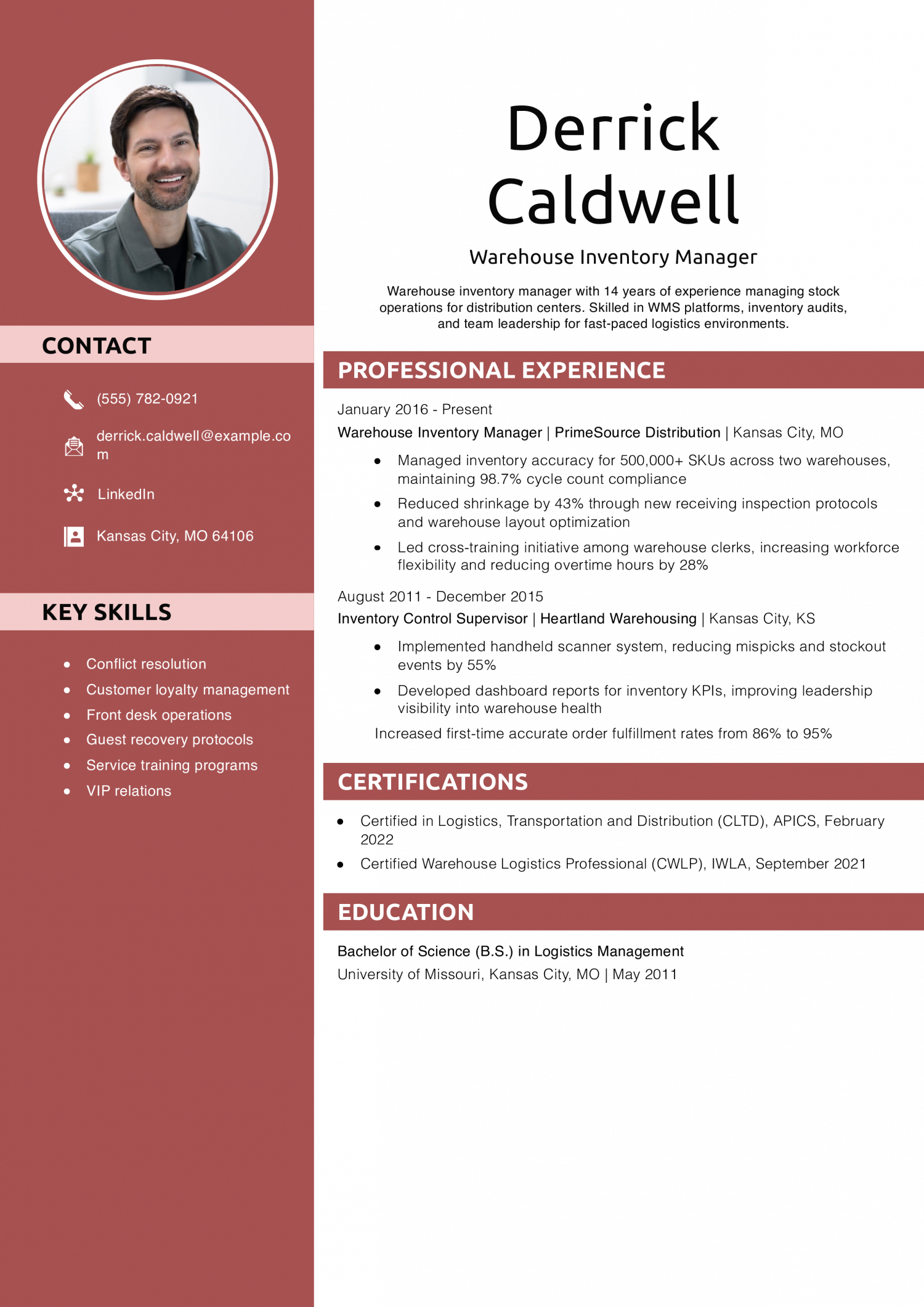
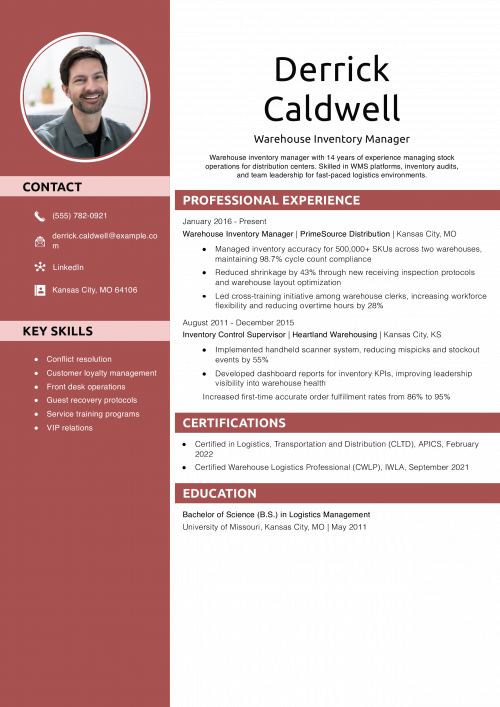
Derrick’s resume shows clear mastery of large, complex warehouse environments. His metrics — SKU counts, shrinkage reduction, fulfillment accuracy — directly show operational success.
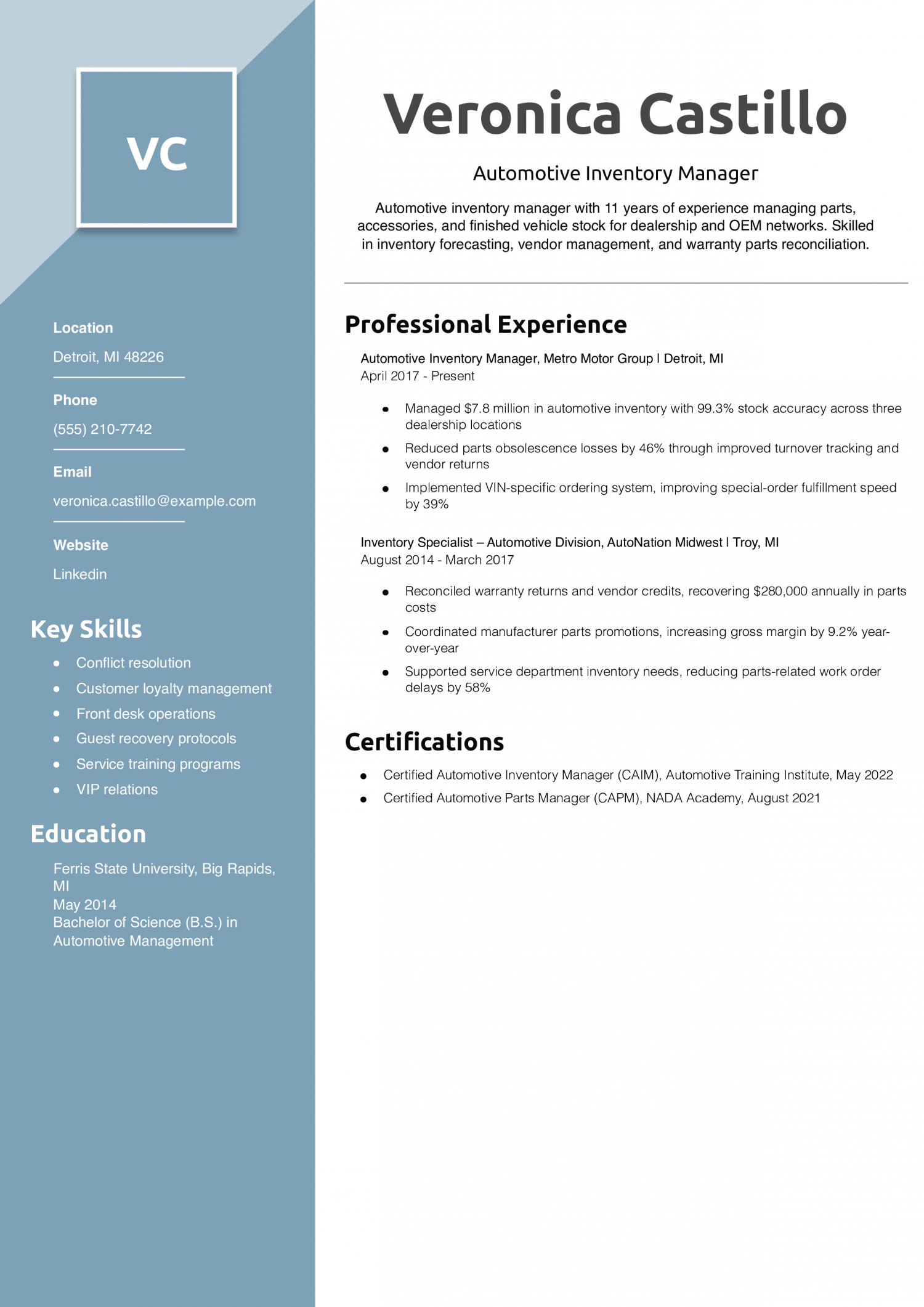
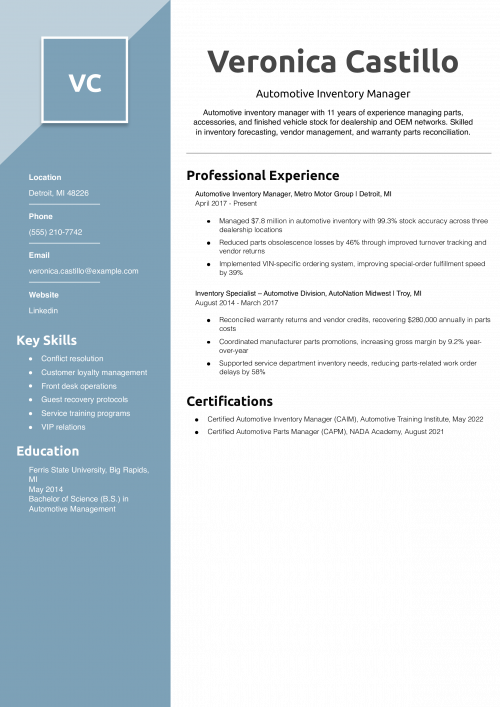
Veronica’s resume connects the unique needs of automotive inventory — warranty reconciliation, VIN-specific parts, service support — with cost savings and operational improvement.
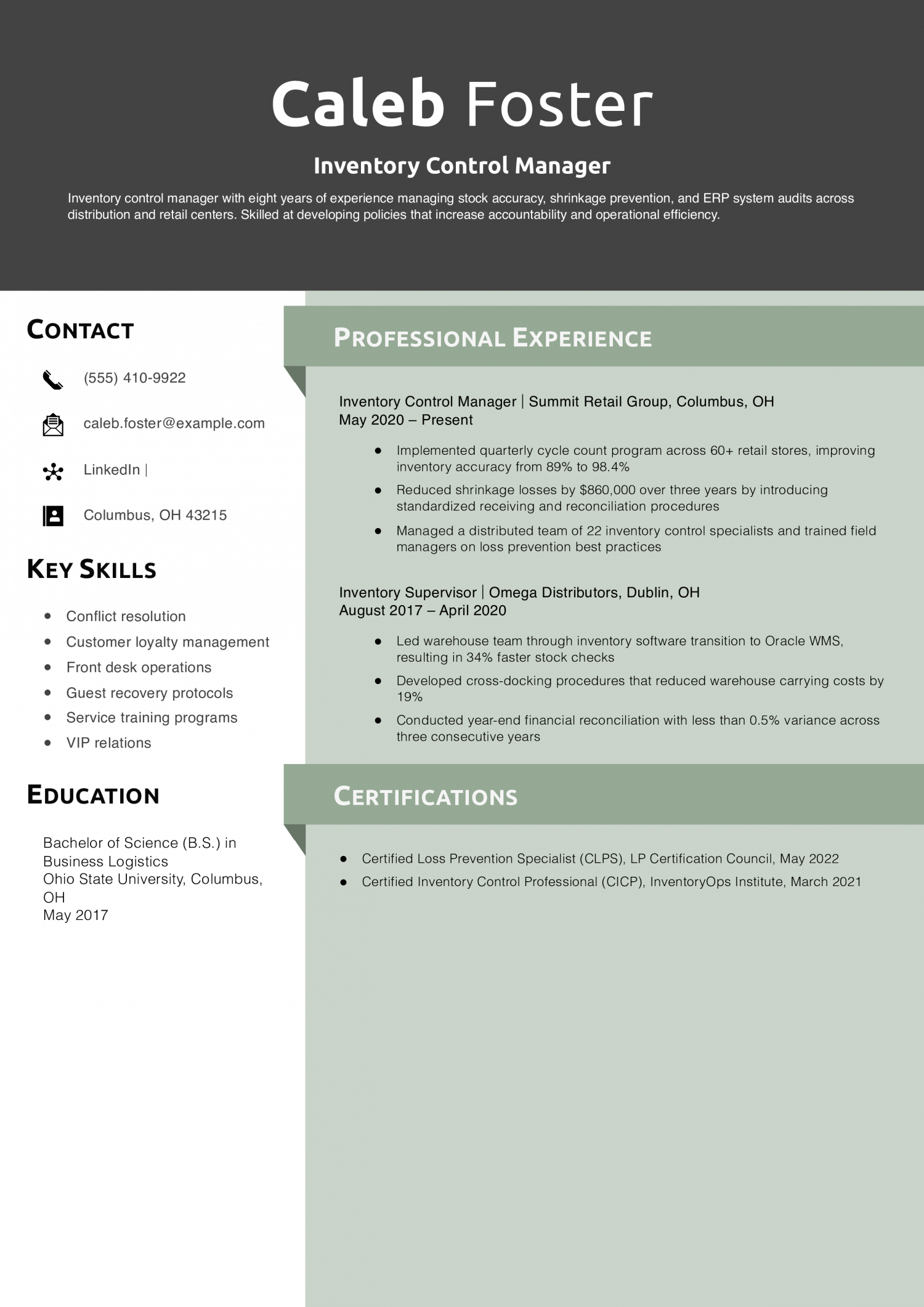
Caleb’s resume is a strong example of someone who not only controls inventory but actively improves systems and reduces losses. Sharp financial outcomes back his leadership skills.
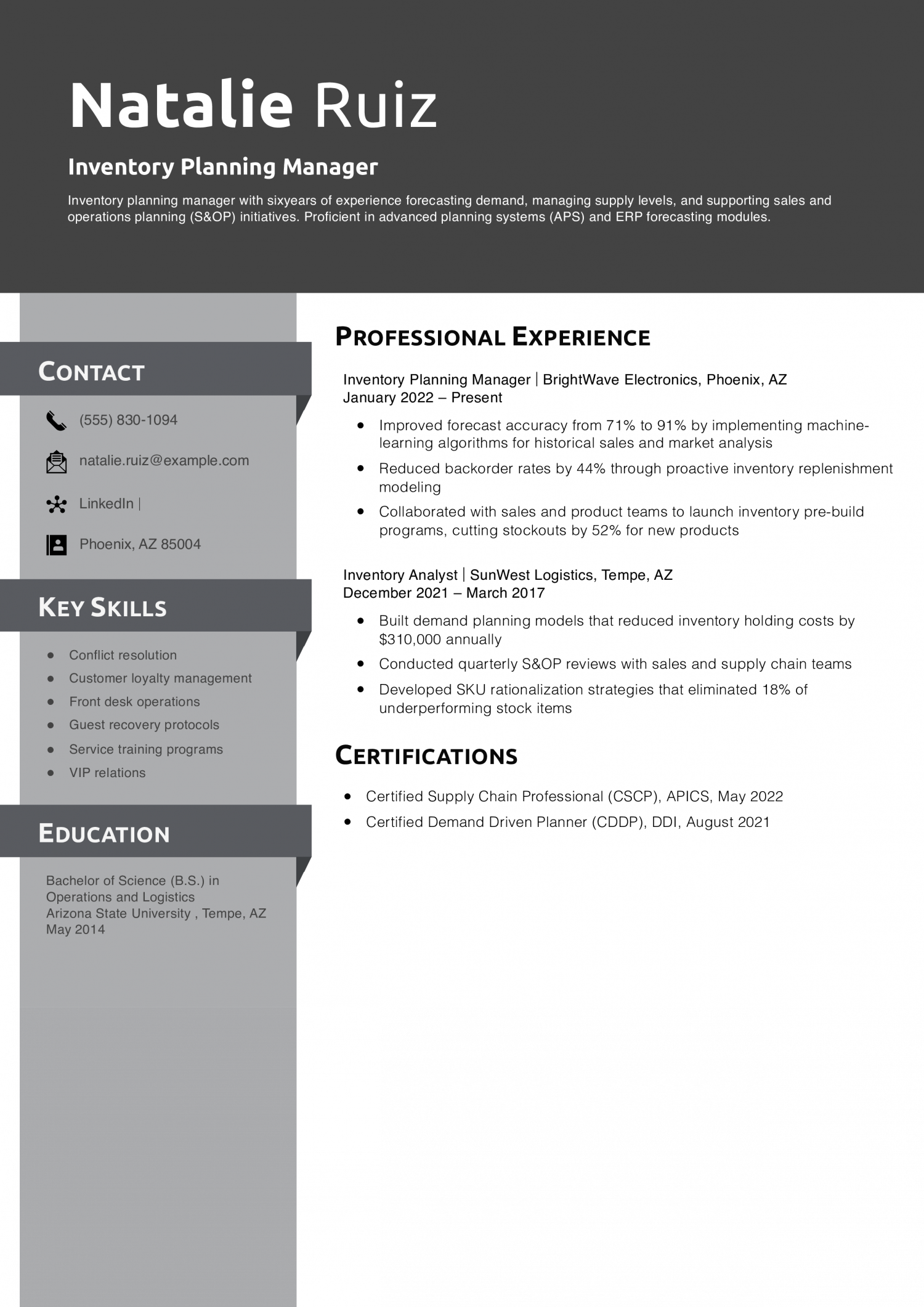
Natalie’s resume shows how smart inventory planning can lower costs, reduce stockouts, and improve business forecasting. Her numbers are detailed and outcome-driven.

Owen’s focus on compliance, variance reduction, and training shows he understands inventory auditing is about protecting assets, not just counting products.
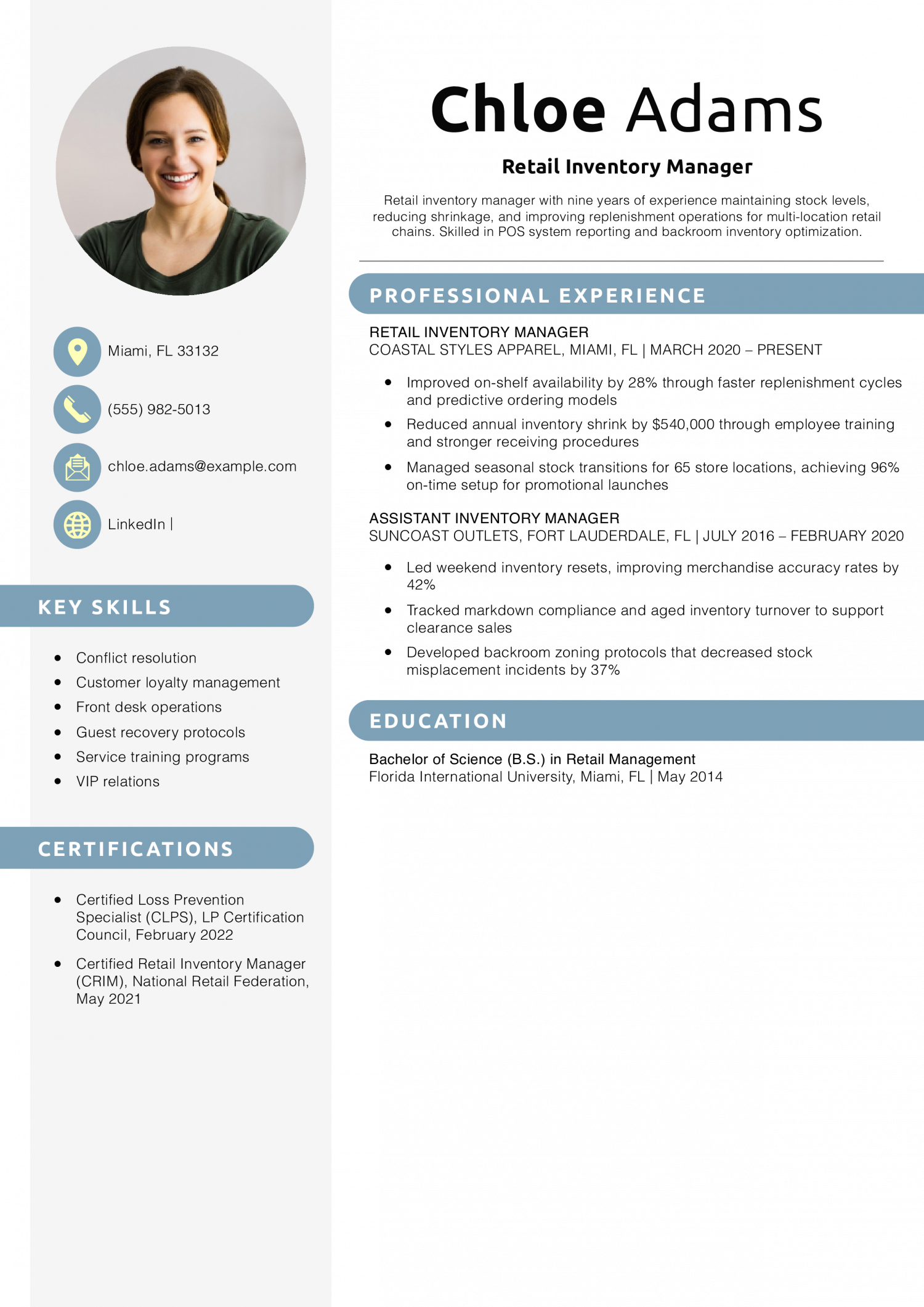
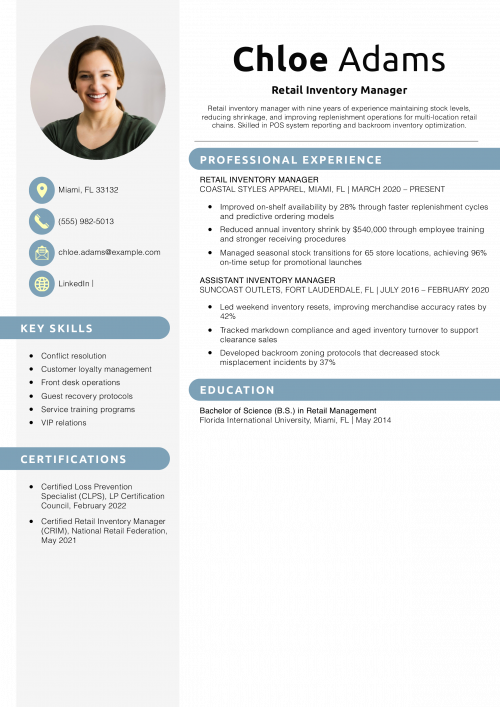
Chloe’s resume highlights metrics critical to retail: shrinkage, shelf availability, and promotional readiness. Her ability to coordinate across many locations adds even more value.
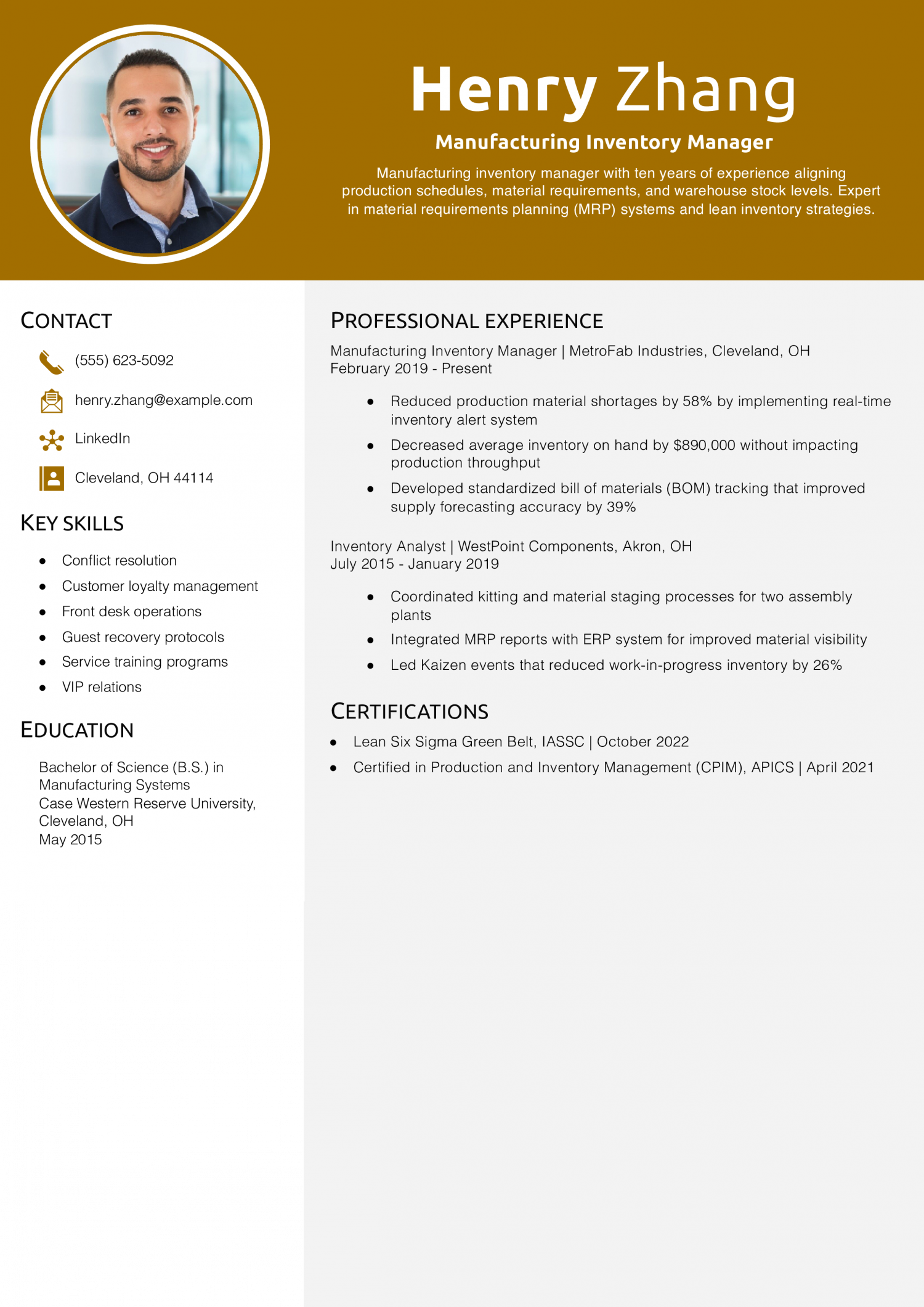
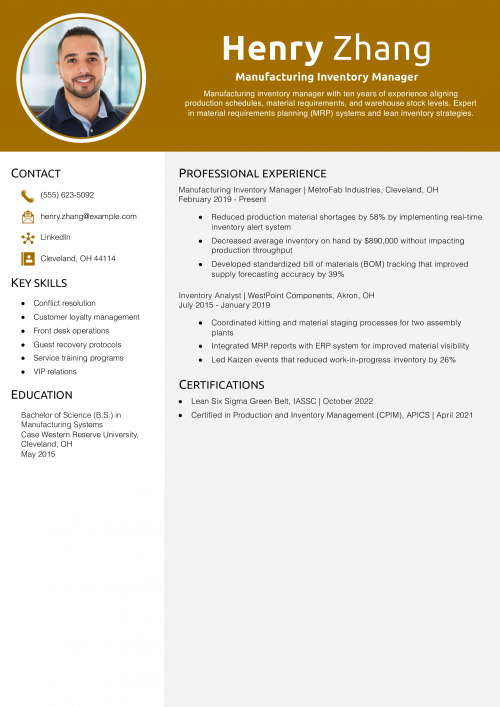
Henry’s resume focuses squarely on cost control, production continuity, and lean practices — exactly what manufacturing companies want in an inventory manager.

Sophia’s resume shows she can manage high complexity across massive inventory systems and multiple distribution hubs — and deliver measurable financial results.
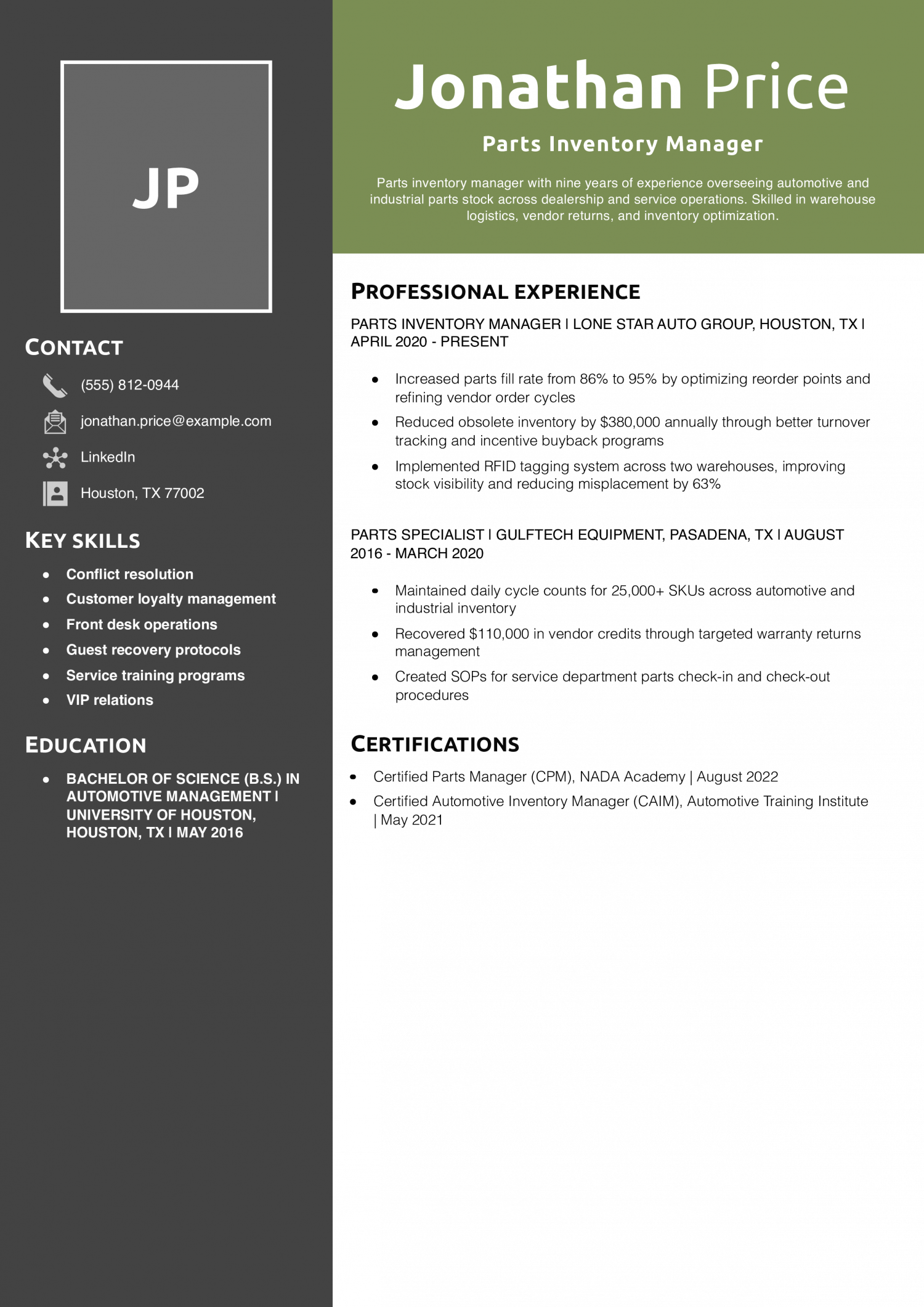
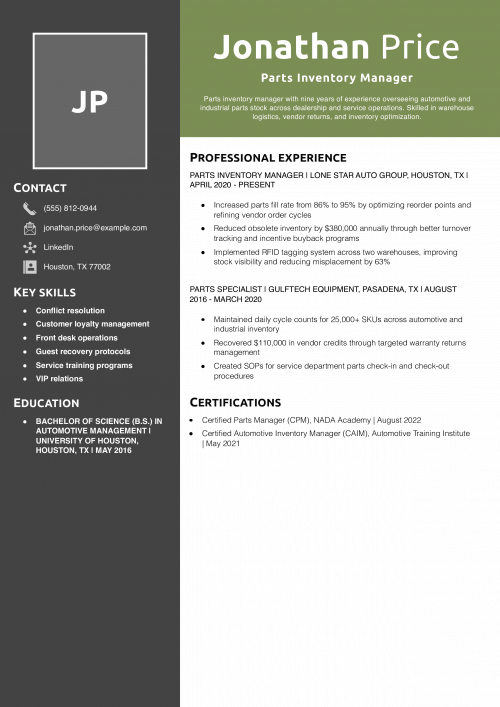
Jonathan’s resume highlights the specialized skill set needed to manage high-turnover parts inventory, emphasizing fulfillment rates, turnover control, and warranty recapture.
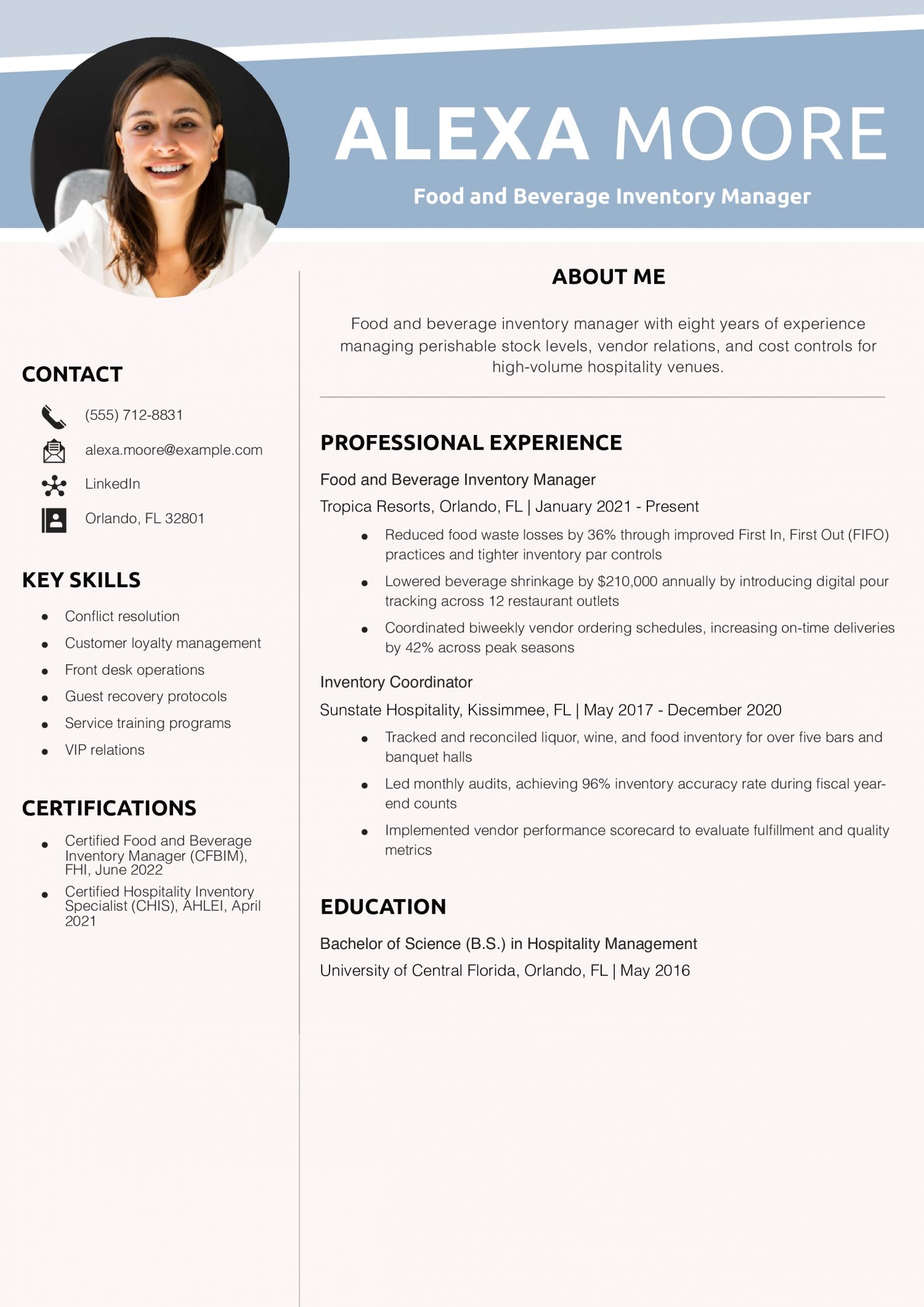
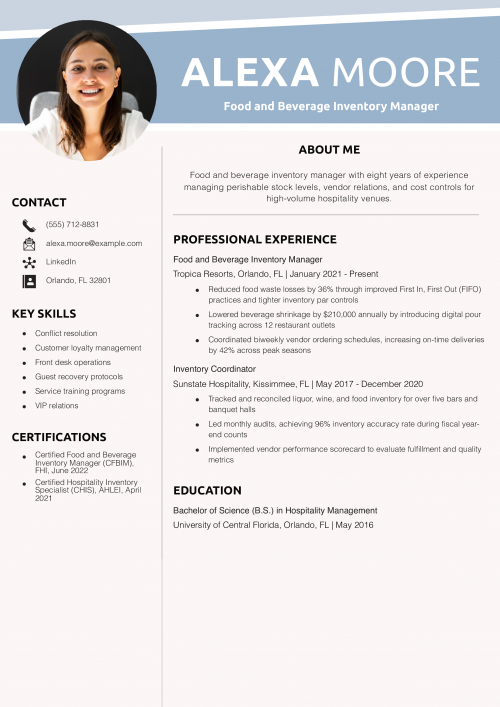
Alexa’s resume ties inventory work directly to two of the biggest pain points in food service — waste and shrinkage. Her ability to show results in these areas builds instant trust.
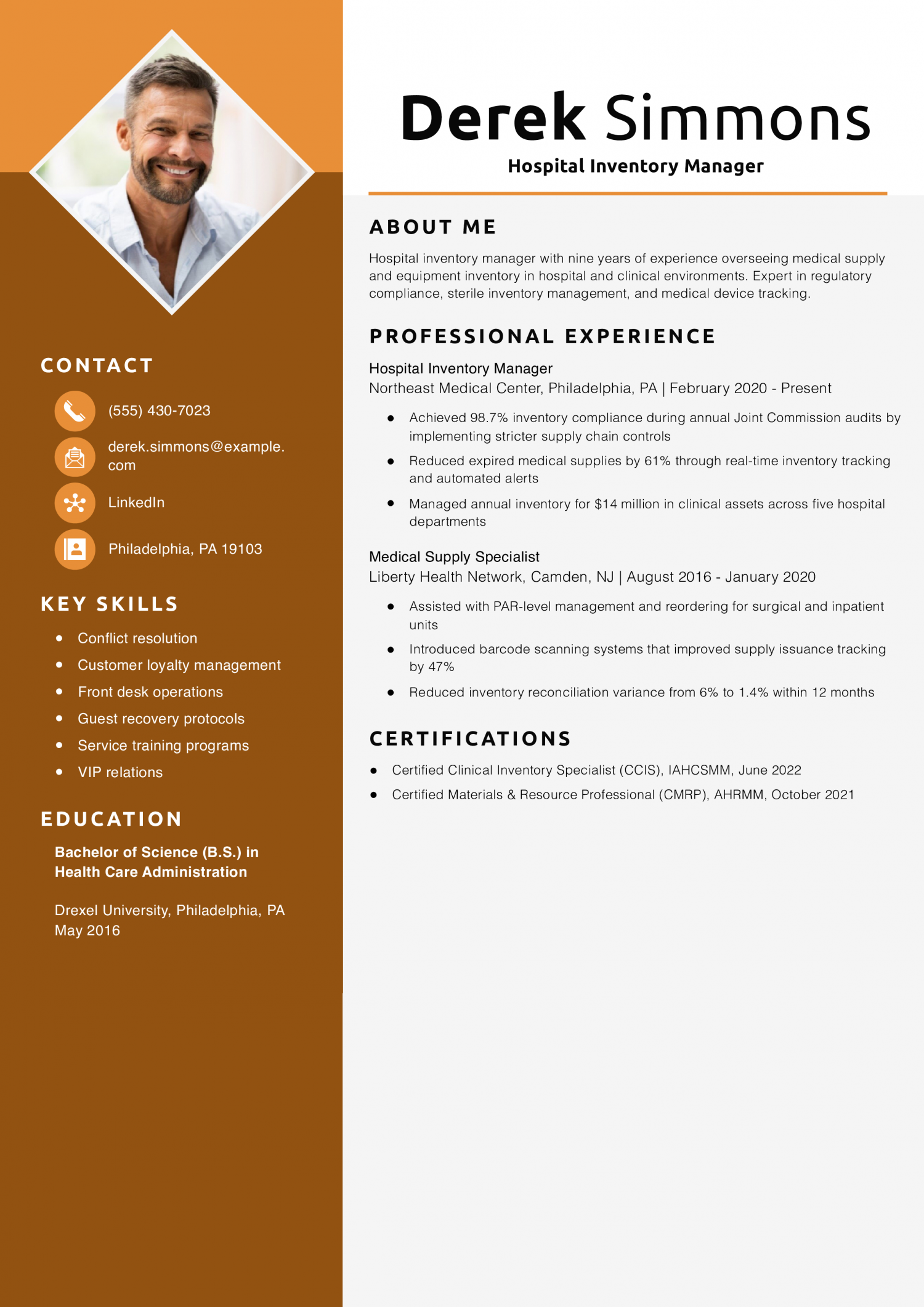
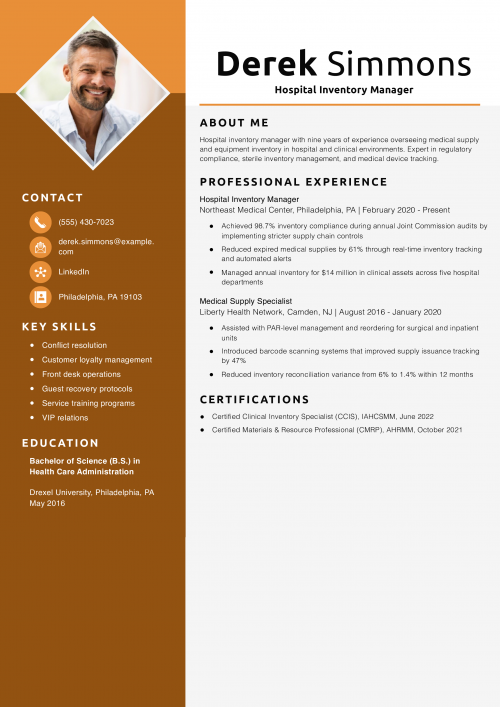
Derek’s resume emphasizes compliance, asset protection, and supply optimization — exactly what hospitals need in their inventory teams.
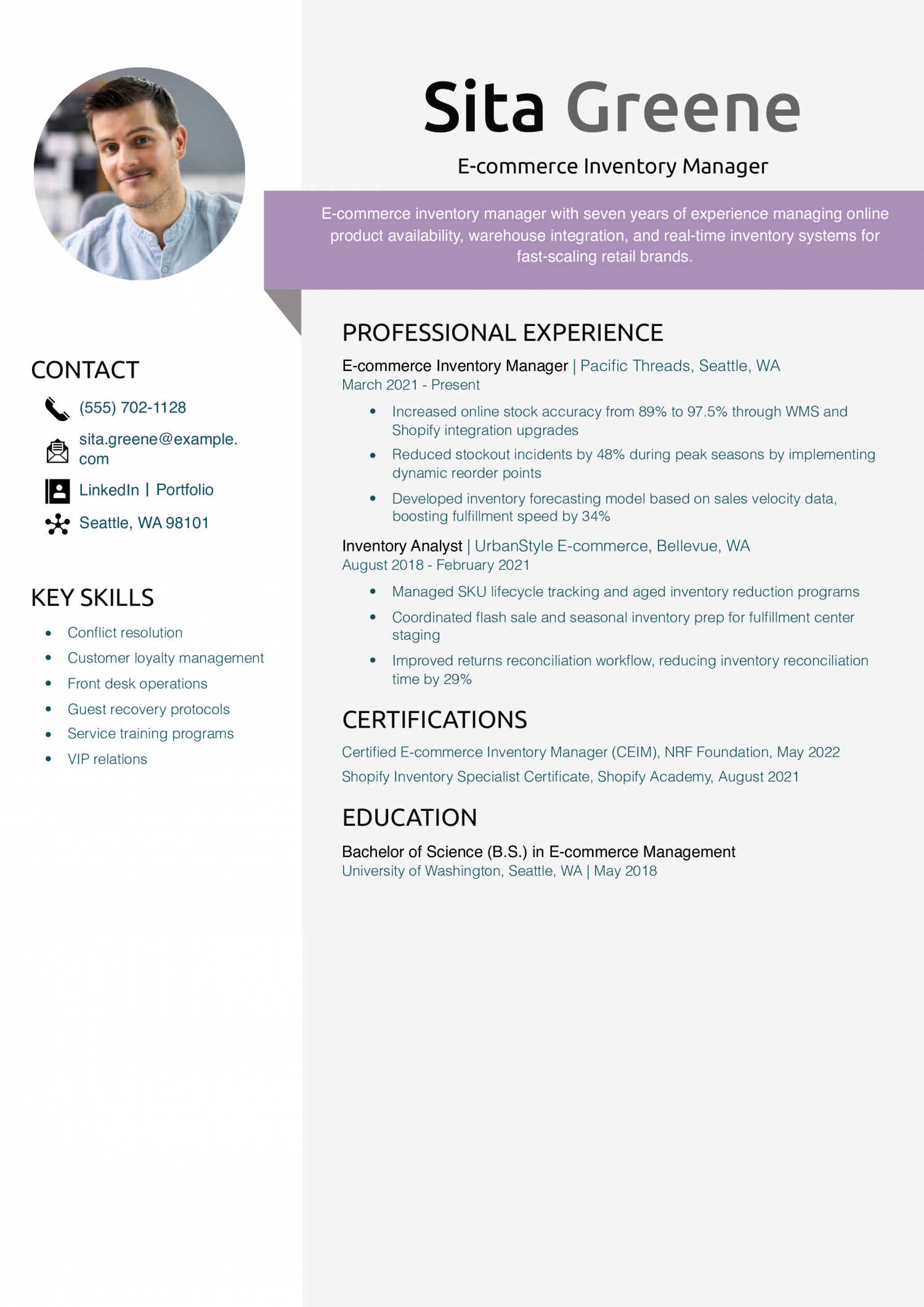
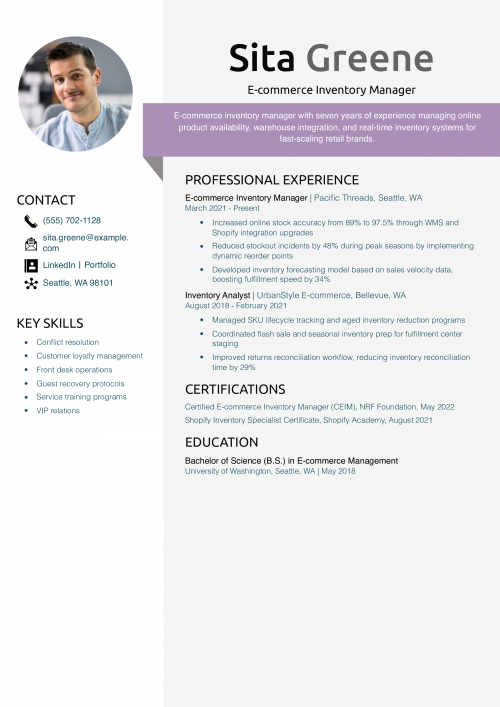
Sita understands the fast-paced, accuracy-driven world of online retail. Her fulfillment metrics and system integrations make her an ideal candidate for e-commerce employers.
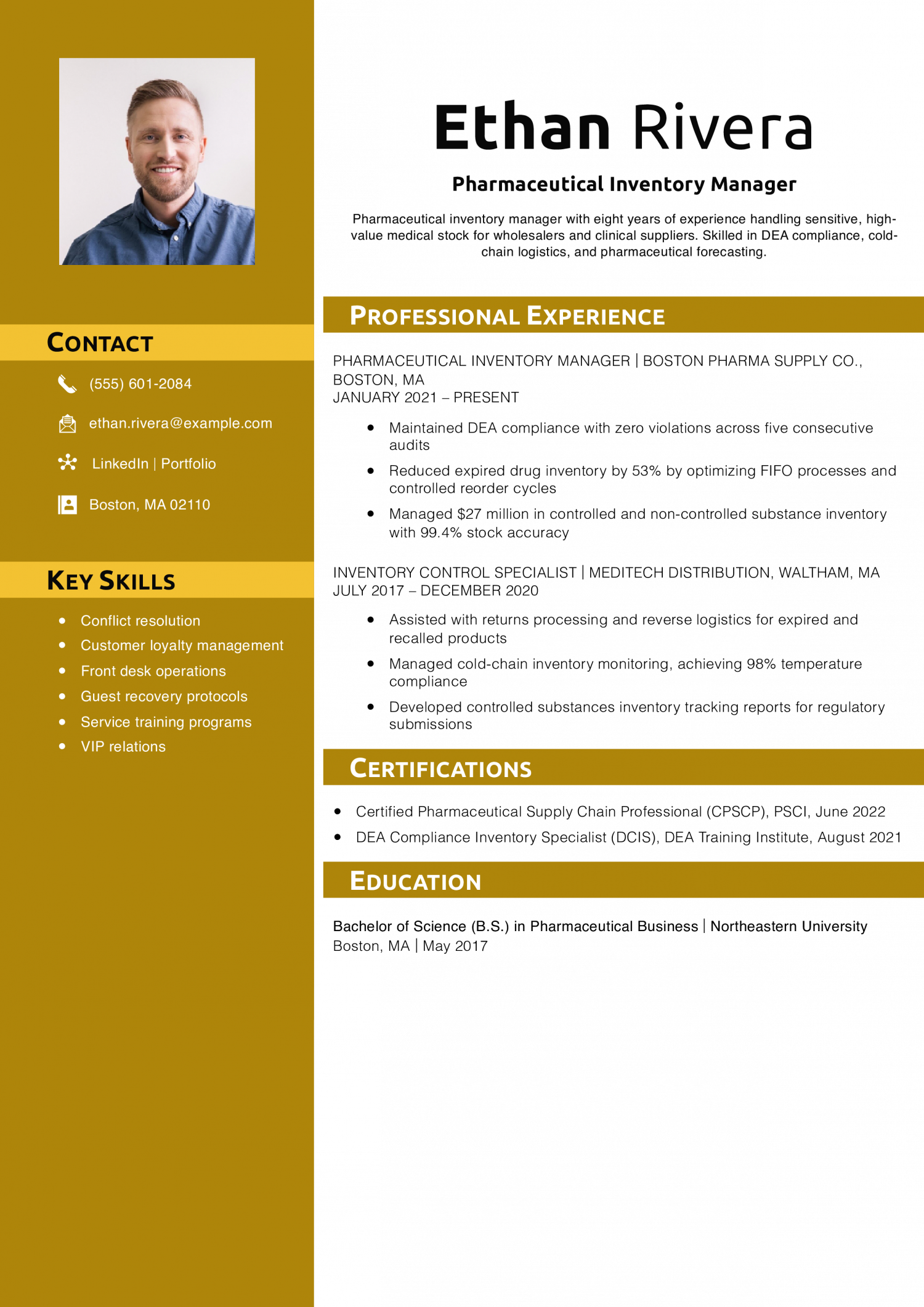
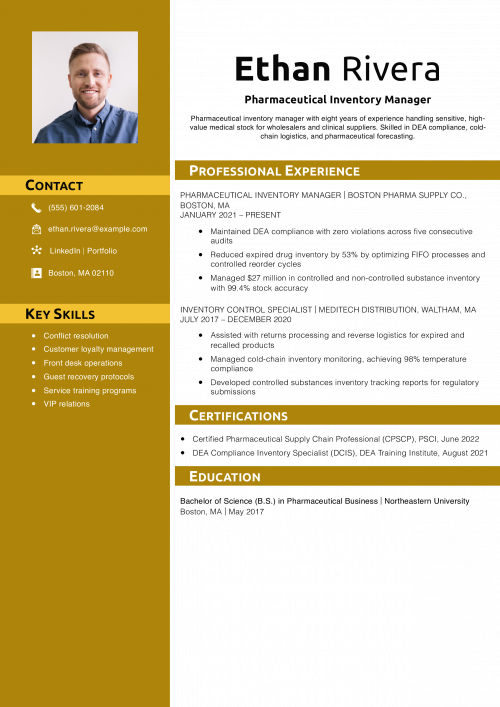
Ethan’s metrics focus on the uniquely high-stakes world of pharmaceutical inventory. His zero violations and tight cold-chain compliance stand out immediately.
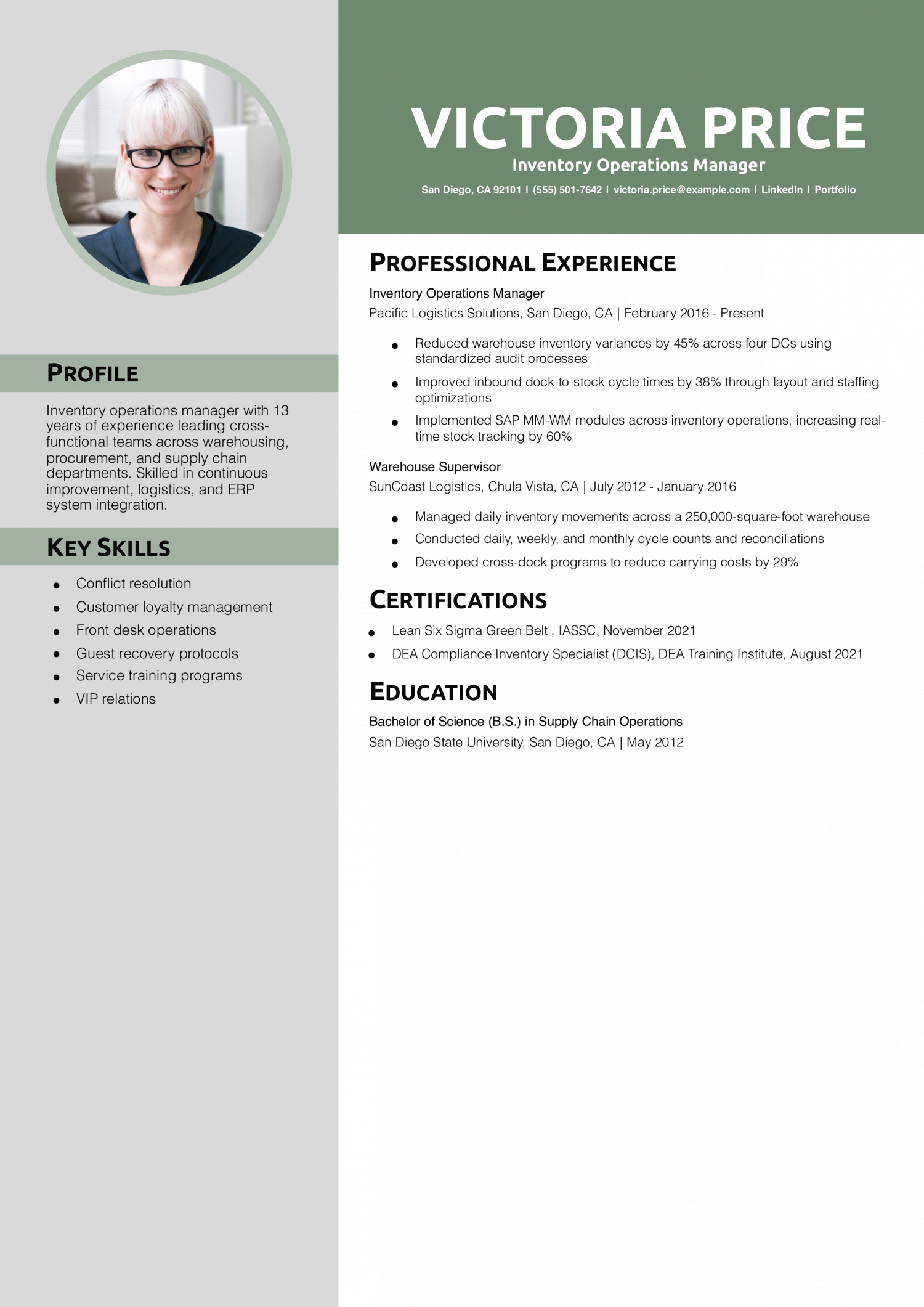
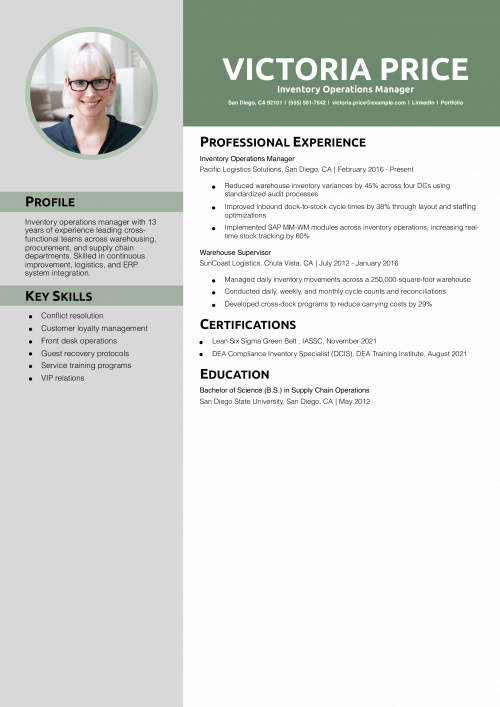
Victoria’s resume balances inventory control with operational leadership. Her metrics show savings, speed, and better accuracy across multiple facilities.
As an inventory manager, you understand the importance of integrating inventory control processes to ensure forecasting accuracy and prevent discrepancies. Your resume also benefits from having a clear, well-organized structure that allows the hiring manager to easily navigate your document for key achievements, skills, and qualifications. Before crafting your content, be sure that your resume template includes the following sections:
Start with your name, professional email address, phone number, city, state, and a link to your professional profile (such as LinkedIn). Make sure your contact information is up to date and easy to find.
TAYLOR HARRISON
[email protected] | (555) 321-6789 | Chicago, IL 60601 | LinkedIn
Leading with an eye-catching summary provides a compelling overview of your career for the hiring manager, immediately demonstrating that you have the qualifications to succeed in the position. Start by listing your title, years of experience, and three to four specializations that match the job posting. Emphasize your most notable achievements and the types of industries you’ve worked in. For instance, if you have a background managing multi-million dollar inventories, highlight this directly in your profile to show potential employers you can execute at the highest level.
Inventory manager with over 10 years of experience overseeing multi-million dollar inventory operations for manufacturing and retail sectors. Adept at reducing shrinkage, optimizing stock turnover, and implementing ERP solutions.
Inventory specialist with three years of experience managing warehouse stock levels and streamlining order fulfillment processes. Skilled in using inventory management systems to maintain 98% stock accuracy.
When describing your work history, the key is emphasizing how you’ve consistently generated value for previous organizations throughout your career. Vague and uninspiring bullet points that describe your daily workflows aren’t likely to stand out to the reader. Your content should be engaging, descriptive, and concise, establishing necessary context for your accomplishments without burdening the hiring manager with extraneous information.
Highlight your ability to achieve cost reductions, minimize shrinkage, and improve inventory forecasting accuracy in fast-paced business environments. Showcase your experience collaborating cross-functionally with logistics, supply chain, and procurement teams to drive operational excellence.
Inventory Manager
Global Supply Co., Dallas, TX | April 2015 to present
Inventory Control Specialist
Midwest Retail Partners, Chicago, IL | July 2021 to present
Inventory management is all about numbers; your resume should have the same focus. Including monetary figures is a great way to grab the reader’s eye, especially if you managed larger inventories or vendor contracts. In addition to featuring hard numbers, be sure to explain how you achieved these outcomes to paint a clear picture for the hiring manager.
Inventory manager job descriptions can vary by company. A hospital’s inventory needs are different from a manufacturing plant’s. To maximize your chances of landing the interview, take the extra step to customize your resume for each application. For example, if you’re applying for an inventory manager position within the retail industry, highlight skills such as demand forecasting, shrinkage reduction, loss prevention, and inventory control.
If you’re moving into inventory management from another role, such as warehouse associate, supply chain assistant, or retail stock clerk, the key is to highlight transferable skills and qualifications to show you’re ready to take on larger responsibilities. For instance, you might emphasize your experience coordinating with the inventory manager to perform audits or conduct forecasting.
Although it is possible to transition from an entry-level role to an inventory manager position with a high school diploma, pursuing a bachelor’s degree in supply chain management is highly recommended to improve your long-term prospects. Industry certifications can strengthen your resume, especially if you’re competing against more experienced candidates.
Template:
[Degree Name], [School Name], [City, ST] | [Graduation Year]
[Relevant honors, coursework, or activities]
Example:
Bachelor of Science (B.S.) in Supply Chain Management | May 2015
Arizona State University | Tempe, AZ
Template:
[Certification Name], [Awarding Organization] | [Completion Year]
[Description if the credential is lesser-known but relevant]
Examples:
Certified in Production and Inventory Management (CPIM) | APICS | March 2021
Certified Supply Chain Professional (CSCP) | APICS | July 2019
Most organizations rely on AI screening tools to identify qualified candidates for job openings by parsing resumes for specific keywords. To ensure compliance with the ATS, feature a comprehensive list of key skills that mirror the job description. Highlight a mix of technical, interpersonal, and inventory management terminology to show hiring managers that you have a versatile background. Below, you’ll find a list of key skills to consider adding to your inventory manager resume:
| Key skills | |
|---|---|
| Barcode scanning technology | Cross-functional collaboration |
| Cycle counting | Data analysis and reporting |
| Demand forecasting | ERP |
| Inventory audits | Inventory control |
| Inventory management | Logistics |
| NetSuite | Oracle |
| Process improvement | Procurement |
| SAP | Stock replenishment |
| Supply chain management | Vendor management |
| Warehouse operations management | |
Start each bullet point with a strong action verb to add a dynamic and engaging element into your writing. Using proactive language helps the hiring manager contextualize your contributions and career achievements. Avoid passive verbs and phrases such as “worked,” “completed,” and “responsible for,” as this kind of language makes your bullet points look more like job duties rather than actual achievements. Below are action verbs you can use to build the professional experience section of your inventory manager resume:
| Action verbs | |
|---|---|
| Analyzed | Audited |
| Conducted | Coordinated |
| Created | Developed |
| Drove | Enhanced |
| Evaluated | Identified |
| Implemented | Improved |
| Increased | Led |
| Managed | Optimized |
| Oversaw | Reduced |
| Spearheaded | Streamlined |
Choose a clean, organized template that reflects your ability to manage complex processes with clarity and precision. Avoid cluttered designs or distracting graphics. Stick to easy-to-read fonts, clear section headings, and logical layouts.
As inventory management processes become increasingly automated, competition for these roles will also grow. To increase your chances of securing interviews for the most lucrative opportunities, carefully align your resume with the job description. For example, if you're pursuing an inventory manager job within the manufacturing industry, emphasize your experience using ERP systems to manage multi-million dollar inventories.
Reverse chronological is the ideal format for inventory manager resumes. This approach places your most recent experience towards the top of your document, allowing the hiring manager to quickly view your most relevant achievements. A combination format is better suited for entry-level candidates who must compensate for a limited work history, making it a poor choice for inventory managers.
Pairing your inventory manager resume with an engaging cover letter is a great way to add a personal touch to your application. Although not every opportunity will require a cover letter, including one immediately shows that you’re willing to exceed expectations. Be sure to mention something specific about the company’s reputation, culture, or mission, and why this draws you to apply for the role.
Executive Resume Writer and Career Coach
Andrew Stoner is an executive career coach and resume writer with 17 years of experience as a hiring manager and operations leader at two Fortune 500 Financial Services companies, and as the career services director at two major university business schools.
Resume Templates offers HR approved resume templates to help you create a professional resume in minutes. Choose from several template options and even pre-populate a resume from your profile.