Biology resumes should clearly present research, lab skills, and academic focus. A clean layout helps employers quickly understand areas of study and hands-on experience.
Key takeaways:
- Emphasize your scientific expertise: To quickly grab the hiring manager’s attention, showcase your areas of expertise as a biologist, such as molecular biology, environmental science, or drug discovery.
- Quantify your professional achievements: Incorporate hard numbers and data to convey the impact of your contributions. For example, you might emphasize how your efforts helped to improve data integrity for a multi-million dollar research study.
- Integrate keywords from the job description: Feature key terms from the job posting to ensure alignment with applicant tracking systems (ATS), such as statistical modeling, polymerase chain reaction (PCR) analysis, and cell-based assays.
Most Popular Biology Resumes
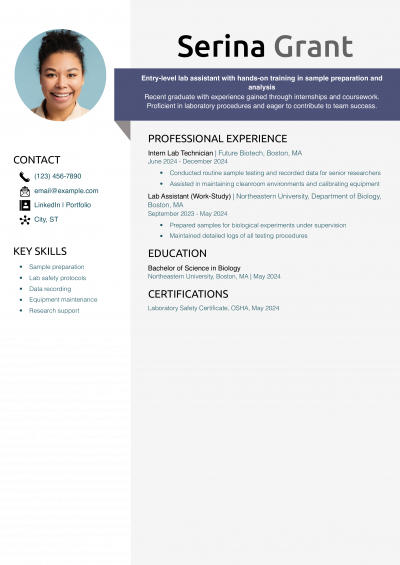
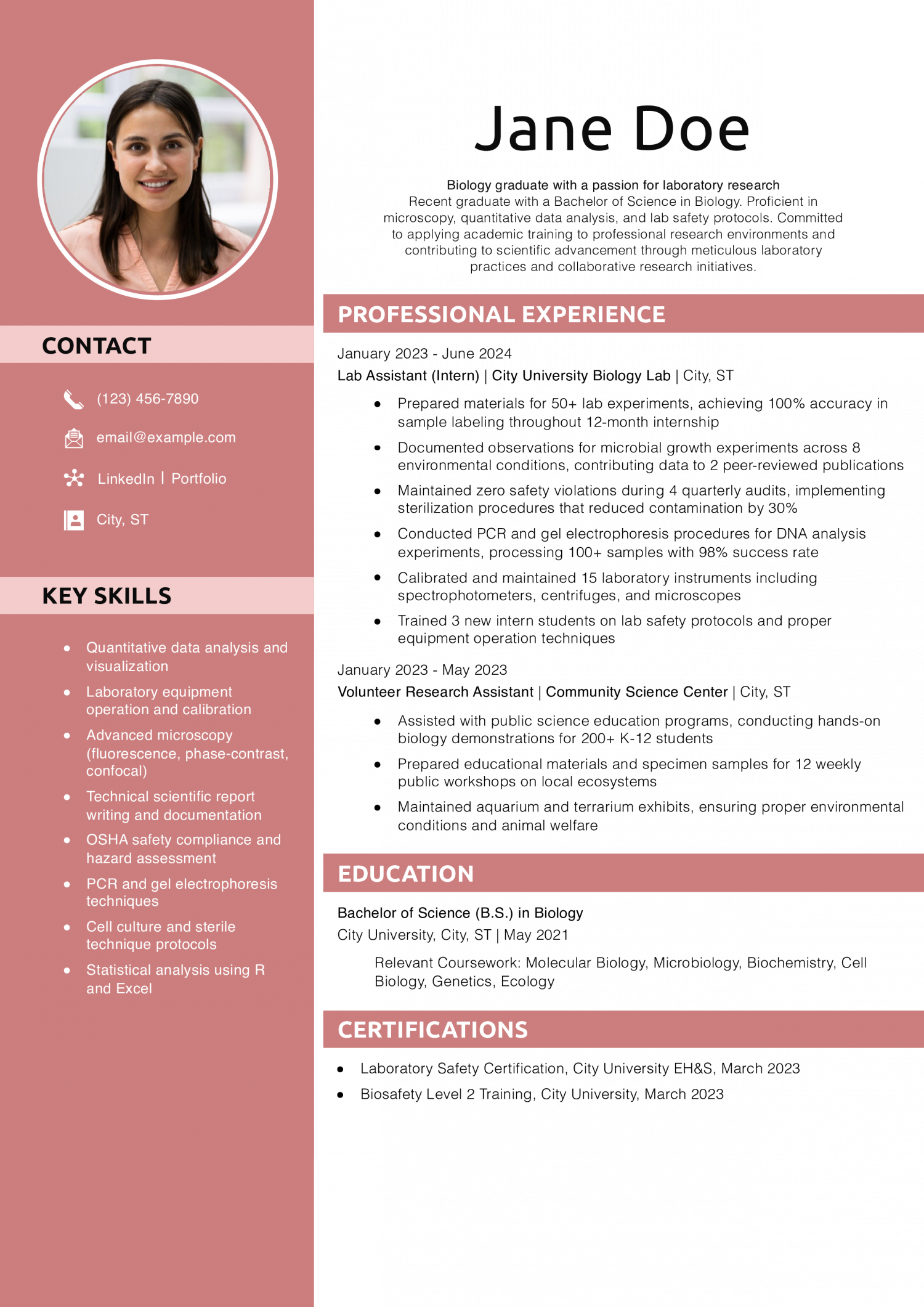
Biology resume with no experience
Why this resume example is strong:
Most candidates just say “assisted with lab work.” This one quantifies what that assistance involved. When I’m reviewing entry-level applications, I want to see process improvement and actual impact, not just task lists.
What makes this interview-worthy:
- 100% accuracy across 50+ experiments over 12 months – In a research environment, one mislabeled sample invalidates weeks of work and perfect accuracy isn’t just following directions.
- Zero safety violations with 30% contamination reduction – Entry-level candidates often overlook safety protocols, but this person not only followed rules but actively improved lab procedures.
When I’m comparing lab assistant candidates, these specifics separate people who handle real responsibility from those who can’t.
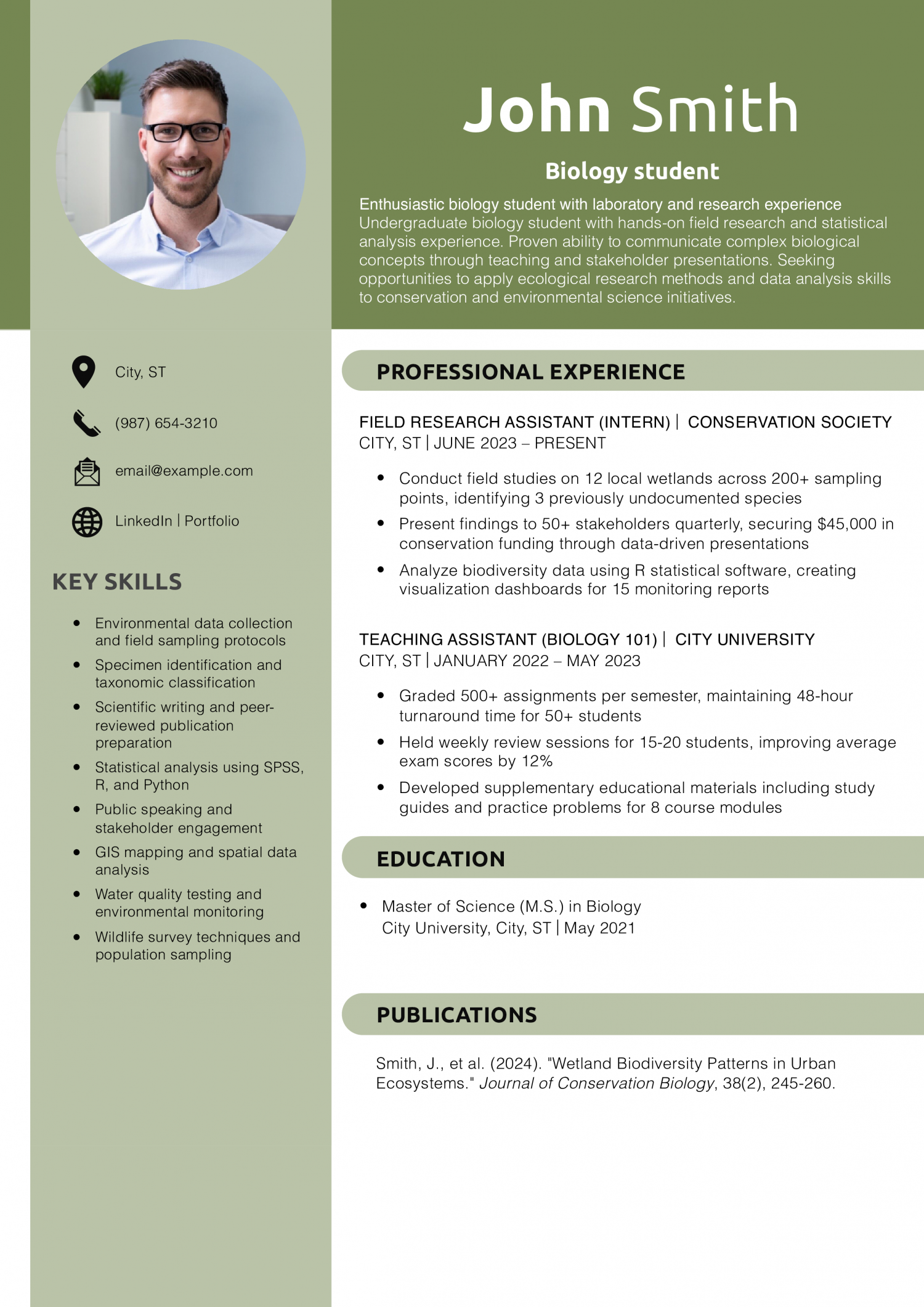
Biology Student Resume Example
Why this resume example is strong:
Most student researchers just collect data or wash glassware without real impact. When I’m hiring for ecology positions, I want people who can both conduct research and communicate it effectively to diverse audiences.
What stands out:
- 3 undocumented species identified across 200+ sampling points – Real field research contributions, not just data entry, and finding species new to the region takes observation beyond coursework.
- $45,000 secured through stakeholder presentations – Few students connect data to funding outcomes, so translating field research into conservation dollars shows practical value beyond academic exercises.
The 12% exam score improvement from teaching work adds important communication skills beyond pure research focus.
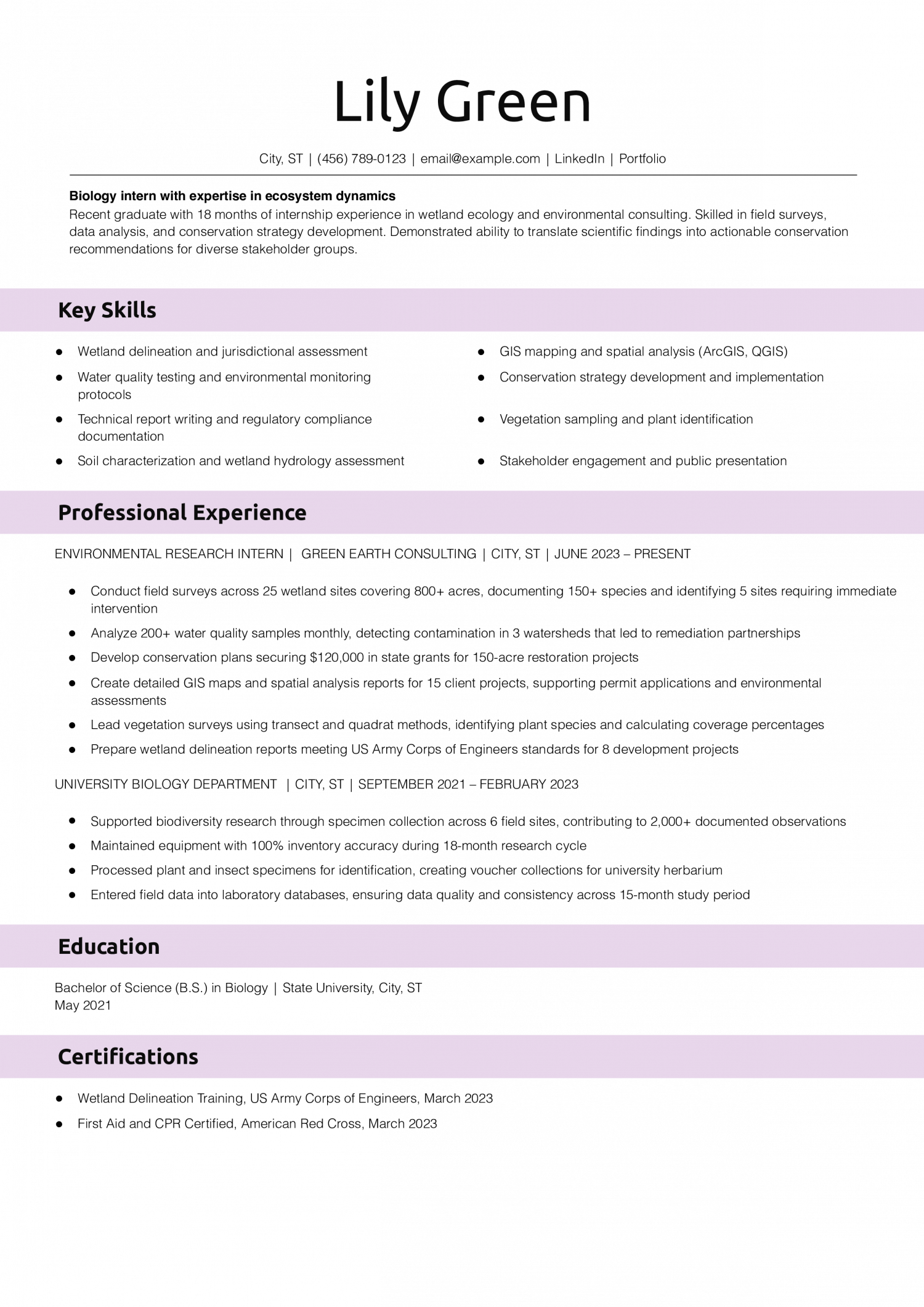
Biology Internship Resume Example
Why this resume example is strong:
This intern didn’t just learn the basics. They found a way to make conservation outcomes happen through their fieldwork. That’s the kind of initiative I look for in early-career hires.
What matters:
- 5 critical intervention sites identified across 800+ acres – Anyone can collect data, but prioritizing sites for immediate action requires judgment about conservation impact, not just field protocols.
- $120,000 in restoration grants secured – Most interns never see how research connects to funding, so tying field assessments to six-figure grants shows real-world conservation economics.
The 24 field surveys across 12 habitat zones shows actual work volume, not resume padding.
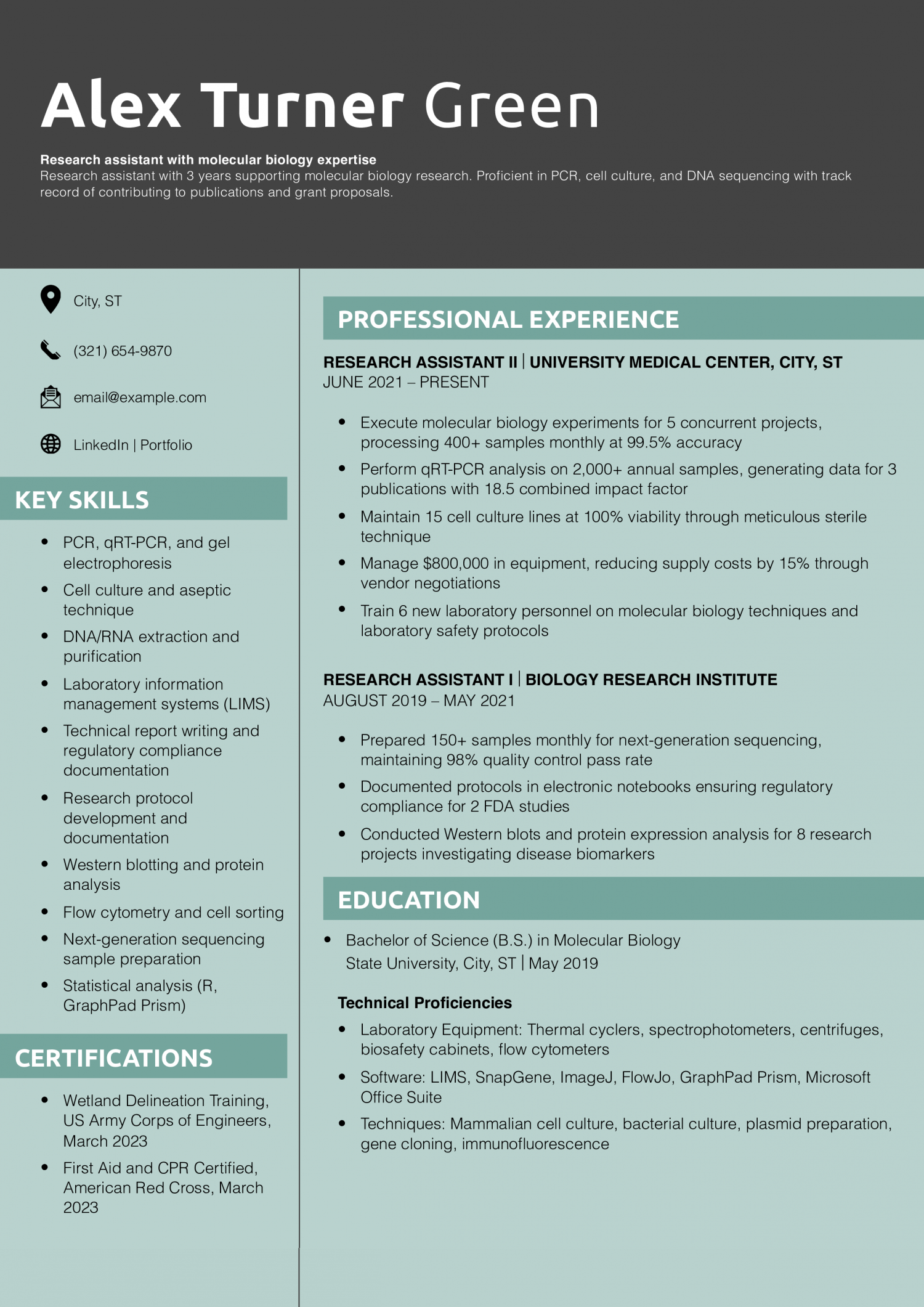
Biology Research Assistant Resume Example
Why this resume example is strong:
Most candidates just list techniques they know. High-throughput molecular work requires both speed and accuracy without any compromise. When I’m hiring research assistants, I need people who can handle demanding timelines.
Critical metrics:
- 2,000+ qRT-PCR samples annually with 99.5% accuracy – Processing this volume while maintaining near-perfect accuracy means handling demanding research timelines without compromising data quality that would invalidate months of work.
- 3 publications with 18.5 combined impact factor – Research assistants often provide data without recognition, so being acknowledged in high-impact publications means work that actually advances the field.
The 15% cost reduction through inventory management adds operational value beyond bench skills alone.
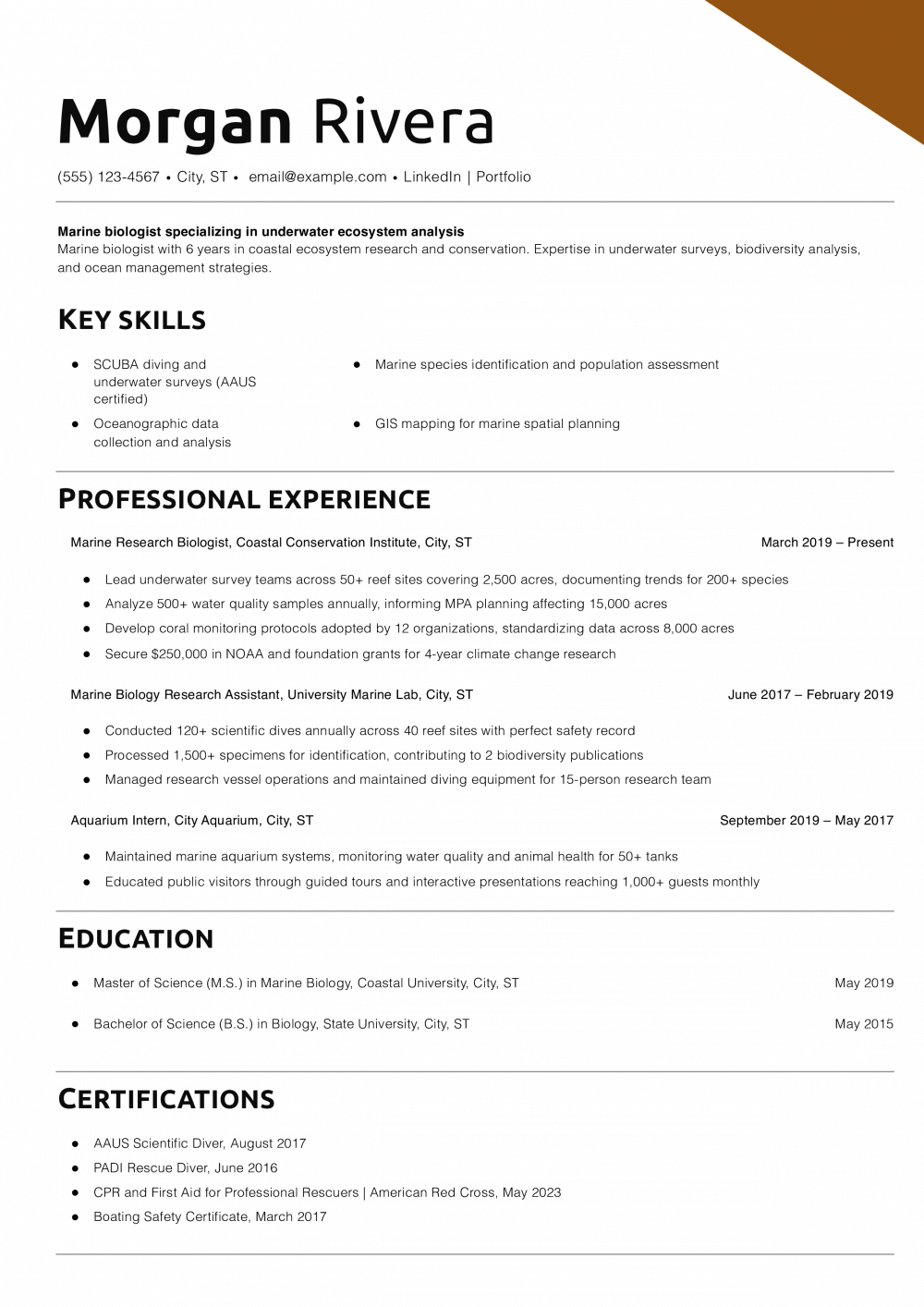
Marine Biology Resume Example
Why this resume example is strong:
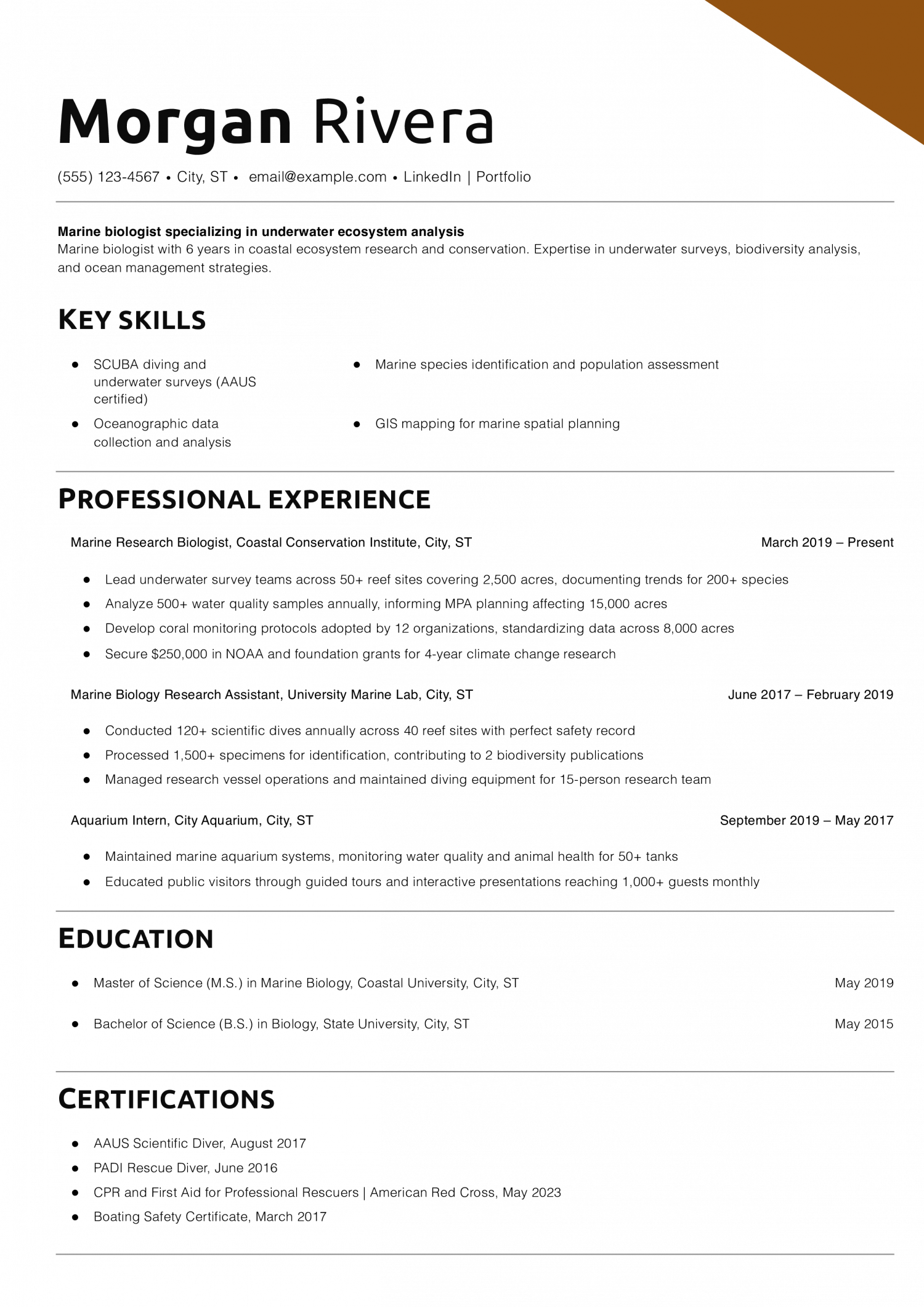
Most marine researchers generate site-specific data that stays in journals without real-world application. When I’m hiring, I need people who translate research into actual policy and management changes.
What matters:
- Monitoring protocols adopted by 12 organizations across 8,000 acres – Creating standardized methods that other organizations actually implement takes methodology with impact beyond individual projects, and most protocols get published then ignored.
- $250,000 in competitive marine conservation grants – Ocean research funding is notoriously competitive, so landing a quarter-million dollars requires both scientific credibility and ability to translate research questions into funded conservation.
The 120+ annual scientific dives with perfect safety record adds operational reliability that matters.
Molecular Biology Resume Example
Why this resume example is strong:
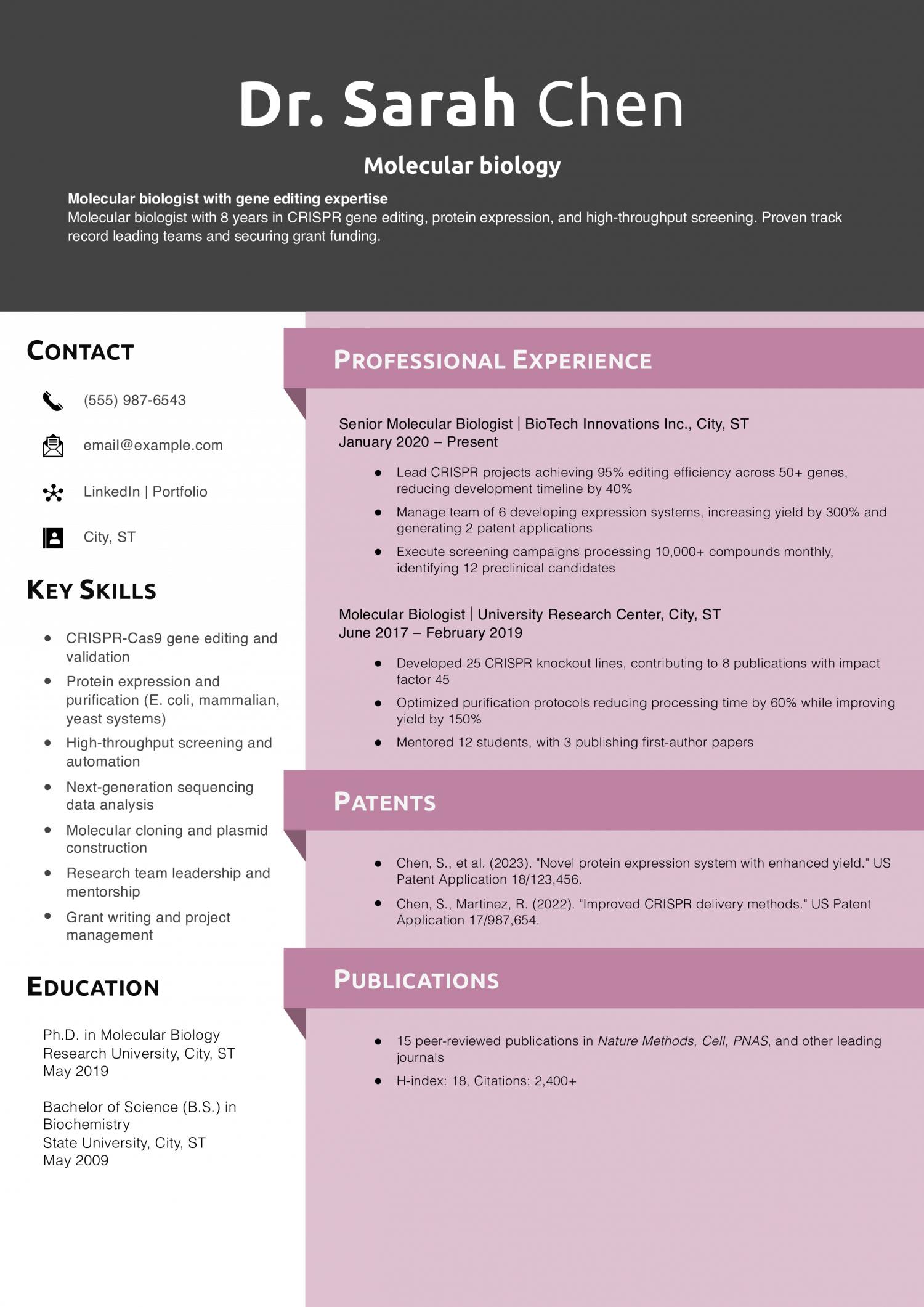
Academic molecular biologists publish papers. Industry molecular biologists move compounds toward commercialization. Three of this candidate’s biomarkers are in Phase II trials. That’s what I need to see.
The operational improvements matter too:
- 95% CRISPR editing efficiency with 40% faster timelines – Gene editing projects often stall due to low success rates, so hitting 95% while accelerating development means technical mastery directly impacting project economics.
- 300% yield increase generating 2 patent applications – Incremental improvements are expected, but tripling protein expression yield while creating patentable IP shows innovation creating lasting competitive advantages.
They know drug development runs on timelines and budgets, not just publications alone.
Conservation Biologist Resume Example
Why this resume example is strong:
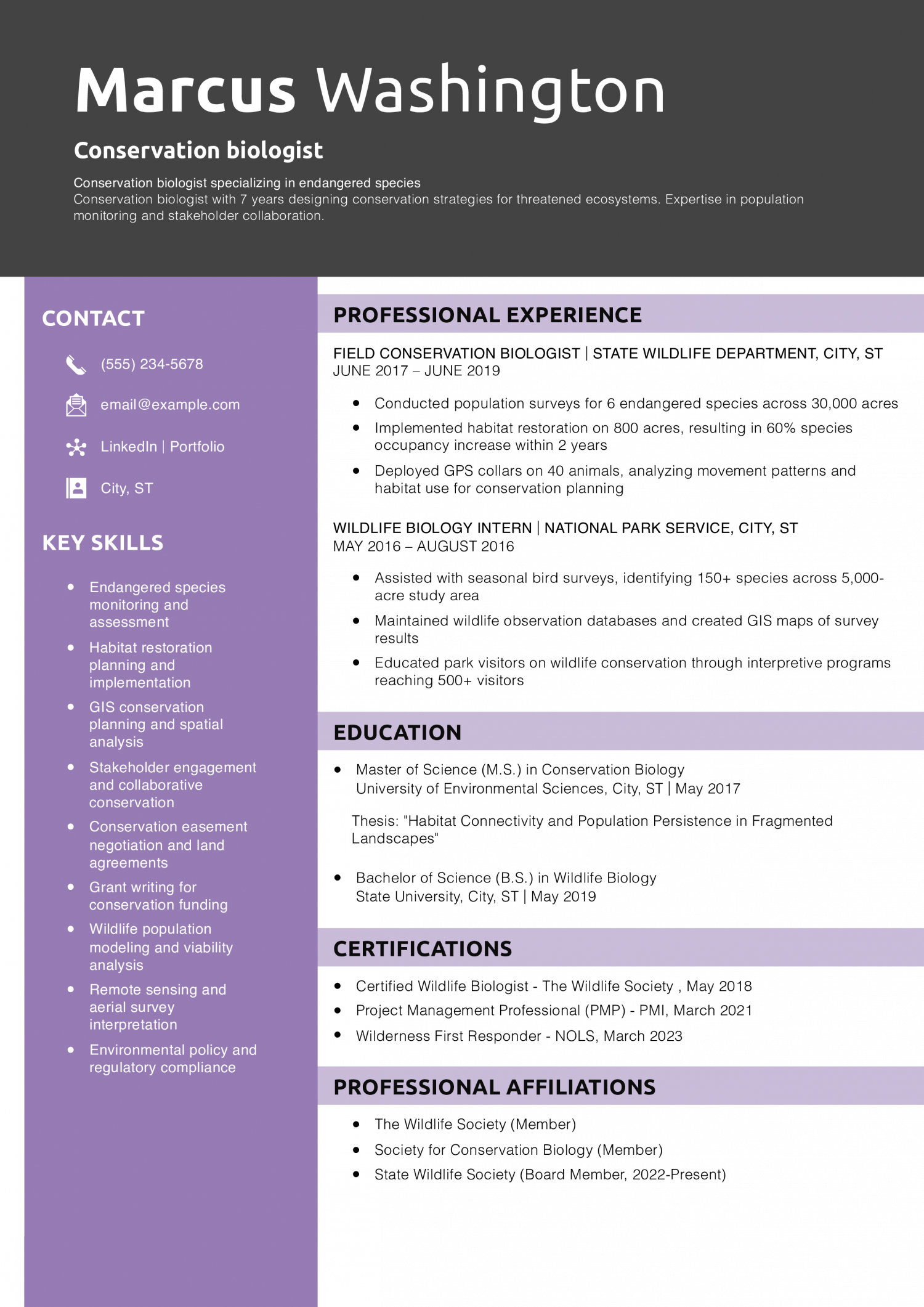
Conservation outcomes often take decades to materialize. Population recovery is measured in generations, not grant cycles. When I’m hiring, I need people who deliver results within realistic timelines.
Key achievements:
- 35% population increase for 3 endangered species over 4 years – Documenting measurable population growth within a presidential term shows management strategies that actually work, not just monitoring programs tracking decline.
- $8 million in conservation easements across 12,000 acres – Most field biologists lack policy skills to secure protected land, so converting assessments into permanent land protection means lasting conservation impact.
The coordination across 28+ organizations adds critical partnership management that conservation requires.
Environmental Biologist Resume Example
Why this resume example is strong:
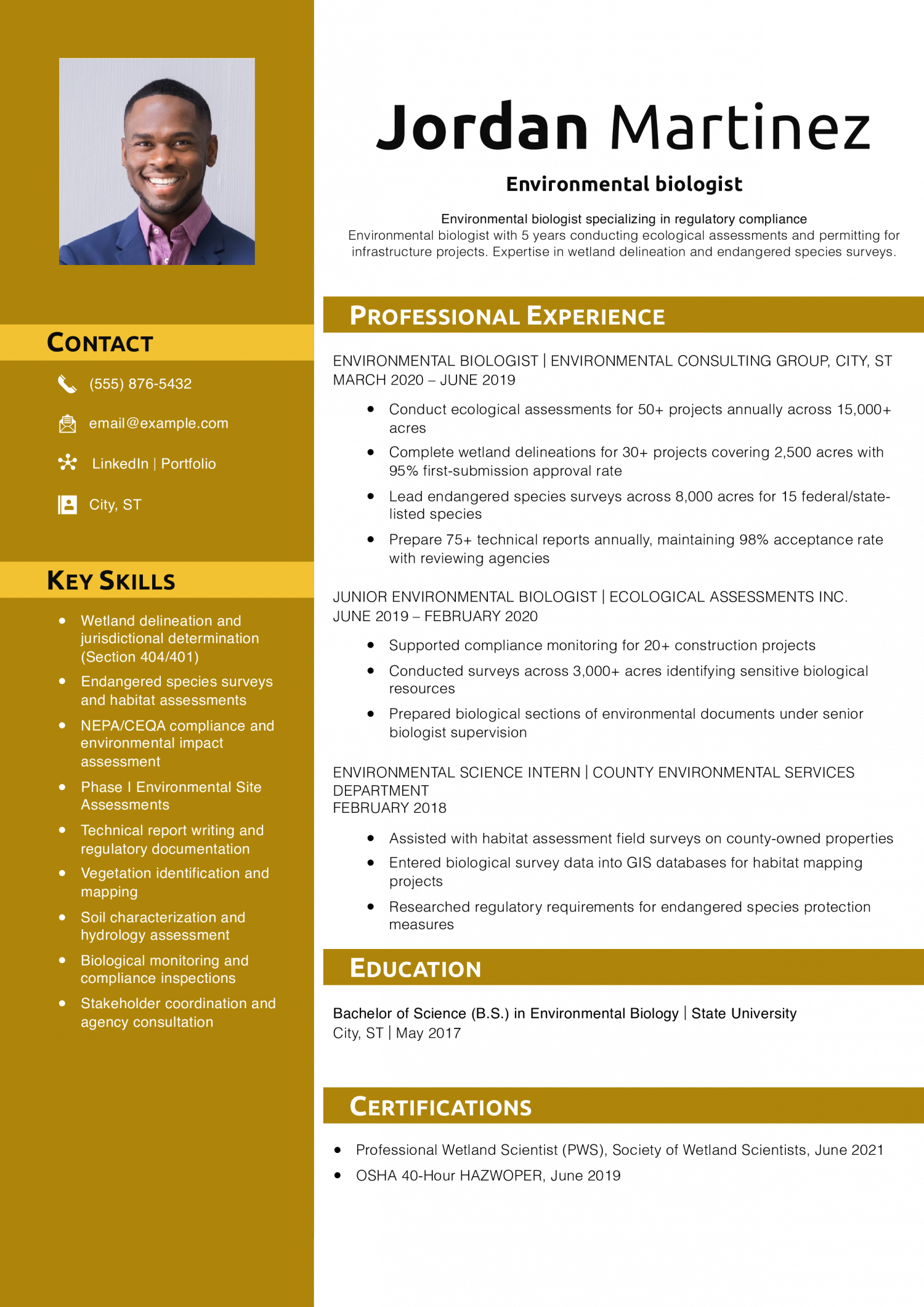
Environmental permitting involves multiple reviewing agencies with different standards and expectations. Most consultants face review cycles that delay projects. When I’m hiring, I need efficient navigators of these frameworks.
Performance indicators that matter:
- 95% first-submission approval rate on Section 404 permits – Most wetland consultants face multiple review cycles delaying projects, so first-submission approval means documentation anticipating agency requirements and saving clients months.
- 98% technical report acceptance across 75+ annual reports – Near-perfect acceptance across high volume means mastery of regulatory requirements, because one rejected report can delay a multimillion-dollar project.
The coordination across 40+ projects adds stakeholder management beyond just technical skills.
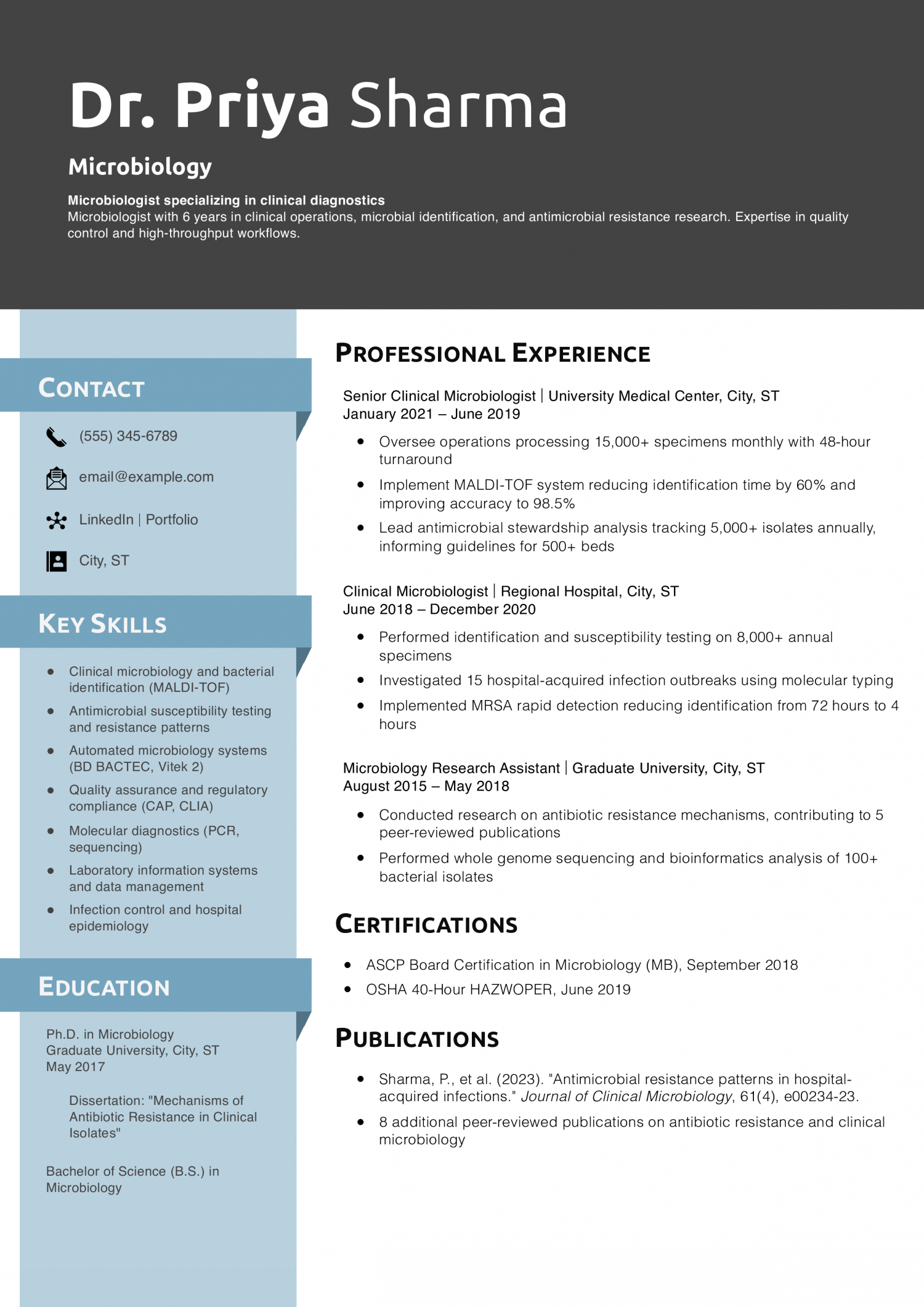
Microbiology Resume Example
Why this resume example is strong:
Clinical microbiology is time-sensitive for patient outcomes. Every hour counts when someone has sepsis. When I’m hiring, I need people who understand that both speed and accuracy matter equally.
Critical metrics:
- 60% faster identification with 98.5% accuracy – Cutting identification time by more than half while maintaining near-perfect accuracy directly impacts patient care through faster targeted treatment reducing complications.
- Zero deficiencies across 3 consecutive CAP inspections – Laboratory accreditation is unforgiving with detailed standards, so maintaining perfect compliance across 50+ procedures while managing high-volume operations means technical competence and operational discipline.
The MRSA detection protocol reducing identification from 72 to 4 hours adds infection control value.
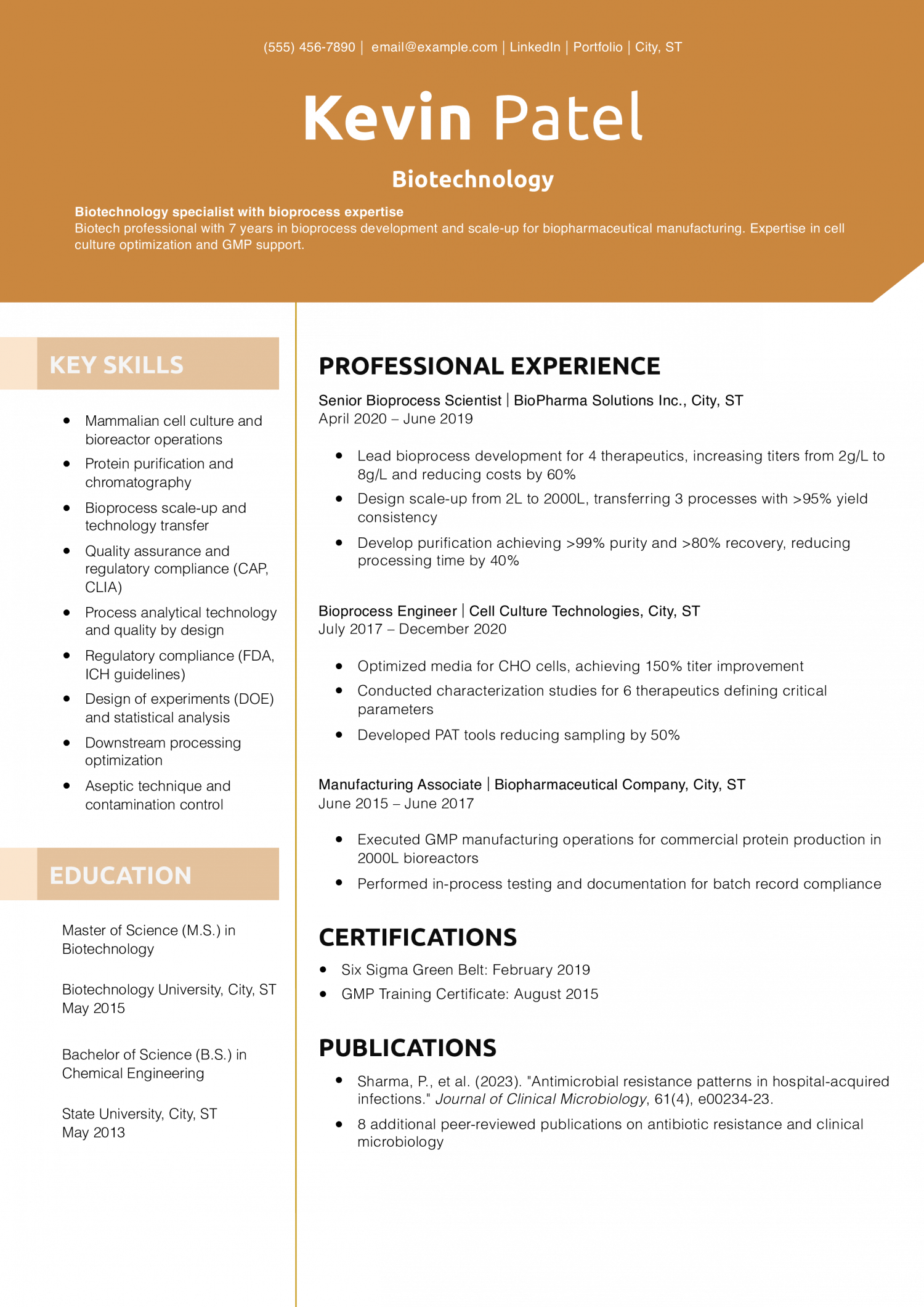
Biotechnology Resume Example
Why this resume example is strong:
Biomanufacturing economics depend fundamentally on productivity per batch. It determines whether a drug is commercially viable. When I’m hiring, I need people who understand entire production economics, not optimization alone.
Performance metrics:
- 400% titer increase (2g/L to 8g/L) cutting costs by 60% – Quadrupling protein production per batch while halving costs means process optimization directly improving commercial viability in crowded therapeutic markets.
- 3 successful scale-ups maintaining >95% yield consistency – Most bioprocesses fail during scale-up due to unforeseen variables at commercial scale, so transferring bench to 2000L production with maintained yields means understanding scale-dependent factors.
Zero manufacturing holds keeps development timelines on track and drugs moving toward patients.
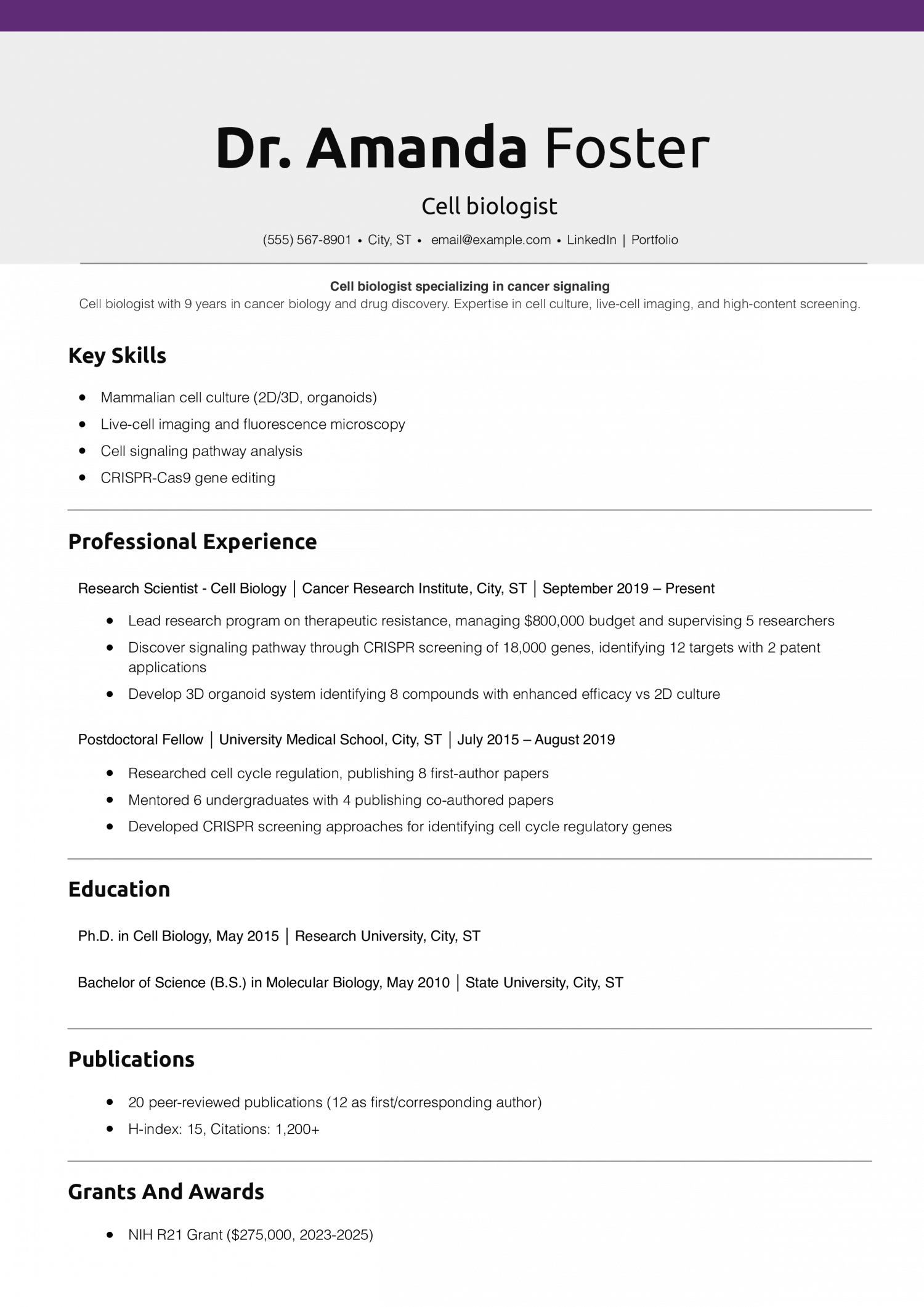
Cell Biologist Resume Example
Why this resume example is strong:
Genome-wide CRISPR screens generate massive datasets most researchers struggle to prioritize. Finding needles in haystacks requires both technical skill and biological insight. I need people who can do both.
Key accomplishments:
- 12 therapeutic targets from 18,000-gene CRISPR screen – Narrowing 18,000 genes to 12 actionable targets with 2 patent applications means extracting clinically relevant findings from complex data, because most screens identify hundreds of hits never becoming drugs.
- 3D organoid system identifying 8 compounds missed by standard screening – Most drug screening uses 2D cultures poorly predicting clinical responses, so developing organoid models revealing compounds conventional approaches miss means translational research bridging the efficacy gap.
Publishing in top-5 oncology journals adds academic credentials supporting the drug discovery focus.
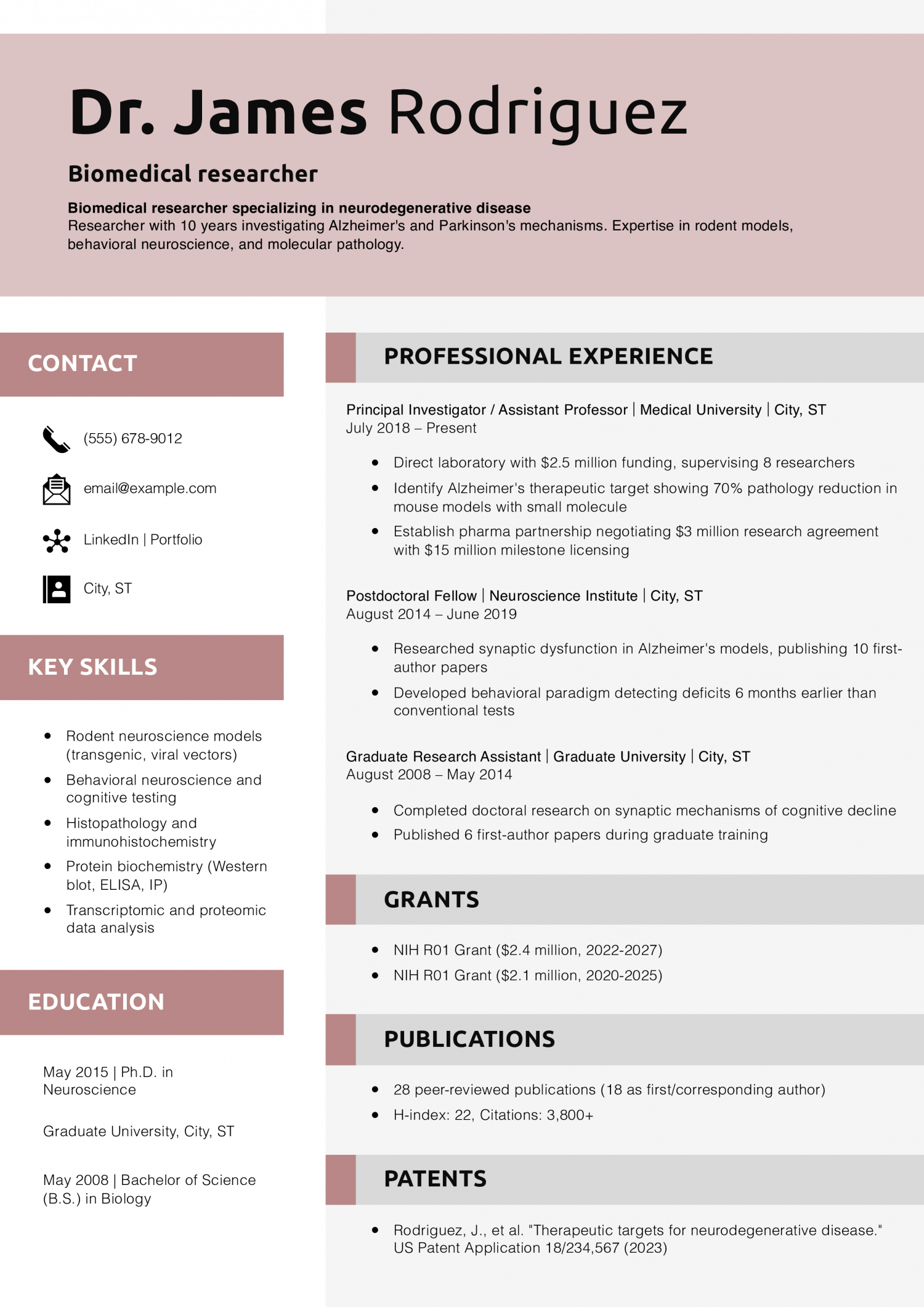
Biomedical Researcher Resume Example
Why this resume example is strong:
Most academic research identifies targets without proving druggability or commercial interest. Industry partners want proof before investing millions in drug development. I look for researchers who bridge that gap.
High-impact metrics:
- 70% reduction in pathological protein with small molecule inhibitor – Substantial therapeutic effect with a chemical probe in preclinical models validates the target and significantly de-risks pharmaceutical development investments, because most targets fail from poor druggability.
- $3 million sponsored research plus $15 million milestone licensing – Academic researchers often lack industry translation skills, so converting discovery into pharma partnership with eight-figure licensing potential means commercial viability of research.
Pharma companies want academics with proven scientific track records, not just interesting targets alone.
Biostatistician Resume Example
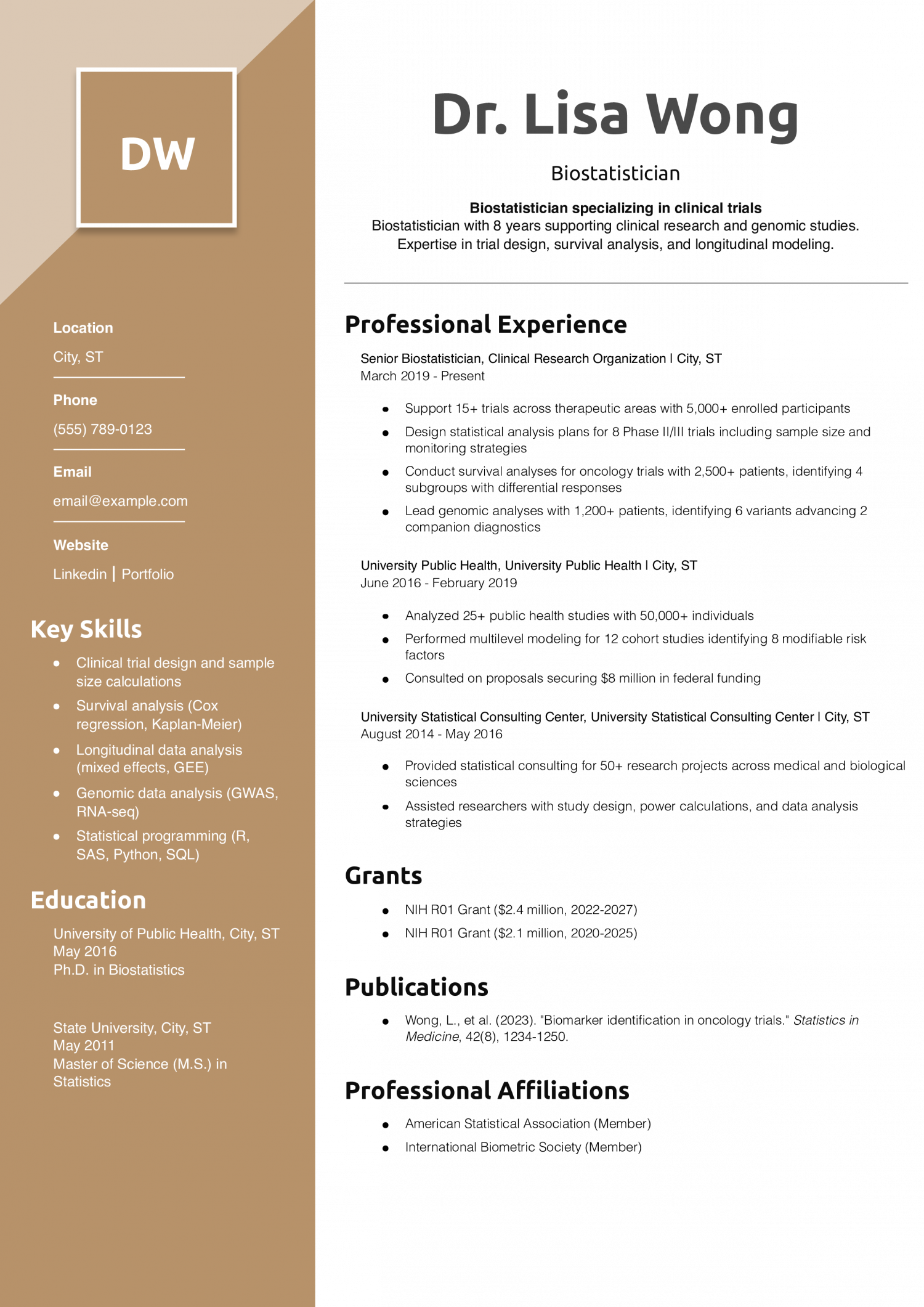
Why this resume example is strong:
Most biomarker analyses find statistical associations without clinical utility. They’re academically interesting but don’t change how drugs are developed. I need statisticians who understand that difference matters.
Key performance indicators:
- 6 genetic variants identified advancing 2 companion diagnostics – Identifying variants advancing diagnostic development means statistical work creating commercial value beyond academic publications, because companion diagnostics are increasingly required by FDA.
- 4 subgroups with differential treatment responses enabling precision medicine – Survival analysis often reports average treatment effects across all patients, but identifying patient subgroups with distinct treatment benefits enables targeted strategies improving outcomes for specific populations.
The automated reporting reducing analysis time by 60% adds operational efficiency beyond methodology alone.
Geneticist Resume Example
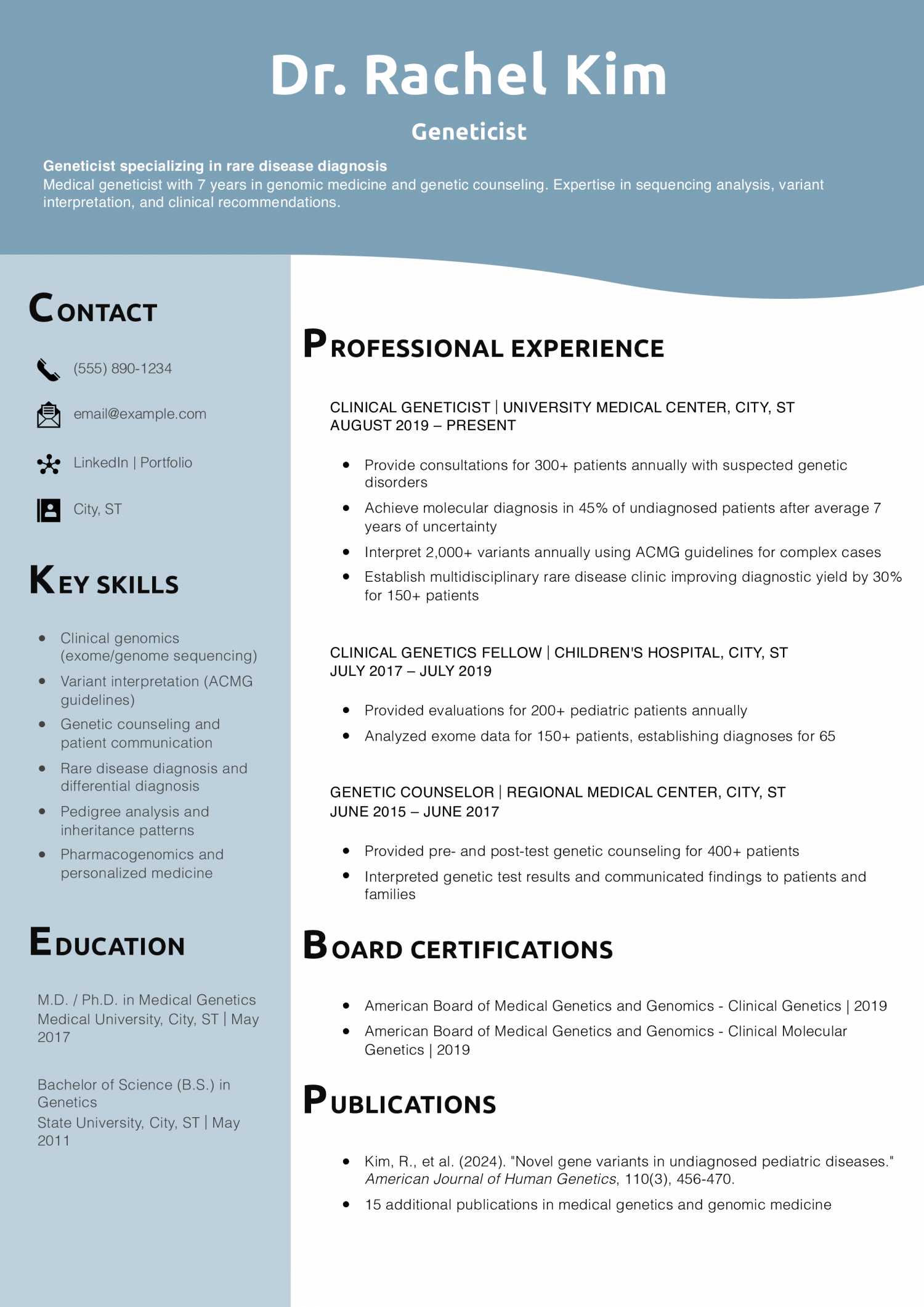
Why this resume example is strong:
Rare disease diagnosis is notoriously difficult. Most patients undergo years of testing without answers, cycling through specialists. The diagnostic odyssey is expensive and frustrating. I need geneticists who actually solve cases.
Critical outcomes:
- 45% diagnostic rate for patients undiagnosed after average 7-year odyssey – Solving nearly half of previously undiagnosed cases means expertise in complex variant interpretation, because each diagnosis ends years of medical uncertainty for families.
- Pharmacogenomic testing reducing adverse drug reactions by 25% – Most genetic medicine focuses narrowly on diagnosis, so implementing pharmacogenomic testing measurably improving prescribing safety means practical clinical value extending beyond rare disease.
When geneticists identify new disease genes, they enable diagnosis for future patients worldwide.
Agricultural Biologist Resume Example
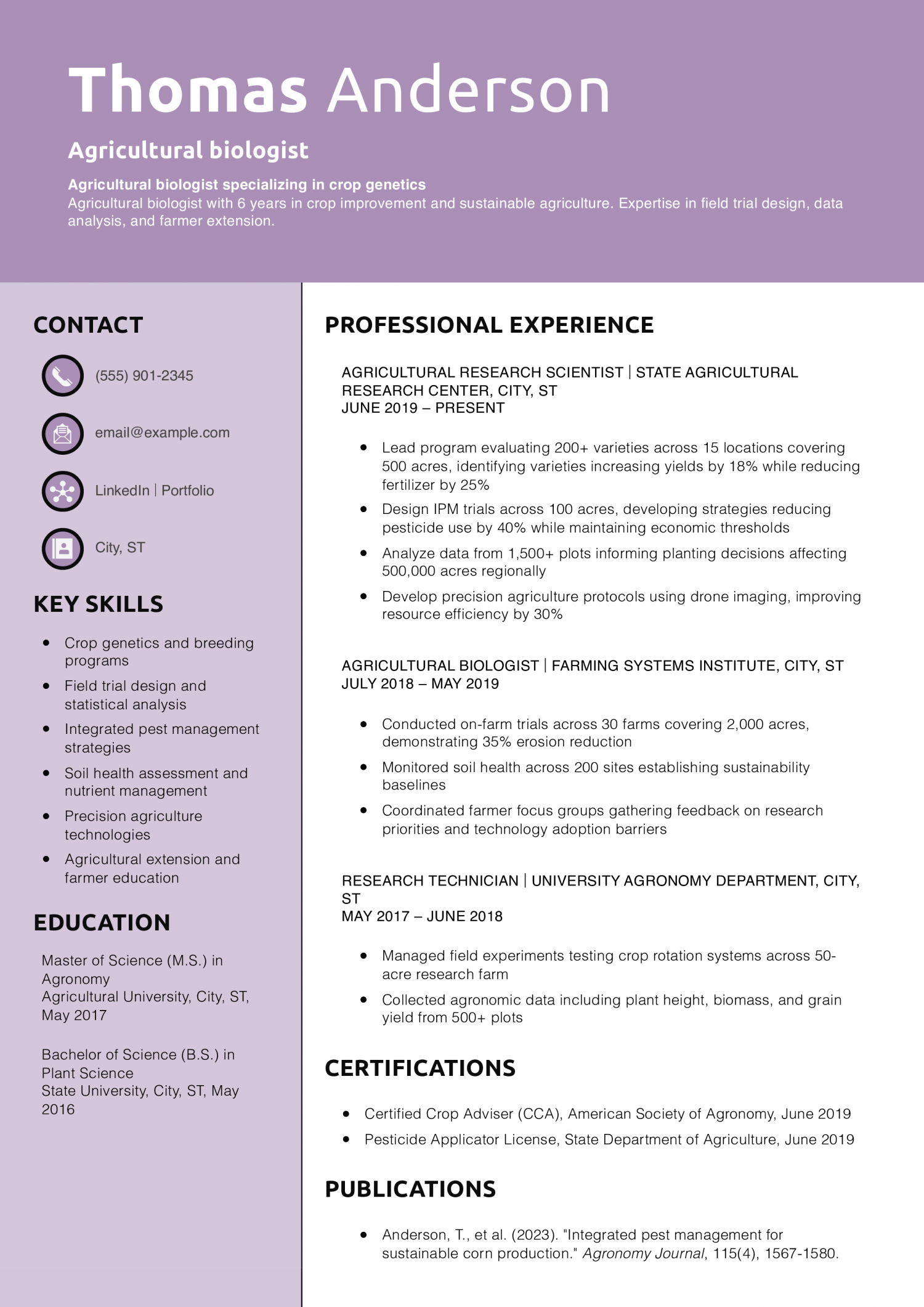
Why this resume example is strong:
Agricultural research often improves one factor while sacrificing another. Higher yields but more fertilizer, fewer pests but environmental damage. Farmers can’t afford those tradeoffs. I need researchers understanding both dimensions.
Key metrics:
- 18% yield increase with 25% less fertilizer across 200+ varieties – Simultaneously increasing productivity and resource efficiency means integrated solutions farmers actually need for economic and environmental sustainability, because recommendations must work on both fronts.
- Recommendations adopted on 150,000 acres within 2 years – Most agricultural research stays in academic journals without field implementation, so translating findings into practices adopted across 150,000 acres means bridging the research-extension gap.
The 40% pesticide reduction through IPM while maintaining economic thresholds adds integrated management value.
Ecologist Resume Example
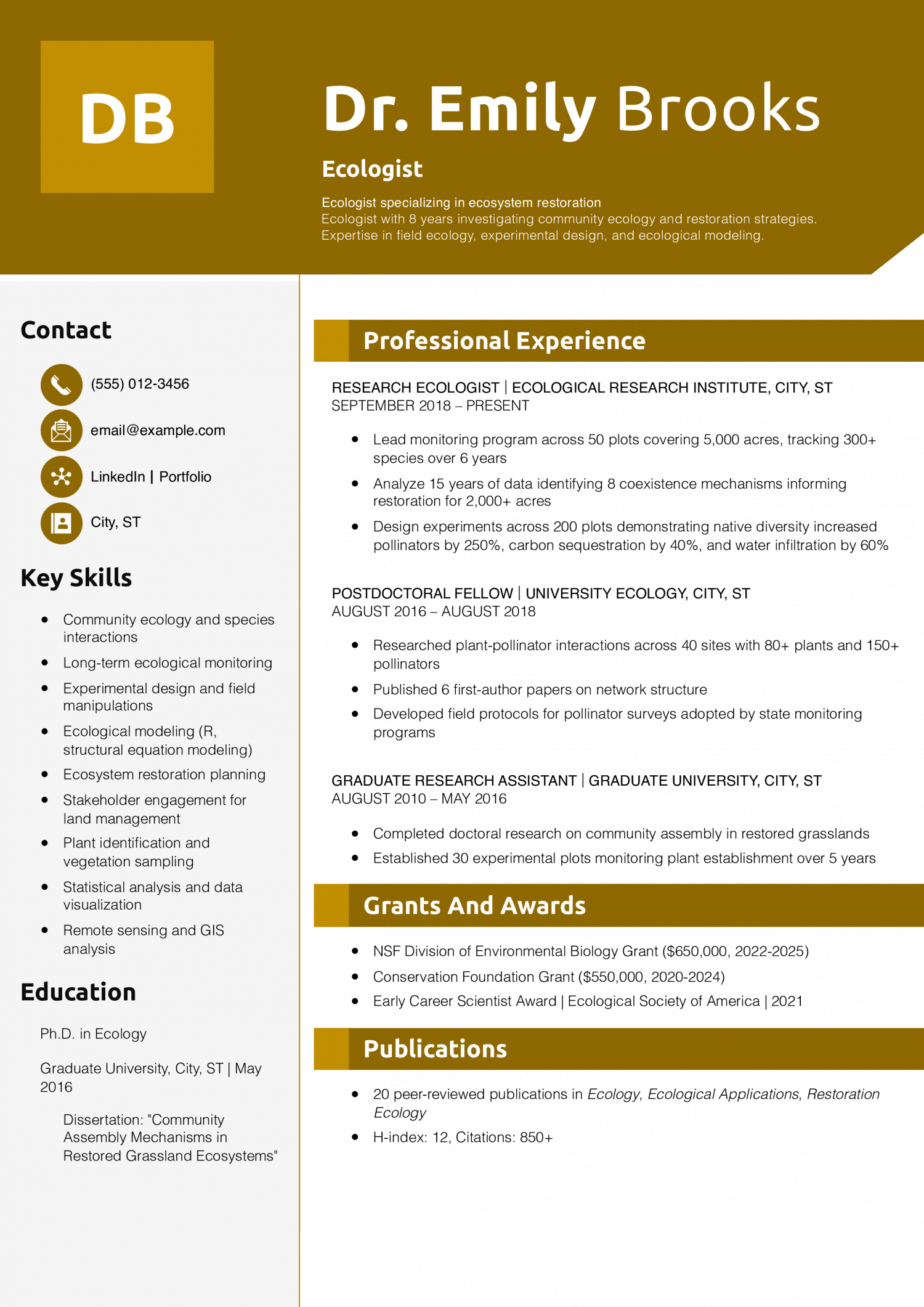
Why this resume example is strong:
Most restoration ecology lacks quantified ecosystem service outcomes. Projects are justified on biodiversity alone, which doesn’t always convince funders. Multi-million dollar restoration investments need both arguments. I look for ecologists making both.
Performance indicators:
- 250% pollinator increase, 40% carbon boost, 60% water infiltration improvement – Multiple quantified ecosystem services make the economic and environmental value case for conservation investment rather than relying solely on biodiversity arguments.
- Predictive models informing $5 million annual restoration spending – Ecological research often stops at pattern description without application, so creating decision-support tools shaping multi-million dollar allocation means applied value beyond publication.
Research actually influencing management means relevance beyond academic journals.
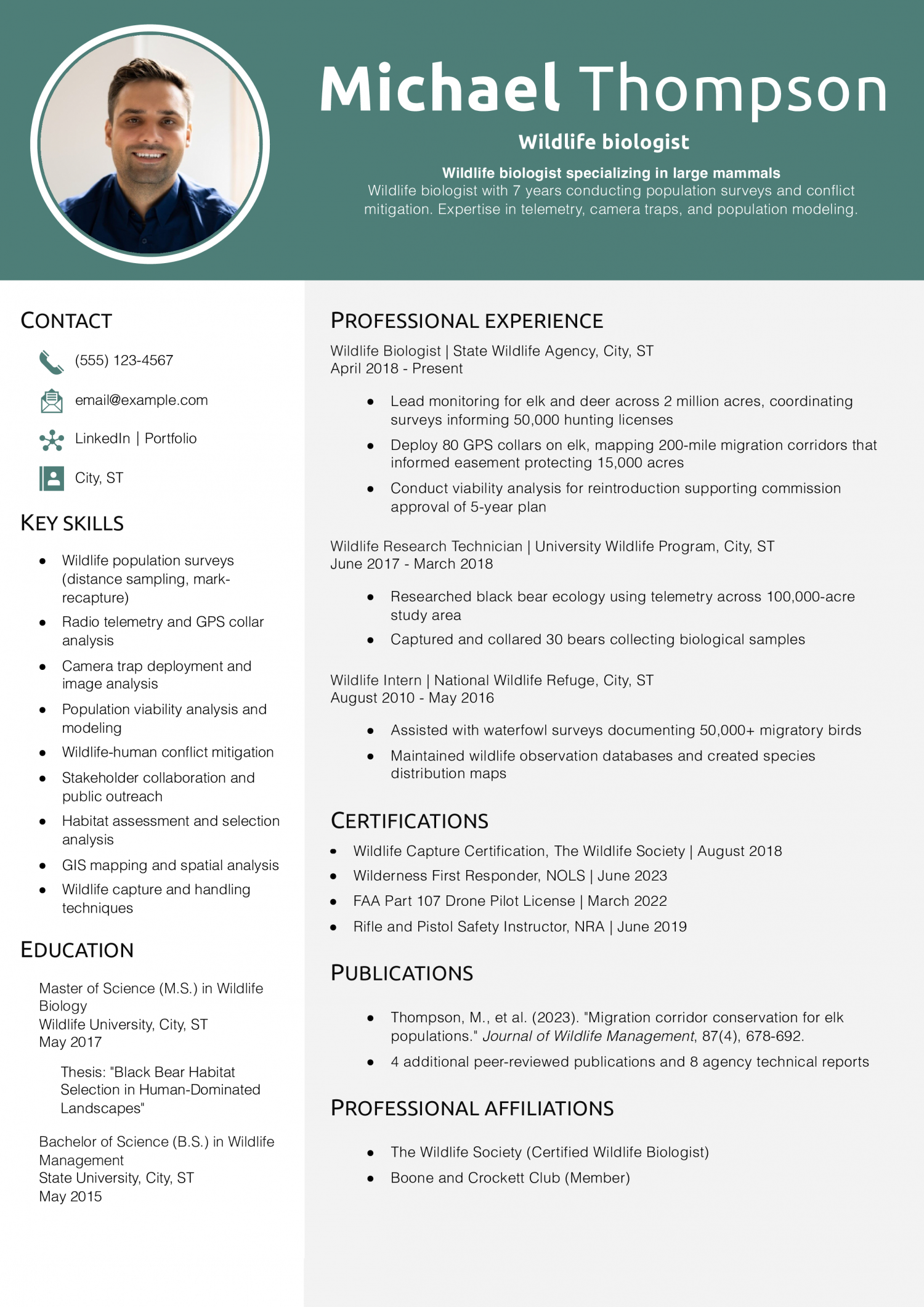
Wildlife Biologist Resume Example
Why this resume example is strong:
Most telemetry studies generate movement data that sits in databases without conservation outcomes or real-world application. Wildlife management requires buy-in from diverse groups with conflicting interests. I need biologists navigating that.
What matters:
- Migration corridor mapping protecting 15,000 acres of critical habitat – Converting GPS tracking data into permanent habitat protection through conservation easements means translation of research into landscape-scale conservation action that most studies never achieve.
- 60% livestock loss reduction while maintaining stable carnivore populations – Wildlife-human conflict management often fails at one objective, either eliminating carnivores or allowing unsustainable economic impacts to ranchers, but this shows solutions balancing competing interests.
That’s the blend of science and diplomacy wildlife management actually requires.
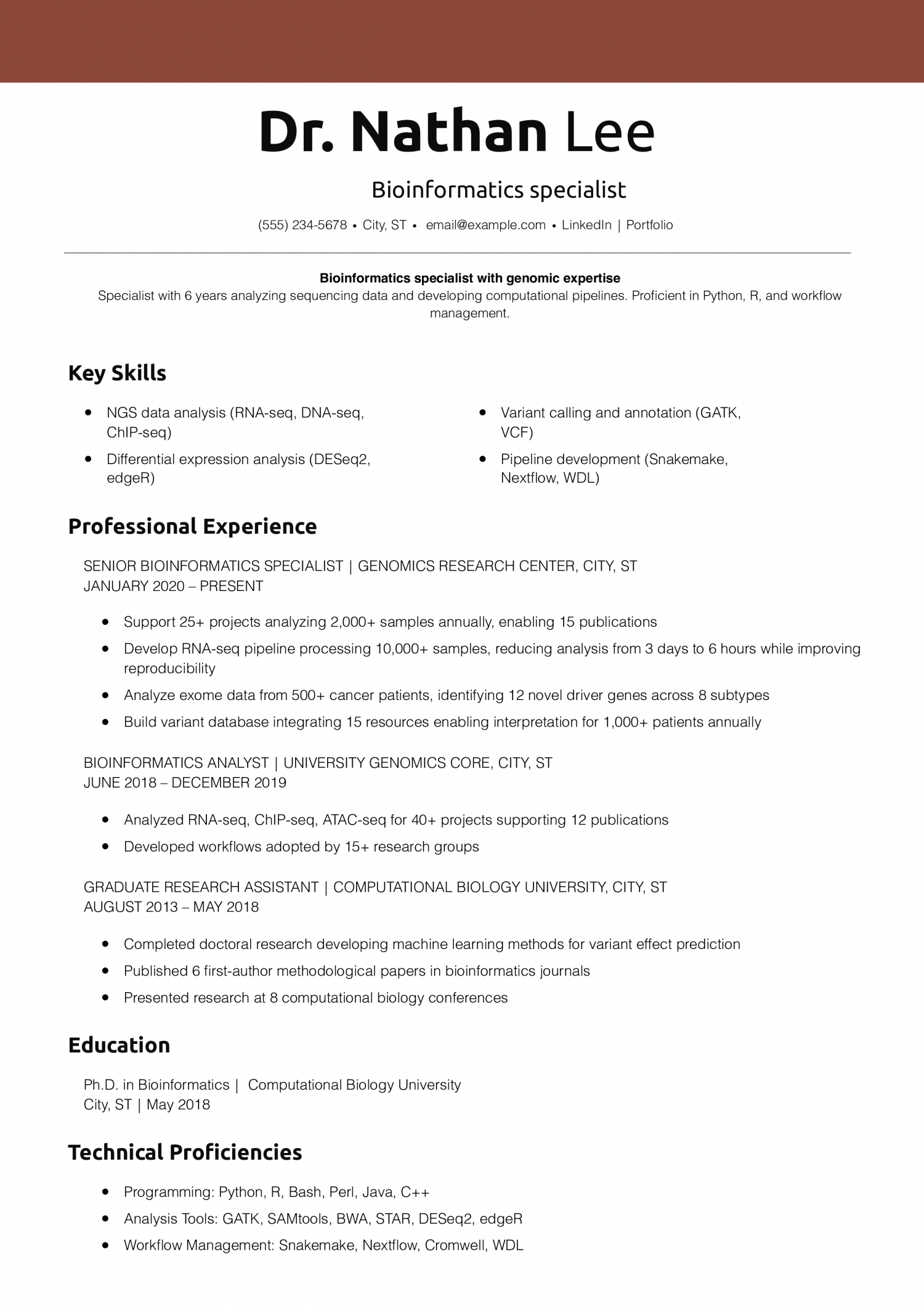
Bioinformatics Specialist Resume Example
Why this resume example is strong:
Bioinformatics bottlenecks are top complaints from experimental biologists. They generate data faster than it can be analyzed. Projects stall waiting for analysis. When I’m hiring, I need people removing those bottlenecks.
Critical metrics:
- Analysis time reduced from 3 days to 6 hours per sample – Achieving 12× speedup through pipeline automation while improving reproducibility removes major research obstacles, because when analysis takes 3 days, experiments get delayed and projects stall.
- 12 novel cancer driver genes identified across 500+ cancer patients – Most bioinformatics work processes data without biological discovery, so finding previously unknown cancer genes means analysis generating new biological insights driving future research directions.
Cutting costs by 40% through cloud computing migration means business acumen beyond technical skills.
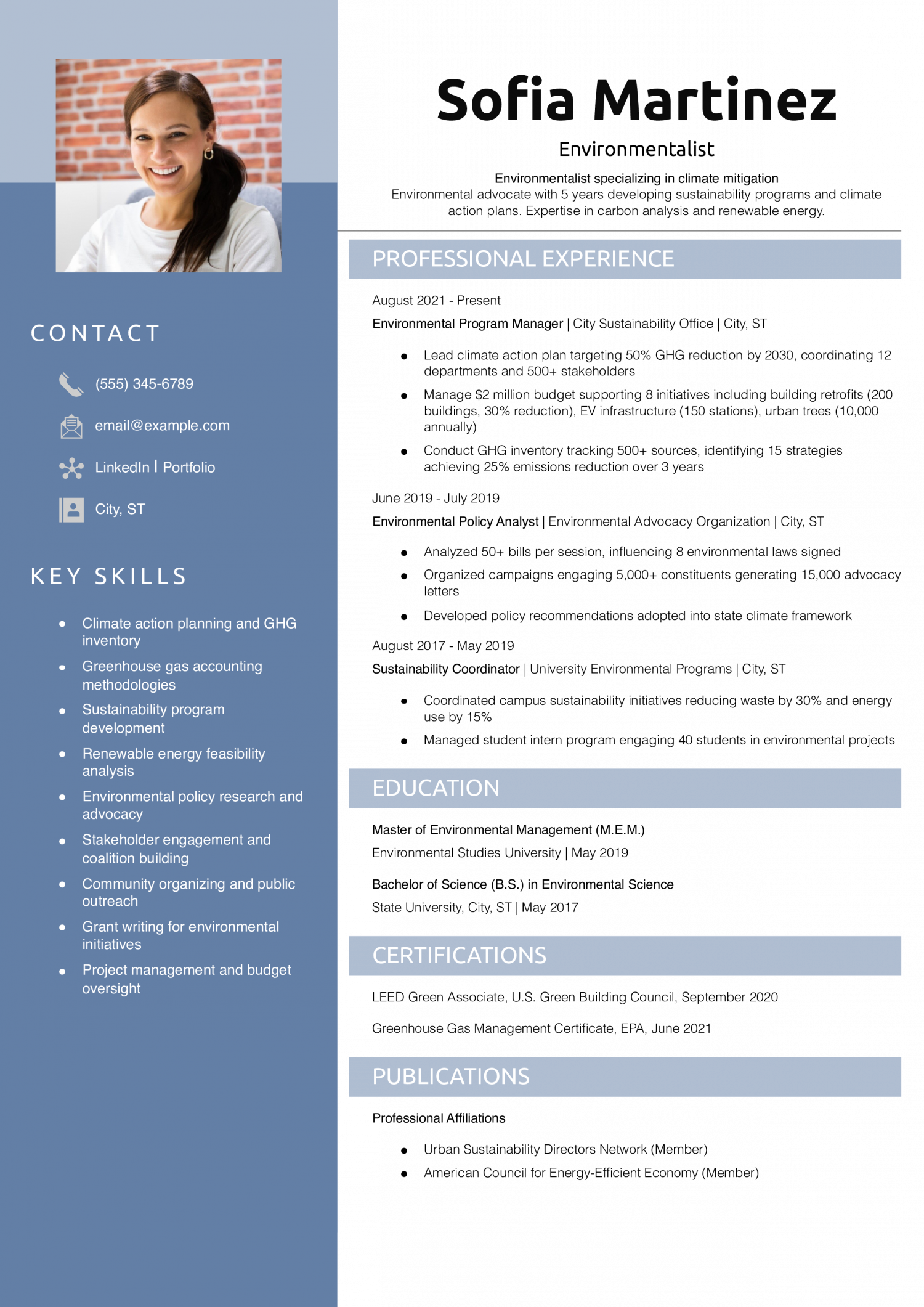
Environmentalist Resume Example
Why this resume example is strong:
Most climate plans set ambitious distant targets without near-term progress. Carbon neutral by 2050 sounds great, but three years is enough to show real results. I need program managers delivering measurable reductions now.
Performance that matters:
- 25% emissions reduction over 3 years through 15 high-impact strategies – Achieving quarter emissions reduction in first 3 years means strategies delivering actual climate benefits rather than paper commitments that might happen decades from now.
- $3.5 million in grants for climate resilience projects affecting 5,000 properties – Environmental advocacy often lacks implementation resources beyond planning documents, so securing multi-million dollar grant funding benefiting thousands of residents means converting goals into funded projects.
Cities only control about 15% of community emissions, so real climate action requires engaging businesses and residents.
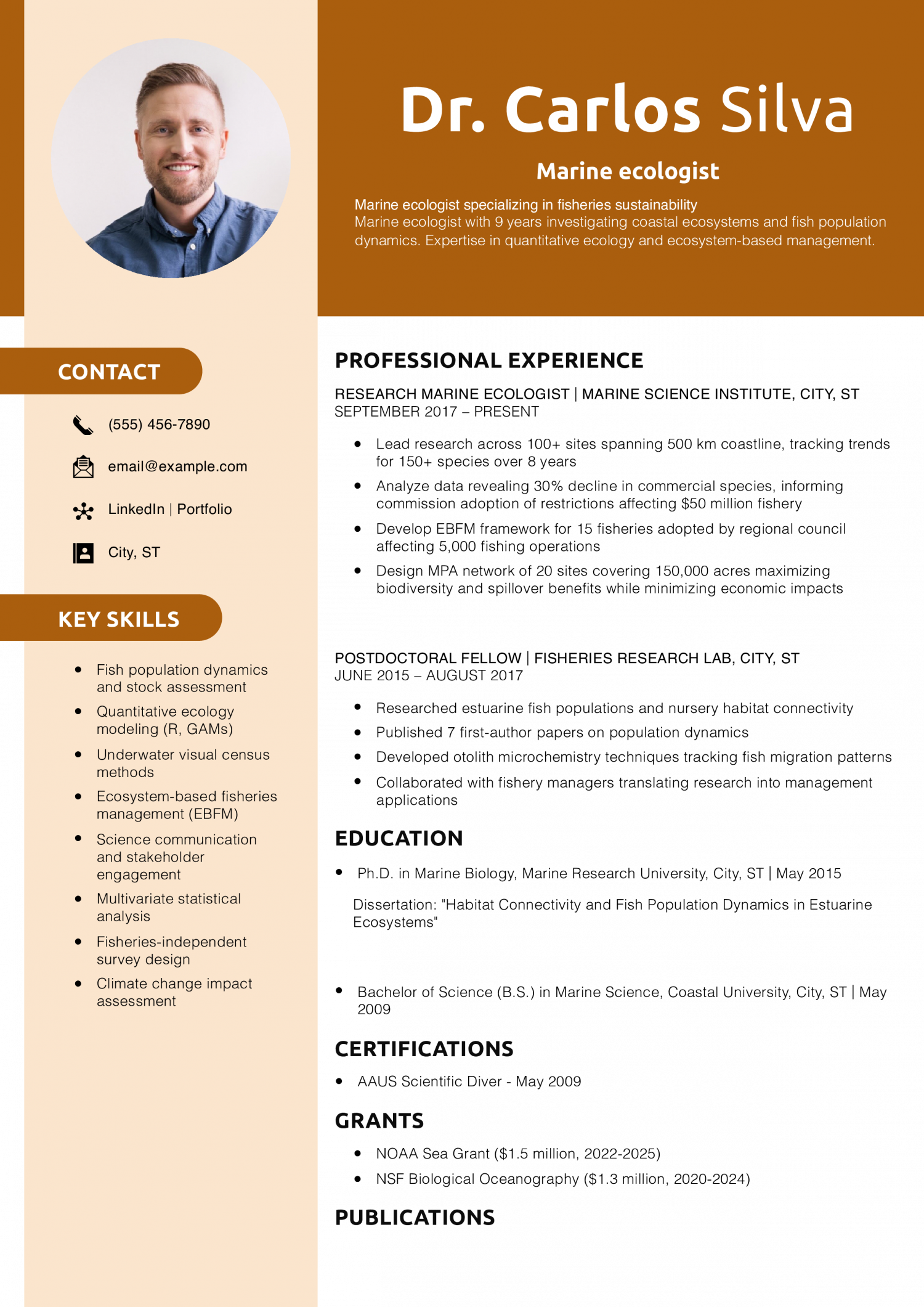
Marine Ecologist Resume Example
Why this resume example is strong:
Most population monitoring tracks trends without influencing actual management decisions or changing how fisheries operate on the water. Fishery closures don’t happen without solid science. I need ecologists bridging that gap.
High-impact outcomes:
- 30% decline analysis informing harvest restrictions on $50 million annual fishery – Providing evidence that actually changed harvest regulations for a major commercial fishery means research with direct economic and conservation consequences that most studies never achieve.
- MPA network design balancing 150,000 acres of protection with fishing community economics – Marine protected area planning often creates bitter conflict between conservation goals and fishing livelihoods, so designing a network achieving conservation while minimizing fishing community impacts means navigating biodiversity-livelihood tradeoffs.
Single-species management is failing, so councils need tools accounting for ecosystem interactions and climate change.
Biology Text-Only Resume Examples and Templates
Biology resume with no experience
Jane Doe
[email protected] | (123) 456-7890 | City, ST | LinkedIn | Portfolio
Biology graduate with a passion for laboratory research
Recent graduate with a Bachelor of Science in Biology. Proficient in microscopy, quantitative data analysis, and lab safety protocols. Committed to applying academic training to professional research environments and contributing to scientific advancement through meticulous laboratory practices and collaborative research initiatives.
Key Skills
- Quantitative data analysis and visualization
- Laboratory equipment operation and calibration
- Advanced microscopy (fluorescence, phase-contrast, confocal)
- Technical scientific report writing and documentation
- OSHA safety compliance and hazard assessment
- PCR and gel electrophoresis techniques
- Cell culture and sterile technique protocols
- Statistical analysis using R and Excel
Professional Experience
Lab Assistant (Intern)
City University Biology Lab | City, ST | June 2023 – June 2024
- Prepared materials for 50+ lab experiments, achieving 100% accuracy in sample labeling throughout 12-month internship
- Documented observations for microbial growth experiments across 8 environmental conditions, contributing data to 2 peer-reviewed publications
- Maintained zero safety violations during 4 quarterly audits, implementing sterilization procedures that reduced contamination by 30%
- Conducted PCR and gel electrophoresis procedures for DNA analysis experiments, processing 100+ samples with 98% success rate
- Calibrated and maintained 15 laboratory instruments including spectrophotometers, centrifuges, and microscopes
- Trained 3 new intern students on lab safety protocols and proper equipment operation techniques
Volunteer Research Assistant
Community Science Center | City, ST | January 2023 – May 2023
- Assisted with public science education programs, conducting hands-on biology demonstrations for 200+ K-12 students
- Prepared educational materials and specimen samples for 12 weekly public workshops on local ecosystems
- Maintained aquarium and terrarium exhibits, ensuring proper environmental conditions and animal welfare
Education
Bachelor of Science (B.S.) in Biology | June 2024
City University | City, ST
Relevant Coursework: Molecular Biology, Microbiology, Biochemistry, Cell Biology, Genetics, Ecology
Certifications
- Laboratory Safety Certification | City University EH&S | 2023
- Biosafety Level 2 Training | City University | 2023
Biology student
John Smith
[email protected] | (987) 654-3210 | City, ST | LinkedIn | Portfolio
Enthusiastic biology student with laboratory and research experience
Undergraduate biology student with hands-on field research and statistical analysis experience. Proven ability to communicate complex biological concepts through teaching and stakeholder presentations. Seeking opportunities to apply ecological research methods and data analysis skills to conservation and environmental science initiatives.
Key Skills
- Environmental data collection and field sampling protocols
- Specimen identification and taxonomic classification
- Scientific writing and peer-reviewed publication preparation
- Statistical analysis using SPSS, R, and Python
- Public speaking and stakeholder engagement
- GIS mapping and spatial data analysis
- Water quality testing and environmental monitoring
- Wildlife survey techniques and population sampling
Professional Experience
Field Research Assistant (Intern)
Conservation Society | City, ST | June 2023 – Present
- Conduct field studies on 12 local wetlands across 200+ sampling points, identifying 3 previously undocumented species
- Present findings to 50+ stakeholders quarterly, securing $45,000 in conservation funding through data-driven presentations
- Analyze biodiversity data using R statistical software, creating visualization dashboards for 15 monitoring reports
- Deploy and maintain 25 wildlife camera traps across 5 study sites, processing 10,000+ images for species identification
- Coordinate volunteer teams of 8-12 participants for monthly wetland surveys and habitat restoration activities
Teaching Assistant (Biology 101)
City University | City, ST | January 2022 – May 2023
- Graded 500+ assignments per semester, maintaining 48-hour turnaround time for 50+ students
- Held weekly review sessions for 15-20 students, improving average exam scores by 12%
- Developed supplementary educational materials including study guides and practice problems for 8 course modules
- Proctored exams and maintained academic integrity policies for classes of 100+ students
Undergraduate Research Assistant
City University Ecology Lab | City, ST | September 2021 – December 2021
- Assisted graduate students with greenhouse plant growth experiments, monitoring 200+ specimens daily
- Maintained detailed laboratory notebooks documenting plant phenology and environmental conditions
- Prepared soil samples and conducted nutrient analysis for 50+ experimental plots
Education
Master of Science (M.S.) in Biology | Expected 2025
City University | City, ST
Bachelor of Science (B.S.) in Biology | May 2022
City University | City, ST
GPA: 3.7/4.0
Publications
Smith, J., et al. (2024). “Wetland Biodiversity Patterns in Urban Ecosystems.” Journal of Conservation Biology, 38(2), 245-260.
Biology internship
Lily Green
[email protected] | (456) 789-0123 | City, ST | LinkedIn | Portfolio
Biology intern with expertise in ecosystem dynamics
Recent graduate with 18 months of internship experience in wetland ecology and environmental consulting. Skilled in field surveys, data analysis, and conservation strategy development. Demonstrated ability to translate scientific findings into actionable conservation recommendations for diverse stakeholder groups.
Key Skills
- Wetland delineation and jurisdictional assessment
- GIS mapping and spatial analysis (ArcGIS, QGIS)
- Water quality testing and environmental monitoring protocols
- Conservation strategy development and implementation
- Technical report writing and regulatory compliance documentation
- Vegetation sampling and plant identification
- Soil characterization and wetland hydrology assessment
- Stakeholder engagement and public presentation
Professional Experience
Environmental Research Intern
Green Earth Consulting | City, ST | March 2023 – Present
- Conduct field surveys across 25 wetland sites covering 800+ acres, documenting 150+ species and identifying 5 sites requiring immediate intervention
- Analyze 200+ water quality samples monthly, detecting contamination in 3 watersheds that led to remediation partnerships
- Develop conservation plans securing $120,000 in state grants for 150-acre restoration projects
- Create detailed GIS maps and spatial analysis reports for 15 client projects, supporting permit applications and environmental assessments
- Lead vegetation surveys using transect and quadrat methods, identifying plant species and calculating coverage percentages
- Prepare wetland delineation reports meeting US Army Corps of Engineers standards for 8 development projects
- Present research findings to clients, regulatory agencies, and community groups in 12 stakeholder meetings
Research Assistant
University Biology Department | City, ST | September 2021 – February 2023
- Supported biodiversity research through specimen collection across 6 field sites, contributing to 2,000+ documented observations
- Maintained equipment with 100% inventory accuracy during 18-month research cycle
- Processed plant and insect specimens for identification, creating voucher collections for university herbarium
- Entered field data into laboratory databases, ensuring data quality and consistency across 15-month study period
- Assisted with greenhouse experiments testing native plant establishment, monitoring 300+ seedlings weekly
Laboratory Technician (Part-time)
City Environmental Testing Lab | City, ST | June 2021 – August 2021
- Conducted water quality analyses including pH, dissolved oxygen, turbidity, and nutrient concentrations for 500+ samples
- Maintained laboratory equipment and ensured compliance with quality assurance protocols
- Prepared reagents and calibration standards following EPA-approved methods
Education
Bachelor of Science (B.S.) in Biology | June 2023
State University | City, ST
Minor: Environmental Science
Relevant Coursework: Wetland Ecology, Conservation Biology, GIS Applications, Environmental Policy
Certifications
- Wetland Delineation Training | US Army Corps of Engineers | 2023
- First Aid and CPR Certified | American Red Cross | 2023
Biology research assistant
Alex Turner
[email protected] | (321) 654-9870 | City, ST | LinkedIn | Portfolio
Research assistant with molecular biology expertise
Research assistant with 3 years supporting molecular biology research. Proficient in PCR, cell culture, and DNA sequencing with track record of contributing to publications and grant proposals.
Key Skills
- PCR, qRT-PCR, and gel electrophoresis
- Cell culture and aseptic technique
- DNA/RNA extraction and purification
- Laboratory information management systems (LIMS)
- Research protocol development and documentation
- Western blotting and protein analysis
- Flow cytometry and cell sorting
- Next-generation sequencing sample preparation
- Statistical analysis (R, GraphPad Prism)
Professional Experience
Research Assistant II
University Medical Center | City, ST | June 2021 – Present
- Execute molecular biology experiments for 5 concurrent projects, processing 400+ samples monthly at 99.5% accuracy
- Perform qRT-PCR analysis on 2,000+ annual samples, generating data for 3 publications with 18.5 combined impact factor
- Maintain 15 cell culture lines at 100% viability through meticulous sterile technique
- Manage $800,000 in equipment, reducing supply costs by 15% through vendor negotiations
- Train 6 new laboratory personnel on molecular biology techniques and laboratory safety protocols
- Develop and optimize new experimental protocols, reducing PCR cycle time by 25% while maintaining data quality
- Prepare grant application materials including preliminary data figures and methodology sections for 3 successful NIH proposals totaling $2.5 million
- Coordinate laboratory meetings and journal clubs, presenting research updates to 15-person research team monthly
Research Assistant I
Biology Research Institute | City, ST | August 2019 – May 2021
- Prepared 150+ samples monthly for next-generation sequencing, maintaining 98% quality control pass rate
- Documented protocols in electronic notebooks ensuring regulatory compliance for 2 FDA studies
- Conducted Western blots and protein expression analysis for 8 research projects investigating disease biomarkers
- Maintained laboratory inventory systems and ordered supplies, ensuring zero research delays due to material shortages
- Extracted DNA and RNA from tissue samples using standardized protocols, achieving 95% average purity scores
Undergraduate Research Intern
State University Genetics Lab | City, ST | January 2019 – May 2019
- Assisted with plant genetics research, maintaining growth chambers and collecting phenotype data
- Performed DNA extractions and PCR amplification for 200+ plant samples
- Created visual presentations of research findings for laboratory group meetings
Education
Bachelor of Science (B.S.) in Molecular Biology | May 2019
State University | City, ST
Dean’s List (6 semesters)
Technical Proficiencies
- Laboratory Equipment: Thermal cyclers, spectrophotometers, centrifuges, biosafety cabinets, flow cytometers
- Software: LIMS, SnapGene, ImageJ, FlowJo, GraphPad Prism, Microsoft Office Suite
- Techniques: Mammalian cell culture, bacterial culture, plasmid preparation, gene cloning, immunofluorescence
Marine biology
Morgan Rivera
[email protected] | (555) 123-4567 | City, ST | LinkedIn | Portfolio
Marine biologist specializing in underwater ecosystem analysis
Marine biologist with 6 years in coastal ecosystem research and conservation. Expertise in underwater surveys, biodiversity analysis, and ocean management strategies.
Key Skills
- SCUBA diving and underwater surveys (AAUS certified)
- Marine species identification and population assessment
- Oceanographic data collection and analysis
- GIS mapping for marine spatial planning
- Coral reef ecosystem monitoring protocols
- Scientific diving safety and emergency procedures
- Underwater photography and videography
- Fish population survey methods (visual census, transects)
- Statistical analysis and ecological modeling
Professional Experience
Marine Research Biologist
Coastal Conservation Institute | City, ST | March 2019 – Present
- Lead underwater survey teams across 50+ reef sites covering 2,500 acres, documenting trends for 200+ species
- Analyze 500+ water quality samples annually, informing MPA planning affecting 15,000 acres
- Develop coral monitoring protocols adopted by 12 organizations, standardizing data across 8,000 acres
- Secure $250,000 in NOAA and foundation grants for 4-year climate change research
- Conduct fish population assessments using underwater visual census methods, surveying 10,000+ individual fish annually
- Train and supervise 8 field technicians and 15 volunteer divers in scientific diving and data collection procedures
- Present research findings at 6 international conferences, including invited talks on coral reef resilience
- Collaborate with governmental agencies on marine protected area designation, contributing scientific data to policy decisions
- Maintain scientific diving equipment and ensure compliance with AAUS diving safety standards
Marine Biology Research Assistant
University Marine Lab | City, ST | June 2017 – February 2019
- Conducted 120+ scientific dives annually across 40 reef sites with perfect safety record
- Processed 1,500+ specimens for identification, contributing to 2 biodiversity publications
- Managed research vessel operations and maintained diving equipment for 15-person research team
- Collected oceanographic data including temperature, salinity, and current measurements at 25 study sites
- Assisted with laboratory analysis of algae and invertebrate samples, creating taxonomic reference collections
Aquarium Intern
City Aquarium | City, ST | September 2016 – May 2017
- Maintained marine aquarium systems, monitoring water quality and animal health for 50+ tanks
- Educated public visitors through guided tours and interactive presentations reaching 1,000+ guests monthly
- Assisted with animal husbandry including feeding, habitat maintenance, and behavioral observations
Education
Master of Science (M.S.) in Marine Biology | May 2017
Coastal University | City, ST
Thesis: “Climate Change Impacts on Coral Reef Fish Communities”
Bachelor of Science (B.S.) in Biology | May 2015
State University | City, ST
Certifications
- AAUS Scientific Diver | 2017
- PADI Rescue Diver | 2016
- CPR and First Aid for Professional Rescuers | American Red Cross | 2023
- Boating Safety Certificate | 2017
Publications
- Rivera, M., et al. (2023). “Coral reef resilience in warming oceans.” Marine Ecology Progress Series, 682, 45-58.
Rivera, M., Johnson, K. (2022). “Fish community structure on urban reefs.” Coral Reefs, 41(3), 567-580.
Molecular biology
Dr. Sarah Chen
[email protected] | (555) 987-6543 | City, ST | LinkedIn | Portfolio
Molecular biologist with gene editing expertise
Molecular biologist with 8 years in CRISPR gene editing, protein expression, and high-throughput screening. Proven track record leading teams and securing grant funding.
Key Skills
- CRISPR-Cas9 gene editing and validation
- Protein expression and purification (E. coli, mammalian, yeast systems)
- High-throughput screening and automation
- Next-generation sequencing data analysis
- Molecular cloning and plasmid construction
- Research team leadership and mentorship
- Grant writing and project management
- Bioreactor operations and scale-up
- Protein characterization (mass spec, chromatography)
Professional Experience
Senior Molecular Biologist
BioTech Innovations Inc. | City, ST | January 2020 – Present
- Lead CRISPR projects achieving 95% editing efficiency across 50+ genes, reducing development timeline by 40%
- Manage team of 6 developing expression systems, increasing yield by 300% and generating 2 patent applications
- Execute screening campaigns processing 10,000+ compounds monthly, identifying 12 preclinical candidates
- Secure $1.2 million in NIH and industry funding over 3 years
- Design and implement automated liquid handling workflows, increasing screening throughput by 200%
- Collaborate with computational biology team on CRISPR guide RNA design, improving targeting specificity by 35%
- Represent company at 8 scientific conferences, presenting breakthrough findings on gene therapy approaches
- Establish protein purification pipeline processing 50+ therapeutic candidates, achieving >99% purity consistently
- Manage laboratory budget of $400,000 annually, optimizing resource allocation across 4 concurrent projects
Molecular Biologist
University Research Center | City, ST | June 2016 – December 2019
- Developed 25 CRISPR knockout lines, contributing to 8 publications with impact factor 45
- Optimized purification protocols reducing processing time by 60% while improving yield by 150%
- Mentored 12 students, with 3 publishing first-author papers
- Conducted molecular cloning experiments generating 100+ expression constructs for functional genomics studies
- Performed protein characterization using mass spectrometry and chromatography techniques
- Collaborated with 5 principal investigators across departments, providing molecular biology expertise for diverse projects
Postdoctoral Research Fellow
Graduate University | City, ST | July 2014 – May 2016
- Investigated CRISPR mechanism of action, publishing 4 first-author papers in high-impact journals
- Developed novel gene editing strategies improving efficiency in difficult-to-transfect cell types
- Trained 8 graduate students and technicians in CRISPR techniques and molecular biology methods
Education
Ph.D. in Molecular Biology | May 2014
Research University | City, ST
Dissertation: “CRISPR-mediated Gene Regulation in Mammalian Cells”
Bachelor of Science (B.S.) in Biochemistry | May 2009
State University | City, ST
Patents
- Chen, S., et al. (2023). “Novel protein expression system with enhanced yield.” US Patent Application 18/123,456.
- Chen, S., Martinez, R. (2022). “Improved CRISPR delivery methods.” US Patent Application 17/987,654.
Publications
- 15 peer-reviewed publications in Nature Methods, Cell, PNAS, and other leading journals
- H-index: 18, Citations: 2,400+
Conservation biologist
Marcus Washington
[email protected] | (555) 234-5678 | City, ST | LinkedIn | Portfolio
Conservation biologist specializing in endangered species
Conservation biologist with 7 years designing conservation strategies for threatened ecosystems. Expertise in population monitoring and stakeholder collaboration.
Key Skills
- Endangered species monitoring and assessment
- Habitat restoration planning and implementation
- GIS conservation planning and spatial analysis
- Stakeholder engagement and collaborative conservation
- Conservation easement negotiation and land agreements
- Grant writing for conservation funding
- Wildlife population modeling and viability analysis
- Remote sensing and aerial survey interpretation
- Environmental policy and regulatory compliance
Professional Experience
Conservation Program Manager
Wildlife Conservation Alliance | City, ST | July 2019 – Present
- Direct programs protecting 8 endangered species across 50,000 acres, increasing 3 populations by 35% over 4 years
- Coordinate with 28 agencies/organizations to establish 12,000 acres of protected areas worth $8 million
- Secure $2.5 million in grants funding habitat restoration across 6 watersheds
- Manage team conducting surveys across 200+ sites, collecting data on 25,000+ animals annually
- Develop species recovery plans following US Fish & Wildlife Service guidelines for 5 endangered species
- Negotiate conservation easements with 15 private landowners, protecting critical habitat while maintaining landowner rights
- Conduct population viability analyses using modeling software to predict long-term species persistence
- Present conservation strategies to state wildlife commission, securing approval for 3-year management plan
- Lead habitat restoration projects including native plant establishment (50,000 plants), invasive removal (200 acres), and wetland reconstruction (15 acres)
- Monitor program effectiveness through annual surveys and adaptive management adjustments
Field Conservation Biologist
State Wildlife Department | City, ST | June 2017 – June 2019
- Conducted population surveys for 6 endangered species across 30,000 acres
- Implemented habitat restoration on 800 acres, resulting in 60% species occupancy increase within 2 years
- Deployed GPS collars on 40 animals, analyzing movement patterns and habitat use for conservation planning
- Collaborated with tribal biologists on co-management strategies for culturally important species
- Wrote technical reports and scientific publications documenting conservation outcomes
Wildlife Biology Intern
National Park Service | City, ST | May 2016 – August 2016
- Assisted with seasonal bird surveys, identifying 150+ species across 5,000-acre study area
- Maintained wildlife observation databases and created GIS maps of survey results
- Educated park visitors on wildlife conservation through interpretive programs reaching 500+ visitors
Education
Master of Science (M.S.) in Conservation Biology | May 2017
University of Environmental Sciences | City, ST
Thesis: “Habitat Connectivity and Population Persistence in Fragmented Landscapes”
Bachelor of Science (B.S.) in Wildlife Biology | May 2015
State University | City, ST
Certifications
- Certified Wildlife Biologist | The Wildlife Society | 2018
- Project Management Professional (PMP) | PMI | 2021
- Wilderness First Responder | NOLS | 2023
Professional Affiliations
- The Wildlife Society (Member)
- Society for Conservation Biology (Member)
- State Wildlife Society (Board Member, 2022-Present)
Environmental biologist
Jordan Martinez
[email protected] | (555) 876-5432 | City, ST | LinkedIn | Portfolio
Environmental biologist specializing in regulatory compliance
Environmental biologist with 5 years conducting ecological assessments and permitting for infrastructure projects. Expertise in wetland delineation and endangered species surveys.
Key Skills
- Wetland delineation and jurisdictional determination (Section 404/401)
- Endangered species surveys and habitat assessments
- NEPA/CEQA compliance and environmental impact assessment
- Phase I Environmental Site Assessments
- Technical report writing and regulatory documentation
- Vegetation identification and mapping
- Soil characterization and hydrology assessment
- Biological monitoring and compliance inspections
- Stakeholder coordination and agency consultation
Professional Experience
Environmental Biologist
Environmental Consulting Group | City, ST | March 2020 – Present
- Conduct ecological assessments for 50+ projects annually across 15,000+ acres
- Complete wetland delineations for 30+ projects covering 2,500 acres with 95% first-submission approval rate
- Lead endangered species surveys across 8,000 acres for 15 federal/state-listed species
- Prepare 75+ technical reports annually, maintaining 98% acceptance rate with reviewing agencies
- Coordinate with federal, state, and local agencies on 40+ projects
- Conduct botanical surveys identifying 300+ plant species and preparing technical species lists
- Lead biological monitoring during construction for 20 projects, ensuring compliance with environmental permits
- Develop habitat restoration plans for compensatory mitigation requirements on 12 development projects
- Train 4 junior biologists in field survey methods and regulatory requirements
- Manage project schedules and budgets for environmental assessment work totaling $2 million annually
Junior Environmental Biologist
Ecological Assessments Inc. | City, ST | June 2019 – February 2020
- Supported compliance monitoring for 20+ construction projects
- Conducted surveys across 3,000+ acres identifying sensitive biological resources
- Prepared biological sections of environmental documents under senior biologist supervision
- Performed wetland boundary flagging and GPS data collection for delineation reports
Environmental Science Intern
County Environmental Services Department | City, ST | Summer 2018
- Assisted with habitat assessment field surveys on county-owned properties
- Entered biological survey data into GIS databases for habitat mapping projects
- Researched regulatory requirements for endangered species protection measures
Education
Bachelor of Science (B.S.) in Environmental Biology | May 2019
State University | City, ST
Minor: Geographic Information Systems
Certifications
- Professional Wetland Scientist (PWS) | Society of Wetland Scientists | 2021
- Qualified SWPPP Developer | 2020
- OSHA 40-Hour HAZWOPER | 2019
Professional Affiliations
- Society of Wetland Scientists (Member)
- California Native Plant Society (Member)
Microbiology
Dr. Priya Sharma
[email protected] | (555) 345-6789 | City, ST | LinkedIn | Portfolio
Microbiologist specializing in clinical diagnostics
Microbiologist with 6 years in clinical operations, microbial identification, and antimicrobial resistance research. Expertise in quality control and high-throughput workflows.
Key Skills
- Clinical microbiology and bacterial identification (MALDI-TOF)
- Antimicrobial susceptibility testing and resistance patterns
- Automated microbiology systems (BD BACTEC, Vitek 2)
- Quality assurance and regulatory compliance (CAP, CLIA)
- Molecular diagnostics (PCR, sequencing)
- Laboratory information systems and data management
- Infection control and hospital epidemiology
- Staff training and competency assessment
- Laboratory accreditation and audit preparation
Professional Experience
Senior Clinical Microbiologist
University Medical Center | City, ST | January 2021 – Present
- Oversee operations processing 15,000+ specimens monthly with 48-hour turnaround
- Implement MALDI-TOF system reducing identification time by 60% and improving accuracy to 98.5%
- Lead antimicrobial stewardship analysis tracking 5,000+ isolates annually, informing guidelines for 500+ beds
- Manage quality control ensuring 100% CAP compliance across 50+ procedures with zero deficiencies in 3 audits
- Supervise 6-person team, reducing overtime costs by 25%
- Investigate hospital-acquired infection outbreaks, conducting molecular epidemiology analysis for 8 investigations
- Develop and validate new diagnostic assays including rapid PCR tests for 5 bacterial pathogens
- Serve on hospital infection control committee, providing microbiological expertise for policy decisions
- Prepare for and host CAP inspection teams, maintaining comprehensive documentation systems
- Present antimicrobial resistance trends at hospital grand rounds and quality improvement meetings
Clinical Microbiologist
Regional Hospital | City, ST | June 2018 – December 2020
- Performed identification and susceptibility testing on 8,000+ annual specimens
- Investigated 15 hospital-acquired infection outbreaks using molecular typing
- Implemented MRSA rapid detection reducing identification from 72 hours to 4 hours
- Maintained proficiency testing programs ensuring continued laboratory certification
- Trained 10 medical laboratory scientists in microbiology procedures and quality control
Microbiology Research Assistant
Graduate University | City, ST | August 2015 – May 2018
- Conducted research on antibiotic resistance mechanisms, contributing to 5 peer-reviewed publications
- Performed whole genome sequencing and bioinformatics analysis of 100+ bacterial isolates
- Maintained bacterial strain collections including proper storage and documentation
Education
Ph.D. in Microbiology | May 2018
Graduate University | City, ST
Dissertation: “Mechanisms of Antibiotic Resistance in Clinical Isolates”
Bachelor of Science (B.S.) in Microbiology | May 2013
State University | City, ST
Certifications
- ASCP Board Certification in Microbiology (MB) | 2018
- Molecular Biology Certification (MB-ASCP) | 2019
Publications
- Sharma, P., et al. (2023). “Antimicrobial resistance patterns in hospital-acquired infections.” Journal of Clinical Microbiology, 61(4), e00234-23.
- 8 additional peer-reviewed publications on antibiotic resistance and clinical microbiology
Professional Affiliations
- American Society for Microbiology (Member)
- American Society for Clinical Pathology (Member)
Biotechnology
Kevin Patel
[email protected] | (555) 456-7890 | City, ST | LinkedIn | Portfolio
Biotechnology specialist with bioprocess expertise
Biotech professional with 7 years in bioprocess development and scale-up for biopharmaceutical manufacturing. Expertise in cell culture optimization and GMP support.
Key Skills
- Mammalian cell culture and bioreactor operations
- Protein purification and chromatography
- Bioprocess scale-up and technology transfer
- GMP manufacturing support and batch record review
- Process analytical technology and quality by design
- Regulatory compliance (FDA, ICH guidelines)
- Design of experiments (DOE) and statistical analysis
- Downstream processing optimization
- Aseptic technique and contamination control
Professional Experience
Senior Bioprocess Scientist
BioPharma Solutions Inc. | City, ST | April 2020 – Present
- Lead bioprocess development for 4 therapeutics, increasing titers from 2g/L to 8g/L and reducing costs by 60%
- Design scale-up from 2L to 2000L, transferring 3 processes with >95% yield consistency
- Develop purification achieving >99% purity and >80% recovery, reducing processing time by 40%
- Support GMP manufacturing, reviewing 200+ batch records and reducing deviations by 35%
- Collaborate on 2 IND and 1 BLA filings with zero manufacturing holds
- Implement process analytical technology tools for real-time monitoring of critical quality attributes
- Lead cross-functional teams of 12 scientists and engineers for technology transfer projects
- Conduct media optimization studies using DOE approaches, improving cell growth and product quality
- Develop single-use bioreactor processes, reducing cleaning validation requirements and facility costs
- Present technical data to FDA during pre-IND meetings and regulatory inspections
Bioprocess Engineer
Cell Culture Technologies | City, ST | July 2017 – March 2020
- Optimized media for CHO cells, achieving 150% titer improvement
- Conducted characterization studies for 6 therapeutics defining critical parameters
- Developed PAT tools reducing sampling by 50%
- Performed lab-scale bioreactor runs for process development, executing 100+ runs over 3 years
- Investigated and resolved cell culture performance issues, implementing corrective actions
Manufacturing Associate
Biopharmaceutical Company | City, ST | June 2015 – June 2017
- Executed GMP manufacturing operations for commercial protein production in 2000L bioreactors
- Performed in-process testing and documentation for batch record compliance
- Participated in deviation investigations and corrective/preventive action (CAPA) processes
Education
Master of Science (M.S.) in Biotechnology | May 2015
Biotechnology University | City, ST
Bachelor of Science (B.S.) in Chemical Engineering | May 2013
State University | City, ST
Certifications
- Six Sigma Green Belt | 2019
- GMP Training Certificate | 2015
Professional Presentations
- Presented bioprocess optimization strategies at 4 industry conferences including ACS and BioProcess International
- Delivered internal training sessions on cell culture fundamentals for 25+ new employees
Cell biologist
Dr. Amanda Foster
[email protected] | (555) 567-8901 | City, ST | LinkedIn | Portfolio
Cell biologist specializing in cancer signaling
Cell biologist with 9 years in cancer biology and drug discovery. Expertise in cell culture, live-cell imaging, and high-content screening.
Key Skills
- Mammalian cell culture (2D/3D, organoids)
- Live-cell imaging and fluorescence microscopy
- Cell signaling pathway analysis
- CRISPR-Cas9 gene editing
- High-content screening and automated image analysis
- Flow cytometry and cell sorting
- Western blotting and immunofluorescence
- Confocal and super-resolution microscopy
- Drug screening and dose-response analysis
Professional Experience
Research Scientist – Cell Biology
Cancer Research Institute | City, ST | September 2019 – Present
- Lead research program on therapeutic resistance, managing $800,000 budget and supervising 5 researchers
- Discover signaling pathway through CRISPR screening of 18,000 genes, identifying 12 targets with 2 patent applications
- Develop 3D organoid system identifying 8 compounds with enhanced efficacy vs 2D culture
- Secure $1.5 million in NIH and Cancer Society grants over 4 years
- Publish 12 manuscripts in journals with impact factor 85, including 2 in top-5 oncology journals
- Present at 15 conferences including 5 invited keynotes
- Establish high-content screening platform processing 10,000 compounds, identifying 25 hit compounds for further validation
- Mentor 3 graduate students and 2 postdocs, guiding research projects and manuscript preparation
- Collaborate with structural biology and medicinal chemistry teams on target validation and compound optimization
- Serve on institutional biosafety committee reviewing 50+ protocols annually
Postdoctoral Fellow
University Medical School | City, ST | July 2015 – August 2019
- Researched cell cycle regulation, publishing 8 first-author papers
- Mentored 6 undergraduates with 4 publishing co-authored papers
- Developed CRISPR screening approaches for identifying cell cycle regulatory genes
- Conducted live-cell imaging experiments tracking cell division dynamics
- Secured independent postdoctoral fellowship funding ($180,000 over 3 years)
Graduate Research Assistant
Research University | City, ST | August 2010 – May 2015
- Investigated signaling pathways in cancer cells, completing doctoral dissertation
- Mastered cell biology techniques including transfection, microscopy, and biochemical assays
- Taught undergraduate cell biology laboratory sections for 3 semesters
Education
Ph.D. in Cell Biology | May 2015
Research University | City, ST
Dissertation: “Cell Cycle Checkpoint Mechanisms in Cancer”
Bachelor of Science (B.S.) in Molecular Biology | May 2010
State University | City, ST
Summa Cum Laude
Grants and Awards
- NIH R21 Grant ($275,000, 2023-2025)
- American Cancer Society Research Scholar Grant ($792,000, 2021-2025)
- Outstanding Young Investigator Award | Cancer Research Institute | 2022
Publications
- 20 peer-reviewed publications (12 as first/corresponding author)
- H-index: 15, Citations: 1,200+
8520389-biomedical-researcher-resume
Dr. James Rodriguez
[email protected] | (555) 678-9012 | City, ST | LinkedIn | Portfolio
Biomedical researcher specializing in neurodegenerative disease
Researcher with 10 years investigating Alzheimer’s and Parkinson’s mechanisms. Expertise in rodent models, behavioral neuroscience, and molecular pathology.
Key Skills
- Rodent neuroscience models (transgenic, viral vectors)
- Behavioral neuroscience and cognitive testing
- Histopathology and immunohistochemistry
- Protein biochemistry (Western blot, ELISA, IP)
- Transcriptomic and proteomic data analysis
- Confocal microscopy and image analysis
- Stereotaxic surgery and viral injections
- Grant writing and project management
- Collaborative research and industry partnerships
Professional Experience
Principal Investigator / Assistant Professor
Medical University | City, ST | July 2018 – Present
- Direct laboratory with $2.5 million funding, supervising 8 researchers
- Identify Alzheimer’s therapeutic target showing 70% pathology reduction in mouse models with small molecule
- Establish pharma partnership negotiating $3 million research agreement with $15 million milestone licensing
- Secure $4.5 million in federal grants (2 R01s) from NIH and DoD
- Publish 18 senior-author manuscripts in journals with impact factor 120, including 3 in top-10 neuroscience
- Serve on NIH study section reviewing 50+ proposals annually
- Teach graduate neuroscience course and mentor 4 PhD students through dissertation completion
- Conduct behavioral testing on 200+ transgenic mice annually, assessing cognitive function and motor performance
- Develop novel biomarkers for early disease detection, filing provisional patent for diagnostic application
- Present research findings at 12 international conferences including 6 invited presentations
- Collaborate with 5 laboratories across 3 institutions on multi-site research projects
Postdoctoral Fellow
Neuroscience Institute | City, ST | August 2014 – June 2018
- Researched synaptic dysfunction in Alzheimer’s models, publishing 10 first-author papers
- Developed behavioral paradigm detecting deficits 6 months earlier than conventional tests
- Conducted electrophysiology recordings from brain slices, characterizing synaptic transmission deficits
- Received competitive postdoctoral fellowship funding ($150,000 over 3 years)
Graduate Research Assistant
Graduate University | City, ST | August 2008 – May 2014
- Completed doctoral research on synaptic mechanisms of cognitive decline
- Published 6 first-author papers during graduate training
- Won best graduate student poster award at Society for Neuroscience conference
Education
Ph.D. in Neuroscience | May 2014
Graduate University | City, ST
Dissertation: “Synaptic Mechanisms of Cognitive Decline in Alzheimer’s Disease”
Bachelor of Science (B.S.) in Biology | May 2008
State University | City, ST
Grants
- NIH R01 Grant ($2.4 million, 2022-2027)
- NIH R01 Grant ($2.1 million, 2020-2025)
- Department of Defense Grant ($850,000, 2023-2026)
Publications
- 28 peer-reviewed publications (18 as first/corresponding author)
- H-index: 22, Citations: 3,800+
Patents
- Rodriguez, J., et al. “Therapeutic targets for neurodegenerative disease.” US Patent Application 18/234,567 (2023)
Biostatistician
Dr. Lisa Wong
[email protected] | (555) 789-0123 | City, ST | LinkedIn | Portfolio
Biostatistician specializing in clinical trials
Biostatistician with 8 years supporting clinical research and genomic studies. Expertise in trial design, survival analysis, and longitudinal modeling.
Key Skills
- Clinical trial design and sample size calculations
- Survival analysis (Cox regression, Kaplan-Meier)
- Longitudinal data analysis (mixed effects, GEE)
- Genomic data analysis (GWAS, RNA-seq)
- Statistical programming (R, SAS, Python, SQL)
- Data visualization and dashboard creation
- Bayesian statistics and adaptive designs
- Missing data imputation methods
- Regulatory submission documentation
Professional Experience
Senior Biostatistician
Clinical Research Organization | City, ST | March 2019 – Present
- Support 15+ trials across therapeutic areas with 5,000+ enrolled participants
- Design statistical analysis plans for 8 Phase II/III trials including sample size and monitoring strategies
- Conduct survival analyses for oncology trials with 2,500+ patients, identifying 4 subgroups with differential responses
- Lead genomic analyses with 1,200+ patients, identifying 6 variants advancing 2 companion diagnostics
- Develop R Shiny reporting reducing analysis time by 60% for 10 trials
- Mentor 3 junior biostatisticians, reducing onboarding time by 40%
- Serve on Data Safety Monitoring Boards for 3 clinical trials, reviewing interim efficacy and safety data
- Prepare statistical sections of regulatory submissions including Clinical Study Reports for FDA review
- Conduct meta-analyses synthesizing data from 5+ clinical trials for regulatory applications
- Present statistical methodologies at investigator meetings and regulatory agency meetings
- Develop standard operating procedures for statistical analysis ensuring regulatory compliance
Biostatistician
University Public Health | City, ST | June 2016 – February 2019
- Analyzed 25+ public health studies with 50,000+ individuals
- Performed multilevel modeling for 12 cohort studies identifying 8 modifiable risk factors
- Consulted on proposals securing $8 million in federal funding
- Taught biostatistics courses to graduate students in epidemiology and public health programs
- Developed statistical analysis workshops attended by 100+ researchers
Statistical Consultant
University Statistical Consulting Center | City, ST | August 2014 – May 2016
- Provided statistical consulting for 50+ research projects across medical and biological sciences
- Assisted researchers with study design, power calculations, and data analysis strategies
- Conducted statistical analyses and prepared results sections for manuscript submissions
Education
Ph.D. in Biostatistics | May 2016
University of Public Health | City, ST
Dissertation: “Statistical Methods for High-Dimensional Genomic Data”
Master of Science (M.S.) in Statistics | May 2011
State University | City, ST
Bachelor of Science (B.S.) in Mathematics | May 2009
State University | City, ST
Certifications
- SAS Certified Statistical Business Analyst | 2017
- Statistical Analysis System (SAS) Programmer | 2016
Publications
- Wong, L., et al. (2023). “Biomarker identification in oncology trials.” Statistics in Medicine, 42(8), 1234-1250.
- 12 additional methodological and applied biostatistics publications
Professional Affiliations
- American Statistical Association (Member)
- International Biometric Society (Member)
- Society for Clinical Trials (Member)
Geneticist
Dr. Rachel Kim
[email protected] | (555) 890-1234 | City, ST | LinkedIn | Portfolio
Geneticist specializing in rare disease diagnosis
Medical geneticist with 7 years in genomic medicine and genetic counseling. Expertise in sequencing analysis, variant interpretation, and clinical recommendations.
Key Skills
- Clinical genomics (exome/genome sequencing)
- Variant interpretation (ACMG guidelines)
- Genetic counseling and patient communication
- Rare disease diagnosis and differential diagnosis
- Pedigree analysis and inheritance patterns
- Pharmacogenomics and personalized medicine
- Electronic health record integration
- Bioinformatics and variant annotation
- Clinical trial enrollment and precision medicine
Professional Experience
Clinical Geneticist
University Medical Center | City, ST | August 2019 – Present
- Provide consultations for 300+ patients annually with suspected genetic disorders
- Achieve molecular diagnosis in 45% of undiagnosed patients after average 7 years of uncertainty
- Interpret 2,000+ variants annually using ACMG guidelines for complex cases
- Establish multidisciplinary rare disease clinic improving diagnostic yield by 30% for 150+ patients
- Implement pharmacogenomic testing for 500+ patients, reducing adverse drug reactions by 25%
- Contribute to 8 gene-disease discoveries expanding testing panels for 4 disease categories
- Coordinate genetic testing for clinical trials enrolling 50+ patients in precision medicine studies
- Provide genetic counseling on inheritance patterns, recurrence risks, and family planning options
- Supervise genetic counseling fellows and medical genetics residents rotating through clinic
- Present complex cases at departmental conferences and contribute to treatment planning discussions
- Develop clinical care pathways integrating genomic data into standard medical practice
Clinical Genetics Fellow
Children’s Hospital | City, ST | July 2017 – July 2019
- Provided evaluations for 200+ pediatric patients annually
- Analyzed exome data for 150+ patients, establishing diagnoses for 65
- Counseled 300+ families on genetic concepts and recurrence risks
- Participated in tumor board meetings providing germline cancer genetics expertise
- Conducted research on undiagnosed diseases, contributing to 4 publications
Genetic Counselor
Regional Medical Center | City, ST | June 2015 – June 2017
- Provided pre- and post-test genetic counseling for 400+ patients
- Interpreted genetic test results and communicated findings to patients and families
- Coordinated multidisciplinary care for patients with hereditary cancer syndromes
Education
M.D. / Ph.D. in Medical Genetics | May 2017
Medical University | City, ST
Dissertation: “Genetic Modifiers of Disease Severity in Rare Disorders”
Bachelor of Science (B.S.) in Genetics | May 2010
State University | City, ST
Board Certifications
- American Board of Medical Genetics and Genomics – Clinical Genetics | 2019
- American Board of Medical Genetics and Genomics – Clinical Molecular Genetics | 2019
Publications
- Kim, R., et al. (2024). “Novel gene variants in undiagnosed pediatric diseases.” American Journal of Human Genetics, 110(3), 456-470.
- 15 additional publications in medical genetics and genomic medicine
Professional Memberships
- American College of Medical Genetics and Genomics (ACMG)
- American Society of Human Genetics (ASHG)
- Undiagnosed Diseases Network (Clinical Site Investigator)
Agricultural biologist
Thomas Anderson
[email protected] | (555) 901-2345 | City, ST | LinkedIn | Portfolio
Agricultural biologist specializing in crop genetics
Agricultural biologist with 6 years in crop improvement and sustainable agriculture. Expertise in field trial design, data analysis, and farmer extension.
Key Skills
- Crop genetics and breeding programs
- Field trial design and statistical analysis
- Integrated pest management strategies
- Soil health assessment and nutrient management
- Precision agriculture technologies
- Agricultural extension and farmer education
- Agronomic data analysis and modeling
- Sustainability metrics and environmental impact assessment
- Climate adaptation strategies
Professional Experience
Agricultural Research Scientist
State Agricultural Research Center | City, ST | June 2019 – Present
- Lead program evaluating 200+ varieties across 15 locations covering 500 acres, identifying varieties increasing yields by 18% while reducing fertilizer by 25%
- Design IPM trials across 100 acres, developing strategies reducing pesticide use by 40% while maintaining economic thresholds
- Analyze data from 1,500+ plots informing planting decisions affecting 500,000 acres regionally
- Develop precision agriculture protocols using drone imaging, improving resource efficiency by 30%
- Collaborate with 50+ farmers through extension, achieving adoption on 150,000 acres within 2 years
- Secure $800,000 in USDA and commodity group grants
- Conduct soil health assessments on 200+ fields, establishing baseline measurements for long-term monitoring
- Present research findings at 8 agricultural conferences and 15 farmer field days annually
- Supervise 2 research technicians and 8 seasonal field workers conducting trial maintenance
- Publish extension bulletins and fact sheets reaching 5,000+ farmers across three-state region
Agricultural Biologist
Farming Systems Institute | City, ST | July 2018 – May 2019
- Conducted on-farm trials across 30 farms covering 2,000 acres, demonstrating 35% erosion reduction
- Monitored soil health across 200 sites establishing sustainability baselines
- Coordinated farmer focus groups gathering feedback on research priorities and technology adoption barriers
- Assisted with grant writing and research proposal development for competitive funding applications
Research Technician
University Agronomy Department | City, ST | May 2017 – June 2018
- Managed field experiments testing crop rotation systems across 50-acre research farm
- Collected agronomic data including plant height, biomass, and grain yield from 500+ plots
- Operated and maintained agricultural equipment including planters, sprayers, and combines
Education
Master of Science (M.S.) in Agronomy | May 2018
Agricultural University | City, ST
Thesis: “Sustainable Intensification Strategies for Corn-Soybean Rotations”
Bachelor of Science (B.S.) in Plant Science | May 2016
State University | City, ST
Certifications
- Certified Crop Adviser (CCA) | American Society of Agronomy | 2019
- Pesticide Applicator License | State Department of Agriculture | 2019
Publications
- Anderson, T., et al. (2023). “Integrated pest management for sustainable corn production.” Agronomy Journal, 115(4), 1567-1580.
- 6 extension publications and fact sheets for farmer audiences
Professional Affiliations
- American Society of Agronomy (Member)
- Crop Science Society of America (Member)
- State Extension Specialists Association (Member)
Ecologist
Dr. Emily Brooks
[email protected] | (555) 012-3456 | City, ST | LinkedIn | Portfolio
Ecologist specializing in ecosystem restoration
Ecologist with 8 years investigating community ecology and restoration strategies. Expertise in field ecology, experimental design, and ecological modeling.
Key Skills
- Community ecology and species interactions
- Long-term ecological monitoring
- Experimental design and field manipulations
- Ecological modeling (R, structural equation modeling)
- Ecosystem restoration planning
- Stakeholder engagement for land management
- Plant identification and vegetation sampling
- Statistical analysis and data visualization
- Remote sensing and GIS analysis
Professional Experience
Research Ecologist
Ecological Research Institute | City, ST | September 2018 – Present
- Lead monitoring program across 50 plots covering 5,000 acres, tracking 300+ species over 6 years
- Analyze 15 years of data identifying 8 coexistence mechanisms informing restoration for 2,000+ acres
- Design experiments across 200 plots demonstrating native diversity increased pollinators by 250%, carbon sequestration by 40%, and water infiltration by 60%
- Develop predictive models using machine learning trained on 10-year data from 100+ sites, informing $5 million annual restoration investment
- Secure $1.2 million in NSF and foundation grants
- Publish 14 manuscripts in journals with impact factor 65, including 2 cover articles
- Consult for 8 agencies influencing management of 100,000 acres
- Supervise 3 research technicians and coordinate 20+ seasonal field assistants
- Conduct vegetation surveys identifying 500+ plant species across diverse ecosystem types
- Present research findings at 10 scientific conferences and 15 land manager workshops
- Collaborate with restoration practitioners translating research into management guidelines
Postdoctoral Fellow
University Ecology | City, ST | August 2016 – August 2018
- Researched plant-pollinator interactions across 40 sites with 80+ plants and 150+ pollinators
- Published 6 first-author papers on network structure
- Developed field protocols for pollinator surveys adopted by state monitoring programs
- Mentored 4 undergraduate researchers conducting independent projects
Graduate Research Assistant
Graduate University | City, ST | August 2010 – May 2016
- Completed doctoral research on community assembly in restored grasslands
- Established 30 experimental plots monitoring plant establishment over 5 years
- Published 5 dissertation chapters in peer-reviewed journals
Education
Ph.D. in Ecology | May 2016
Graduate University | City, ST
Dissertation: “Community Assembly Mechanisms in Restored Grassland Ecosystems”
Bachelor of Science (B.S.) in Environmental Science | May 2010
State University | City, ST
Grants and Awards
- NSF Division of Environmental Biology Grant ($650,000, 2022-2025)
- Conservation Foundation Grant ($550,000, 2020-2024)
- Early Career Scientist Award | Ecological Society of America | 2021
Publications
- 20 peer-reviewed publications in Ecology, Ecological Applications, Restoration Ecology
- H-index: 12, Citations: 850+
Professional Service
- Associate Editor, Restoration Ecology | 2023-Present
- Ecological Society of America (Member, Restoration Section Officer)
Wildlife biologist
Michael Thompson
[email protected] | (555) 123-4567 | City, ST | LinkedIn | Portfolio
Wildlife biologist specializing in large mammals
Wildlife biologist with 7 years conducting population surveys and conflict mitigation. Expertise in telemetry, camera traps, and population modeling.
Key Skills
- Wildlife population surveys (distance sampling, mark-recapture)
- Radio telemetry and GPS collar analysis
- Camera trap deployment and image analysis
- Population viability analysis and modeling
- Wildlife-human conflict mitigation
- Stakeholder collaboration and public outreach
- Habitat assessment and selection analysis
- GIS mapping and spatial analysis
- Wildlife capture and handling techniques
Professional Experience
Wildlife Biologist
State Wildlife Agency | City, ST | April 2018 – Present
- Lead monitoring for elk and deer across 2 million acres, coordinating surveys informing 50,000 hunting licenses
- Deploy 80 GPS collars on elk, mapping 200-mile migration corridors that informed easement protecting 15,000 acres
- Conduct viability analysis for reintroduction supporting commission approval of 5-year plan
- Implement conflict program reducing livestock losses by 60% while maintaining stable carnivore populations
- Coordinate with 30+ landowners, 3 tribes, 5 organizations on planning affecting 500,000 acres
- Conduct education programs reaching 2,000+ hunters and ranchers annually
- Analyze GPS collar data using resource selection functions, identifying critical habitat areas for protection
- Lead helicopter surveys counting 5,000+ animals annually across 150 survey units
- Prepare annual population status reports synthesizing data for management decisions
- Supervise 4 wildlife technicians and coordinate 50+ seasonal survey volunteers
- Respond to 200+ wildlife conflict calls annually, implementing non-lethal deterrents
Wildlife Research Technician
University Wildlife Program | City, ST | June 2017 – March 2018
- Researched black bear ecology using telemetry across 100,000-acre study area
- Captured and collared 30 bears collecting biological samples
- Conducted den surveys documenting reproductive success and cub survival
- Processed scat samples for diet analysis and DNA extraction
Wildlife Intern
National Wildlife Refuge | City, ST | Summer 2016
- Assisted with waterfowl surveys documenting 50,000+ migratory birds
- Maintained wildlife observation databases and created species distribution maps
- Led public wildlife viewing tours for 500+ refuge visitors
Education
Master of Science (M.S.) in Wildlife Biology | May 2017
Wildlife University | City, ST
Thesis: “Black Bear Habitat Selection in Human-Dominated Landscapes”
Bachelor of Science (B.S.) in Wildlife Management | May 2015
State University | City, ST
Certifications
- Wildlife Capture Certification | The Wildlife Society | 2018
- Wilderness First Responder | NOLS | 2023
- FAA Part 107 Drone Pilot License | 2022
- Rifle and Pistol Safety Instructor | NRA | 2019
Publications
- Thompson, M., et al. (2023). “Migration corridor conservation for elk populations.” Journal of Wildlife Management, 87(4), 678-692.
- 4 additional peer-reviewed publications and 8 agency technical reports
Professional Affiliations
- The Wildlife Society (Certified Wildlife Biologist)
- Boone and Crockett Club (Member)
Bioinformatics specialist
Dr. Nathan Lee
[email protected] | (555) 234-5678 | City, ST | LinkedIn | Portfolio
Bioinformatics specialist with genomic expertise
Specialist with 6 years analyzing sequencing data and developing computational pipelines. Proficient in Python, R, and workflow management.
Key Skills
- NGS data analysis (RNA-seq, DNA-seq, ChIP-seq)
- Variant calling and annotation (GATK, VCF)
- Differential expression analysis (DESeq2, edgeR)
- Pipeline development (Snakemake, Nextflow, WDL)
- Cloud computing (AWS, Google Cloud)
- Machine learning and statistical modeling
- Database management (SQL, MongoDB)
- High-performance computing cluster management
- Version control (Git, GitHub)
Professional Experience
Senior Bioinformatics Specialist
Genomics Research Center | City, ST | January 2020 – Present
- Support 25+ projects analyzing 2,000+ samples annually, enabling 15 publications
- Develop RNA-seq pipeline processing 10,000+ samples, reducing analysis from 3 days to 6 hours while improving reproducibility
- Analyze exome data from 500+ cancer patients, identifying 12 novel driver genes across 8 subtypes
- Build variant database integrating 15 resources enabling interpretation for 1,000+ patients annually
- Establish HPC infrastructure supporting 50+ researchers with shared resources
- Mentor 4 scientists in bioinformatics, developing training materials
- Implement AWS workflows reducing costs by 40%
- Develop custom R packages for genomic data visualization adopted by 20+ research groups
- Lead bioinformatics working group establishing data analysis standards across institution
- Provide statistical consulting for study design and power calculations for sequencing experiments
- Manage petabyte-scale genomic datasets ensuring data security and regulatory compliance
Bioinformatics Analyst
University Genomics Core | City, ST | June 2018 – December 2019
- Analyzed RNA-seq, ChIP-seq, ATAC-seq for 40+ projects supporting 12 publications
- Developed workflows adopted by 15+ research groups
- Maintained genomics data processing pipelines on shared HPC cluster
- Conducted training workshops teaching 100+ researchers bioinformatics fundamentals
Graduate Research Assistant
Computational Biology University | City, ST | August 2013 – May 2018
- Completed doctoral research developing machine learning methods for variant effect prediction
- Published 6 first-author methodological papers in bioinformatics journals
- Presented research at 8 computational biology conferences
Education
Ph.D. in Bioinformatics | May 2018
Computational Biology University | City, ST
Dissertation: “Machine Learning Approaches for Variant Effect Prediction”
Bachelor of Science (B.S.) in Computer Science | May 2012
State University | City, ST
Technical Proficiencies
- Programming: Python, R, Bash, Perl, Java, C++
- Analysis Tools: GATK, SAMtools, BWA, STAR, DESeq2, edgeR
- Workflow Management: Snakemake, Nextflow, Cromwell, WDL
- Cloud Platforms: AWS (EC2, S3, Batch), Google Cloud Platform
- Databases: PostgreSQL, MySQL, MongoDB
- Visualization: ggplot2, matplotlib, Plotly, Shiny
Publications
- Lee, N., et al. (2023). “Machine learning for genomic variant classification.” Bioinformatics, 39(8), 1234-1245.
- 14 peer-reviewed publications in bioinformatics and computational biology
Environmentalist
Sofia Martinez
[email protected] | (555) 345-6789 | City, ST | LinkedIn | Portfolio
Environmentalist specializing in climate mitigation
Environmental advocate with 5 years developing sustainability programs and climate action plans. Expertise in carbon analysis and renewable energy.
Key Skills
- Climate action planning and GHG inventory
- Greenhouse gas accounting methodologies
- Sustainability program development
- Renewable energy feasibility analysis
- Environmental policy research and advocacy
- Stakeholder engagement and coalition building
- Community organizing and public outreach
- Grant writing for environmental initiatives
- Project management and budget oversight
Professional Experience
Environmental Program Manager
City Sustainability Office | City, ST | August 2021 – Present
- Lead climate action plan targeting 50% GHG reduction by 2030, coordinating 12 departments and 500+ stakeholders
- Manage $2 million budget supporting 8 initiatives including building retrofits (200 buildings, 30% reduction), EV infrastructure (150 stations), urban trees (10,000 annually)
- Conduct GHG inventory tracking 500+ sources, identifying 15 strategies achieving 25% emissions reduction over 3 years
- Develop renewable procurement transitioning facilities to 100% renewable electricity via 50 MW solar/wind at 20% cost savings
- Partner with 40 businesses achieving 100,000 metric tons CO2 reduction annually
- Secure $3.5 million in grants for resilience projects affecting 5,000 properties
- Coordinate citywide climate equity assessment ensuring vulnerable communities benefit from sustainability programs
- Establish sustainability metrics dashboard tracking progress across 25 key performance indicators
- Lead community engagement processes conducting 30 public meetings and workshops reaching 2,000+ residents
- Supervise 3 sustainability coordinators implementing programs across city departments
Environmental Policy Analyst
Environmental Advocacy Organization | City, ST | June 2019 – July 2021
- Analyzed 50+ bills per session, influencing 8 environmental laws signed
- Organized campaigns engaging 5,000+ constituents generating 15,000 advocacy letters
- Developed policy recommendations adopted into state climate framework
- Prepared testimony for legislative hearings on clean energy and environmental justice
- Built coalitions with 25 environmental organizations coordinating advocacy strategies
- Conducted policy research analyzing economic and environmental impacts of proposed legislation
Sustainability Coordinator
University Environmental Programs | City, ST | August 2017 – May 2019
- Coordinated campus sustainability initiatives reducing waste by 30% and energy use by 15%
- Managed student intern program engaging 40 students in environmental projects
- Organized Earth Week events attracting 3,000+ participants annually
- Developed sustainability education curriculum reaching 5,000+ students
Education
Master of Environmental Management (M.E.M.) | May 2019
Environmental Studies University | City, ST
Concentration: Climate Change Policy and Sustainable Energy
Bachelor of Science (B.S.) in Environmental Science | May 2017
State University | City, ST
Certifications
- LEED Green Associate | U.S. Green Building Council | 2020
- Greenhouse Gas Management Certificate | EPA | 2021
Awards
- Emerging Environmental Leader Award | State Environmental Council | 2023
- Outstanding Graduate Student Award | Environmental Studies University | 2019
Professional Affiliations
- Urban Sustainability Directors Network (Member)
- American Council for Energy-Efficient Economy (Member)
Marine ecologist
Dr. Carlos Silva
[email protected] | (555) 456-7890 | City, ST | LinkedIn | Portfolio
Marine ecologist specializing in fisheries sustainability
Marine ecologist with 9 years investigating coastal ecosystems and fish population dynamics. Expertise in quantitative ecology and ecosystem-based management.
Key Skills
- Fish population dynamics and stock assessment
- Quantitative ecology modeling (R, GAMs)
- Underwater visual census methods
- Ecosystem-based fisheries management (EBFM)
- Marine spatial planning and MPA design
- Science communication and stakeholder engagement
- Multivariate statistical analysis
- Fisheries-independent survey design
- Climate change impact assessment
Professional Experience
Research Marine Ecologist
Marine Science Institute | City, ST | September 2017 – Present
- Lead research across 100+ sites spanning 500 km coastline, tracking trends for 150+ species over 8 years
- Analyze data revealing 30% decline in commercial species, informing commission adoption of restrictions affecting $50 million fishery
- Develop EBFM framework for 15 fisheries adopted by regional council affecting 5,000 fishing operations
- Design MPA network of 20 sites covering 150,000 acres maximizing biodiversity and spillover benefits while minimizing economic impacts
- Secure $2.8 million in NOAA and NSF grants
- Publish 16 manuscripts in journals with impact factor 72, including 3 featured in policy briefings
- Collaborate with 23 fishing associations and communities through participatory research informing 5 management plans
- Conduct underwater fish surveys collecting data on 50,000+ individual fish annually
- Develop climate vulnerability assessments predicting species distribution shifts under warming scenarios
- Present research findings to fishery management councils influencing harvest regulations
- Supervise 5 research technicians and coordinate 15 seasonal field assistants conducting surveys
Postdoctoral Fellow
Fisheries Research Lab | City, ST | July 2015 – August 2017
- Researched estuarine fish populations and nursery habitat connectivity
- Published 7 first-author papers on population dynamics
- Developed otolith microchemistry techniques tracking fish migration patterns
- Collaborated with fishery managers translating research into management applications
Graduate Research Assistant
Marine Research University | City, ST | August 2009 – May 2015
- Completed doctoral research on habitat connectivity effects on fish populations
- Conducted 300+ SCUBA surveys documenting fish communities across estuarine habitats
- Published 5 dissertation chapters in peer-reviewed journals
- Received graduate research fellowship funding doctoral studies
Education
Ph.D. in Marine Biology | May 2015
Marine Research University | City, ST
Dissertation: “Habitat Connectivity and Fish Population Dynamics in Estuarine Ecosystems”
Bachelor of Science (B.S.) in Marine Science | May 2009
Coastal University | City, ST
Certifications
- AAUS Scientific Diver | 2009
- PADI Divemaster | 2008
Grants
- NOAA Sea Grant ($1.5 million, 2022-2025)
- NSF Biological Oceanography ($1.3 million, 2020-2024)
Publications
- Silva, C., et al. (2024). “Ecosystem-based fisheries management in a changing ocean.” Fish and Fisheries, 25(2), 234-250.
- 23 peer-reviewed publications (16 as first/corresponding author)
- H-index: 14, Citations: 1,100+
Professional Service
- Fishery Management Council Scientific and Statistical Committee (Member)
- Marine Fisheries Advisory Committee (Member)
- Reviewer for 8 marine science journals
How To Write a Biology Resume Example
When writing a scientific paper, you follow a clear structure with an abstract, introduction, results, and a bibliography. Your resume should also have a well-organized template allowing the reader to navigate your qualifications, skills, and professional achievements easily. Before crafting your content, be sure that your document contains the following sections:
- Contact information
- Profile
- Key skills
- Professional experience
- Education and certifications
01 Share your contact information
Provide your full name, phone number, email address, location, and a URL for your LinkedIn profile. Ensure that your information is current so recruiters and hiring managers can easily reach you to schedule an interview.
Example
Your Name
[email protected] | (123) 456-7890 | City, ST | LinkedIn | Portfolio
02 Write a compelling profile summarizing your biology qualifications
Open your resume with a powerful summary to immediately make a strong first impression on the hiring manager. Start by highlighting your job title, years of experience, and three to four specializations that align with the organization’s needs, such as PCR, flow cytometry, and DNA extraction. Highlight your unique expertise and areas of study as a biologist. For example, if you’ve previously worked on multi-million dollar clinical research studies to support drug discovery efforts, feature this information directly in your profile.
Senior-level Profile Example:
A senior biologist and researcher with over 10 years of experience specializing in ecological studies, molecular biology, genetic analysis, and laboratory research. A proven history of designing and leading large-scale studies on biodiversity and environmental sustainability to drive scientific advancements and conservation efforts. Skilled in collaborating with interdisciplinary teams to analyze complex biological data and develop innovative solutions for ecosystem preservation.
Entry-level Profile Example:
A junior biologist with a strong foundation in molecular biology, environmental science, and laboratory research. Skilled in conducting fieldwork, analyzing biological data, and utilizing advanced lab techniques to support genetics and ecosystem dynamics research. Passionate about applying scientific knowledge to solve environmental challenges and contribute to conservation efforts.
03 Add a results-driven professional experience section
Your work experience is the focal point of your resume, allowing you to convey your most notable accomplishments. As a scientist, it can be challenging to craft unique bullet points given the scientific and technical nature of your occupation. Rather than only detailing specific laboratory techniques and methodologies you’ve used in the past, emphasize how your efforts contributed to larger research objectives. For example, you might highlight how you integrated new quality control procedures to enhance data integrity for complex microbiology experiments.
Senior-Level Professional Experience Example:
Molecular Biologist
ABC Biotech, Boston, MA | January 2012 – Present
- Spearheaded genome editing projects, leading to a 30% increase in research productivity
- Conducted CRISPR experiments, achieving a 95% success rate in DNA modifications
- Supervise a team of eight researchers, mentoring junior staff and overseeing grant-funded initiatives
Entry-Level Professional Experience Example:
Research Assistant
XYZ University, Denver, CO | September 2020 – June 2021
- Supported faculty with sample preparation, maintaining a 100% compliance rate with lab safety protocols
- Conducted statistical analyses using R, improving the accuracy of ecological data models by 15%
Resume writer’s tip: Quantify your experience
Incorporating numerical data into your resume is a great way to enhance the impact of your bullet points. Although featuring numbers and metrics can be more difficult for scientists, it is possible to quantify your achievements using the right approach. For instance, if you worked on a particularly large clinical study, you might include a monetary figure to establish a sense of scope for the reader. If you helped to improve laboratory operations, you might highlight a reduction in sample analysis or data collection times.
Do
- "Reduced analysis time by 20% by streamlining lab workflows and implementing automated data collection tools."
Don’t
- "I improved lab workflows and data collection processes."
What if you don’t have experience?
If you’re a recent graduate entering the biology field for the first time, you’ll need to employ a different approach to market yourself effectively for entry-level positions. Internships can be incredibly valuable in demonstrating that you have hands-on experience in complex laboratory environments. Another option is to feature your academic research projects and skill sets to show hiring managers you have the knowledge and formal training to succeed.
04 Include relevant education and certifications
As a scientist, it’s important to feature your degrees and relevant industry certifications on your resume. Most job openings will require a bachelor’s degree in biology, molecular biology, or ecology. You can also further enhance your long-term career prospects by pursuing specialized credentials depending on your field of study. For instance, if you’re targeting a role within the pharmaceutical industry, you might consider a Certified Clinical Research Professional (CCRP) credential.
Education
Education Template:
[Degree Name and Major] | [Graduation Date]
[School Name] | [City, ST]
Example:
Bachelor of Science (B.S.) in Biology | May 2015
University of Washington | Seattle, WA
Certifications
Certifications Template:
[Certification Name] | [Awarding Organization] | [Completion Date]
Example:
- Certified Clinical Research Professional (CCRP) | SOCRA | April 2020
- Molecular Biology Techniques Certification | ASCB | August 2018
05 List pertinent key skills
Most organizations utilize some form of ATS to reduce the applicant pool and identify qualified candidates during the hiring process. To pass through the initial screening phase, it’s important to feature a robust list of skills that contains specific keywords from the job posting. Be sure to feature a wide array of scientific terms, laboratory techniques, and research methodologies to emphasize your comprehensive knowledge as a biologist. Below, you’ll find a list of skills to consider highlighting on your resume:
Assay development
Biochemistry
Cell-based assays
Clinical research
Data analysis
Data visualization
DNA extraction
Drug discovery
Ecology
Environmental science
Flow cytometry
Gene sequencing
Laboratory operations
Microbiology
Microscopy
PCR and qPCR analysis
Quality control
Scientific writing
Specimen handling
Resume writer’s tip: Use common action verbs
Lead each bullet point with a powerful action verb to add a unique and engaging element to your writing. Using proactive language allows the hiring manager to better visualize your accomplishments and the integral role you played in laboratory operations and research studies. That said, it’s important to diversify your usage of action verbs to keep your content fresh and compelling. We’ve compiled a list of verbs you can use to build the professional experience section of your biology resume:
Analyzed
Collaborated
Conducted
Created
Developed
Documented
Evaluated
Examined
Identified
Implemented
Improved
Led
Managed
Optimized
Oversaw
Performed
Prepared
Researched
Tested
Validated
How To Pick the Best Biology Resume Template
When selecting your resume template, prioritize structure and readability over aesthetics. Opt for a clean, traditional layout that allows the reader to scan your document for key information easily. Avoid overly decorative designs with strong visual elements that might distract the hiring manager from your qualifications and achievements.
Resume Templates offers HR approved resume templates to help you create a professional resume in minutes. Choose from several template options and even pre-populate a resume from your profile.
Frequently Asked Questions: Biology Resume Examples and Advice
To effectively tailor your Biology CV, start by highlighting key skills and experiences that match the job description. Look for keywords from the job posting, such as specific tools, certifications, or industry terms, and integrate them naturally into your CV. This customization will make your CV more relevant and increase your chances of passing ATS scans.
According to the Bureau of Labor Statistics, occupations for biologist technicians are expected to grow by 7% over the next decade. Specialized scientific disciplines are also experiencing positive growth, as wildlife biologist jobs are projected to increase by 4% between 2023 and 2033. Although this data is encouraging, aligning your resume with the job description is essential to maximize your chances of securing interviews for the most lucrative opportunities.
For example, if you're pursuing a position with a pharmaceutical company, emphasize your experience performing clinical research studies to support complex drug discovery initiatives. If your focus is on environmental science, highlight your experience performing laboratory experiments and research on natural habits and wildlife.
Reverse chronological is the ideal format for biologists. This approach features your work history towards the top of your document, allowing the hiring manager to view your most recent and relevant experience immediately. A combination format is only a viable option for recent graduates and entry-level job seekers, as this strategy prioritizes your academic achievements and skills in lieu of a robust work history.
Once you’ve completed your resume, consider pairing it with a customized cover letter to enhance the strength of your application. Mention something specific about the organization’s reputation, mission, or research initiatives and why this draws you to apply for the opportunity. This adds a personal touch to your document that can help differentiate you from other applicants.